
DIASTOLIC DYSFUNCTION AND HEART FAILURE PHYSIOLOGY HISTORICAL FEATURES
- Slides: 23
DIASTOLIC DYSFUNCTION AND HEART FAILURE PHYSIOLOGY, HISTORICAL FEATURES AND CLINICAL PERSPECTIVE Medicine Resident Rounds September 28, 2007 Jacobi Hospital
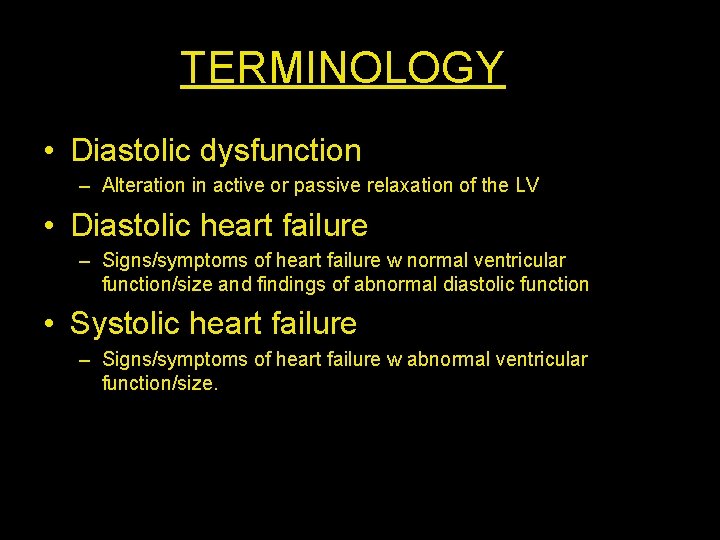
TERMINOLOGY • Diastolic dysfunction – Alteration in active or passive relaxation of the LV • Diastolic heart failure – Signs/symptoms of heart failure w normal ventricular function/size and findings of abnormal diastolic function • Systolic heart failure – Signs/symptoms of heart failure w abnormal ventricular function/size.
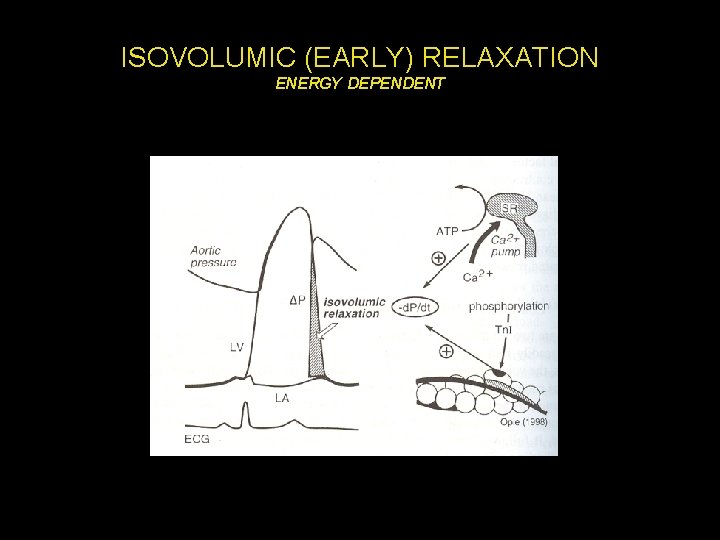
ISOVOLUMIC (EARLY) RELAXATION ENERGY DEPENDENT
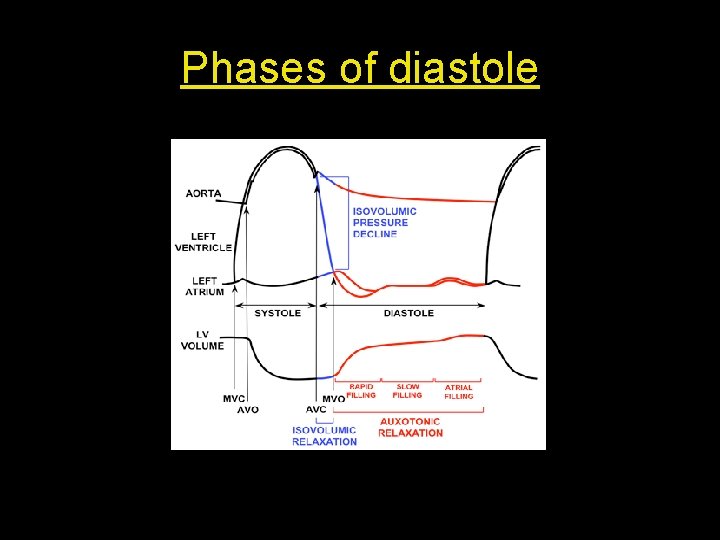
Phases of diastole
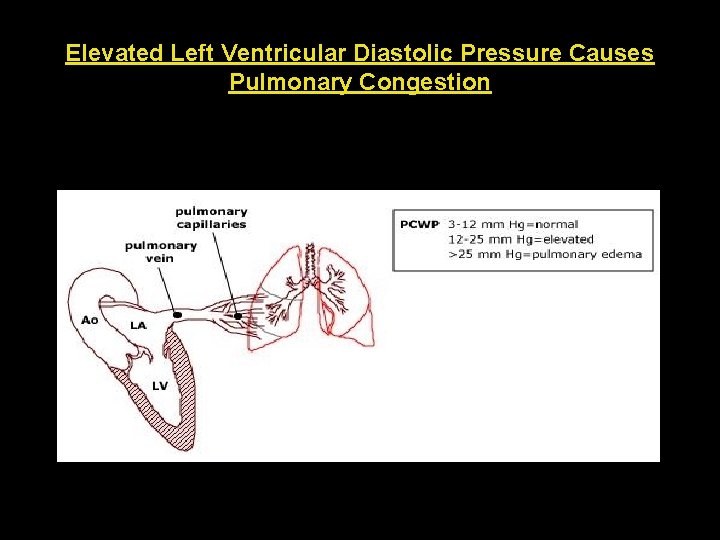
Elevated Left Ventricular Diastolic Pressure Causes Pulmonary Congestion
HISTORICAL CONCEPTS OF DIASTOLIC FUNCTION • 1940 -1965 Experimental Heart failure was associated with increased diastolic pressures (volume overload or global ischemia) – Objective confirmation of Heart failure was an elevated diastolic pressure (during cardiac catheterization) • 1965 Braunwald editorial noting that marked increases observed in hypertrophic hearts without evidence of clinical heart failure. • 1970 Report of reversible diastolic pressure increase without enlargement of the LV heart size during ischemia. • 1975 Non invasive techniques of evaluating diastolic volume changes, wall thickness and LV diastolic diameter
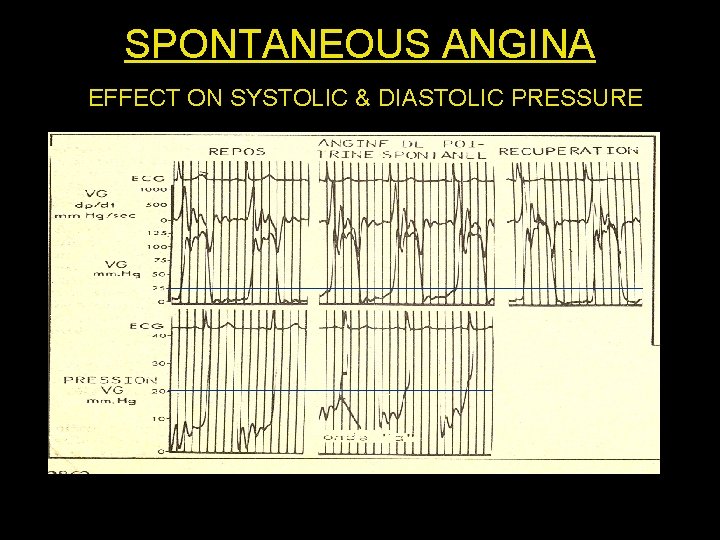
SPONTANEOUS ANGINA EFFECT ON SYSTOLIC & DIASTOLIC PRESSURE
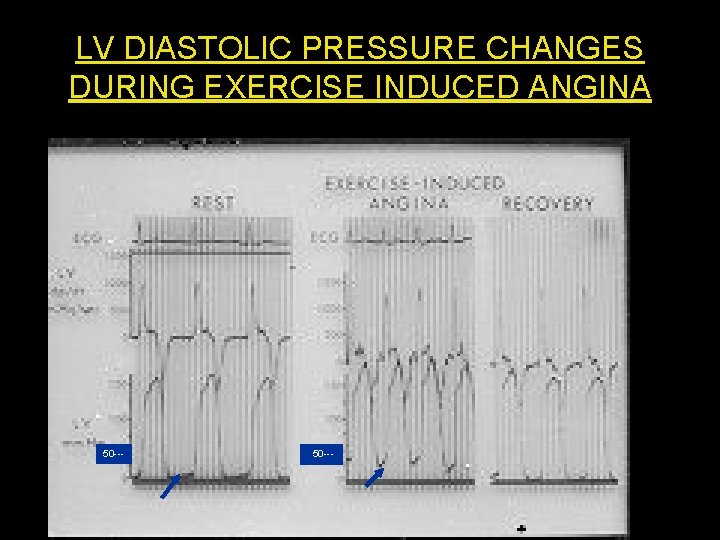
LV DIASTOLIC PRESSURE CHANGES DURING EXERCISE INDUCED ANGINA 50 ---
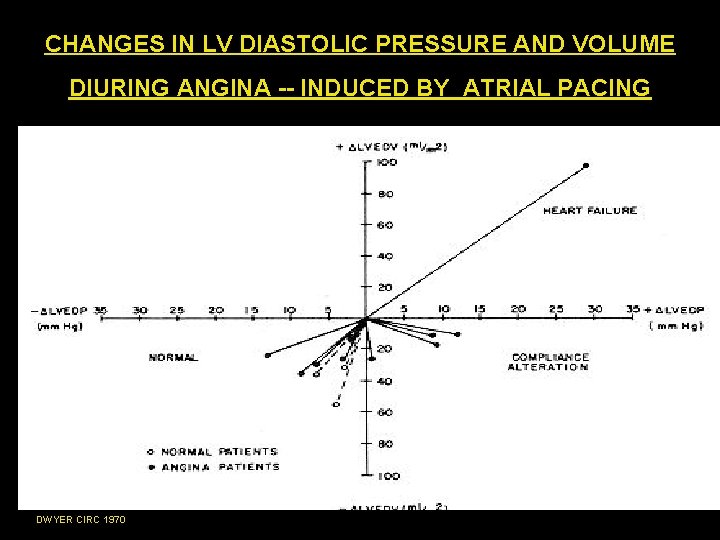
CHANGES IN LV DIASTOLIC PRESSURE AND VOLUME DIURING ANGINA -- INDUCED BY ATRIAL PACING DWYER CIRC 1970
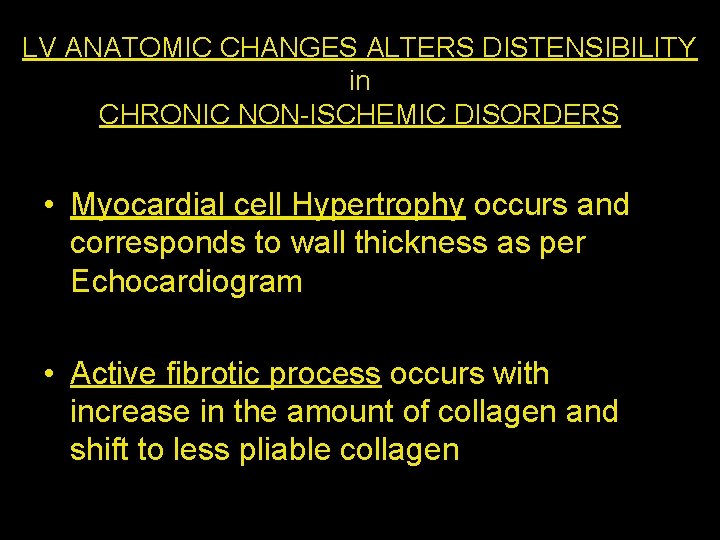
LV ANATOMIC CHANGES ALTERS DISTENSIBILITY in CHRONIC NON-ISCHEMIC DISORDERS • Myocardial cell Hypertrophy occurs and corresponds to wall thickness as per Echocardiogram • Active fibrotic process occurs with increase in the amount of collagen and shift to less pliable collagen
LV DIASTOLIC DISTENSIBILITY • Stiffness- Compliance- Distensibility are best quantified by the LV pressure / volume relationship
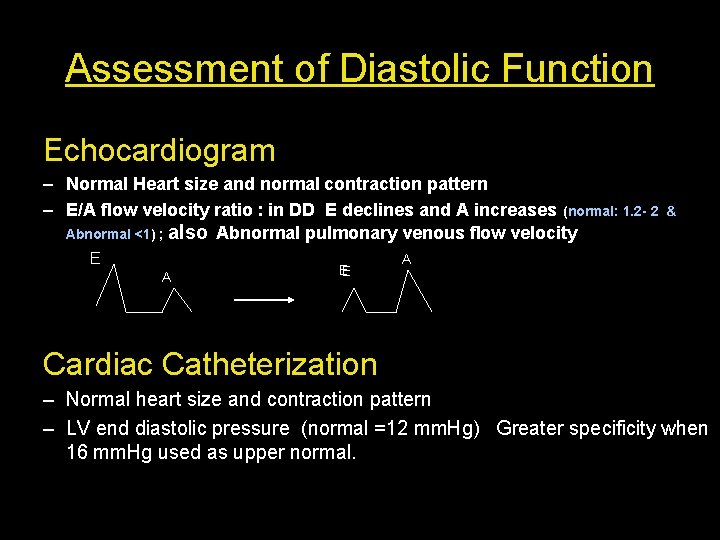
Assessment of Diastolic Function Echocardiogram – Normal Heart size and normal contraction pattern – E/A flow velocity ratio : in DD E declines and A increases (normal: 1. 2 - 2 Abnormal <1) ; also Abnormal pulmonary venous flow velocity E A EE & A Cardiac Catheterization – Normal heart size and contraction pattern – LV end diastolic pressure (normal =12 mm. Hg) Greater specificity when 16 mm. Hg used as upper normal.
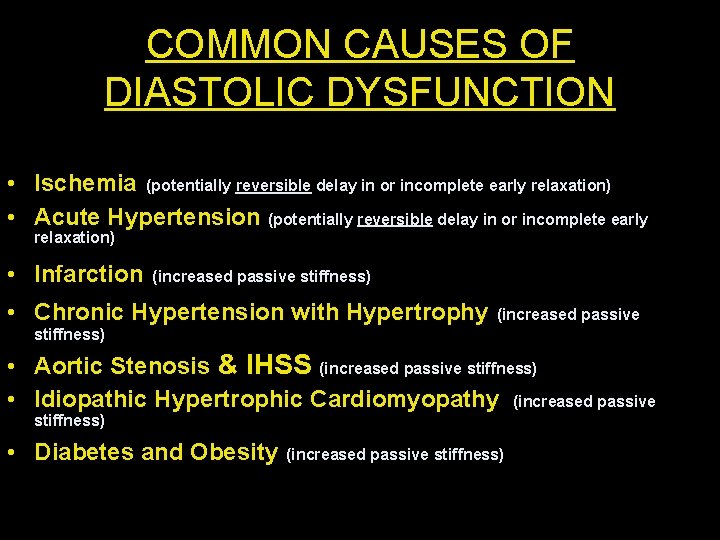
COMMON CAUSES OF DIASTOLIC DYSFUNCTION • Ischemia (potentially reversible delay in or incomplete early relaxation) • Acute Hypertension (potentially reversible delay in or incomplete early relaxation) • Infarction (increased passive stiffness) • Chronic Hypertension with Hypertrophy (increased passive stiffness) • Aortic Stenosis & IHSS (increased passive stiffness) • Idiopathic Hypertrophic Cardiomyopathy (increased passive stiffness) • Diabetes and Obesity (increased passive stiffness)
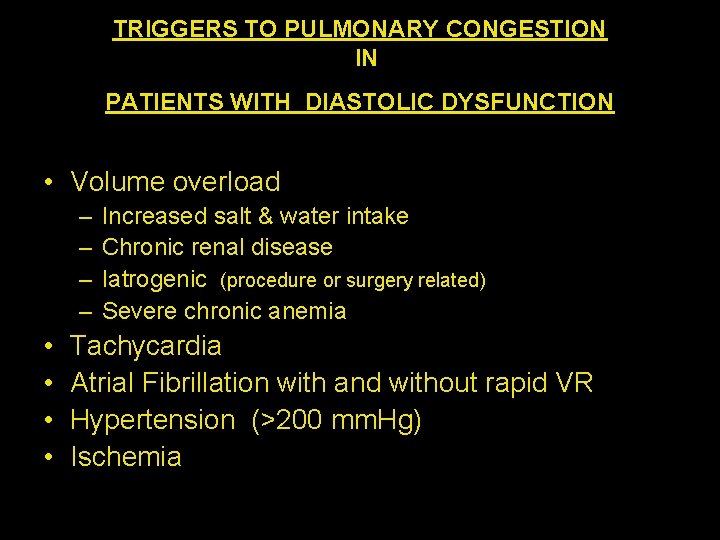
TRIGGERS TO PULMONARY CONGESTION IN PATIENTS WITH DIASTOLIC DYSFUNCTION • Volume overload – – • • Increased salt & water intake Chronic renal disease Iatrogenic (procedure or surgery related) Severe chronic anemia Tachycardia Atrial Fibrillation with and without rapid VR Hypertension (>200 mm. Hg) Ischemia
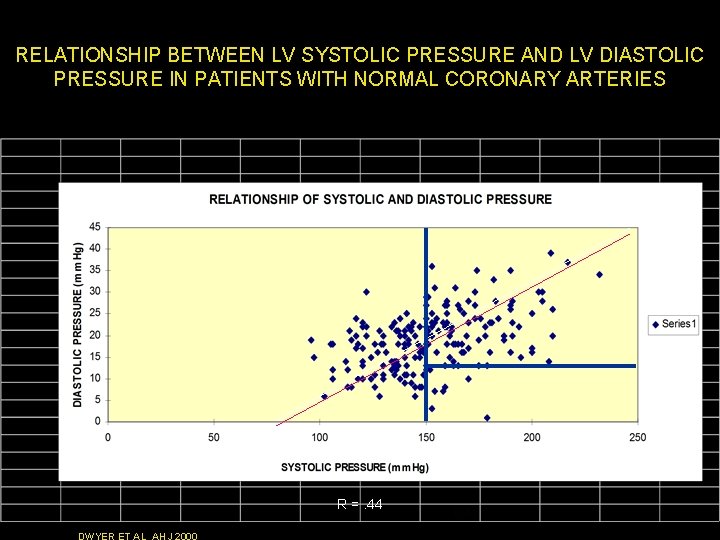
RELATIONSHIP BETWEEN LV SYSTOLIC PRESSURE AND LV DIASTOLIC PRESSURE IN PATIENTS WITH NORMAL CORONARY ARTERIES R =. 44 DWYER ET AL AHJ 2000
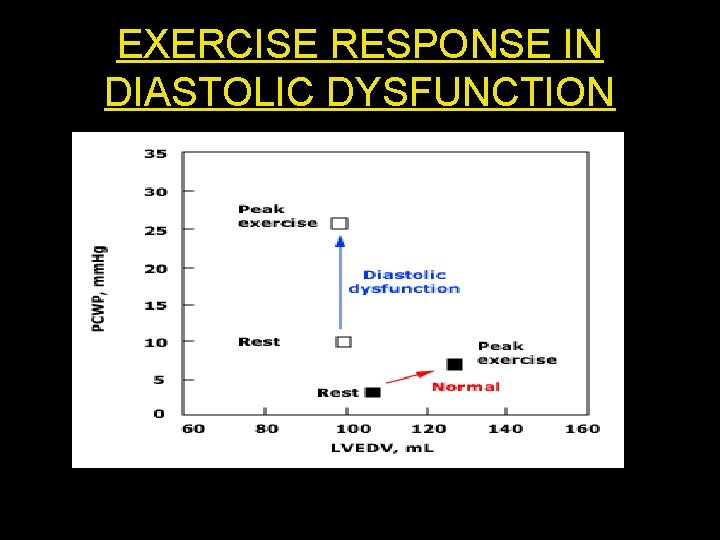
EXERCISE RESPONSE IN DIASTOLIC DYSFUNCTION
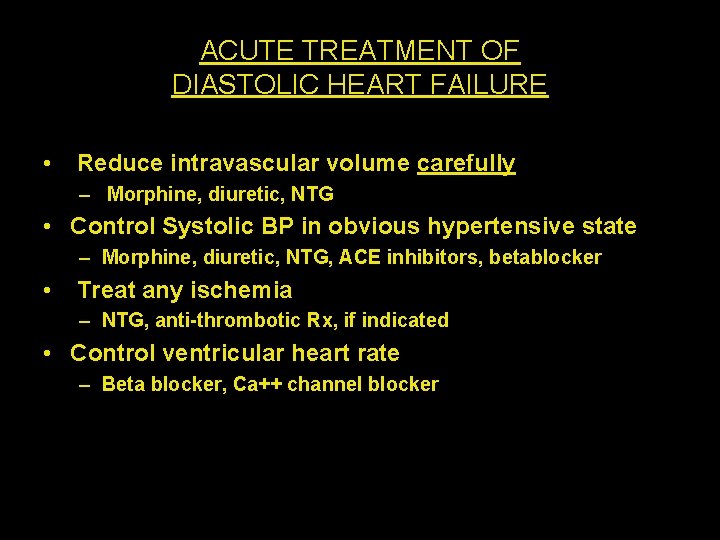
ACUTE TREATMENT OF DIASTOLIC HEART FAILURE • Reduce intravascular volume carefully – Morphine, diuretic, NTG • Control Systolic BP in obvious hypertensive state – Morphine, diuretic, NTG, ACE inhibitors, betablocker • Treat any ischemia – NTG, anti-thrombotic Rx, if indicated • Control ventricular heart rate – Beta blocker, Ca++ channel blocker
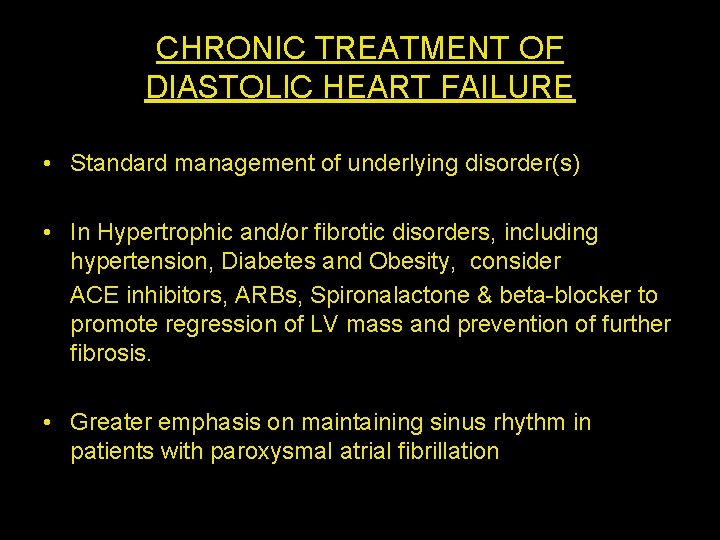
CHRONIC TREATMENT OF DIASTOLIC HEART FAILURE • Standard management of underlying disorder(s) • In Hypertrophic and/or fibrotic disorders, including hypertension, Diabetes and Obesity, consider ACE inhibitors, ARBs, Spironalactone & beta-blocker to promote regression of LV mass and prevention of further fibrosis. • Greater emphasis on maintaining sinus rhythm in patients with paroxysmal atrial fibrillation
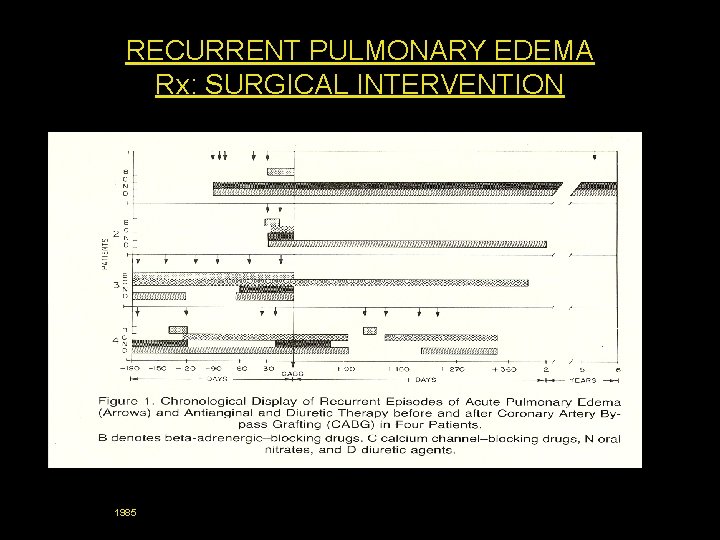
RECURRENT PULMONARY EDEMA Rx: SURGICAL INTERVENTION 1985
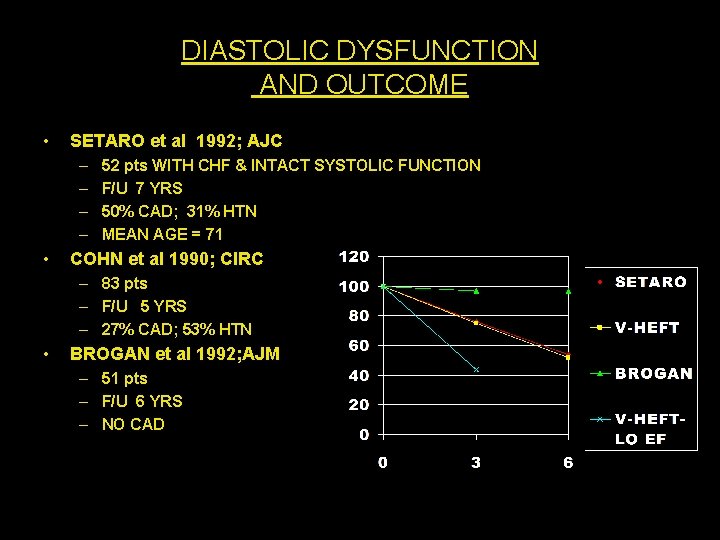
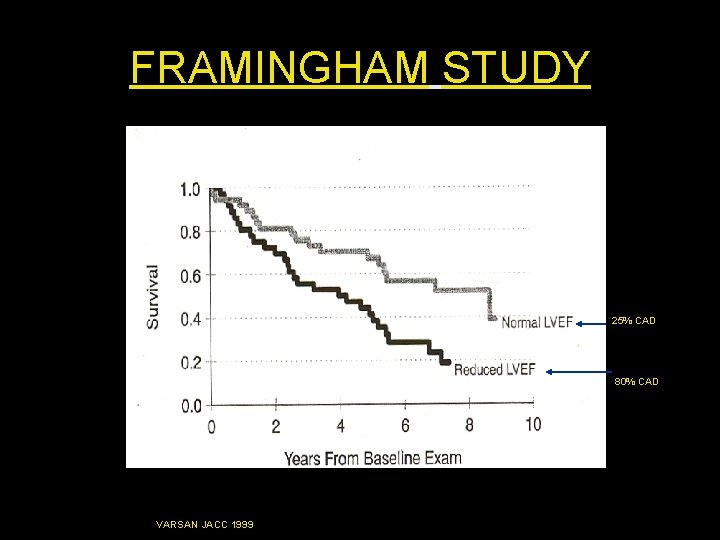
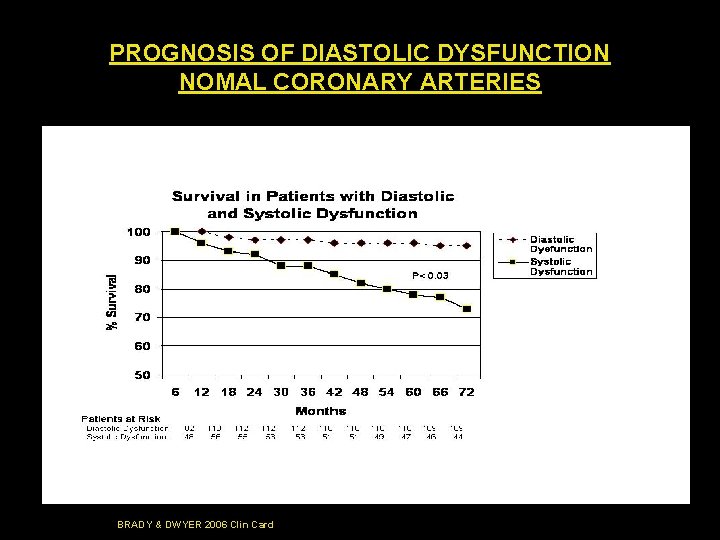
DIASTOLIC DYSFUNCTION AND OUTCOME • SETARO et al 1992; AJC – – • 52 pts WITH CHF & INTACT SYSTOLIC FUNCTION F/U 7 YRS 50% CAD; 31% HTN MEAN AGE = 71 COHN et al 1990; CIRC – 83 pts – F/U 5 YRS – 27% CAD; 53% HTN • BROGAN et al 1992; AJM – 51 pts – F/U 6 YRS – NO CAD
FRAMINGHAM STUDY 25% CAD 80% CAD VARSAN JACC 1999
PROGNOSIS OF DIASTOLIC DYSFUNCTION NOMAL CORONARY ARTERIES BRADY & DWYER 2006 Clin Card
SUMMARY • Diastolic dysfunction and Diastolic Heart failure is common • It is present in many common disorders. Beware and be skeptical of the patient with the diagnosis of “asthma” • It’s easy to treat the acute heart failure and fun too! Patients are usually ready to go home within hours and probably can. • Managing the progression and chronic state is more problematic. • Patients with many admissions with diastolic heart failure is a often physician failure in managing the underlying disorders. • Prognosis is heavily influenced by the presence of coronary disease and the age of the patient. Can’t live forever!