
Diarrhea in Children beyond ORS and Zinc Dr
Diarrhea in Children beyond ORS and Zinc Dr. Shrish Bhatnagar Associate Prof. ( Pediatric Gastroenterologist) Eras Lucknow Medical College and Hospital Vivekananda Polyclinic & Institute of M. Sciences, Lucknow.
Dedication JNMC SGPGIMS Late Dr S K BHATNAGAR
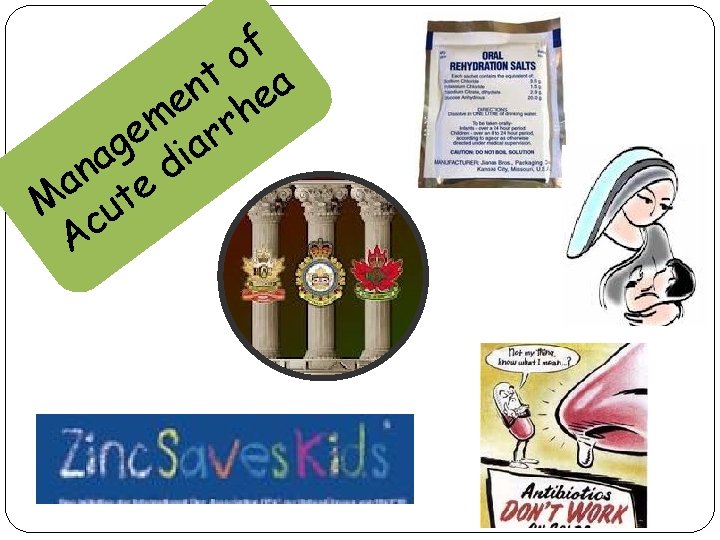
f o t a n e e h m r e ar g i a an te d M cu A
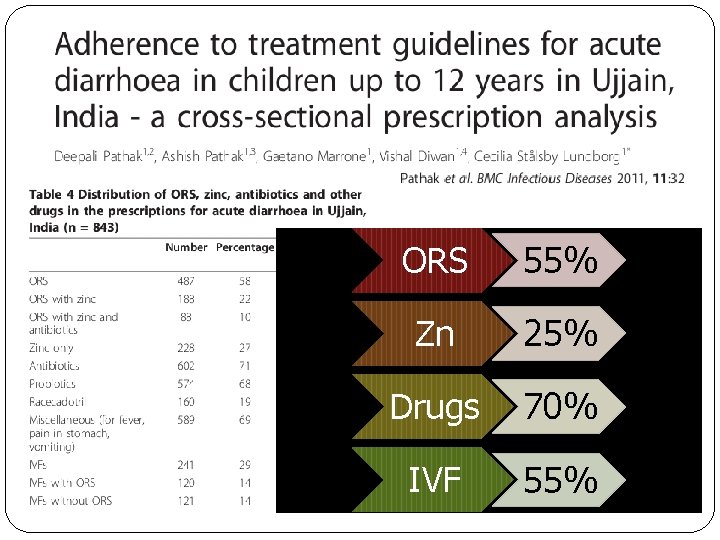
ORS 55% Zn 25% Drugs 70% IVF 55%
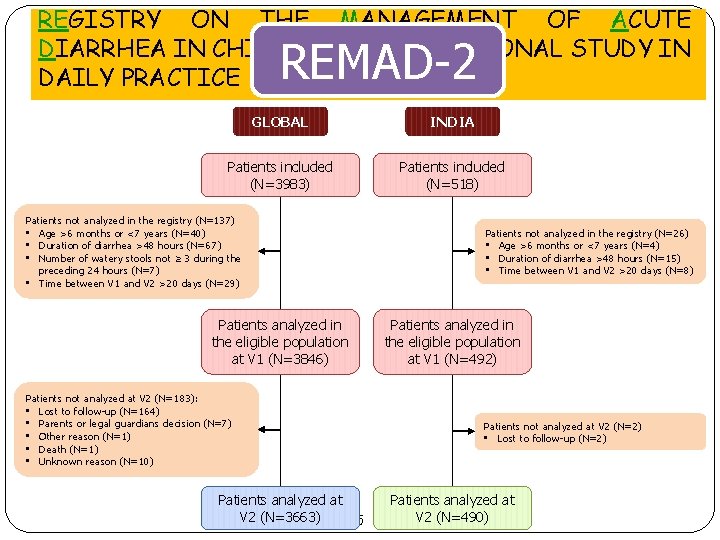
REGISTRY ON THE MANAGEMENT OF ACUTE DIARRHEA IN CHILDREN: OBSERVATIONAL STUDY IN DAILY PRACTICE REMAD-2 GLOBAL INDIA Patients included (N=3983) Patients included (N=518) Patients not analyzed in the registry (N=137) • Age >6 months or <7 years (N=40) • Duration of diarrhea >48 hours (N=67) • Number of watery stools not ≥ 3 during the preceding 24 hours (N=7) • Time between V 1 and V 2 >20 days (N=29) Patients analyzed in the eligible population at V 1 (N=3846) Patients not analyzed at V 2 (N=183): • Lost to follow-up (N=164) • Parents or legal guardians decision (N=7) • Other reason (N=1) • Death (N=1) • Unknown reason (N=10) Patients analyzed at V 2 (N=3663) 5 Patients not analyzed in the registry (N=26) • Age >6 months or <7 years (N=4) • Duration of diarrhea >48 hours (N=15) • Time between V 1 and V 2 >20 days (N=8) Patients analyzed in the eligible population at V 1 (N=492) Patients not analyzed at V 2 (N=2) • Lost to follow-up (N=2) Patients analyzed at V 2 (N=490)
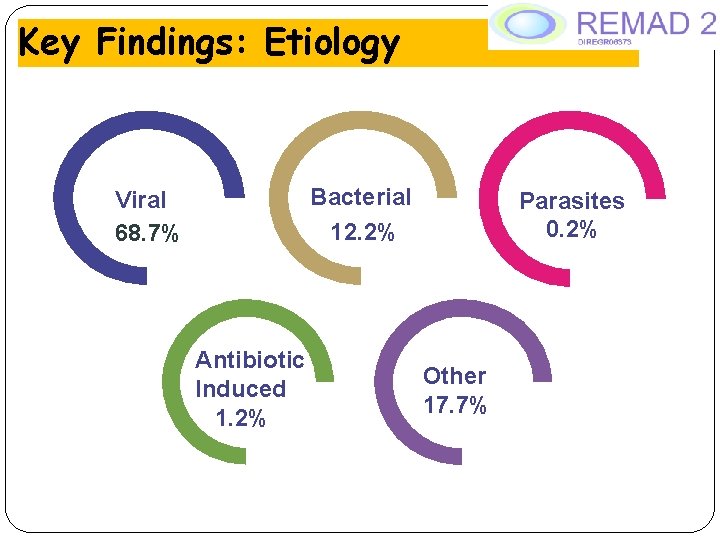
Key Findings: Etiology Bacterial 12. 2% Viral 68. 7% Antibiotic Induced 1. 2% Parasites 0. 2% Other 17. 7%
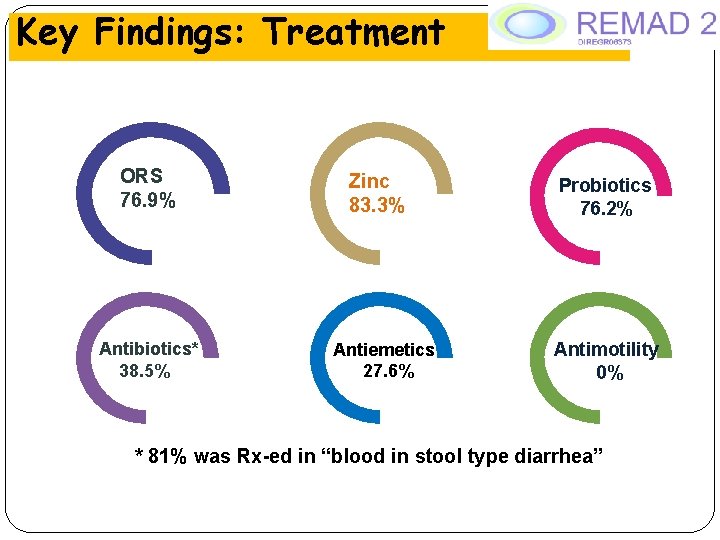
Key Findings: Treatment ORS 76. 9% Antibiotics* 38. 5% Zinc 83. 3% Antiemetics 27. 6% Probiotics 76. 2% Antimotility 0% * 81% was Rx-ed in “blood in stool type diarrhea”
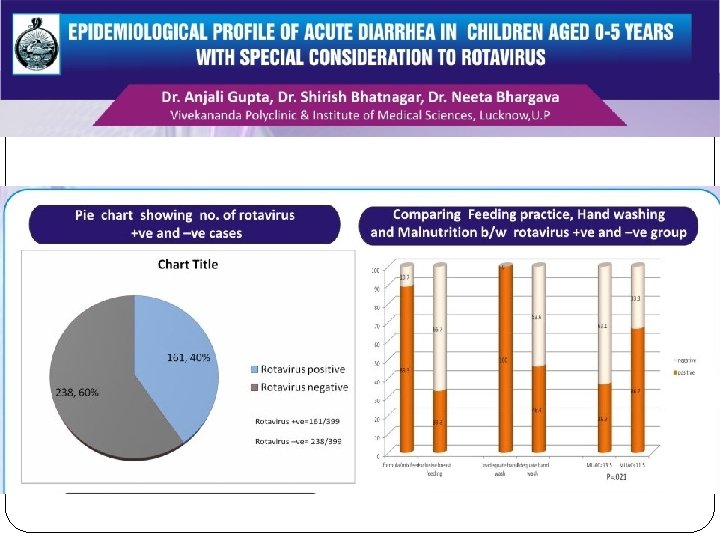
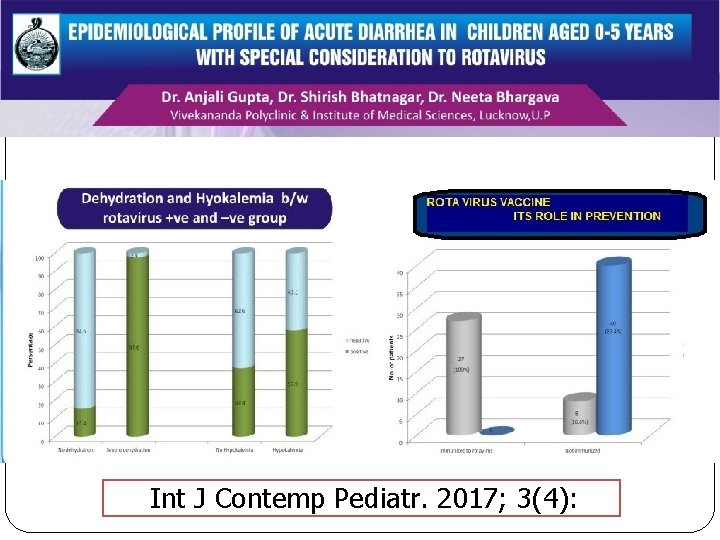
Int J Contemp Pediatr. 2017; 3(4):

Confusions in diarrhea ? Acute diarrhea • Feeding • Milk restriction • Anti secretory and Probiotics Persistent diarrhea • Nutritional Management Chronic Diarrhea • • Spectrum Celiac Disease Cow Milk Protein Intolerance Diarrhea in Infants and Young Children
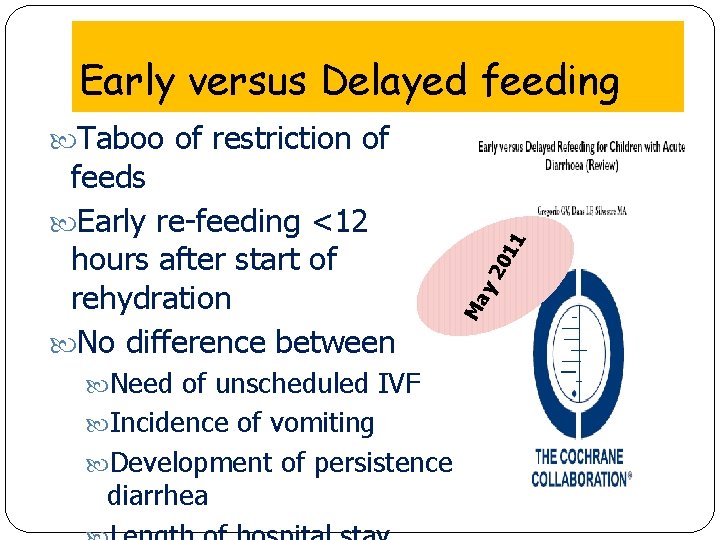
Early versus Delayed feeding 01 y 2 Ma feeds Early re-feeding <12 hours after start of rehydration No difference between 1 Taboo of restriction of Need of unscheduled IVF Incidence of vomiting Development of persistence diarrhea
Restriction of lactose products Reintroduction of milk at different times and concentrations has showed no significant difference in the duration of hospitalization or the duration of diarrhea between the different feeding regimens (Rees 1979, Santosham 1991; Soeprapto 1979) Meta-analysis on effects of continuous feeding with lactose-containing versus lactose- free diets to young children suffering from acute diarrhea. Conclusion: Routine dilution of milk and use of lactose-free milk formulas is unnecessary. (Brown 1994) Continued breastfeeding during diarrhea was also found to cause a significant decrease in the volume and number of stools (Khin-Maung-U 1985)

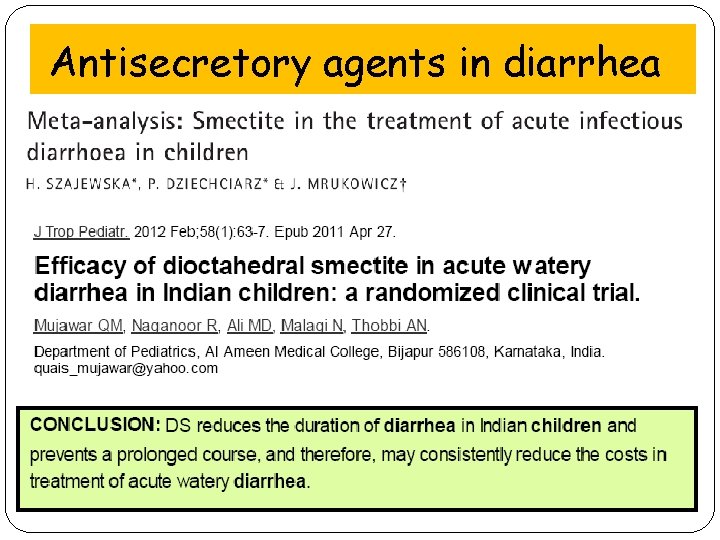
Antisecretory agents in diarrhea IAP consensus statement • With the current evidence anti secretory are not recommended for the treatment of diarrhea
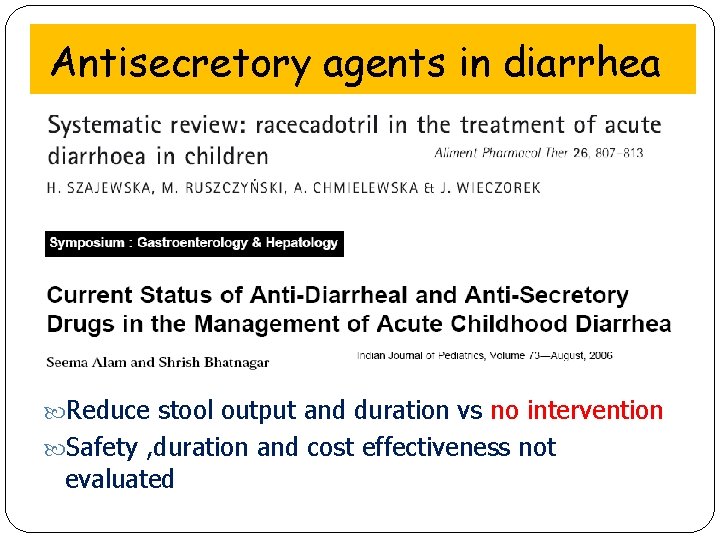
Antisecretory agents in diarrhea Reduce stool output and duration vs no intervention Safety , duration and cost effectiveness not evaluated
Antisecretory agents in diarrhea
Probiotics Bring Confusion? Duration Dose Strain Cost Vs Benefit
Evolution of Probiotics 2017 ?
Probiotics in diarrhea NO ROLE OF PRODUCTS WITH COMBINATION OF PRE & PROBIOTICS
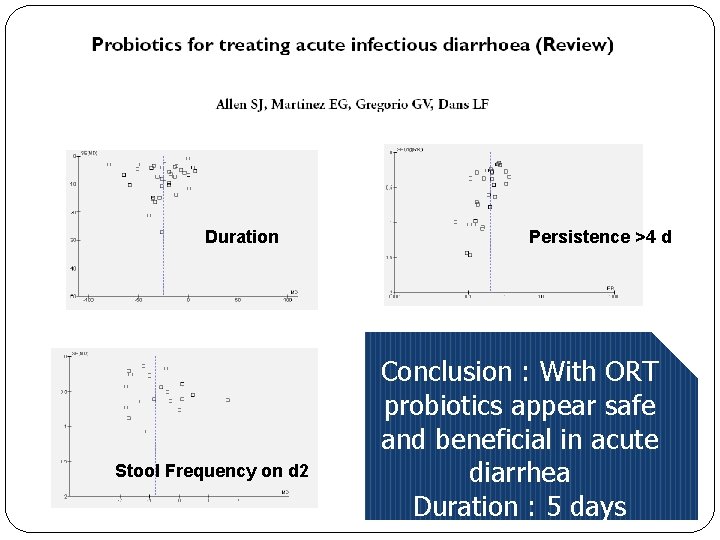
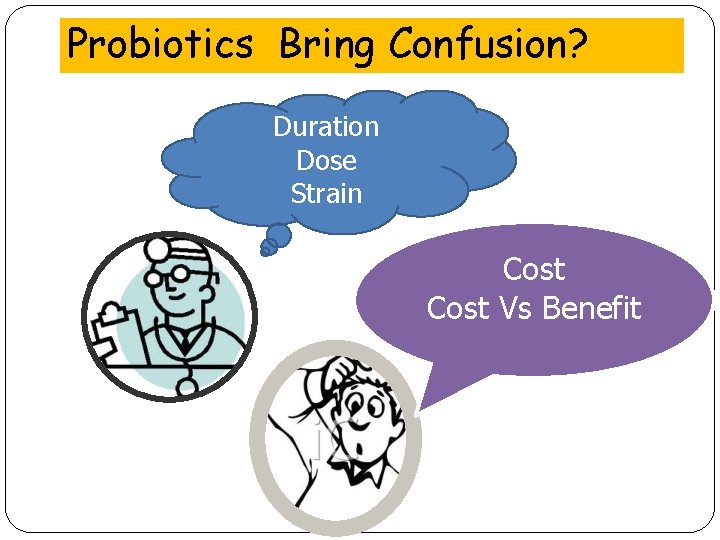
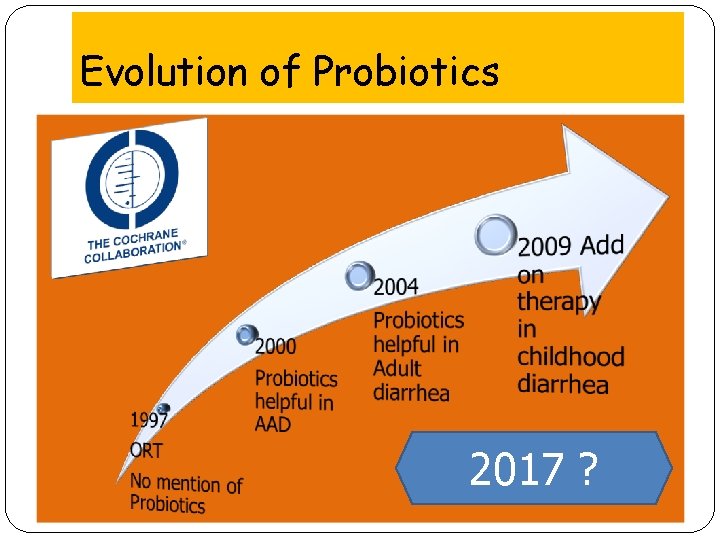
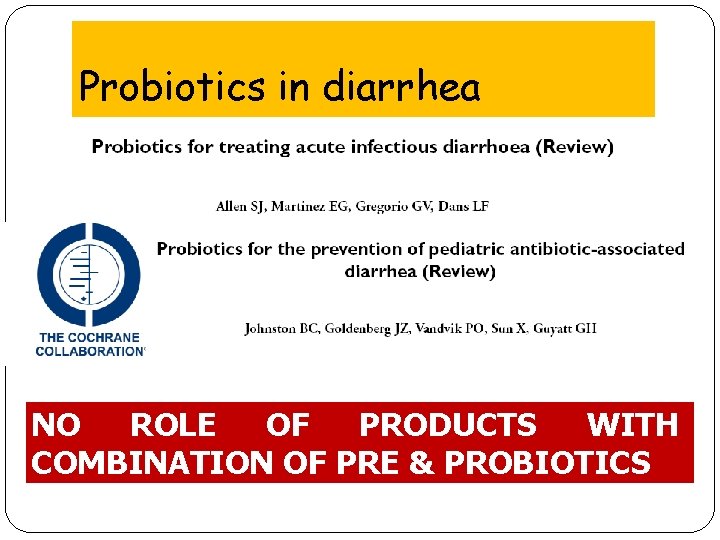
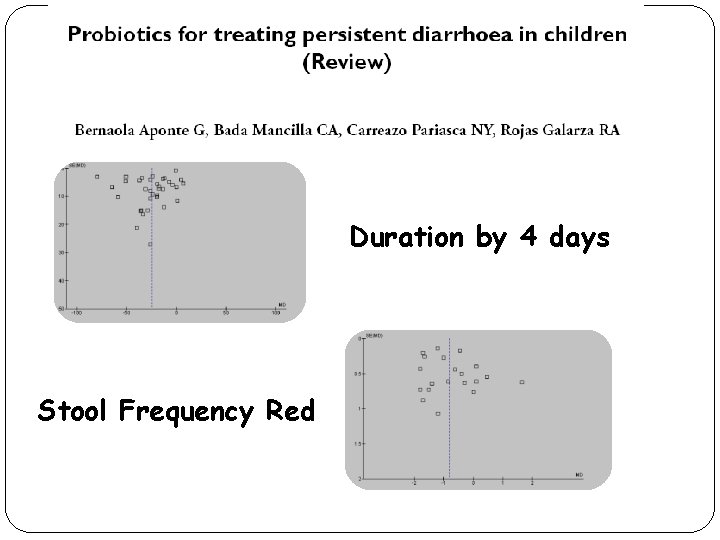
Duration Stool Frequency on d 2 Persistence >4 d Conclusion : With ORT probiotics appear safe and beneficial in acute diarrhea Duration : 5 days
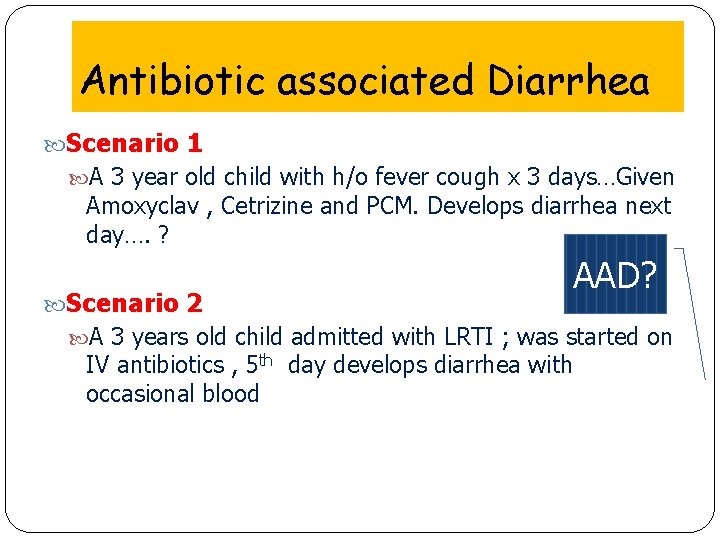
Antibiotic associated Diarrhea Scenario 1 A 3 year old child with h/o fever cough x 3 days…Given Amoxyclav , Cetrizine and PCM. Develops diarrhea next day…. ? Scenario 2 AAD? A 3 years old child admitted with LRTI ; was started on IV antibiotics , 5 th day develops diarrhea with occasional blood
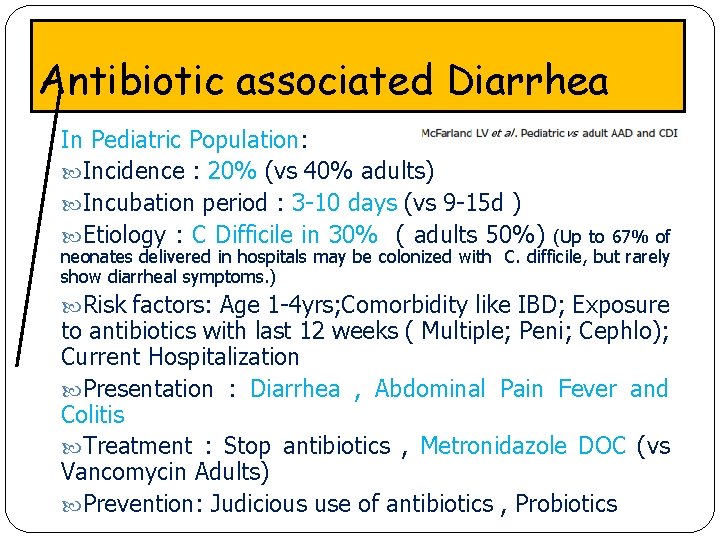
Antibiotic associated Diarrhea In Pediatric Population: Incidence : 20% (vs 40% adults) Incubation period : 3 -10 days (vs 9 -15 d ) Etiology : C Difficile in 30% ( adults 50%) (Up to 67% of neonates delivered in hospitals may be colonized with C. difficile, but rarely show diarrheal symptoms. ) Risk factors: Age 1 -4 yrs; Comorbidity like IBD; Exposure to antibiotics with last 12 weeks ( Multiple; Peni; Cephlo); Current Hospitalization Presentation : Diarrhea , Abdominal Pain Fever and Colitis Treatment : Stop antibiotics , Metronidazole DOC (vs Vancomycin Adults) Prevention: Judicious use of antibiotics , Probiotics
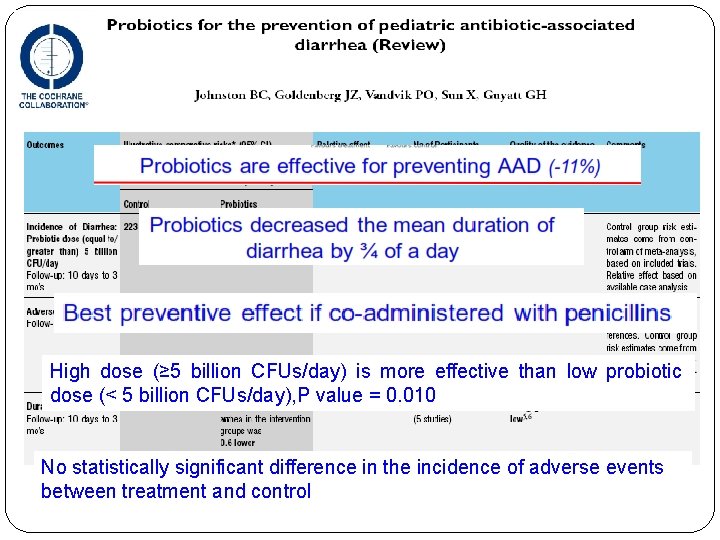
High dose (≥ 5 billion CFUs/day) is more effective than low probiotic dose (< 5 billion CFUs/day), P value = 0. 010 No statistically significant difference in the incidence of adverse events between treatment and control
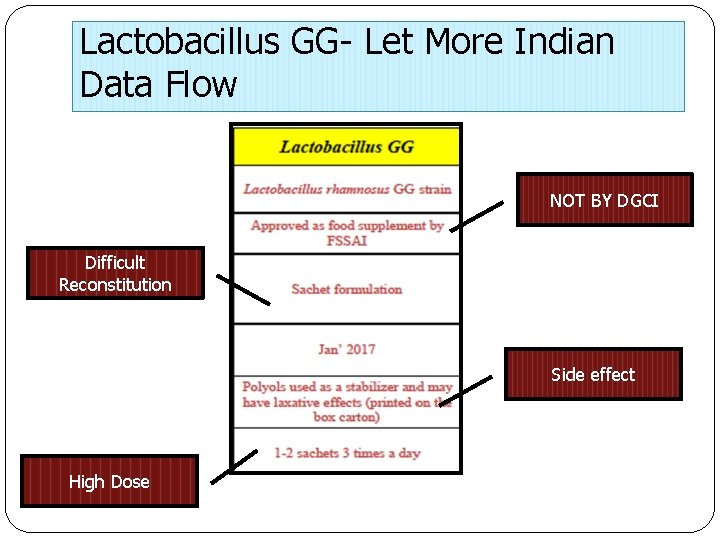
Lactobacillus GG- Let More Indian Data Flow NOT BY DGCI Difficult Reconstitution Side effect High Dose
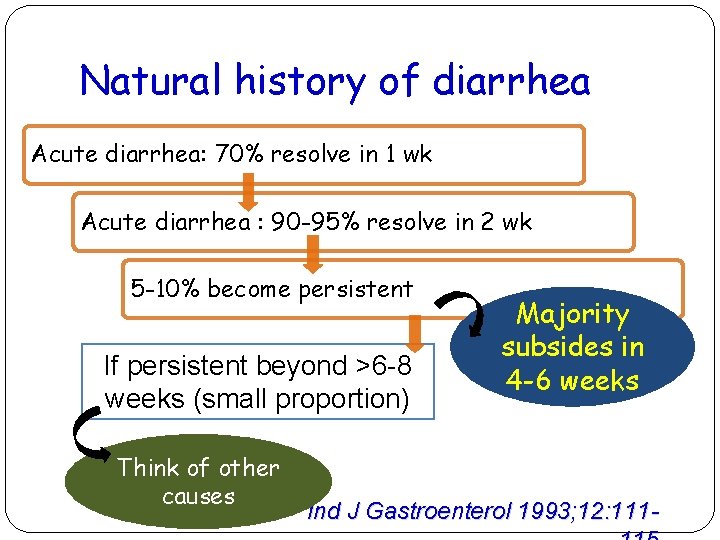
Natural history of diarrhea Acute diarrhea: 70% resolve in 1 wk Acute diarrhea : 90 -95% resolve in 2 wk 5 -10% become persistent If persistent beyond >6 -8 weeks (small proportion) Think of other causes Majority subsides in 4 -6 weeks Ind J Gastroenterol 1993; 12: 111 -
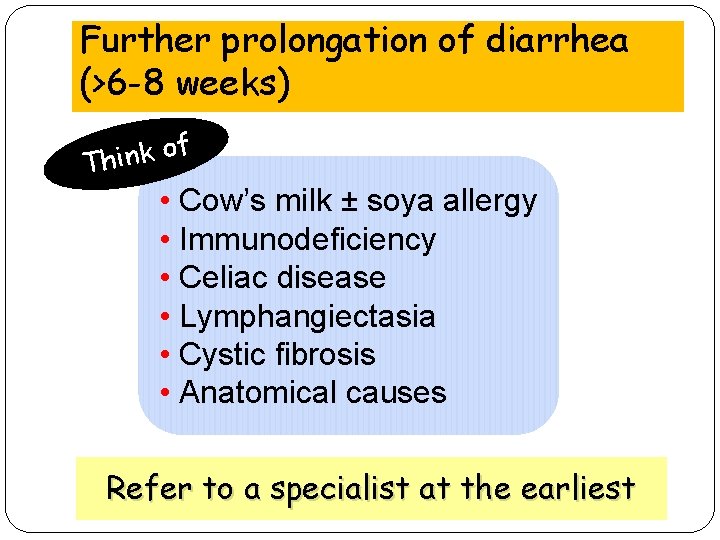
Further prolongation of diarrhea (>6 -8 weeks) f o k n i Th • Cow’s milk ± soya allergy • Immunodeficiency • Celiac disease • Lymphangiectasia • Cystic fibrosis • Anatomical causes Refer to a specialist at the earliest
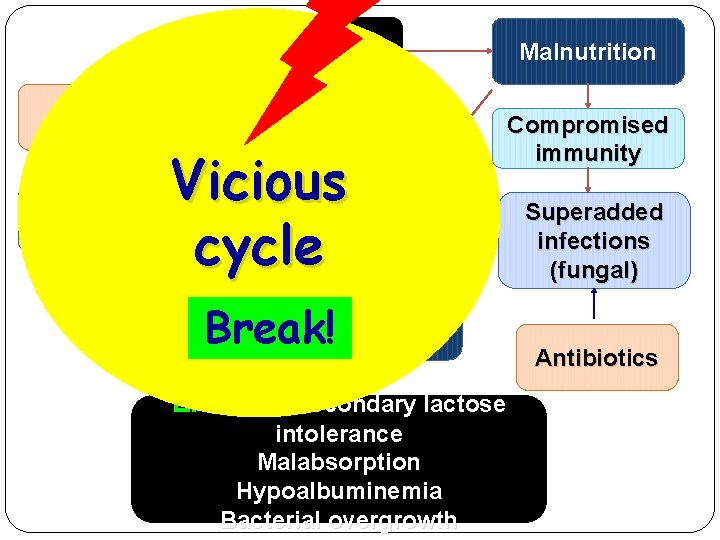
Food allergies (soy, bovine) Persisting infections Prolonged Diarrhea Vicious Small bowel mucosal injury cycle Villous atrophy Loss of brush border enzymes Break! Effects: Secondary lactose intolerance Malabsorption Hypoalbuminemia Bacterial overgrowth Malnutrition Compromised immunity Superadded infections (fungal) Antibiotics
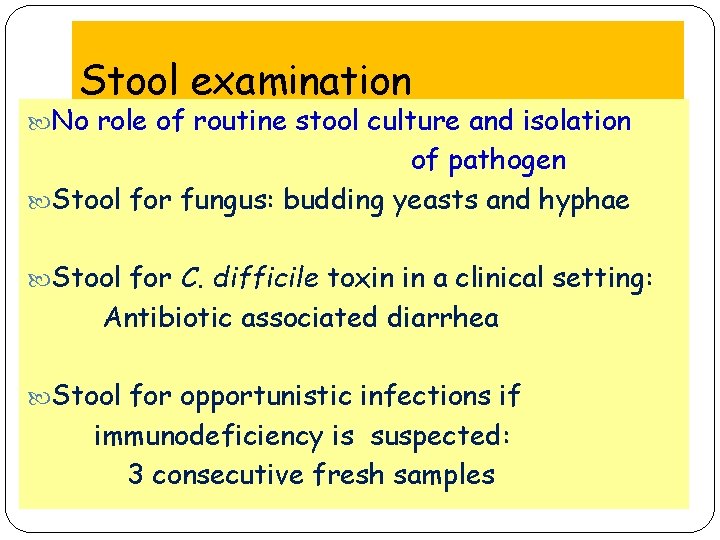
Stool examination No role of routine stool culture and isolation of pathogen Stool for fungus: budding yeasts and hyphae Stool for C. difficile toxin in a clinical setting: Antibiotic associated diarrhea Stool for opportunistic infections if immunodeficiency is suspected: 3 consecutive fresh samples
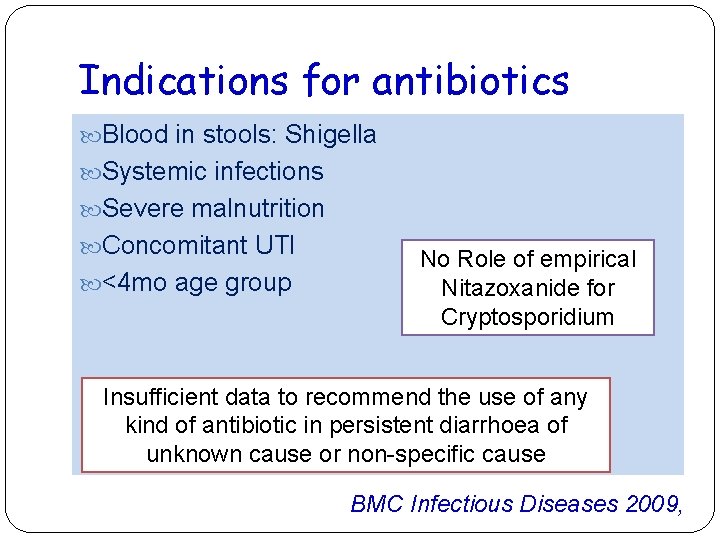
Indications for antibiotics Blood in stools: Shigella Systemic infections Severe malnutrition Concomitant UTI <4 mo age group No Role of empirical Nitazoxanide for Cryptosporidium Insufficient data to recommend the use of any kind of antibiotic in persistent diarrhoea of unknown cause or non-specific cause BMC Infectious Diseases 2009,
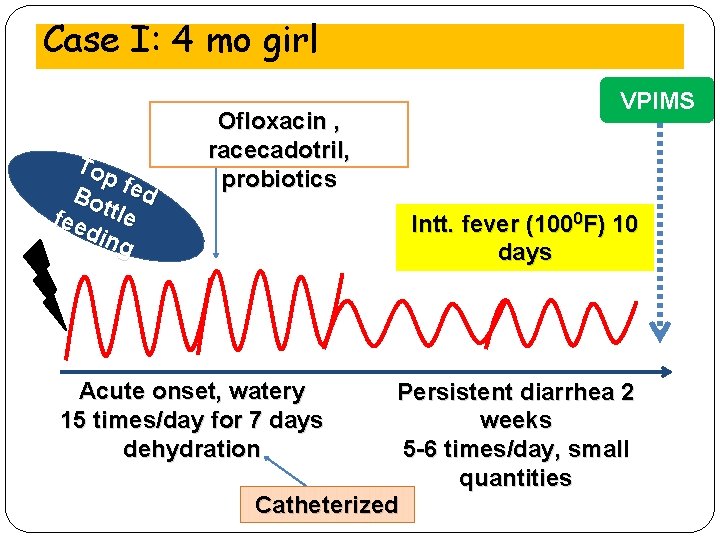
Case I: 4 mo girl Top Bo fed fee ttle din g Ofloxacin , racecadotril, probiotics VPIMS Intt. fever (1000 F) 10 days Acute onset, watery 15 times/day for 7 days dehydration Persistent diarrhea 2 weeks 5 -6 times/day, small quantities Catheterized
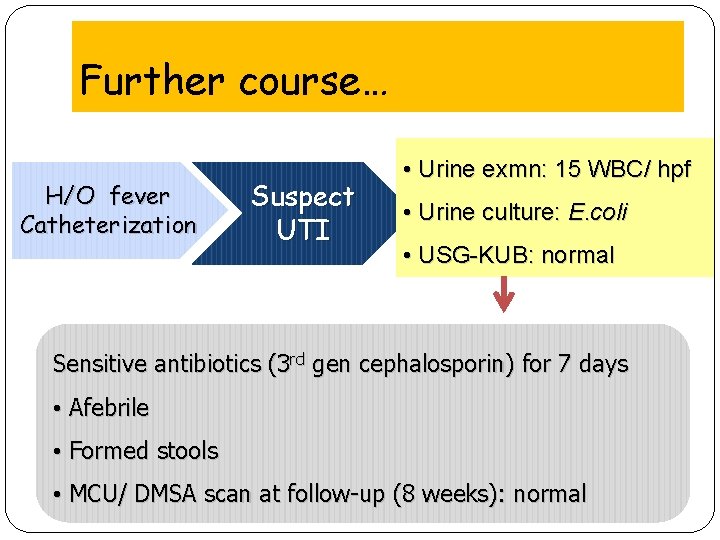
Further course… H/O fever Catheterization Suspect UTI • Urine exmn: 15 WBC/ hpf • Urine culture: E. coli • USG-KUB: normal Sensitive antibiotics (3 rd gen cephalosporin) for 7 days • Afebrile • Formed stools • MCU/ DMSA scan at follow-up (8 weeks): normal
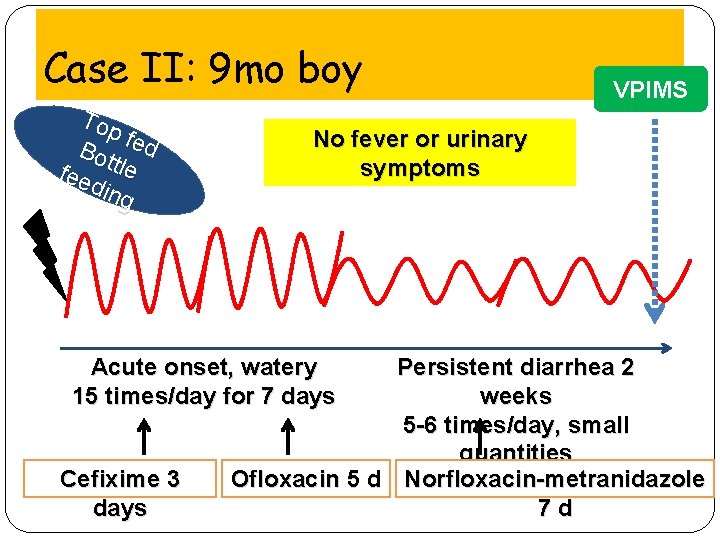
Case II: 9 mo boy Top Bot fed fee tle din g No fever or urinary symptoms Acute onset, watery 15 times/day for 7 days Cefixime 3 days VPIMS Persistent diarrhea 2 weeks 5 -6 times/day, small quantities Ofloxacin 5 d Norfloxacin-metranidazole 7 d
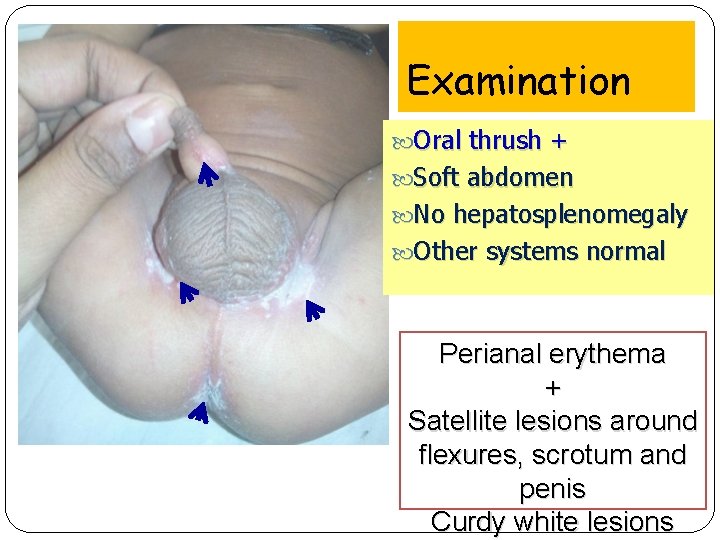
Examination Oral thrush + Soft abdomen No hepatosplenomegaly Other systems normal Perianal erythema + Satellite lesions around flexures, scrotum and penis Curdy white lesions
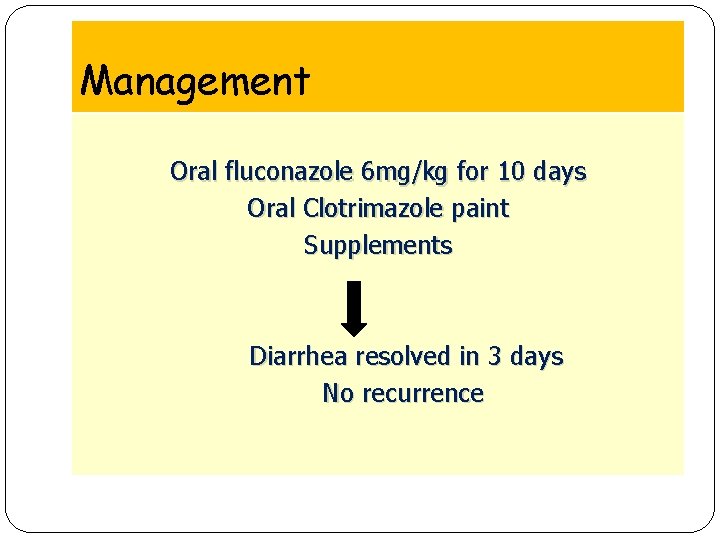
Management Oral fluconazole 6 mg/kg for 10 days Oral Clotrimazole paint Supplements Diarrhea resolved in 3 days No recurrence
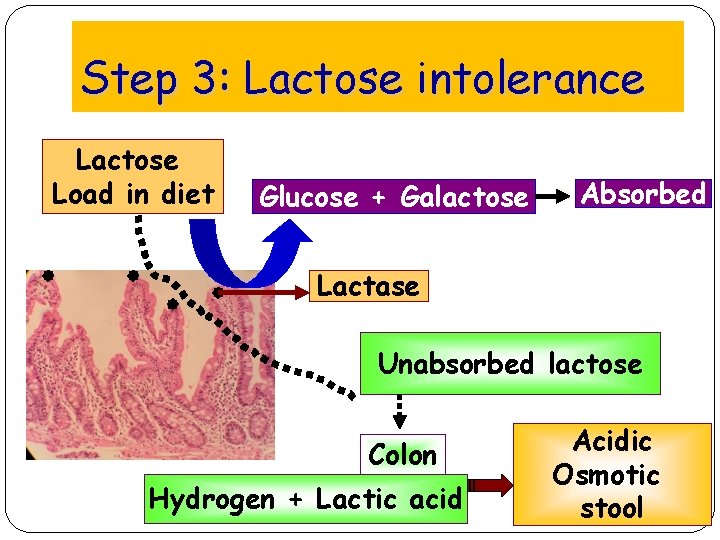
Step 3: Lactose intolerance Lactose Load in diet Glucose + Galactose Absorbed Lactase Unabsorbed lactose Colon Hydrogen + Lactic acid Acidic Osmotic stool
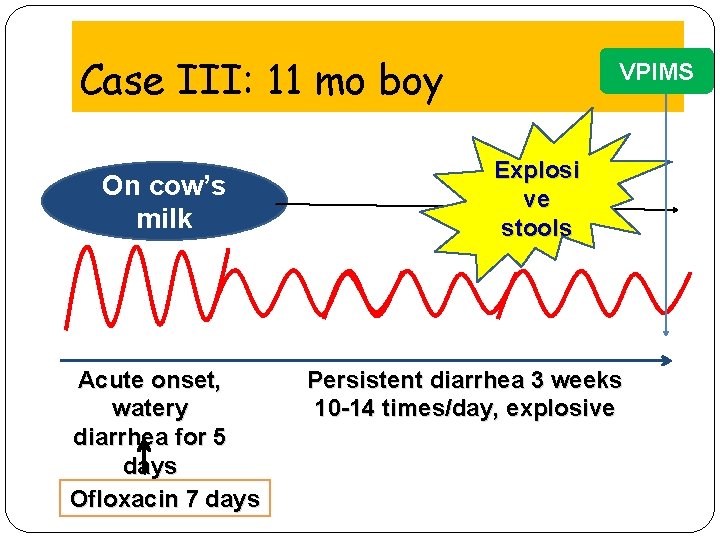
Case III: 11 mo boy On cow’s milk Acute onset, watery diarrhea for 5 days Ofloxacin 7 days VPIMS Explosi ve stools Persistent diarrhea 3 weeks 10 -14 times/day, explosive
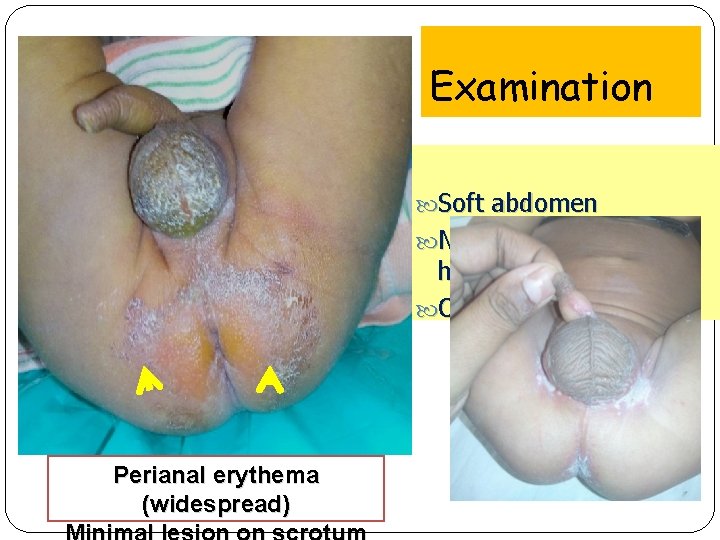
Examination Soft abdomen No hepatosplenomegaly Other systems normal Perianal erythema (widespread)
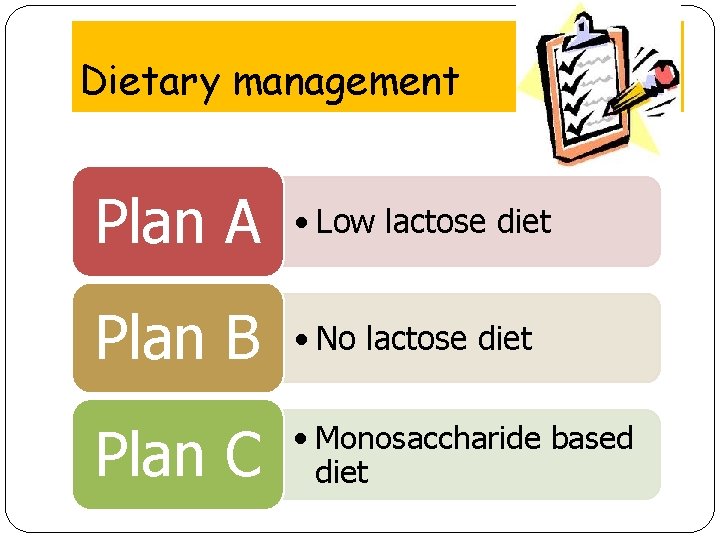
Dietary management Plan A • Low lactose diet Plan B • No lactose diet Plan C • Monosaccharide based diet
Duration by 4 days Stool Frequency Red
Quality control: Relevance of species and strain identification
Some examples from the world literature - Quality control: Out of 9 only 3 products matched the label claims
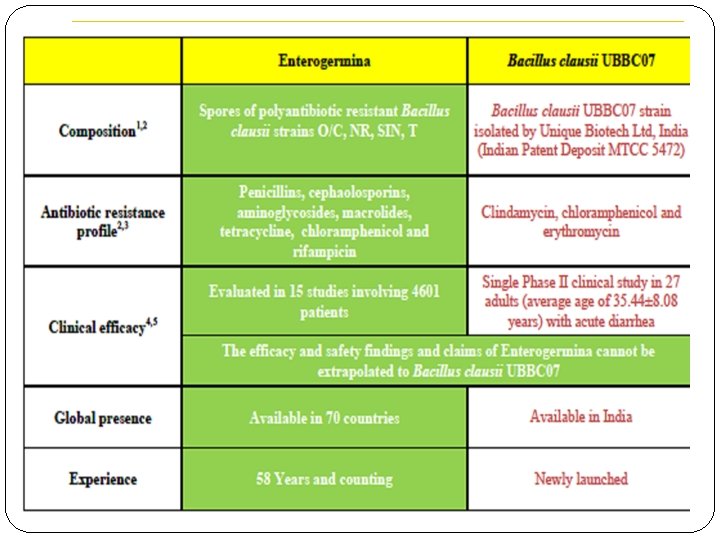
What about sporeformers? In the following slides the outcomes of a survey on 5 products commercially available in India Products Declared dose Bacillus clausii Spores suspension ( bottles of 5 ml) Product A 2 x 10⁹ spores/ 5 ml Bacillus clausii spores (sachet 1 g) Product B 2 x 10⁹ spore in 1 g 2 x 10⁹ spores/ 5 ml 2 x 10⁹ spores in 1 g Bacillus clausii spores suspension ( bottles of 5 ml) Product C 2 x 10⁹ spores/ 5 ml Bacillus clausii spores (sachets 1 g) Product D 2 x 10⁹ spores in 1 g Bacillus clausii spores Product E ( bottles 5 ml) 2 x 10⁹ CFU/ 5 ml 2 x 10⁹ spores/ 5 ml 2 x 10⁹ spores in 1 g
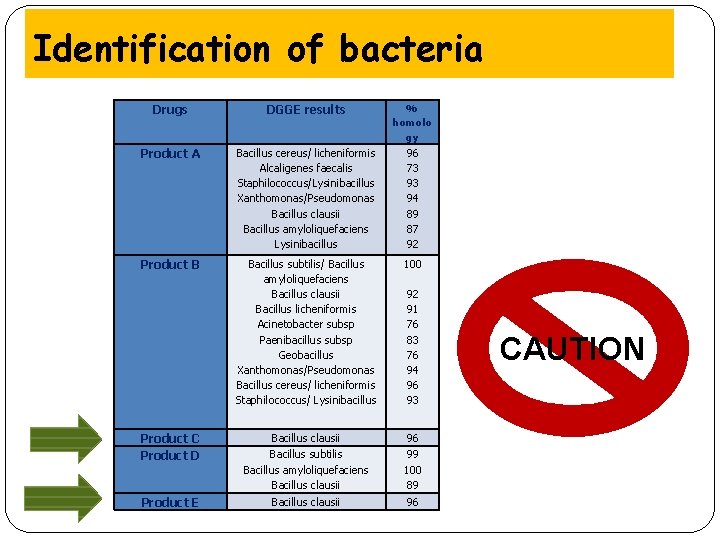
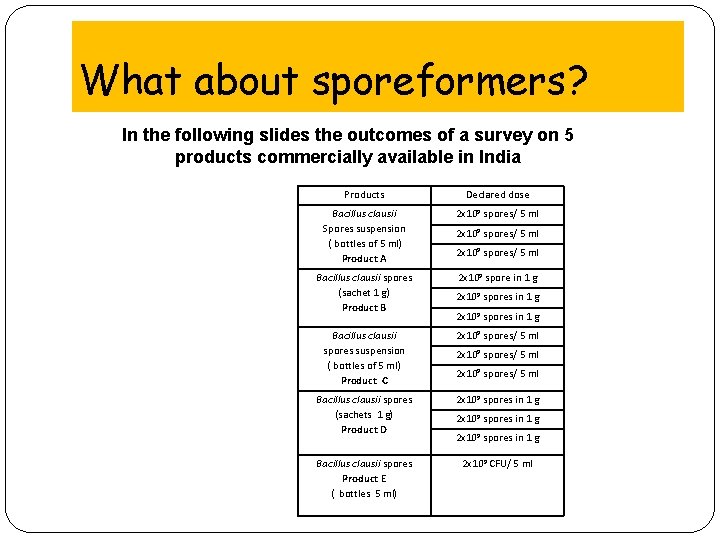
Identification of bacteria Drugs DGGE results % homolo gy Product A Bacillus cereus/ licheniformis 96 Alcaligenes faecalis 73 Staphilococcus/Lysinibacillus 93 Xanthomonas/Pseudomonas 94 Bacillus clausii 89 Bacillus amyloliquefaciens 87 Lysinibacillus 92 Product B Bacillus subtilis/ Bacillus 100 amyloliquefaciens Bacillus clausii 92 Bacillus licheniformis 91 Acinetobacter subsp 76 Paenibacillus subsp 83 Geobacillus 76 Xanthomonas/Pseudomonas 94 Bacillus cereus/ licheniformis 96 Staphilococcus/ Lysinibacillus 93 CAUTION Product C Product D Product E Bacillus clausii 96 Bacillus subtilis Bacillus amyloliquefaciens Bacillus clausii 99 100 89 Bacillus clausii 96
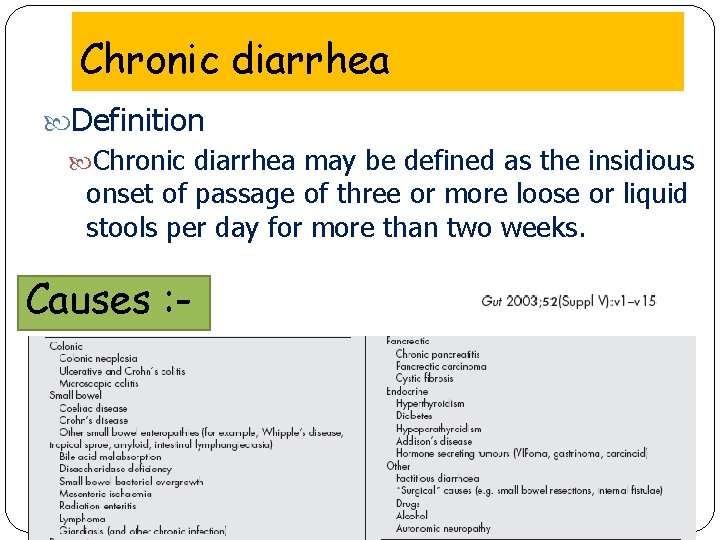
Chronic diarrhea Definition Chronic diarrhea may be defined as the insidious onset of passage of three or more loose or liquid stools per day for more than two weeks. Causes : -
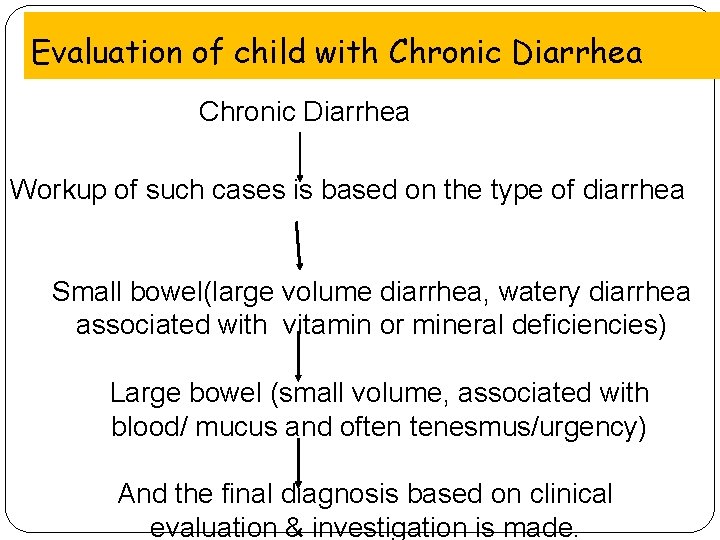
Evaluation of child with Chronic Diarrhea Workup of such cases is based on the type of diarrhea Small bowel(large volume diarrhea, watery diarrhea associated with vitamin or mineral deficiencies) Large bowel (small volume, associated with blood/ mucus and often tenesmus/urgency) And the final diagnosis based on clinical evaluation & investigation is made.
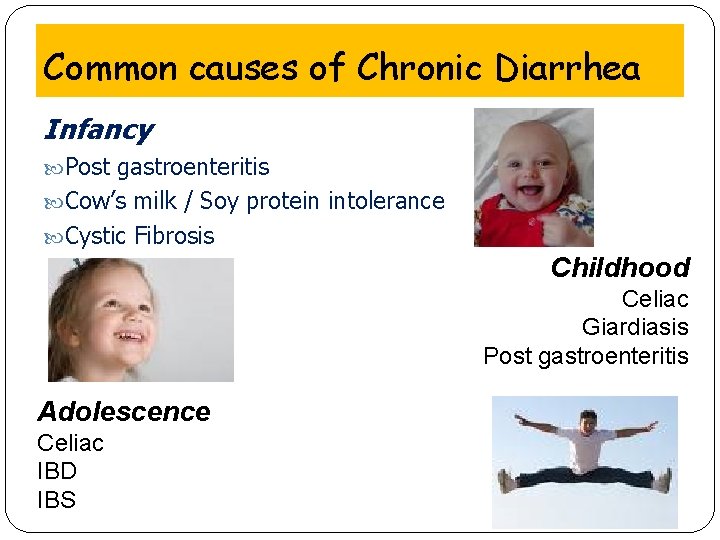
Common causes of Chronic Diarrhea Infancy Post gastroenteritis Cow’s milk / Soy protein intolerance Cystic Fibrosis Childhood Celiac Giardiasis Post gastroenteritis Adolescence Celiac IBD IBS
AN : N E R D H L I T H NOR C N IN I A E M H U R R R T A C I E D P S C ; 4 I L 1 0 N ICA 2 . O r t R ia d e CH OLOG P p m. e t 1 I n 4 T o 7 C E 3 J : A ) t I In 1(1 D N I Authors Dr Shrish Bhatnagar, Dr Romesh Gauttam Received DR J. R. SRIVASTAVA AWARD at UP Pedicon 2011
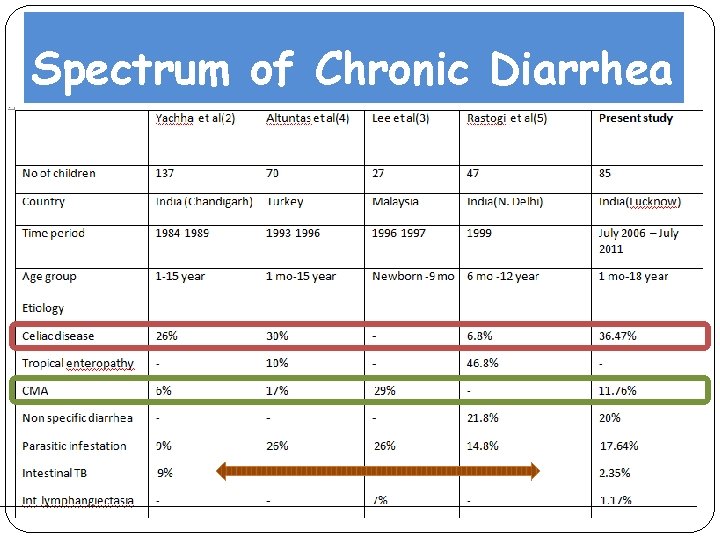
Spectrum of Chronic Diarrhea
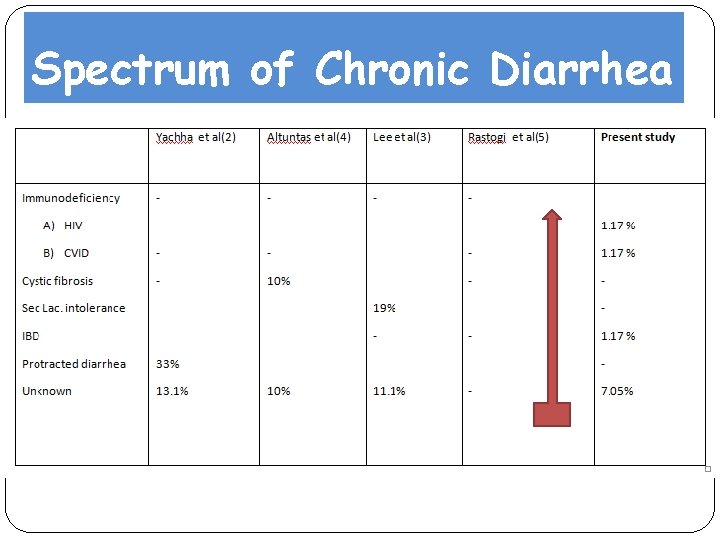
Spectrum of Chronic Diarrhea
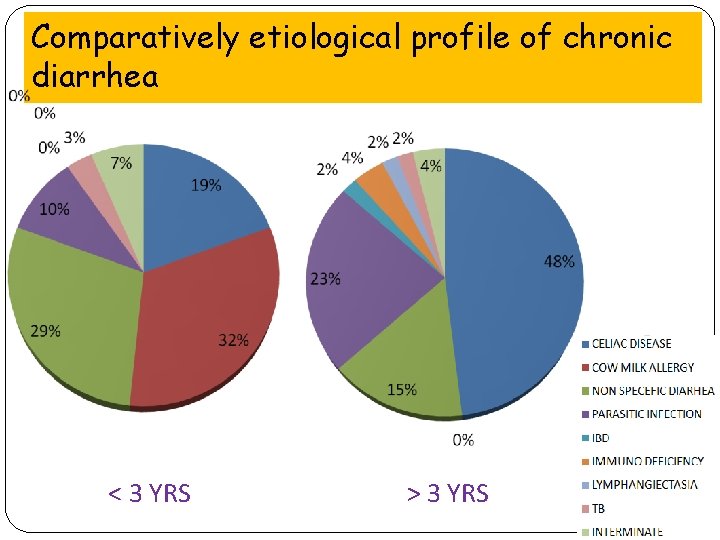
Comparatively etiological profile of chronic diarrhea < 3 YRS > 3 YRS
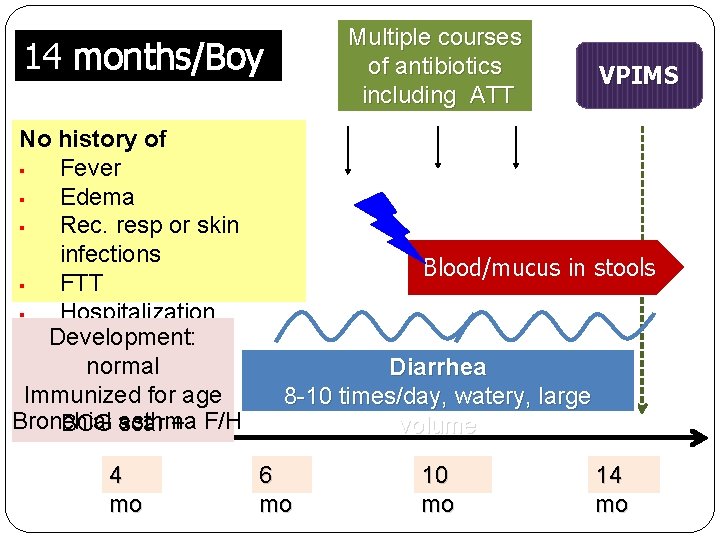
Multiple courses of antibiotics including ATT 14 months/Boy No history of § Fever § Edema § Rec. resp or skin infections § FTT § Hospitalization Development: normal Immunized for age Bronchial BCG asthma scar + F/H 4 mo VPIMS Blood/mucus in stools Diarrhea 8 -10 times/day, watery, large volume 6 mo 10 mo 14 mo
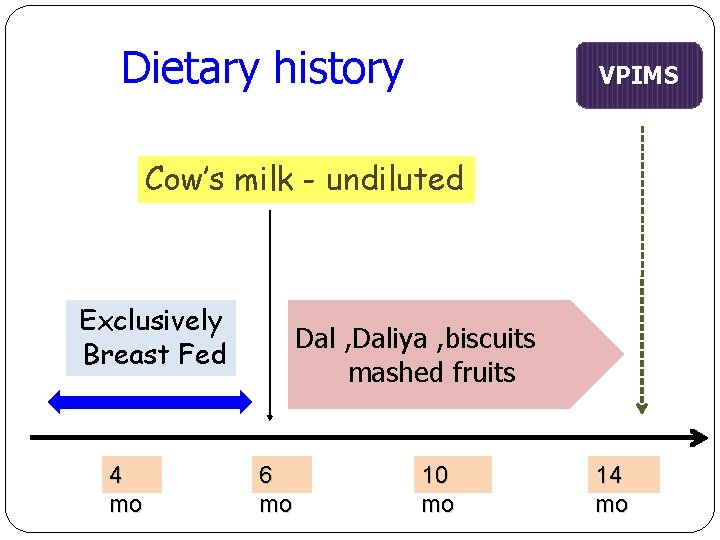
Dietary history VPIMS Cow’s milk - undiluted Exclusively Breast Fed 4 mo Dal , Daliya , biscuits mashed fruits 6 mo 10 mo 14 mo
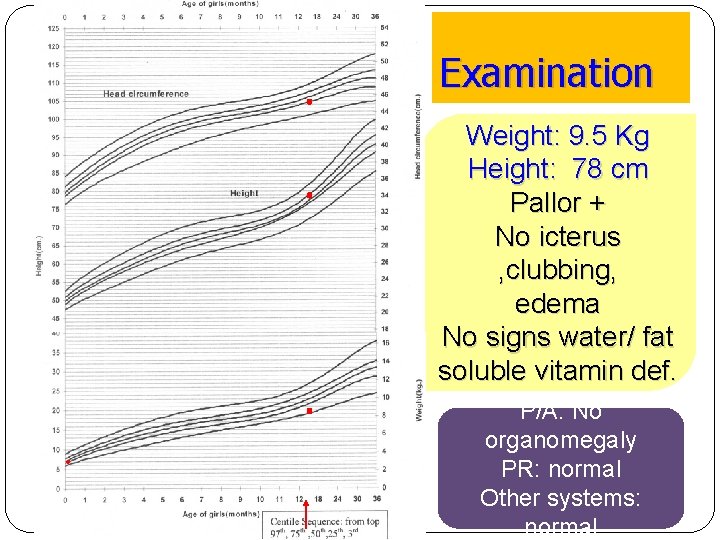
Examination Weight: 9. 5 Kg Height: 78 cm Pallor + No icterus , clubbing, edema No signs water/ fat soluble vitamin def. P/A: No organomegaly PR: normal Other systems: normal
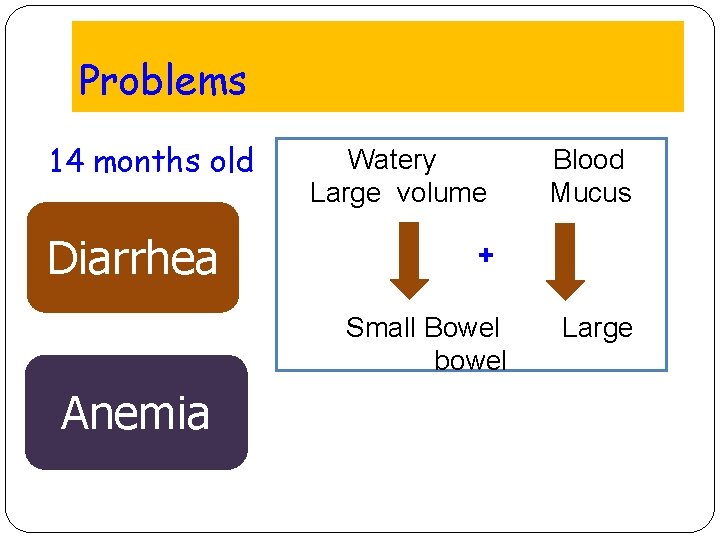
Problems 14 months old Diarrhea Watery Large volume + Small Bowel bowel Anemia Blood Mucus Large
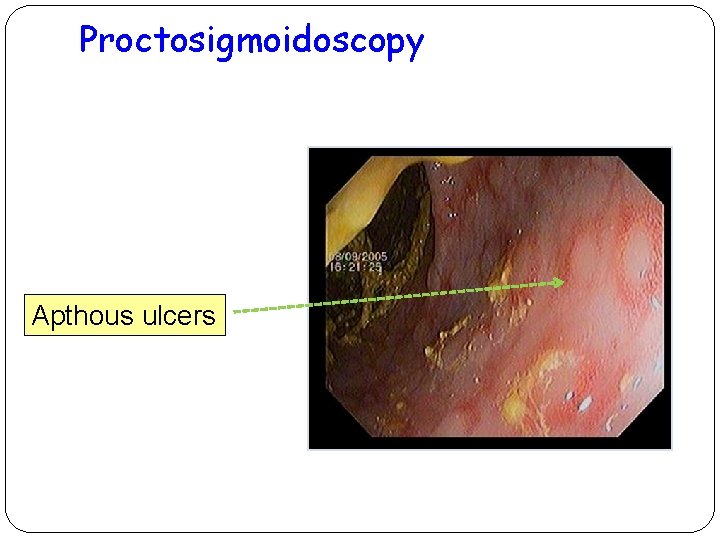
Proctosigmoidoscopy Apthous ulcers
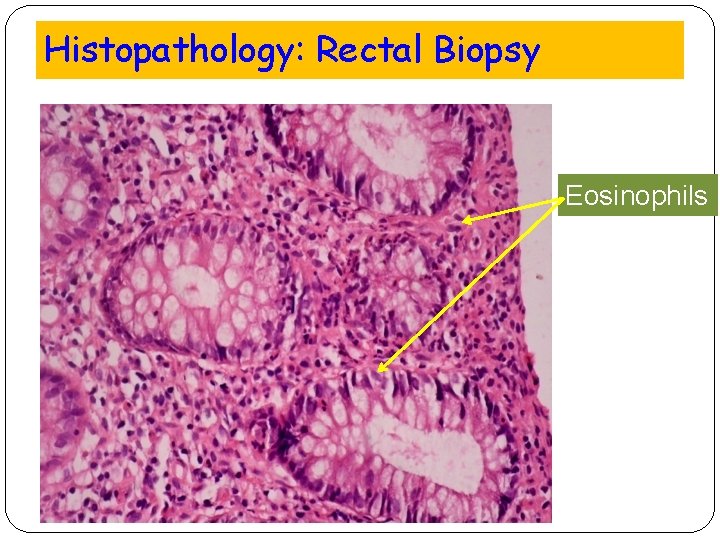
Histopathology: Rectal Biopsy Eosinophils
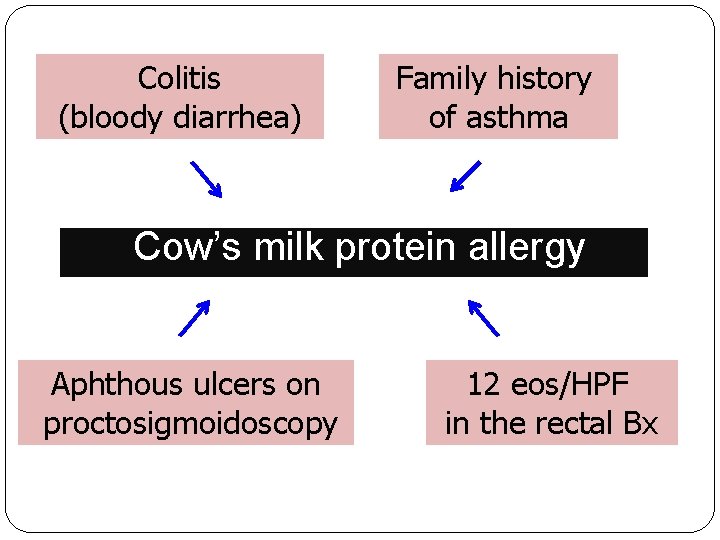
Colitis (bloody diarrhea) Family history of asthma Cow’s milk protein allergy Aphthous ulcers on proctosigmoidoscopy 12 eos/HPF in the rectal Bx
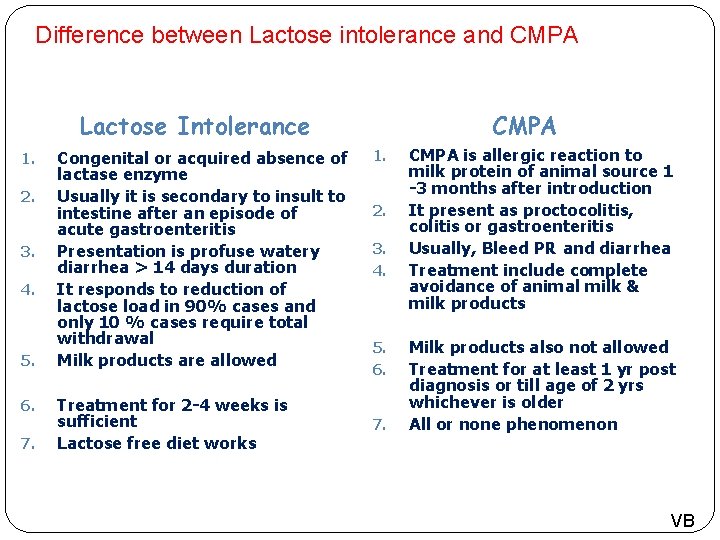
Difference between Lactose intolerance and CMPA Lactose Intolerance 1. 2. 3. 4. 5. 6. 7. Congenital or acquired absence of lactase enzyme Usually it is secondary to insult to intestine after an episode of acute gastroenteritis Presentation is profuse watery diarrhea > 14 days duration It responds to reduction of lactose load in 90% cases and only 10 % cases require total withdrawal Milk products are allowed Treatment for 2 -4 weeks is sufficient Lactose free diet works CMPA 1. 2. 3. 4. 5. 6. 7. CMPA is allergic reaction to milk protein of animal source 1 -3 months after introduction It present as proctocolitis, colitis or gastroenteritis Usually, Bleed PR and diarrhea Treatment include complete avoidance of animal milk & milk products Milk products also not allowed Treatment for at least 1 yr post diagnosis or till age of 2 yrs whichever is older All or none phenomenon VB
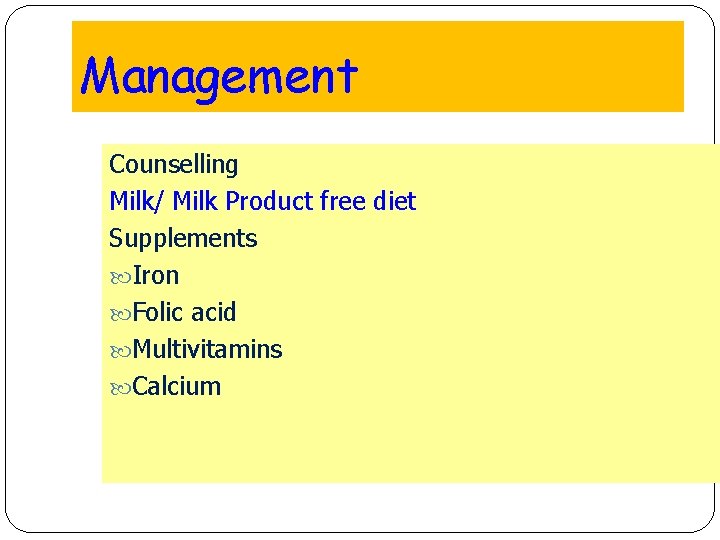
Management Counselling Milk/ Milk Product free diet Supplements Iron Folic acid Multivitamins Calcium
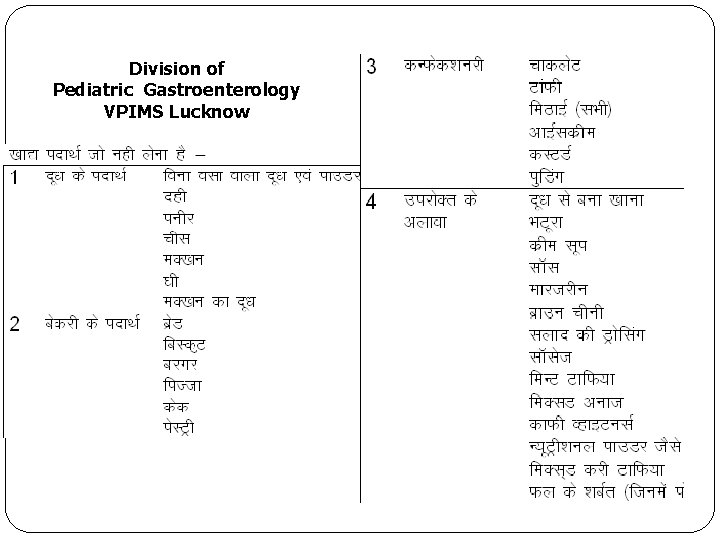
Division of Pediatric Gastroenterology VPIMS Lucknow
Case presentation
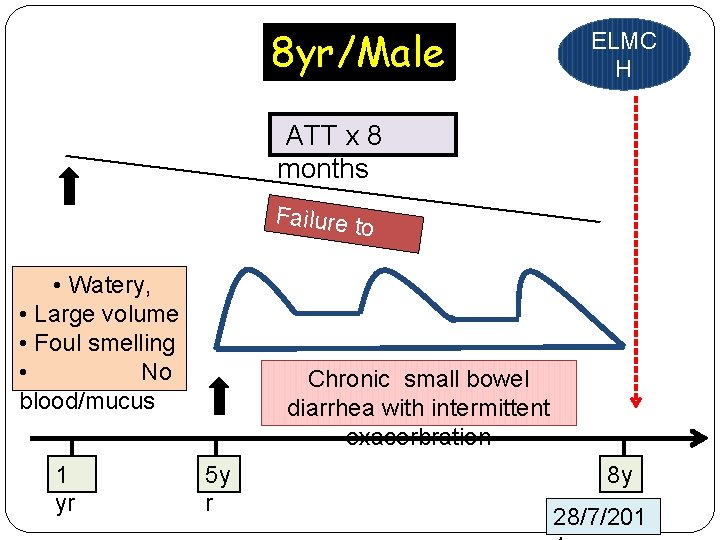
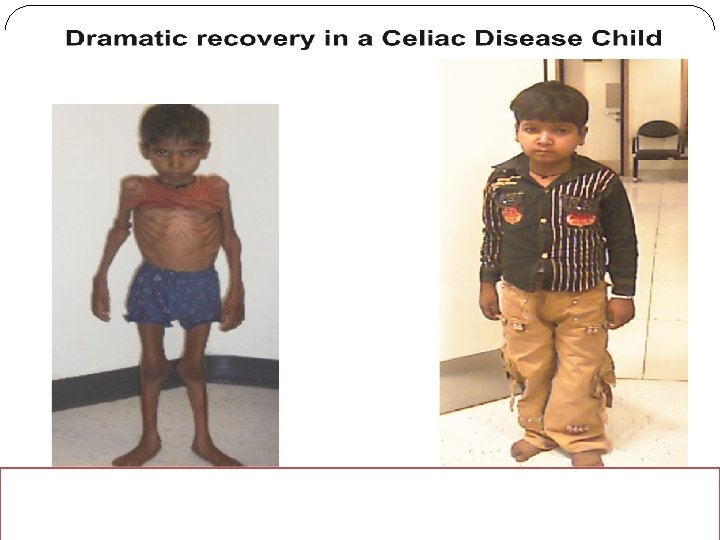
8 yr/Male ELMC H ATT x 8 months Failure t o thrive • Watery, • Large volume • Foul smelling • No blood/mucus 1 yr Chronic small bowel diarrhea with intermittent exacerbration 5 y r 8 y r 28/7/201
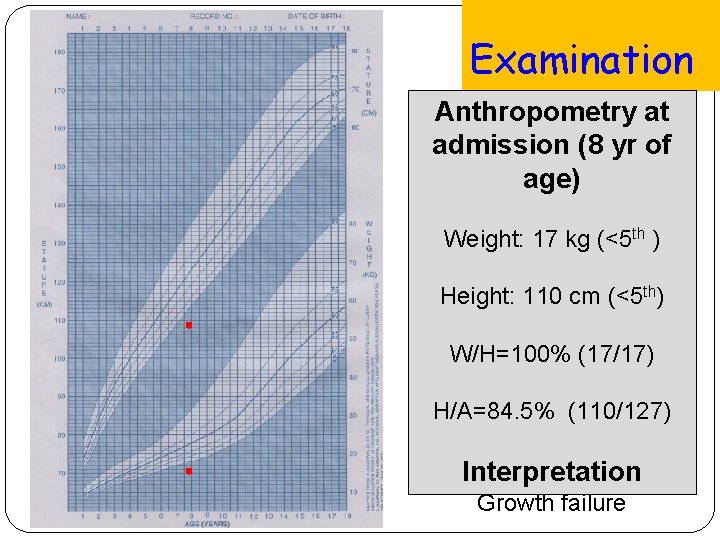
Examination Anthropometry at admission (8 yr of age) Weight: 17 kg (<5 th ) Height: 110 cm (<5 th) W/H=100% (17/17) H/A=84. 5% (110/127) Interpretation Growth failure
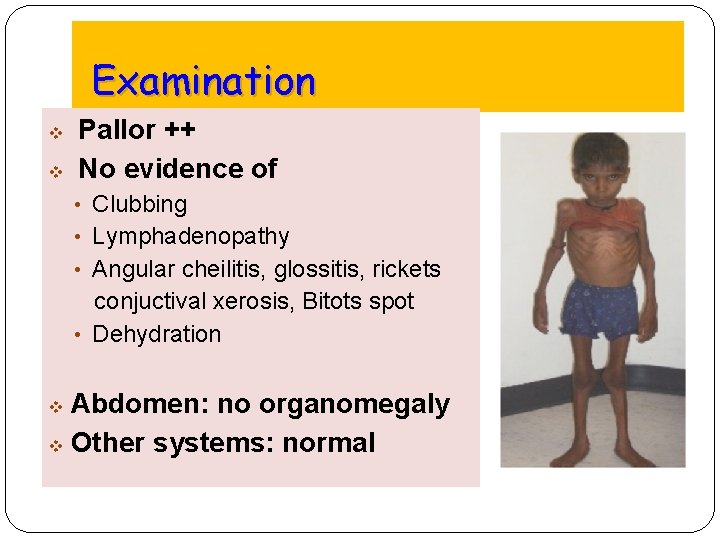
Examination v v Pallor ++ No evidence of • Clubbing • Lymphadenopathy • Angular cheilitis, glossitis, rickets conjuctival xerosis, Bitots spot • Dehydration Abdomen: no organomegaly v Other systems: normal v
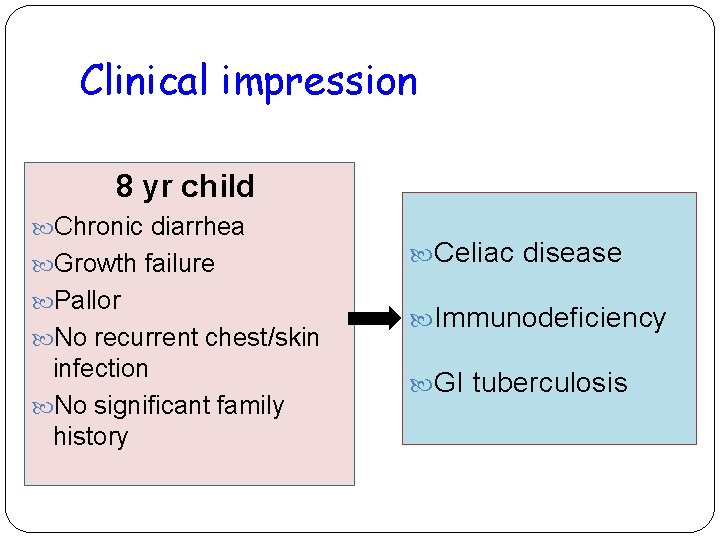
Clinical impression 8 yr child Chronic diarrhea Growth failure Pallor No recurrent chest/skin infection No significant family history Celiac disease Immunodeficiency GI tuberculosis
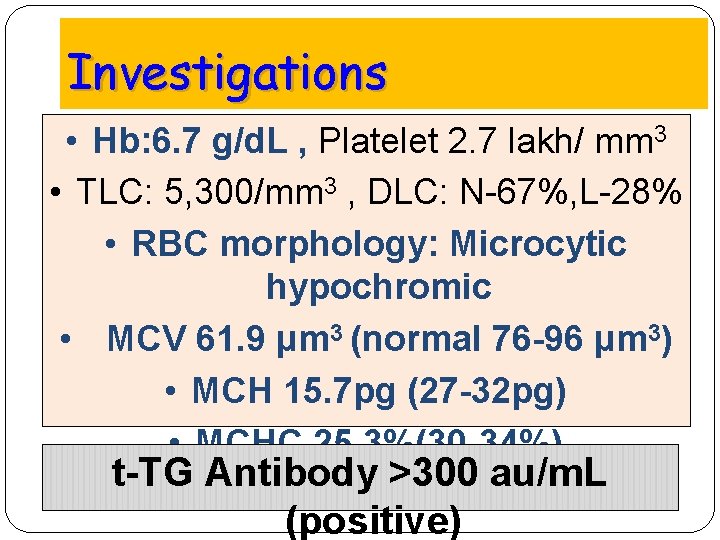
Investigations • Hb: 6. 7 g/d. L , Platelet 2. 7 lakh/ mm 3 • TLC: 5, 300/mm 3 , DLC: N-67%, L-28% • RBC morphology: Microcytic hypochromic • MCV 61. 9 μm 3 (normal 76 -96 μm 3) • MCH 15. 7 pg (27 -32 pg) • MCHC 25. 3%(30 -34%) t-TG Antibody >300 au/m. L (positive)
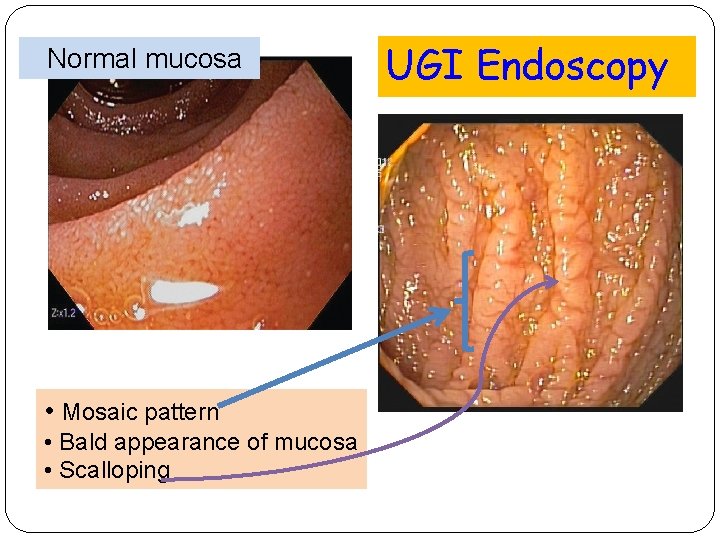
Normal mucosa • Mosaic pattern • Bald appearance of mucosa • Scalloping UGI Endoscopy
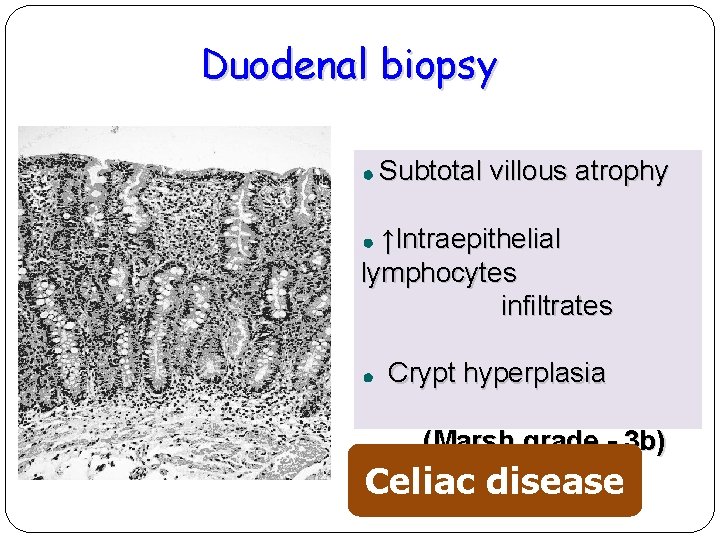
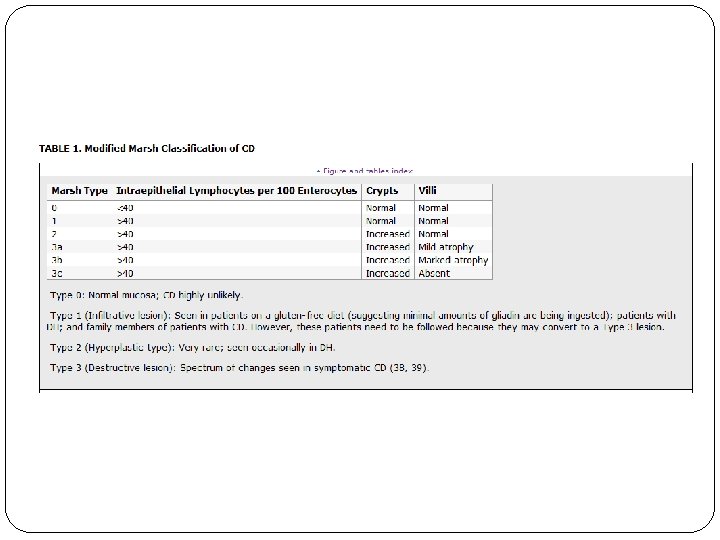
Duodenal biopsy Subtotal villous atrophy ↑Intraepithelial lymphocytes infiltrates Crypt hyperplasia (Marsh grade - 3 b) Celiac disease
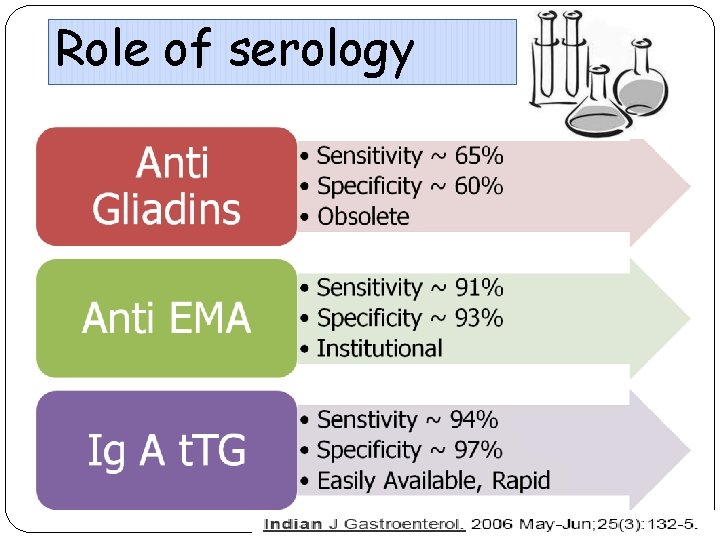
Role of serology
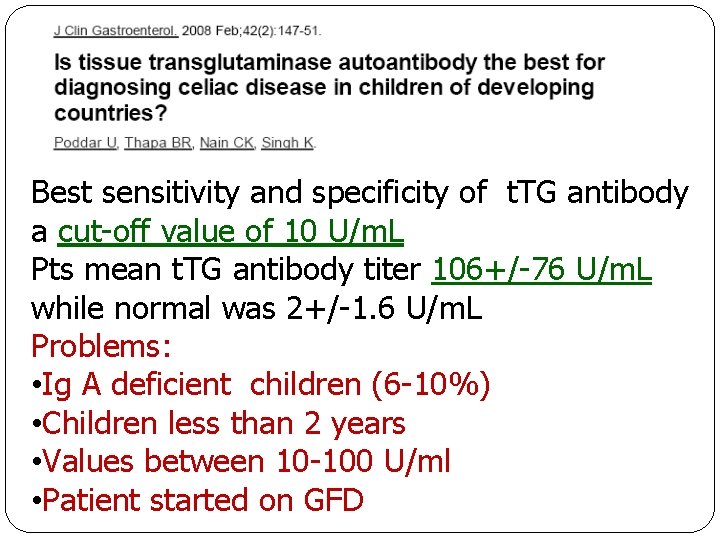
Best sensitivity and specificity of t. TG antibody a cut-off value of 10 U/m. L Pts mean t. TG antibody titer 106+/-76 U/m. L while normal was 2+/-1. 6 U/m. L Problems: • Ig A deficient children (6 -10%) • Children less than 2 years • Values between 10 -100 U/ml • Patient started on GFD
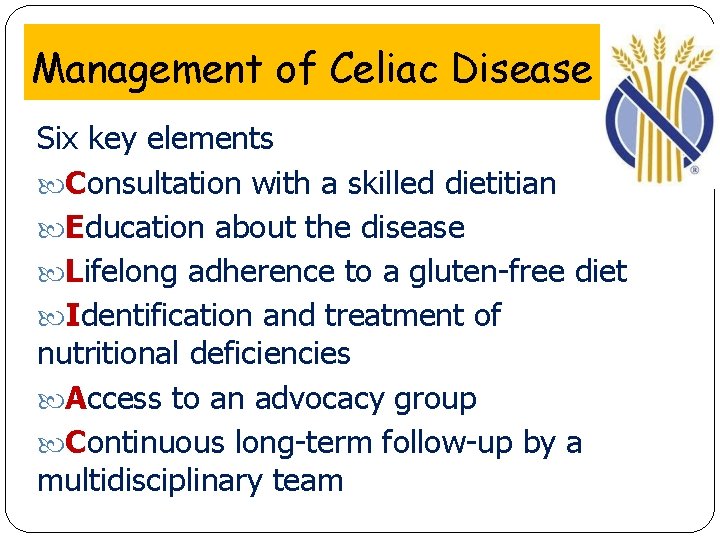
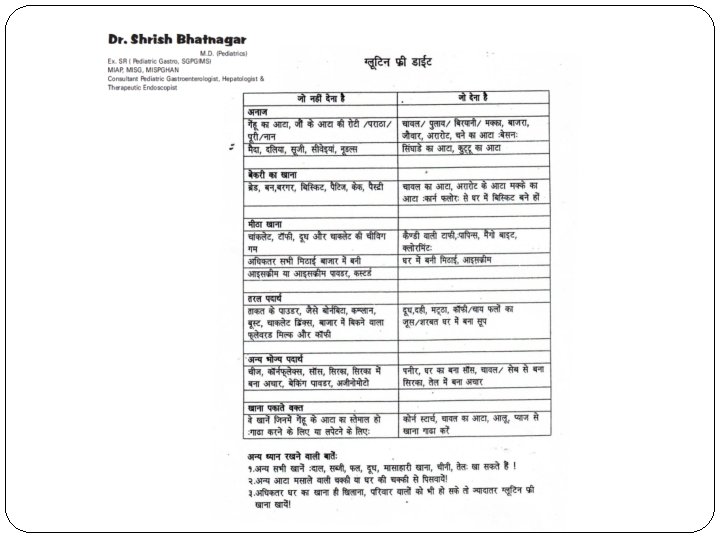
Management of Celiac Disease Six key elements Consultation with a skilled dietitian Education about the disease Lifelong adherence to a gluten-free diet Identification and treatment of nutritional deficiencies Access to an advocacy group Continuous long-term follow-up by a multidisciplinary team

Endoscopic appearances of other diagnosis Intestinal Lymphangiectasia Giardiasis Ulcerative Colitis HIV with candida
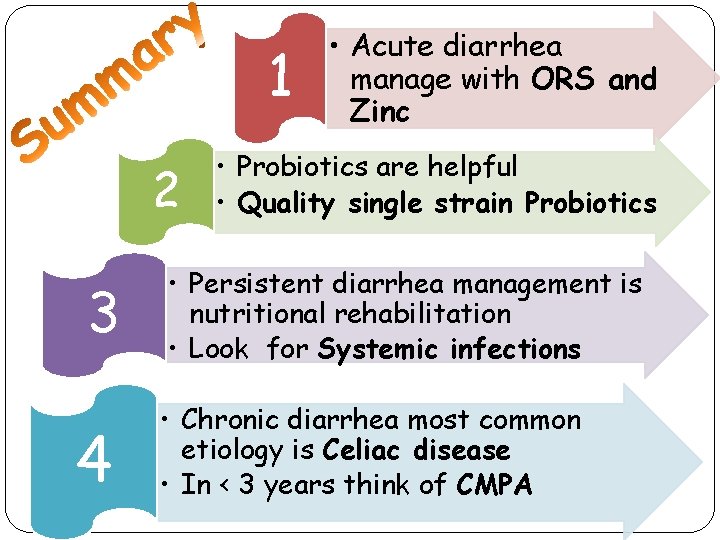
1 2 3 4 • Acute diarrhea manage with ORS and Zinc • Probiotics are helpful • Quality single strain Probiotics • Persistent diarrhea management is nutritional rehabilitation • Look for Systemic infections • Chronic diarrhea most common etiology is Celiac disease • In < 3 years think of CMPA

THANK YOU

Lucknow IAP and THANK YOU
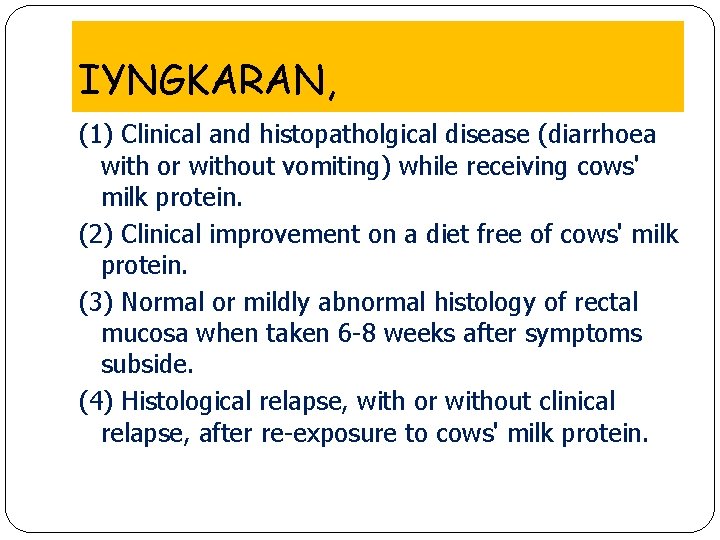
IYNGKARAN, (1) Clinical and histopatholgical disease (diarrhoea with or without vomiting) while receiving cows' milk protein. (2) Clinical improvement on a diet free of cows' milk protein. (3) Normal or mildly abnormal histology of rectal mucosa when taken 6 -8 weeks after symptoms subside. (4) Histological relapse, with or without clinical relapse, after re-exposure to cows' milk protein.
- Slides: 80