
DIALOGUE STRATEGIES DIALOGUE STRATEGIES HELP STUDENTS communicate their

- Slides: 12
DIALOGUE STRATEGIES
DIALOGUE STRATEGIES HELP STUDENTS: • communicate their thinking • listen to classmates’ ideas which can often give a different perspective • identify misconceptions • use the vocabulary and language of the discipline
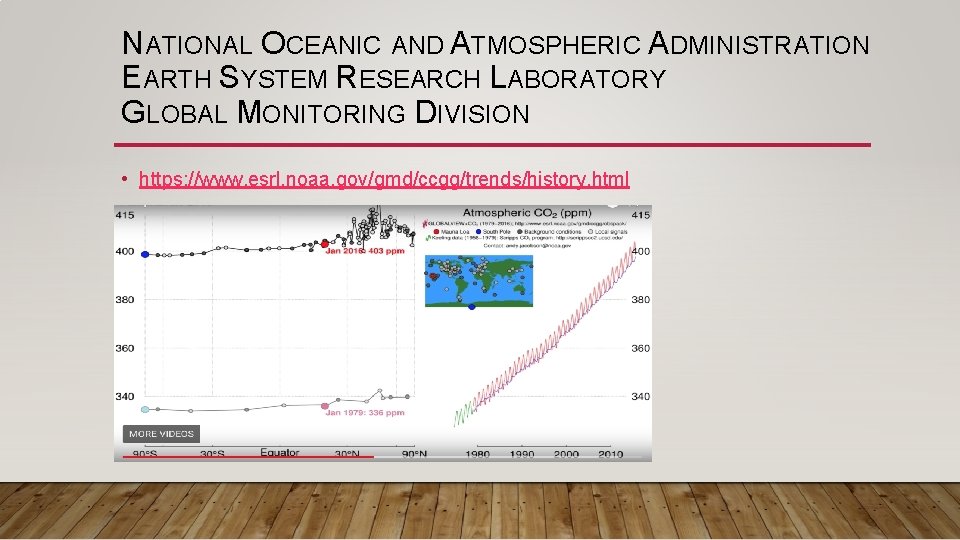
NATIONAL OCEANIC AND ATMOSPHERIC ADMINISTRATION EARTH SYSTEM RESEARCH LABORATORY GLOBAL MONITORING DIVISION • https: //www. esrl. noaa. gov/gmd/ccgg/trends/history. html
THINK-PAIR-SHARE • Think- identify any patterns that seem important, that a theory would need to be able to explain (30 sec) • Pair- talk with your neighbor about the patterns and trends you found (1 min) • Share- then we will discuss the patterns as a class (1 min)
WHY THINK-PAIR-SHARE WORKS • Think • Pair • Share
USE DIALOGUE STRATEGIES WHEN YOU WANT STUDENTS TO: • build on prior knowledge • create hypotheses, brainstorm • process observation/reading • construct argument with evidence /modify thinking
CHALLENGES OF DIALOGUE STRATEGIES • Time • Class size • Student engagement • Complexity of the data • Good intro activities/prompts
PAIRED VERBAL FLUENCY • Students get in pairs. One is Student A and one is Student B. • The instructor gives the prompt/data/topic. • The students take turns speaking and listening in 3 rounds (20, 30, and 45 seconds). • End with a class discussion, writing assignment, i. Clicker quiz
THE SECRET TO LIVING LONGER SUSAN PINKER • https: //www. ted. com/talks/susan_pinker_the_secret_to_living_longer • What reduces our chances of dying? • What are the strongest predictors of long-life?
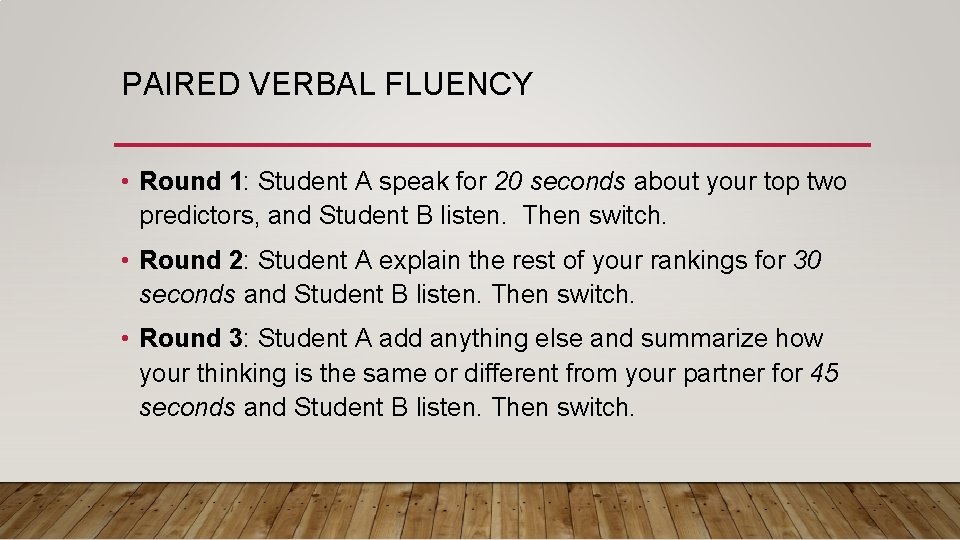
PAIRED VERBAL FLUENCY • Round 1: Student A speak for 20 seconds about your top two predictors, and Student B listen. Then switch. • Round 2: Student A explain the rest of your rankings for 30 seconds and Student B listen. Then switch. • Round 3: Student A add anything else and summarize how your thinking is the same or different from your partner for 45 seconds and Student B listen. Then switch.
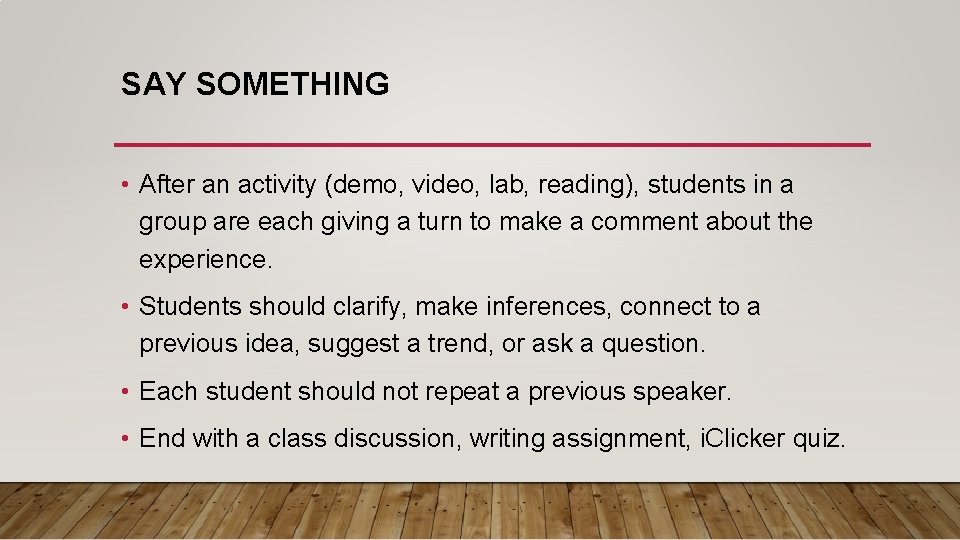
SAY SOMETHING • After an activity (demo, video, lab, reading), students in a group are each giving a turn to make a comment about the experience. • Students should clarify, make inferences, connect to a previous idea, suggest a trend, or ask a question. • Each student should not repeat a previous speaker. • End with a class discussion, writing assignment, i. Clicker quiz.
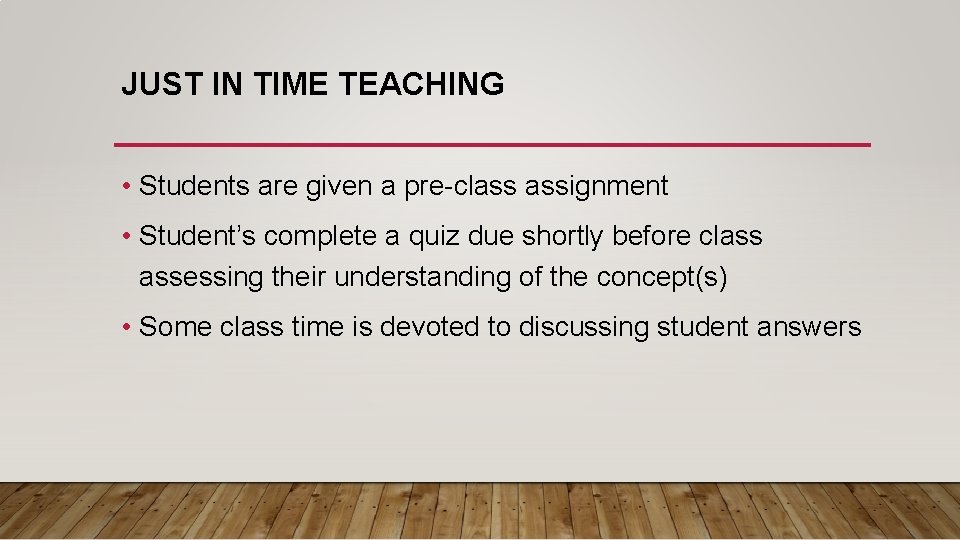
JUST IN TIME TEACHING • Students are given a pre-class assignment • Student’s complete a quiz due shortly before class assessing their understanding of the concept(s) • Some class time is devoted to discussing student answers