
Dialogue How and why to use it in
- Slides: 12
Dialogue How and why to use it in your writing
The What and the Why Dialogue – n. A written or spoken conversation between two or more people Adds detail to story Reveals info about characters Shows relationships Conveys emotional state Moves story forward
The When and the How Use, but don’t overuse Keep it brief Make it realistic People don’t always speak in perfect standard English Think words like gonna, kinda, etc. People exaggerate People don’t always say what they really feel Don’t just use to move plot
Punctuation & Capitalization Depends on location of dialogue in relation to other text Example 1: Text before dialogue Miss Baker said, “Absolutely!”
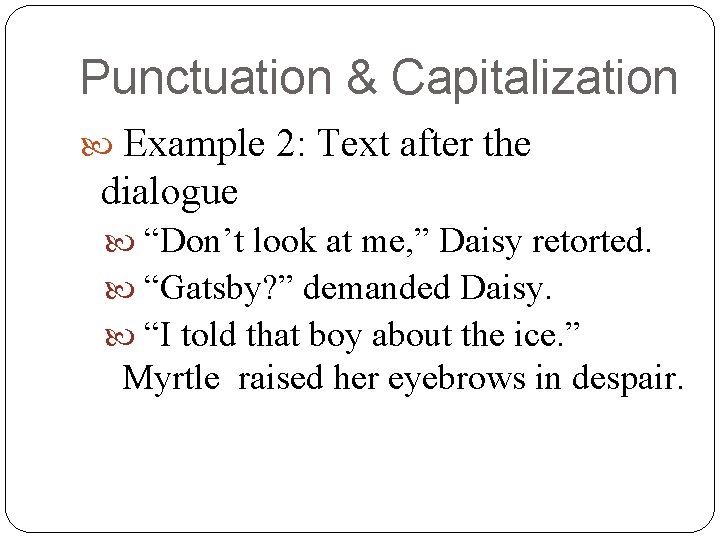
Punctuation & Capitalization Example 2: Text after the dialogue “Don’t look at me, ” Daisy retorted. “Gatsby? ” demanded Daisy. “I told that boy about the ice. ” Myrtle raised her eyebrows in despair.
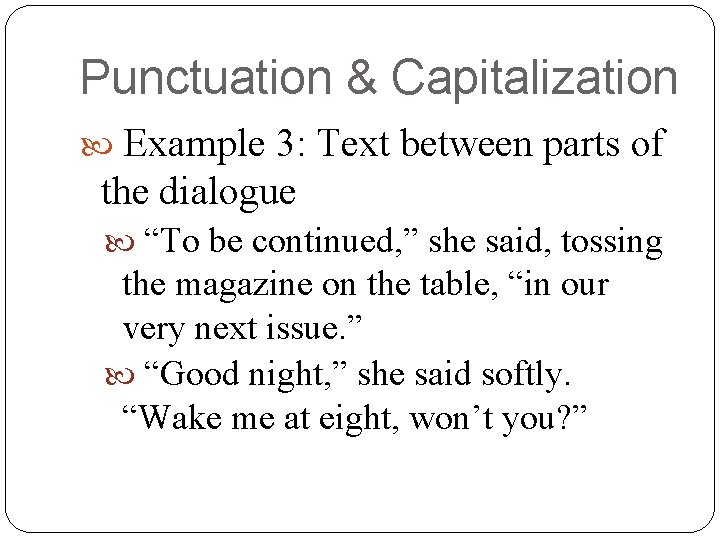
Punctuation & Capitalization Example 3: Text between parts of the dialogue “To be continued, ” she said, tossing the magazine on the table, “in our very next issue. ” “Good night, ” she said softly. “Wake me at eight, won’t you? ”
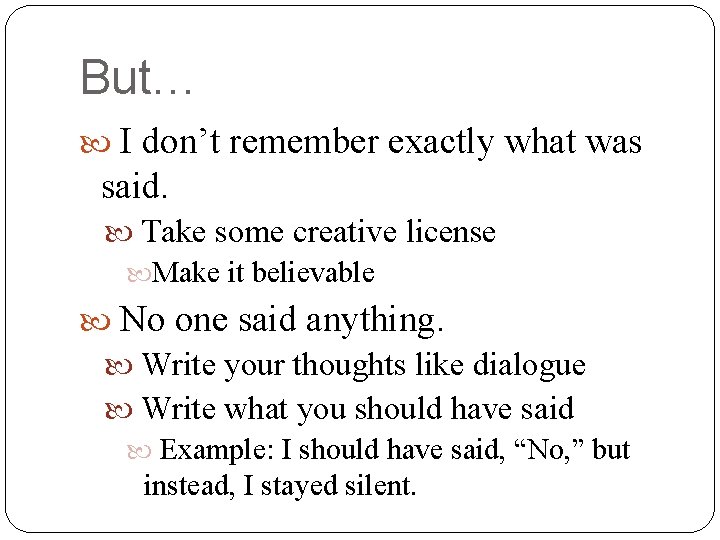
But… I don’t remember exactly what was said. Take some creative license Make it believable No one said anything. Write your thoughts like dialogue Write what you should have said Example: I should have said, “No, ” but instead, I stayed silent.
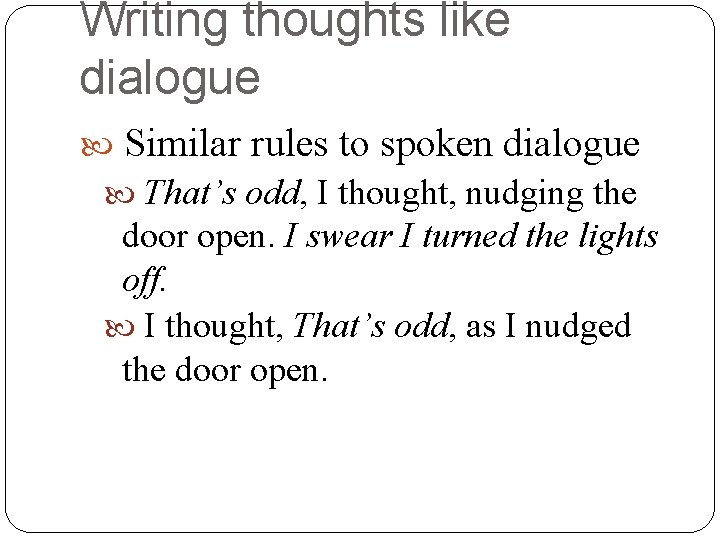
Writing thoughts like dialogue Similar rules to spoken dialogue That’s odd, I thought, nudging the door open. I swear I turned the lights off. I thought, That’s odd, as I nudged the door open.
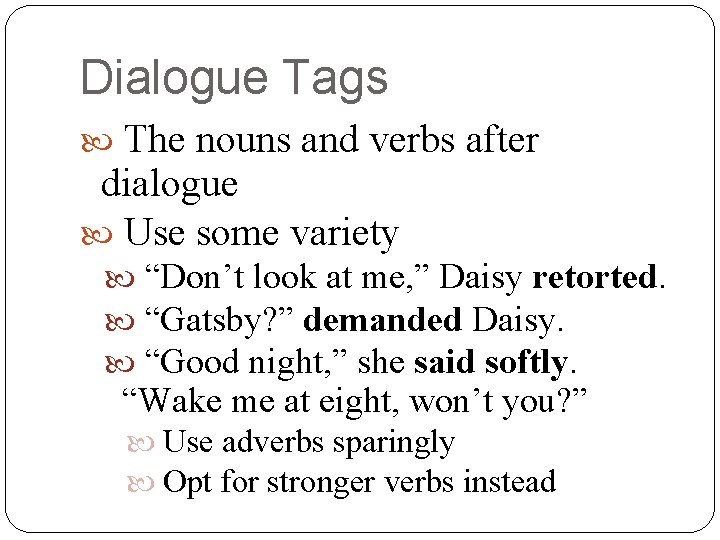
Dialogue Tags The nouns and verbs after dialogue Use some variety “Don’t look at me, ” Daisy retorted. “Gatsby? ” demanded Daisy. “Good night, ” she said softly. “Wake me at eight, won’t you? ” Use adverbs sparingly Opt for stronger verbs instead
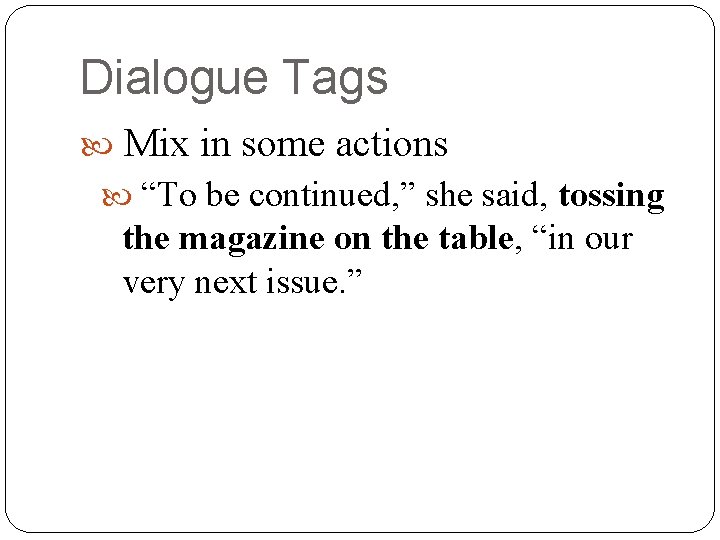
Dialogue Tags Mix in some actions “To be continued, ” she said, tossing the magazine on the table, “in our very next issue. ”
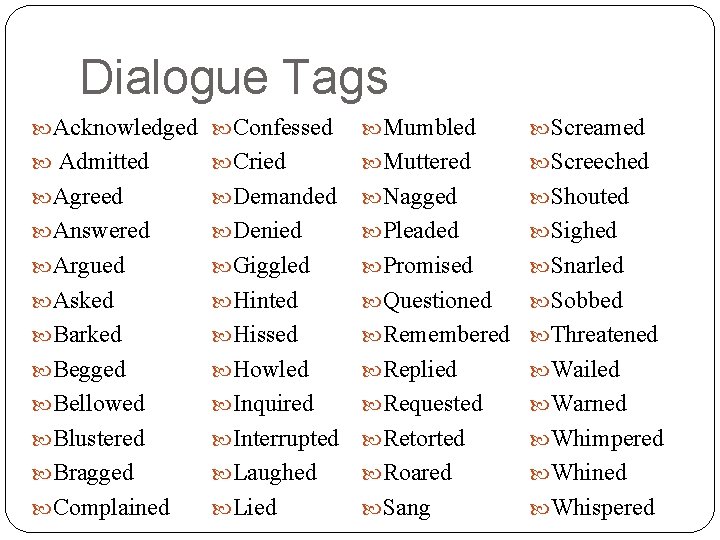
Dialogue Tags Acknowledged Confessed Mumbled Screamed Admitted Cried Muttered Screeched Agreed Demanded Nagged Shouted Answered Denied Pleaded Sighed Argued Giggled Promised Snarled Asked Hinted Questioned Sobbed Barked Hissed Remembered Threatened Begged Howled Replied Wailed Bellowed Inquired Requested Warned Blustered Interrupted Retorted Whimpered Bragged Laughed Roared Whined Complained Lied Sang Whispered
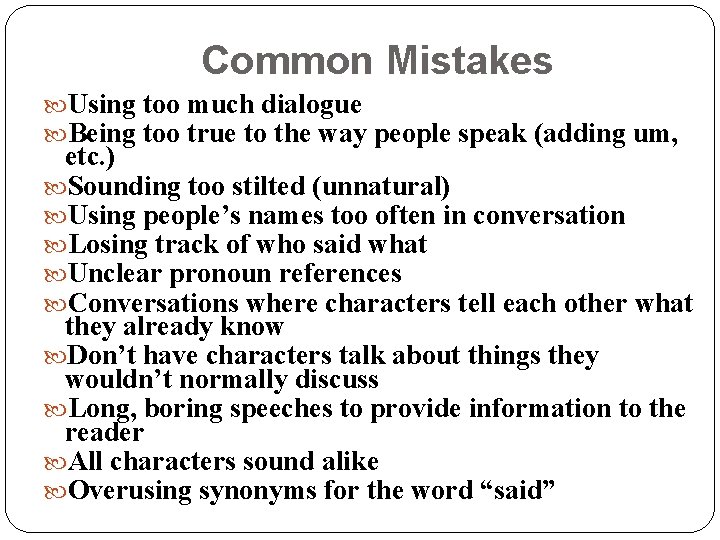
Common Mistakes Using too much dialogue Being too true to the way people speak (adding um, etc. ) Sounding too stilted (unnatural) Using people’s names too often in conversation Losing track of who said what Unclear pronoun references Conversations where characters tell each other what they already know Don’t have characters talk about things they wouldn’t normally discuss Long, boring speeches to provide information to the reader All characters sound alike Overusing synonyms for the word “said”