
DIALECTICAL BEHAVIORAL THERAPY DBT JFKU Mark Purcell Psy
DIALECTICAL BEHAVIORAL THERAPY (DBT) JFKU Mark Purcell, Psy. D & Claire Coyne, LMFT
Different Types of Emotions C I T A T S E E V O L c i Joy E n mbar a P assed Pain Confu sed
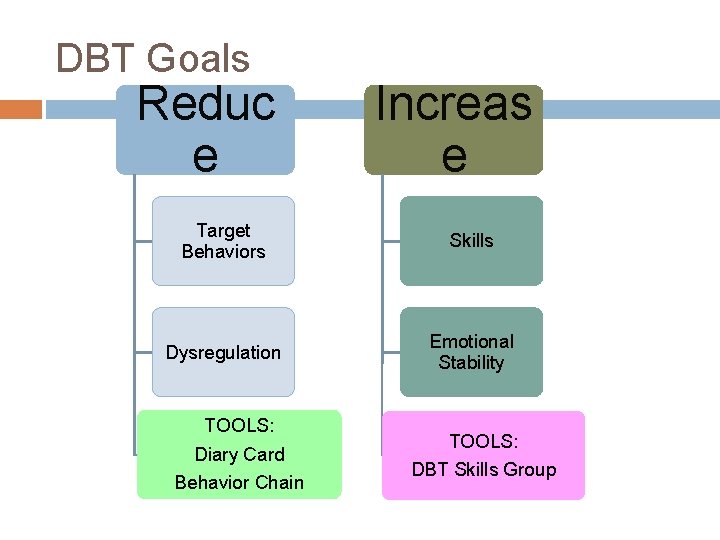
DBT Goals Reduc e Increas e Target Behaviors Skills Dysregulation Emotional Stability TOOLS: Diary Card Behavior Chain TOOLS: DBT Skills Group
RADICAL ACCEPTANCE 4 Grant me the serenity to ACCEPT the things I cannot change, Courage to CHANGE the things I can, And WISDOM to know the difference.
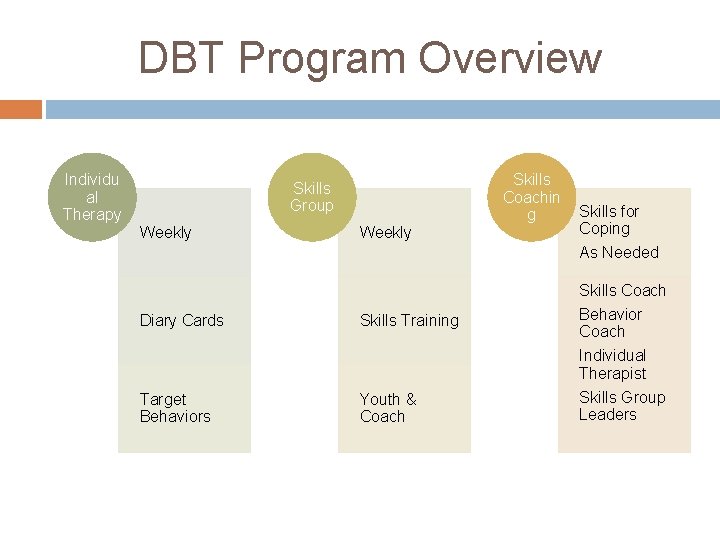
DBT Program Overview Individu al Therapy Skills Coachin g Skills Group Weekly Skills for Coping As Needed Skills Coach Diary Cards Skills Training Target Behaviors Youth & Coach Behavior Coach Individual Therapist Skills Group Leaders

Dialectics Finding Balance Dialectics Involves integrating seemingly opposing views Similar to Eastern Concepts of Non-Duality Use the word “And” instead of “But” One Set of Needs or Wants Opposing Needs or Wants Acceptance Change Trust Suspicion Dependence Independence Careful, Too Fearful Impulsive, Reckless Surrender Protect/Fight Focus on Self Focus on Others
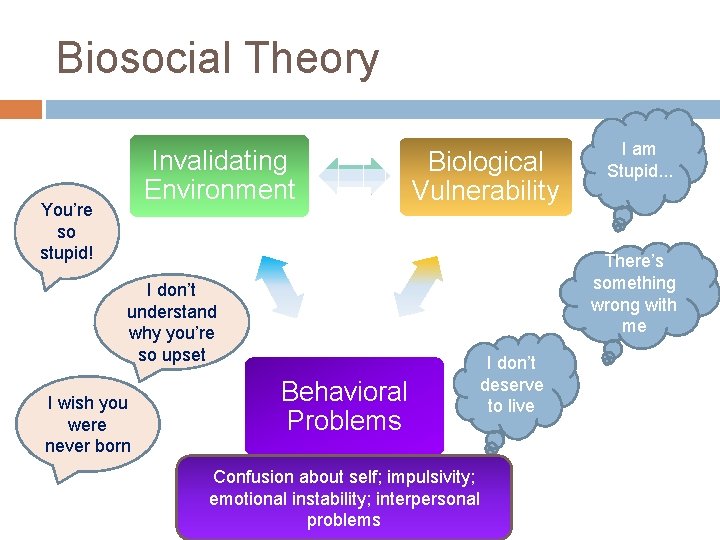
Biosocial Theory Invalidating Environment You’re so stupid! Biological Vulnerability There’s something wrong with me I don’t understand why you’re so upset I wish you were never born I am Stupid. . . Behavioral Problems Confusion about self; impulsivity; emotional instability; interpersonal problems I don’t deserve to live
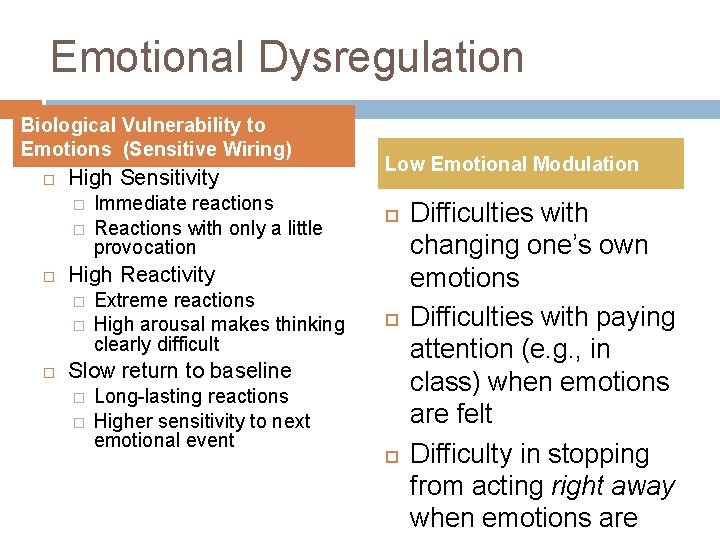
Emotional Dysregulation Biological Vulnerability to Emotions (Sensitive Wiring) High Sensitivity � � High Reactivity � � Immediate reactions Reactions with only a little provocation Low Emotional Modulation Extreme reactions High arousal makes thinking clearly difficult Slow return to baseline � � Long-lasting reactions Higher sensitivity to next emotional event Difficulties with changing one’s own emotions Difficulties with paying attention (e. g. , in class) when emotions are felt Difficulty in stopping from acting right away when emotions are

Consequences of invalidating Environment By not validating feelings, the environment does not teach the individual to: Label feelings Effectively regulate emotions Trust feelings By making problem solving seem easier than it is, the environment does not teach the individual to: Effectively tolerate stress Form realistic goals and expectations When communication of anger or sadness is punished and/or when only intense anger or sadness are responded to, the environment teaches the individual to: Vary between having no emotions and having extreme emotions.
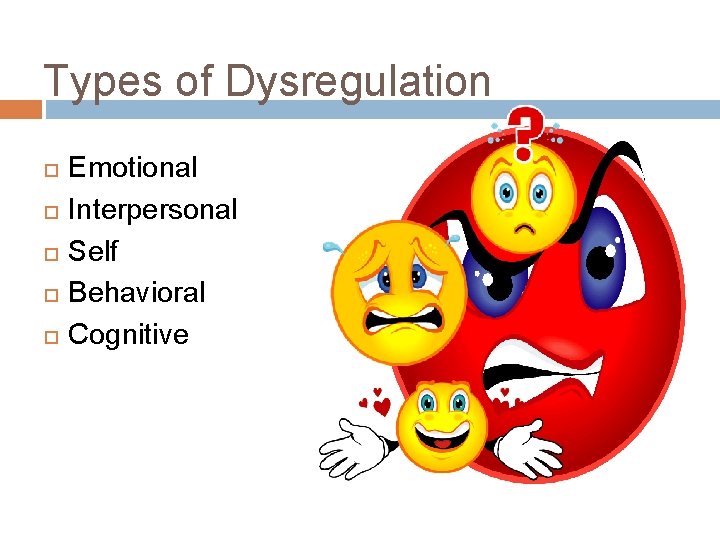
Types of Dysregulation Emotional Interpersonal Self Behavioral Cognitive
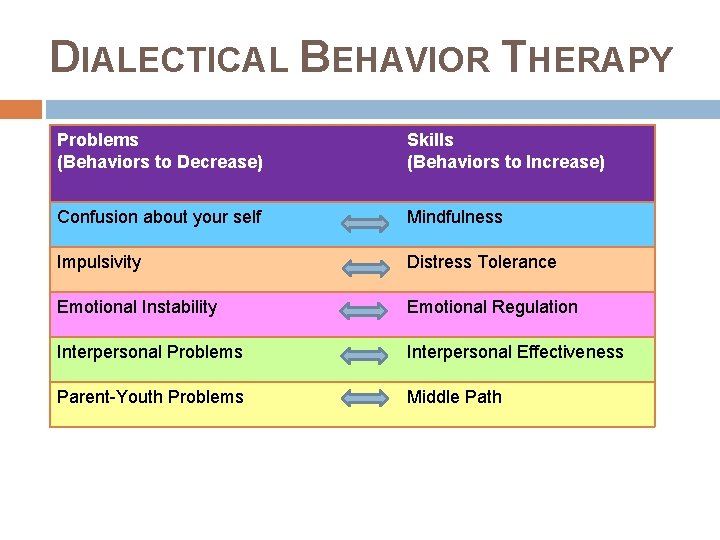
DIALECTICAL BEHAVIOR THERAPY Problems (Behaviors to Decrease) Skills (Behaviors to Increase) Confusion about your self Mindfulness Impulsivity Distress Tolerance Emotional Instability Emotional Regulation Interpersonal Problems Interpersonal Effectiveness Parent-Youth Problems Middle Path
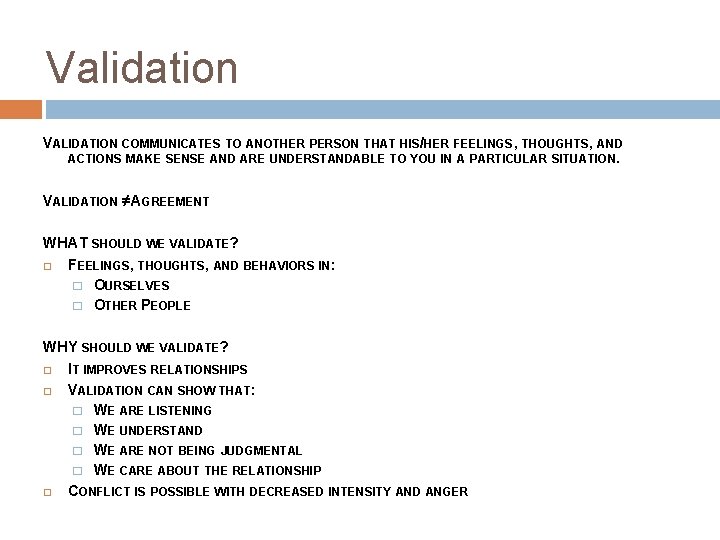
Validation VALIDATION COMMUNICATES TO ANOTHER PERSON THAT HIS/HER FEELINGS, THOUGHTS, AND ACTIONS MAKE SENSE AND ARE UNDERSTANDABLE TO YOU IN A PARTICULAR SITUATION. VALIDATION ≠ AGREEMENT WHAT SHOULD WE VALIDATE? FEELINGS, THOUGHTS, AND BEHAVIORS IN: � OURSELVES � OTHER PEOPLE WHY SHOULD WE VALIDATE? IT IMPROVES RELATIONSHIPS VALIDATION CAN SHOW THAT: � WE ARE LISTENING � WE UNDERSTAND � WE ARE NOT BEING JUDGMENTAL � WE CARE ABOUT THE RELATIONSHIP CONFLICT IS POSSIBLE WITH DECREASED INTENSITY AND ANGER
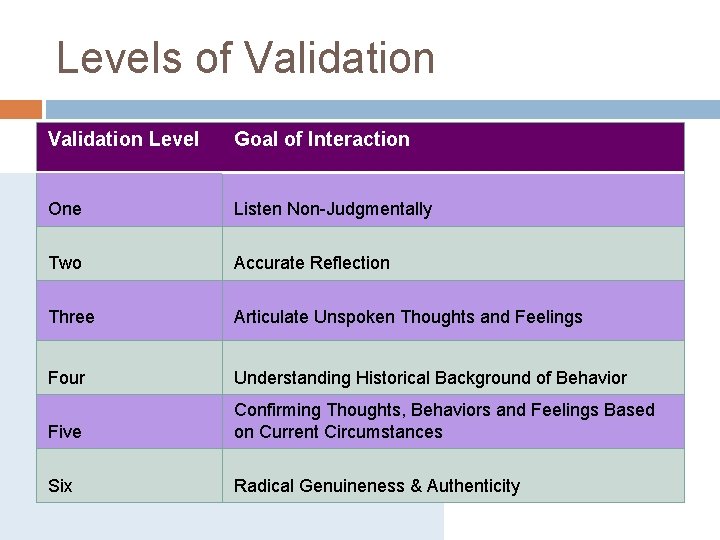
Levels of Validation Level Goal of Interaction One Listen Non-Judgmentally Two Accurate Reflection Three Articulate Unspoken Thoughts and Feelings Four Understanding Historical Background of Behavior Five Confirming Thoughts, Behaviors and Feelings Based on Current Circumstances Six Radical Genuineness & Authenticity
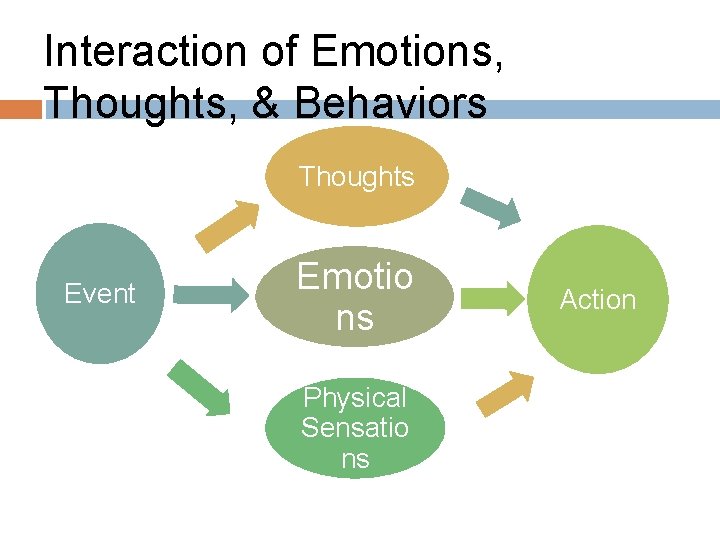
Interaction of Emotions, Thoughts, & Behaviors Thoughts Event Emotio ns Physical Sensatio ns Action
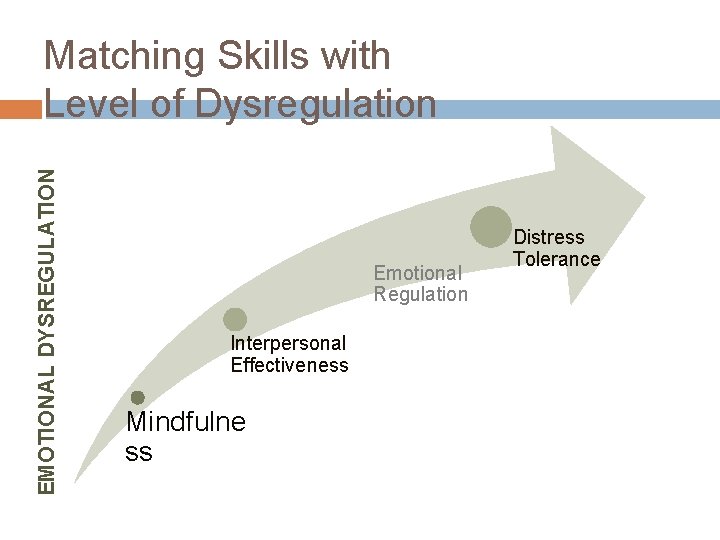
EMOTIONAL DYSREGULATION Matching Skills with Level of Dysregulation Emotional Regulation Interpersonal Effectiveness Mindfulne ss Distress Tolerance
Commitment Strategies Selling it, evaluating pros and cons Devil’s advocate Foot-in-the-door technique Freedom to choose in absence of alternatives Shaping
Orientation Strategies Therapeutic Alliance Connect problems to areas of dysregulation and skill development Define problems as targets Link long-term goals to targets Introduce biosocial theory Introduce tx format/characteristics Introduce diary cards Review agreements Use commitment strategies
Pre-Treatment Goals Agreement on Goals � Commitment to change � Initial targets of treatment Agreement to Recommended Tx. Client agreements Therapist agreements Agreement to Therapist-Client Relationship
Treatment Goals Level 1: Severe Behavioral Dyscontrol Level 2: Quiet Desperation Level 3: Problems in Living Level 4: Incompleteness
Stage 1 Targets Decrease � Life-threatening/high-risk behaviors � Therapy-interfering behaviors � Quality of life interfering behaviors � Increase behavioral skills Mindfullness, distress tolerance, interpersonal effectiveness, emotional regulation
Therapy-Interfering Behaviors Client Non-compliance Non-collaborative Non-attending Behaviors that interfere with other clients Pushing therapists’ limits Reduce therapist’s motivation to treat
Therapy-Interfering Behavior Therapist � Extreme acceptance or change � Extreme flexibility to rigidity � Extreme nurturing or withholding � Extreme vulnerability or irreverence Disrespectful Behaviors
Quality of Life Interfering Behaviors Incapacitating DSM Disorder High risk sexual behavior Extreme financial difficulties Criminal behaviors Severe interpersonal dysfuntion Unemployment, severe school problems Physical health, dysfunctional behaviors Severe housing difficulties
Adol. Secondary Targets Excessive leniency vs. authoritarian control Normalizing pathological behaviors vs. pathologizing normative behaviors Forcing autonomy vs. fostering dependence
Diary Cards Track and observe behaviors in real time Structure Session Spring board to Chain and Solution Analysis Integration of Skills
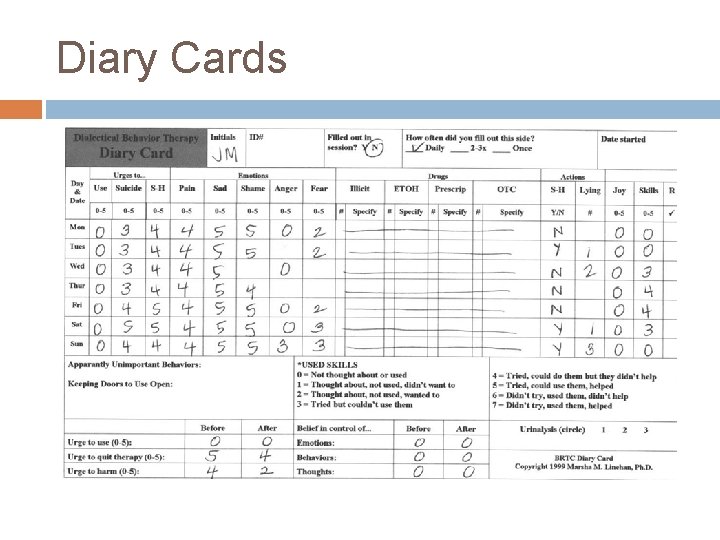
Diary Cards
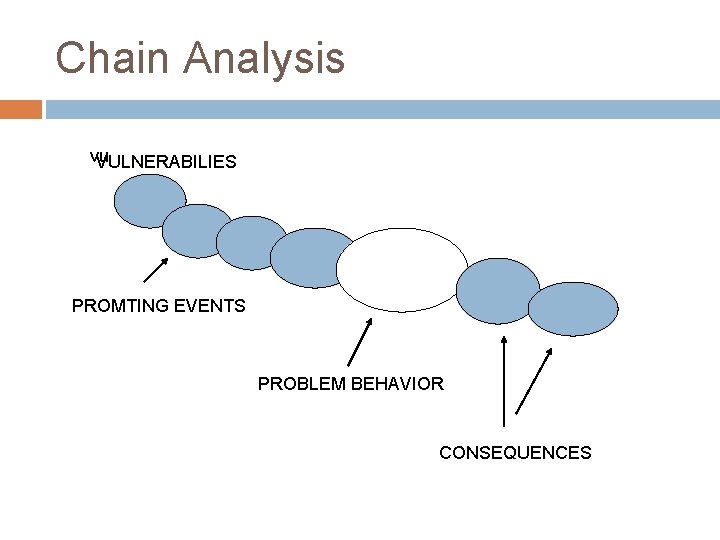
Chain Analysis vu VULNERABILIES PROMTING EVENTS PROBLEM BEHAVIOR CONSEQUENCES
Solution Analysis Identify goals, needs, desires Generate solutions Evaluate solutions Choose a solution to implement Troubleshoot solution
Responding to Problems Solve the problem Change emotional reaction to problem Tolerate/accept the problem Stay miserable
DBT Consultation Agreements To accept a dialectical philosophy To consult with patient on how to interact with otherapists Consistency of therapists is not expected Observe own limits, without judgment
Consultation Agreements Con’t Search for non-pejorative, empathic interpretation of client’s behavior All therapists are fallible
DBT Team Responsibilities Plan and trouble shoot treatment Monitoring adherence to DBT Progress towards DBT competence Consult to therapist Support to therapist and team members
- Slides: 32