
Dialectical Behavior Therapy DBT Philosophy and Applications DBT
Dialectical Behavior Therapy: (DBT) Philosophy and Applications
DBT Clientele Attributes • Unbalanced interpersonal relationships • Unstable self-image • Impulsivity • Recurring suicidal or self-harming behavior • Mood instability • Perfectionism • Attachment / abandonment issues • Borderline traits
DBT Incorporates: • Dialectics • Zen tradition • Cognitive behavioral therapy
DBT Philosophy Dialectical Worldview • Interconnectedness • Opposing forces. – Thesis – Antithesis – Synthesis – Thesis – Etc. • Walking the middle path. • Change is constant. – Example: Cutting relieves emotional pain versus health implications and dangers= Finding healthy ways to relieve emotional pain.
Choose the Dialectical Statement • People hate me / everyone thinks I am the coolest / some people enjoy being around me and others do not. • I can’t do anything right / I have strengths and things I am learning / I have it all figured out • There are things I like and dislike about others/ I hate them / They are so perfect
DBT Philosophy Zen Tradition • Mindfulness – – – Wide mind Non-judgmental stance Observing • Acceptance as a balance to change • Irreverence versus warmth • Radical acceptance – Example: Clients may not have caused all of their own problems, AND they have to solve them anyway.
DBT Filosophy Cognitive Behavioral Therapy • Thoughts, feelings, behaviors. • Eliminate negative secondary gains. – Example: Crisis call to therapist after selfharming, therapist will ensure 911 is called and call will end. • Behavior skills training. – Example of Dear Man
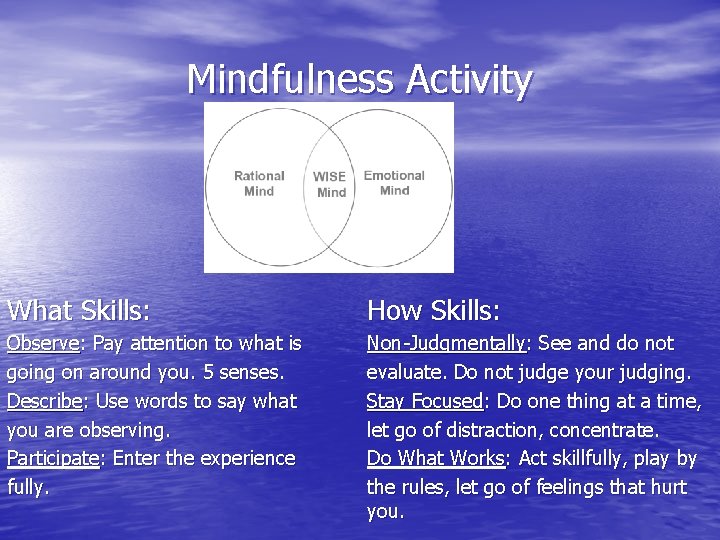
Mindfulness Activity What Skills: How Skills: Observe: Pay attention to what is going on around you. 5 senses. Describe: Use words to say what you are observing. Participate: Enter the experience fully. Non-Judgmentally: See and do not evaluate. Do not judge your judging. Stay Focused: Do one thing at a time, let go of distraction, concentrate. Do What Works: Act skillfully, play by the rules, let go of feelings that hurt you.
Biosocial Theory of BPD • Emotional vulnerability • Invalidating environments. • Biological issues. • One cannot ignore the 75% prevalence of sexual abuse among those diagnosed with BPD.
DBT Therapy Assumptions • Clients are doing the best they can. • Clients want to improve. • Clients need to do better, try harder, and be more • • motivated to change. Clients must learn new behaviors in all relevant contexts. Clients cannot fail in DBT. Clients may not have caused all their problems, and they have to solve them anyway. The lives of suicidal BPD clients are unbearable as they are currently being lived.
Modes of DBT Individual Therapy • Individual therapist is main contact. • Commitment to program and safety • Eliminate life threatening and therapy-interfering • behaviors. Improve quality of life. – PTSD treatment, application of skills, and self concept development. – Processing is to take place in individual therapy.
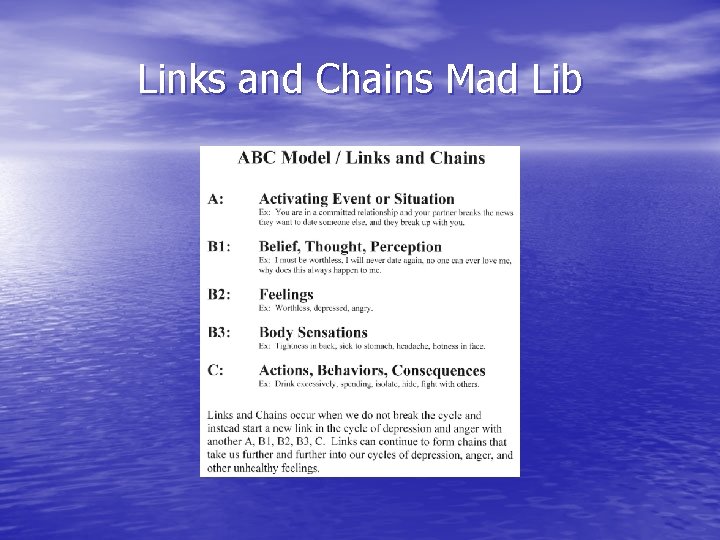
Links and Chains Mad Lib
Modes of DBT Group Skills Training In parallel with individual therapy – skills focus. • Core mindfulness • Interpersonal effectiveness • Emotional regulation • Distress tolerance • Walking the middle path
Interpersonal Effectiveness Activity • Validation Exercise
Modes of DBT Telephone Consultation • Individual therapist contact. • Support and assistance with skills before crisis. • Clear limits and boundaries.
Distress Tolerance Activities • Radical Acceptance • Ice • Pros and Cons of unhealthy behavior
Modes of DBT Therapist Consultation Meeting • Weekly meetings – – Team acquires skills Provides support Integrates DBT philosophy Plans treatment for clients.
Emotional Regulation Activity • Rope Challenge

DBT at Children’s Outpatient • 16 weeks of skills group. No more than 2 client • • • absences. Open ended with entry dates every 4 weeks. Mandatory guardian and client attendance. Staff supervision one hour weekly. YOQ monitoring. 2 hours of group and family/individual session weekly. Broadened client symptomology.
References • Linehan, M. (1993 a). Cognitive- behavioral treatment of borderline personality disorder. New York, NY: The Guilford Press • Linehan, M. (1993 b). Skills training manual for treating borderline personality disorder. New York, NY: The Guilford Press
- Slides: 20