
Diagrams PHYLUM MOLLUSCA Main Characteristics Muscular foot A

- Slides: 10
Diagrams PHYLUM MOLLUSCA
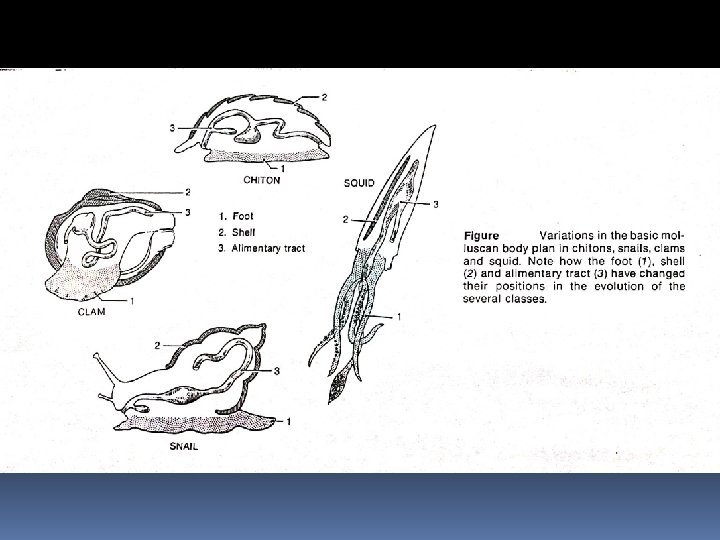
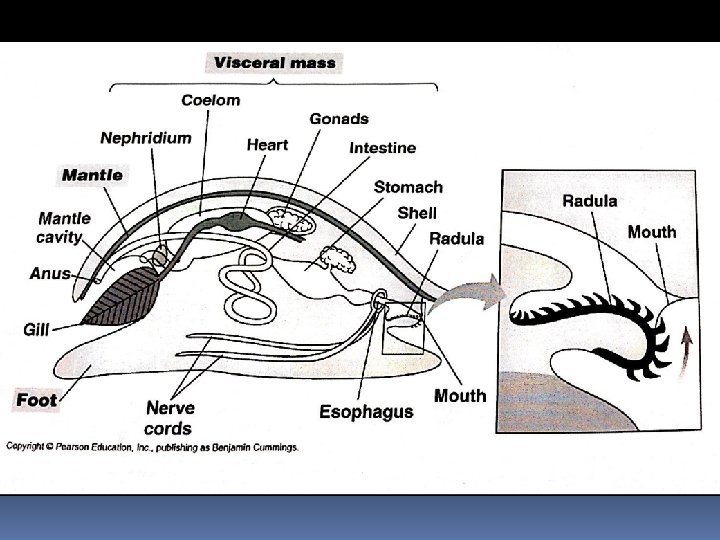
Main Characteristics Muscular foot: A highly developed muscle used for a variety of needs depending on the class of mollusc (movement, mucus secretion, jet propulsion, etc. ) Mantle: The epidermis layer of a mollusc that forms a bicarbonate shell (in most spp. ) Radula: A tongue-like structure with teeth that is used to grasp onto food particles. All molluscs have them in some form, except for the bivalves Freshwater or marine species exist.
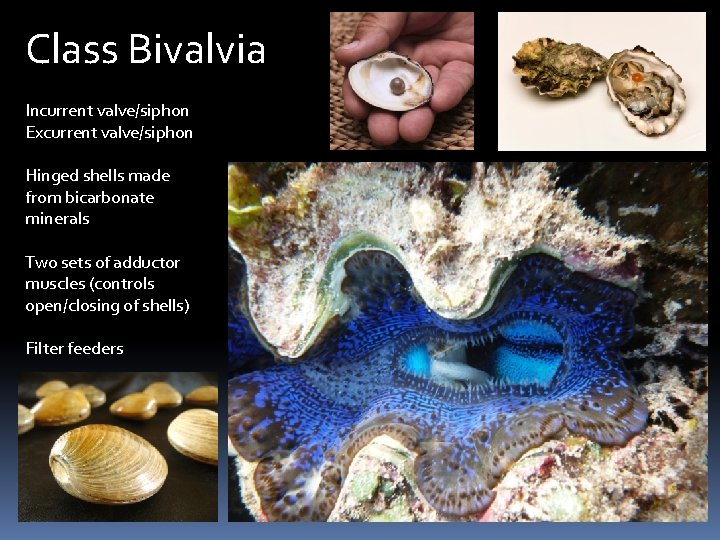
Class Bivalvia Incurrent valve/siphon Excurrent valve/siphon Hinged shells made from bicarbonate minerals Two sets of adductor muscles (controls open/closing of shells) Filter feeders
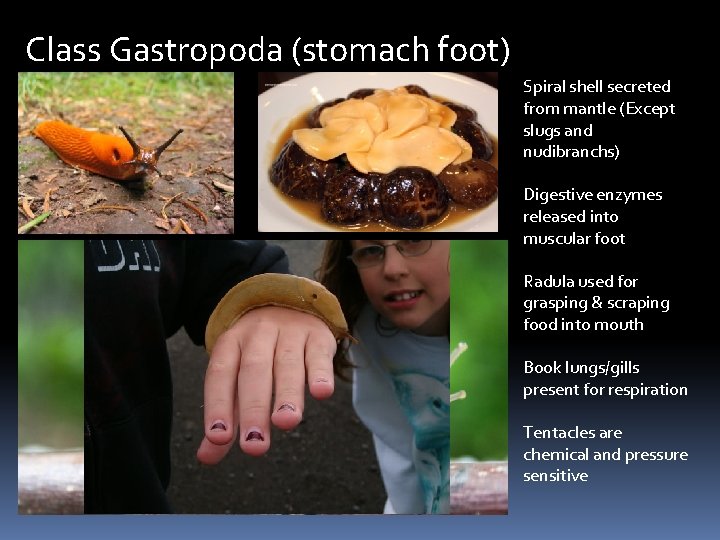
Class Gastropoda (stomach foot) Spiral shell secreted from mantle (Except slugs and nudibranchs) Digestive enzymes released into muscular foot Radula used for grasping & scraping food into mouth Book lungs/gills present for respiration Tentacles are chemical and pressure sensitive
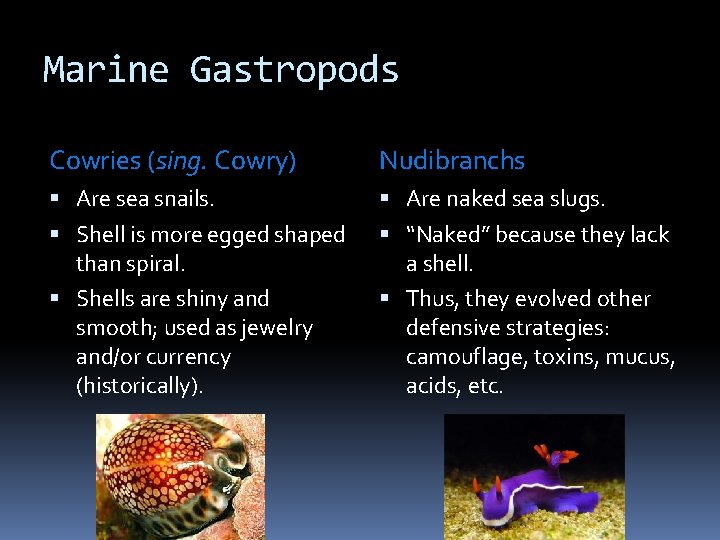
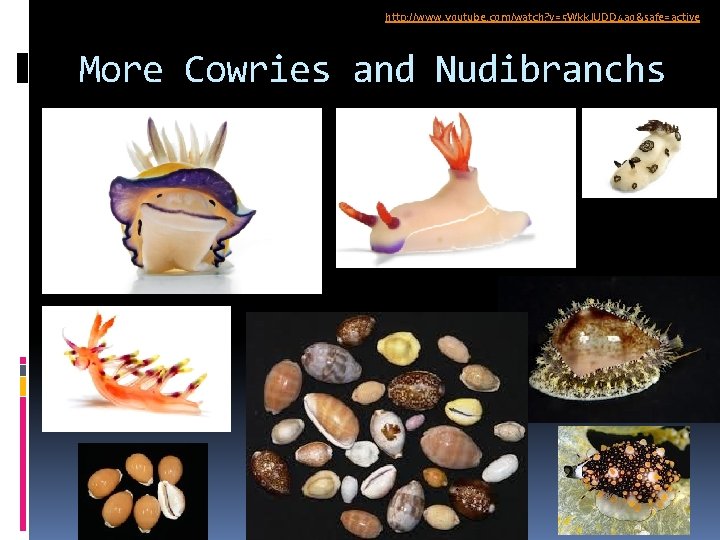
Marine Gastropods Cowries (sing. Cowry) Nudibranchs Are sea snails. Are naked sea slugs. Shell is more egged shaped than spiral. “Naked” because they lack a shell. Shells are shiny and smooth; used as jewelry and/or currency (historically). Thus, they evolved other defensive strategies: camouflage, toxins, mucus, acids, etc.
http: //www. youtube. com/watch? v=5 Wkk. JUDD 4 ao&safe=active More Cowries and Nudibranchs
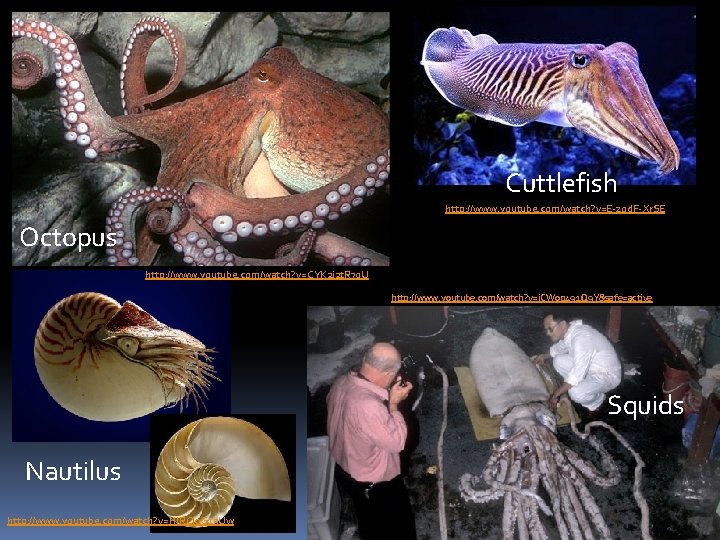
Class Cephalopoda (head foot) • Mantle extends to head region • External shell not present (except in Nautilus) • Advance nervous system with chromatophores (for colour changing skin) • Excellent eye-sight and coordination • Jet propulsion movement • Tentacles with suction cups for grasping • The only closed circulatory system mollusk
Cuttlefish http: //www. youtube. com/watch? v=E-zod. F-Xr. SE Octopus http: //www. youtube. com/watch? v=CYK 2 i 2 t. R 7 g. U http: //www. youtube. com/watch? v=j. CWop 491 Q 9 Y&safe=active Squids Nautilus http: //www. youtube. com/watch? v=HIRCI 0 G 19 Uw