
Diagnostic Sampling Collection Packaging Shipping Overview SAMPLE COLLECTION
- Slides: 26
Diagnostic Sampling Collection, Packaging, Shipping Overview
SAMPLE COLLECTION Just In Time Training Diagnostic Sampling: Overview
Before You Begin ● Test specifications from laboratory – Samples needed, any special media – Temperature ● Gather all supplies – Pre-label specimen containers ● Gather PPE – Coveralls, footwear, gloves – Respirators, face shields Just In Time Training Diagnostic Sampling: Overview
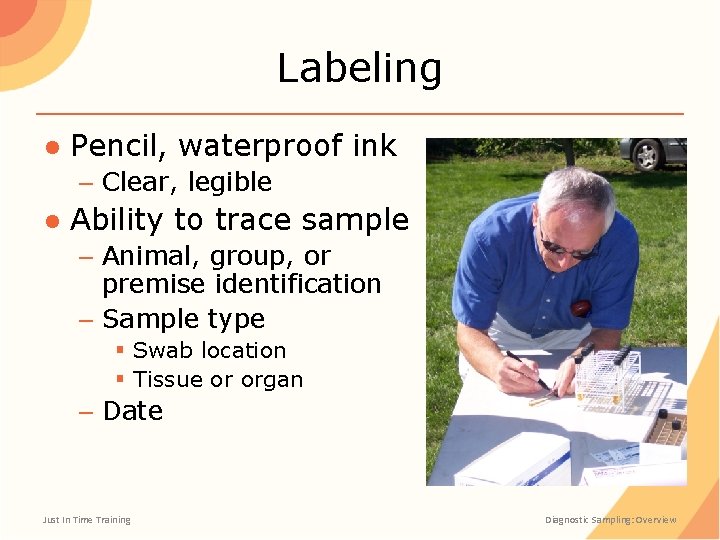
Labeling ● Pencil, waterproof ink – Clear, legible ● Ability to trace sample – Animal, group, or premise identification – Sample type § Swab location § Tissue or organ – Date Just In Time Training Diagnostic Sampling: Overview
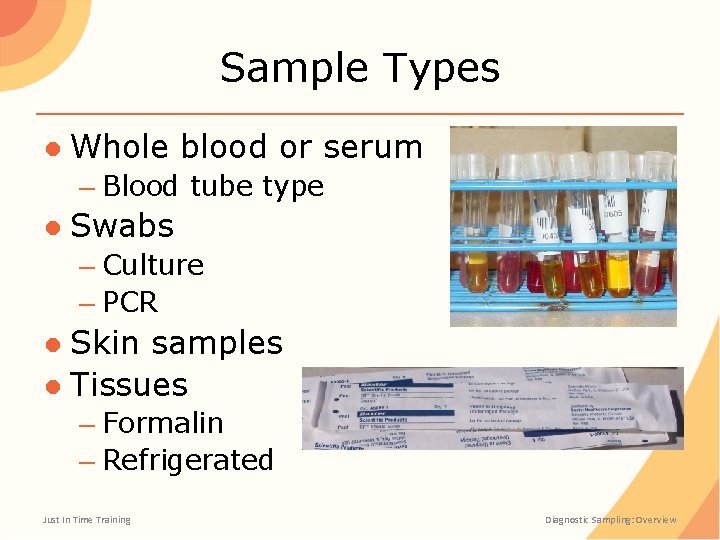
Sample Types ● Whole blood or serum – Blood tube type ● Swabs – Culture – PCR ● Skin samples ● Tissues – Formalin – Refrigerated Just In Time Training Diagnostic Sampling: Overview
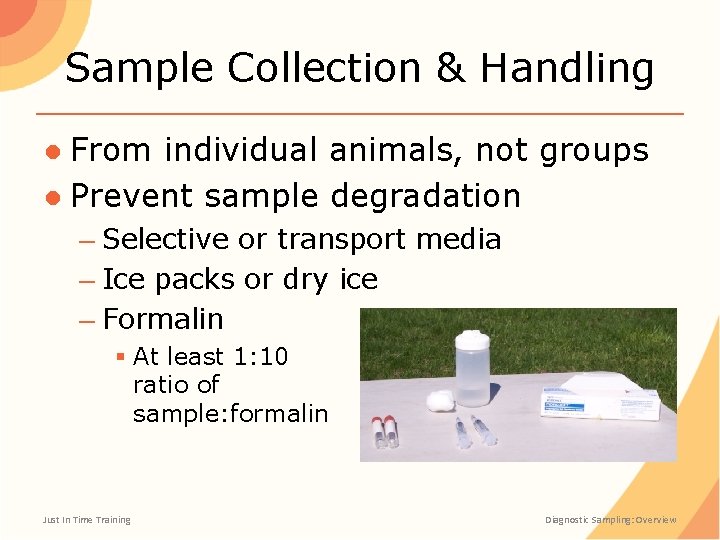
Sample Collection & Handling ● From individual animals, not groups ● Prevent sample degradation – Selective or transport media – Ice packs or dry ice – Formalin § At least 1: 10 ratio of sample: formalin Just In Time Training Diagnostic Sampling: Overview
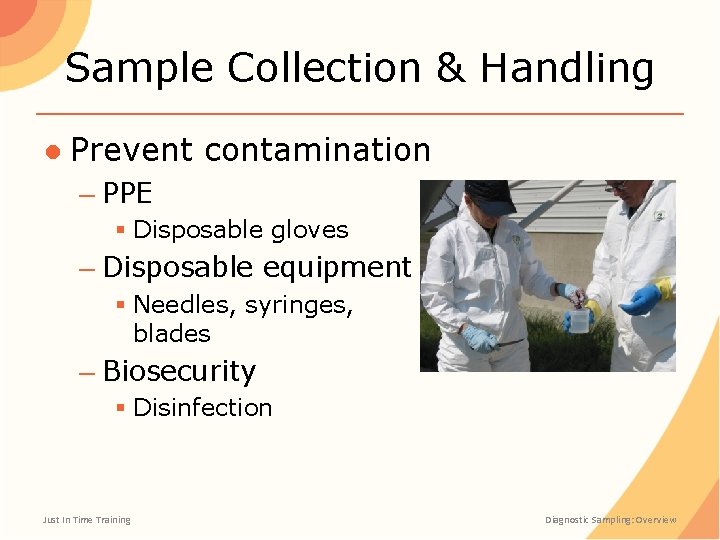
Sample Collection & Handling ● Prevent contamination – PPE § Disposable gloves – Disposable equipment § Needles, syringes, blades – Biosecurity § Disinfection Just In Time Training Diagnostic Sampling: Overview
SAMPLE PACKAGING Just In Time Training Diagnostic Sampling: Overview
Prior to Shipping ● Samples must be packaged to withstand: – Shocks and vibrations – Pressure changes – Other conditions encountered during transport § Weather § Temperature § Rough handling Just In Time Training Diagnostic Sampling: Overview
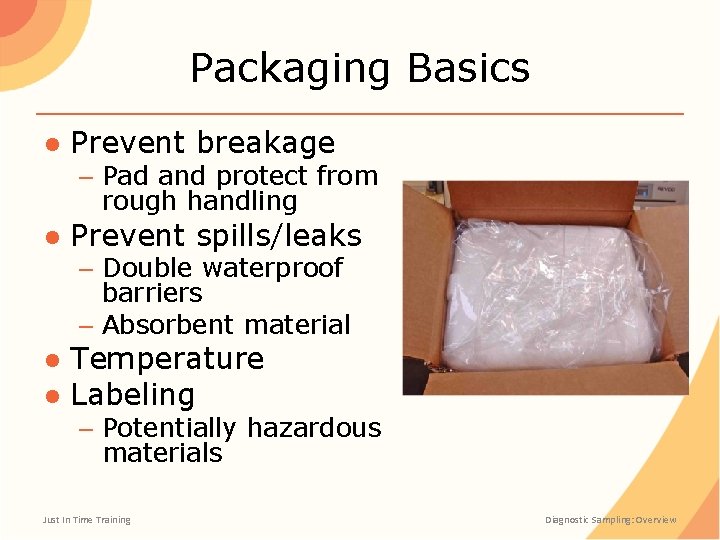
Packaging Basics ● Prevent breakage – Pad and protect from rough handling ● Prevent spills/leaks – Double waterproof barriers – Absorbent material ● Temperature ● Labeling – Potentially hazardous materials Just In Time Training Diagnostic Sampling: Overview
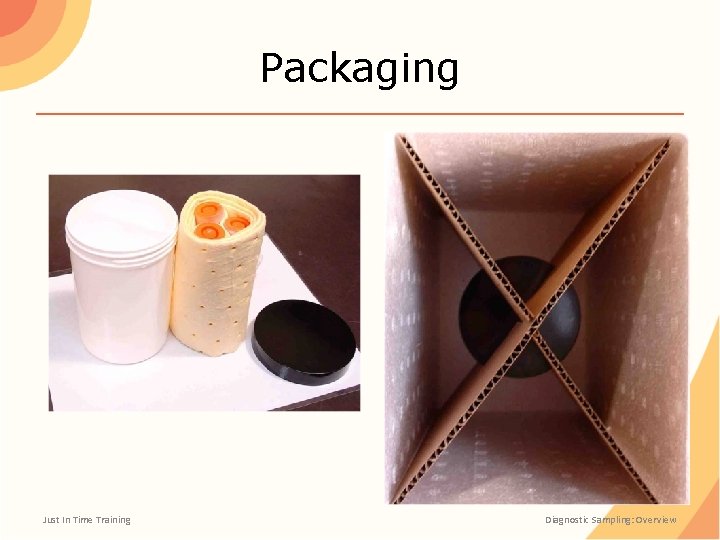
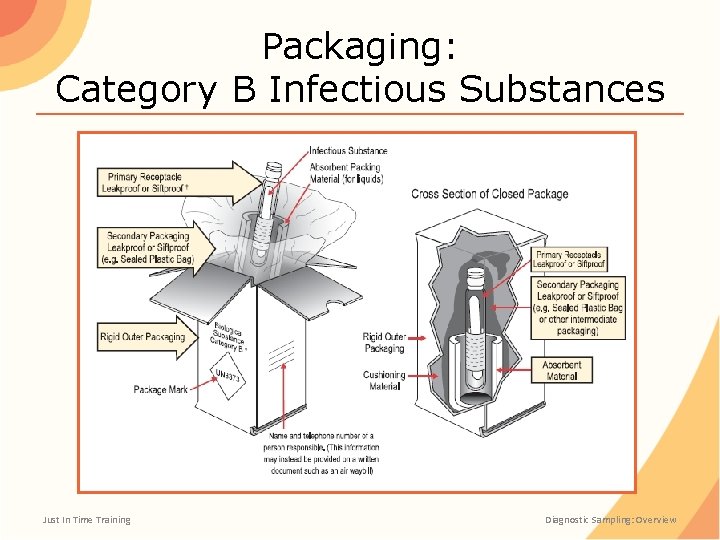
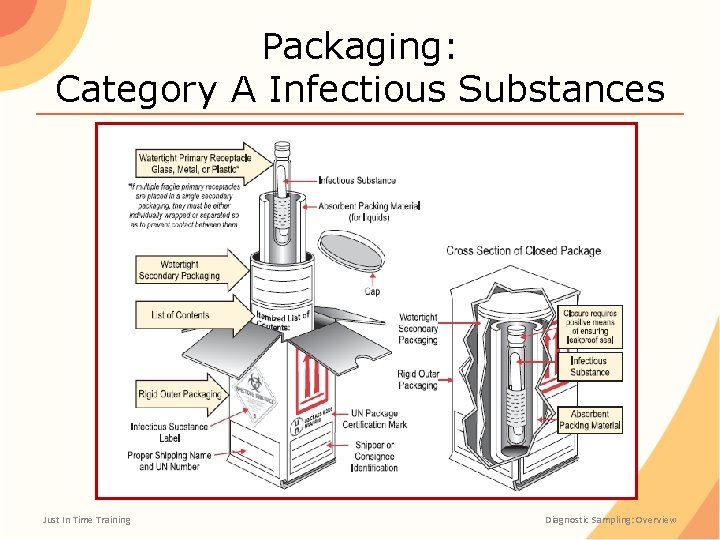
Preventing Breakage and Spills ● Plastic versus glass containers ● Pad primary sample container(s) ● Primary watertight barrier ● Absorbent material ● Secondary watertight material ● Rigid outer material (box) ● Do not pack formalin in same box with non-formalin samples Just In Time Training Diagnostic Sampling: Overview
Packaging Just In Time Training Diagnostic Sampling: Overview
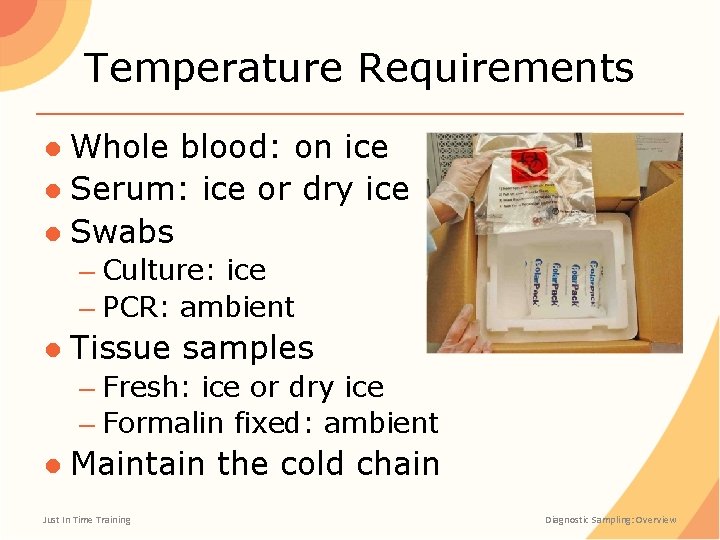
Temperature Requirements ● Whole blood: on ice ● Serum: ice or dry ice ● Swabs – Culture: ice – PCR: ambient ● Tissue samples – Fresh: ice or dry ice – Formalin fixed: ambient ● Maintain the cold chain Just In Time Training Diagnostic Sampling: Overview
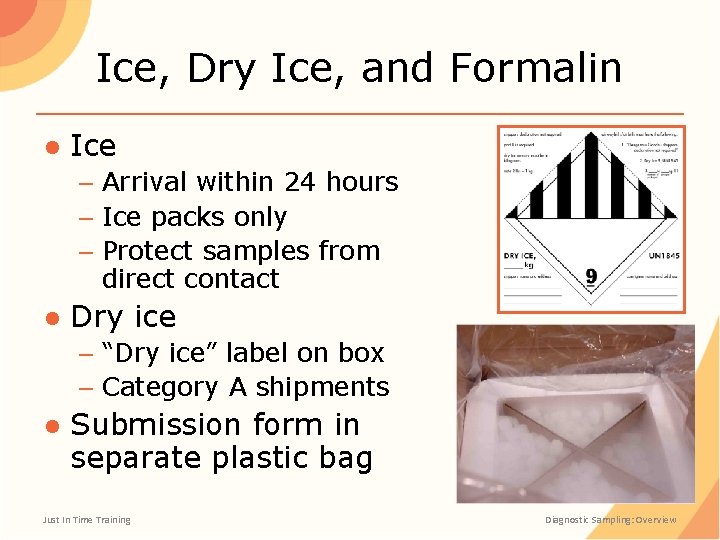
Ice, Dry Ice, and Formalin ● Ice – Arrival within 24 hours – Ice packs only – Protect samples from direct contact ● Dry ice – “Dry ice” label on box – Category A shipments ● Submission form in separate plastic bag Just In Time Training Diagnostic Sampling: Overview
Sample Shipping
Diagnostic Sample Shipping ● DOT hazardous material definition: – Any material that is capable of causing risk to health, safety, and property during transportation ● Includes infectious substances ● Regulated by DOT Hazardous Materials Regulations (HMR) – Section 49 Code of Federal Regulations Just In Time Training Diagnostic Sampling: Overview
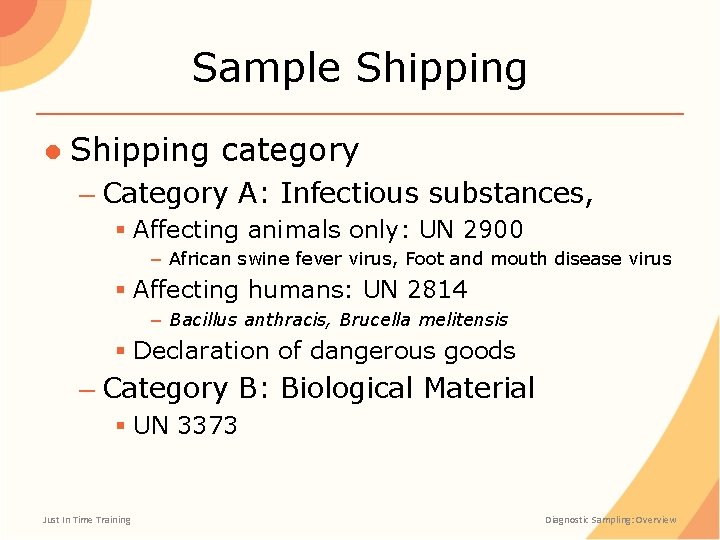
Sample Shipping ● Shipping category – Category A: Infectious substances, § Affecting animals only: UN 2900 – African swine fever virus, Foot and mouth disease virus § Affecting humans: UN 2814 – Bacillus anthracis, Brucella melitensis § Declaration of dangerous goods – Category B: Biological Material § UN 3373 Just In Time Training Diagnostic Sampling: Overview
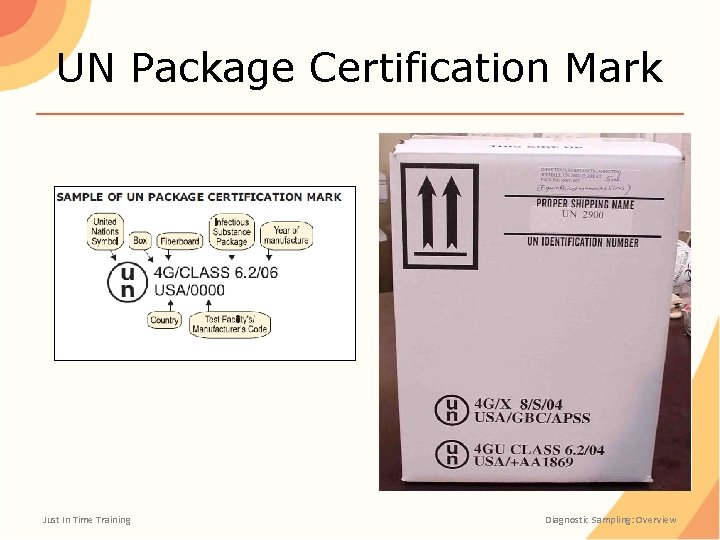
UN Package Certification Mark Just In Time Training Diagnostic Sampling: Overview
Packaging: Category B Infectious Substances Just In Time Training Diagnostic Sampling: Overview
Packaging: Category A Infectious Substances Just In Time Training Diagnostic Sampling: Overview
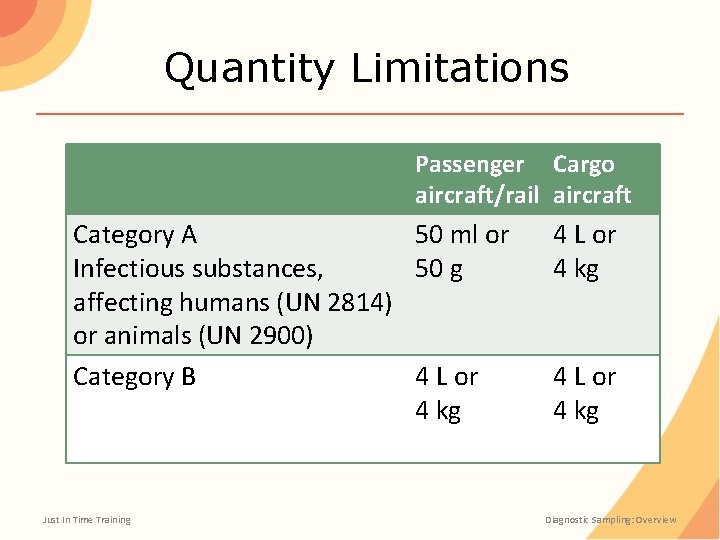
Quantity Limitations Passenger Cargo aircraft/rail aircraft Category A 50 ml or Infectious substances, 50 g affecting humans (UN 2814) or animals (UN 2900) Category B 4 L or 4 kg Just In Time Training 4 L or 4 kg Diagnostic Sampling: Overview
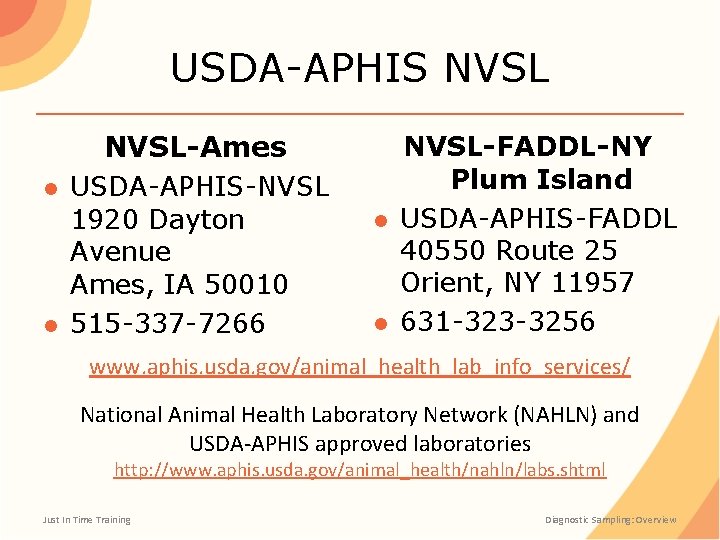
USDA-APHIS NVSL-Ames ● USDA-APHIS-NVSL 1920 Dayton Avenue Ames, IA 50010 ● 515 -337 -7266 NVSL-FADDL-NY Plum Island ● USDA-APHIS-FADDL 40550 Route 25 Orient, NY 11957 ● 631 -323 -3256 www. aphis. usda. gov/animal_health_lab_info_services/ National Animal Health Laboratory Network (NAHLN) and USDA-APHIS approved laboratories http: //www. aphis. usda. gov/animal_health/nahln/labs. shtml Just In Time Training Diagnostic Sampling: Overview
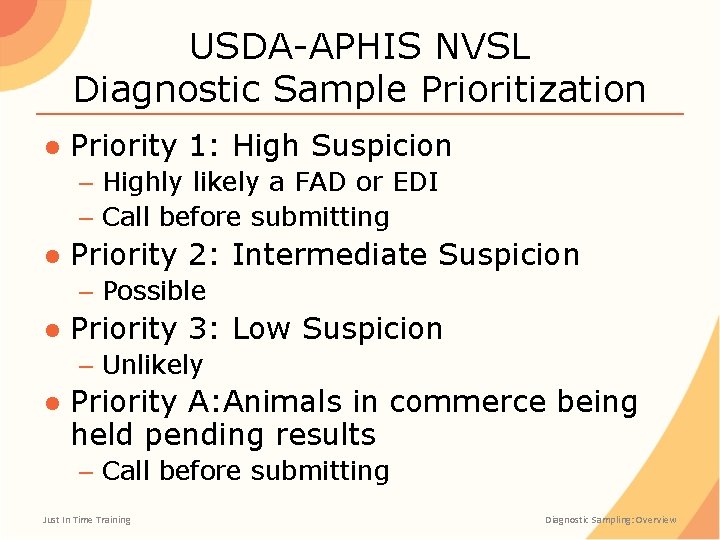
USDA-APHIS NVSL Diagnostic Sample Prioritization ● Priority 1: High Suspicion – Highly likely a FAD or EDI – Call before submitting ● Priority 2: Intermediate Suspicion – Possible ● Priority 3: Low Suspicion – Unlikely ● Priority A: Animals in commerce being held pending results – Call before submitting Just In Time Training Diagnostic Sampling: Overview
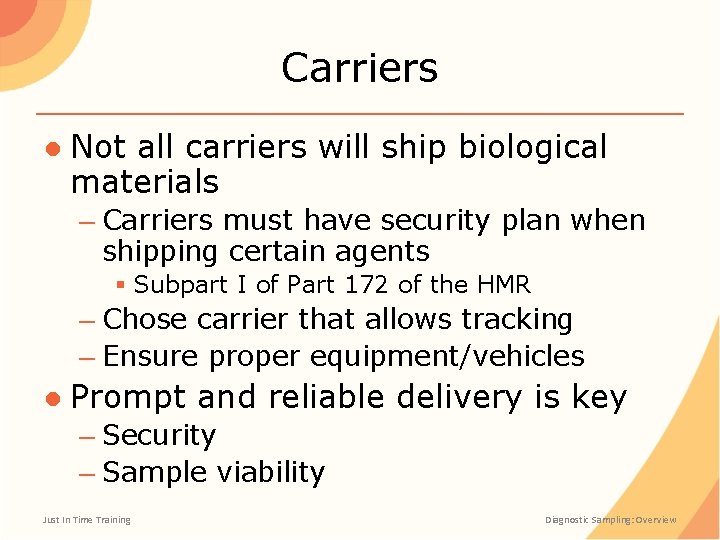
Carriers ● Not all carriers will ship biological materials – Carriers must have security plan when shipping certain agents § Subpart I of Part 172 of the HMR – Chose carrier that allows tracking – Ensure proper equipment/vehicles ● Prompt and reliable delivery is key – Security – Sample viability Just In Time Training Diagnostic Sampling: Overview
Resources ● USDA-APHIS – USDA-APHIS National Veterinary Services Laboratories § http: //www. aphis. usda. gov/animal_health/lab_info_services/ – USDA-APHIS VS Memorandum No. 580. 4: Procedures for the Investigation of Potential Foreign Animal Disease/Emerging Disease Incidents(FAD/EDI) § http: //www. aphis. usda. gov/animal_health/lab_info_services/downl oads/VS_Memo 580_4. pdf ● Department of Transportation – 49 CFR 172: Pipeline and Hazardous Materials Safety Administration, Department of Transportation – Hazardous Materials Regulations. § http: //ecfr. gpoaccess. gov/cgi/t/textidx? c=ecfr&tpl=/ecfrbrowse/Title 49/49 cfr 172_main_02. tpl – Transporting Infectious Substances Safely § http: //www. phmsa. dot. gov/staticfiles/PHMSA/Downloadable. Files/Fi les/Transporting_Infectious_Substances_brochure. pdf Just In Time Training Diagnostic Sampling: Overview
Acknowledgments Development of this presentation was by the Center for Food Security and Public Health at Iowa State University through funding from the Multi-State Partnership for Security in Agriculture Authors: Amber Stumbaugh, MS; Dan Taylor, DVM, MPH Reviewers: Glenda Dvorak, DVM, MPH, DACVPM