
Diagnostic Radiography as a Career Copyright 1996 Dale


- Slides: 21
Diagnostic Radiography as a Career Copyright, 1996 © Dale Carnegie & Associates, Inc.
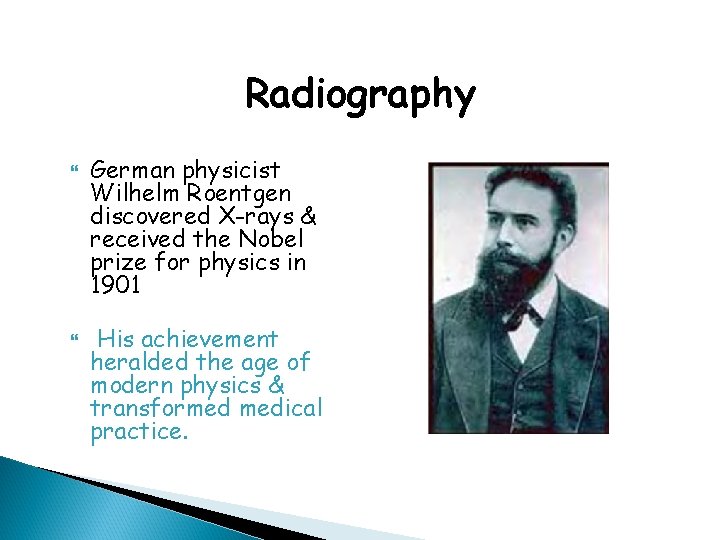
Radiography German physicist Wilhelm Roentgen discovered X-rays & received the Nobel prize for physics in 1901 His achievement heralded the age of modern physics & transformed medical practice.
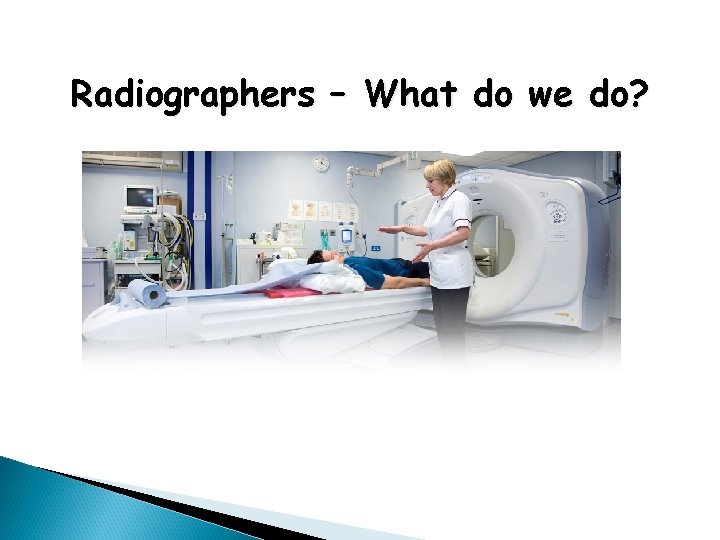
Radiographers – What do we do?
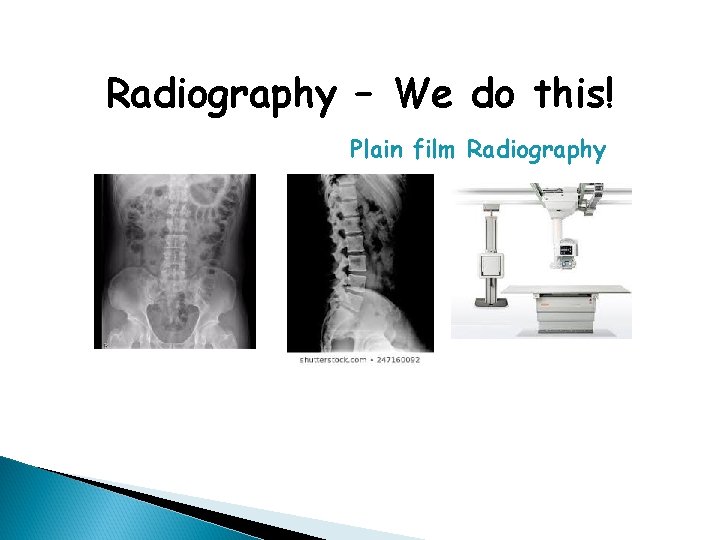
Radiography – We do this! Plain film Radiography
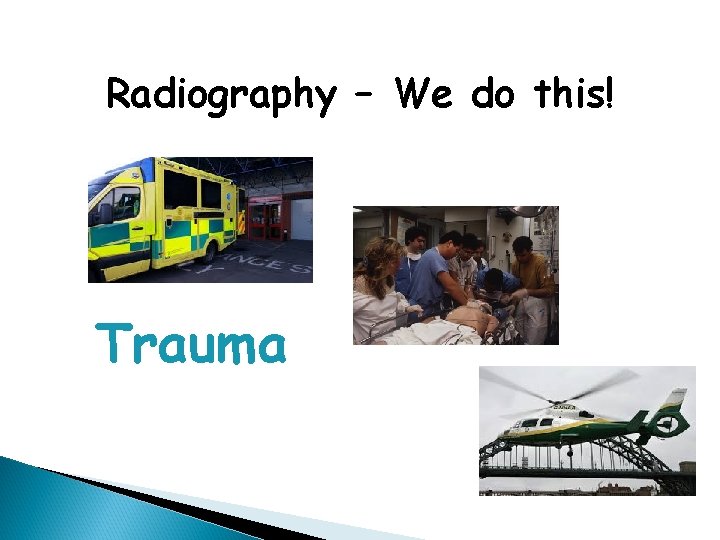
Radiography – We do this! Trauma
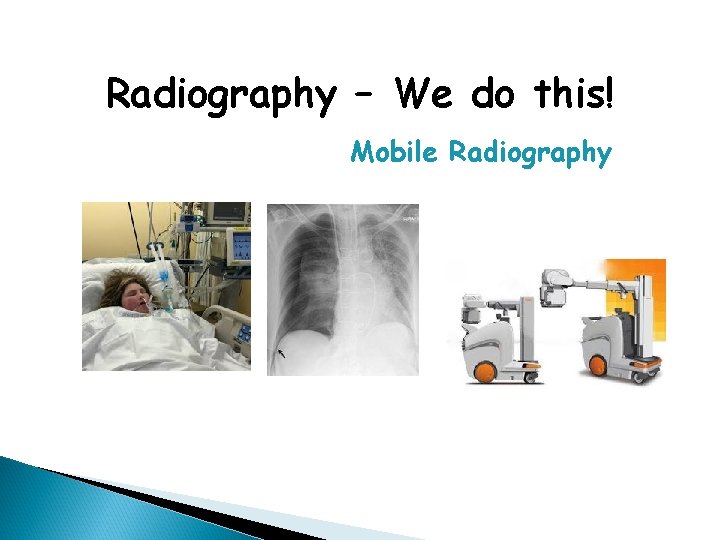
Radiography – We do this! Mobile Radiography
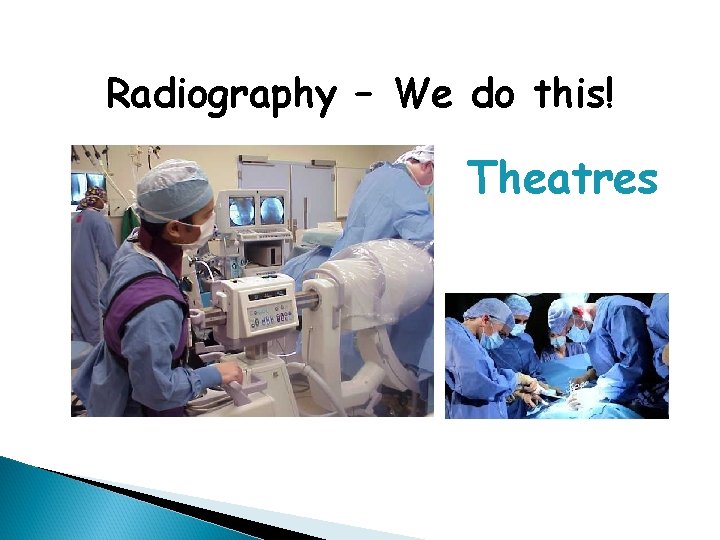
Radiography – We do this! Theatres
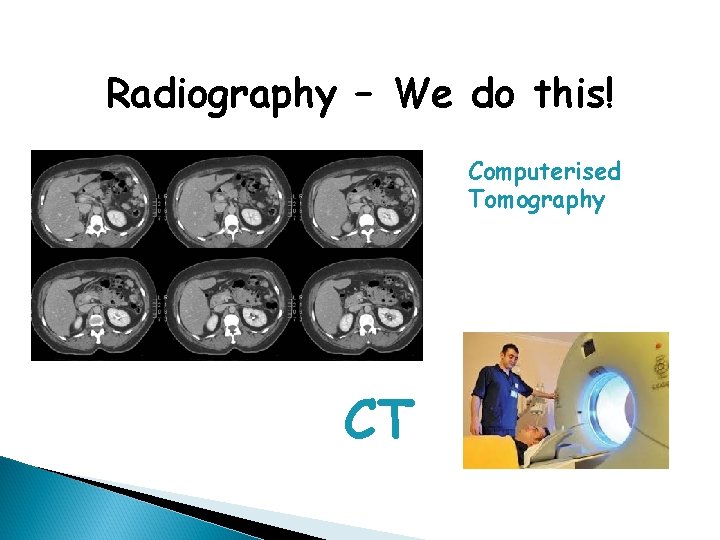
Radiography – We do this! Computerised Tomography CT
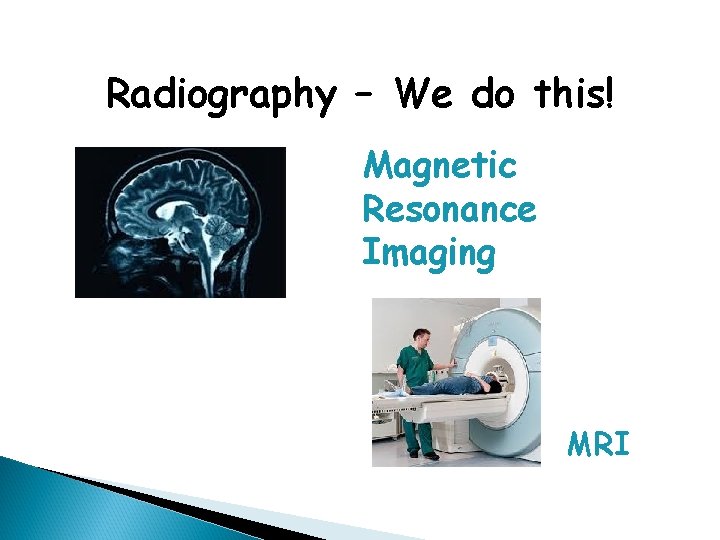
Radiography – We do this! Magnetic Resonance Imaging MRI
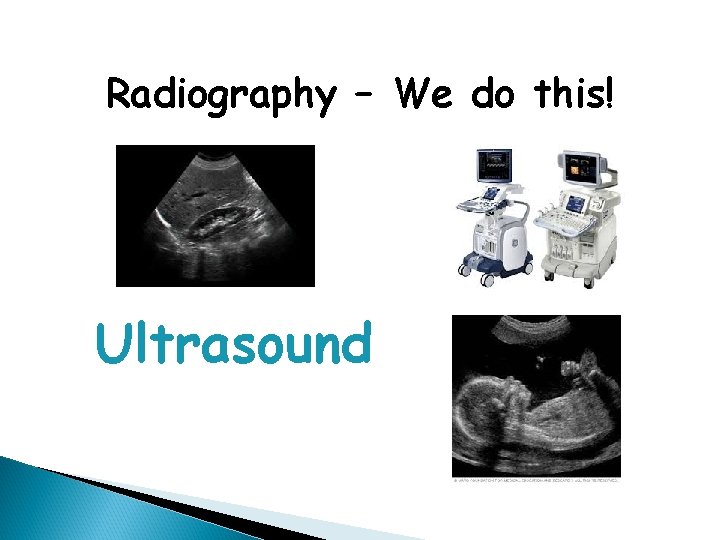
Radiography – We do this! Ultrasound
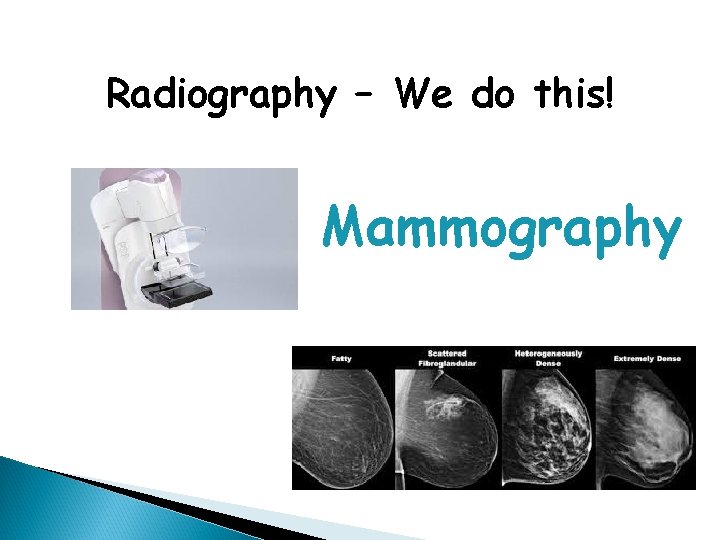
Radiography – We do this! Mammography
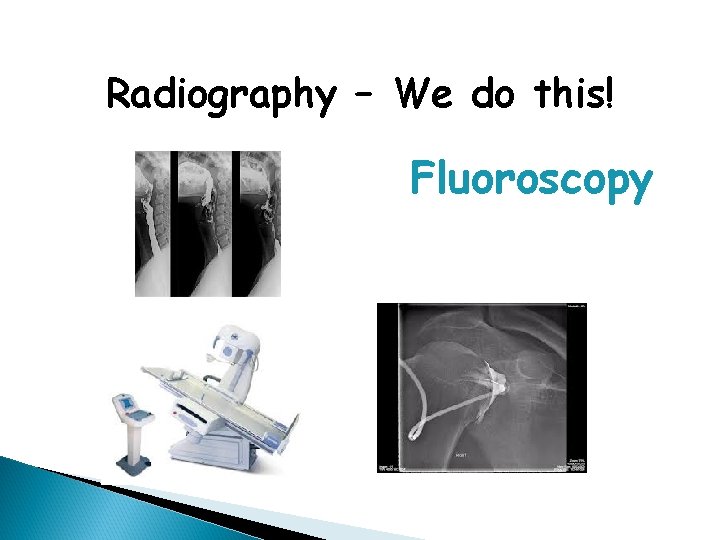
Radiography – We do this! Fluoroscopy
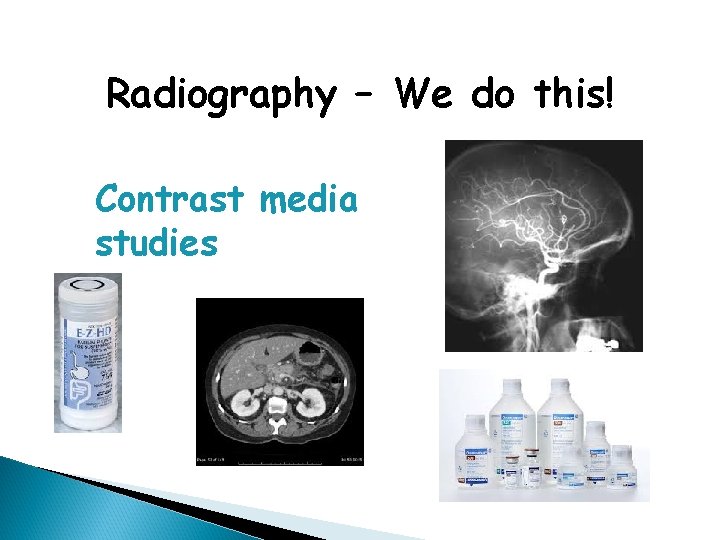
Radiography – We do this! Contrast media studies
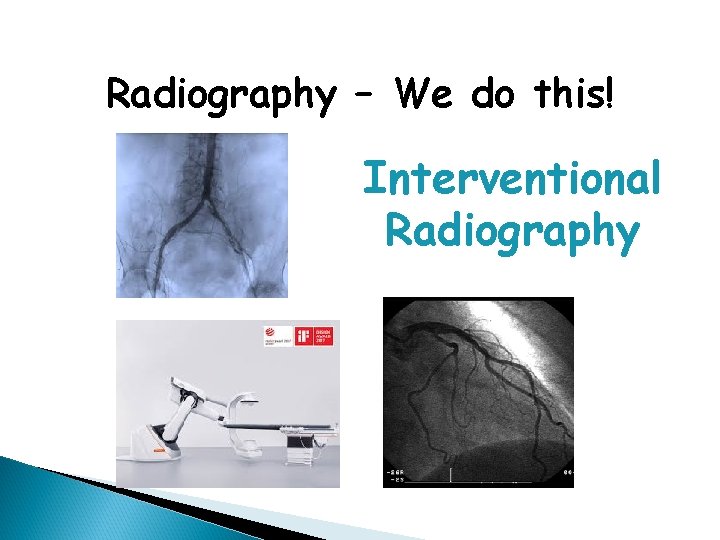
Radiography – We do this! Interventional Radiography
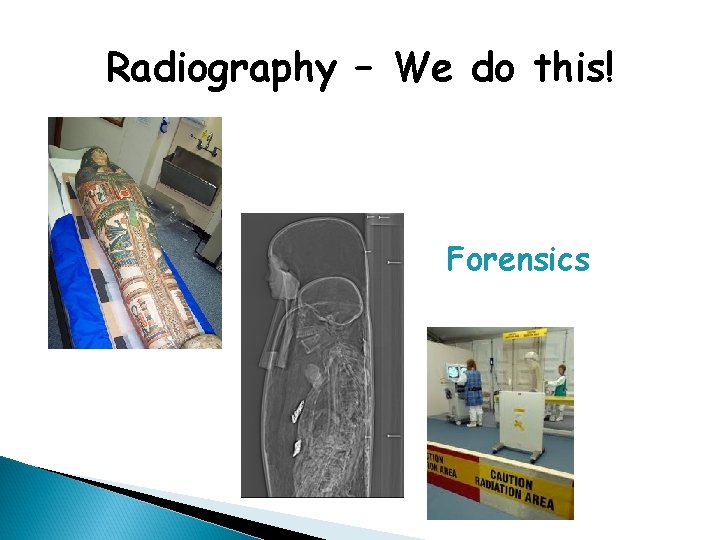
Radiography – We do this! Forensics
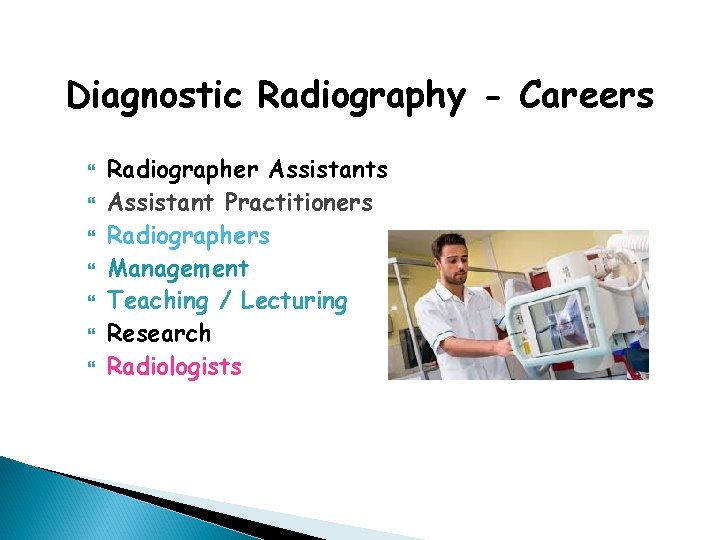
Diagnostic Radiography - Careers Radiographer Assistants Assistant Practitioners Radiographers Management Teaching / Lecturing Research Radiologists
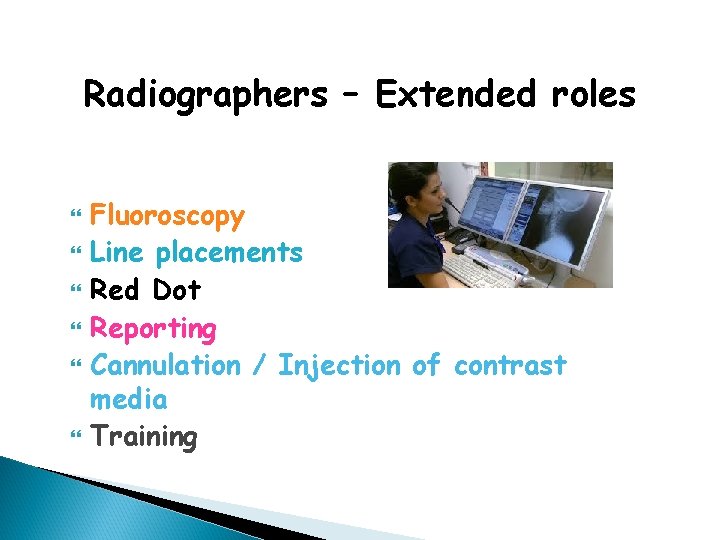
Radiographers – Extended roles Fluoroscopy Line placements Red Dot Reporting Cannulation / Injection of contrast media Training
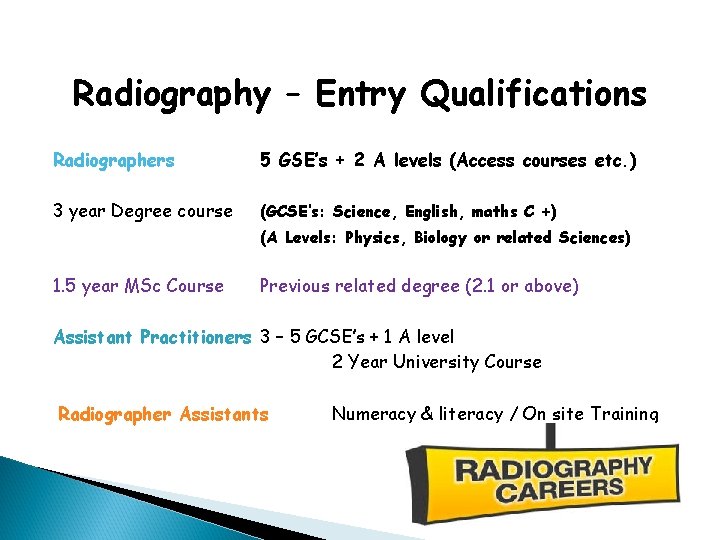
Radiography – Entry Qualifications Radiographers 5 GSE’s + 2 A levels (Access courses etc. ) 3 year Degree course (GCSE’s: Science, English, maths C +) (A Levels: Physics, Biology or related Sciences) 1. 5 year MSc Course Previous related degree (2. 1 or above) Assistant Practitioners 3 – 5 GCSE’s + 1 A level 2 Year University Course Radiographer Assistants Numeracy & literacy / On site Training
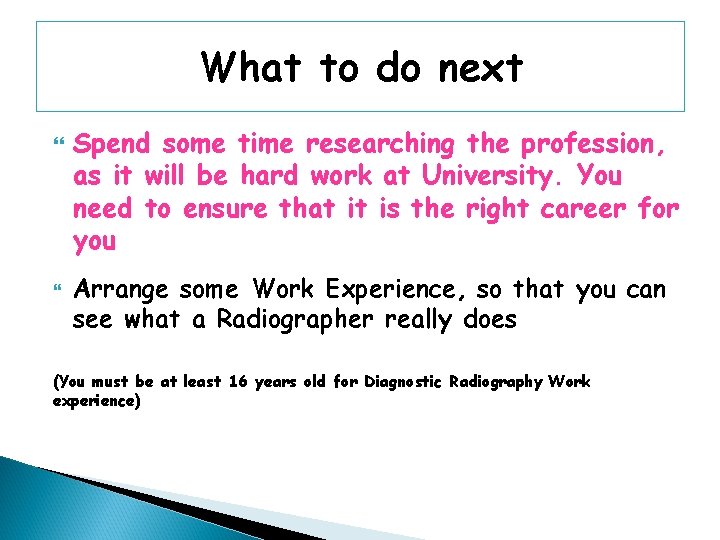
What to do next Spend some time researching the profession, as it will be hard work at University. You need to ensure that it is the right career for you Arrange some Work Experience, so that you can see what a Radiographer really does (You must be at least 16 years old for Diagnostic Radiography Work experience)
Useful web sites www. radiographycareers. co. uk www. nhscareers sor. org
Radiography Any Questions Thank you diane. charlton 1@nhs. net