
Diagnostic Medical Sonography Program Vascular Technology Holdorf LECTURES

- Slides: 38
Diagnostic Medical Sonography Program Vascular Technology Holdorf LECTURES 3 & 4 Part ONE Arterial Testing Signs, Symptoms, and Disease Mechanisms
Contents Arterial Testing Chronic occlusive disease Acute arterial occlusion Physical exam Palpation (pulses and Aneurysms) Bruits Risk Factors Mechanisms of disease Non-Atherosclerotic Lesions Doppler waveform analysis
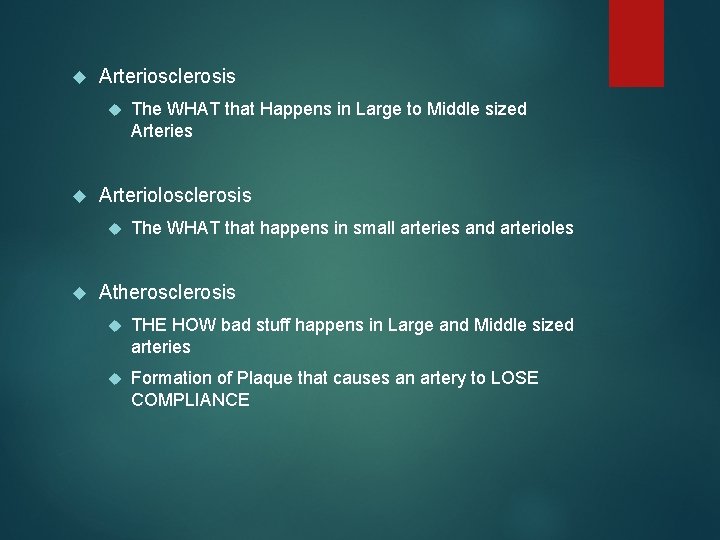
Arteriosclerosis vs. Arteriolosclerosis vs. Atherosclerosis What’s the difference?
Arteriosclerosis Arteriolosclerosis The WHAT that Happens in Large to Middle sized Arteries The WHAT that happens in small arteries and arterioles Atherosclerosis THE HOW bad stuff happens in Large and Middle sized arteries Formation of Plaque that causes an artery to LOSE COMPLIANCE
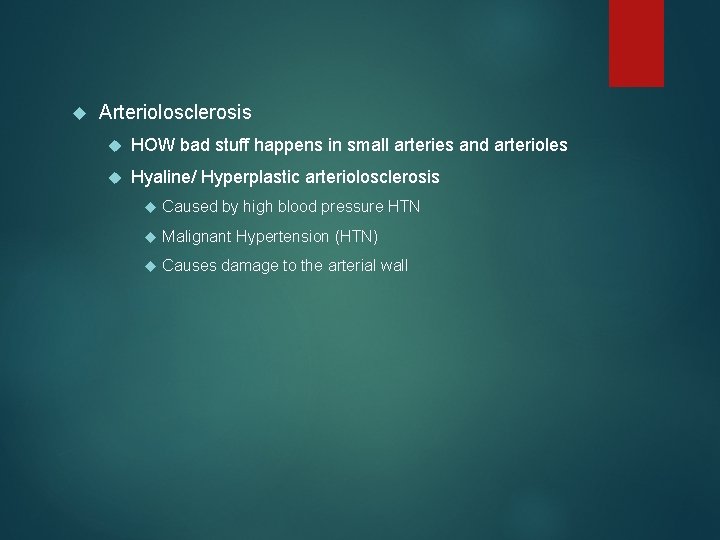
Arteriolosclerosis HOW bad stuff happens in small arteries and arterioles Hyaline/ Hyperplastic arteriolosclerosis Caused by high blood pressure HTN Malignant Hypertension (HTN) Causes damage to the arterial wall
Arterial Testing NOTE: It is important to obtain pertinent clinical history and lab values, findings or physical examination, and appropriate indication for testing to perform the study. Essential to maintain a warm environment for the patient in order to permit warming (and peripheral dilation) to occur. An adequate amount of acoustic coupling gel is applied to the skin for all types of Doppler exams.
SIGNS AND SYMPTOMS I. Chronic occlusive disease A. Claudication B. Ischemic Rest Pain C. Tissue Loss
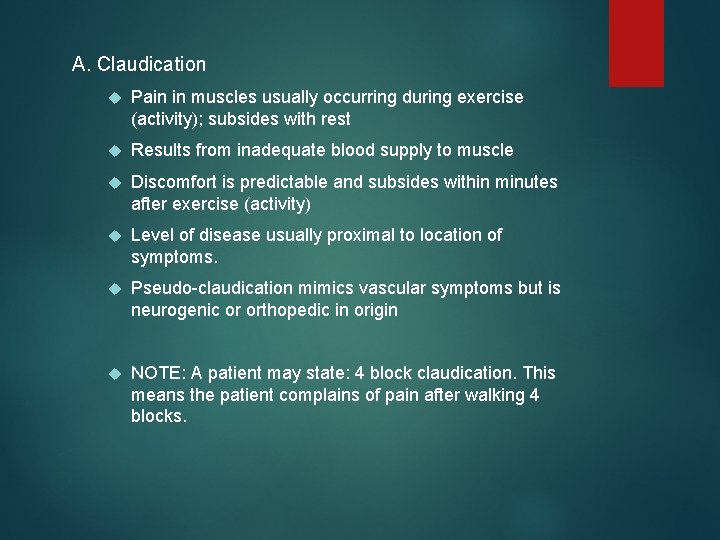
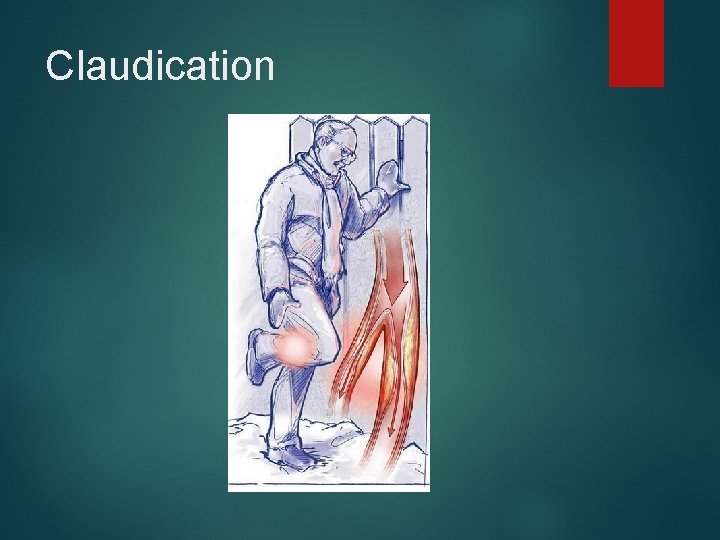
A. Claudication Pain in muscles usually occurring during exercise (activity); subsides with rest Results from inadequate blood supply to muscle Discomfort is predictable and subsides within minutes after exercise (activity) Level of disease usually proximal to location of symptoms. Pseudo-claudication mimics vascular symptoms but is neurogenic or orthopedic in origin NOTE: A patient may state: 4 block claudication. This means the patient complains of pain after walking 4 blocks.
Claudication
B. Ischemic Rest Pain A more severe symptom of diminished blood flow Occurs when limb not dependent: Blood pressure decreases (such as when sleeping) Affects forefoot, heel and toe C. Tissue Loss Necrosis or death of tissue Due to deficient or absent blood supply
2. Acute Arterial Occlusion Symptoms include the 6 P’s: Pain Pallor: Pale color of the skin Pulselessness Paresthesia: Tingling, pricking, burning of the skin Paralysis Polar: Cold skin May result from thrombus, embolism, or trauma Emergency situation since the abrupt onset does not provide for the development of collateral channels
3. Vasospastic Disorders Raynaud's phenomenon: A condition that exists when symptoms of intermittent digital ischemia occurs in response to cold exposure or emotional stress Changes in skin color may include pallor (whiteness), cyanosis (bluish color), or rubor (dark red color) Primary Raynaud’s Ischemia due to digital arterial spasm Common in young women; may be hereditary, bilateral, history of symptoms for 2 years without progression/evidence of cause Benign condition with excellent prognosis
Secondary Raynaud’s Also known as obstructive Raynaud’s syndrome Normal vasoconstriction responses of arterioles superimposed on a FIXED artery obstruction. Ischemia constantly present. May be the first manifestation of Buerger’s disease Buerger’s Disease Inflammation and thrombosis in small and medium-sized blood vessels, typically in the legs and leading to gangrene. It has been associated with smoking.
4. Physical Exam Skin Changes A. Color Pallor: result of deficient blood supply: Skin Pale Rubor: Suggests dilated vessels or vessels dilated secondary to reactive hyperemia: skin is reddened Cyanosis: A concentration of deoxygenated hemoglobin, causes bluish discoloration. Reactive Hyperemia: The transient increase in organ blood flow that occurs following a brief period of ischemia (e. g. , arterial occlusion).
b. Temperature Touch patient’s skin to determine warm/cold Utilize skin thermometer to document precisely C. Lesions (Will refer more to this in the Venous Lecture) Ulcerations located: tibial area, foot, toes Deep and more regular in shape Quite painful as compared to venous ulcers Duration of ulcer(s) is important (i. e. , days, weeks) Gangrene: Death of tissue; usually due to deficient or absent blood supply
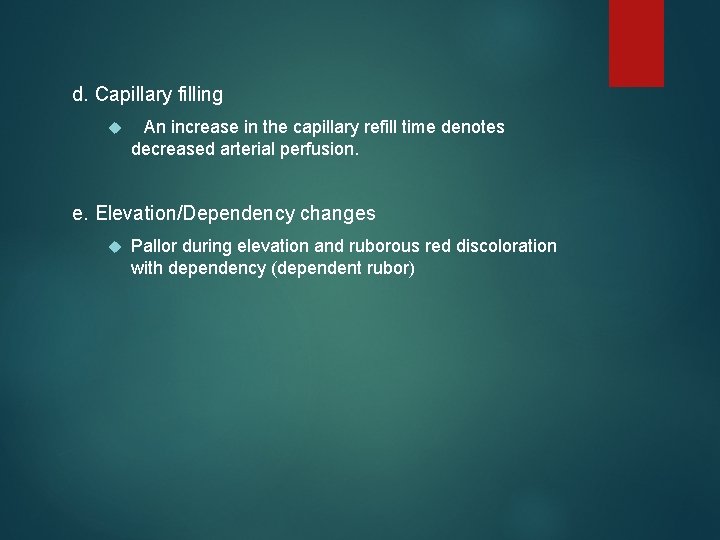
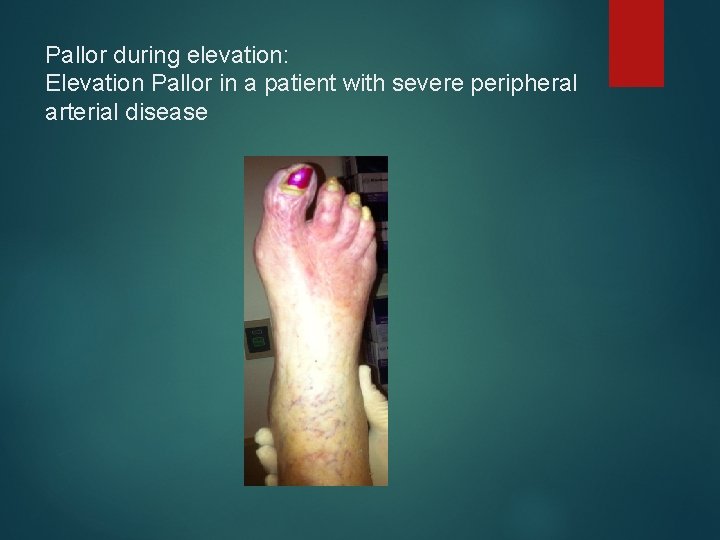
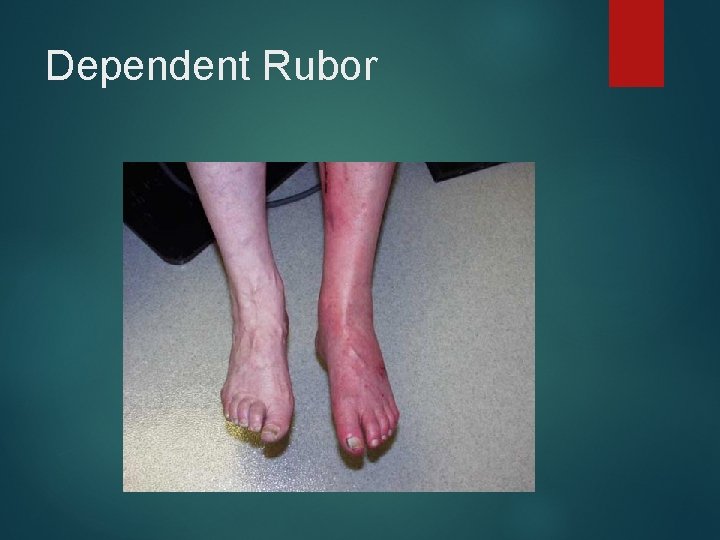
d. Capillary filling An increase in the capillary refill time denotes decreased arterial perfusion. e. Elevation/Dependency changes Pallor during elevation and ruborous red discoloration with dependency (dependent rubor)
Pallor during elevation: Elevation Pallor in a patient with severe peripheral arterial disease
Dependent Rubor
Palpation (Pulses, Aneurysms) Rhythmic throbbing of artery in time with heartbeat signifies adequate circulatory status. Diminished/absent pulse suggests arterial insufficiency Grading pulses on a scale of 0 (none) – 4+ (bounding) is fairly standard. Aneurysms can be palpated and described as bounding
Palpation (Pulses, Aneurysms) continued: Palpable “vibration” or “thrill” over pulse site may indicate a fistula, post-stenotic turbulence, or a patent dialysis access site. FISTULA: An abnormal connection between 2 body parts: two hollow or tubular organs. Palpable Pulses: Aorta, femoral, popliteal, dorsalis pedis (DPA), posterior tibial (PTA) The peroneal artery is not palpable
Auscultation (Bruits) Bruit auscultation is more often done with carotid examination Other than stethoscope use for carotid vessels and heart, additional sites include: Aorta Femoral Popliteal arteries Additional details regarding bruits will be discussed in the cerebrovascular testing lecture
Risk Factors for Arterial Disease Diabetes Atherosclerosis: more common: Occurs at a younger age Higher incidence of disease: distal Pop and tibial arteries Medial calcification develops in Lower Extremity arteries Poor sensation (neuropathy) may lead to increased injury Higher incidence of gangrenous change, amputations
Hypertension Unclear whether high blood pressure is a causative factor or enhances the development of the atherosclerotic process. Systemic hypertension is associated with greater incidence of coronary atherosclerosis. Increased BP taxes the heart Hyperlipidemia Elevated plasma lipids closely associated with development of atherosclerosis Frequent Cause: Diet high in animal fat; metabolic problems associated with heredity. Smoking Studies suggest the chemicals in cigarettes irritate the endothelial lining of vessels, causing vasoconstriction Others (not controllable): Age, Family History
Mechanism of Disease Atherosclerosis (Obliterans) Most common arterial pathology: thickening, hardening, loss of elasticity of artery walls. Changes occur in intima and media layer of the vessel MAJOR RISK FACTORS: smoking, hyperlipidemia, family history. Less important factors: Hypertension, diabetes, sedentary lifestyle, and arterial wall shear/stress. Most common sites: Carotid bifurcation Vessel origins Infra-renal aortic-iliac system Common Femoral Artery Bifurcation Superior Femoral Artery at the adductor canal level Trifurcation region
Embolism Obstruction of vessel by foreign substance or blood clot Emboli may be solid, liquid, or gaseous; may arise from the body or enter from without. Most frequent cause: Small plaque breaks loose (e. g. atherosclerotic lesion, arteritis, or angiographic procedure) and travels distally until it lodges in small vessel. Example: Blue toe syndrome. Toe ischemia results.
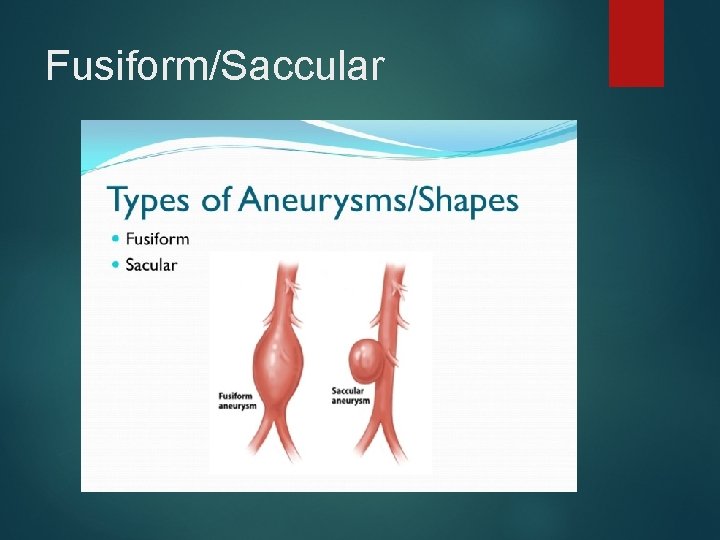
Aneurysm: True Aneurysm is dilatation of all three arterial wall layers; Examples are: Fusiform = diffuse, circumferential dilatation Saccular = localized out-pouching
Fusiform/Saccular
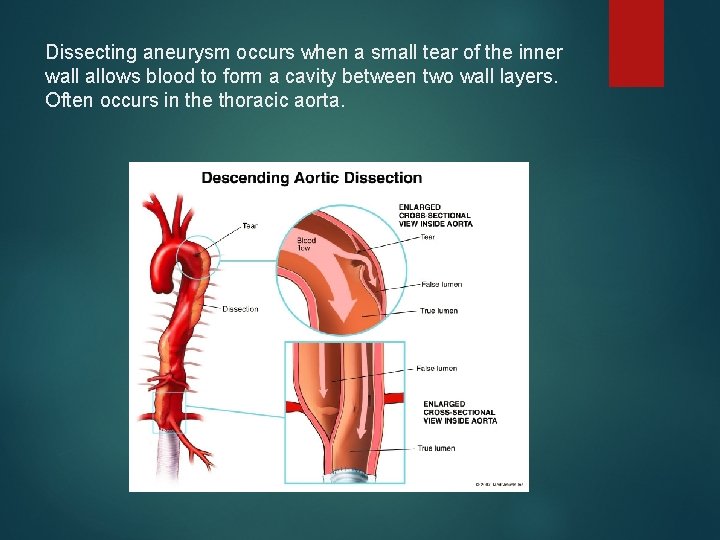
Dissecting aneurysm occurs when a small tear of the inner wall allows blood to form a cavity between two wall layers. Often occurs in the thoracic aorta.
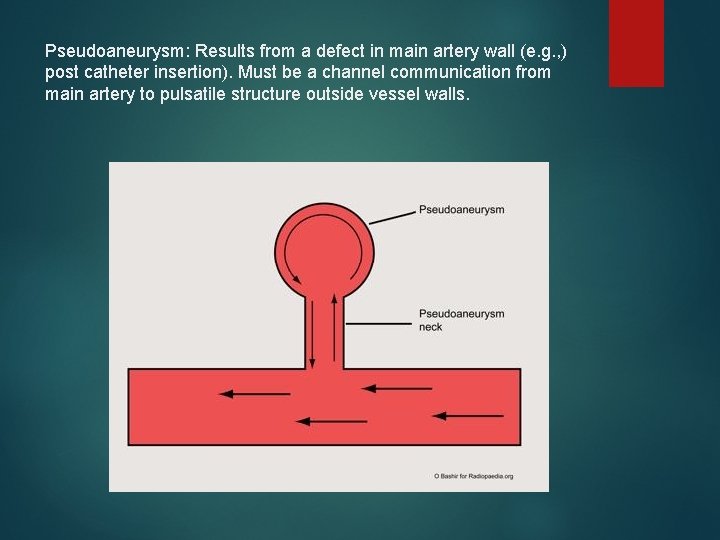
Pseudoaneurysm: Results from a defect in main artery wall (e. g. , ) post catheter insertion). Must be a channel communication from main artery to pulsatile structure outside vessel walls.
Most common location of a true aneurysm is infra-renal aorta. Other locations include: Thoracic aorta, femoral, popliteal, renal Patients with one aneurysm have higher incidence of 2. More often of the CFA or popliteal Artery as opposed to elsewhere. Cause unknown? ? Poor nutrition, congenital defect, infection, or atherosclerosis. MOST FREQUENT COMPLCATION OF ANEURYSM: Rupture of the aortic aneurysm: embolization of the peripheral aneurysms. NOTE: Both types can accumulate thrombus inside.
Non-Atherosclerotic Lesions Arteritis Can affect tibial and peroneal arteries, as well as the smaller more distal arterioles and nutrient vessels Inflammation of arterial wall leads to thrombosis of vessel Type: Buerger’s disease (thromboangitis obliterans) Associated with heavy cigarette smoking Occurs primarily in men <40 years old Patients present with occlusions of distal arteries Rest pain and ischemic ulceration present
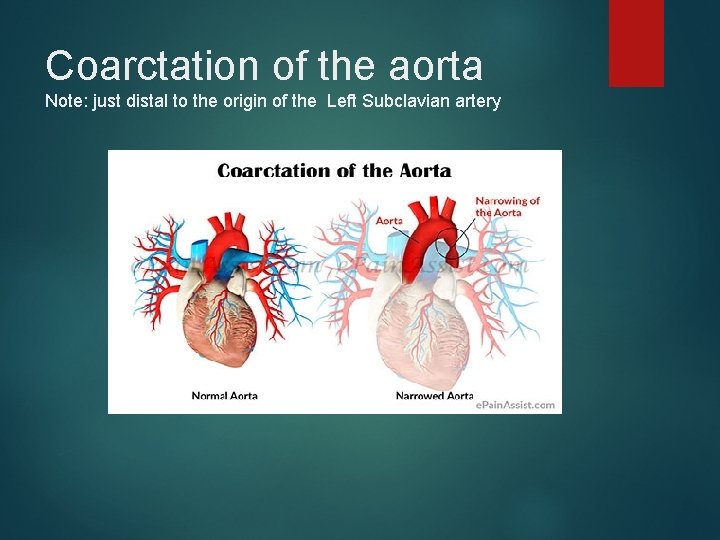
Coarctation of the aorta One of several congenital anomalies of the arterial system Congenital narrowing or structure of thoracic aorta, but may affect abdominal aorta Clinical findings: Hypertension due to decreased kidney perfusion Manifestations of Lower extremity ischemia (e. g. , decreased pulses and or segmental pressures)
Coarctation of the aorta Note: just distal to the origin of the Left Subclavian artery
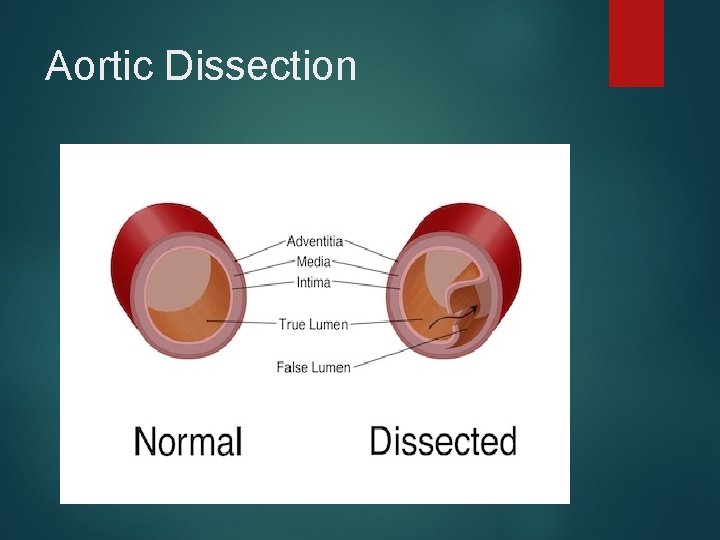
Dissection Can affect aorta and peripheral arteries Distinguishing ultrasound feature: Thin membrane dividing the arterial lumen into 2 compartments Media is weakened; intima develops tear through which blood leaks into the media (false lumen) Flow velocities differ in each lumen Aortic dissections which can extend to iliacs, may occur consequent to hypertension or severe chest trauma Complications: stenosis, occlusion, or thrombosis Death from rupture of the aortic dissection can occur. Ultrasound thought to be extremely important in diagnosis Vasospastic disorders: Future lecture Entrapment Syndrome: Future lecture
Aortic Dissection
VERY IMPORTANT General Considerations for Interpretation 1. Include clinical indication(s) for exam 2. Adequate description of the exam performed 3. Description of positive as well as negative findings 4. Characterization of the disease 5. Reasons for a technically limited or incomplete exam 6. Comparison with previous studies if applicable or possible 7. Identification of the technologist/sonographer who performed the exam Preliminary findings provided according to protocol