
Diagnostic approach to hereditary renal hypouricemia Ivan Sebesta
Diagnostic approach to hereditary renal hypouricemia Ivan Sebesta Institute of Inherited Metabolic Disorders, Institute of Medical Biochemistry and Laboratory Diagnostics, First Faculty of Medicine, Charles University in Prague
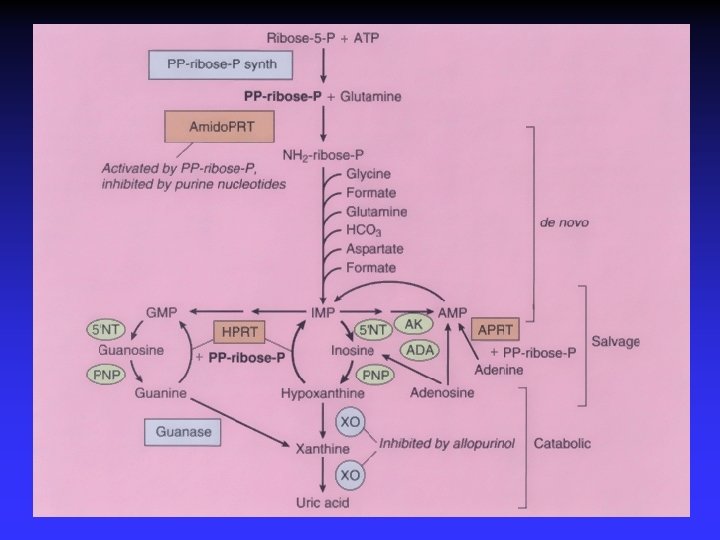
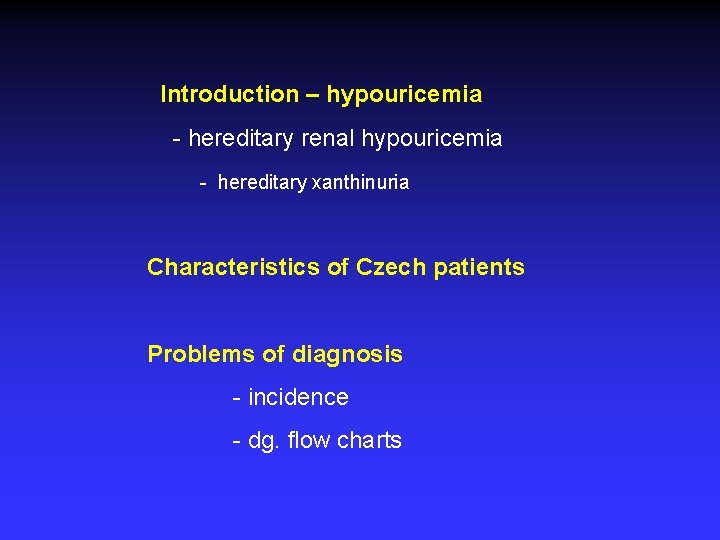
Introduction – hypouricemia - hereditary renal hypouricemia - hereditary xanthinuria Characteristics of Czech patients Problems of diagnosis - incidence - dg. flow charts
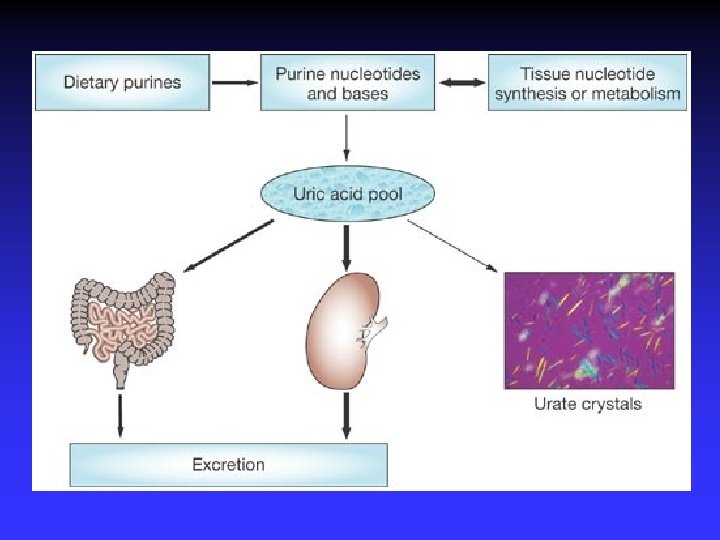
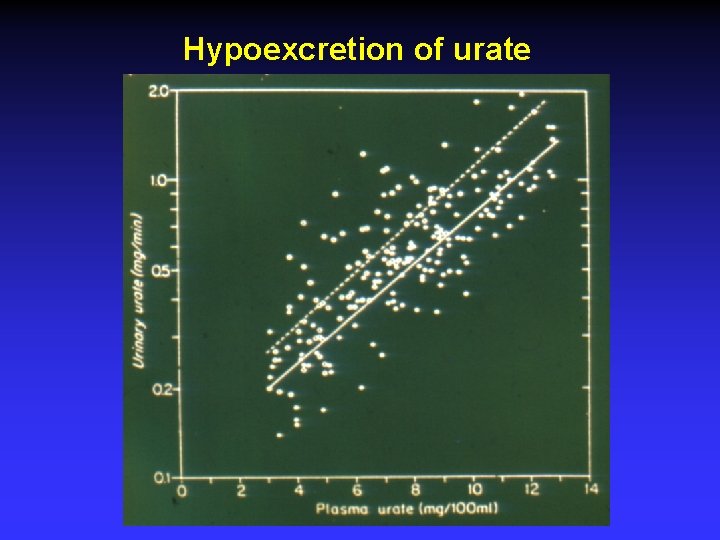
Hypoexcretion of urate
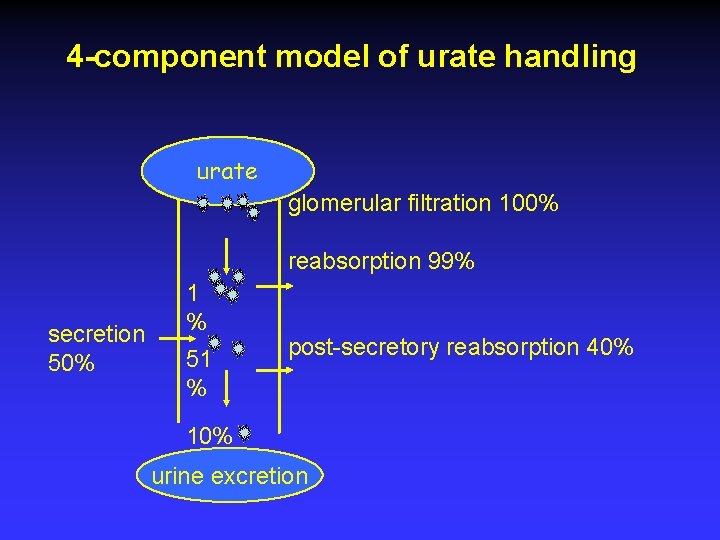
4 -component model of urate handling urate glomerular filtration 100% reabsorption 99% secretion 50% 1 % 51 % post-secretory reabsorption 40% 10% urine excretion
• Enomoto, A. , et al. , Molecular identification of a renal urate anion exchanger that regulates blood urate levels. Nature, 2002. 417(6887): p. 447 -52. Urate transporter URAT 1 - gene SLC 22 A 12 • OMIM 607096, Gene. ID 116085 • 11 q 13, 2 transcript variants (3206 and 2940 bp)553 amino acids • expressed in fetal and adult kidney
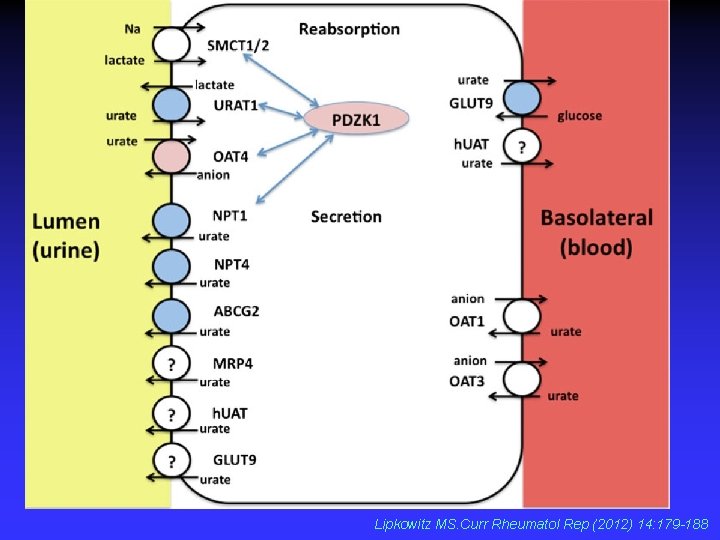
Lipkowitz MS. Curr Rheumatol Rep (2012) 14: 179 -188
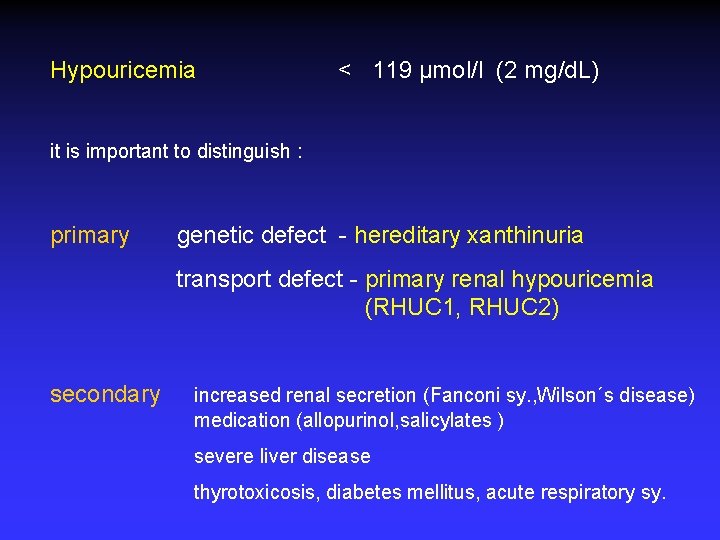
Hypouricemia < 119 µmol/l (2 mg/d. L) it is important to distinguish : primary genetic defect - hereditary xanthinuria transport defect - primary renal hypouricemia (RHUC 1, RHUC 2) secondary increased renal secretion (Fanconi sy. , Wilson´s disease) medication (allopurinol, salicylates ) severe liver disease thyrotoxicosis, diabetes mellitus, acute respiratory sy.

Hereditary xanthinuria xanthine oxidoreductase ( XO) deficiency type I XO def. + aldehyde oxidase deficiency type II molybdenum cofactor def. “ “ + sulfite oxidase def. dg. markers: hypouricemia high urinary concentration of xanthine symptoms: cca 50% patients - hematuria, renal colic acute renal failure, crystalluria, urolithiasis th: low purine diet, high fluid intake (alkalization of urine is of no value)
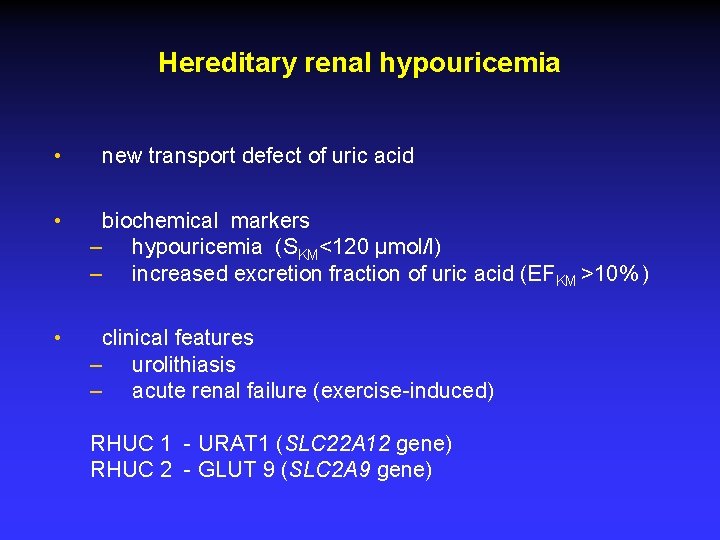
Hereditary renal hypouricemia • new transport defect of uric acid • biochemical markers – hypouricemia (SKM<120 μmol/l) – increased excretion fraction of uric acid (EFKM >10% ) • clinical features – urolithiasis – acute renal failure (exercise-induced) RHUC 1 - URAT 1 (SLC 22 A 12 gene) RHUC 2 - GLUT 9 (SLC 2 A 9 gene)
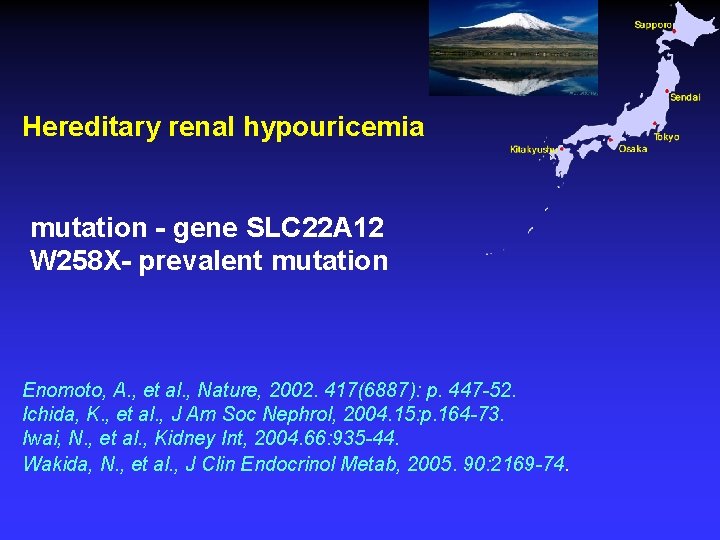
Hereditary renal hypouricemia mutation - gene SLC 22 A 12 W 258 X- prevalent mutation Enomoto, A. , et al. , Nature, 2002. 417(6887): p. 447 -52. Ichida, K. , et al. , J Am Soc Nephrol, 2004. 15: p. 164 -73. Iwai, N. , et al. , Kidney Int, 2004. 66: 935 -44. Wakida, N. , et al. , J Clin Endocrinol Metab, 2005. 90: 2169 -74.
Institute of Inherited Metabolic Disorder, First Faculty of of Medicine, Charles University, Prague ( patients with HPRT def. , FJHN, APRT def, ASL def. , ADA def. ) Are disorders with hypouricemia also in the Czech population ?
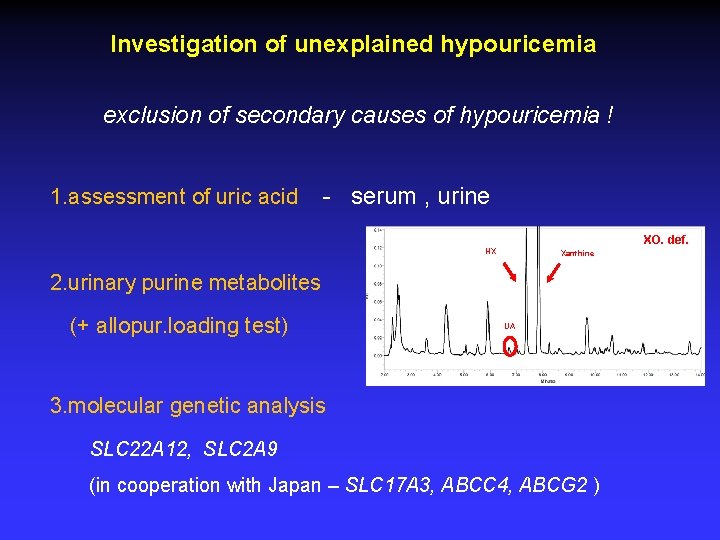
Investigation of unexplained hypouricemia exclusion of secondary causes of hypouricemia ! 1. assessment of uric acid - serum , urine XO. def. HX Xanthine 2. urinary purine metabolites (+ allopur. loading test) UA 3. molecular genetic analysis SLC 22 A 12, SLC 2 A 9 (in cooperation with Japan – SLC 17 A 3, ABCC 4, ABCG 2 )
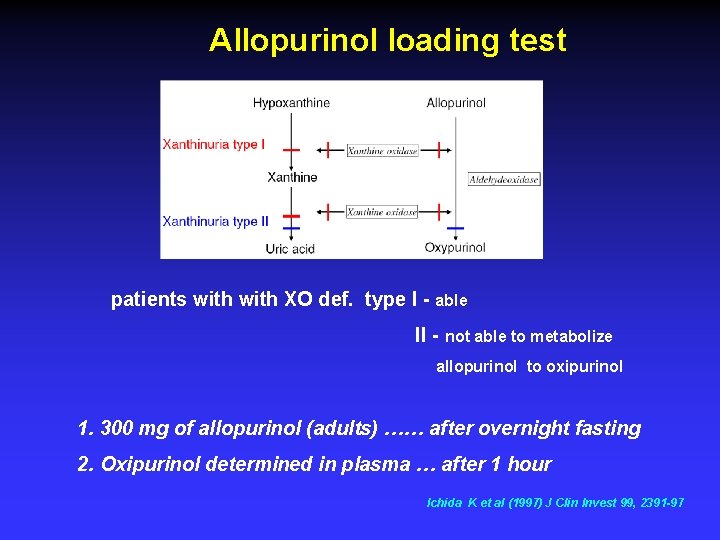
Allopurinol loading test patients with XO def. type I - able II - not able to metabolize allopurinol to oxipurinol 1. 300 mg of allopurinol (adults) …… after overnight fasting 2. Oxipurinol determined in plasma … after 1 hour Ichida K et al (1997) J Clin Invest 99, 2391 -97
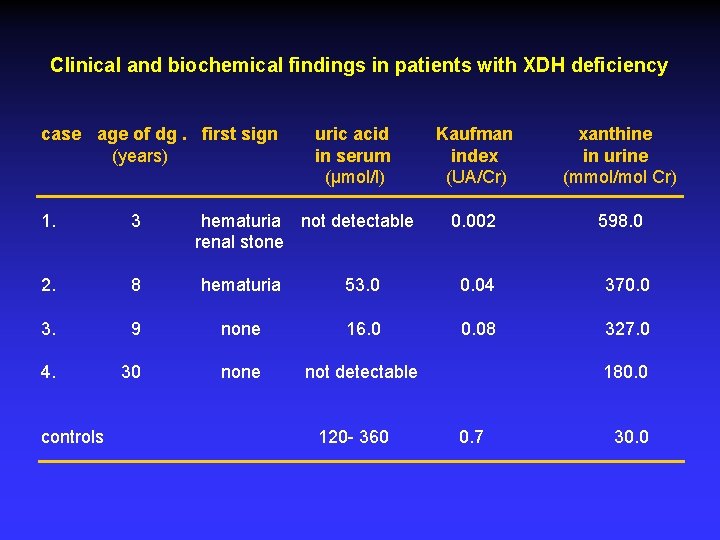
Clinical and biochemical findings in patients with XDH deficiency case age of dg. first sign (years) uric acid in serum (µmol/l) Kaufman index (UA/Cr) xanthine in urine (mmol/mol Cr) 0. 002 598. 0 1. 3 hematuria not detectable renal stone 2. 8 hematuria 53. 0 0. 04 370. 0 3. 9 none 16. 0 0. 08 327. 0 4. 30 none not detectable controls 120 - 360 180. 0 0. 7 30. 0
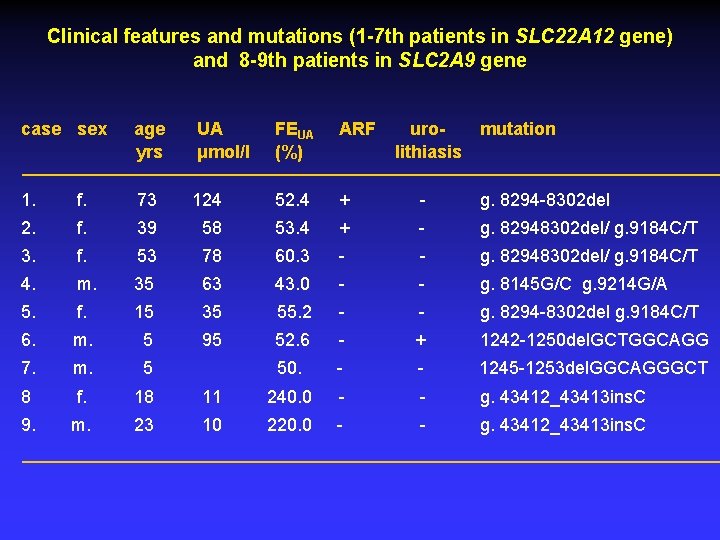
Clinical features and mutations (1 -7 th patients in SLC 22 A 12 gene) and 8 -9 th patients in SLC 2 A 9 gene case sex age yrs UA μmol/l FEUA (%) ARF urolithiasis mutation 1. f. 73 124 52. 4 + - g. 8294 -8302 del 2. f. 39 58 53. 4 + - g. 82948302 del/ g. 9184 C/T 3. f. 53 78 60. 3 - - g. 82948302 del/ g. 9184 C/T 4. m. 35 63 43. 0 - - g. 8145 G/C g. 9214 G/A 5. f. 15 35 55. 2 - - g. 8294 -8302 del g. 9184 C/T 6. m. 5 95 52. 6 - + 1242 -1250 del. GCTGGCAGG 7. m. 5 50. - - 1245 -1253 del. GGCAGGGCT 8 f. 18 11 240. 0 - - g. 43412_43413 ins. C 9. m. 23 10 220. 0 - - g. 43412_43413 ins. C
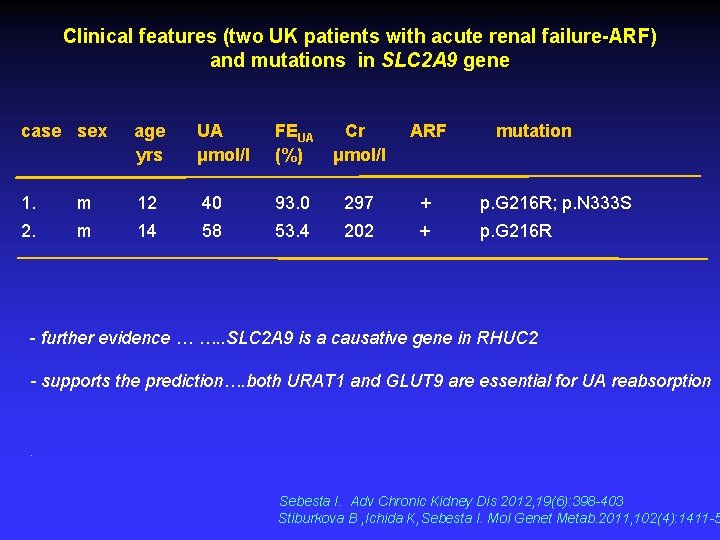
Clinical features (two UK patients with acute renal failure-ARF) and mutations in SLC 2 A 9 gene case sex age yrs UA μmol/l FEUA Cr (%) μmol/l ARF mutation 1. m 12 40 93. 0 297 + p. G 216 R; p. N 333 S 2. m 14 58 53. 4 202 + p. G 216 R - further evidence … …. . SLC 2 A 9 is a causative gene in RHUC 2 - supports the prediction…. both URAT 1 and GLUT 9 are essential for UA reabsorption . Sebesta I. Adv Chronic Kidney Dis 2012, 19(6): 398 -403 Stiburkova B , Ichida K, Sebesta I. Mol Genet Metab. 2011, 102(4): 1411 -5
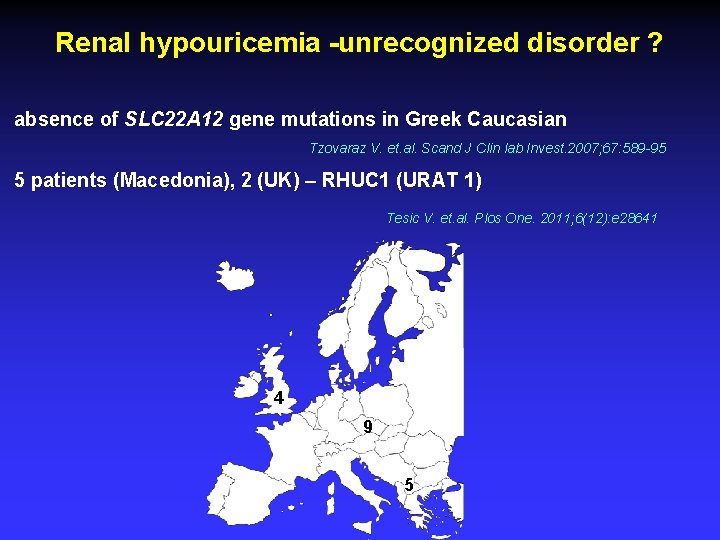
Renal hypouricemia -unrecognized disorder ? absence of SLC 22 A 12 gene mutations in Greek Caucasian Tzovaraz V. et. al. Scand J Clin lab Invest. 2007; 67: 589 -95 5 patients (Macedonia), 2 (UK) – RHUC 1 (URAT 1) Tesic V. et. al. Plos One. 2011; 6(12): e 28641 4 9 5
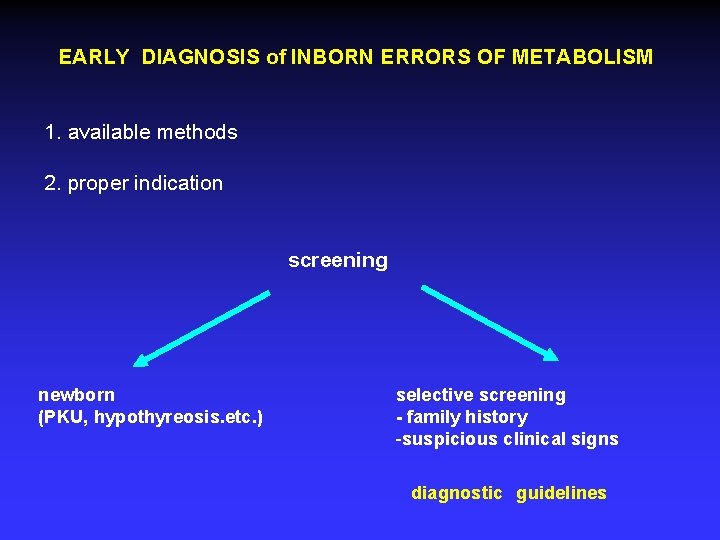
EARLY DIAGNOSIS of INBORN ERRORS OF METABOLISM 1. available methods 2. proper indication screening newborn (PKU, hypothyreosis. etc. ) selective screening - family history -suspicious clinical signs diagnostic guidelines
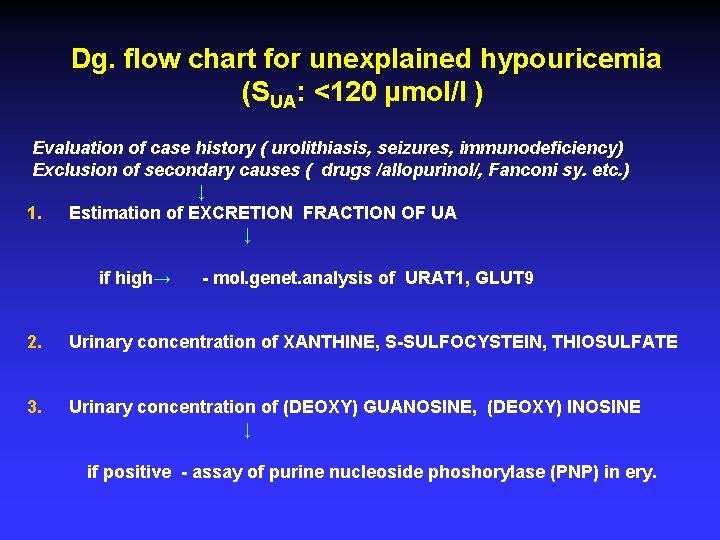
Dg. flow chart for unexplained hypouricemia (SUA: <120 μmol/l ) Evaluation of case history ( urolithiasis, seizures, immunodeficiency) Exclusion of secondary causes ( drugs /allopurinol/, Fanconi sy. etc. ) ↓ 1. Estimation of EXCRETION FRACTION OF UA ↓ if high→ - mol. genet. analysis of URAT 1, GLUT 9 2. Urinary concentration of XANTHINE, S-SULFOCYSTEIN, THIOSULFATE 3. Urinary concentration of (DEOXY) GUANOSINE, (DEOXY) INOSINE ↓ if positive - assay of purine nucleoside phoshorylase (PNP) in ery.
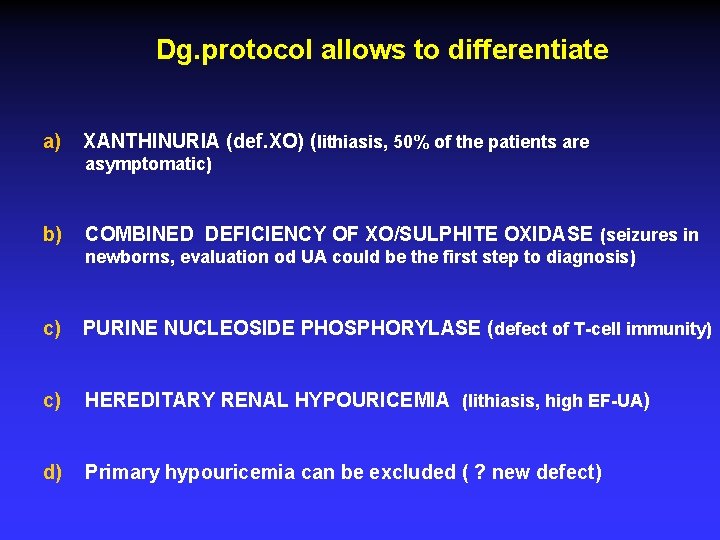
Dg. protocol allows to differentiate a) XANTHINURIA (def. XO) (lithiasis, 50% of the patients are asymptomatic) b) COMBINED DEFICIENCY OF XO/SULPHITE OXIDASE (seizures in newborns, evaluation od UA could be the first step to diagnosis) c) PURINE NUCLEOSIDE PHOSPHORYLASE (defect of T-cell immunity) c) HEREDITARY RENAL HYPOURICEMIA (lithiasis, high EF-UA) d) Primary hypouricemia can be excluded ( ? new defect)
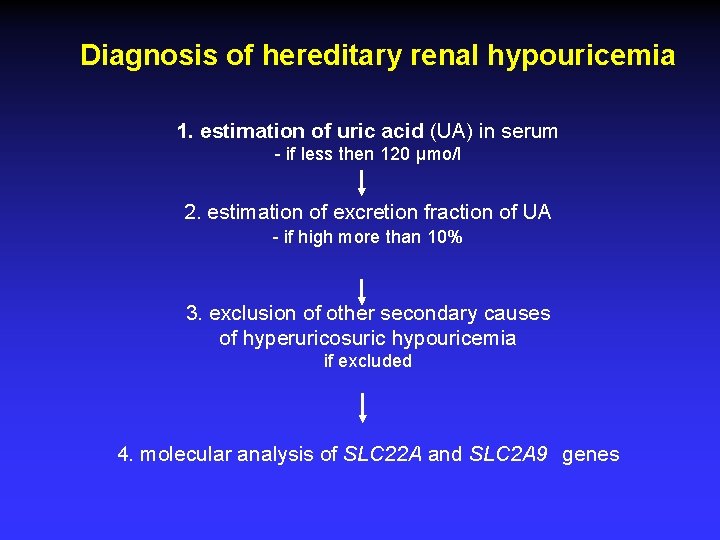
Diagnosis of hereditary renal hypouricemia 1. estimation of uric acid (UA) in serum - if less then 120 µmo/l 2. estimation of excretion fraction of UA - if high more than 10% 3. exclusion of other secondary causes of hyperuricosuric hypouricemia if excluded 4. molecular analysis of SLC 22 A and SLC 2 A 9 genes
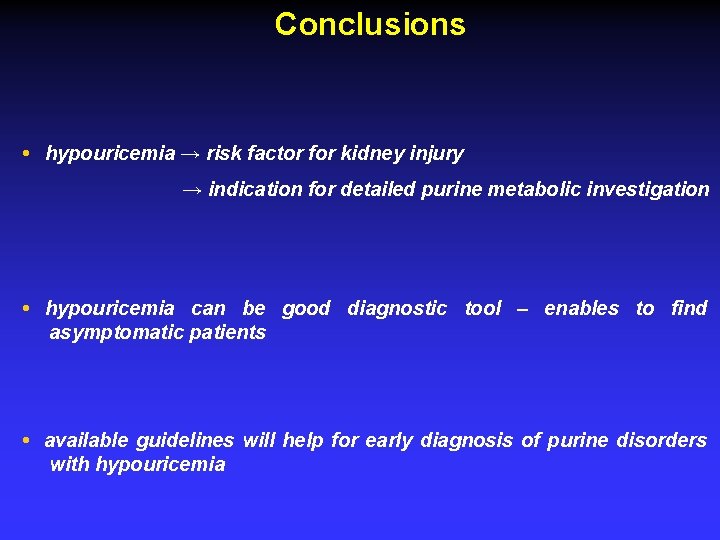
Conclusions • hypouricemia → risk factor for kidney injury → indication for detailed purine metabolic investigation • hypouricemia can be good diagnostic tool – enables to find asymptomatic patients • available guidelines will help for early diagnosis of purine disorders with hypouricemia
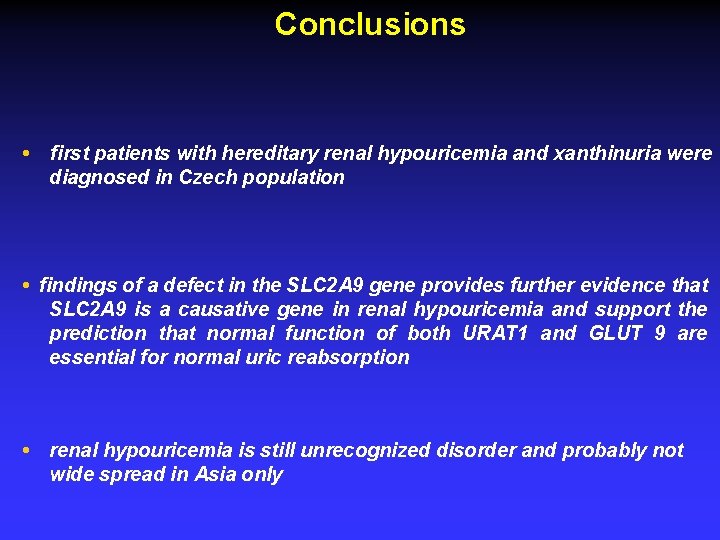
Conclusions • first patients with hereditary renal hypouricemia and xanthinuria were diagnosed in Czech population • findings of a defect in the SLC 2 A 9 gene provides further evidence that SLC 2 A 9 is a causative gene in renal hypouricemia and support the prediction that normal function of both URAT 1 and GLUT 9 are essential for normal uric reabsorption • renal hypouricemia is still unrecognized disorder and probably not wide spread in Asia only
- Slides: 25