
Diagnosis Pulmonary Embolism Pharmacology Case Study Nursing Department
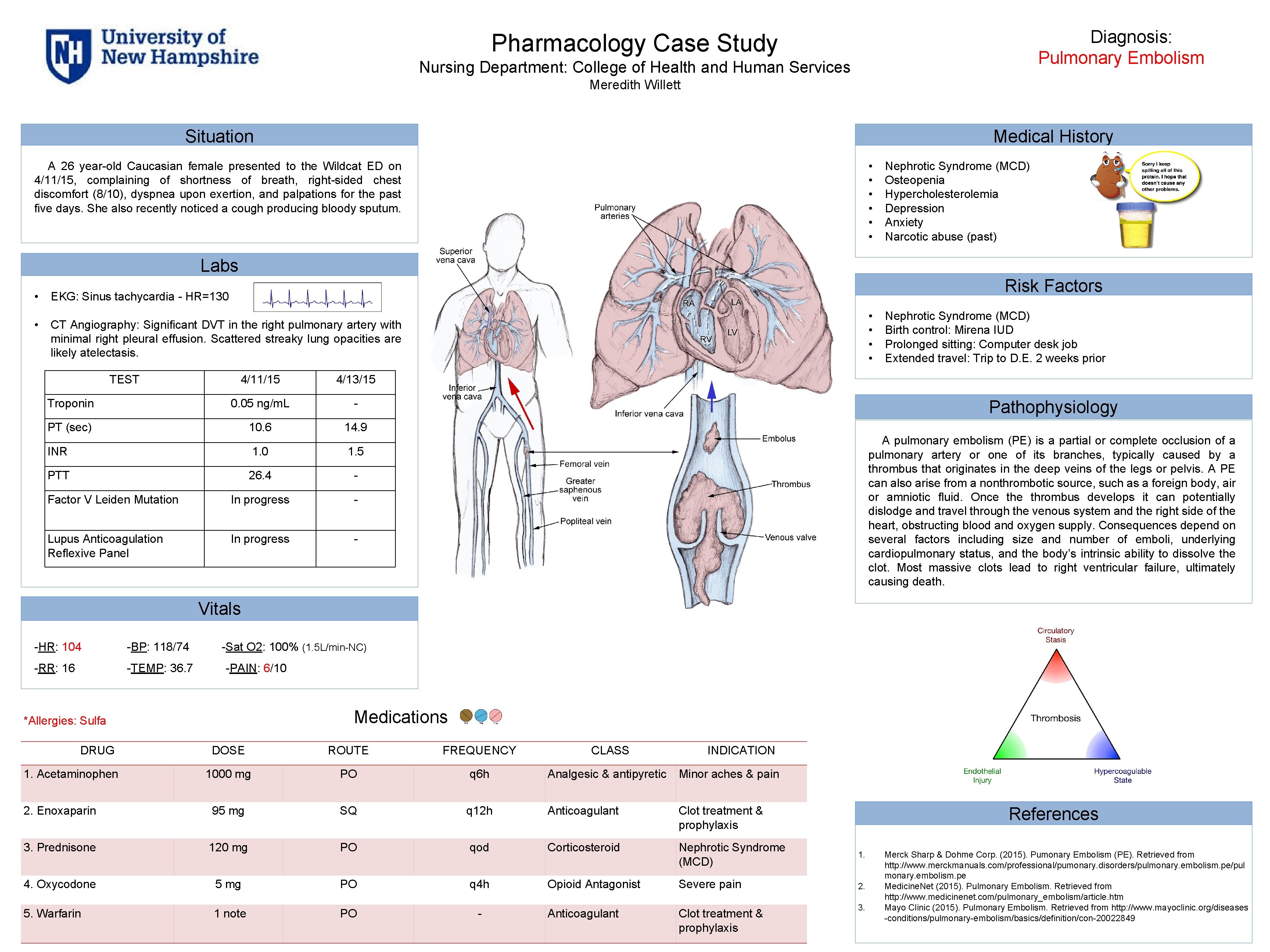
Diagnosis: Pulmonary Embolism Pharmacology Case Study Nursing Department: College of Health and Human Services Meredith Willett Situation Medical History • • • A 26 year-old Caucasian female presented to the Wildcat ED on 4/11/15, complaining of shortness of breath, right-sided chest discomfort (8/10), dyspnea upon exertion, and palpations for the past five days. She also recently noticed a cough producing bloody sputum. Nephrotic Syndrome (MCD) Osteopenia Hypercholesterolemia Depression Anxiety Narcotic abuse (past) Labs • • Risk Factors EKG: Sinus tachycardia - HR=130 • • CT Angiography: Significant DVT in the right pulmonary artery with minimal right pleural effusion. Scattered streaky lung opacities are likely atelectasis. TEST 4/11/15 4/13/15 Troponin 0. 05 ng/m. L - PT (sec) 10. 6 14. 9 INR 1. 0 1. 5 PTT 26. 4 - Factor V Leiden Mutation In progress - Lupus Anticoagulation Reflexive Panel In progress - Nephrotic Syndrome (MCD) Birth control: Mirena IUD Prolonged sitting: Computer desk job Extended travel: Trip to D. E. 2 weeks prior Pathophysiology A pulmonary embolism (PE) is a partial or complete occlusion of a pulmonary artery or one of its branches, typically caused by a thrombus that originates in the deep veins of the legs or pelvis. A PE can also arise from a nonthrombotic source, such as a foreign body, air or amniotic fluid. Once thrombus develops it can potentially dislodge and travel through the venous system and the right side of the heart, obstructing blood and oxygen supply. Consequences depend on several factors including size and number of emboli, underlying cardiopulmonary status, and the body’s intrinsic ability to dissolve the clot. Most massive clots lead to right ventricular failure, ultimately causing death. Vitals -HR: 104 -BP: 118/74 -RR: 16 -TEMP: 36. 7 -Sat O 2: 100% (1. 5 L/min-NC) -PAIN: 6/10 Medications *Allergies: Sulfa DRUG DOSE ROUTE FREQUENCY CLASS 1000 mg PO q 6 h Analgesic & antipyretic Minor aches & pain 2. Enoxaparin 95 mg SQ q 12 h Anticoagulant Clot treatment & prophylaxis 3. Prednisone 120 mg PO qod Corticosteroid Nephrotic Syndrome (MCD) 1. 4. Oxycodone 5 mg PO q 4 h Opioid Antagonist Severe pain 2. 1. Acetaminophen 5. Warfarin 1 note PO - Anticoagulant INDICATION Clot treatment & prophylaxis References 3. Merck Sharp & Dohme Corp. (2015). Pumonary Embolism (PE). Retrieved from http: //www. merckmanuals. com/professional/pumonary. disorders/pulmonary. embolism. pe/pul monary. embolism. pe Medicine. Net (2015). Pulmonary Embolism. Retrieved from http: //www. medicinenet. com/pulmonary_embolism/article. htm Mayo Clinic (2015). Pulmonary Embolism. Retrieved from http: //www. mayoclinic. org/diseases -conditions/pulmonary-embolism/basics/definition/con-20022849
- Slides: 1