
Diagnosis Intervention Evaluation and Documentation ADA NUTRITION CARE




- Slides: 82
Diagnosis, Intervention, Evaluation, and Documentation
ADA NUTRITION CARE PROCESS AND MODEL Screening & Referral System Ø Ø Identify risk factors Use appropriate tools and methods Ø Involve interdisciplinary collaboration Nutrition Assessment Ø Obtain/collect timely and appropriate data Ø Analyze/interpret with evidence- based standards ØDocument Nutrition Diagnosis Ø Identify and label problem Ø Determine cause/contributing risk factors Ø Cluster signs and symptoms/ defining characteristics ØDocument Relationship Between Patient/Client/Group & Dietetics Professional Nutrition Monitoring and Evaluation Monitor progress Ø Measure outcome indicators Ø Evaluate outcomes Ø Ø Document Ø Ø Outcomes Management System Monitor the success of the Nutrition Care Process implementation Evaluate the impact with aggregate data Identify and analyze causes of less than optimal performance and outcomes Refine the use of the Nutrition Care Process Nutrition Intervention Ø Plan nutrition intervention · Formulate goals and determine a plan of action ØImplement the nutrition intervention · Care is delivered and actions are carried out ØDocument
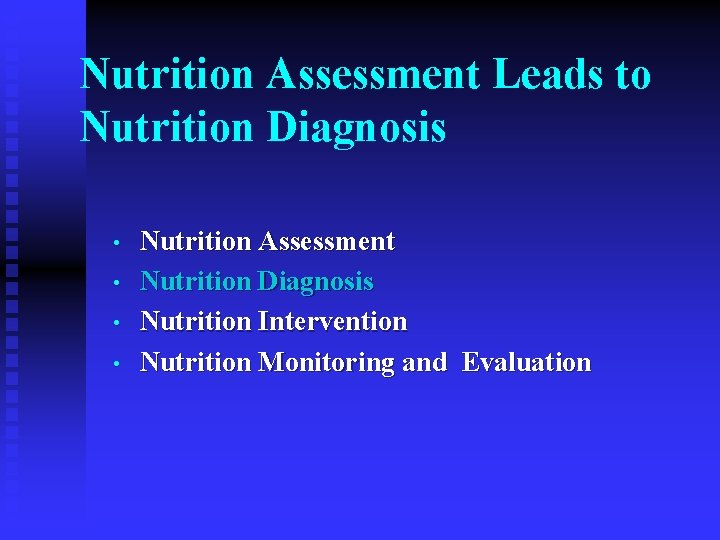
Nutrition Assessment Leads to Nutrition Diagnosis • • Nutrition Assessment Nutrition Diagnosis Nutrition Intervention Nutrition Monitoring and Evaluation
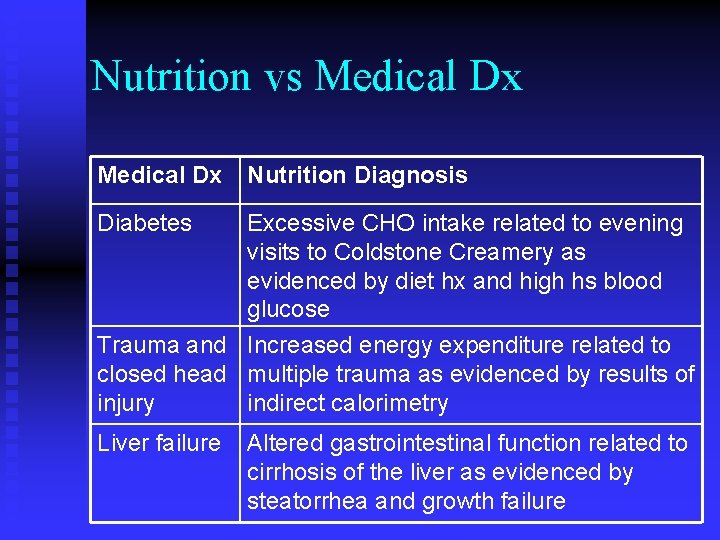
Nutrition vs Medical Dx Nutrition Diagnosis Diabetes Excessive CHO intake related to evening visits to Coldstone Creamery as evidenced by diet hx and high hs blood glucose Trauma and Increased energy expenditure related to closed head multiple trauma as evidenced by results of injury indirect calorimetry Liver failure Altered gastrointestinal function related to cirrhosis of the liver as evidenced by steatorrhea and growth failure
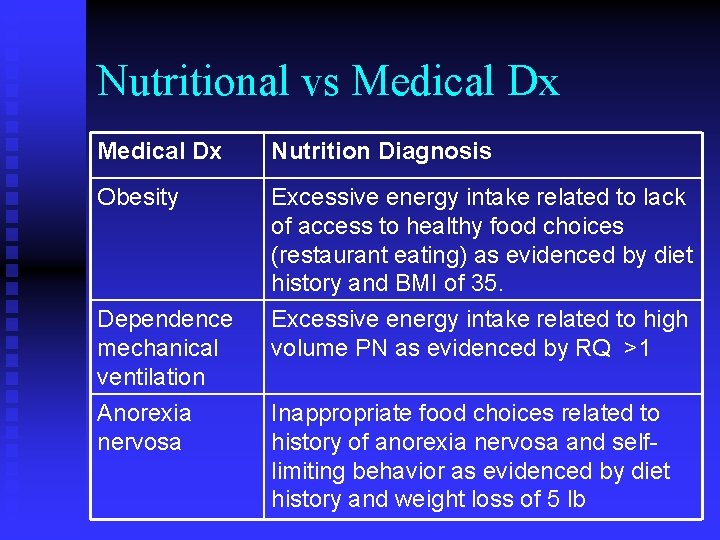
Nutritional vs Medical Dx Nutrition Diagnosis Obesity Excessive energy intake related to lack of access to healthy food choices (restaurant eating) as evidenced by diet history and BMI of 35. Dependence mechanical ventilation Excessive energy intake related to high volume PN as evidenced by RQ >1 Anorexia nervosa Inappropriate food choices related to history of anorexia nervosa and selflimiting behavior as evidenced by diet history and weight loss of 5 lb
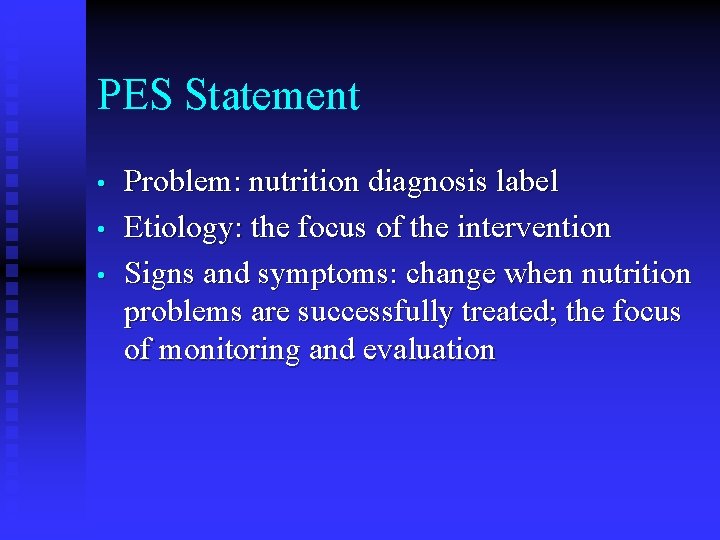
PES Statement • • • Problem: nutrition diagnosis label Etiology: the focus of the intervention Signs and symptoms: change when nutrition problems are successfully treated; the focus of monitoring and evaluation
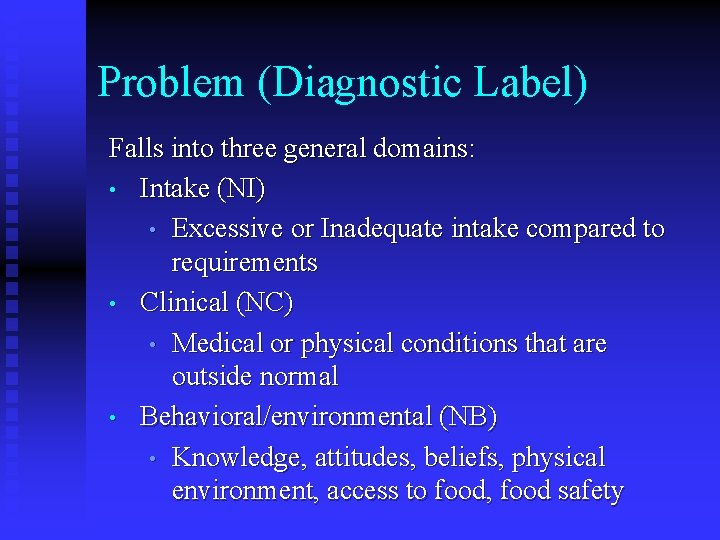
Problem (Diagnostic Label) Falls into three general domains: • Intake (NI) • Excessive or Inadequate intake compared to requirements • Clinical (NC) • Medical or physical conditions that are outside normal • Behavioral/environmental (NB) • Knowledge, attitudes, beliefs, physical environment, access to food, food safety
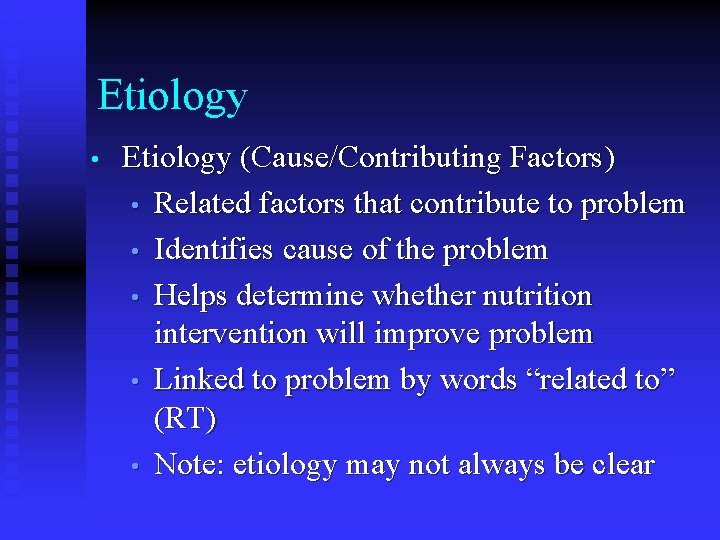
Etiology • Etiology (Cause/Contributing Factors) • Related factors that contribute to problem • Identifies cause of the problem • Helps determine whether nutrition intervention will improve problem • Linked to problem by words “related to” (RT) • Note: etiology may not always be clear
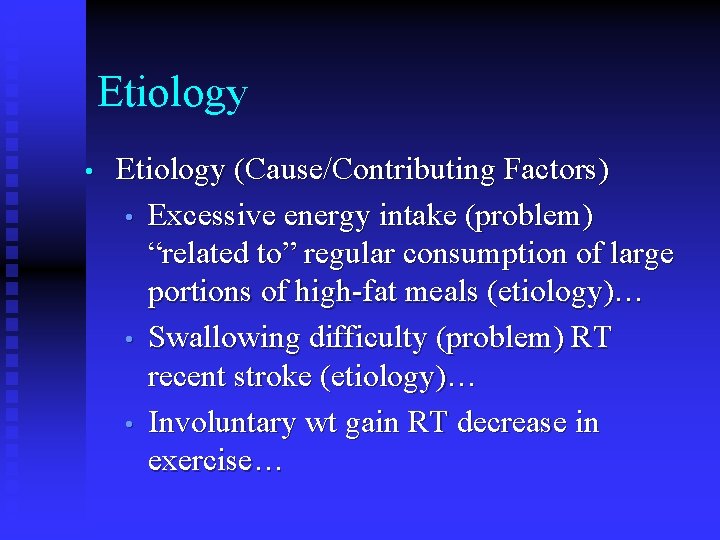
Etiology • Etiology (Cause/Contributing Factors) • Excessive energy intake (problem) “related to” regular consumption of large portions of high-fat meals (etiology)… • Swallowing difficulty (problem) RT recent stroke (etiology)… • Involuntary wt gain RT decrease in exercise…
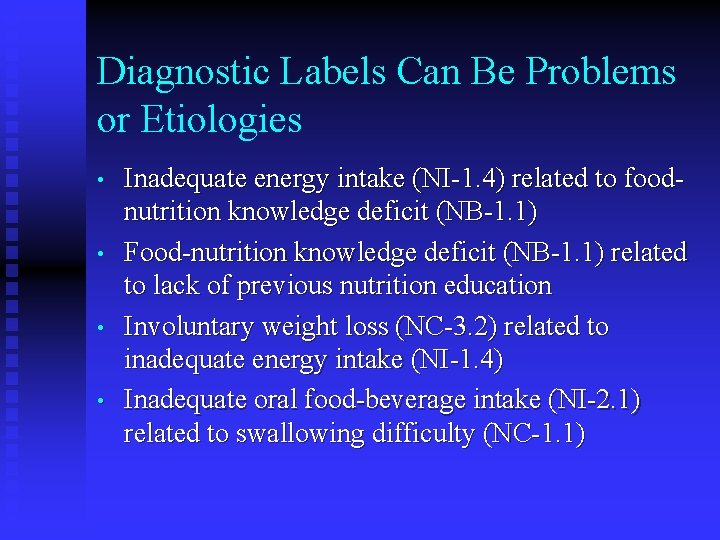
Diagnostic Labels Can Be Problems or Etiologies • • Inadequate energy intake (NI-1. 4) related to foodnutrition knowledge deficit (NB-1. 1) Food-nutrition knowledge deficit (NB-1. 1) related to lack of previous nutrition education Involuntary weight loss (NC-3. 2) related to inadequate energy intake (NI-1. 4) Inadequate oral food-beverage intake (NI-2. 1) related to swallowing difficulty (NC-1. 1)
Signs and Symptoms • • Signs/Symptoms (Defining characteristics) • Evidence that problem exists • Linked to etiology by words “as evidenced by” Evaluation and monitoring of effectiveness of intervention is done by reviewing signs and symptoms
Nutrition Dx with S/S • • • Excessive energy intake (NI-1. 5) (P) “related to” regular consumption of large portions of high-fat meals (E) “as evidenced by” diet history & 12 lb wt gain over last 18 mo (Signs)
Nutrition Assessment Identifies Etiology and S/S • • Problem: excessive energy intake Etiology: reviewing the diet history, we learn that • Patient eats in fast food restaurants 2 x day • Patient supersizes portions because it’s a bargain • Patient has only 15 minutes for lunch
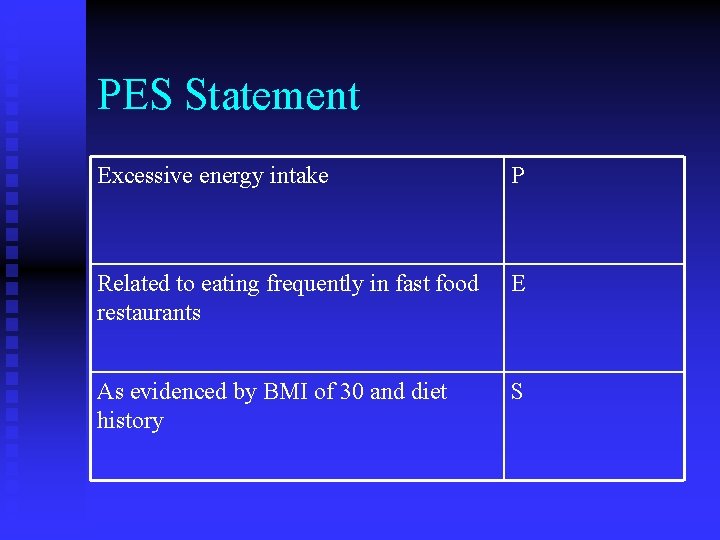
PES Statement Excessive energy intake P Related to eating frequently in fast food restaurants E As evidenced by BMI of 30 and diet history S
Etiology Guides Intervention! • • The clinician determines what the intervention is by looking at the root cause of the nutrition problem. If the cause of excessive energy intake is eating frequently in fast food restaurants, how would you intervene?
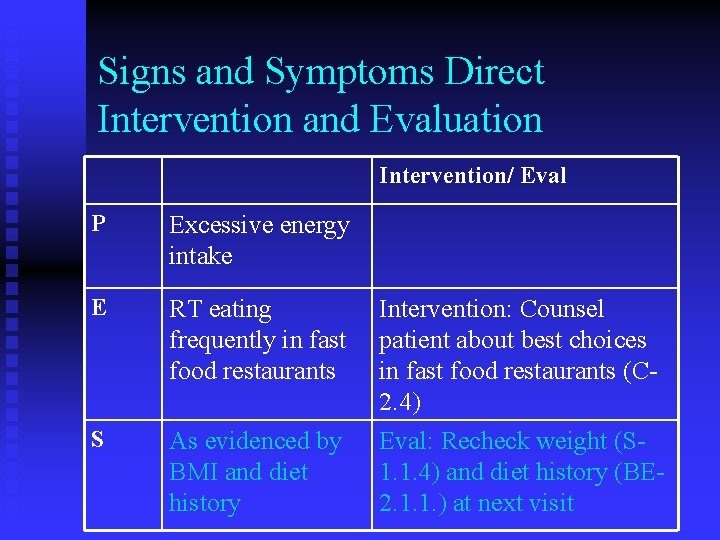
Signs and Symptoms Direct Intervention and Evaluation Intervention/ Eval P Excessive energy intake E RT eating frequently in fast food restaurants S As evidenced by BMI and diet history Intervention: Counsel patient about best choices in fast food restaurants (C 2. 4) Eval: Recheck weight (S 1. 1. 4) and diet history (BE 2. 1. 1. ) at next visit
PES Statements • • • Excessive fat intake (NI-5. 6. 2) related to high intake of fried foods and bakery goods as evidenced by diet history and hyperlipidemia Excessive energy intake (NI-1. 5) related to high intake of fried foods and snack items as evidenced by diet history and BMI Food/nutrition related knowledge deficit (NB-1. 1) related to lack of education on cholesterol lowering diet as evidenced by history and patient self-report
Nutrition Diagnosis Statement Should Be • • • Clear, concise Specific Related to one problem Accurate – related to one etiology Based on reliable, accurate assessment data
Evaluating Your PES Statement • • There are no right or wrong PES statements But some are better than others
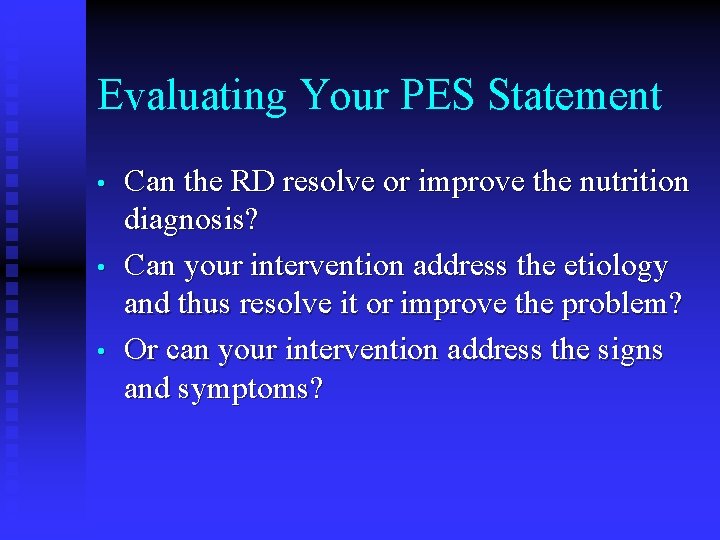
Evaluating Your PES Statement • • • Can the RD resolve or improve the nutrition diagnosis? Can your intervention address the etiology and thus resolve it or improve the problem? Or can your intervention address the signs and symptoms?
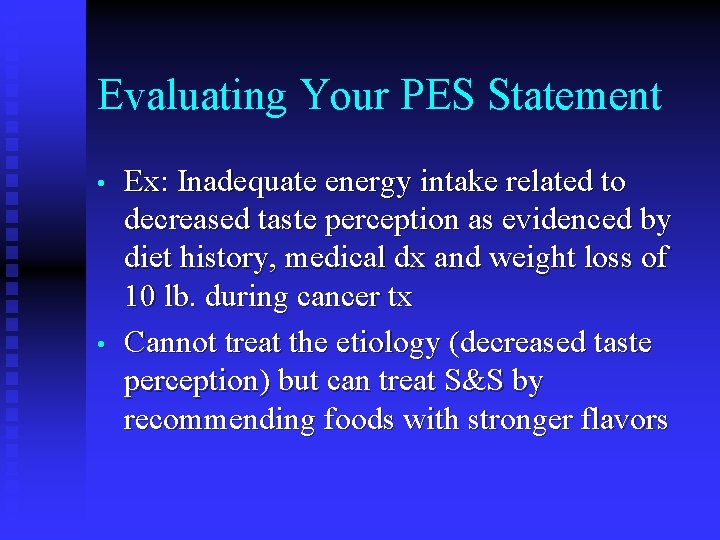
Evaluating Your PES Statement • • Ex: Inadequate energy intake related to decreased taste perception as evidenced by diet history, medical dx and weight loss of 10 lb. during cancer tx Cannot treat the etiology (decreased taste perception) but can treat S&S by recommending foods with stronger flavors
Evaluating Your PES Statement • • • Altered nutrition-related labs related to GI bleed as evidenced by medical hx and decreased hgb/hct in medical record Labs likely won’t improve until GI bleed is addressed; the etiology is not a nutritional deficit CAN address inadequate intake of iron, copper, B 12, protein, etc.
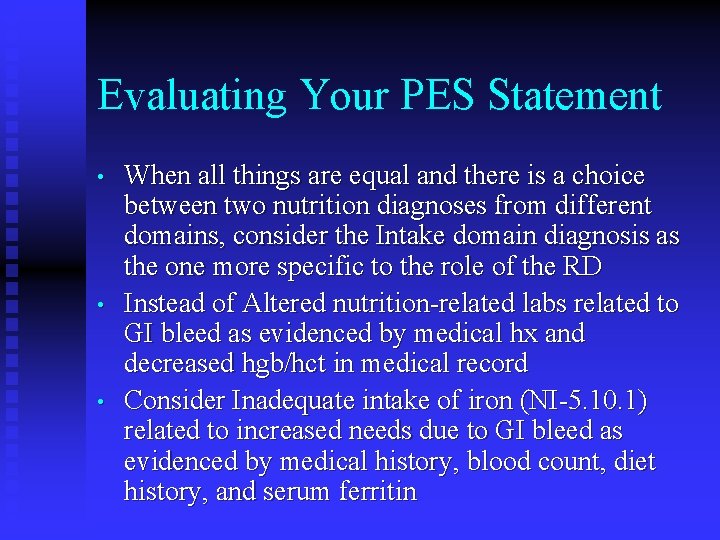
Evaluating Your PES Statement • • • When all things are equal and there is a choice between two nutrition diagnoses from different domains, consider the Intake domain diagnosis as the one more specific to the role of the RD Instead of Altered nutrition-related labs related to GI bleed as evidenced by medical hx and decreased hgb/hct in medical record Consider Inadequate intake of iron (NI-5. 10. 1) related to increased needs due to GI bleed as evidenced by medical history, blood count, diet history, and serum ferritin
Evaluating Your PES Statement • • Will measuring the signs and symptoms tell you if the problem is resolved or improved? Ex: If nutrition dx is excessive energy intake, can do another diet history at next visit and see if intake has changed; can also check weight
NCP Example: Long Term Care • • 85 y. o. resident of LTC facility has lost >10% weight in the last 6 months Medical workup negative Oral supplement is ordered but patient continues to lose weight Nutrition professional is consulted for enteral feeding recommendations
NCP Example: LTC • On assessment, it is found that patient’s teeth no longer fit and she cannot chew regular meats and vegetables; patient is storing oral supplement in drawer as she worries about the cost
Write a PES statement for this patient!
NCP Example: LTC • Diagnosis: Inadequate energy intake (NI 1. 4) related to poorly fitting dentures and hoarding of oral supplement as evidenced by observation and pt interview
Etiology Guides Intervention • Intervention: Nutrition professional orders dental consult (RC-1. 3) to reline dentures and chopped diet (ND-1. 2); puts resident on Medpass supplement (ND-3. 1. 1)
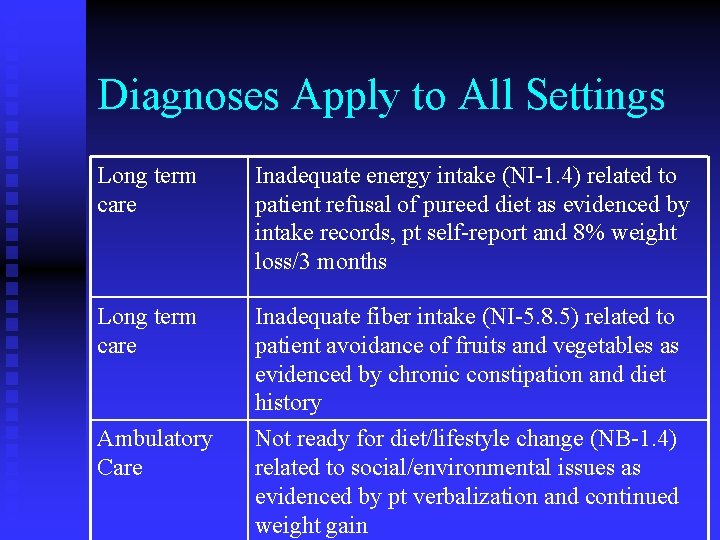
Diagnoses Apply to All Settings Long term care Inadequate energy intake (NI-1. 4) related to patient refusal of pureed diet as evidenced by intake records, pt self-report and 8% weight loss/3 months Long term care Inadequate fiber intake (NI-5. 8. 5) related to patient avoidance of fruits and vegetables as evidenced by chronic constipation and diet history Not ready for diet/lifestyle change (NB-1. 4) related to social/environmental issues as evidenced by pt verbalization and continued weight gain Ambulatory Care
ADA’s Nutrition Care Process Steps • • Nutrition Assessment Nutrition Diagnosis Nutrition Intervention Nutrition Monitoring and Evaluation
Nutrition Intervention • • Should be targeted at etiology If not etiology, then signs and symptoms
Nutrition Interventions Four categories of nutrition interventions: • Food and/or nutrient delivery (ND) • Nutrition education (E) • Nutrition counseling (C) • Coordination of nutrition care (RC)
Food and/or Nutrient Delivery • • Meals and snacks (ND-1) Enteral/parenteral nutrition (ND-2) Medical food supplements (ND-3. 1) Vitamin and mineral supplement (ND-3. 2) Bioactive substance supplement (ND-3. 3) Feeding assistance (ND-4) Feeding environment (ND-5) Nutrition-related medication management (ND-6)
Nutrition Education (E) • • Initial/brief nutrition education (E-1) • E. g. survival skills on discharge Comprehensive nutrition education (E-2) • Purpose • Recommended modifications • Result interpretation • Other Note: Education is appropriate for food and nutrition-related knowledge deficit. If the client knows the content, more education probably won’t help
Nutrition Counseling (C) • • • Theory or approach Strategies Phase
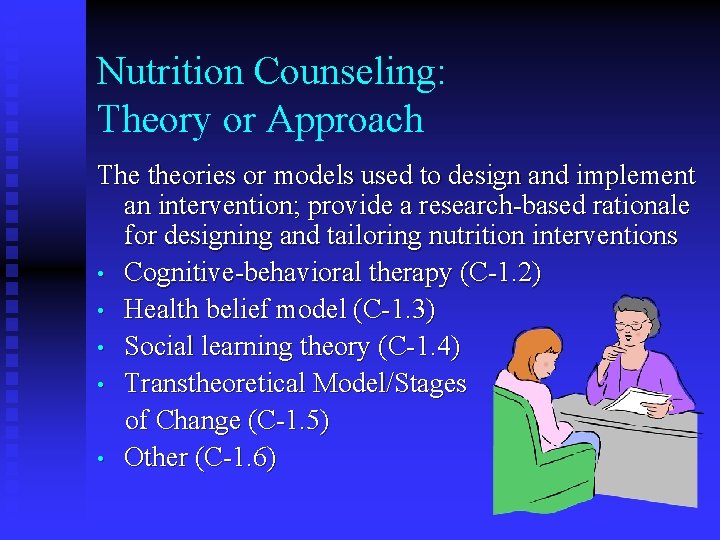
Nutrition Counseling: Theory or Approach The theories or models used to design and implement an intervention; provide a research-based rationale for designing and tailoring nutrition interventions • Cognitive-behavioral therapy (C-1. 2) • Health belief model (C-1. 3) • Social learning theory (C-1. 4) • Transtheoretical Model/Stages of Change (C-1. 5) • Other (C-1. 6)
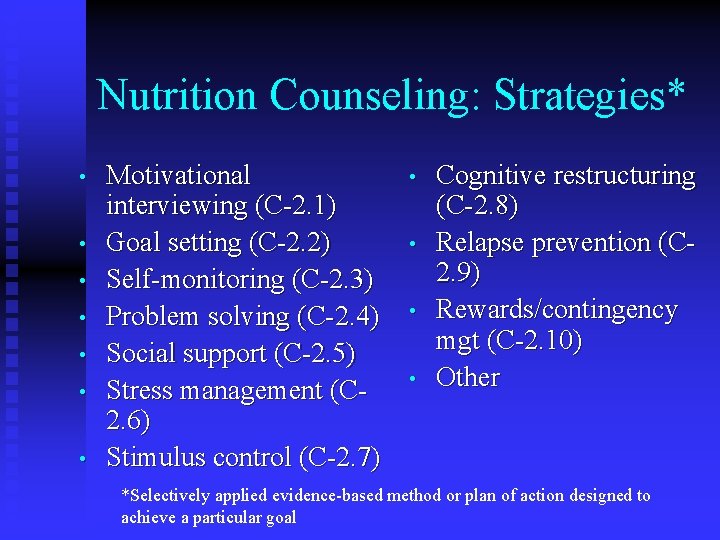
Nutrition Counseling: Strategies* • • Motivational interviewing (C-2. 1) Goal setting (C-2. 2) Self-monitoring (C-2. 3) Problem solving (C-2. 4) Social support (C-2. 5) Stress management (C 2. 6) Stimulus control (C-2. 7) • • Cognitive restructuring (C-2. 8) Relapse prevention (C 2. 9) Rewards/contingency mgt (C-2. 10) Other *Selectively applied evidence-based method or plan of action designed to achieve a particular goal
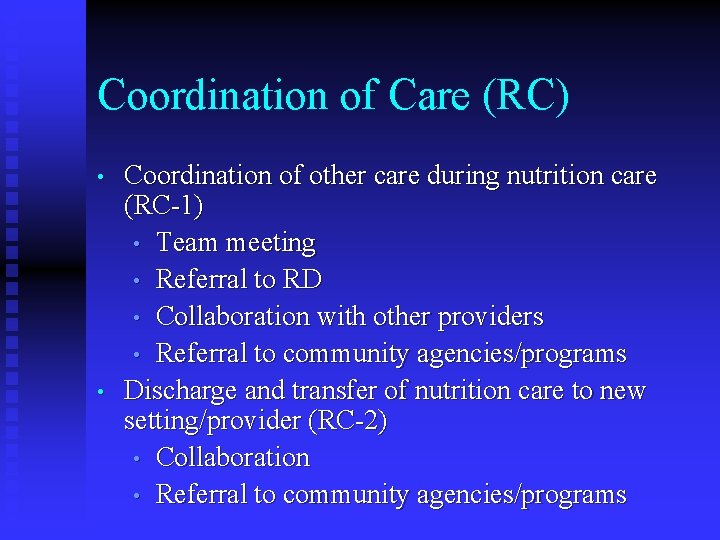
Coordination of Care (RC) • • Coordination of other care during nutrition care (RC-1) • Team meeting • Referral to RD • Collaboration with other providers • Referral to community agencies/programs Discharge and transfer of nutrition care to new setting/provider (RC-2) • Collaboration • Referral to community agencies/programs
ADA’s Nutrition Care Process Steps • • Nutrition Assessment Nutrition Diagnosis Nutrition Intervention Nutrition Monitoring and Evaluation
Nutrition Monitoring and Evaluation • • • Monitor progress and determine if goals are met Identifies patient/client outcomes relevant to the nutrition diagnosis and intervention plans and goals Measure and compare to client’s previous status, nutrition goals, or reference standards
Nutrition Outcomes – 4 Categories • • Nutrition-Related Behavioral and Environmental Outcomes (BE)—Nutrition-related knowledge, behavior, access, and ability that impact food and nutrient intake Food and Nutrient Intake Outcomes (FI)—Food and/or nutrient intake from all sources Nutrition-Related Physical Signs and Symptom Outcomes (S)—Anthropomorphic, biochemical, and physical exam parameters Nutrition-Related Patient/client centered Outcomes (PC)—perception of patient/client’s nutrition intervention and its impact
Nutrition-Related Behavioral and Environmental Outcomes (BE) • • Knowledge/beliefs (1) Behavior (2) Access (3) Physical activity and function (4)
Behavior-Environmental Outcomes Domain: Beliefs and Attitudes (BE-1. 1) Definition: beliefs/attitudes about and/or readiness to change food, nutrition, or nutrition-related behaviors Potential indicators (BE-1. 1) • Readiness to change • Perceived consequences of change • Perceived costs versus benefits of change • Perceived risk • Outcome expectancy • Conflict with patient/family value system • Self efficacy
Beliefs and Attitudes (BE-1. 1) Measurement methods or data sources • Patient self-report, client/patient assessment questionnaire or interview Typically used to monitor and evaluate change in the following domains of nutrition intervention: • Nutrition education, nutrition counseling
Beliefs and Attitudes (BE-1. 1) Typically used to monitor and evaluate change in the following nutrition diagnoses • Harmful beliefs/attitudes about food- or nutrition-related topics • Not ready for diet/lifestyle change • Inability to manage self-care • Excess or inadequate oral food/beverage, energy, macronutrient, micronutrient, or bioactive substance intake • Imbalance of nutrients • Inappropriate fat foods
Beliefs and Attitudes (BE-1. 1) Typically used to monitor/evaluate change in the following nutrition diagnoses (cont) • Inappropriate intake of amino acids • Underweight • Overweight/obesity • Disordered eating pattern • Physical inactivity • Excess exercise
Behavior-Environmental Outcomes Domain: Food and Nutrition Knowledge (BE-1. 2) Definition: Level of knowledge about food, nutrition and health, or nutrition-related information and guidelines relevant to patient/client needs
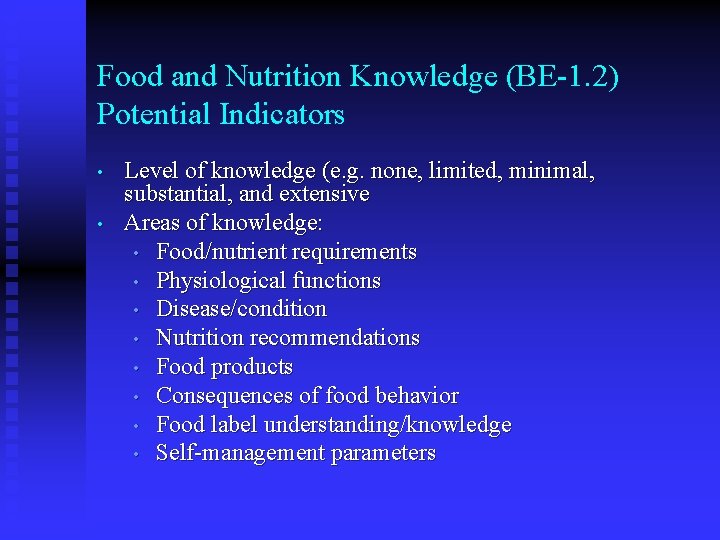
Food and Nutrition Knowledge (BE-1. 2) Potential Indicators • • Level of knowledge (e. g. none, limited, minimal, substantial, and extensive Areas of knowledge: • Food/nutrient requirements • Physiological functions • Disease/condition • Nutrition recommendations • Food products • Consequences of food behavior • Food label understanding/knowledge • Self-management parameters
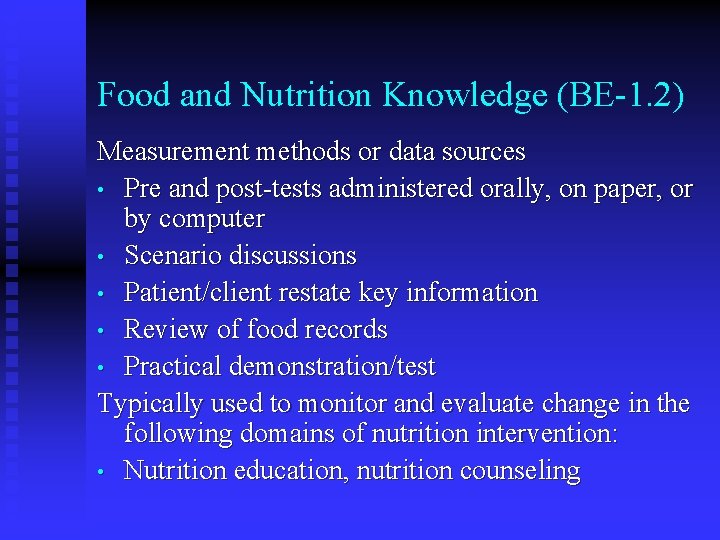
Food and Nutrition Knowledge (BE-1. 2) Measurement methods or data sources • Pre and post-tests administered orally, on paper, or by computer • Scenario discussions • Patient/client restate key information • Review of food records • Practical demonstration/test Typically used to monitor and evaluate change in the following domains of nutrition intervention: • Nutrition education, nutrition counseling
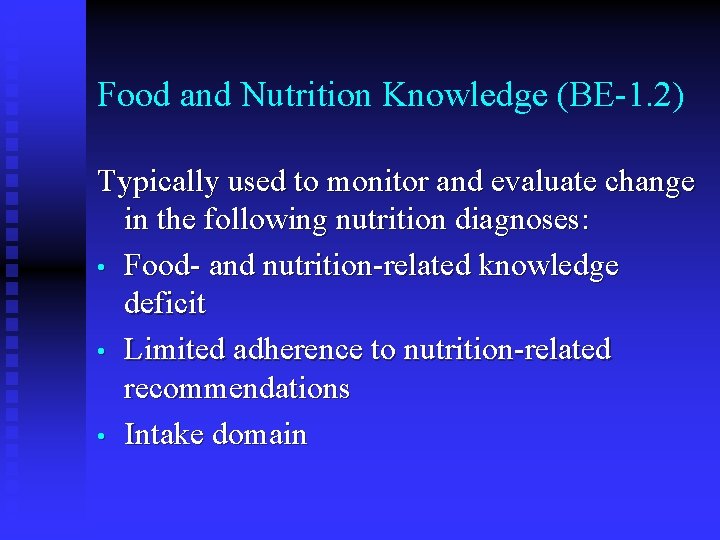
Food and Nutrition Knowledge (BE-1. 2) Typically used to monitor and evaluate change in the following nutrition diagnoses: • Food- and nutrition-related knowledge deficit • Limited adherence to nutrition-related recommendations • Intake domain
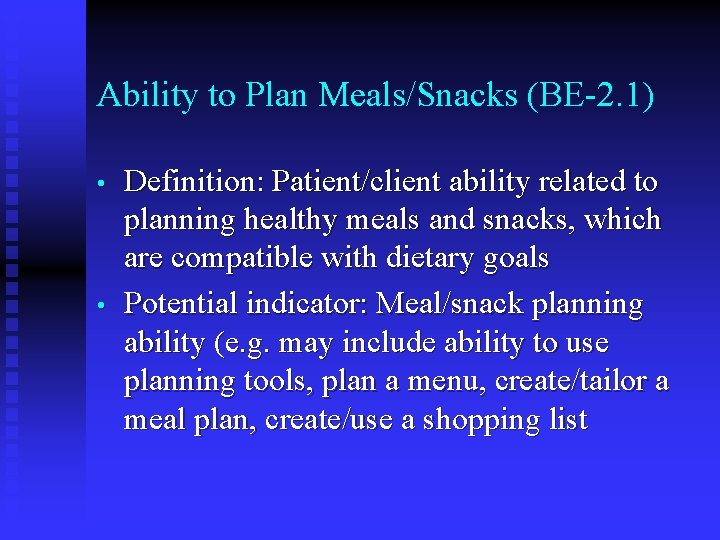
Ability to Plan Meals/Snacks (BE-2. 1) • • Definition: Patient/client ability related to planning healthy meals and snacks, which are compatible with dietary goals Potential indicator: Meal/snack planning ability (e. g. may include ability to use planning tools, plan a menu, create/tailor a meal plan, create/use a shopping list
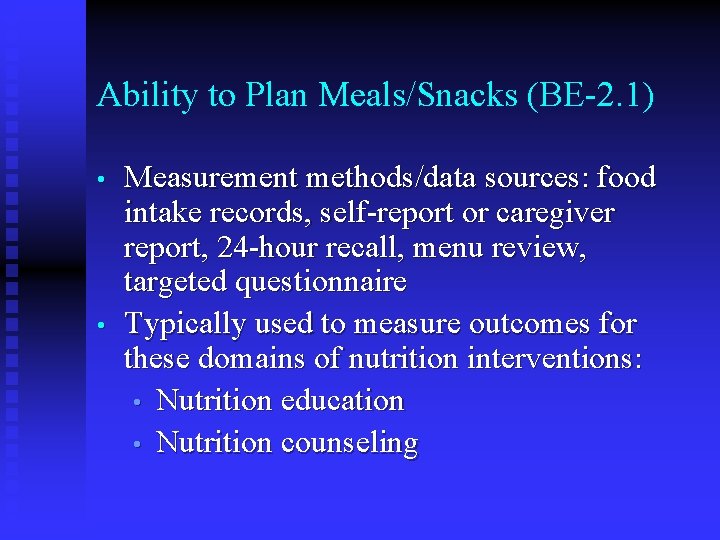
Ability to Plan Meals/Snacks (BE-2. 1) • • Measurement methods/data sources: food intake records, self-report or caregiver report, 24 -hour recall, menu review, targeted questionnaire Typically used to measure outcomes for these domains of nutrition interventions: • Nutrition education • Nutrition counseling
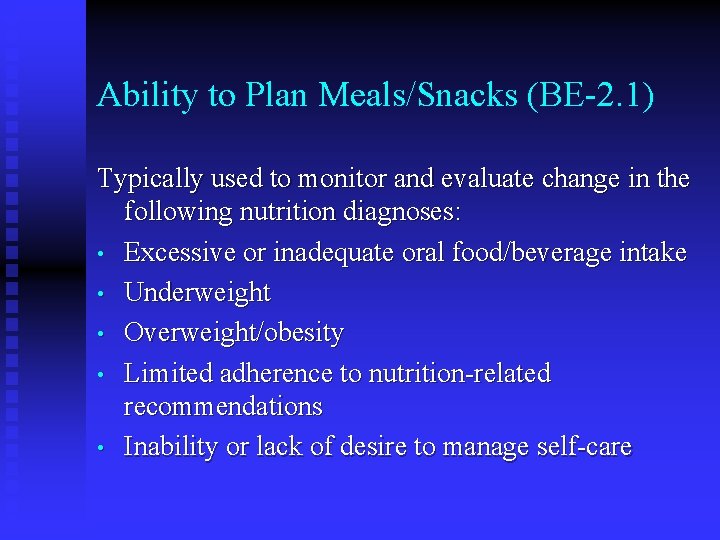
Ability to Plan Meals/Snacks (BE-2. 1) Typically used to monitor and evaluate change in the following nutrition diagnoses: • Excessive or inadequate oral food/beverage intake • Underweight • Overweight/obesity • Limited adherence to nutrition-related recommendations • Inability or lack of desire to manage self-care
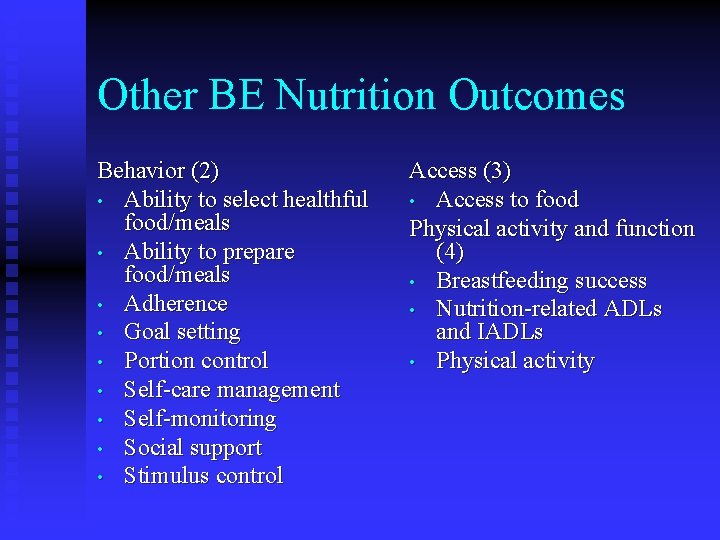
Other BE Nutrition Outcomes Behavior (2) • Ability to select healthful food/meals • Ability to prepare food/meals • Adherence • Goal setting • Portion control • Self-care management • Self-monitoring • Social support • Stimulus control Access (3) • Access to food Physical activity and function (4) • Breastfeeding success • Nutrition-related ADLs and IADLs • Physical activity
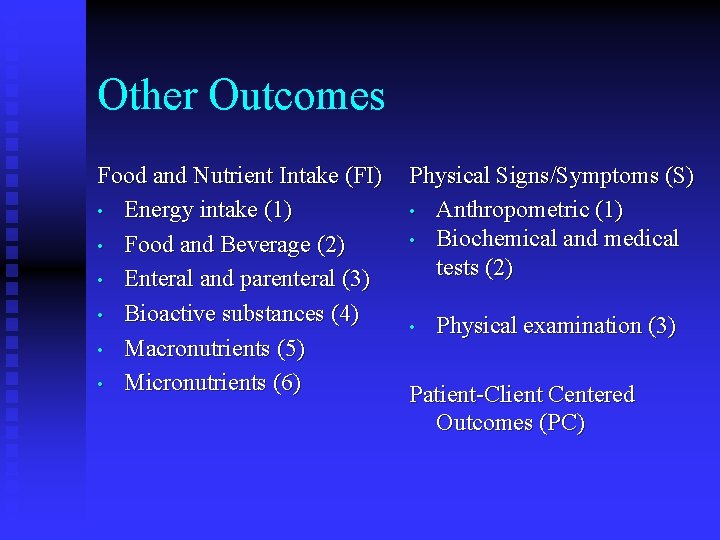
Other Outcomes Food and Nutrient Intake (FI) • Energy intake (1) • Food and Beverage (2) • Enteral and parenteral (3) • Bioactive substances (4) • Macronutrients (5) • Micronutrients (6) Physical Signs/Symptoms (S) • Anthropometric (1) • Biochemical and medical tests (2) • Physical examination (3) Patient-Client Centered Outcomes (PC)
Outcomes Based Practice • • Underlays Performance Improvement and Management Meets accreditation standards (TJC, American Diabetes Association) Supports value of nutrition providers in health delivery system Enhances reputation/ties with medical staff and other colleagues
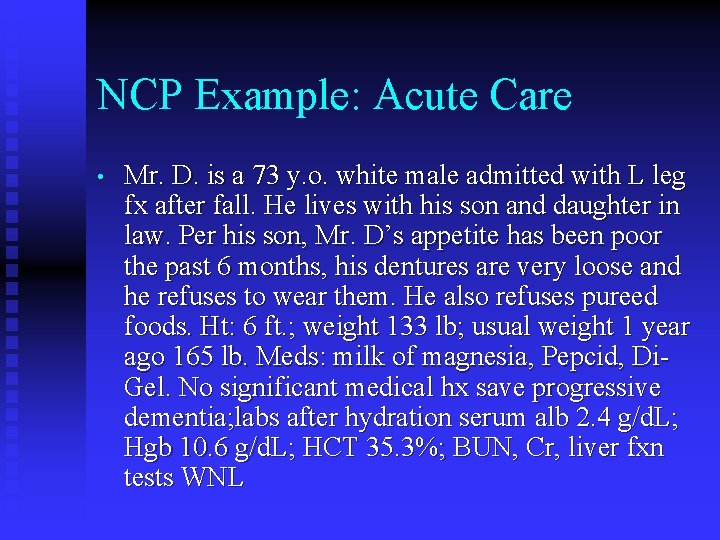
NCP Example: Acute Care • Mr. D. is a 73 y. o. white male admitted with L leg fx after fall. He lives with his son and daughter in law. Per his son, Mr. D’s appetite has been poor the past 6 months, his dentures are very loose and he refuses to wear them. He also refuses pureed foods. Ht: 6 ft. ; weight 133 lb; usual weight 1 year ago 165 lb. Meds: milk of magnesia, Pepcid, Di. Gel. No significant medical hx save progressive dementia; labs after hydration serum alb 2. 4 g/d. L; Hgb 10. 6 g/d. L; HCT 35. 3%; BUN, Cr, liver fxn tests WNL
Write a PES statement for this patient!
NCP Example: Acute Care Nutrition Diagnosis • Inadequate energy intake (NI-1. 4) related to dementia and poor appetite as evidenced by diet history and recent unintentional weight loss • Chewing difficulty (NC-1. 2) related to illfitting dentures as evidenced by diet history • Increased energy expenditure (NI-1. 2) related to long bone fx as evidenced by medical history
How would you intervene with this patient?
Intervention • • Dental consult to have dentures relined for better fit (RC - coordination of care) Try oral supplements to determine patient preference and evaluate acceptance (ND-3. 1. 1 food-nutrient delivery) Consider move to assisted living (RC coordination of care) Educate patient’s family on nutrient-dense choices for supplemental feedings (E - nutrition education)
Monitoring and Evaluation • • Initiate calorie count while patient is hospitalized to evaluate acceptance of oral supplements Weigh patient weekly after discharge Evaluate patient’s ability to chew textured foods after dentures are replaced Evaluate patient in Geriatric Clinic in one month
The Diet Prescription • • Designates type, amount, frequency of feeding based on pt’s needs, care goals May specify calorie goal May limit or increase various components of the diet Each institution usually has specific diets that have been approved by committee that are used at that institution
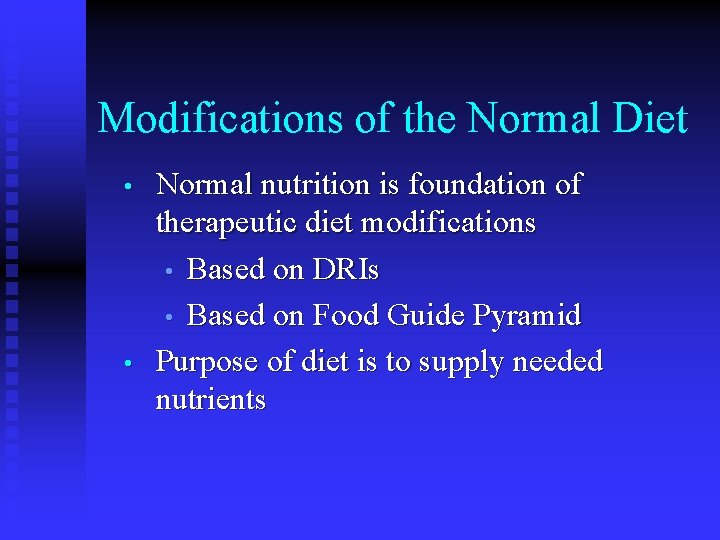
Modifications of the Normal Diet • • Normal nutrition is foundation of therapeutic diet modifications • Based on DRIs • Based on Food Guide Pyramid Purpose of diet is to supply needed nutrients
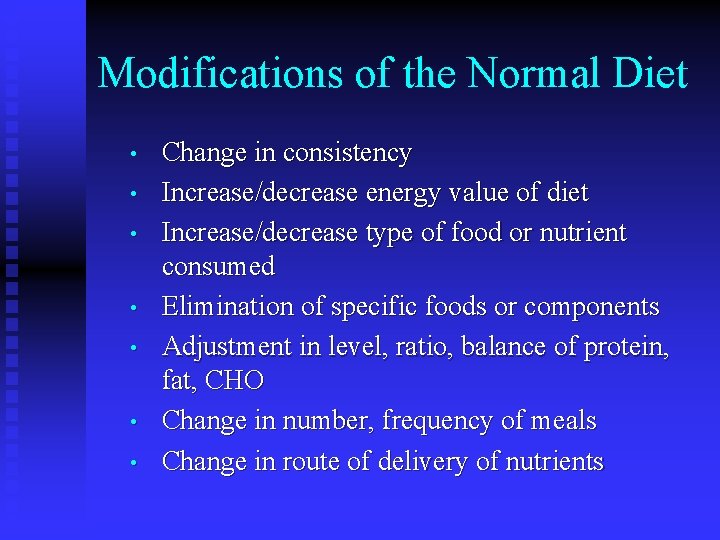
Modifications of the Normal Diet • • Change in consistency Increase/decrease energy value of diet Increase/decrease type of food or nutrient consumed Elimination of specific foods or components Adjustment in level, ratio, balance of protein, fat, CHO Change in number, frequency of meals Change in route of delivery of nutrients
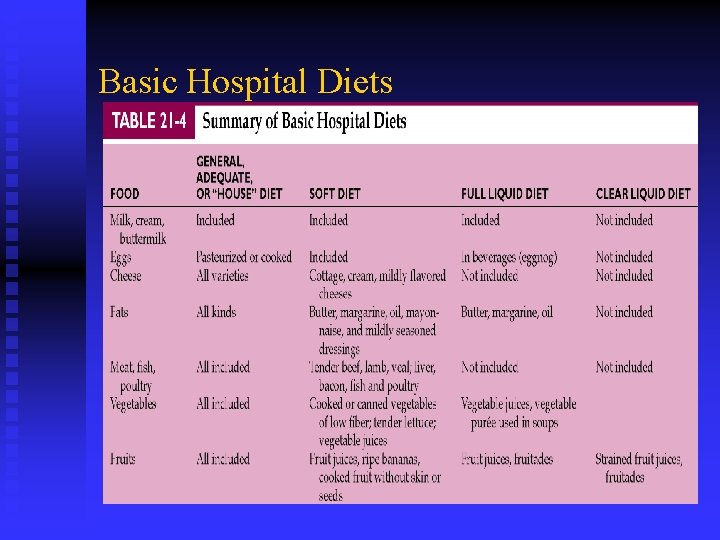
Basic Hospital Diets
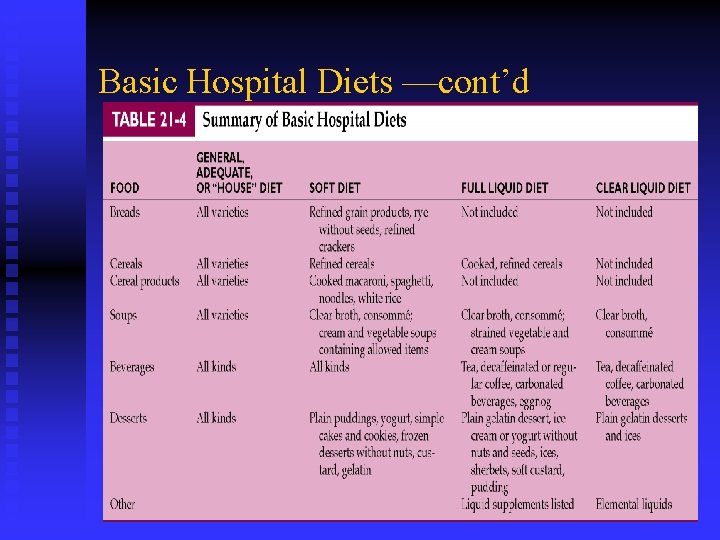
Basic Hospital Diets —cont’d
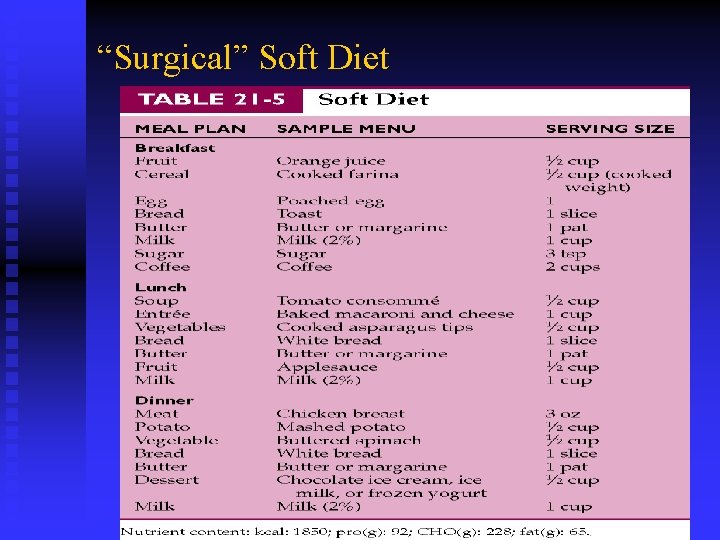
“Surgical” Soft Diet
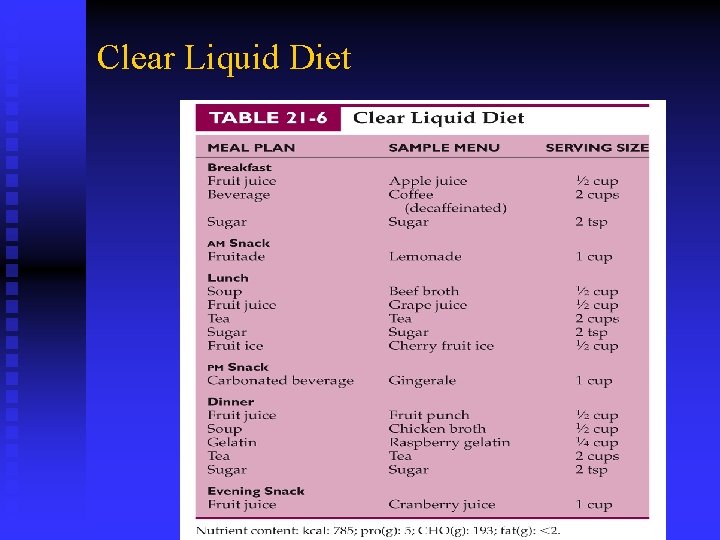
Clear Liquid Diet
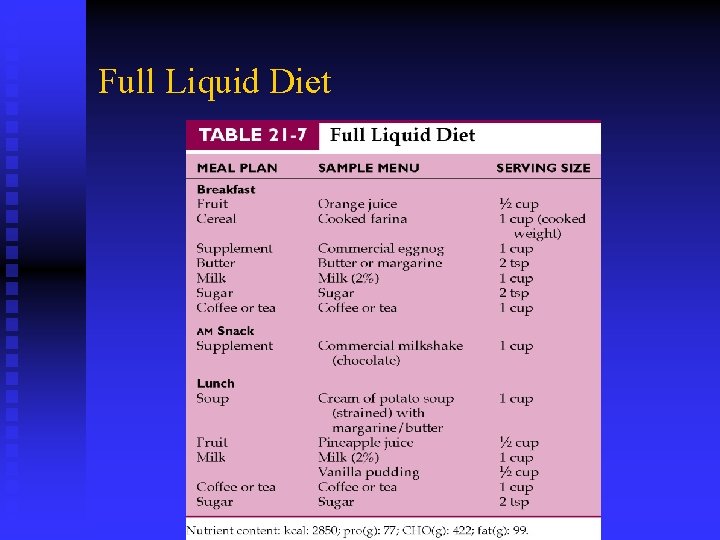
Full Liquid Diet
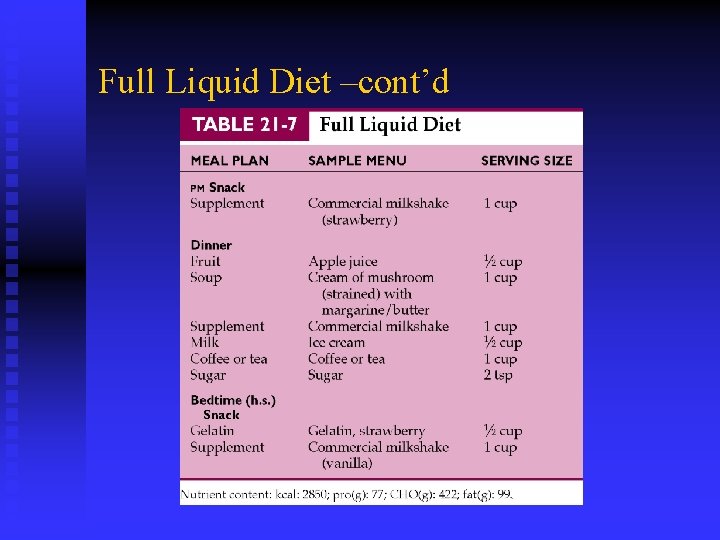
Full Liquid Diet –cont’d
House or Standard Diet Controversies • • Should the house diet be low in fat, saturated fat, sodium, and sugar to conform with the U. S. dietary guidelines? Should the house diet be intended to maximize the nutritional intake of sick people, featuring familiar, comfort foods and fulfilling patient preferences and expectations, regardless of conformity to dietary guidelines designed for healthy people?
Consistency Diet Controversies • • Soft Diet: what should be included or excluded? Is the diet ‘dental” soft, “surgical” soft, mechanical soft; the needs of dysphagia patients and dental patients are different Full liquid diet: there is no evidence that it has a role as part of a surgical progression; many of the foods included are poorly tolerated by persons immediately post GI surgery (dairy products, fats, etc. ) May be useful as a source of nutrition for persons with mouth pain or dental surgery
Consistency Diet Controversies • • Thickened liquids: when speech pathologists recommend specific liquid consistencies, they may be using a different standard than is used in the food and nutrition department There is no generally-accepted standard for nectar thick, honey thick, etc. Often these foods vary greatly among and within institutions and depending on where and by whom the thickening is done
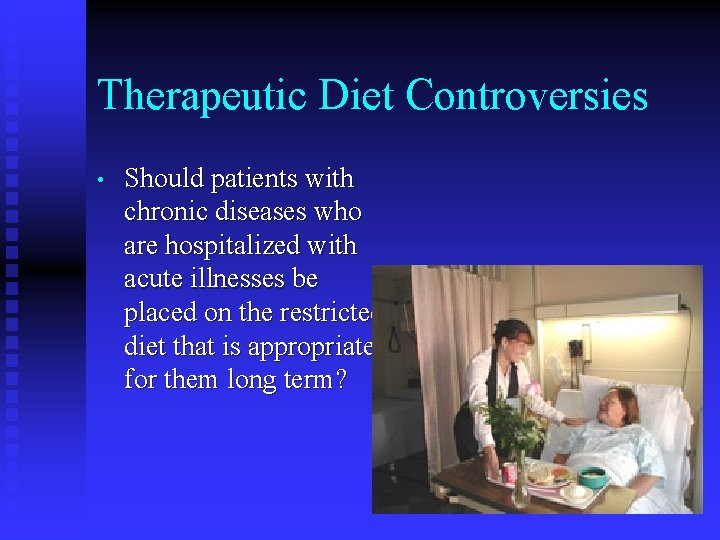
Therapeutic Diet Controversies • Should patients with chronic diseases who are hospitalized with acute illnesses be placed on the restricted diet that is appropriate for them long term?
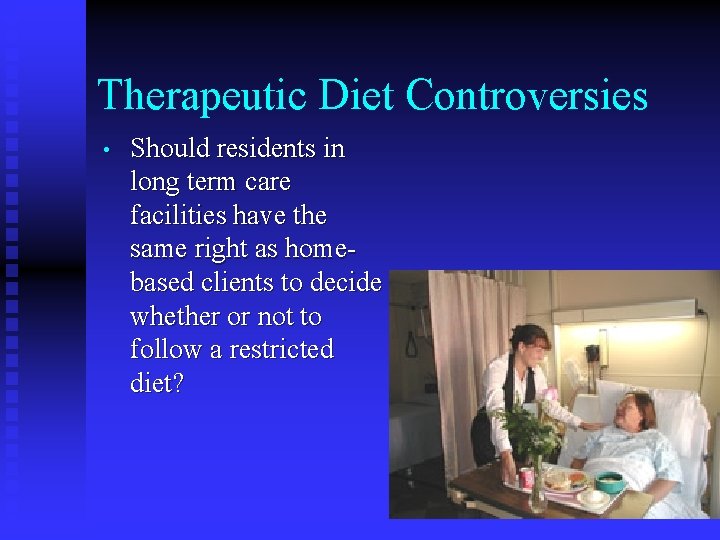
Therapeutic Diet Controversies • Should residents in long term care facilities have the same right as homebased clients to decide whether or not to follow a restricted diet?
Nutritional Care of the Terminally Ill Patient • • Maintenance of comfort and quality of life are the main goals of nutritional care for terminally ill patients = “palliative care” Dietary restrictions and aggressive nutrition care that negatively impacts quality of life are rarely appropriate.
Palliative Care • Encourages the alleviation of physical symptoms, anxiety, and fear while attempting to maintain the patient’s ability to function independently
Continuity of Care • • Due to shortened length of stay, more nutritional care is being provided in alternative settings (long term care, home care, ambulatory clinics and community programs) Nutrition counseling and education in acute care is often limited to survival skills Nutritional counseling should be provided in a setting conducive to long term behavior change The acute care stay can be an opportunity to identify nutritional problems and devise a plan for follow-up care
Discharge Planning Discharge documentation includes • Summary of nutritional therapies and outcomes • Pertinent information such as weight, lab results, dietary intake • Potential drug-nutrient interactions • Expected progress or prognosis • Recommendations for follow-up services
Discharge Planning Courtesy University of Washington Medical Centers, Seattle.