
Diagnosis and Treatment of Multiple Myeloma Mark B

Diagnosis and Treatment of Multiple Myeloma Mark B. Juckett MD Division of Hematology University of Wisconsin December 11, 2002
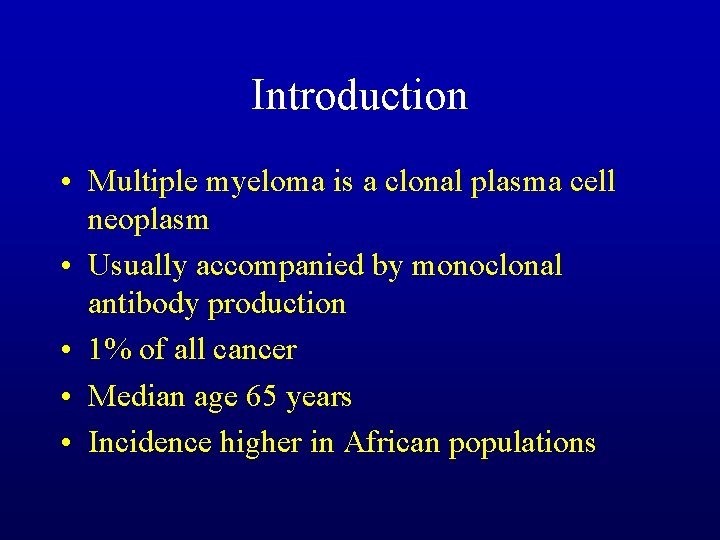
Introduction • Multiple myeloma is a clonal plasma cell neoplasm • Usually accompanied by monoclonal antibody production • 1% of all cancer • Median age 65 years • Incidence higher in African populations
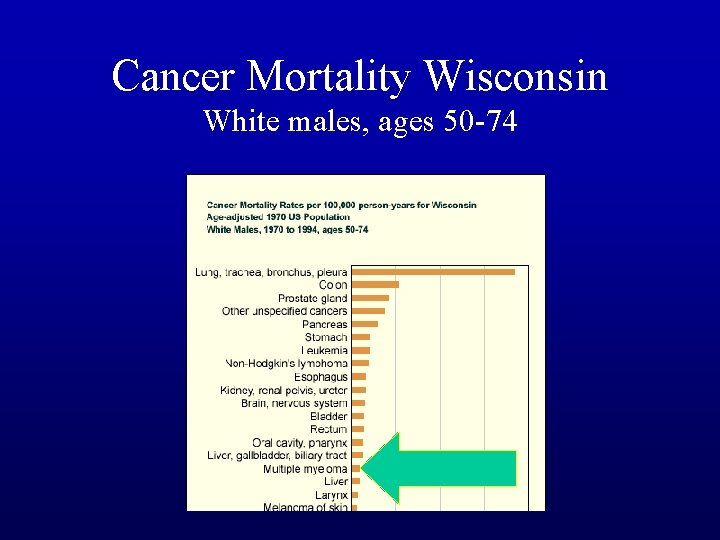
Cancer Mortality Wisconsin White males, ages 50 -74
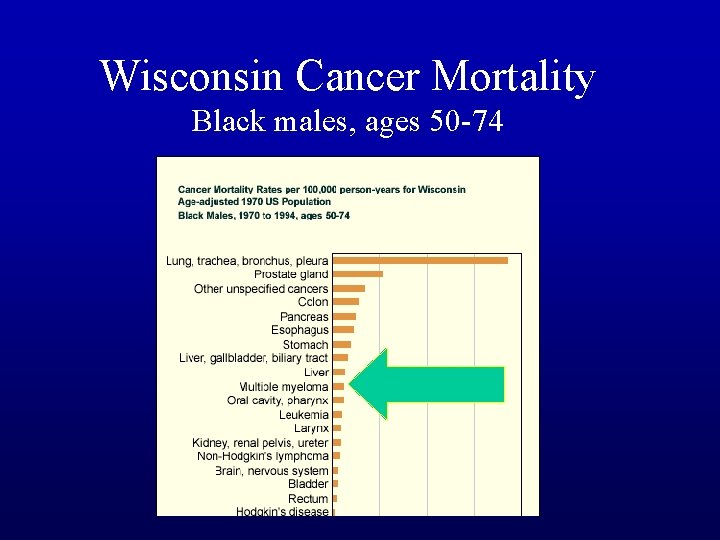
Wisconsin Cancer Mortality Black males, ages 50 -74
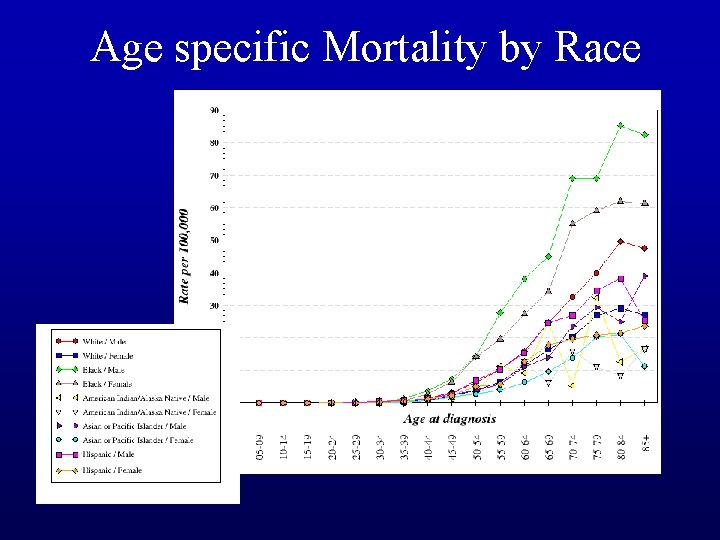
Age specific Mortality by Race
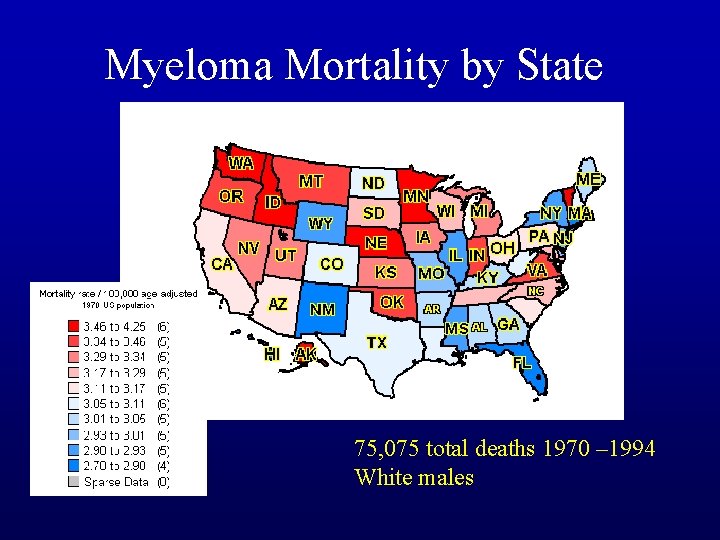
Myeloma Mortality by State 75, 075 total deaths 1970 – 1994 White males
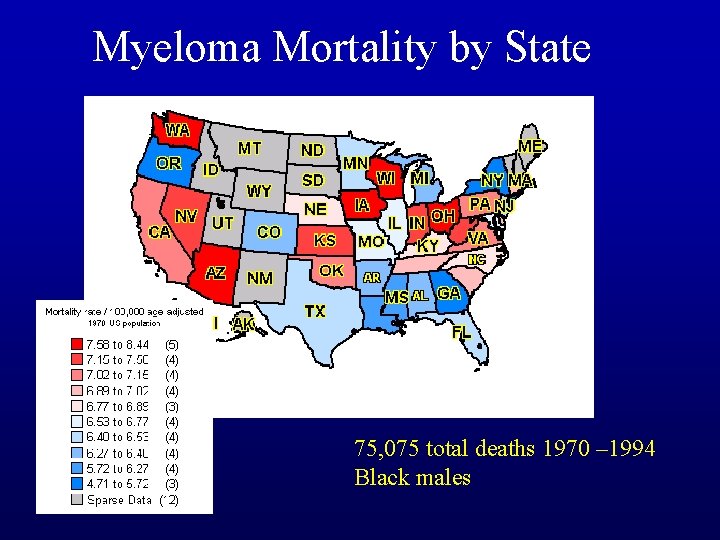
Myeloma Mortality by State 75, 075 total deaths 1970 – 1994 Black males
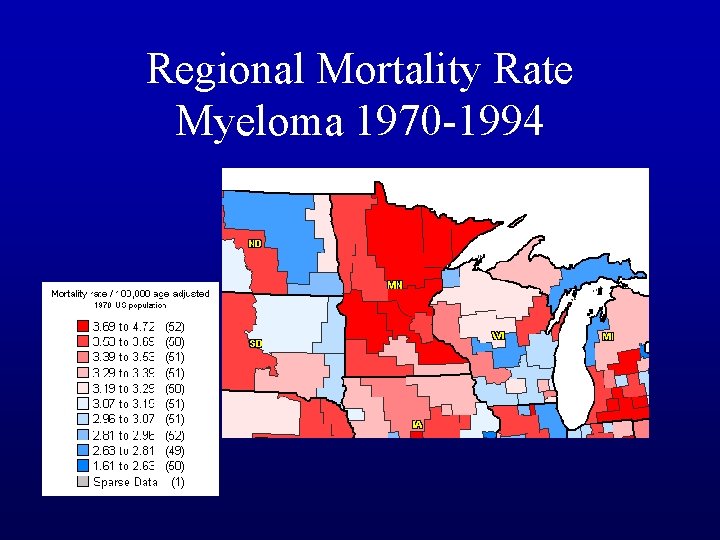
Regional Mortality Rate Myeloma 1970 -1994
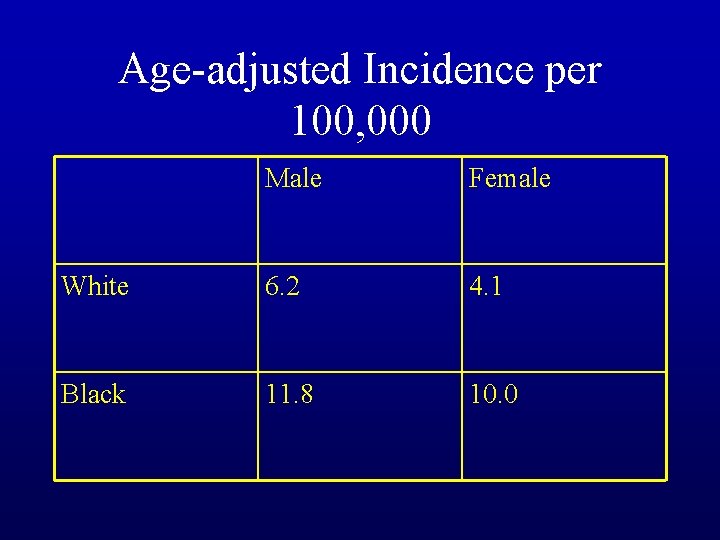
Age-adjusted Incidence per 100, 000 Male Female White 6. 2 4. 1 Black 11. 8 10. 0
Etiology • • Familial clustering African Americans Radiation Agriculture, Benzene, Radiation, Sheet metal work • Chronic inflammatory disorders

Normal B cell Development Pre B cell Ig. M B cell Bone Marrow Follicles Travel Lymph Node

B cell finds “meaning” B cell activation Germinal Center Formation

Plasma Cells travel back to bone marrow Memory B cell “Activated B cell” Plasma Cell
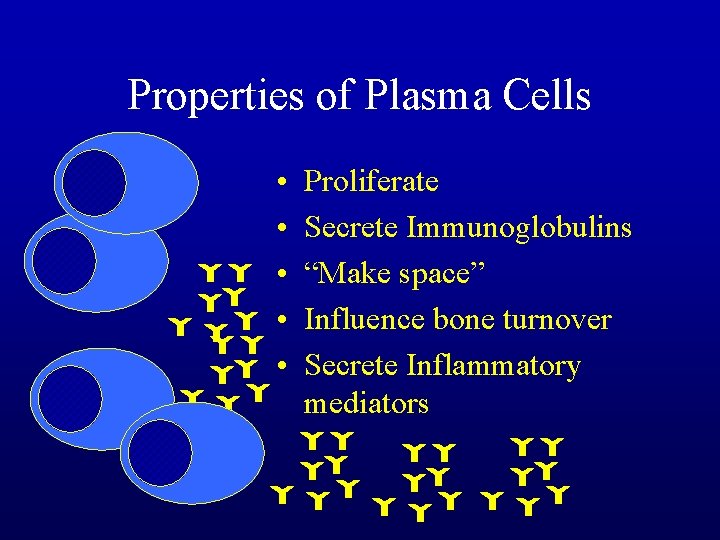
Properties of Plasma Cells • • • Proliferate Secrete Immunoglobulins “Make space” Influence bone turnover Secrete Inflammatory mediators
Clinical Manifestations • Plasma Cell proliferation – Pancytopenia, bone damage, constitutional symptoms, anorexia, cachexia, hypercalcemia • Monoclonal protein production – Renal failure, hyperviscosity, amyloidosis, hypoalbuminemia, neurologic symptoms • Immunodeficiency – Infection, autoimmune phenomena
Presenting Symptoms and Signs • Symptoms – – – – Back Pain Fatigue Anorexia Recurrent infection Constipation Somulence Fracture Neuropathy • Signs – – – – Lytic lesions Anemia, pancytopenia Hypercalcemia Renal insufficiency Monoclonal proteins Organomegaly Bone tumors Hypogammaglobulins
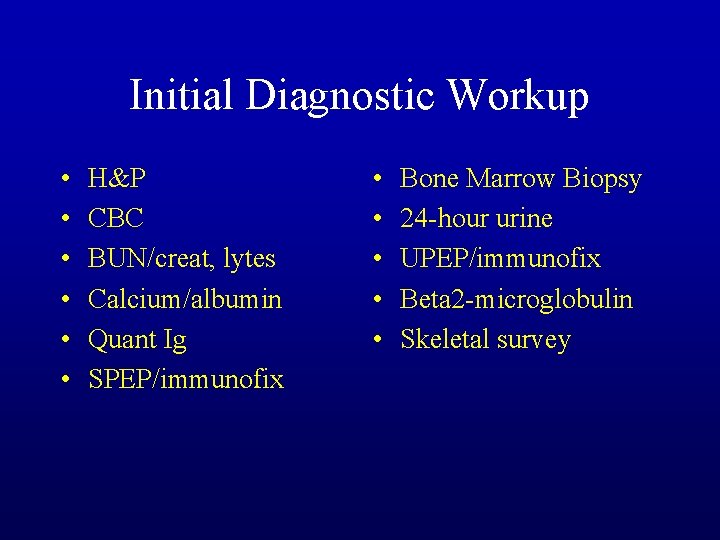
Initial Diagnostic Workup • • • H&P CBC BUN/creat, lytes Calcium/albumin Quant Ig SPEP/immunofix • • • Bone Marrow Biopsy 24 -hour urine UPEP/immunofix Beta 2 -microglobulin Skeletal survey

Lytic Bone Lesions in Myeloma • Important for diagnosis • Treatment of impending fracture
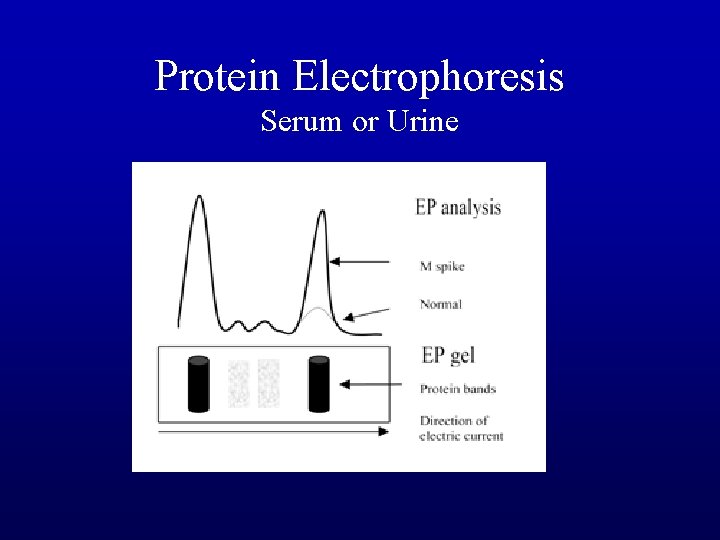
Protein Electrophoresis Serum or Urine

Staging Greater than 20% plasma cells • Stage I (All) – Hgb > 10 g/dl – Normal calcium – Normal bones or Solitary plasmacytoma – Low M-protein • Ig. G < 5 g/dl • Ig. A < 3 g/dl • Light chains < 4 g/24 h • Stage III (Any) – – Hgb < 10 g/dl Hypercalcemia Multiple lytic lesions High M-protein • Ig. G > 7 g/dl • Ig. A > 5 g/dl • Light chains > 12 g/24 h • Stage II – not fitting I or III
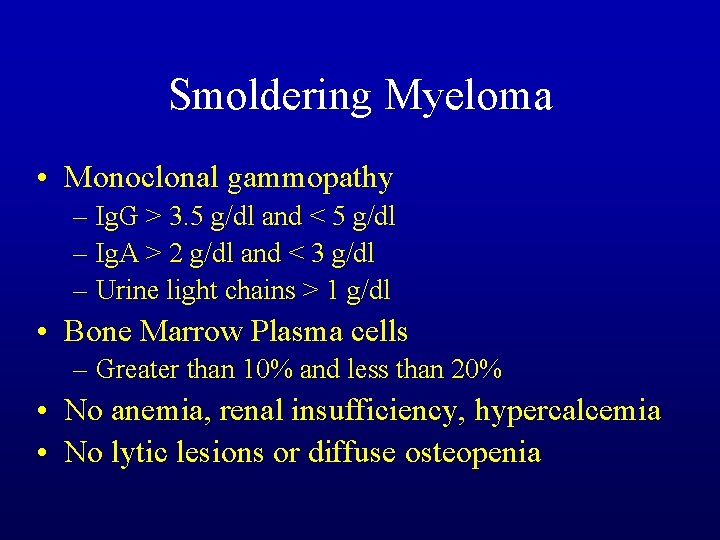
Smoldering Myeloma • Monoclonal gammopathy – Ig. G > 3. 5 g/dl and < 5 g/dl – Ig. A > 2 g/dl and < 3 g/dl – Urine light chains > 1 g/dl • Bone Marrow Plasma cells – Greater than 10% and less than 20% • No anemia, renal insufficiency, hypercalcemia • No lytic lesions or diffuse osteopenia
NCCN Treatment Guidelines • National Comprehensive Cancer Network – Group of NCI Cancer Centers • Evidence based guidelines of appropriate care for general population • Reviewed annually and updated by panel members • Available online: www. nccn. org
Treatment Solitary Plasmacytoma • Radiation therapy 45 to 50 Gy • Follow up – CBC, SPEP, UPEP, chemistry every 3 months – Bone Survey ± CT scan or MRI every 6 mo – Yearly evaluation after one year and no disease
Treatment Smoldering or Stage I myeloma • Counseling and observation • Followup – CBC, SPEP, UPEP, chemistry every 3 mo – Bone survey ± Bone marrow biospy every 6 mo • Clinical trial of thalidomide or other biological therapy • Progression to Stage II, III disease – Treat accordingly
Treatment Stage II or III disease • General Goals of Oncology – Cure to regain normal life – Achieve complete remission to preserve quality life – Control disease to preserve quality life – Minimize symptoms – Prevent suffering
Treatment Stage II or III disease • Combination chemotherapy – Not curative, complete remission uncommon • Multiple regimens – none yet shown to improve survival over 30 years of study • Regimen choice depending on goals of therapy • Supportive care crucial for preservation of function and activity
Treatment Stage II or III disease • Goals of initial treatment – – Gain control of disease Improve organ function Maintain activity & function Relieve pain, constitutional symptoms • Chemotherapy regimens differ in toxicity, ability to achieve remission • Approach differs depending on age, comorbidity, possibility of stem cell transplant
Stem cell transplant for myeloma • Rationale – Dose response relationship for remission and hematologic toxicity – Stem cell transplant minimizes the hematologic toxicity of high dose chemotherapy – Stem cell transplant has no anti-myeloma effect per se but allows escalation of chemotherapy
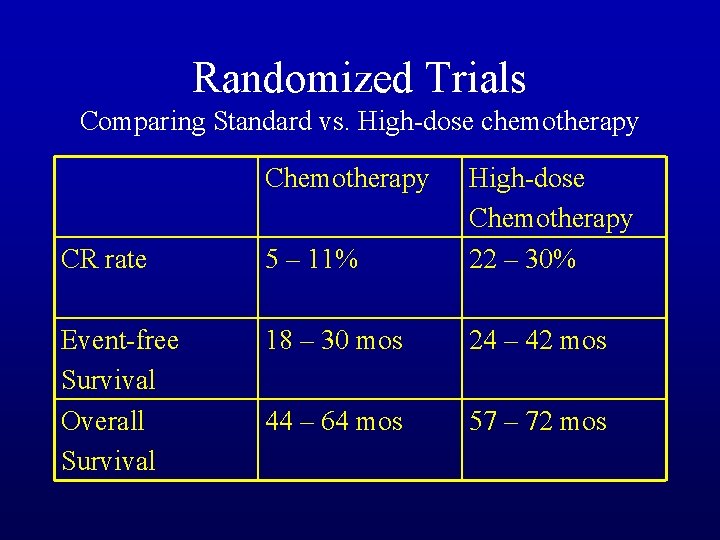
Randomized Trials Comparing Standard vs. High-dose chemotherapy CR rate 5 – 11% High-dose Chemotherapy 22 – 30% Event-free Survival Overall Survival 18 – 30 mos 24 – 42 mos 44 – 64 mos 57 – 72 mos
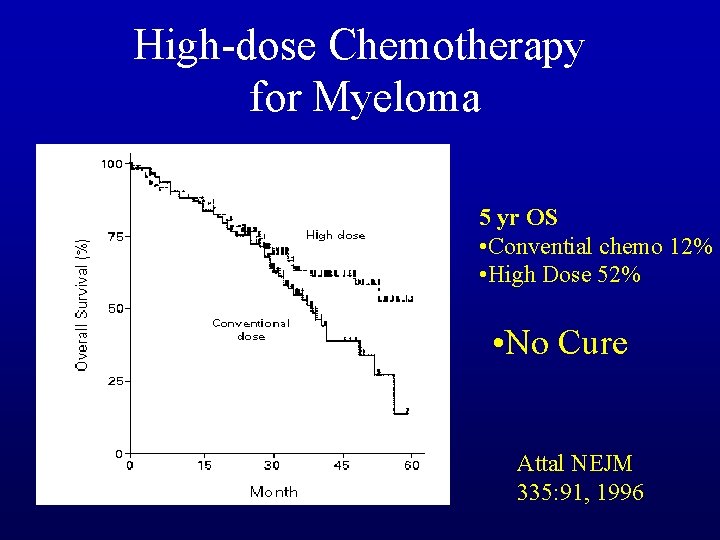
High-dose Chemotherapy for Myeloma 5 yr OS • Convential chemo 12% • High Dose 52% • No Cure Attal NEJM 335: 91, 1996
Candidates for High-dose chemotherapy • Who? – Responding patients – Age < 65 yo, possible for age 65 – 75 years – Adequate renal, pulmonary, cardiac function • When? – Upfront vs. first relapse: Same overall survival, but better QOL with upfront
Investigational Approaches • Thalidomide – Response rate 36% in relapse • PS-341, Arsenic trioxide, R 115777 • Allogeneic transplant – Outpatient treatment with minimal chemotherapy – Studies suggest long remissions – Cure?
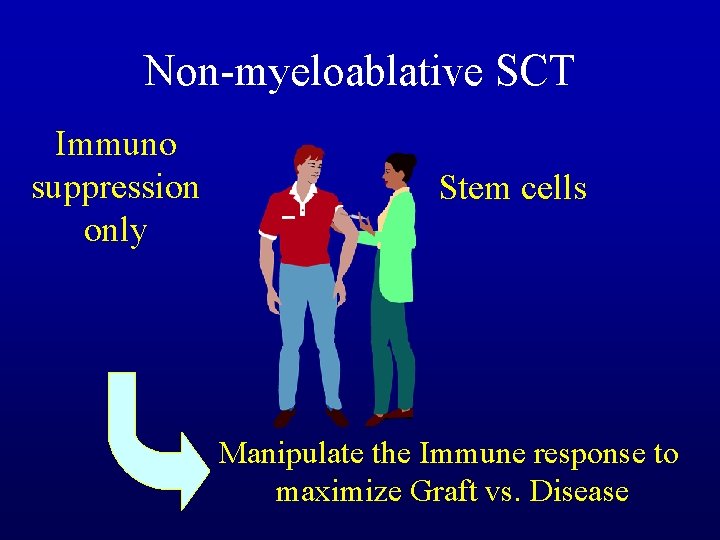
Non-myeloablative SCT Immuno suppression only Stem cells Manipulate the Immune response to maximize Graft vs. Disease
Auto/Allo Transplant for Myeloma • Auto - improve cytoreduction with less morbidity prior to NST • Allo NST - use in minimal residual disease state to allow time for “GVM” • Separate Auto and Allo to reduce TRM
Auto/Allo NST - Results • • • 32 patients (median age 55) Previously treated (43% refractory/relapse) Mel-200 with PBSCT NST - TBI 2 Gy, PBSCT, CSA, MMF 31/32 received both NST - median 0 days hospitalization, neutropenia, thrombocytopenia Maloney, Blood 98: 1822 a
Auto/Allo NST - Results (cont) • Overall survival 81% (median f/u 423 days) • Day-100 mortality 6% • GVHD – Acute 45% – Chronic 55% • Response Rate 84% (CR 53%, PR 31%) • 2 Patients have progressed Maloney, Blood 98: 1822 a
Supportive Care • Prevent Fractures – 85% of patients have lytic bone disease – Biphosphonates – Pamidronate, Zolentronate – Local radiotherapy for critical lytic lesions and persistent pain • Anemia – Erythropoietin helpful for anemia patients • Infection – Prophylactic antibiotics and IV immunoglobulin for patients with recurrent infection
Monoclonal Gammopathy • Increasingly common with age • Associated with many inflammatory conditions • Diagnosis depends on finding M-protein – But • No evidence of clinical disease – No lytic lesions – Plasma cells below 10% in the bone marrow – Normal blood counts and renal function
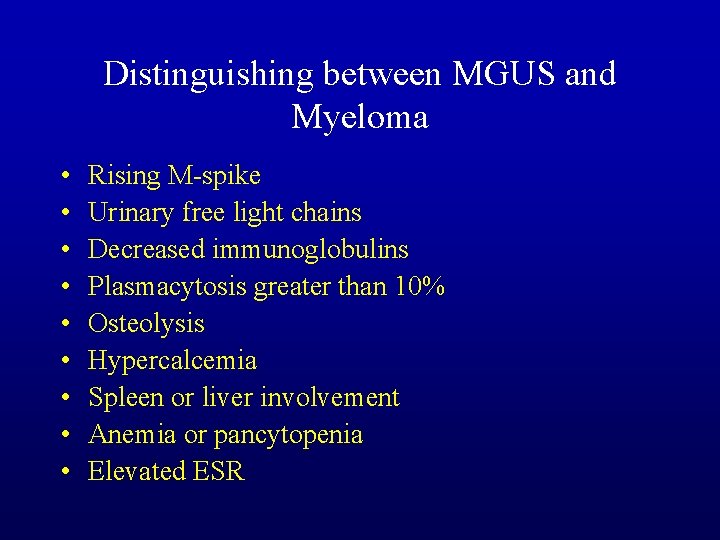
Distinguishing between MGUS and Myeloma • • • Rising M-spike Urinary free light chains Decreased immunoglobulins Plasmacytosis greater than 10% Osteolysis Hypercalcemia Spleen or liver involvement Anemia or pancytopenia Elevated ESR
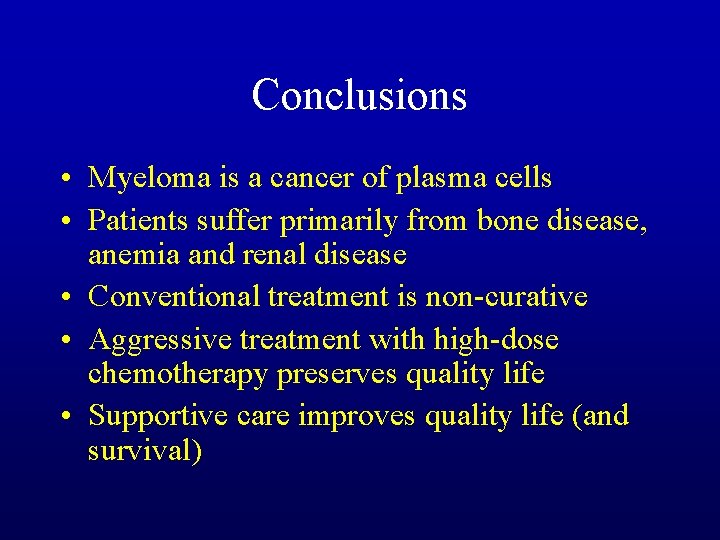
Conclusions • Myeloma is a cancer of plasma cells • Patients suffer primarily from bone disease, anemia and renal disease • Conventional treatment is non-curative • Aggressive treatment with high-dose chemotherapy preserves quality life • Supportive care improves quality life (and survival)
- Slides: 40