
Diagnosis and Management of shock Dr Hossam Hassan


- Slides: 31
Diagnosis and Management of shock Dr. Hossam Hassan Consultant and Assistant prof D. E. M
Objectives l l Identify the 4 main catigories of shock Discuss the goals of resuscitation in shock Summarize the general principles of shock management Describe the physiologic effects of vasopressors and inotropic agents
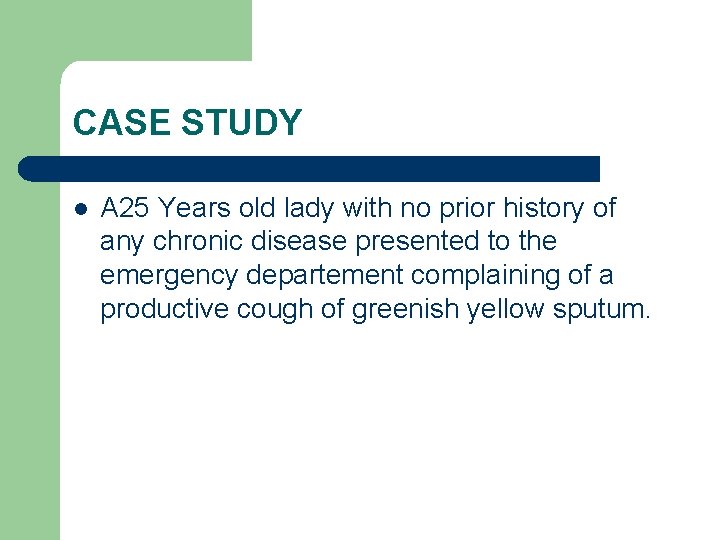
CASE STUDY l A 25 Years old lady with no prior history of any chronic disease presented to the emergency departement complaining of a productive cough of greenish yellow sputum.
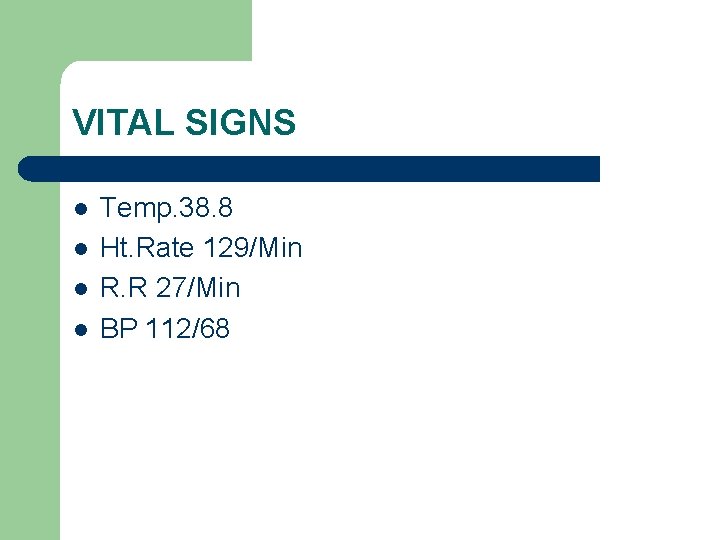
VITAL SIGNS l l Temp. 38. 8 Ht. Rate 129/Min R. R 27/Min BP 112/68
l l l Where do you triage this Pt? . What information do you need to determine if this Pt. is in shock? What initial interventions are needed to stabilize that Pt? .
l l l Shock is a syndrome of impaired tissue oxygenation and perfusion due to a variety of etiologies If left untreated Irreversible injury , Organ dysfunction And finally death
Clinical ulterations in shock l l The presentation of patients with shock may be Subtle(mild confusion, tachycardia( Or easily identifiable(profound hypotesion. anuria(
l l The clinical manifestation of shock result from 1 - inadequate tissue perfusion and oxygenation 2 - Compansatory respnses 3 - The specific etiology
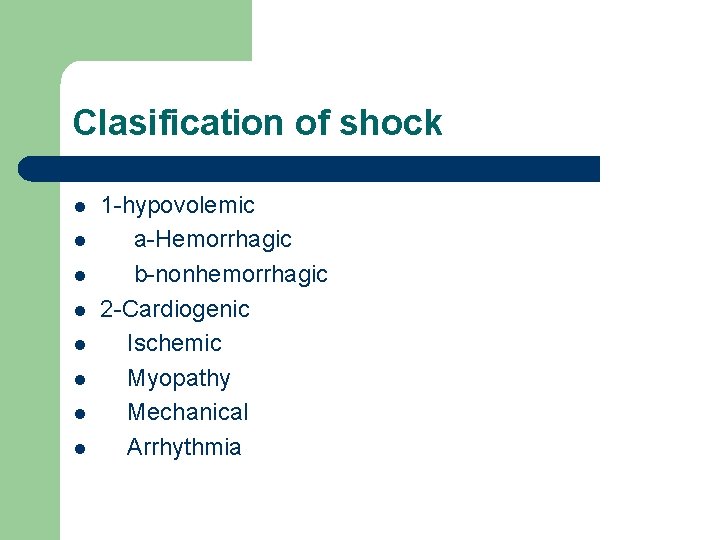
Clasification of shock l l l l 1 -hypovolemic a-Hemorrhagic b-nonhemorrhagic 2 -Cardiogenic Ischemic Myopathy Mechanical Arrhythmia
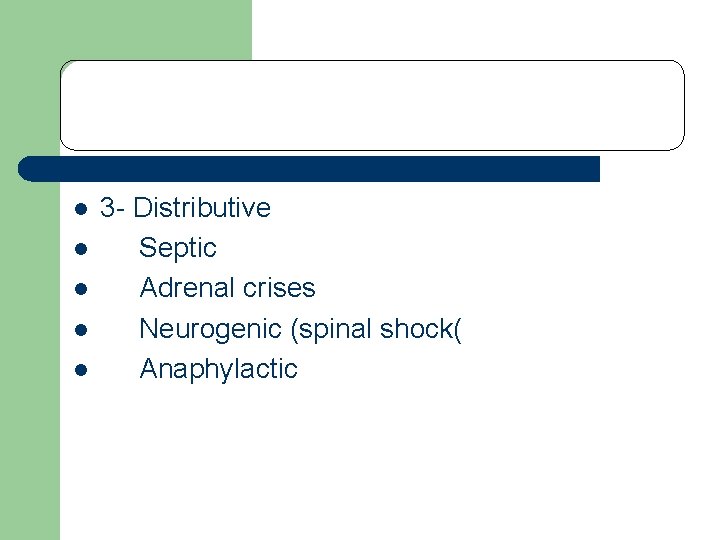
l l l 3 - Distributive Septic Adrenal crises Neurogenic (spinal shock( Anaphylactic
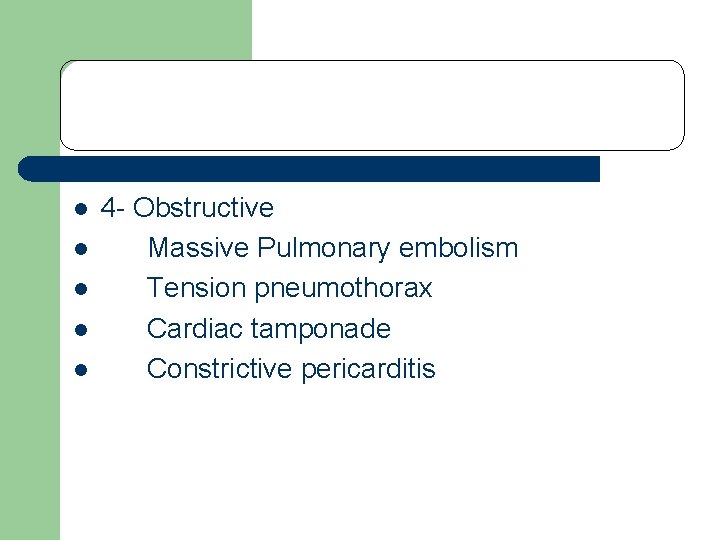
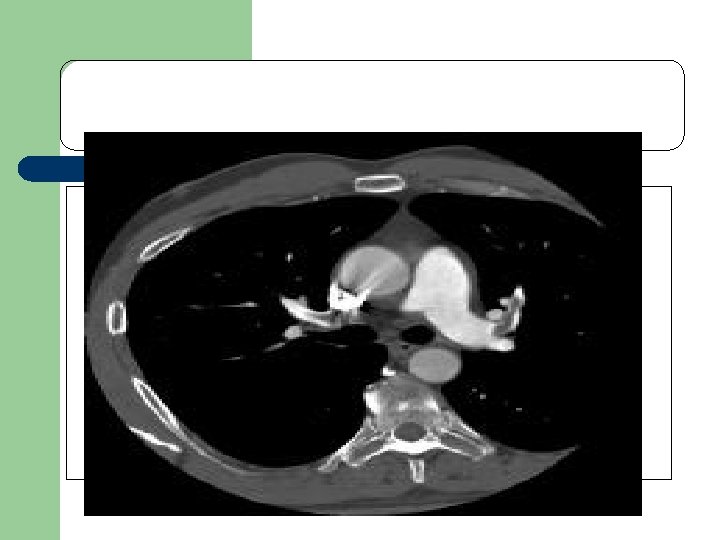
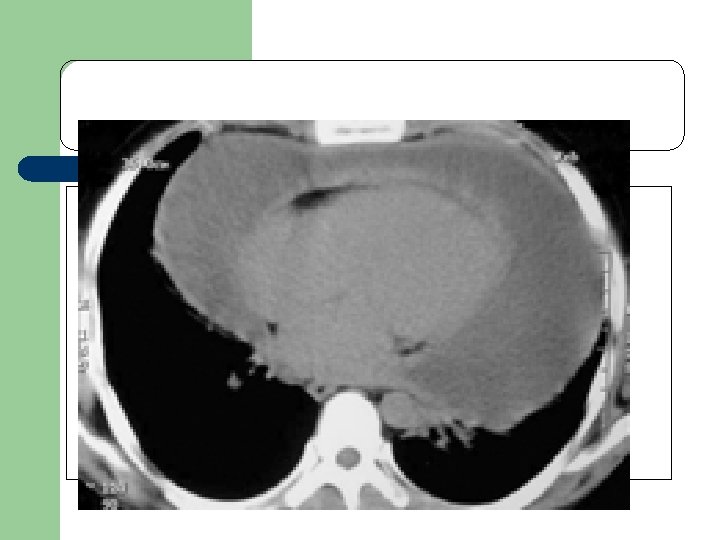
l l l 4 - Obstructive Massive Pulmonary embolism Tension pneumothorax Cardiac tamponade Constrictive pericarditis
HYPOVOLEMIC SHOCK l l l It occure when the intra vascular volume is depleted relative to the vascular capacity as a result of. 1 - Hge 2 - G. I. T loss 3 -urinary loss 4 -dehydration
HYPOVOLEMIC SHOCK l l l Management The goal is to restore the fluid lost Vasopressors are used only as a temporary method to restore B. P untill fluid resuscitation take place
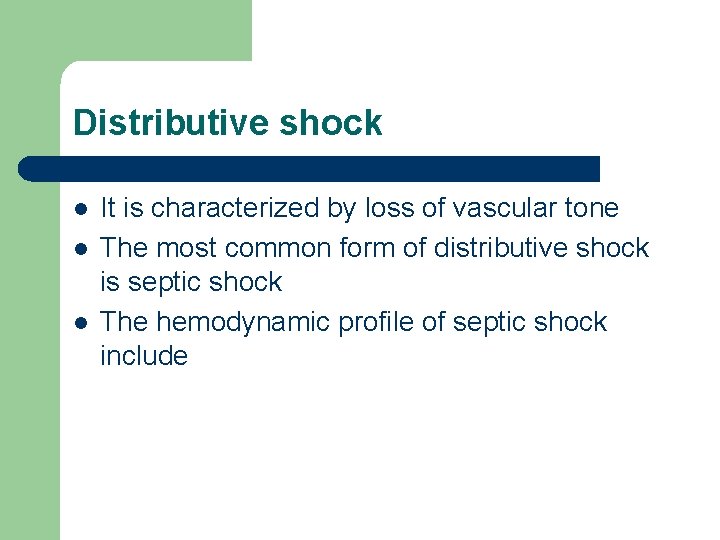
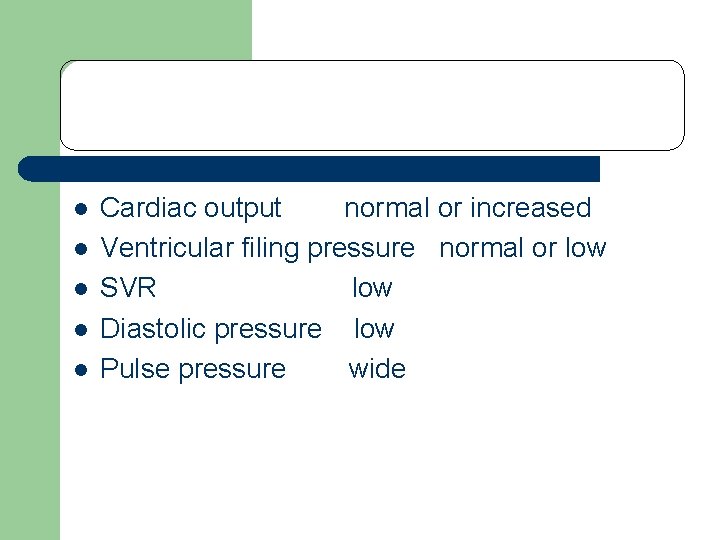
Distributive shock l l l It is characterized by loss of vascular tone The most common form of distributive shock is septic shock The hemodynamic profile of septic shock include
l l l Cardiac output normal or increased Ventricular filing pressure normal or low SVR low Diastolic pressure low Pulse pressure wide
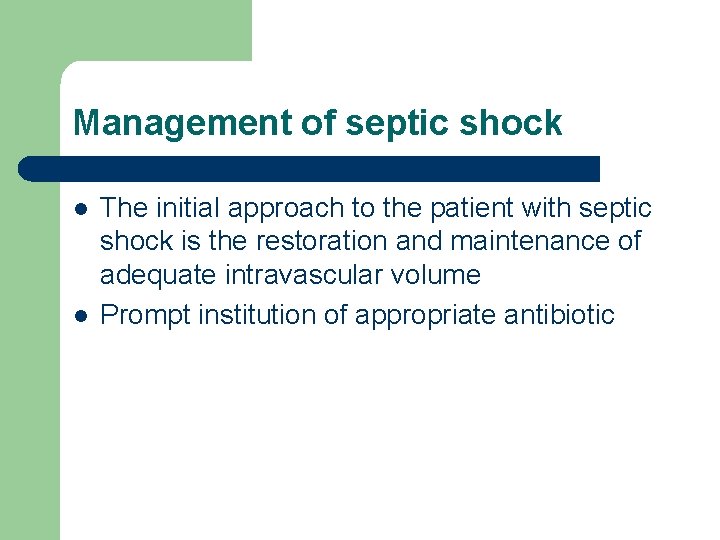
Management of septic shock l l The initial approach to the patient with septic shock is the restoration and maintenance of adequate intravascular volume Prompt institution of appropriate antibiotic
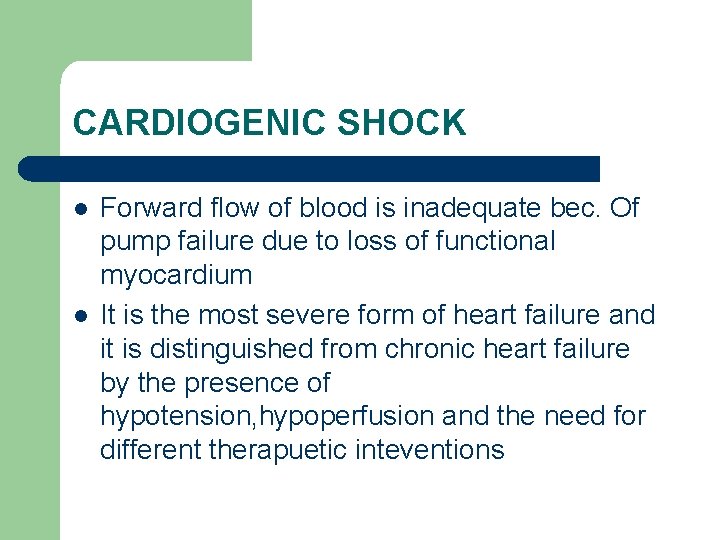
CARDIOGENIC SHOCK l l Forward flow of blood is inadequate bec. Of pump failure due to loss of functional myocardium It is the most severe form of heart failure and it is distinguished from chronic heart failure by the presence of hypotension, hypoperfusion and the need for different therapuetic inteventions
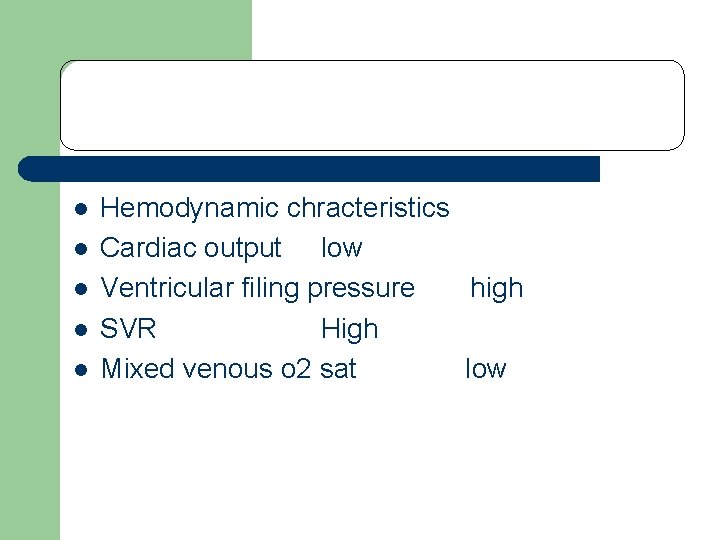
l l l Hemodynamic chracteristics Cardiac output low Ventricular filing pressure high SVR High Mixed venous o 2 sat low
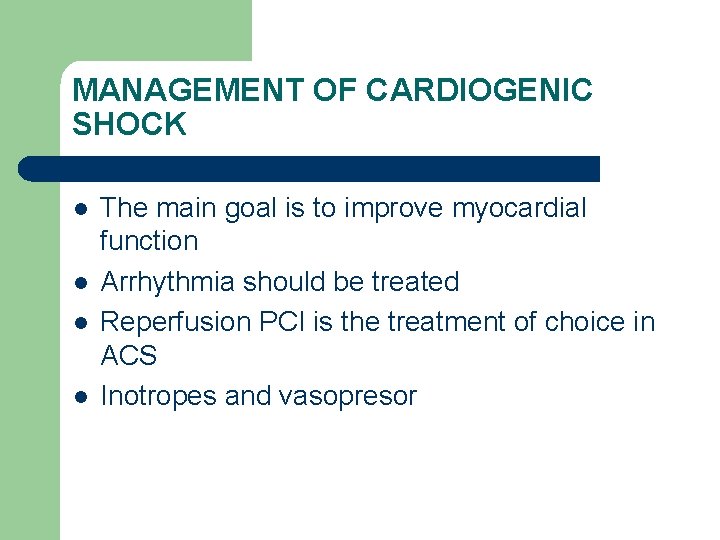
MANAGEMENT OF CARDIOGENIC SHOCK l l The main goal is to improve myocardial function Arrhythmia should be treated Reperfusion PCI is the treatment of choice in ACS Inotropes and vasopresor
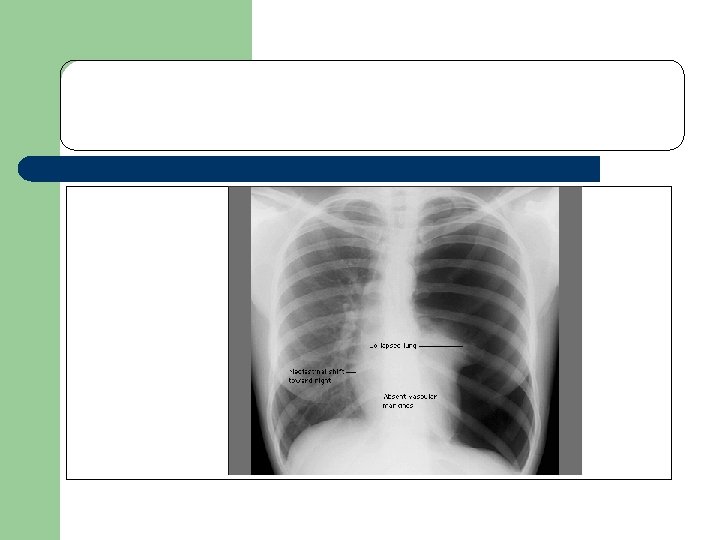
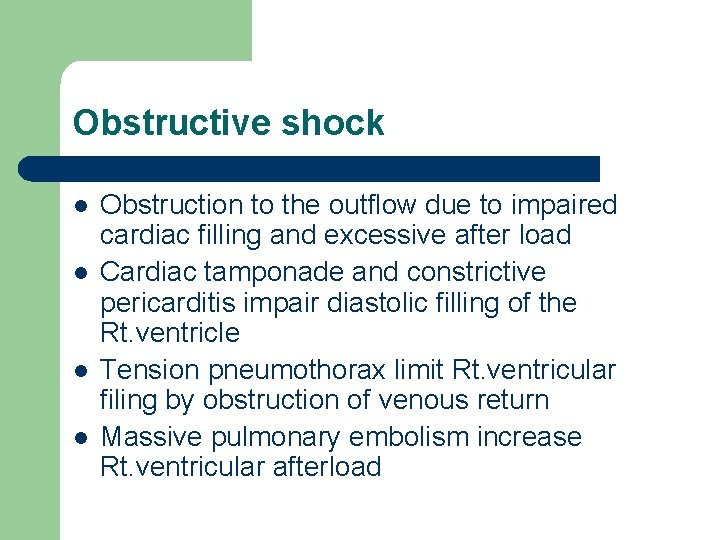
Obstructive shock l l Obstruction to the outflow due to impaired cardiac filling and excessive after load Cardiac tamponade and constrictive pericarditis impair diastolic filling of the Rt. ventricle Tension pneumothorax limit Rt. ventricular filing by obstruction of venous return Massive pulmonary embolism increase Rt. ventricular afterload
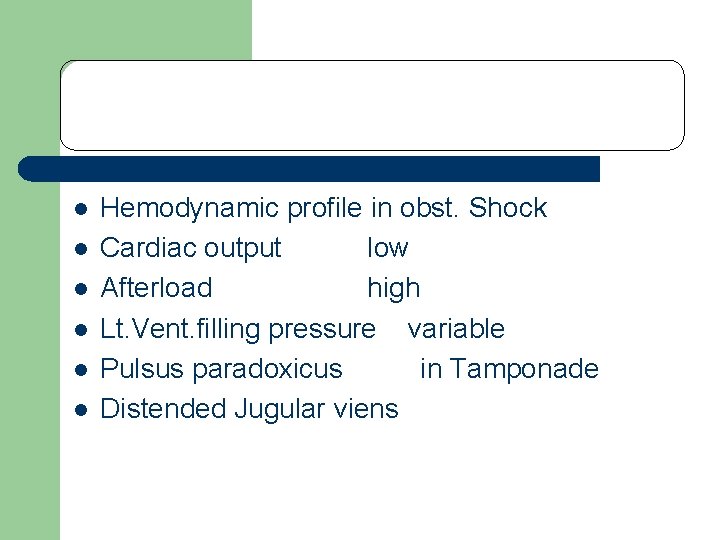
l l l Hemodynamic profile in obst. Shock Cardiac output low Afterload high Lt. Vent. filling pressure variable Pulsus paradoxicus in Tamponade Distended Jugular viens
Management Of Obstructive Shock Directed Mainly to Management of the cause
GENERAL Principles of shock management l l The overall goal of shock management is to improve oxygen delivery or utilization in order to prevent cellular and organ injury Effective therapy requires treatment of the underlying etiology
l l Restoration of adequate perfusion, monitoring and comperhensive supportive care Interventions to restore perfusion center on achieving an adequate B. P, increasing cardiac output and optimizing oxygen content of the blood
l Oxygen demand should also be reduced
In Summery l l l Management of shock 1 - Monitoring 2 - Fluid Therapy 3 - Vasoactive agents 4 - Treat the cause
l l THANK YOU