
Diagnosing Diabetes In Adults Type 1 LADA or
Diagnosing Diabetes In Adults– Type 1, LADA, or Type 2? Part 3 Stanley Schwartz MD, FACE, FACP Affiliate Main Line Health Emeritus, Clinical Assoc. Prof. of Medicine Perlman School of Medicine, University of Pennsylvania Struan F. A. Grant, Ph. D Children’s Hospital of Philadelphia Associate Professor, University of Pennsylvania Vanessa Guy Children’s Hospital of Philadelphia Senior Clinical Research Coordinator Co-Investigators NIH RO-1, Genes in LADA
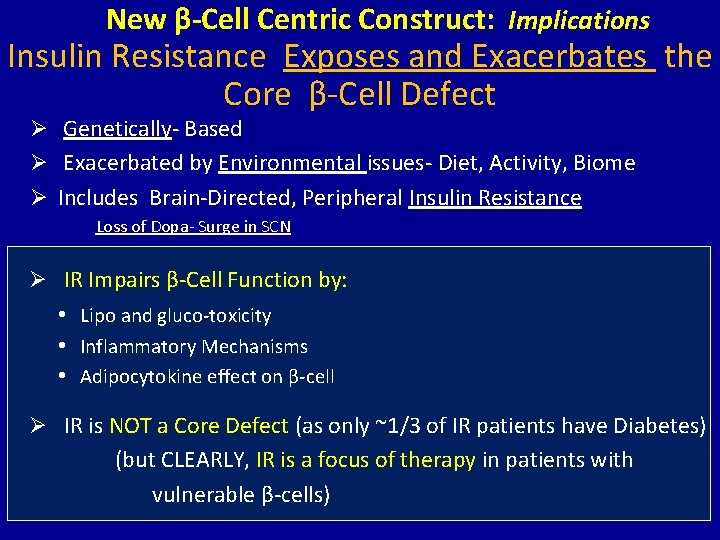
New β-Cell Centric Construct: Implications Insulin Resistance Exposes and Exacerbates the Core β-Cell Defect Ø Genetically- Based Ø Exacerbated by Environmental issues- Diet, Activity, Biome Ø Includes Brain-Directed, Peripheral Insulin Resistance Loss of Dopa- Surge in SCN Ø IR Impairs β-Cell Function by: • Lipo and gluco-toxicity • Inflammatory Mechanisms • Adipocytokine effect on β-cell Ø IR is NOT a Core Defect (as only ~1/3 of IR patients have Diabetes) (but CLEARLY, IR is a focus of therapy in patients with vulnerable β-cells)
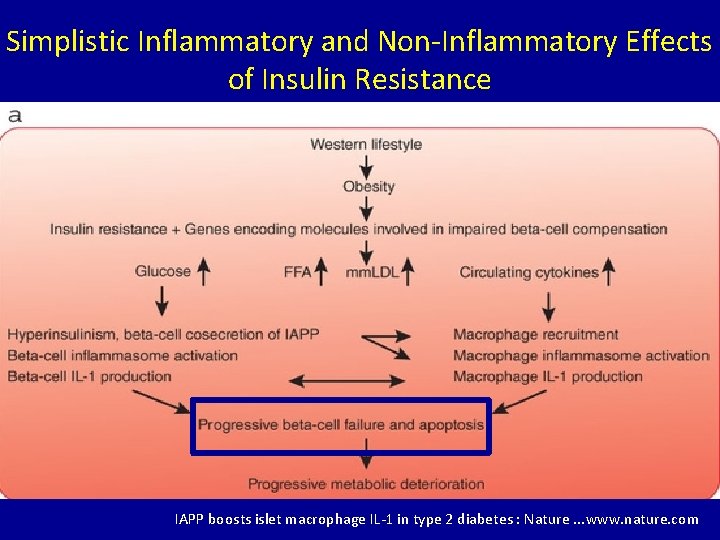
Simplistic Inflammatory and Non-Inflammatory Effects of Insulin Resistance IAPP boosts islet macrophage IL-1 in type 2 diabetes : Nature. . . www. nature. com
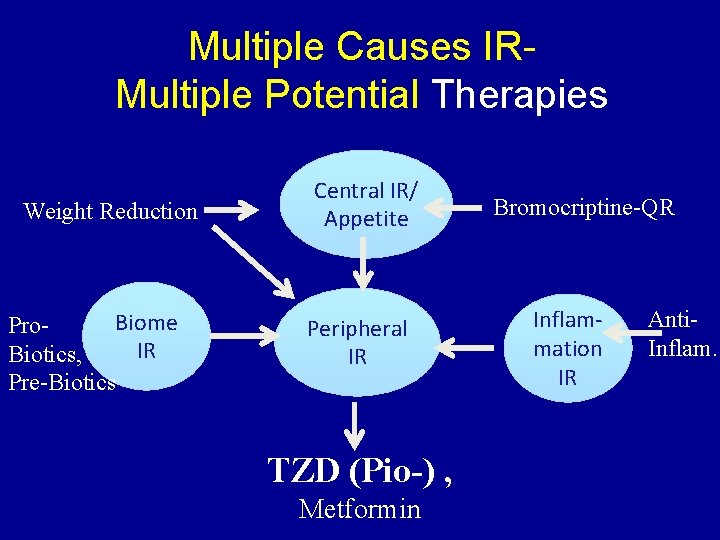
Multiple Causes IRMultiple Potential Therapies Weight Reduction Biome Pro. IR Biotics, Pre-Biotics Central IR/ Appetite Peripheral IR TZD (Pio-) , Metformin Bromocriptine-QR Inflammation IR Anti. Inflam.

New β-Cell Centric Construct: Implications Environmental Risk Factors in T 1 D/T 2 D, ? ‘LADA’ T 1 D Ø Seasonality at diagnosis Ø Migrants assume risk of host country Ø Risk factors from case-control studies • • • Hormones • Vitamin D Stress • Cow’s Milk Improved Hygiene • Gut-microbial Balance – Biome Infant/childhood diet • Lack of Physical Activity Viruses – exposures as early as in utero T 2 D Ø Obesity-Diet Ø Lack of Physical Activity Ø AGE ingestion LADA Ø Coffee Ø More Educated
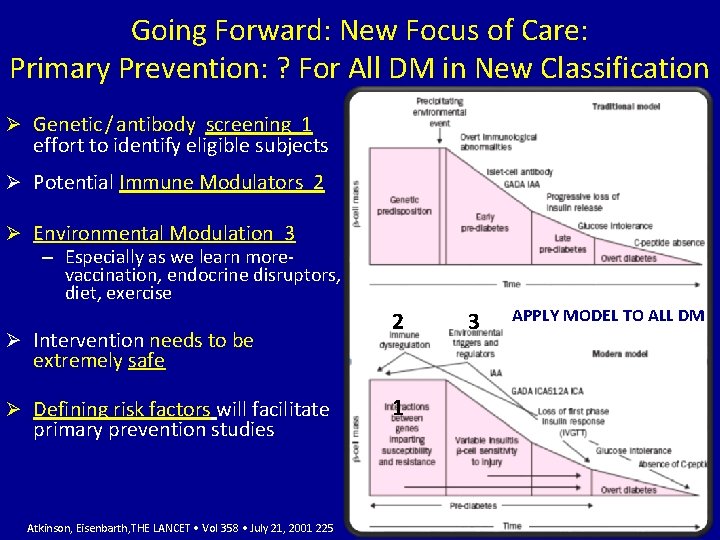
Going Forward: New Focus of Care: Primary Prevention: ? For All DM in New Classification Ø Genetic / antibody screening 1 effort to identify eligible subjects Ø Potential Immune Modulators 2 Ø Environmental Modulation 3 – Especially as we learn morevaccination, endocrine disruptors, diet, exercise Ø Intervention needs to be 2 extremely safe Ø Defining risk factors will facilitate primary prevention studies Atkinson, Eisenbarth, THE LANCET • Vol 358 • July 21, 2001 225 1 3 APPLY MODEL TO ALL DM
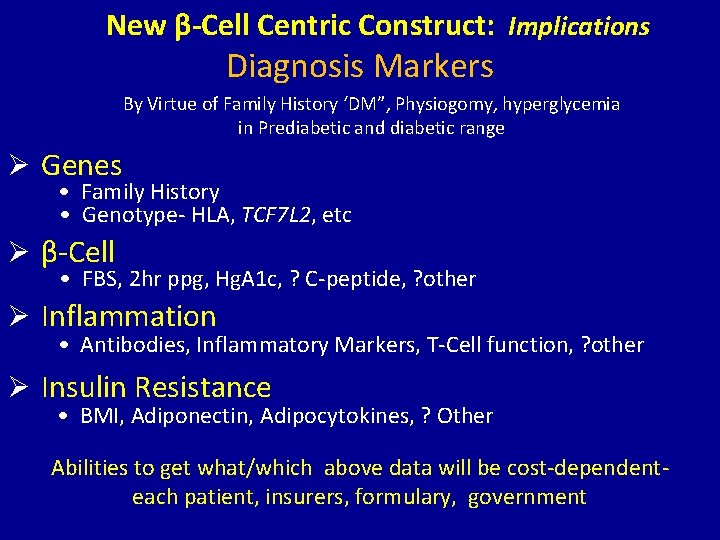
New β-Cell Centric Construct: Implications Diagnosis Markers By Virtue of Family History ‘DM”, Physiogomy, hyperglycemia in Prediabetic and diabetic range Ø Genes • Family History • Genotype- HLA, TCF 7 L 2, etc Ø β-Cell • FBS, 2 hr ppg, Hg. A 1 c, ? C-peptide, ? other Ø Inflammation • Antibodies, Inflammatory Markers, T-Cell function, ? other Ø Insulin Resistance • BMI, Adiponectin, Adipocytokines, ? Other Abilities to get what/which above data will be cost-dependenteach patient, insurers, formulary, government
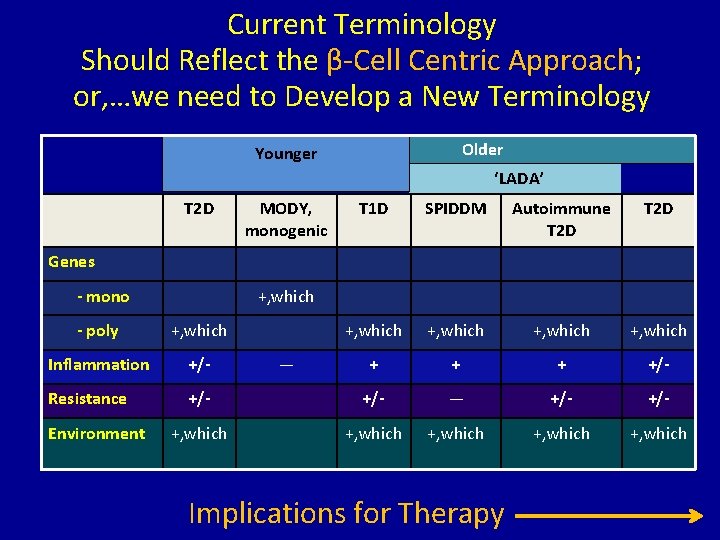
Current Terminology Should Reflect the β-Cell Centric Approach; or, …we need to Develop a New Terminology Older Younger ‘LADA’ T 2 D MODY, monogenic T 1 D SPIDDM Autoimmune T 2 D +, which + +/- Genes - mono +, which - poly +, which Inflammation +/- Resistance +/- ─ +/- +, which +, which Environment ─ Implications for Therapy
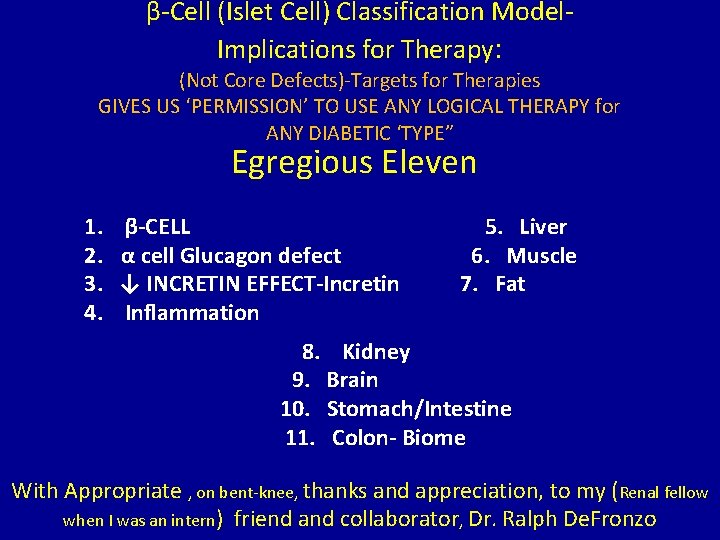
β-Cell (Islet Cell) Classification Model. Implications for Therapy: (Not Core Defects)-Targets for Therapies GIVES US ‘PERMISSION’ TO USE ANY LOGICAL THERAPY for ANY DIABETIC ‘TYPE” Egregious Eleven 1. 2. 3. 4. β-CELL α cell Glucagon defect ↓ INCRETIN EFFECT-Incretin Inflammation 5. Liver 6. Muscle 7. Fat 8. Kidney 9. Brain 10. Stomach/Intestine 11. Colon- Biome With Appropriate , on bent-knee, thanks and appreciation, to my (Renal fellow when I was an intern) friend and collaborator, Dr. Ralph De. Fronzo
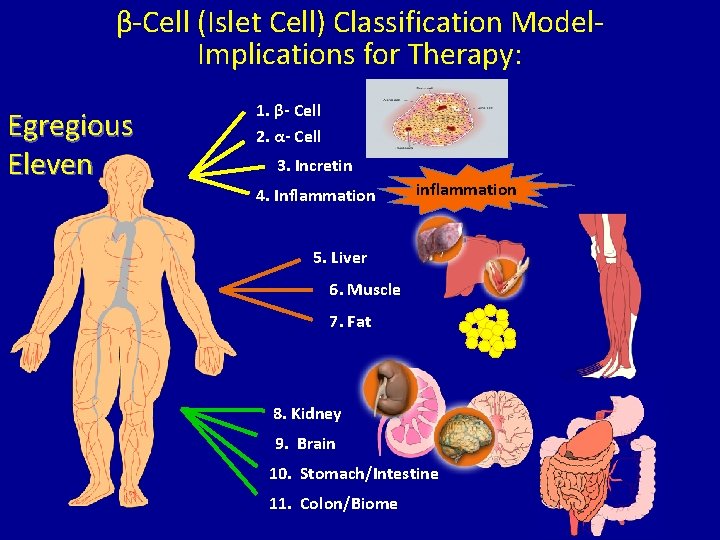
β-Cell (Islet Cell) Classification Model. Implications for Therapy: Egregious Eleven 1. β- Cell 2. α- Cell 3. Incretin 4. Inflammation inflammation 5. Liver 6. Muscle 7. Fat 8. Kidney 9. Brain 10. Stomach/Intestine 11. Colon/Biome
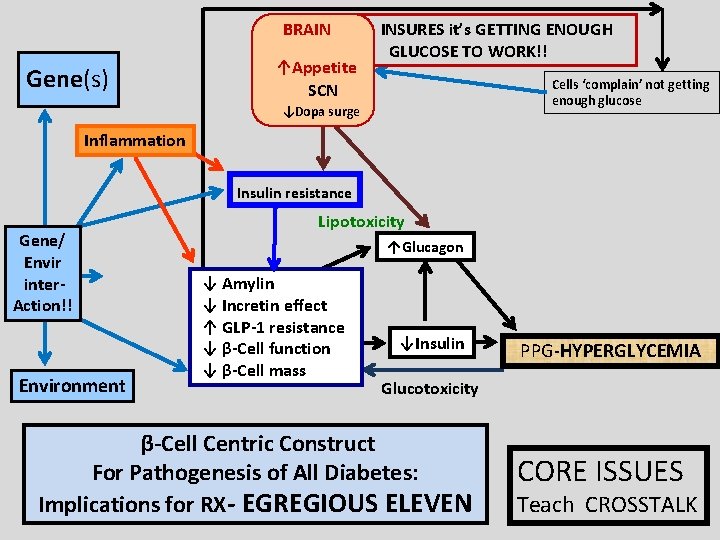
BRAIN Gene(s) ↑Appetite SCN INSURES it’s GETTING ENOUGH GLUCOSE TO WORK!! Cells ‘complain’ not getting enough glucose ↓Dopa surge Inflammation Insulin resistance Gene/ Envir inter. Action!! Environment Lipotoxicity ↑Glucagon ↓ Amylin ↓ Incretin effect ↑ GLP-1 resistance ↓ β-Cell function ↓ β-Cell mass ↓Insulin PPG-HYPERGLYCEMIA Glucotoxicity β-Cell Centric Construct For Pathogenesis of All Diabetes: Implications for RX- EGREGIOUS ELEVEN CORE ISSUES Teach CROSSTALK
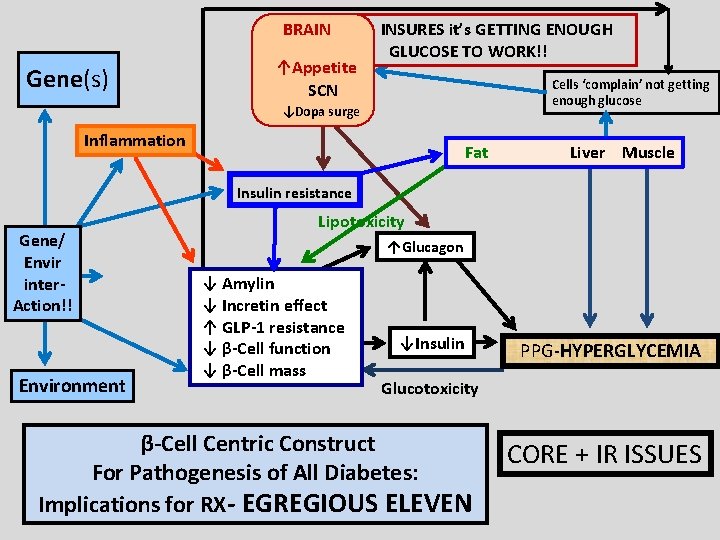
BRAIN Gene(s) ↑Appetite SCN INSURES it’s GETTING ENOUGH GLUCOSE TO WORK!! Cells ‘complain’ not getting enough glucose ↓Dopa surge Inflammation Fat Liver Muscle Insulin resistance Gene/ Envir inter. Action!! Environment Lipotoxicity ↑Glucagon ↓ Amylin ↓ Incretin effect ↑ GLP-1 resistance ↓ β-Cell function ↓ β-Cell mass ↓Insulin PPG-HYPERGLYCEMIA Glucotoxicity β-Cell Centric Construct For Pathogenesis of All Diabetes: Implications for RX- EGREGIOUS ELEVEN CORE + IR ISSUES
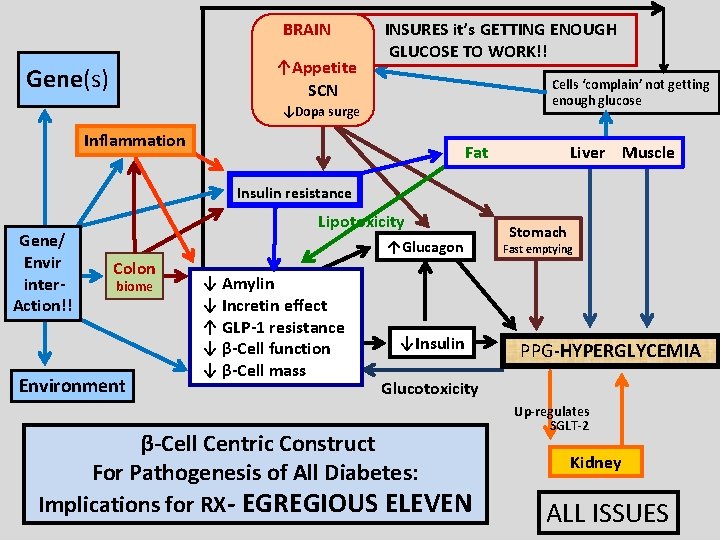
BRAIN ↑Appetite SCN Gene(s) INSURES it’s GETTING ENOUGH GLUCOSE TO WORK!! Cells ‘complain’ not getting enough glucose ↓Dopa surge Inflammation Fat Liver Muscle Insulin resistance Gene/ Envir inter. Action!! Lipotoxicity ↑Glucagon Colon biome Environment ↓ Amylin ↓ Incretin effect ↑ GLP-1 resistance ↓ β-Cell function ↓ β-Cell mass ↓Insulin Stomach Fast emptying PPG-HYPERGLYCEMIA Glucotoxicity β-Cell Centric Construct For Pathogenesis of All Diabetes: Implications for RX- EGREGIOUS ELEVEN Up-regulates SGLT-2 Kidney ALL ISSUES
- Slides: 13