
Diagen TM Continuous Hydrothermal Conversion of Waste Biomass
Diagen TM Continuous Hydrothermal Conversion of Waste Biomass & Plastic into Bio-Fuels Chris Bathurst BE, Ph. D, MIPENZ, PE (Mech & Chem), Int. PE, Director Solvent Rescue (1999) Ltd, Solray Systems Ltd 027 205 2069
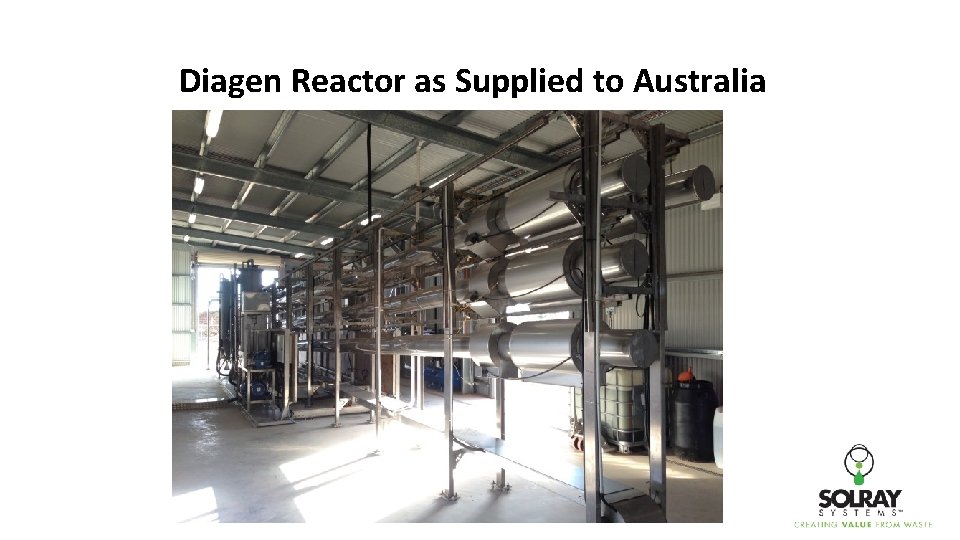
Diagen Reactor as Supplied to Australia
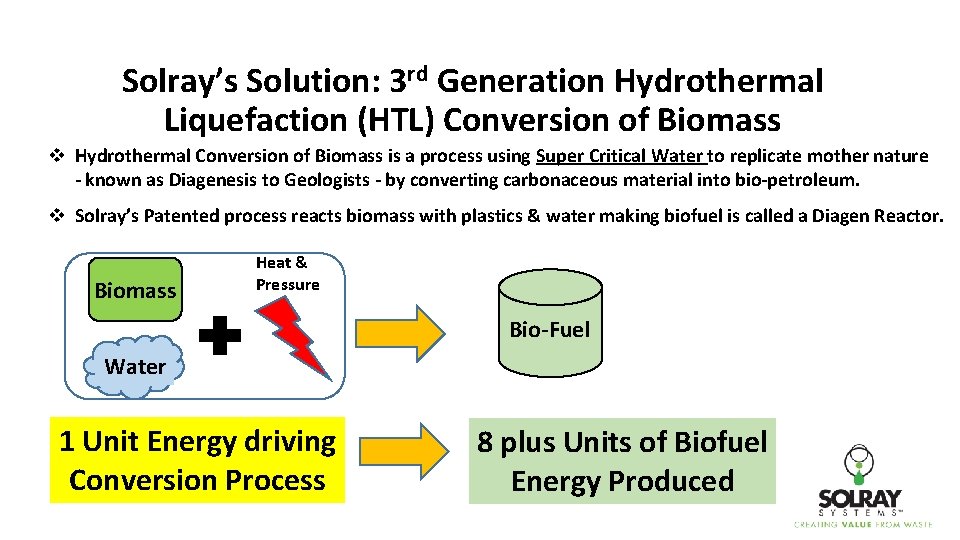
Solray’s Solution: 3 rd Generation Hydrothermal Liquefaction (HTL) Conversion of Biomass v Hydrothermal Conversion of Biomass is a process using Super Critical Water to replicate mother nature - known as Diagenesis to Geologists - by converting carbonaceous material into bio-petroleum. v Solray’s Patented process reacts biomass with plastics & water making biofuel is called a Diagen Reactor. Biomass Heat & Pressure Bio-Fuel Water 1 Unit Energy driving Conversion Process 8 plus Units of Biofuel Energy Produced
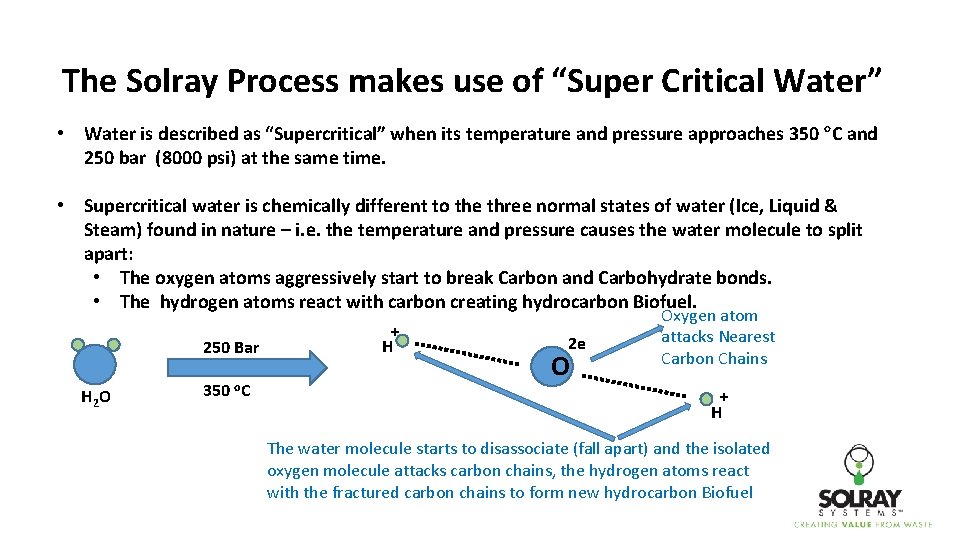
The Solray Process makes use of “Super Critical Water” • Water is described as “Supercritical” when its temperature and pressure approaches 350 o. C and 250 bar (8000 psi) at the same time. • Supercritical water is chemically different to the three normal states of water (Ice, Liquid & Steam) found in nature – i. e. the temperature and pressure causes the water molecule to split apart: • The oxygen atoms aggressively start to break Carbon and Carbohydrate bonds. • The hydrogen atoms react with carbon creating hydrocarbon Biofuel. 250 Bar H 2 O 350 o. C + H 2 e O Oxygen atom attacks Nearest Carbon Chains + H The water molecule starts to disassociate (fall apart) and the isolated oxygen molecule attacks carbon chains, the hydrogen atoms react with the fractured carbon chains to form new hydrocarbon Biofuel
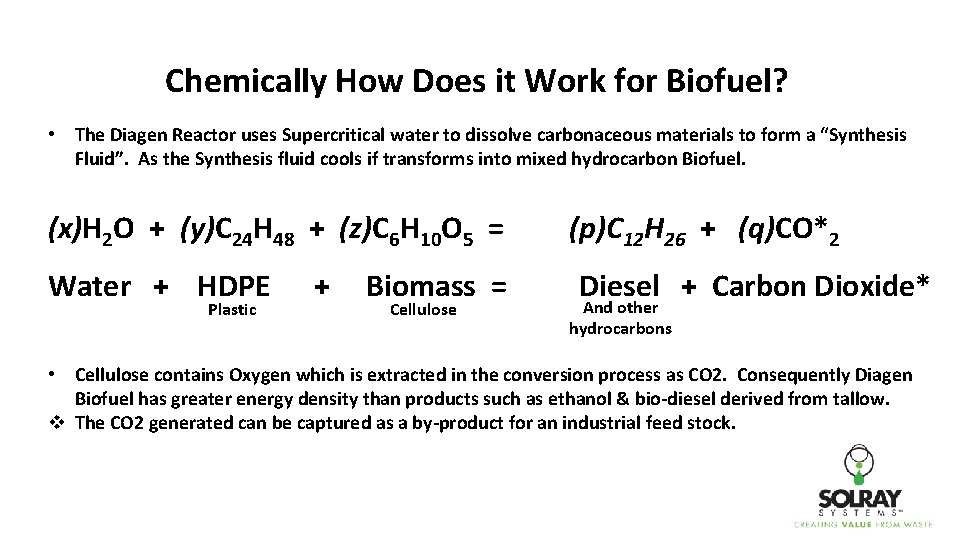
Chemically How Does it Work for Biofuel? • The Diagen Reactor uses Supercritical water to dissolve carbonaceous materials to form a “Synthesis Fluid”. As the Synthesis fluid cools if transforms into mixed hydrocarbon Biofuel. (x)H 2 O + (y)C 24 H 48 + (z)C 6 H 10 O 5 = (p)C 12 H 26 + (q)CO*2 Water + HDPE Diesel + Carbon Dioxide* Plastic + Biomass = Cellulose And other hydrocarbons • Cellulose contains Oxygen which is extracted in the conversion process as CO 2. Consequently Diagen Biofuel has greater energy density than products such as ethanol & bio-diesel derived from tallow. v The CO 2 generated can be captured as a by-product for an industrial feed stock.
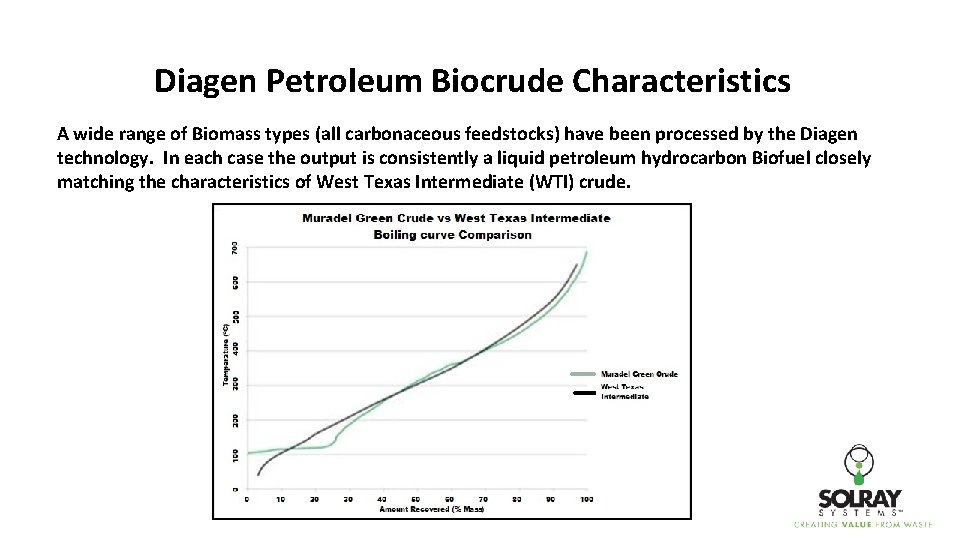
Diagen Petroleum Biocrude Characteristics A wide range of Biomass types (all carbonaceous feedstocks) have been processed by the Diagen technology. In each case the output is consistently a liquid petroleum hydrocarbon Biofuel closely matching the characteristics of West Texas Intermediate (WTI) crude.
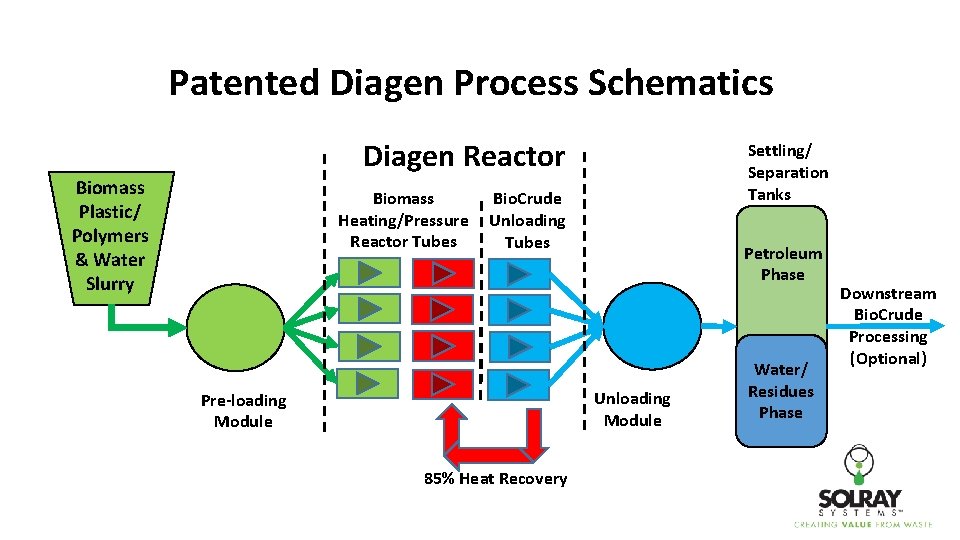
Patented Diagen Process Schematics Diagen Reactor Biomass Plastic/ Polymers & Water Slurry Biomass Heating/Pressure Reactor Tubes Settling/ Separation Tanks Bio. Crude Unloading Tubes Petroleum Phase Unloading Module Pre-loading Module 85% Heat Recovery Water/ Residues Phase Downstream Bio. Crude Processing (Optional)
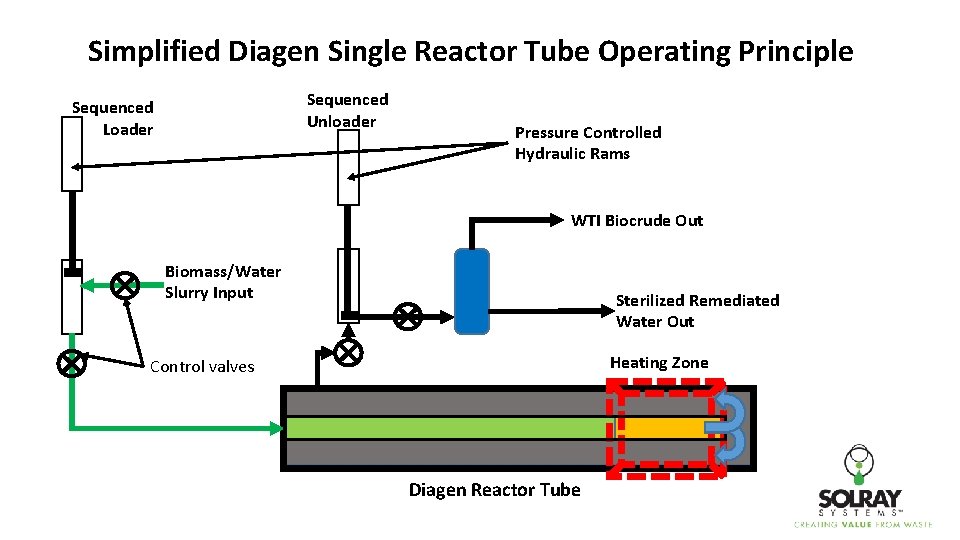
Simplified Diagen Single Reactor Tube Operating Principle Sequenced Unloader Sequenced Loader Pressure Controlled Hydraulic Rams WTI Biocrude Out Biomass/Water Slurry Input Sterilized Remediated Water Out Heating Zone Control valves Diagen Reactor Tube
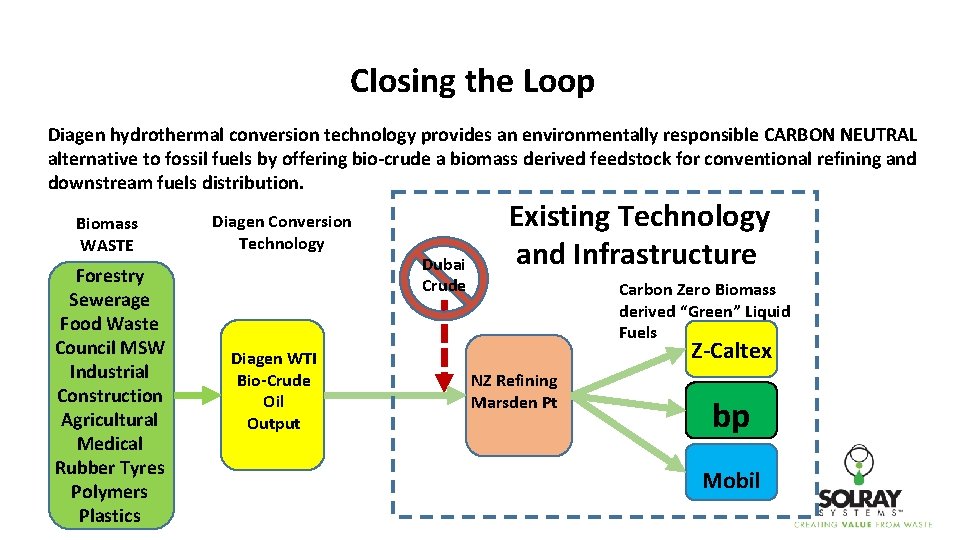
Closing the Loop Diagen hydrothermal conversion technology provides an environmentally responsible CARBON NEUTRAL alternative to fossil fuels by offering bio-crude a biomass derived feedstock for conventional refining and downstream fuels distribution. Biomass WASTE Forestry Sewerage Food Waste Council MSW Industrial Construction Agricultural Medical Rubber Tyres Polymers Plastics Diagen Conversion Technology Diagen WTI Bio-Crude Oil Output Dubai Crude Existing Technology and Infrastructure Carbon Zero Biomass derived “Green” Liquid Fuels Z-Caltex NZ Refining Marsden Pt bp Mobil
- Slides: 9