
Diabetic Pneumopathy Lungs The Neglected Target Organ in
Diabetic Pneumopathy Lungs; The Neglected Target Organ in Diabetes Mellitus Majid Mokhtari, MD, FCCP Internal Medicine, Pulmonary & CCM Faculty SBUMS, Tehran, Iran Tehran, October 2019

Disclosures None

• Introduction • Pathophysiology • Diabetes and Pulmonary Diseases • • • Airways Parenchyma Vascular Cancer Diabetes and SDB Outlines • Hypoglycemic Agents and the Lungs • Conclusions
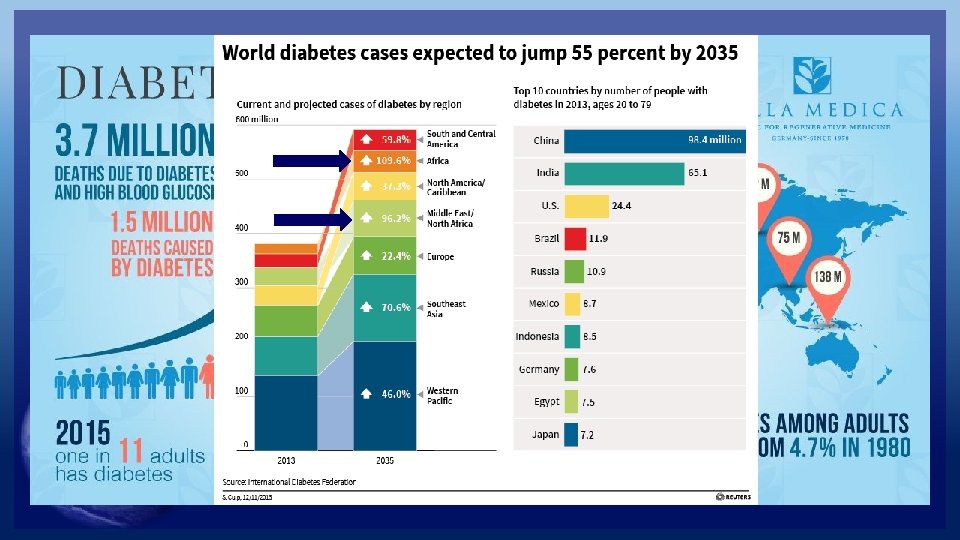
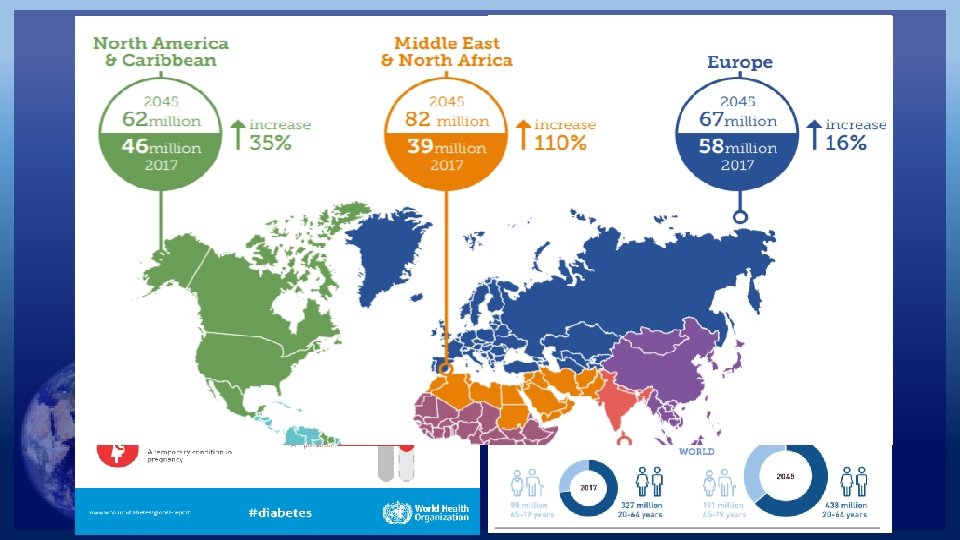
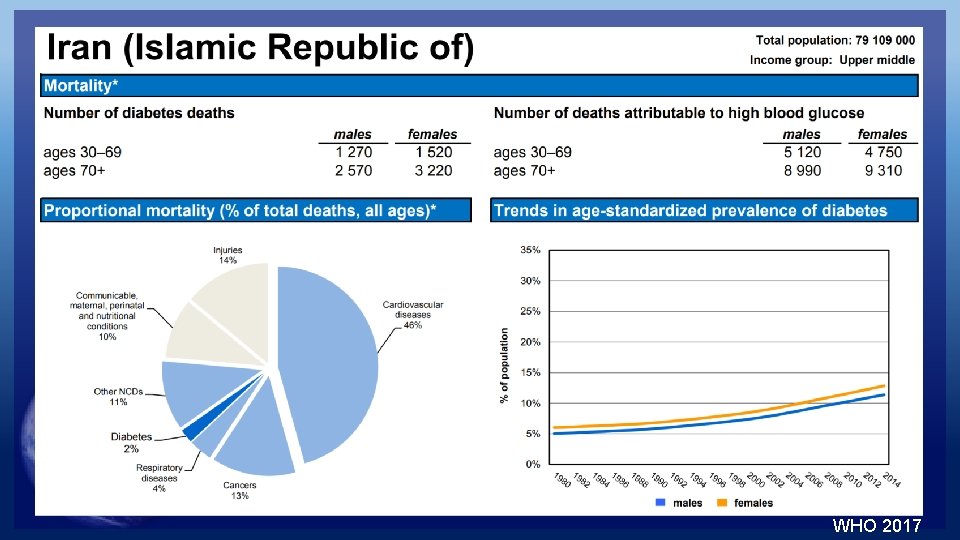
WHO 2017
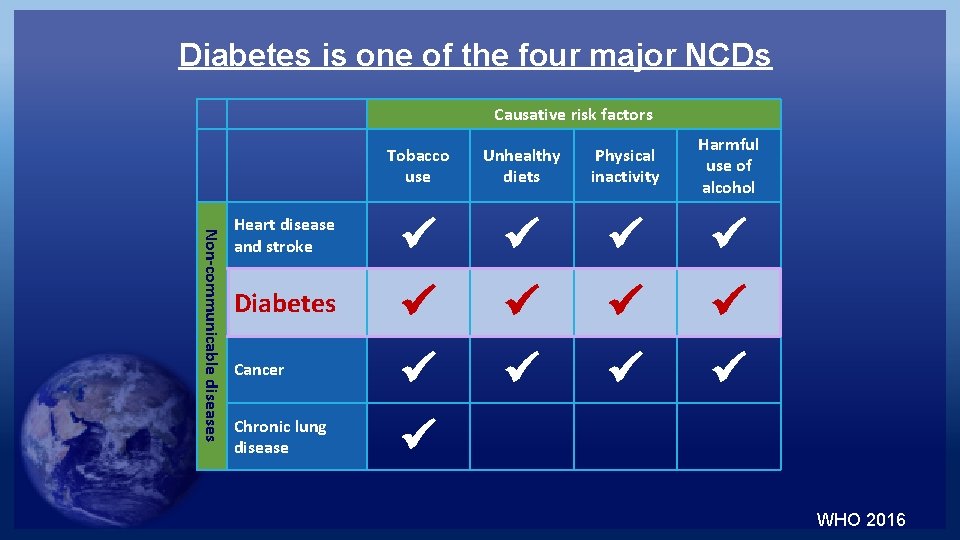
Diabetes is one of the four major NCDs Causative risk factors Non-communicable diseases Tobacco use Unhealthy diets Physical inactivity Harmful use of alcohol Heart disease and stroke Diabetes Cancer Chronic lung disease WHO 2016
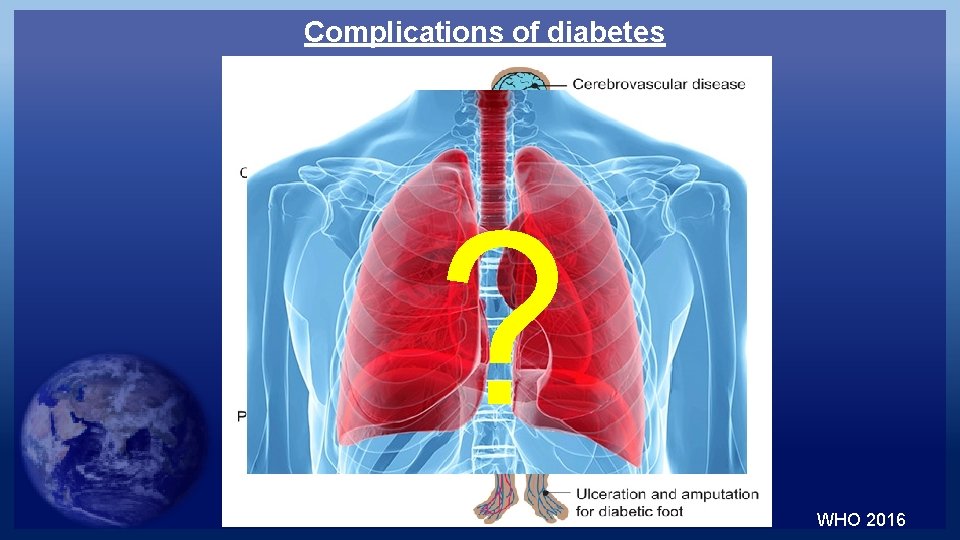
Complications of diabetes ? WHO 2016
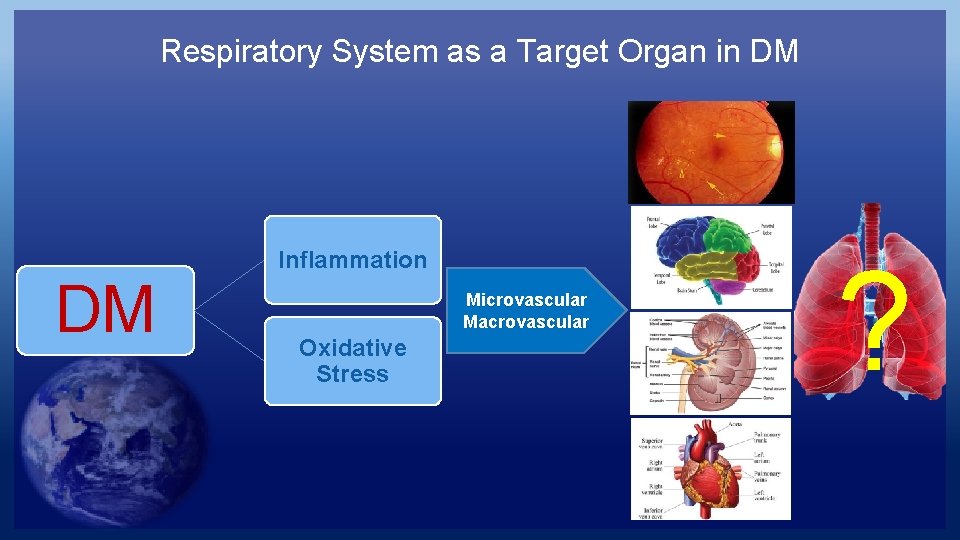
Respiratory System as a Target Organ in DM Inflammation DM Microvascular Macrovascular Oxidative Stress ?

Outlines • Introduction • Pathophysiology • Diabetes and Pulmonary Diseases • • • Airways Parenchyma Vascular Cancer Diabetes and SDB • Hypoglycemic Agents and the Lungs • Conclusions
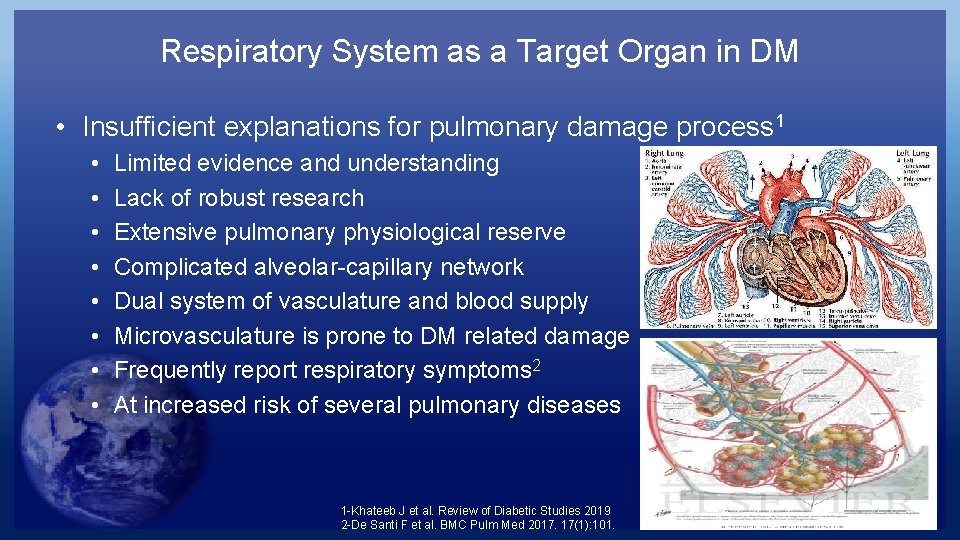
Respiratory System as a Target Organ in DM • Insufficient explanations for pulmonary damage process 1 • • Limited evidence and understanding Lack of robust research Extensive pulmonary physiological reserve Complicated alveolar-capillary network Dual system of vasculature and blood supply Microvasculature is prone to DM related damage Frequently report respiratory symptoms 2 At increased risk of several pulmonary diseases 1 -Khateeb J et al. Review of Diabetic Studies 2019 2 -De Santi F et al. BMC Pulm Med 2017. 17(1): 101.
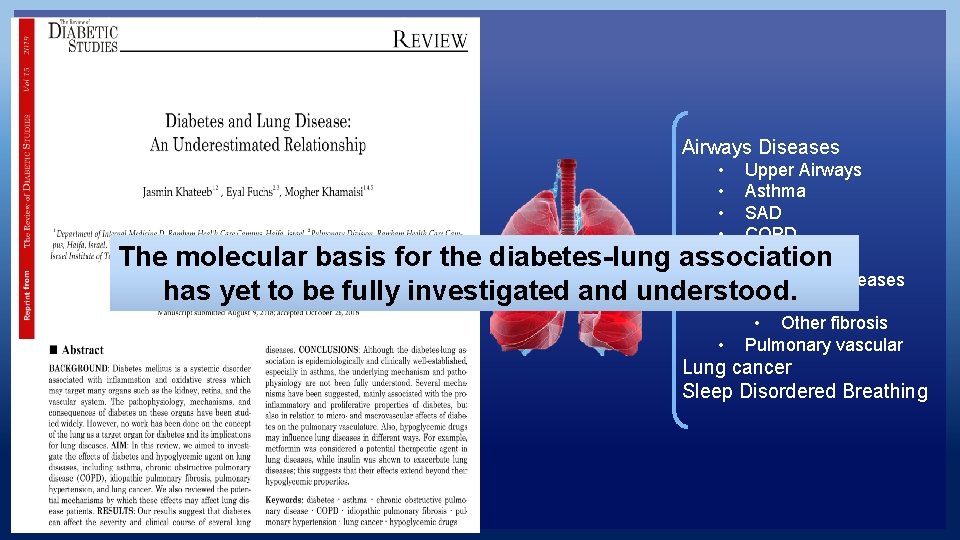
Airways Diseases • • Upper Airways Asthma SAD COPD • • Other fibrosis Pulmonary vascular Parenchyma The molecular basis for the diabetes-lung association • Restrictive diseases has yet to be fully investigated and understood. • UIP/IPF Lung cancer Sleep Disordered Breathing
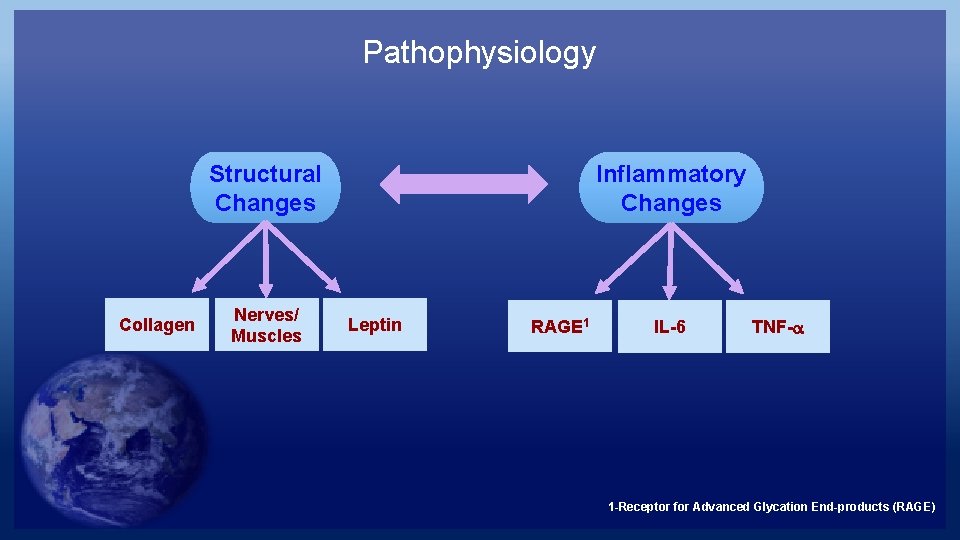
Pathophysiology Structural Changes Collagen Nerves/ Muscles Inflammatory Changes Leptin RAGE 1 IL-6 TNF- 1 -Receptor for Advanced Glycation End-products (RAGE)
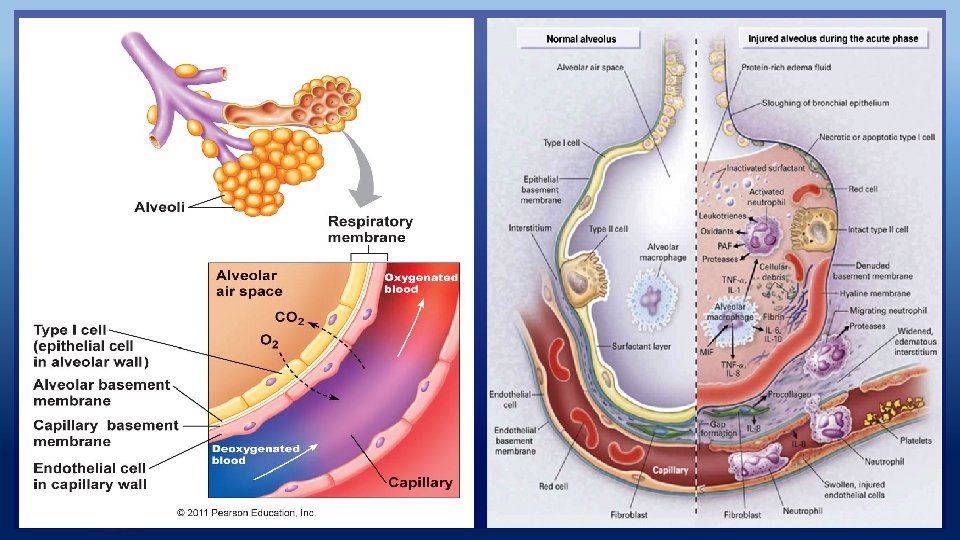
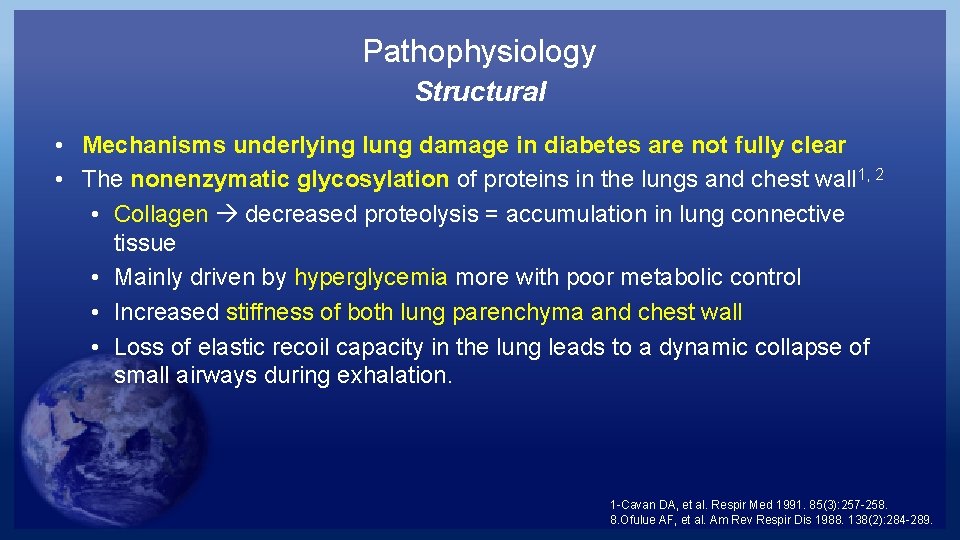
Pathophysiology Structural • Mechanisms underlying lung damage in diabetes are not fully clear • The nonenzymatic glycosylation of proteins in the lungs and chest wall 1, 2 • Collagen decreased proteolysis = accumulation in lung connective tissue • Mainly driven by hyperglycemia more with poor metabolic control • Increased stiffness of both lung parenchyma and chest wall • Loss of elastic recoil capacity in the lung leads to a dynamic collapse of small airways during exhalation. 1 -Cavan DA, et al. Respir Med 1991. 85(3): 257 -258. 8. Ofulue AF, et al. Am Rev Respir Dis 1988. 138(2): 284 -289.
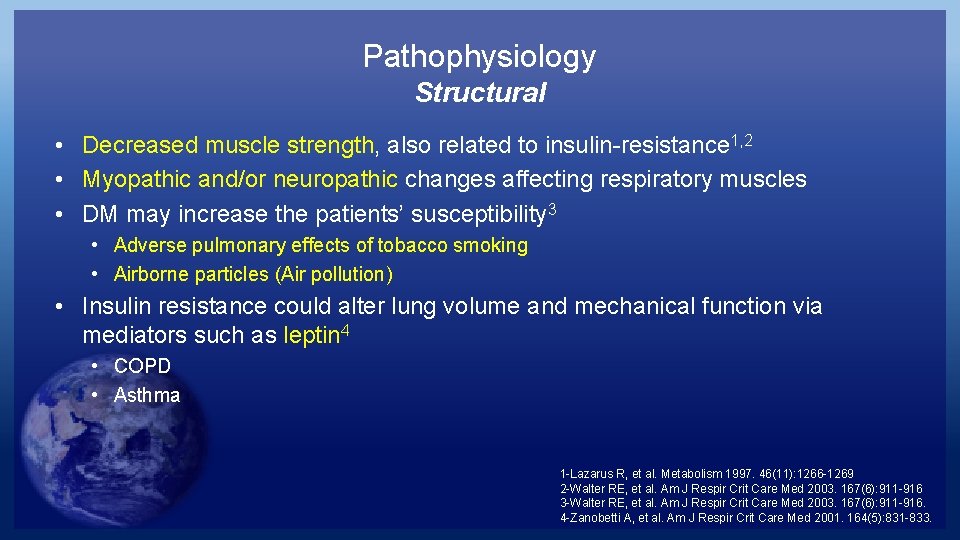
Pathophysiology Structural • Decreased muscle strength, also related to insulin-resistance 1, 2 • Myopathic and/or neuropathic changes affecting respiratory muscles • DM may increase the patients’ susceptibility 3 • Adverse pulmonary effects of tobacco smoking • Airborne particles (Air pollution) • Insulin resistance could alter lung volume and mechanical function via mediators such as leptin 4 • COPD • Asthma 1 -Lazarus R, et al. Metabolism 1997. 46(11): 1266 -1269 2 -Walter RE, et al. Am J Respir Crit Care Med 2003. 167(6): 911 -916 3 -Walter RE, et al. Am J Respir Crit Care Med 2003. 167(6): 911 -916. 4 -Zanobetti A, et al. Am J Respir Crit Care Med 2001. 164(5): 831 -833.
Pathophysiology Structural • Autopsy study of six diabetics and six nondiabetic controls 1 • EM in diabetics there is a thickening of the kidney and lung basement membrane with similar magnitude in both • All lung regions are equally affected • There was no correlation between the lung basement membrane thickening and the duration and type of DM • Increased density of the alveolar-capillary interface reduction in diffusion capacity 2, 3 1 -Weynand B, et al. Respiration. 1999; 66: 14 -9 2 -Wheatley CM, et al. Eur J Appl Physiol. 2011; 111: 56778 3 -Hitchings AW, et al. Thorax 2016. 71(7): 587 -593.
Pathophysiology Structural • Collagen and elastin fibers and their cross-linking 1 • Structural instability of the lung tissue in DM • Basement membrane of alveolar-capillary interface • Changes in connective tissue’s biochemistry • Changes in the chest’s autonomic nervous system Beneficial role of hypoglycemic agents on lung function and inflammation is unknown 3 1 -Suki B, et al. Compr Physiol. 2011; 1: 1317 -5 2 -Mižíková I, et al. Am J Physiol Lung Cell Mol Physiol. 2015; 308: L 114558. 3 -Hitchings AW, et al. Thorax 2016. 71(7): 587 -593.
Pathophysiology Inflammation • Proinflammatory pathways and vascular inflammation • Receptor for Advanced Glycation End-products (RAGE)1 • RAGE is expressed in the lung and promotes vascular inflammation 1 • Interleukin 6 metabolism alterations has been suggested as a severity predictor in lung diseases 2 • Emergence of microangiopathy • Nonenzymatic glycosylation tissue proteins • Accumulation of advanced glycosylation end products 1 -Brett AM, et al. Am J Pathol 1993. 143(6): 1699 -1712 2 -Ferreira MA, et al. Lancet 2011. 378(9795): 1006 -1014 3 -Hitchings AW, et al. Thorax 2016. 71(7): 587 -593.
Pathophysiology Inflammation • Lungs can be primary location of the activation of inflammation followed by the development of type 2 diabetes 1 • Systemic inflammatory pathways also play a role • Inadequate control lung higher function levels of inflammation markers (TNF-alpha, Diminished happens several ferritin, fibrinogen, and C-reactive protein)2 years before diabetes diagnosis 3 • COPD increased risk of type 2 DM • In a prospective cohort study (100, 000) women • Inflammatory markers link • Both systemic and pulmonary inflammation 4 1 - Litonjua AA, et al. Respir Med 2005. 99(12): 1583 -1590. 2 - Dennis RJ, et al. BMC Pulm Med 2010. 10: 38. 3 - Rana JS, et al. Diabetes Care 2004. 27(10): 2478 -2484. 4 -Fabbri LM, et al. Eur Respir J 2008. 31(1): 204 -212.

Outlines • Introduction • Pathophysiology • Diabetes and Pulmonary Diseases • • • Airways Parenchyma Vascular Cancer Diabetes and SDB • Hypoglycemic Agents and the Lungs • Conclusions
Diabetes and Respiratory Diseases; The Clinical Links
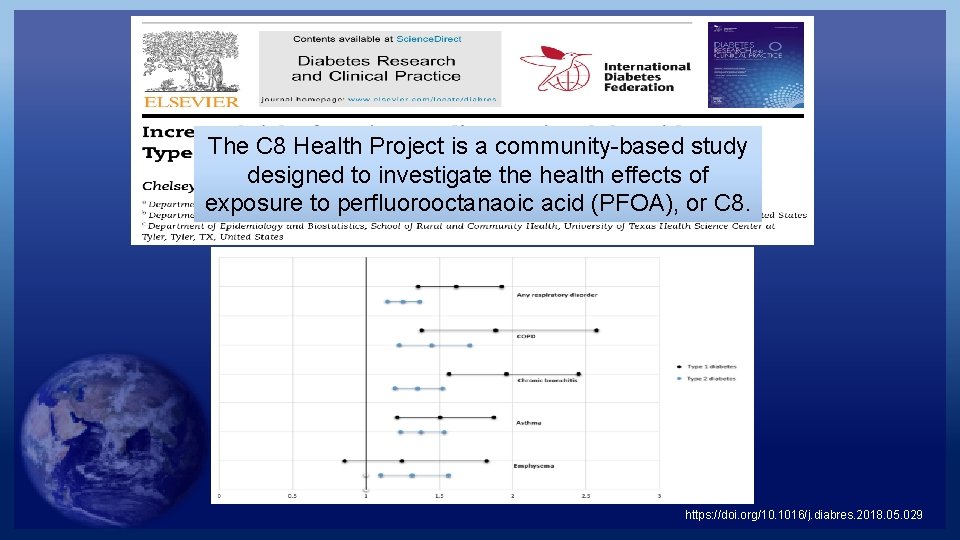
The C 8 Health Project is a community-based study designed to investigate the health effects of exposure to perfluorooctanaoic acid (PFOA), or C 8. • • • 54, 457 adults of C 8 database 5296 reporting a physician diagnosis of diabetes 3923 reporting chronic bronchitis 4805 reporting asthma 1260 reporting emphysema RDs in Diabetic population • T 1 D 26% • T 2 D 21% • Non-DM 13% https: //doi. org/10. 1016/j. diabres. 2018. 05. 029
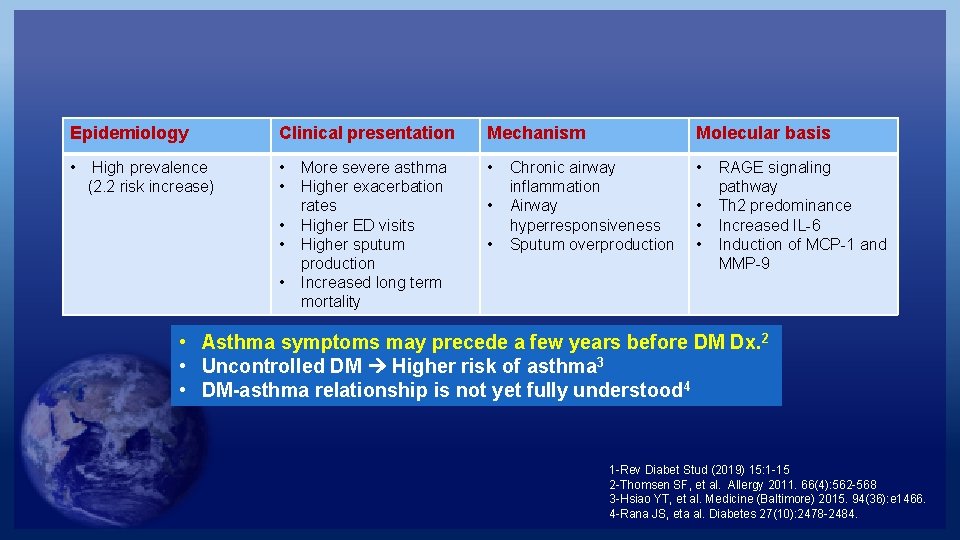
Epidemiology Clinical presentation Mechanism Molecular basis • • • High prevalence (2. 2 risk increase) • • • More severe asthma Higher exacerbation rates Higher ED visits Higher sputum production Increased long term mortality Chronic airway inflammation 1 Airway hyperresponsiveness Sputum overproduction • Asthma • • RAGE signaling pathway Th 2 predominance Increased IL-6 Induction of MCP-1 and MMP-9 • Asthma symptoms may precede a few years before DM Dx. 2 • Uncontrolled DM Higher risk of asthma 3 • DM-asthma relationship is not yet fully understood 4 1 -Rev Diabet Stud (2019) 15: 1 -15 2 -Thomsen SF, et al. Allergy 2011. 66(4): 562 -568 3 -Hsiao YT, et al. Medicine (Baltimore) 2015. 94(36): e 1466. 4 -Rana JS, eta al. Diabetes 27(10): 2478 -2484.
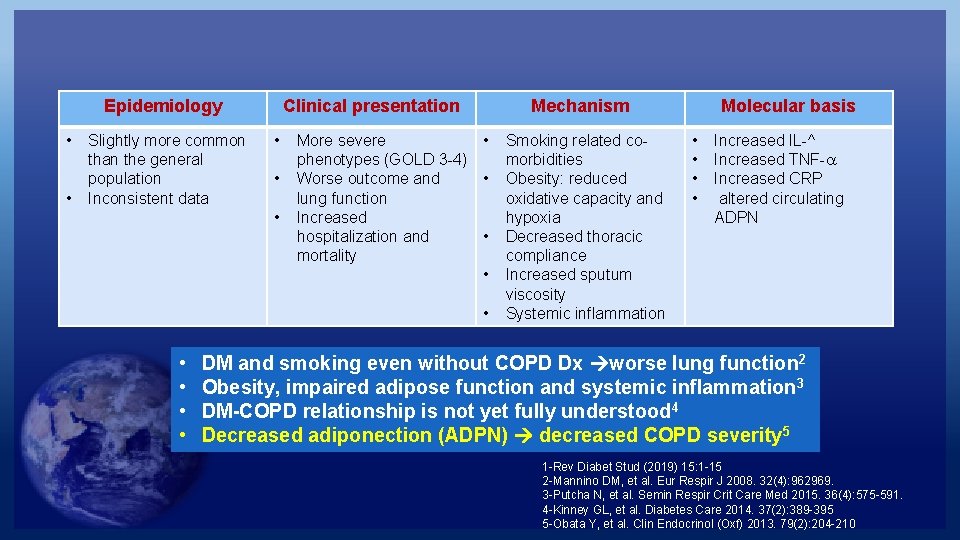
Epidemiology • • Slightly more common than the general population Inconsistent data Clinical presentation • • • Mechanism More severe • phenotypes (GOLD 3 -4) Worse outcome and • lung function Increased hospitalization and • mortality • COPD • • • Smoking related comorbidities Obesity: reduced 1 oxidative capacity and hypoxia Decreased thoracic compliance Increased sputum viscosity Systemic inflammation Molecular basis • • Increased IL-^ Increased TNF- Increased CRP altered circulating ADPN DM and smoking even without COPD Dx worse lung function 2 Obesity, impaired adipose function and systemic inflammation 3 DM-COPD relationship is not yet fully understood 4 Decreased adiponection (ADPN) decreased COPD severity 5 1 -Rev Diabet Stud (2019) 15: 1 -15 2 -Mannino DM, et al. Eur Respir J 2008. 32(4): 962969. 3 -Putcha N, et al. Semin Respir Crit Care Med 2015. 36(4): 575 -591. 4 -Kinney GL, et al. Diabetes Care 2014. 37(2): 389 -395 5 -Obata Y, et al. Clin Endocrinol (Oxf) 2013. 79(2): 204 -210
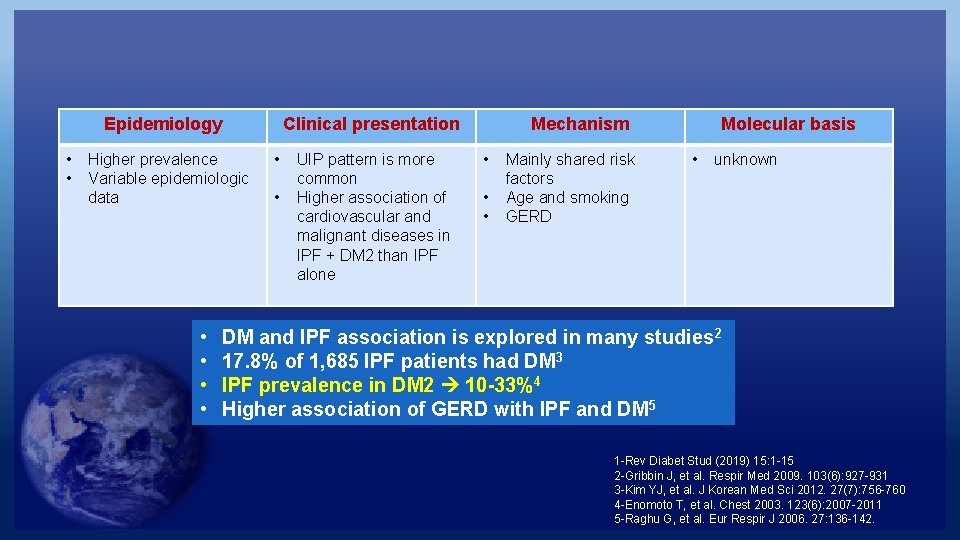
Epidemiology • • Clinical presentation Mechanism Molecular basis • UIP pattern is more • Mainly shared risk • unknown 1 Idiopathic Pulmonary Fibrosis (IPF) common factors Higher prevalence Variable epidemiologic data • • • Higher association of cardiovascular and malignant diseases in IPF + DM 2 than IPF alone • • Age and smoking GERD DM and IPF association is explored in many studies 2 17. 8% of 1, 685 IPF patients had DM 3 IPF prevalence in DM 2 10 -33%4 Higher association of GERD with IPF and DM 5 1 -Rev Diabet Stud (2019) 15: 1 -15 2 -Gribbin J, et al. Respir Med 2009. 103(6): 927 -931 3 -Kim YJ, et al. J Korean Med Sci 2012. 27(7): 756 -760 4 -Enomoto T, et al. Chest 2003. 123(6): 2007 -2011 5 -Raghu G, et al. Eur Respir J 2006. 27: 136 -142.
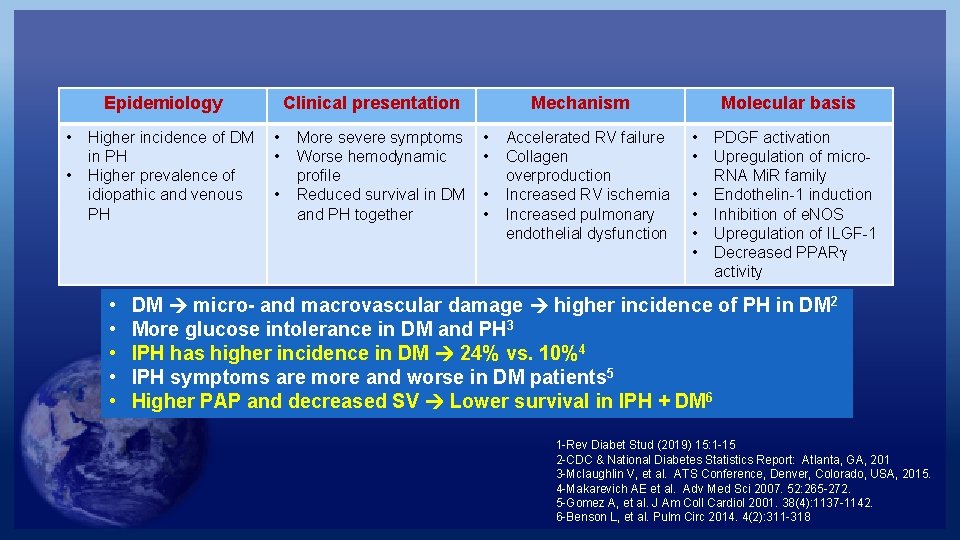
Epidemiology • • Higher incidence of DM in PH Higher prevalence of idiopathic and venous PH • • • Clinical presentation • • More severe symptoms Worse hemodynamic profile Reduced survival in DM and PH together Mechanism • • Accelerated RV failure Collagen overproduction Increased RV ischemia Increased pulmonary endothelial dysfunction Molecular basis • • Pulmonary Hypertension (PH)1 • • PDGF activation Upregulation of micro. RNA Mi. R family Endothelin-1 induction Inhibition of e. NOS Upregulation of ILGF-1 Decreased PPAR activity DM micro- and macrovascular damage higher incidence of PH in DM 2 More glucose intolerance in DM and PH 3 IPH has higher incidence in DM 24% vs. 10%4 IPH symptoms are more and worse in DM patients 5 Higher PAP and decreased SV Lower survival in IPH + DM 6 1 -Rev Diabet Stud (2019) 15: 1 -15 2 -CDC & National Diabetes Statistics Report: Atlanta, GA, 201 3 -Mclaughlin V, et al. ATS Conference, Denver, Colorado, USA, 2015. 4 -Makarevich AE et al. Adv Med Sci 2007. 52: 265 -272. 5 -Gomez A, et al. J Am Coll Cardiol 2001. 38(4): 1137 -1142. 6 -Benson L, et al. Pulm Circ 2014. 4(2): 311 -318
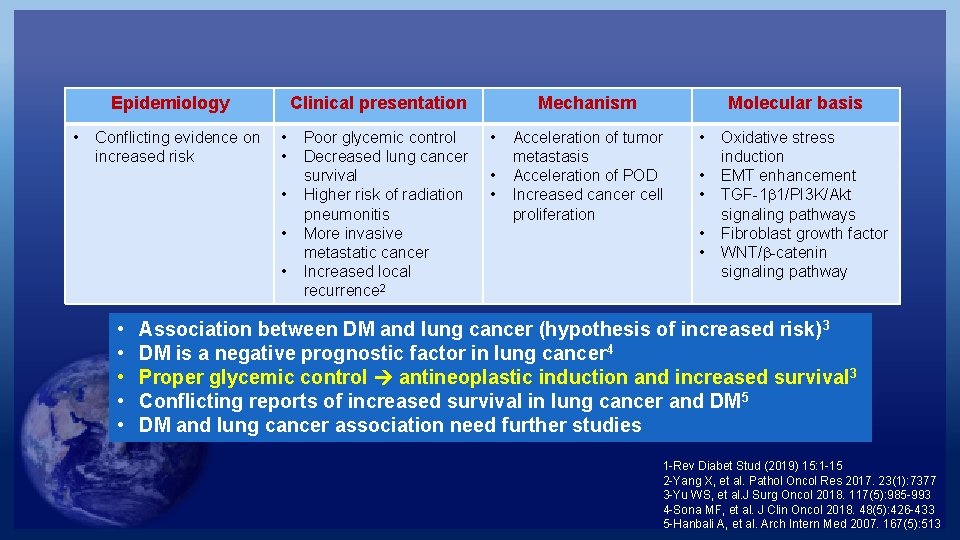
Epidemiology • Conflicting evidence on increased risk Clinical presentation • • • Poor glycemic control Decreased lung cancer survival Higher risk of radiation pneumonitis More invasive metastatic cancer Increased local recurrence 2 Mechanism • • • Molecular basis Acceleration of tumor metastasis Acceleration of POD 1 cancer cell Increased proliferation Lung Cancer • • • Oxidative stress induction EMT enhancement TGF-1 1/PI 3 K/Akt signaling pathways Fibroblast growth factor WNT/ -catenin signaling pathway Association between DM and lung cancer (hypothesis of increased risk) 3 DM is a negative prognostic factor in lung cancer 4 Proper glycemic control antineoplastic induction and increased survival 3 Conflicting reports of increased survival in lung cancer and DM 5 DM and lung cancer association need further studies 1 -Rev Diabet Stud (2019) 15: 1 -15 2 -Yang X, et al. Pathol Oncol Res 2017. 23(1): 7377 3 -Yu WS, et al. J Surg Oncol 2018. 117(5): 985 -993 4 -Sona MF, et al. J Clin Oncol 2018. 48(5): 426 -433 5 -Hanbali A, et al. Arch Intern Med 2007. 167(5): 513
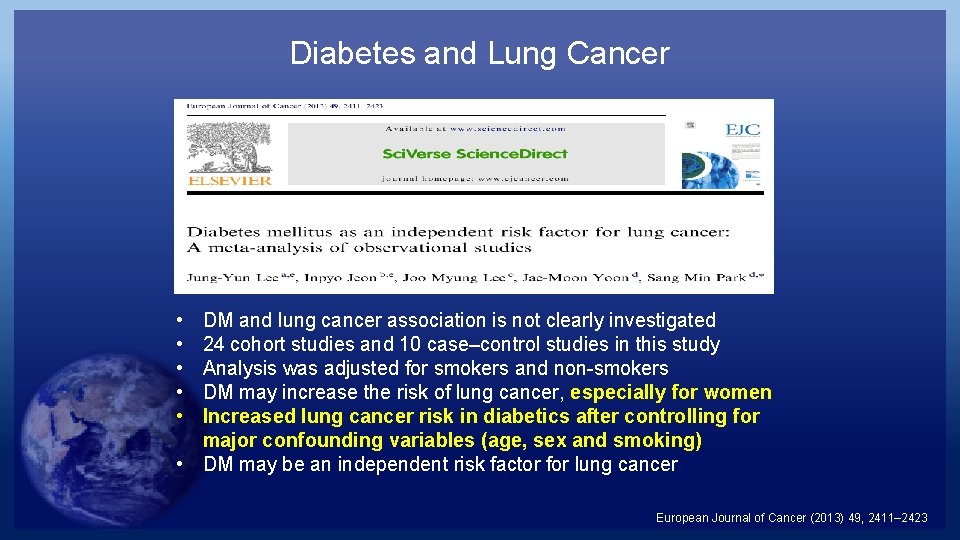
Diabetes and Lung Cancer • • • DM and lung cancer association is not clearly investigated 24 cohort studies and 10 case–control studies in this study Analysis was adjusted for smokers and non-smokers DM may increase the risk of lung cancer, especially for women Increased lung cancer risk in diabetics after controlling for major confounding variables (age, sex and smoking) • DM may be an independent risk factor for lung cancer European Journal of Cancer (2013) 49, 2411– 2423
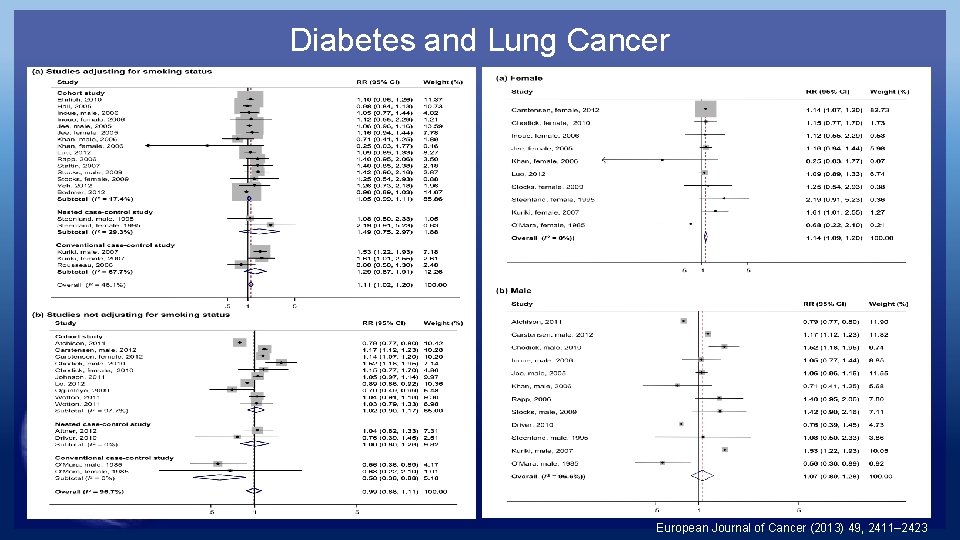
Diabetes and Lung Cancer European Journal of Cancer (2013) 49, 2411– 2423
Epidemiology • • OSA patients are more likely to have DM than without OSA 1 23% of the diabetes population had OSA 3 Clinical presentation • • OSA may itself be affected by diabetes Physical inactivity, predisposes to obesity and diabetes and OSA Mechanism • OSA affects glucose metabolism, insulin sensitivity and 1 beta-cell pancreatic function 2 After correction for BMI, which explained 13% of the variance in OSA, diabetes explained a further 8%4 DM and SDB • Molecular basis • • Unknown OSA independently associated with other neuroendocrine metabolic changes that might favor the development of DM 2 1 -Coughlin SR, et al. Eur Heart J 2004. 25: 735 -741 2 -Punjabi NM, et al. Am J Respir Crit Care Med 2009. 179: 235 -240. 3 -Punjabi NM, et al. Respir Physiol Neurobiol 2003. 136: 167 -178. 4 -West SD, et al. Thorax 2006. 61: 945 -950.

Outlines • Introduction • Pathophysiology • Diabetes and Pulmonary Diseases • • • Airways Parenchyma Vascular Cancer Diabetes and SDB • Hypoglycemic Agents and the Lungs • Conclusions
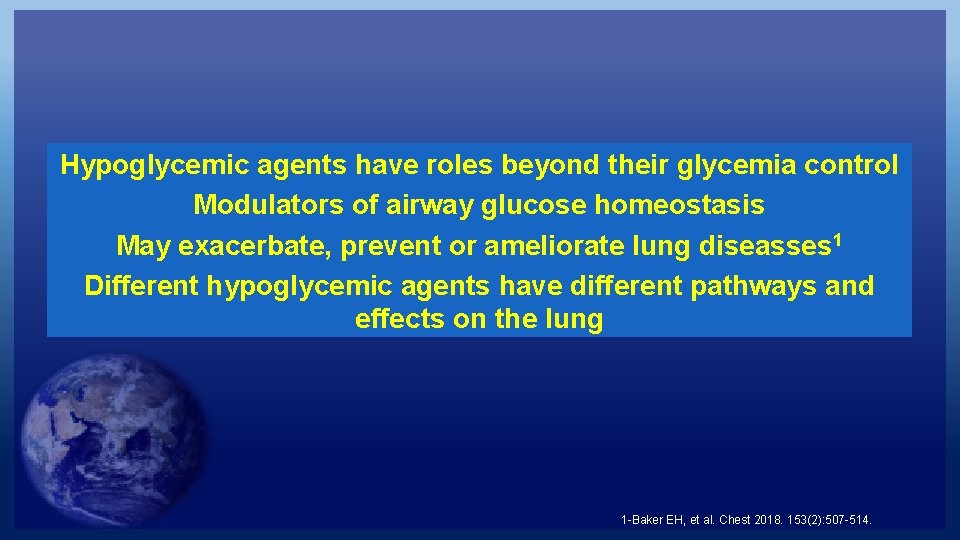
Hypoglycemic agents have roles beyond their glycemia control Modulators of airway homeostasis Hypoglycemic Agentsglucose and Lung Diseases May exacerbate, prevent or ameliorate lung diseasses 1 Different hypoglycemic agents have different pathways and effects on the lung 1 -Baker EH, et al. Chest 2018. 153(2): 507 -514.
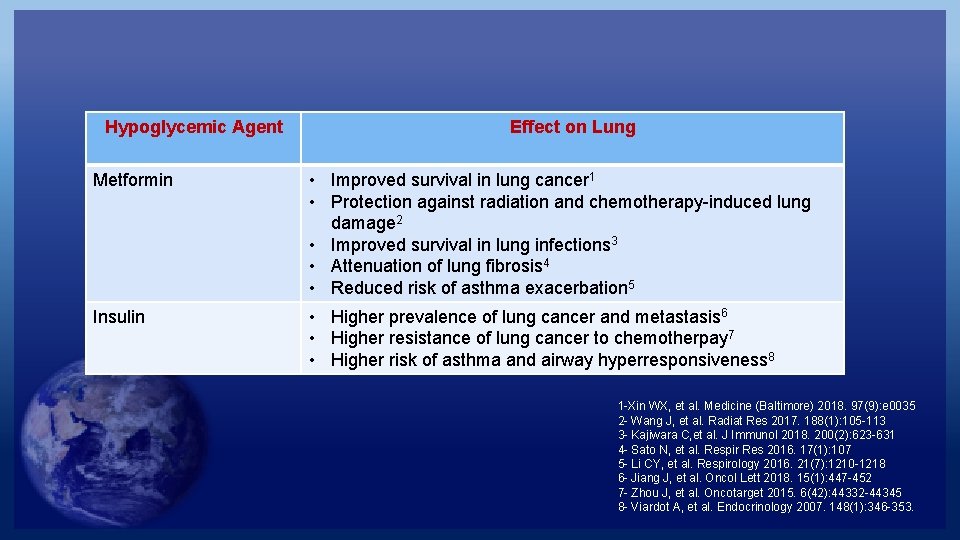
Hypoglycemic Agent Metformin Effect on Lung • Improved survival in lung cancer 1 • Protection against radiation and chemotherapy-induced lung damage 2 • Improved survival in lung infections 3 • Attenuation of lung fibrosis 4 • Reduced risk of asthma exacerbation 5 Hypoglycemic Agents and Lung Diseases Insulin • Higher prevalence of lung cancer and metastasis 6 • Higher resistance of lung cancer to chemotherpay 7 • Higher risk of asthma and airway hyperresponsiveness 8 1 -Xin WX, et al. Medicine (Baltimore) 2018. 97(9): e 0035 2 - Wang J, et al. Radiat Res 2017. 188(1): 105 -113 3 - Kajiwara C, et al. J Immunol 2018. 200(2): 623 -631 4 - Sato N, et al. Respir Res 2016. 17(1): 107 5 - Li CY, et al. Respirology 2016. 21(7): 1210 -1218 6 - Jiang J, et al. Oncol Lett 2018. 15(1): 447 -452 7 - Zhou J, et al. Oncotarget 2015. 6(42): 44332 -44345 8 - Viardot A, et al. Endocrinology 2007. 148(1): 346 -353.
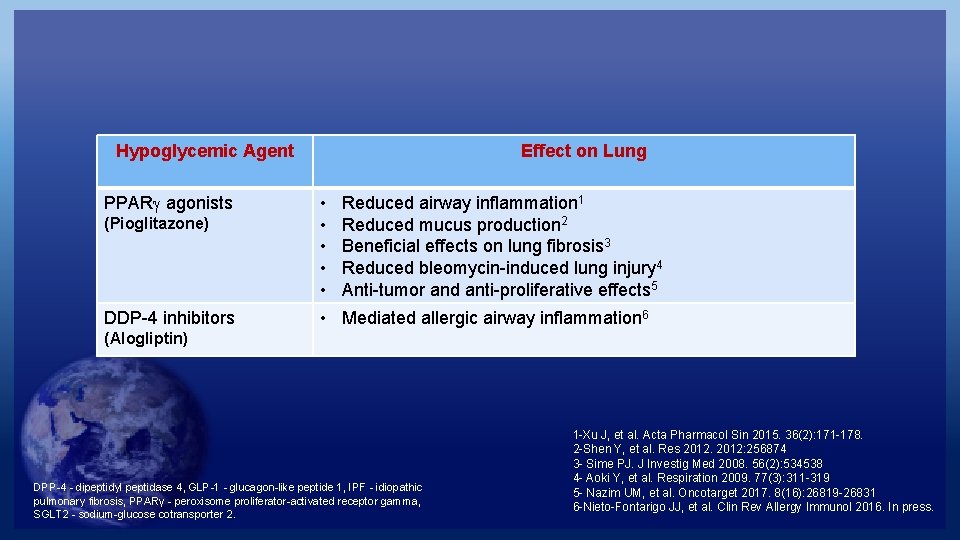
Hypoglycemic Agent PPAR agonists Effect on Lung • • • Reduced airway inflammation 1 Reduced mucus production 2 Beneficial effects on lung fibrosis 3 Reduced bleomycin-induced lung injury 4 Anti-tumor and anti-proliferative effects 5 Hypoglycemic Agents and Lung Diseases (Pioglitazone) DDP-4 inhibitors • Mediated allergic airway inflammation 6 (Alogliptin) DPP-4 - dipeptidyl peptidase 4, GLP-1 - glucagon-like peptide 1, IPF - idiopathic pulmonary fibrosis, PPARγ - peroxisome proliferator-activated receptor gamma, SGLT 2 - sodium-glucose cotransporter 2. 1 -Xu J, et al. Acta Pharmacol Sin 2015. 36(2): 171 -178. 2 -Shen Y, et al. Res 2012: 256874 3 - Sime PJ. J Investig Med 2008. 56(2): 534538 4 - Aoki Y, et al. Respiration 2009. 77(3): 311 -319 5 - Nazim UM, et al. Oncotarget 2017. 8(16): 26819 -26831 6 -Nieto-Fontarigo JJ, et al. Clin Rev Allergy Immunol 2016. In press.
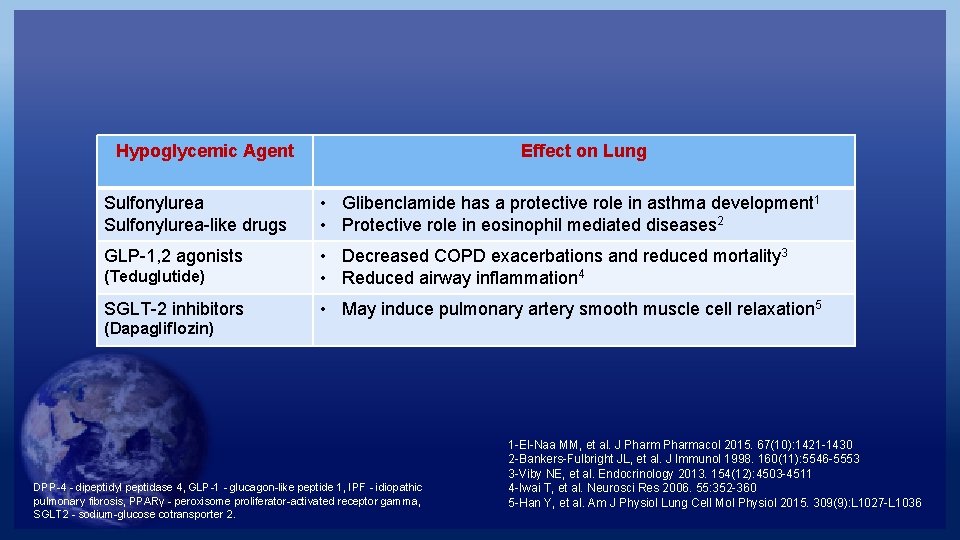
Hypoglycemic Agent Effect on Lung Sulfonylurea-like drugs • Glibenclamide has a protective role in asthma development 1 • Protective role in eosinophil mediated diseases 2 GLP-1, 2 agonists (Teduglutide) • Decreased COPD exacerbations and reduced mortality 3 • Reduced airway inflammation 4 SGLT-2 inhibitors • May induce pulmonary artery smooth muscle cell relaxation 5 Hypoglycemic Agents and Lung Diseases (Dapagliflozin) DPP-4 - dipeptidyl peptidase 4, GLP-1 - glucagon-like peptide 1, IPF - idiopathic pulmonary fibrosis, PPARγ - peroxisome proliferator-activated receptor gamma, SGLT 2 - sodium-glucose cotransporter 2. 1 -El-Naa MM, et al. J Pharmacol 2015. 67(10): 1421 -1430 2 -Bankers-Fulbright JL, et al. J Immunol 1998. 160(11): 5546 -5553 3 -Viby NE, et al. Endocrinology 2013. 154(12): 4503 -4511 4 -Iwai T, et al. Neurosci Res 2006. 55: 352 -360 5 -Han Y, et al. Am J Physiol Lung Cell Mol Physiol 2015. 309(9): L 1027 -L 1036

Outlines • Introduction • Pathophysiology • Diabetes and Pulmonary Diseases • • • Airways Parenchyma Vascular Cancer Diabetes and SDB • Hypoglycemic Agents and the Lungs • Conclusions
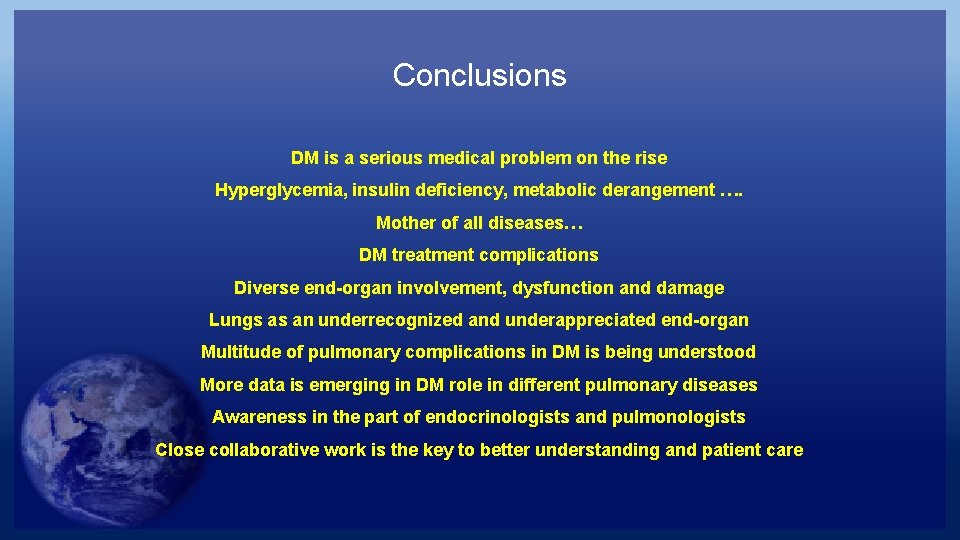
Conclusions DM is a serious medical problem on the rise Hyperglycemia, insulin deficiency, metabolic derangement …. Mother of all diseases… DM treatment complications Diverse end-organ involvement, dysfunction and damage Lungs as an underrecognized and underappreciated end-organ Multitude of pulmonary complications in DM is being understood More data is emerging in DM role in different pulmonary diseases Awareness in the part of endocrinologists and pulmonologists Close collaborative work is the key to better understanding and patient care


Thank you for your attention
- Slides: 46