
Diabetic Ketoacidosis Irene N Sills MD Albany Medical

Diabetic Ketoacidosis Irene N. Sills, MD Albany Medical Center Albany, NY
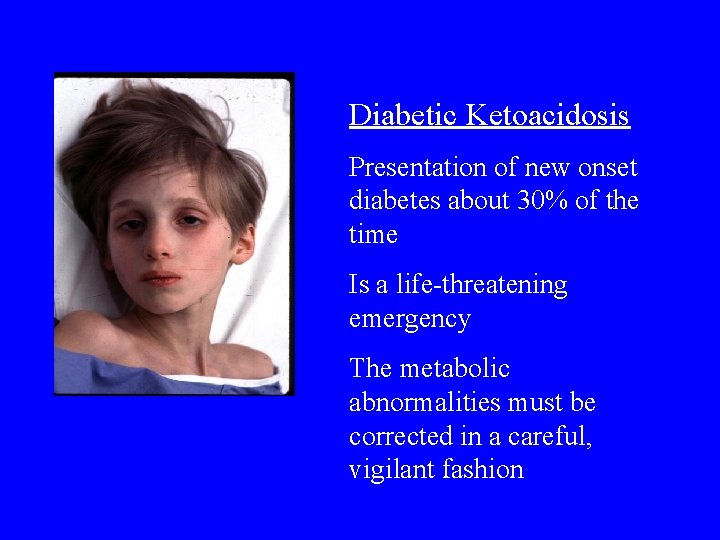
Diabetic Ketoacidosis Presentation of new onset diabetes about 30% of the time Is a life-threatening emergency The metabolic abnormalities must be corrected in a careful, vigilant fashion
Diabetic Ketoacidosis • • • Pathophysiology Diagnosis Treatment Complications of treatment When the acidosis is resolved
Diabetic Ketoacidosis • • Abnormal metabolic state Due to insulin deficiency In patient with type 1 diabetes Characterized by hyperglycemia and acidosis
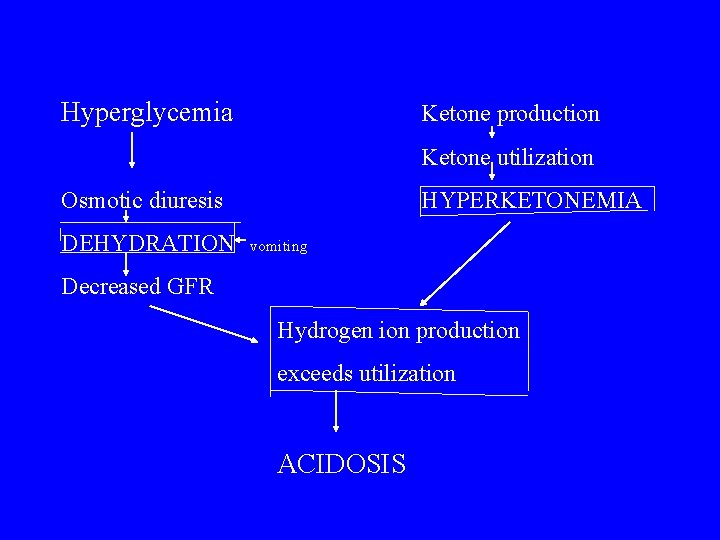
Hyperglycemia Ketone production Ketone utilization Osmotic diuresis DEHYDRATION HYPERKETONEMIA vomiting Decreased GFR Hydrogen ion production exceeds utilization ACIDOSIS
Endogenous Compensation for Acidosis • Chemical buffering by extracellular (bicarbonate) and intracellular buffers (protein, organic and inorganic phosphates, hemoglobin) • Control of CO 2 levels by alveolar ventilation rate • Control of blood bicarbonate concentration by changes in H+ excretion (excretion of titrable acidity and ammonium) and reabsorption of bicarbonate
Diabetic Ketoacidosis • Failure to take insulin (total insulin deficiency) • Relative insulin deficiency – – – infection trauma surgery stress dehydration ** • Hormones that lower glucose: INSULIN • Hormones that raise glucose: catecholamines, cortisol, glucagon, growth hormone
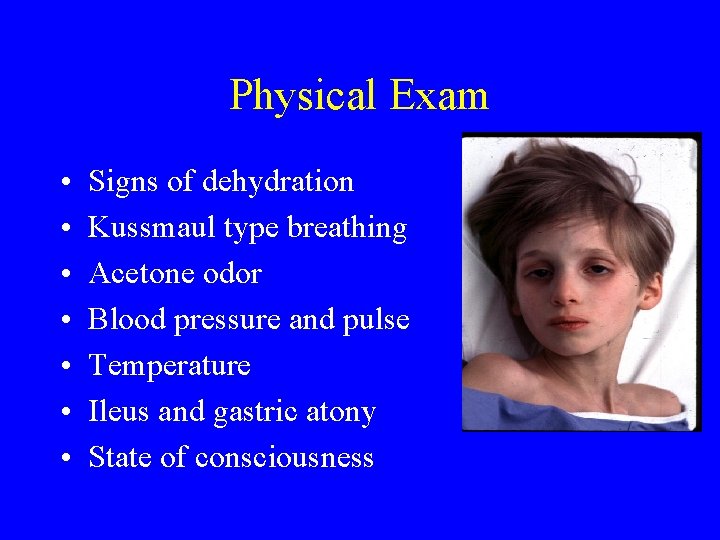
Physical Exam • • Signs of dehydration Kussmaul type breathing Acetone odor Blood pressure and pulse Temperature Ileus and gastric atony State of consciousness
Laboratory 1 • Glucose 400 -500 mg/dl, but may vary • Arterial p. H less than 7. 3; bicarbonate less than 15 m. M/L • Sodium usually normal, but may be low • Potassium initially elevated • Serum ketones positive • Serum osmolality elevated
Laboratory 2 • • Anion gap elevated: Na- (Cl + HCO 3) Creatinine spuriously elevated Hemoglobin and hematocrit elevated WBC may be elevated
Therapy • 1. Correction of the dehydration (PRIORITY) • 2. Correction of the hyperglycemia
Dehydration • Immediately decreases levels of “antiinsulin” hormones • Insulin resistance exacerbates the insulin deficiency • Rehydration will decrease stress hormones • Rehydration will improve kidney perfusion
Dehydration • DKA is a hypertonic state and should be corrected over 36 -48 hours • If clinically in shock, 10 -20 cc/kg. 9 NS or plasma expander over 30 -45 minutes • Fluids should be no more hypotonic than. 45 NS • Maintenance fluid may be. 9 NS until serum glucose is less than 300 mg/dl when glucose containing solution is added
Dehydration • Deficit replacement should be given EVENLY over 36 -48 hours • IV infusion rate usually calculates to one and a-half times maintenance • On-going losses should be replaced • Potassium should be added when patient voids • Bicarbonate is usually not needed
Insulin • Regular (novolog) insulin U 100 • 0. 05 -. 1 U/kg/hr • If glucose is <120 -180 mg/dl and acidosis is persisting, it is better to increase the glucose in the infusion rather than decrease the insulin
Monitoring • Serum glucose hourly • Electrolytes, calcium, phosphorous every 24 hours • Flowsheet with accurate I’s and O’s, vital signs, insulin doses, mental status checks, and laboratory results
Complications of therapy • • Hypokalemia Inadequate rehydration Hypoglycemia Cerebral edema and other CNS catastrophes
Hypokalemia • Vomiting • Renal losses exacerbated by hyperaldosteronism • Insulin and p. H correction moves potassium into the cells • Danger if the initial potassium is less than 3. 6 meq/L
Inadequate Rehydration

Hypoglycemia
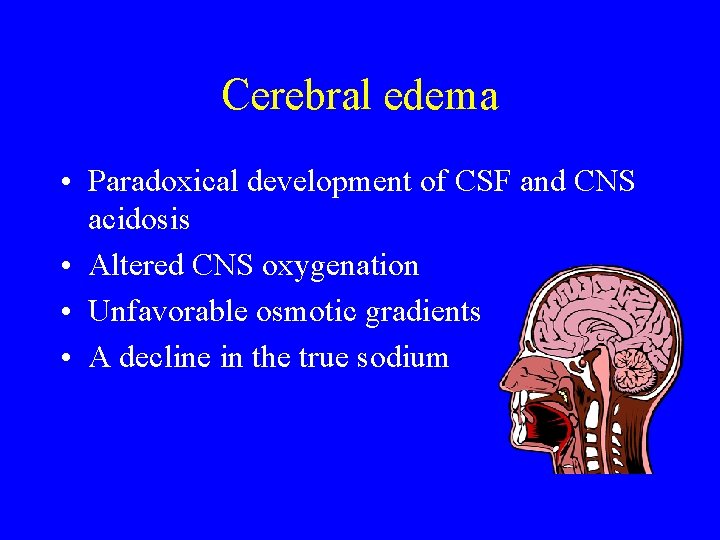
Cerebral edema • Paradoxical development of CSF and CNS acidosis • Altered CNS oxygenation • Unfavorable osmotic gradients • A decline in the true sodium
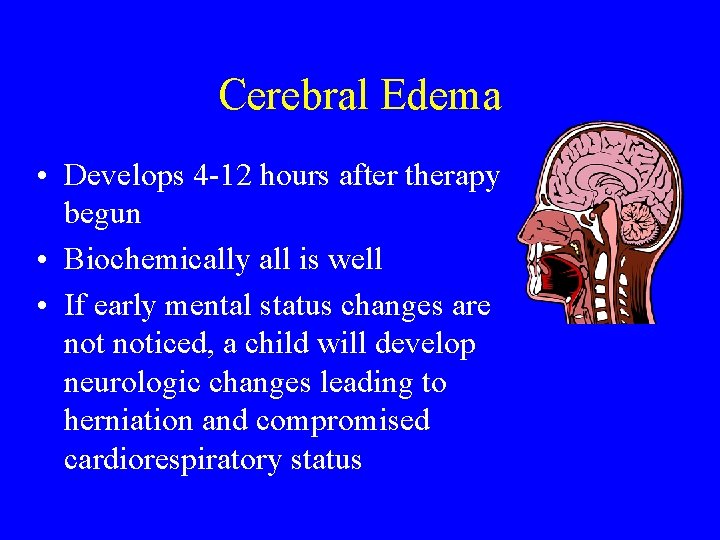
Cerebral Edema • Develops 4 -12 hours after therapy begun • Biochemically all is well • If early mental status changes are noticed, a child will develop neurologic changes leading to herniation and compromised cardiorespiratory status
Cerebral Edema • NEJM: Cerebral edema that was not clinically expected developed in a small group of children • CT scans while in DKA and after resolution • Ventricular narrowing during therapy • Perhaps, some degree of swelling in all children
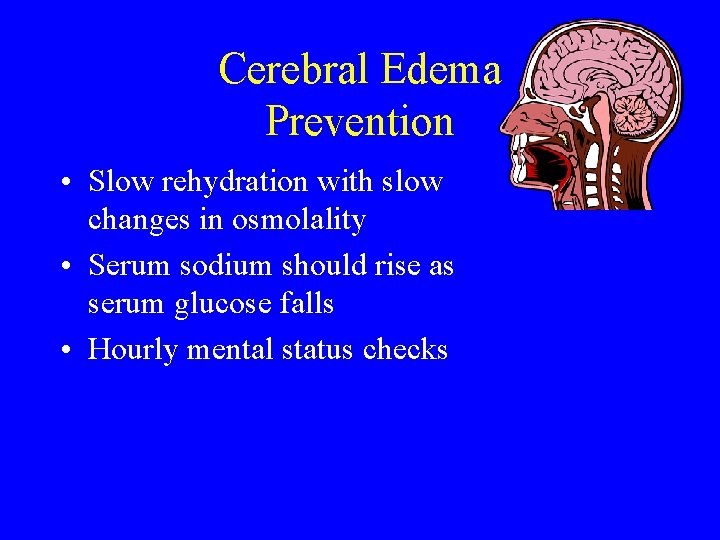
Cerebral Edema Prevention • Slow rehydration with slow changes in osmolality • Serum sodium should rise as serum glucose falls • Hourly mental status checks
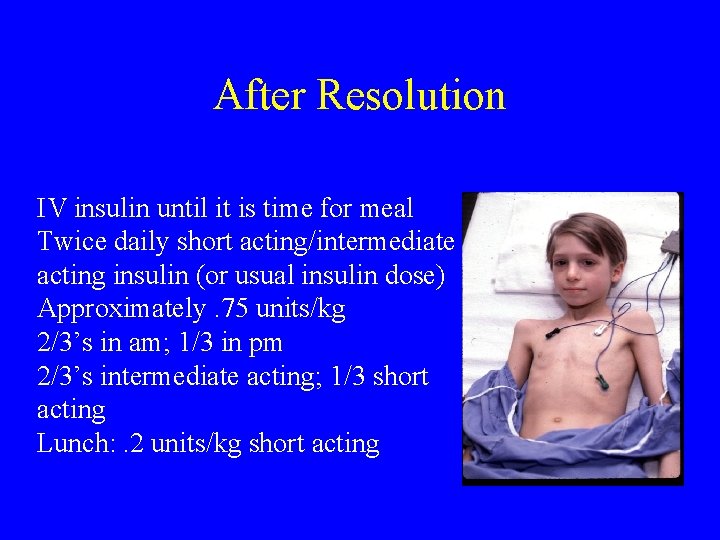
After Resolution IV insulin until it is time for meal Twice daily short acting/intermediate acting insulin (or usual insulin dose) Approximately. 75 units/kg 2/3’s in am; 1/3 in pm 2/3’s intermediate acting; 1/3 short acting Lunch: . 2 units/kg short acting
Team Management • • Physician Certified diabetes educator Dietician Psychologist or social worker
Insulin • Rapid acting - Humalog or Novolog • Short acting - Regular • Intermediate acting - NPH, Lente • Long acting - Ultralente • New, peakless - Glargine (Lantus)
Target Blood Glucose Levels • Prebreakfast • 70 - 120 mg/dl • Prelunch and dinner • 70 - 150 mg/dl • Prebedtime snack • 90 - 180 mg/dl • Younger child • 80 - 180 mg/dl
Principles of Meal Planning • • Meet nutritional requirements Well balanced meals and snacks Healthful fat consumption Avoid obesity Incorporate social and cultural factors Artificial sweeteners
Constituents of Meal Plan • Carbohydrate • Protein • Fat • 50 -60% calories • 15 -20% calories • 25 -35% calories
Monitoring • • Hemoglobin A 1 c Home glucose monitoring Glucowatch Subcutaneous sensor
Have a good day! Have good day
- Slides: 32