
Diabetic Ketoacidosis DKA Gloria Mora Victoria Quach Evelyn
Diabetic Ketoacidosis (DKA) Gloria Mora, Victoria Quach, Evelyn Rodriguez, Chelsea Schmitz, & Danielle Tatum
Objectives ● ● Describe pathophysiology and clinical manifestations of DKA Explain interprofessional care and emergency management of DKA Identify priority nursing diagnoses and interventions Describe patient teaching related to management of DM and prevention of DKA
Etiology What is DKA? ● DKA is a metabolic derangement characterized by hyperglycemia, metabolic acidosis, and ketosis due to a extreme lack of circulating insulin ○ More prevalent in Type 1 diabetes but can also occur in Type 2 Precipitating factors ● The Five “I’s” ○ ○ ○ Infection Infarction (myocardial, heart attack) Infant (pregnancy) Indiscretion (street drug usage) Insulin lack (noncompliance, dose reduction, pump malfunction, can’t afford) ● Other factors ○ ○ Medications (Corticosteroids, sympathomimetics, atypical antipsychotics New diagnosis of diabetes
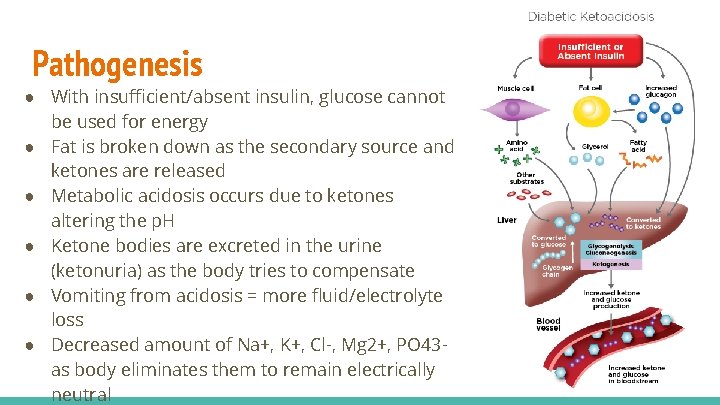
Pathogenesis ● With insufficient/absent insulin, glucose cannot be used for energy ● Fat is broken down as the secondary source and ketones are released ● Metabolic acidosis occurs due to ketones altering the p. H ● Ketone bodies are excreted in the urine (ketonuria) as the body tries to compensate ● Vomiting from acidosis = more fluid/electrolyte loss ● Decreased amount of Na+, K+, Cl-, Mg 2+, PO 43 as body eliminates them to remain electrically neutral
Pathogenesis (continue) ● Affects protein synthesis and leads to protein degradation and nitrogen losses from tissues ● Stimulates glucose production from amino acids in the liver, worsening hyperglycemia ● Hypovolemia then shock can occur d/t fluid loss and dehydration ● Renal failure secondary to hypovolemic shock can occur leading to retention of ketones and glucose, making acidosis worse ● Can lead to death/coma as a result of dehydration, electrolyte imbalance, and acidosis
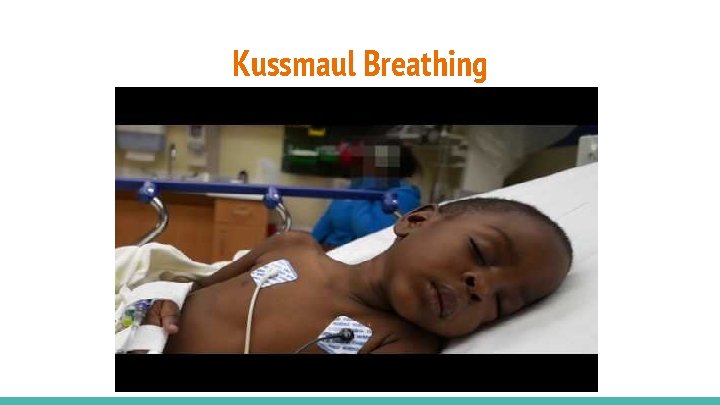
Clinical Manifestations ● ● ● Early symptoms: lethargy and weakness Dehydration: poor skin turgor, dry mucous membranes, tachycardia, orthostatic hypotension Severe dehydration: dry/loose skin, eyes become soft/sunken Abdominal pain, anorexia, nausea, vomiting Kussmaul respirations (rapid, deep breathing) ○ Body’s attempt to reverse metabolic acidosis by exhaling excess CO 2 Breath odor of ketones: sweet, fruity Rapid, weak pulse Gradually increasing restlessness, confusion, lethargy Fever, urinary frequency, thirst Glucosuria and ketonuria Serum glucose >250 mg/d. L
Kussmaul Breathing
Management of DKA ● Administration of IV fluids ● IV administration of short-acting insulin ● Electrolyte replacement ● ● ● ● Assessment of mental status Recording of intake and output Central venous pressure monitoring (if indicated) Assessment of blood glucose levels Assessment of blood and urine for ketones ECG monitoring Assessment of cardiovascular and respiratory status

Know where to find the hospital’s DKA protocol
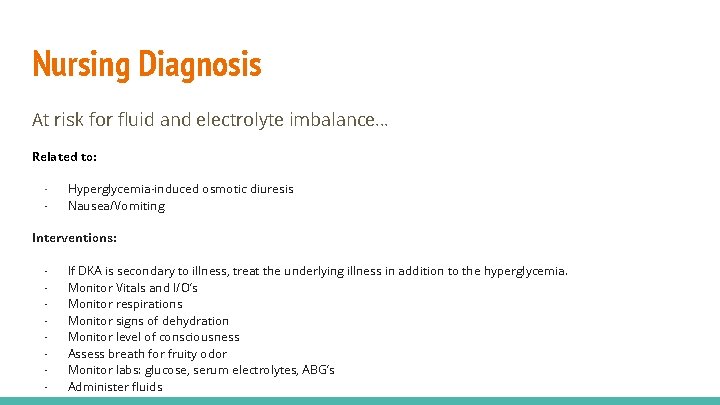
Nursing Diagnosis At risk for fluid and electrolyte imbalance… Related to: - Hyperglycemia-induced osmotic diuresis Nausea/Vomiting Interventions: - If DKA is secondary to illness, treat the underlying illness in addition to the hyperglycemia. Monitor Vitals and I/O’s Monitor respirations Monitor signs of dehydration Monitor level of consciousness Assess breath for fruity odor Monitor labs: glucose, serum electrolytes, ABG’s Administer fluids
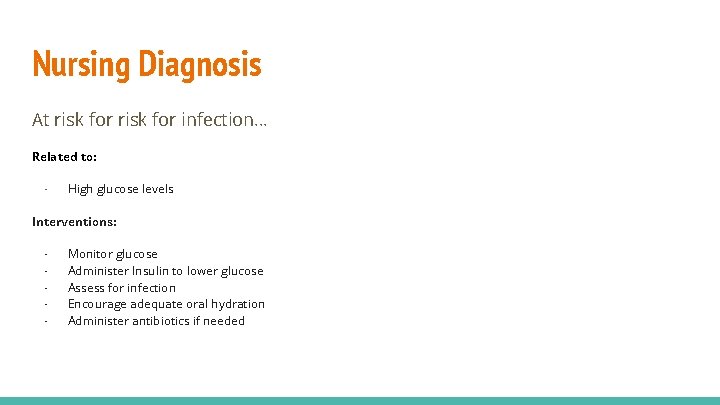
Nursing Diagnosis At risk for infection… Related to: - High glucose levels Interventions: - Monitor glucose Administer Insulin to lower glucose Assess for infection Encourage adequate oral hydration Administer antibiotics if needed
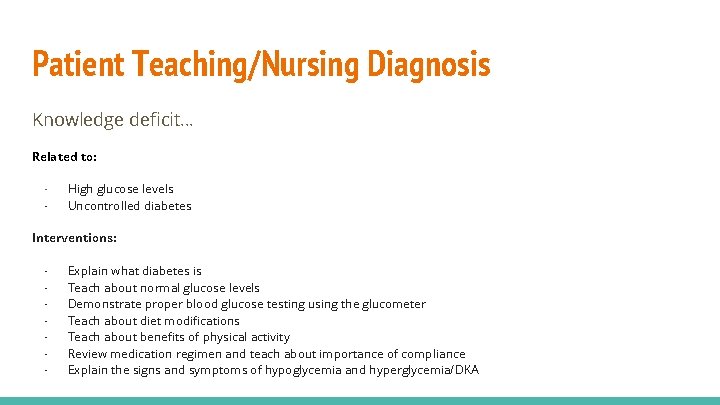
Patient Teaching/Nursing Diagnosis Knowledge deficit… Related to: - High glucose levels Uncontrolled diabetes Interventions: - Explain what diabetes is Teach about normal glucose levels Demonstrate proper blood glucose testing using the glucometer Teach about diet modifications Teach about benefits of physical activity Review medication regimen and teach about importance of compliance Explain the signs and symptoms of hypoglycemia and hyperglycemia/DKA
- Slides: 12