
DIABETIC FOOT ULCERS Ns Siti Anisah S Kep
DIABETIC FOOT ULCERS Ns. Siti Anisah, S. Kep, ETN, M. Kep
Diabetic Foot Ulcers • Pemeriksaan & deteksi dini kaki diabetes • Kelainan biomekanik pada kaki diabetik • Management pada DFU
An early detection of diabetic foot Klasifikasi : • Klasifikasi The Meggitt Wagner • Grade 0 -5 • The PEDIS (perfusion, extent, depth, infection, sensation)
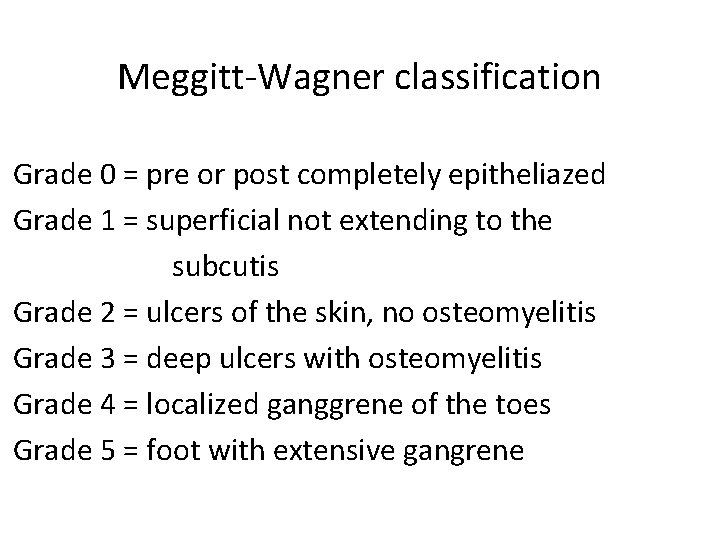
Meggitt-Wagner classification Grade 0 = pre or post completely epitheliazed Grade 1 = superficial not extending to the subcutis Grade 2 = ulcers of the skin, no osteomyelitis Grade 3 = deep ulcers with osteomyelitis Grade 4 = localized ganggrene of the toes Grade 5 = foot with extensive gangrene
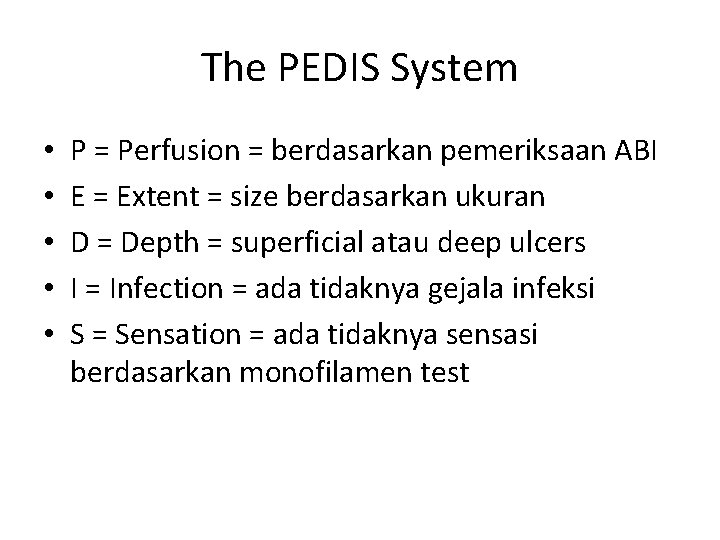
The PEDIS System • • • P = Perfusion = berdasarkan pemeriksaan ABI E = Extent = size berdasarkan ukuran D = Depth = superficial atau deep ulcers I = Infection = ada tidaknya gejala infeksi S = Sensation = ada tidaknya sensasi berdasarkan monofilamen test
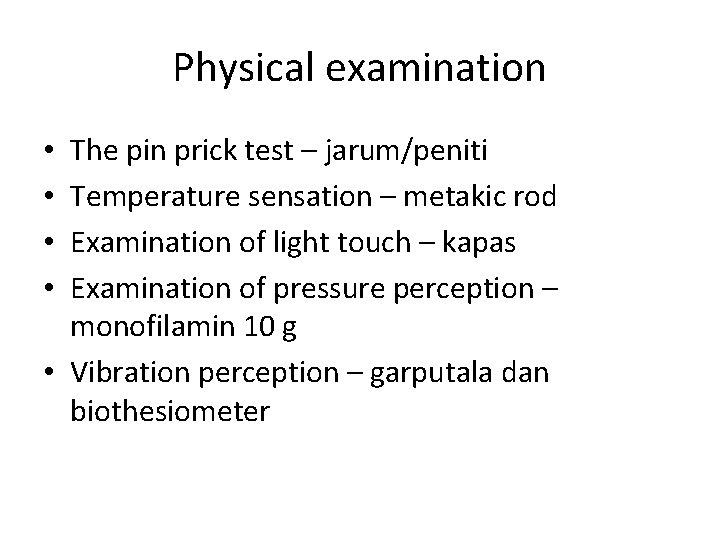
Physical examination The pin prick test – jarum/peniti Temperature sensation – metakic rod Examination of light touch – kapas Examination of pressure perception – monofilamin 10 g • Vibration perception – garputala dan biothesiometer • •
• Position sense (proprioception) • Deep tendon reflex • ABI (Angkle Brachial Pressure Index)
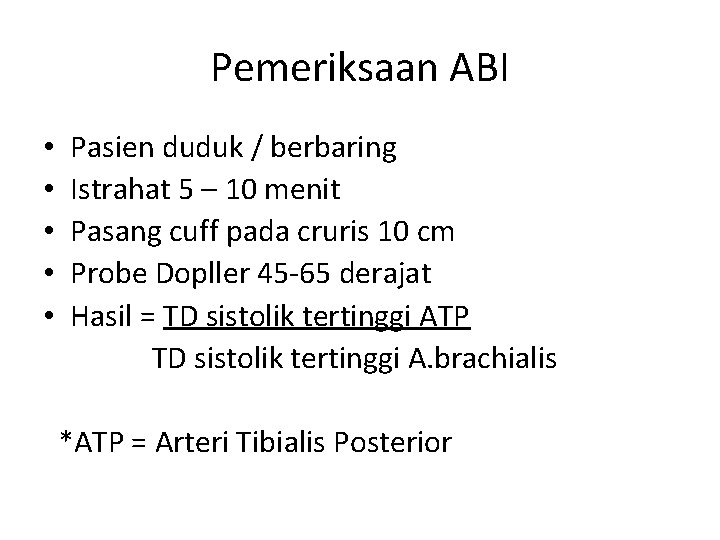
Pemeriksaan ABI • • • Pasien duduk / berbaring Istrahat 5 – 10 menit Pasang cuff pada cruris 10 cm Probe Dopller 45 -65 derajat Hasil = TD sistolik tertinggi ATP TD sistolik tertinggi A. brachialis *ATP = Arteri Tibialis Posterior
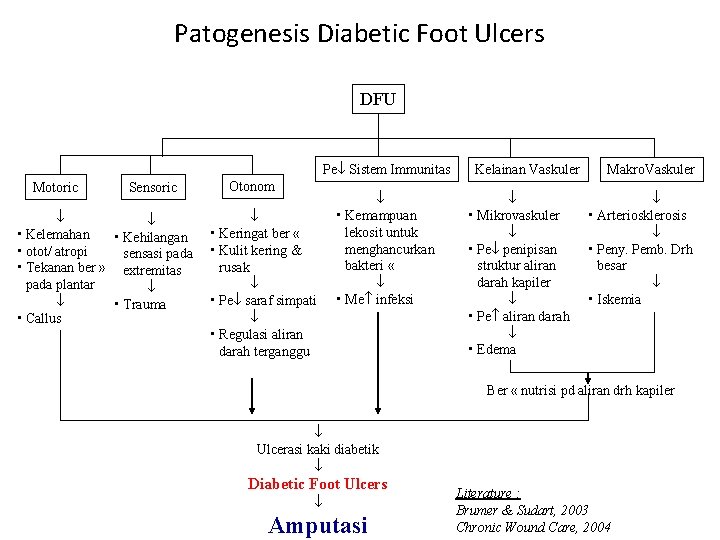
Patogenesis Diabetic Foot Ulcers DFU Pe Sistem Immunitas Motoric Sensoric • Kelemahan • Kehilangan • otot/ atropi sensasi pada • Tekanan ber » extremitas pada plantar • Trauma • Callus Otonom • Keringat ber « • Kulit kering & rusak • Pe saraf simpati • Regulasi aliran darah terganggu • Kemampuan lekosit untuk menghancurkan bakteri « • Me infeksi Kelainan Vaskuler • Mikrovaskuler • Pe penipisan struktur aliran darah kapiler • Pe aliran darah • Edema Makro. Vaskuler • Arteriosklerosis • Peny. Pemb. Drh besar • Iskemia Ber « nutrisi pd aliran drh kapiler Ulcerasi kaki diabetik Diabetic Foot Ulcers Amputasi Literature : Brumer & Sudart, 2003 Chronic Wound Care, 2004
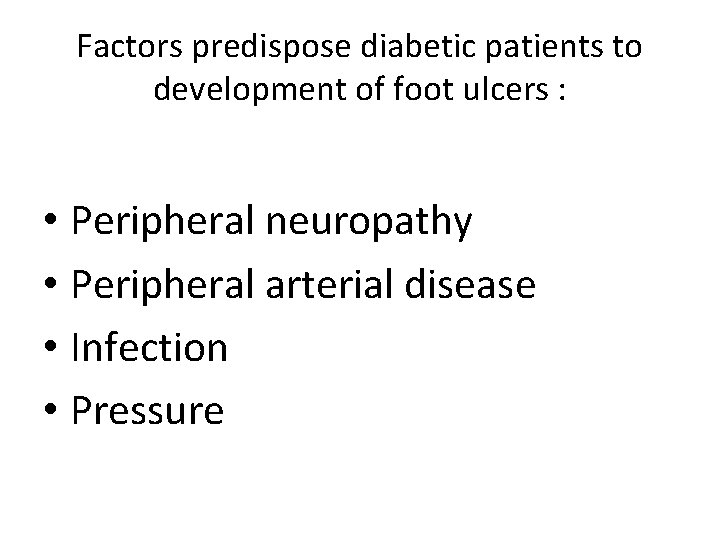
Factors predispose diabetic patients to development of foot ulcers : • Peripheral neuropathy • Peripheral arterial disease • Infection • Pressure
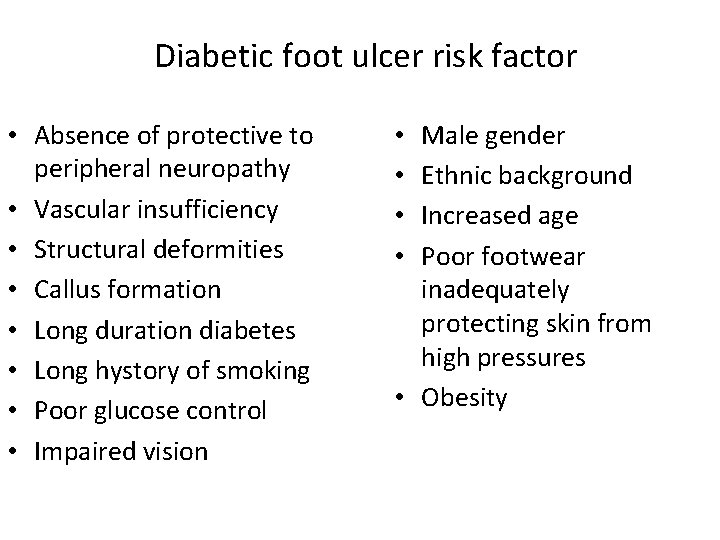
Diabetic foot ulcer risk factor • Absence of protective to peripheral neuropathy • Vascular insufficiency • Structural deformities • Callus formation • Long duration diabetes • Long hystory of smoking • Poor glucose control • Impaired vision Male gender Ethnic background Increased age Poor footwear inadequately protecting skin from high pressures • Obesity • •
Peran Perawat : ü Holisticaly assess ulcers and influential factors that retard and support healing processes. ü Continuously monitor, take care of the wound appropriate and intervene holistically to maximize healing process. ü Maintain optimum level of patient’s quality of life
How do health care practices cause nonhealing ? ü Inadequate assessment ü Inadequate debridement ü Dry wound environment ü Use of cytotoxic agents ü Inadequate financial resources
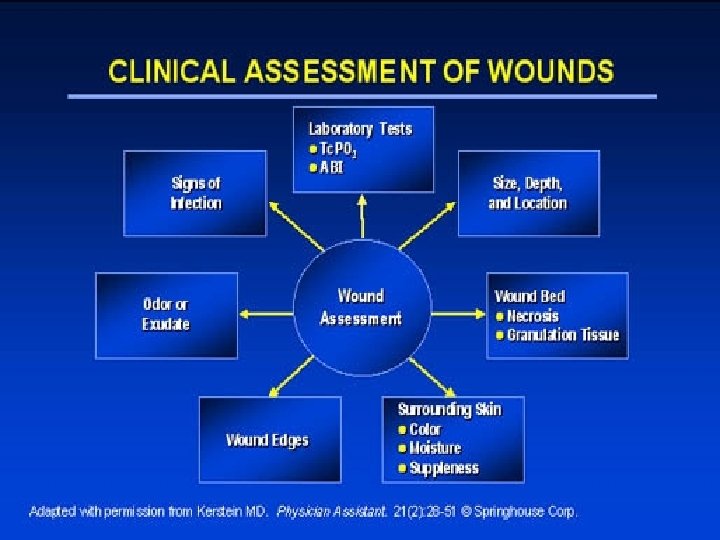
Wound assessment • History (underlying diseases associated with peripheral neuropathy → DM type I, II) • Inspect (erythema, deformities, callus formation, blisters, etc) • Palpate (pedal pulses, temperature changes in foot, oedema)
• Investigate - peripheral vascular disease → Doppler ultrasound - foot sensation screening for sensory deficit → Monofilamen test 10 gm - Sensitivitas microorganisme → pus culture
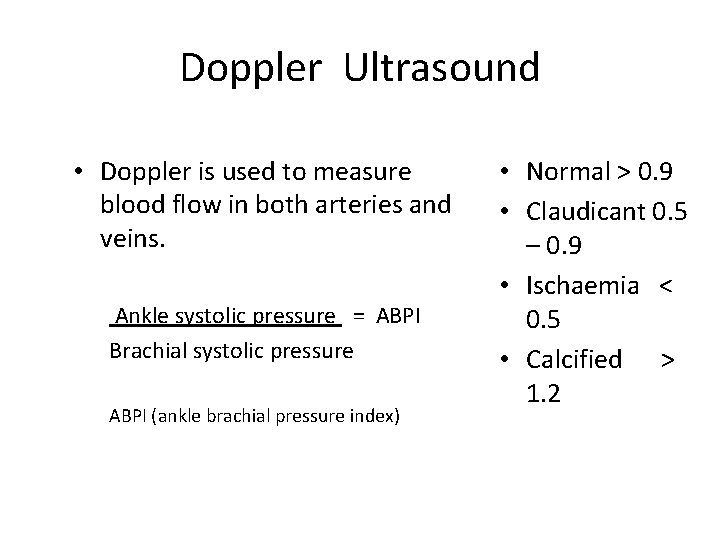
Doppler Ultrasound • Doppler is used to measure blood flow in both arteries and veins. Ankle systolic pressure = ABPI Brachial systolic pressure ABPI (ankle brachial pressure index) • Normal > 0. 9 • Claudicant 0. 5 – 0. 9 • Ischaemia < 0. 5 • Calcified > 1. 2
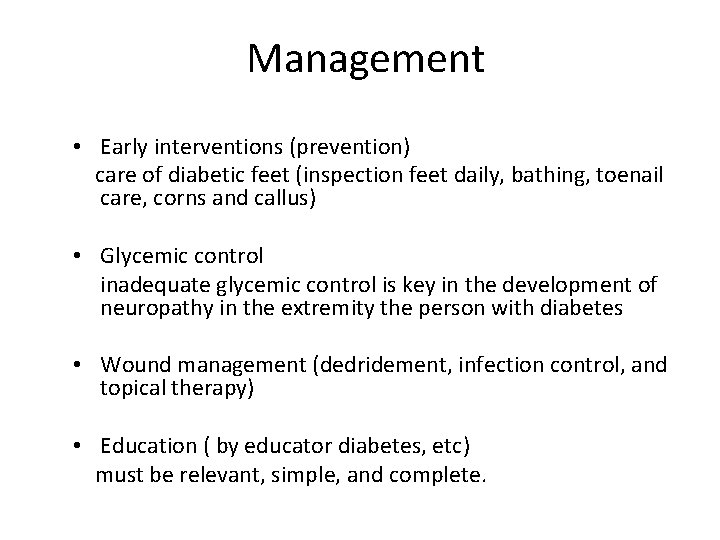
Management • Early interventions (prevention) care of diabetic feet (inspection feet daily, bathing, toenail care, corns and callus) • Glycemic control inadequate glycemic control is key in the development of neuropathy in the extremity the person with diabetes • Wound management (dedridement, infection control, and topical therapy) • Education ( by educator diabetes, etc) must be relevant, simple, and complete.
THERAPEUTIC ISSUES • • • Moist wound environment Reduction or prevention of infection Autolytic debridement Reduction of wound pain Stimulation of the development of granulation tissue

THERAPEUTIC ISSUES 1. 2. 3. 4. 5. 6. 7. Dressing Débridement Topical antimicrobials Partial-thickness skin grafting Expanded epithelial autografts and allografts Growth factors Anabolic steroids and other systemic agents
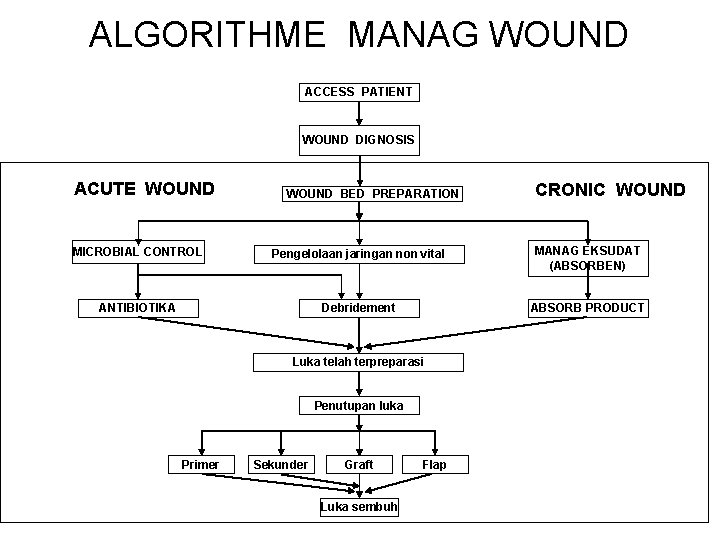
ALGORITHME MANAG WOUND ACCESS PATIENT WOUND DIGNOSIS ACUTE WOUND BED PREPARATION CRONIC WOUND MICROBIAL CONTROL Pengelolaan jaringan non vital MANAG EKSUDAT (ABSORBEN) ANTIBIOTIKA Debridement ABSORB PRODUCT Luka telah terpreparasi Penutupan luka Primer Sekunder Graft Luka sembuh Flap
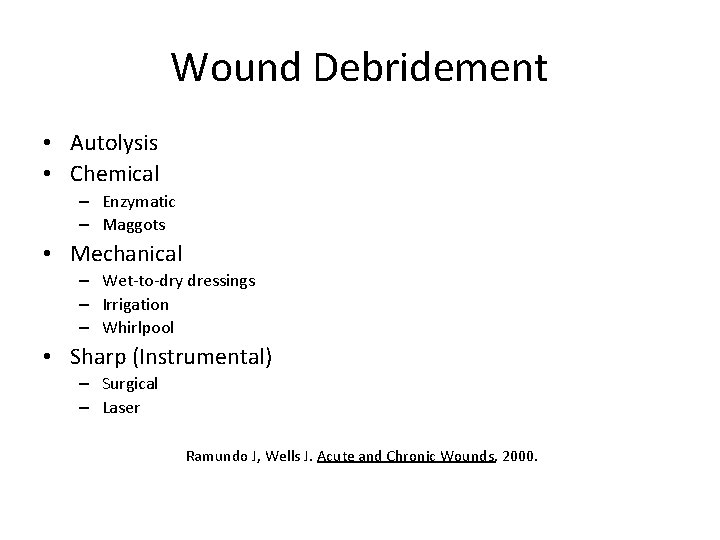
Wound Debridement • Autolysis • Chemical – Enzymatic – Maggots • Mechanical – Wet-to-dry dressings – Irrigation – Whirlpool • Sharp (Instrumental) – Surgical – Laser Ramundo J, Wells J. Acute and Chronic Wounds, 2000.
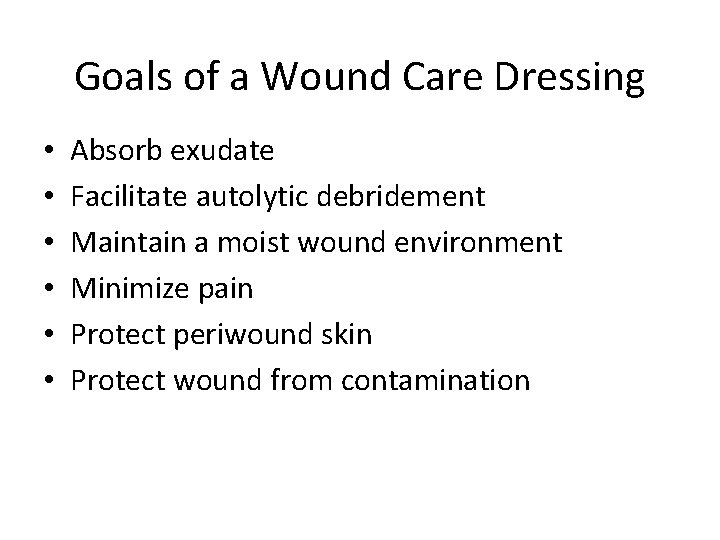
Goals of a Wound Care Dressing • • • Absorb exudate Facilitate autolytic debridement Maintain a moist wound environment Minimize pain Protect periwound skin Protect wound from contamination
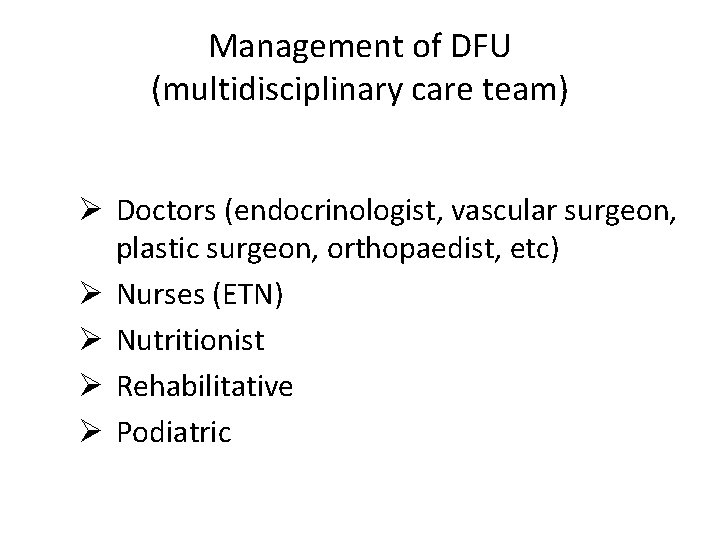
Management of DFU (multidisciplinary care team) Ø Doctors (endocrinologist, vascular surgeon, plastic surgeon, orthopaedist, etc) Ø Nurses (ETN) Ø Nutritionist Ø Rehabilitative Ø Podiatric
References 1. Blackey, Patricia. Practical Stoma Wound and Incontinence Management. Vermont, Victoria. Australia 2004, Page 283. 2. Berkala Ilmu Kedokteran: Potensi antikandida ekstrak madu secara in vitro dan in vivo. Volume 36, No. 4, Faculty of Medicine University. Desember 2004 3. Delay, Carol. The Care of Wounds : A Guide for Nurses. Blackwall Publishing 2005. Pages 96, 164, 185, 208. 4. Milne, Chaterine & Dubuc L, Debra. Wound, Ostomy, and Continence Nursing Secrets : Question and Answer Reveal the Secrets to Successful WOC Care. Philadelpia, Pennyslavia. Page 61. 5. Morison J, Moya; Ovington G, Liza: Wilkie, Kay. Cronic Wound Care : A Problem Based Learning Approach. Mosby, 2004. Page 109. 6. Sussman, Carrie; Bates, Barbara M. Wound Care : A Collaborative Practice Manual for Physical Therapist and Nurses. Aspen Publication, 1998.
Cont. . 7. Ostomy / Wound Management – ISSN: 0889 -5899 -volume 48 -Issue 11 -November 2002 -Pages ; 28 -40. 8. Wound Journal of Surgery : Surgery History Special Wound Healing Methods Used in Egypt and the Mytological Background. January 8, 2004. page 213. 7. 8. 9. 10. 11. http: //aswcjournal. com http: //papaindevelopment. com http: //worlwidewound http//healthpoint. product/honey http; //papain_debris. com
- Slides: 26