
Diabetic Foot Managment Dr Amir Sabbaghzadeh Irani Akhtar
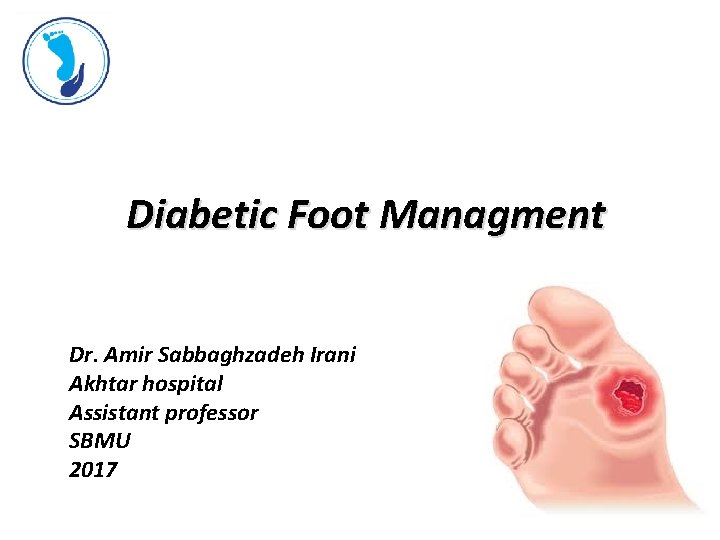
Diabetic Foot Managment Dr. Amir Sabbaghzadeh Irani Akhtar hospital Assistant professor SBMU 2017
Epidemiology • 175 million people worldwide with diabetes mellitus • by 2030 the projected number is 360 million • foot disorders are the most common complication • The major cause of hospitalization
• Diabetic foot ulcer (DFU) is the most costly and devastating complication • Affects 15% of diabetic patients during their lifetime • Proper management can greatly reduce, delay or prevent o Infection o Gangrene o Amputation o Death
• Diabetes is a multi-organ systemic disease • All comorbidities that affect wound healing must be managed • So you need a multidisciplinary team
The Role of orthopedic surgeon?
Treatment approaches • Patient education • Blood glucose control • Neuropathy • Vasculopathy
Wound/Ulcer Management
Three Main Questions 1. Extent of the lesion 2. Vascularity 3. Infection
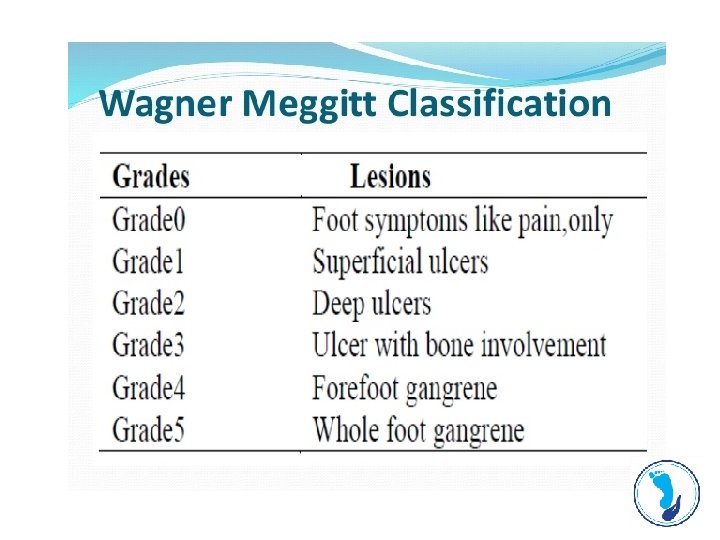
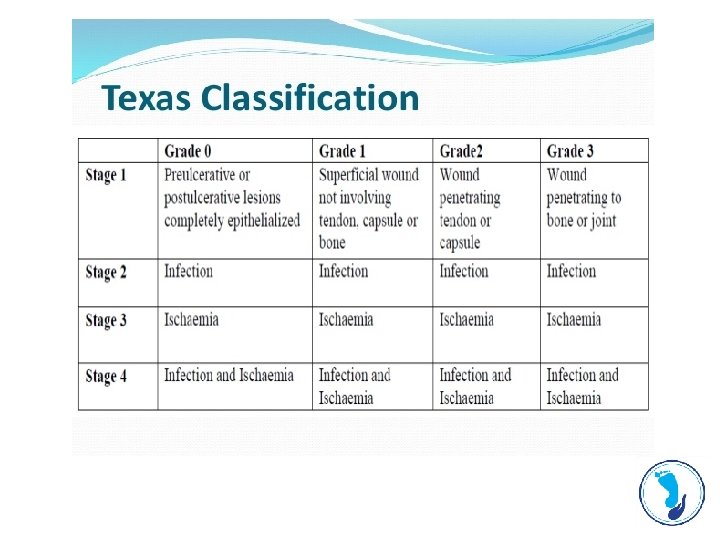
• First step is to classify(extent and ischemia) • Wagner • University of Texas ulcer classification
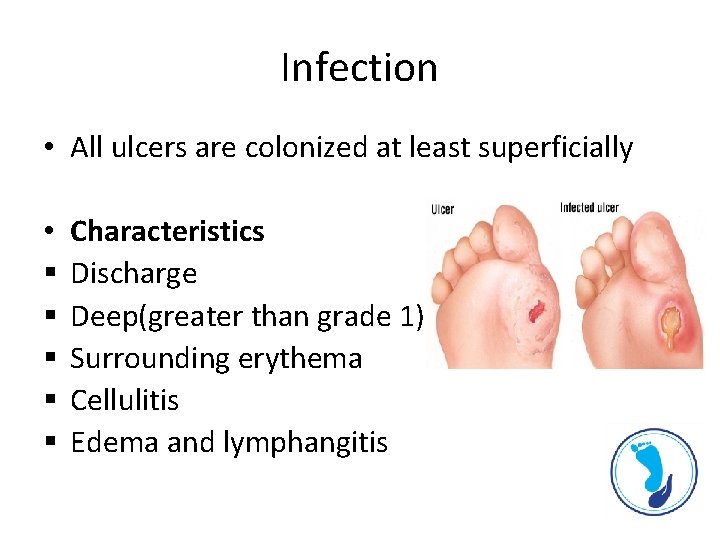
Infection • All ulcers are colonized at least superficially • § § § Characteristics Discharge Deep(greater than grade 1) Surrounding erythema Cellulitis Edema and lymphangitis
Principles of care for diabetic foot
• Most grade 1 ulcers can be treated outpatient and non-operatively • Deeper than grade 1 usually require inpatient or surgery
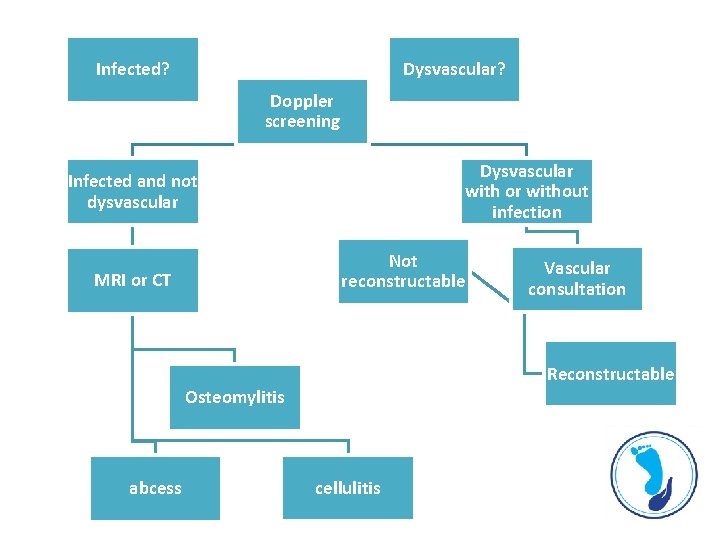
Infected? Dysvascular? Doppler screening Dysvascular with or without infection Infected and not dysvascular Not reconstructable MRI or CT Vascular consultation Reconstructable Osteomylitis abcess cellulitis
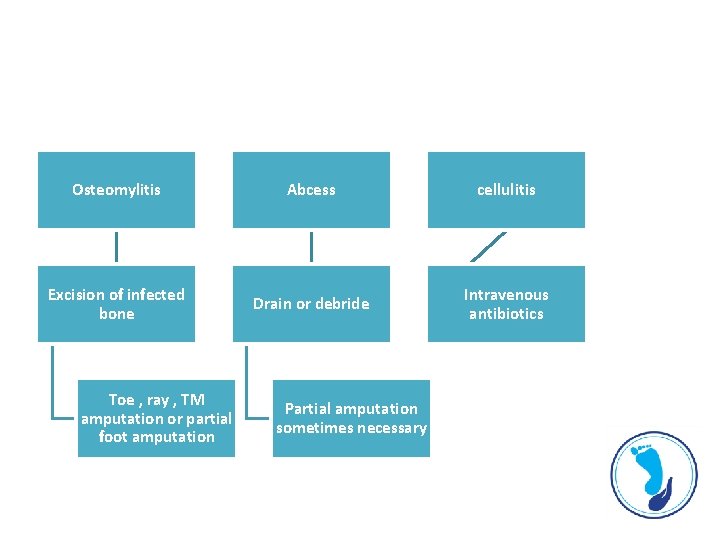
Osteomylitis Abcess cellulitis Excision of infected bone Drain or debride Intravenous antibiotics Toe , ray , TM amputation or partial foot amputation Partial amputation sometimes necessary
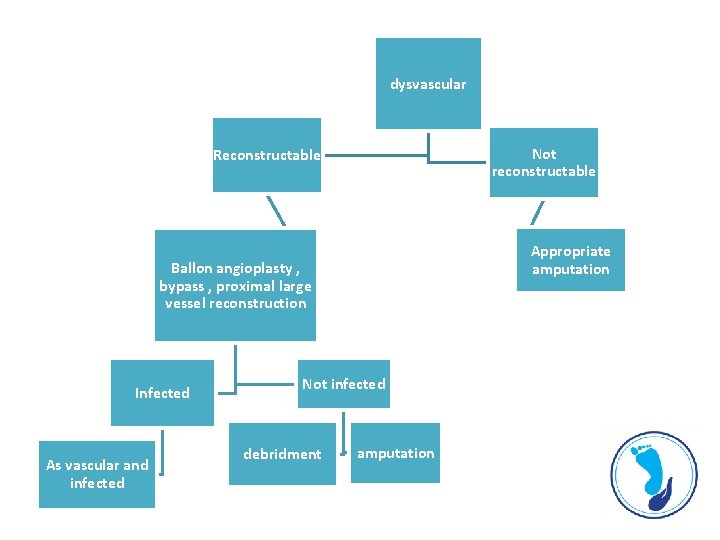
dysvascular Not reconstructable Reconstructable Appropriate amputation Ballon angioplasty , bypass , proximal large vessel reconstruction Infected As vascular and infected Not infected debridment amputation
Operative or Non-operative Off-Loading
Non-operative Off-Loading
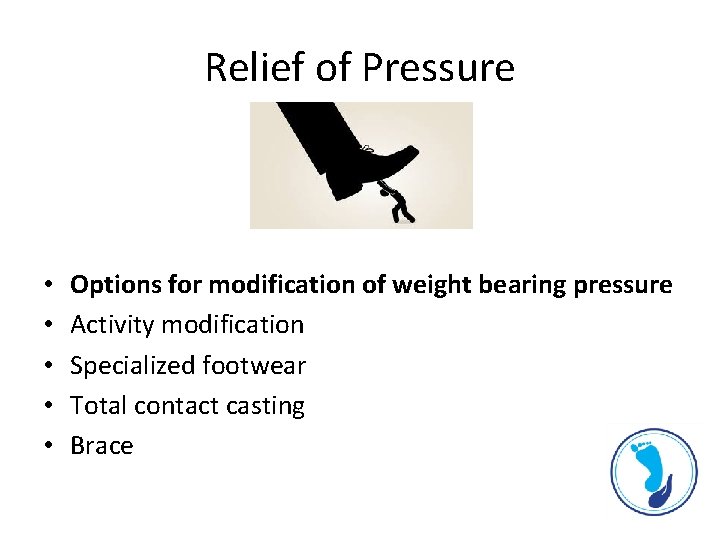
Relief of Pressure • • • Options for modification of weight bearing pressure Activity modification Specialized footwear Total contact casting Brace
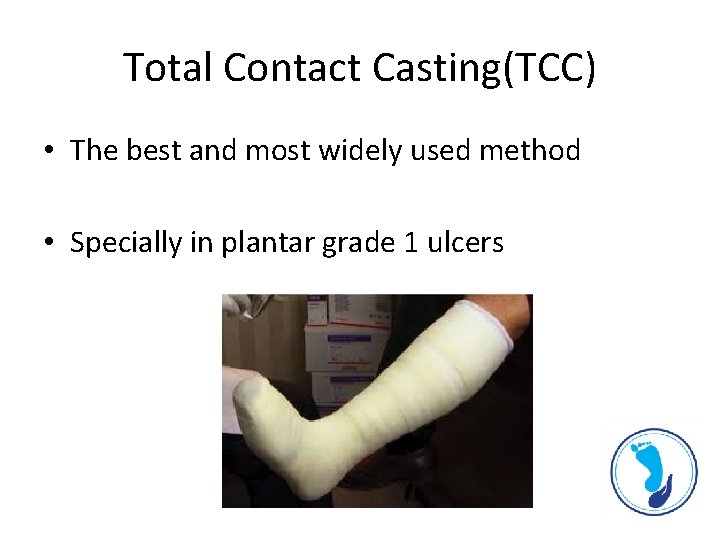
Total Contact Casting(TCC) • The best and most widely used method • Specially in plantar grade 1 ulcers
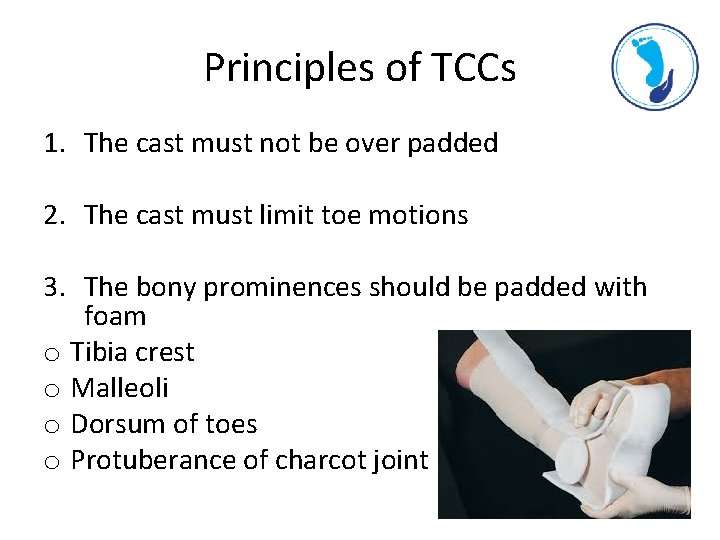
Principles of TCCs 1. The cast must not be over padded 2. The cast must limit toe motions 3. The bony prominences should be padded with foam o Tibia crest o Malleoli o Dorsum of toes o Protuberance of charcot joint
4. Foot and ankle should be positioned in a neutral planti-grade position(Equinus the most common error) 5. First cast should be changed within 5 -10 days 6. The rest every 2 to 4 weeks
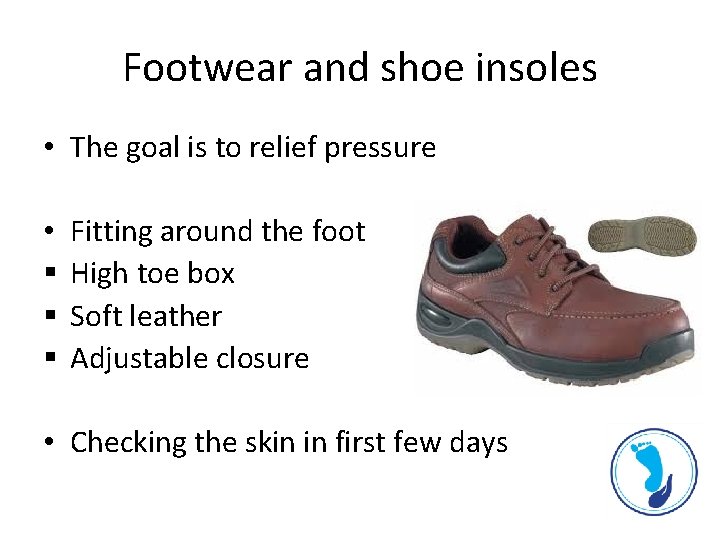
Footwear and shoe insoles • The goal is to relief pressure • § § § Fitting around the foot High toe box Soft leather Adjustable closure • Checking the skin in first few days
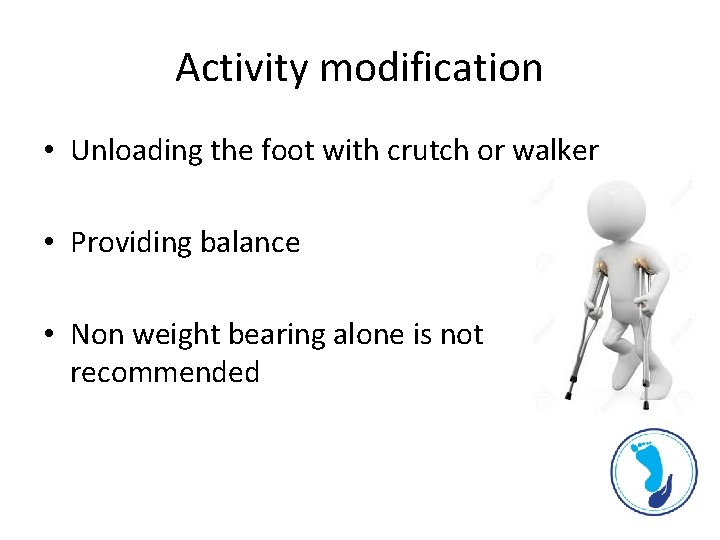
Activity modification • Unloading the foot with crutch or walker • Providing balance • Non weight bearing alone is not recommended
Surgical treatment • When ulcers fail to heal or recur • Excessive internal bone pressure
Principles of surgical treatment • Having adequate vascularity • Incision is usually made away from ulcer • Better to put the incision medially laterally or dorsally • Avoid excision of bone from ulcer • In presence of infection leave the incision open
Surgical Off-Loading
Three techniques for Off-Loading • Bone resection(most direct most effective) • Realignment • Reconstruction in proximal
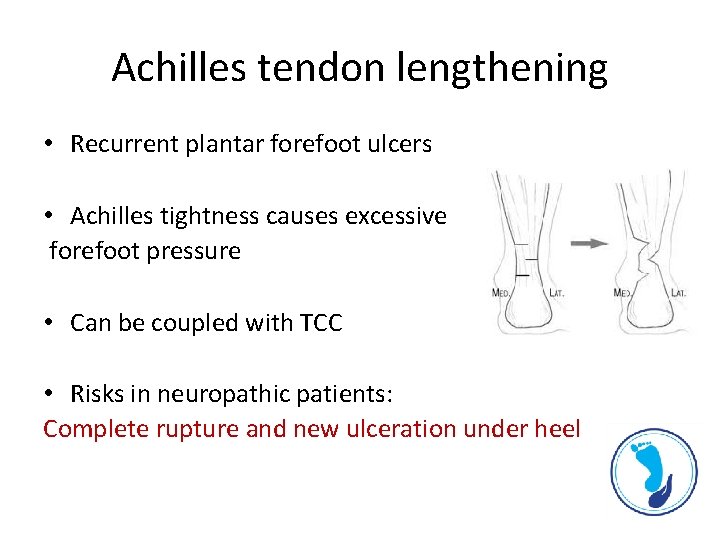
Achilles tendon lengthening • Recurrent plantar forefoot ulcers • Achilles tightness causes excessive forefoot pressure • Can be coupled with TCC • Risks in neuropathic patients: Complete rupture and new ulceration under heel
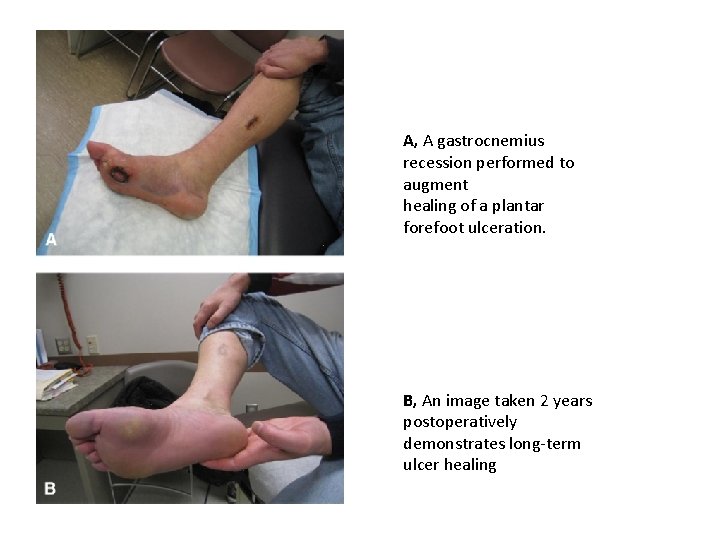
A, A gastrocnemius recession performed to augment healing of a plantar forefoot ulceration. B, An image taken 2 years postoperatively demonstrates long-term ulcer healing
Heel Ulcers • Most defecult to manage • Respond poorly to pressure relief • They are characterized by ischemia(occlusion of medial branch of the posterior tibial artery to heel pad)
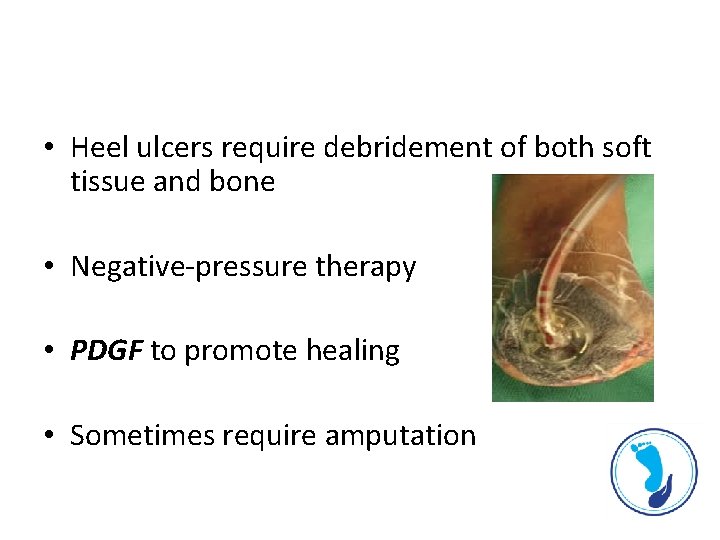
• Heel ulcers require debridement of both soft tissue and bone • Negative-pressure therapy • PDGF to promote healing • Sometimes require amputation
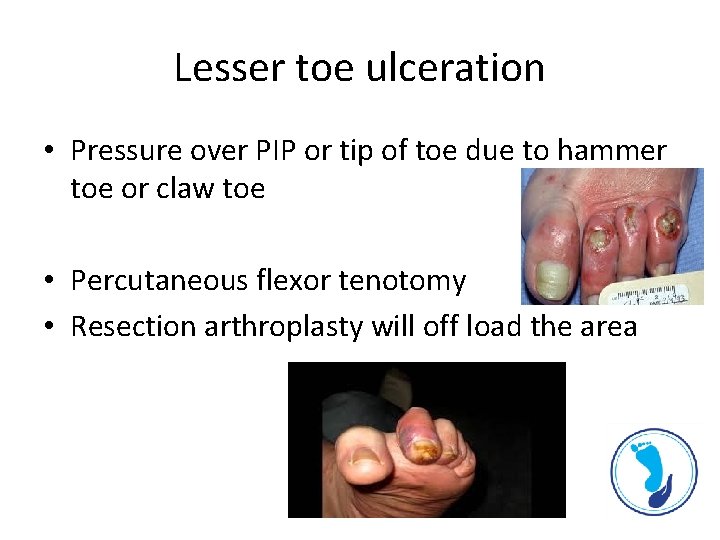
Lesser toe ulceration • Pressure over PIP or tip of toe due to hammer toe or claw toe • Percutaneous flexor tenotomy • Resection arthroplasty will off load the area
• Distal tip ulcers, in a flexible hammer toe flexor digitorum longus tenotomy
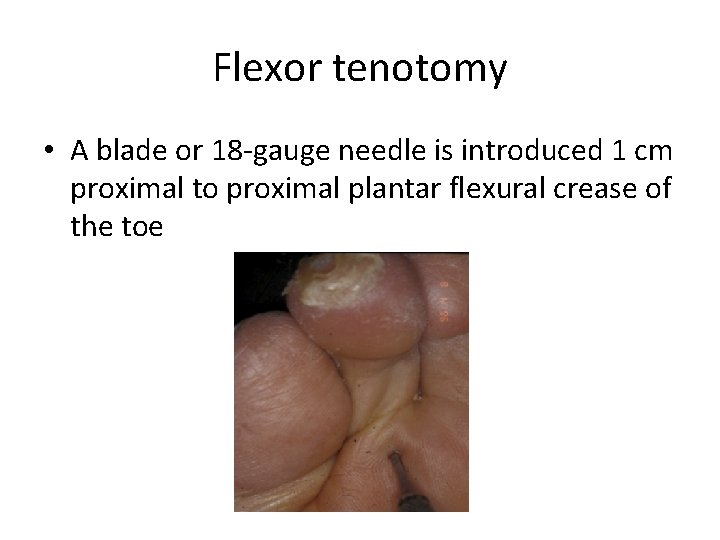
Flexor tenotomy • A blade or 18 -gauge needle is introduced 1 cm proximal to proximal plantar flexural crease of the toe
1. Ankle is held in a dorsiflexed position 2. Actively holding all toes in a flexed position 3. Toe is manually straightened 4. The blade is moved across the taught tendon
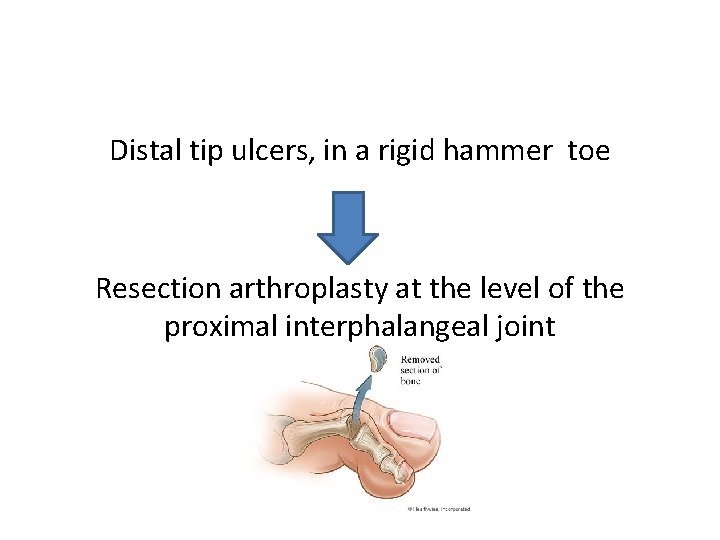
Distal tip ulcers, in a rigid hammer toe Resection arthroplasty at the level of the proximal interphalangeal joint
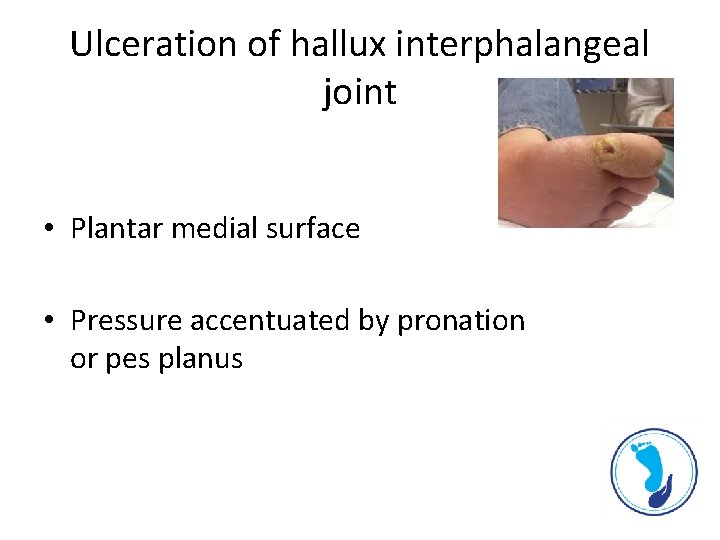
Ulceration of hallux interphalangeal joint • Plantar medial surface • Pressure accentuated by pronation or pes planus
Three Options • Resection of the medial condyles of the proximal and distal phalanges • Dorsiflexion Close wedge osteotomy of base of proximal phalanx • Modified Keller resection
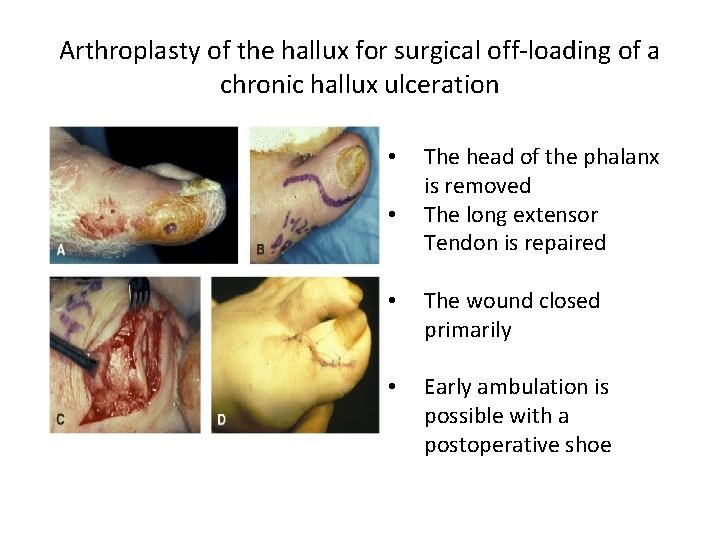
Arthroplasty of the hallux for surgical off-loading of a chronic hallux ulceration • • The head of the phalanx is removed The long extensor Tendon is repaired • The wound closed primarily • Early ambulation is possible with a postoperative shoe
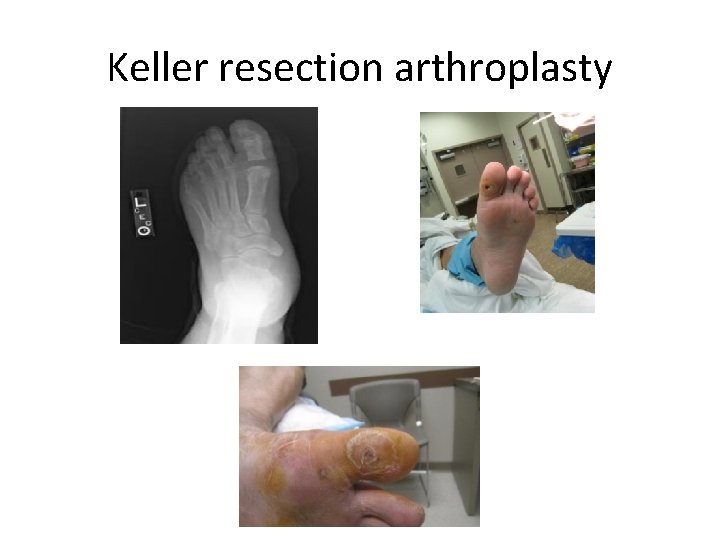
Keller resection arthroplasty
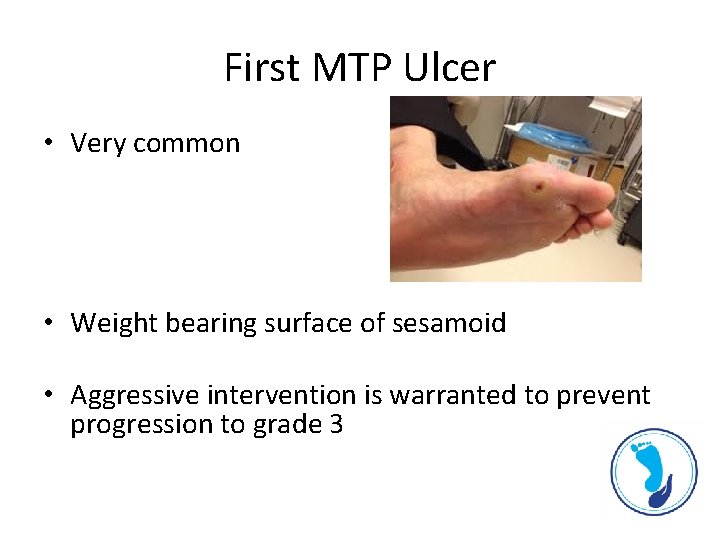
First MTP Ulcer • Very common • Weight bearing surface of sesamoid • Aggressive intervention is warranted to prevent progression to grade 3
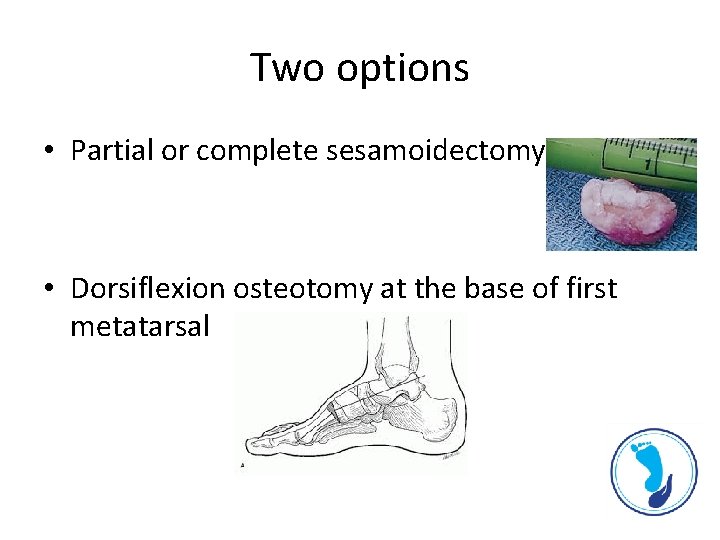
Two options • Partial or complete sesamoidectomy • Dorsiflexion osteotomy at the base of first metatarsal
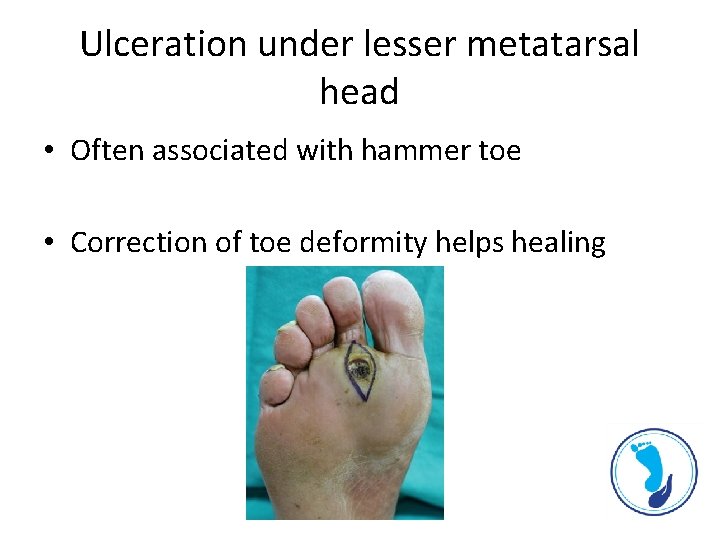
Ulceration under lesser metatarsal head • Often associated with hammer toe • Correction of toe deformity helps healing
Three options • Metatarsal head resection • Metatarsal condylectomy • Dorsiflexion osteotomy (off loads planar aspect of metatarsal head)
lesser metatarsal head resections peroneus longus-tobrevis tendon transfer(ulceration under 1 st MTP) gastrocnemius recession(ulceration under 5 st MTP)
Thanks
- Slides: 48