
Diabetes Mellitus Lecture 2 ROLE OF THE CLINICAL

Diabetes Mellitus Lecture 2
ROLE OF THE CLINICAL LABORATORY IN DIABETES MELLITUS Diagnosis: Preclinical (Screening) Type 1 Diabetes: Evidence from animal studies suggests that immune intervention therapy before the appearance of clinical symptoms can delay or prevent T 1 DM. Results from human studies have been disappointing. Notwithstanding the lack of success, a number of large clinical trials are under way to assess a variety of therapeutic strategies designed to delay or prevent the onset of T 1 DM. Until effective intervention therapy becomes available and cost-effective screening strategies are developed for young children, screening for antibodies is not recommended outside of prospective clinical studies 2

ROLE OF THE CLINICAL LABORATORY IN DIABETES MELLITUS Diagnosis: Preclinical (Screening) Type 2 Diabetes: The ADA, which previously did not support screening, now advocates screening in all asymptomatic individuals over the age of 45 years. Current guidelines include the use of Hb. A 1 c for screening. If the Hb. A 1 c is less than 5. 7% (39 mmol/mol) or the FPG is less than 100 mg/d. L, testing should be repeated at 3 -year intervals. Testing may be considered at a younger age or may be carried out more frequently in individuals at increased risk of diabetes (eg, family history, members of certain ethnic groups). 3
ROLE OF THE CLINICAL LABORATORY IN DIABETES MELLITUS Diagnosis: Preclinical (Screening) The rising incidence of T 2 DM in adolescents has led to the recommendation for screening overweight youths (BMI >85 th percentile) with any two of the following risk factors: They have a family history of T 2 DM in first- or seconddegree relatives. They belong to a certain race and/or ethnic group. They have signs of insulin resistance or conditions associated with insulin resistance. There is a maternal history of diabetes or GDM during the child’s gestation. 4
ROLE OF THE CLINICAL LABORATORY IN DIABETES MELLITUS Diagnosis: Preclinical (Screening) Testing should be done every 3 years starting at 10 years of age. Rationales for screening are that at least 33% of individuals with T 2 DM are undiagnosed, complications are often present by the time of diagnosis, and treatment delays the onset of complications. Apart from these recommendations, no published evidence indicates that treatment based on screening has value. However, a recent systematic review identified 16 trials that consistently found that treatment of IFG or IGT was associated with delayed progression to diabetes. 5

ROLE OF THE CLINICAL LABORATORY IN DIABETES MELLITUS Diagnosis: Clinical The laboratory diagnosis of diabetes is made exclusively by the demonstration of hyperglycemia, by measuring venous plasma glucose or Hb. A 1 c. Although other tests (eg, C-peptide, insulin analysis) have been proposed to assist in the diagnosis and classification of the disease, these do not at present have a role outside of research studies. 6
ROLE OF THE CLINICAL LABORATORY IN DIABETES MELLITUS Management: Acute In diabetic ketoacidosis, hyperosmolar nonketotic coma, and hypoglycemia, the clinical laboratory has an essential role in both the diagnosis of the condition and monitoring of therapy. Several analytes are frequently measured to guide clinicians in treatment regimens to restore euglycemia and correct other metabolic disturbances. Tests performed include: Glucose in blood and urine, Ketones in blood and urine, Acid-base status (p. H ([H+]), bicarbonate) Lactate Tests related to cellular dehydration or therapy (eg, potassium, sodium, phosphate, osmolality) 7
ROLE OF THE CLINICAL LABORATORY IN DIABETES MELLITUS Management: Acute KETONE BODIES The development of ketosis requires changes in both adipose tissue and the liver. The primary substrates for ketone body formation are free fatty acids from adipose stores. Normally, long-chain fatty acids are taken up by the liver, reesterified to triglycerides, and stored in the liver or incorporated in very low-density lipoproteins and returned to the plasma. In contrast to other tissue, the brain cannot use free fatty acids for energy. 8 When glucose is unavailable, ketone bodies supply the vast majority of the brain’s energy. After a 3 -day fast, ketone bodies provide 30% to 40% of the body’s energy requirements.
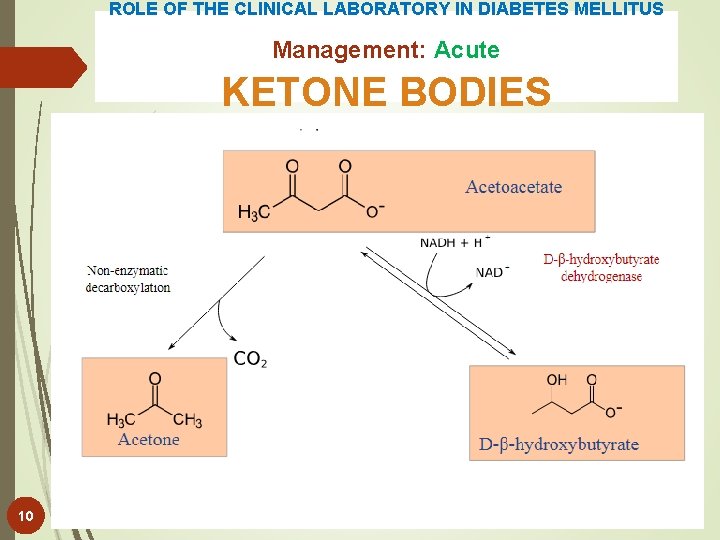
ROLE OF THE CLINICAL LABORATORY IN DIABETES MELLITUS Management: Acute KETONE BODIES In uncontrolled diabetes, the low insulin concentrations result in increased lipolysis and decreased reesterification, thereby increasing plasma free fatty acids. In addition, the higher glucagon/insulin ratio enhances fatty acid oxidation in the liver. Increased counterregulatory hormones also augment lipolysis and ketogenesis in fat and liver, respectively. Thus increased hepatic ketone production and decreased peripheral tissue metabolism lead to acetoacetate accumulation in the blood. A small fraction undergoes spontaneous decarboxylation to form acetone, but most of it is converted to βhydroxybutyrate. 9
ROLE OF THE CLINICAL LABORATORY IN DIABETES MELLITUS Management: Acute KETONE BODIES 10
ROLE OF THE CLINICAL LABORATORY IN DIABETES MELLITUS Management: Acute KETONE BODIES Excessive formation of ketone bodies results in increased blood concentrations (ketonemia) and increased excretion in the urine (ketonuria). This process is observed in conditions associated with reduced availability of carbohydrates such as: starvation or frequent vomiting or decreased use of carbohydrates (such as diabetes mellitus, glycogen storage disease type I [von Gierke disease]). The popular high-fat, low-carbohydrate diets are ketogenic and increase ketone bodies in the circulation. Diabetes mellitus and alcohol consumption are the most common causes of ketoacidosis in adults. 11
ROLE OF THE CLINICAL LABORATORY IN DIABETES MELLITUS Management: Acute KETONE BODIES 12 The ADA states that urine ketone testing is an important part of monitoring patients with diabetes, particularly those with T 1 DM, pregnancy with preexisting diabetes, and GDM. Patients with T 1 DM should test for ketones during acute illness or stress, with consistent increase in blood glucose (>300 mg/d. L), during pregnancy, or when symptoms of ketoacidosis are present. Measurement of ketones in urine and blood is widely performed in patients with diabetes for both diagnosis and monitoring of diabetic ketoacidosis.
ROLE OF THE CLINICAL LABORATORY IN DIABETES MELLITUS Management: Chronic Studies documented a correlation between blood glucose concentrations and the development of long-term complications of diabetes. Measurement of glucose and glycated proteins provides an index of short- and long-term glycemic control, respectively. Detection and monitoring of complications are achieved by assaying serum creatinine and lipids and assaying urine for albuminuria. The success of newer therapies, such as islet cell or pancreas transplantation, can be monitored by measuring serum C-peptide or insulin concentrations. 13
ROLE OF THE CLINICAL LABORATORY IN DIABETES MELLITUS Management: Chronic Tests performed include: Glucose, Blood (fasting, random) & Urine Glycated proteins Hb. A 1 c Fructosamine Glycated serum albumin 1, 5 -Anhydroglucitol (1, 5 -AG) Urinary protein Albuminuria (previously termed microalbuminuria) Proteinuria Evaluation of complications (eg, creatinine, cholesterol, triglycerides) 14
ROLE OF THE CLINICAL LABORATORY IN DIABETES MELLITUS Management: Chronic GLYCATED PROTEINS Measurement of glycated proteins, primarily glycated hemoglobin (GHb) or (Hb. A 1 c), is effective in monitoring long-term glucose control in people with diabetes mellitus. It provides a retrospective index of integrated plasma glucose values over an extended period of time. GHb concentrations therefore a valuable and widely used aide to blood glucose determinations for monitoring long-term glycemic control. In addition, GHb has recently been recommended for the diagnosis of diabetes and is a measure of risk for the development of microvascular complications of diabetes. 15
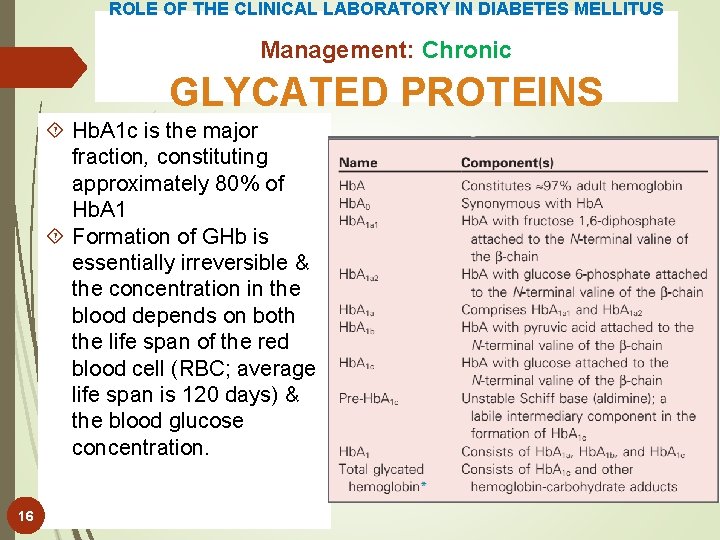
ROLE OF THE CLINICAL LABORATORY IN DIABETES MELLITUS Management: Chronic GLYCATED PROTEINS Hb. A 1 c is the major fraction, constituting approximately 80% of Hb. A 1 Formation of GHb is essentially irreversible & the concentration in the blood depends on both the life span of the red blood cell (RBC; average life span is 120 days) & the blood glucose concentration. 16
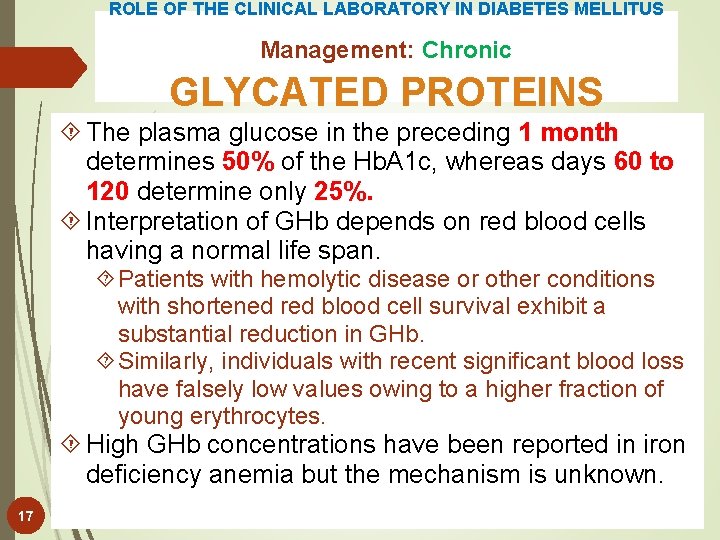
ROLE OF THE CLINICAL LABORATORY IN DIABETES MELLITUS Management: Chronic GLYCATED PROTEINS The plasma glucose in the preceding 1 month determines 50% of the Hb. A 1 c, whereas days 60 to 120 determine only 25%. Interpretation of GHb depends on red blood cells having a normal life span. Patients with hemolytic disease or other conditions with shortened red blood cell survival exhibit a substantial reduction in GHb. Similarly, individuals with recent significant blood loss have falsely low values owing to a higher fraction of young erythrocytes. High GHb concentrations have been reported in iron deficiency anemia but the mechanism is unknown. 17
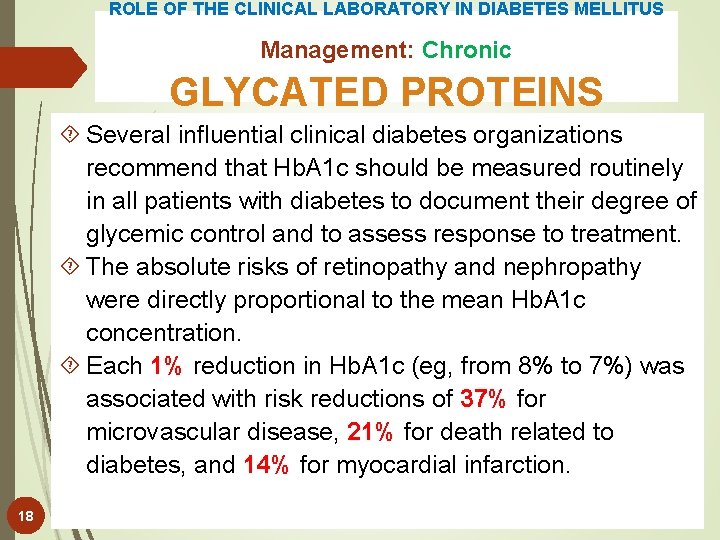
ROLE OF THE CLINICAL LABORATORY IN DIABETES MELLITUS Management: Chronic GLYCATED PROTEINS Several influential clinical diabetes organizations recommend that Hb. A 1 c should be measured routinely in all patients with diabetes to document their degree of glycemic control and to assess response to treatment. The absolute risks of retinopathy and nephropathy were directly proportional to the mean Hb. A 1 c concentration. Each 1% reduction in Hb. A 1 c (eg, from 8% to 7%) was associated with risk reductions of 37% for microvascular disease, 21% for death related to diabetes, and 14% for myocardial infarction. 18
ROLE OF THE CLINICAL LABORATORY IN DIABETES MELLITUS Management: Chronic GLYCATED PROTEINS More than 150 different methods have been described for the determination of GHbs. The ADA recommends that laboratories use only Hb. A 1 c assays that are certified by the NGSP (previously termed the National Glycohemoglobin Standardization Program). These assays are listed on the NGSP website (www. NGSP. org) and are updated several times a year. 19
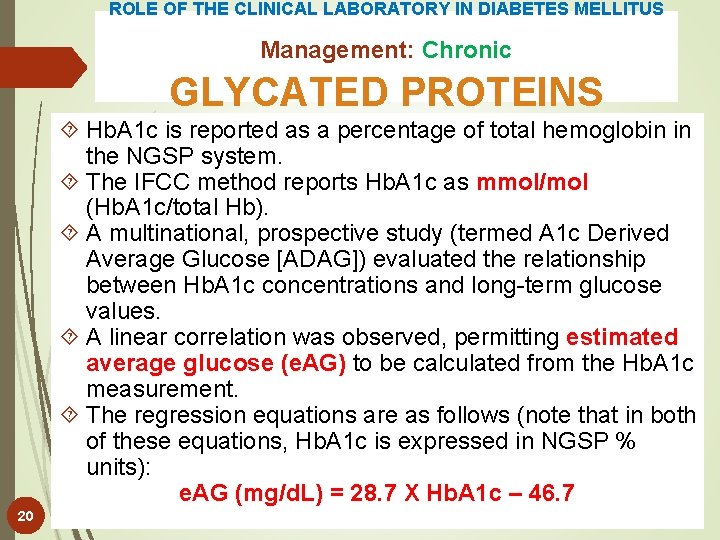
ROLE OF THE CLINICAL LABORATORY IN DIABETES MELLITUS Management: Chronic GLYCATED PROTEINS Hb. A 1 c is reported as a percentage of total hemoglobin in the NGSP system. The IFCC method reports Hb. A 1 c as mmol/mol (Hb. A 1 c/total Hb). A multinational, prospective study (termed A 1 c Derived Average Glucose [ADAG]) evaluated the relationship between Hb. A 1 c concentrations and long-term glucose values. A linear correlation was observed, permitting estimated average glucose (e. AG) to be calculated from the Hb. A 1 c measurement. The regression equations are as follows (note that in both of these equations, Hb. A 1 c is expressed in NGSP % units): e. AG (mg/d. L) = 28. 7 X Hb. A 1 c – 46. 7 20
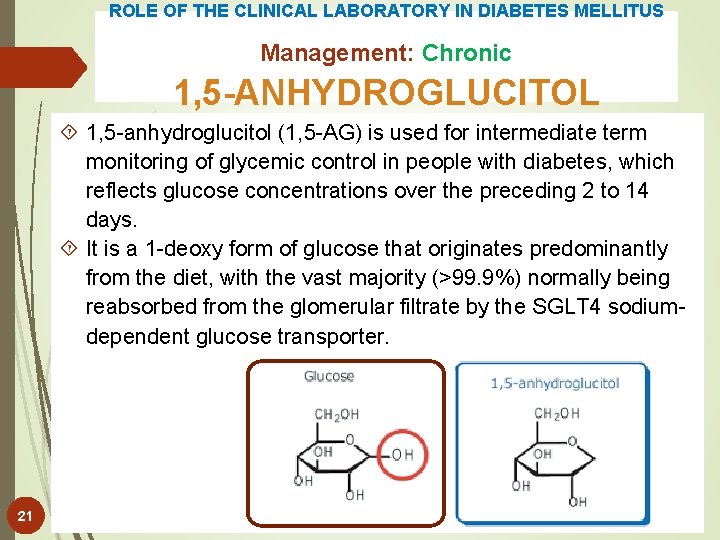
ROLE OF THE CLINICAL LABORATORY IN DIABETES MELLITUS Management: Chronic 1, 5 -ANHYDROGLUCITOL 1, 5 -anhydroglucitol (1, 5 -AG) is used for intermediate term monitoring of glycemic control in people with diabetes, which reflects glucose concentrations over the preceding 2 to 14 days. It is a 1 -deoxy form of glucose that originates predominantly from the diet, with the vast majority (>99. 9%) normally being reabsorbed from the glomerular filtrate by the SGLT 4 sodiumdependent glucose transporter. 21
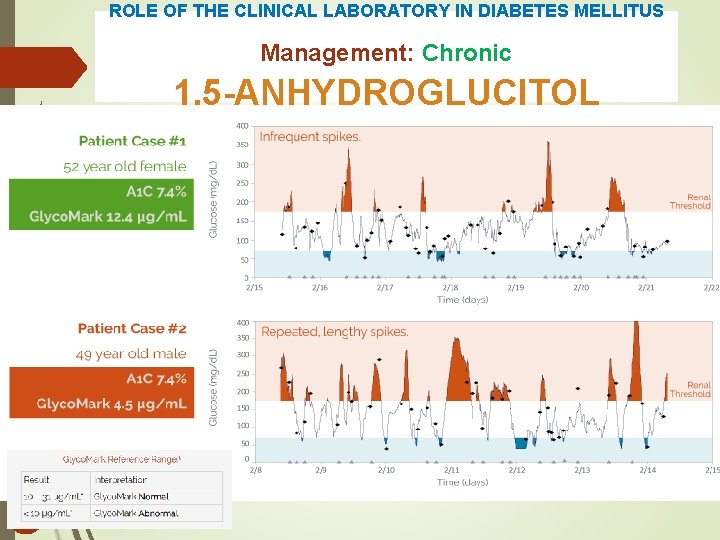
ROLE OF THE CLINICAL LABORATORY IN DIABETES MELLITUS Management: Chronic 1, 5 -ANHYDROGLUCITOL When blood glucose concentrations exceed the renal threshold (usually about 180 mg/d. L), reabsorption of 1, 5 -AG decreases, leading to a rapid reduction in serum 1, 5 -AG concentrations. Therefore low 1, 5 -AG indicates hyperglycemia, correlating particularly with postprandial blood glucose concentration. An automated colorimetric assay is commercially available (and FDA-approved for use in the United States) (Glyco. Mark) 22
ROLE OF THE CLINICAL LABORATORY IN DIABETES MELLITUS Management: Chronic 1, 5 -ANHYDROGLUCITOL 23
ROLE OF THE CLINICAL LABORATORY IN DIABETES MELLITUS Management: Chronic ALBUMINURIA Patients with diabetes mellitus are at high risk of developing renal damage. End-stage renal disease requiring dialysis or transplantation develops in approximately one-third of patients with type 1 diabetes, diabetes is the most common cause of end-stage renal disease in the United States and Europe. Although nephropathy is less common in patients with T 2 DM, ~ 60% of all cases of diabetic nephropathy occur in these patients because of the higher incidence of this form of diabetes. 24
ROLE OF THE CLINICAL LABORATORY IN DIABETES MELLITUS Management: Chronic ALBUMINURIA Early detection of diabetic nephropathy relies on tests of urinary excretion of albumin. Persistent proteinuria detectable by routine screening tests (equivalent to a urinary albumin excretion rate [AER] >200 µg/min or >300 mg/24 h) indicates overt diabetic nephropathy. This is usually associated with longstanding disease. Once diabetic nephropathy occurs, renal function deteriorates rapidly and renal insufficiency evolves. Treatment at this stage can retard the rate of progression without stopping or reversing the renal damage. 25
ROLE OF THE CLINICAL LABORATORY IN DIABETES MELLITUS Management: Chronic ALBUMINURIA Preceding this stage is a period of increased AER not detected by routine dipstick methods. This range of 20 to 200 µg/min (or 30– 300 mg/24 h) of increased AER has been called microalbuminuria, although current nomenclature has eliminated the terms microalbuminuria and macroalbuminuria. The term microalbuminuria, although widely used, is misleading. It implies a small version of the albumin molecule rather than an excretion rate of albumin greater than normal but less than that detectable by routine methods. Use of the term is discouraged. 26
ROLE OF THE CLINICAL LABORATORY IN DIABETES MELLITUS Management: Chronic ALBUMINURIA The presence of increased AER denotes an increase in the transcapillary escape rate of albumin and therefore is a marker of microvascular disease. Persistent AER greater than 20 µg/min represents a 20 fold greater risk for the development of clinically overt renal disease in patients with T 1 DM & T 2 DM. Prospective studies have demonstrated that increased urinary albumin excretion in patients with DM precedes and is highly predictive of: • Diabetic nephropathy • Cardiovascular mortality 27 • End-stage renal disease • Total mortality
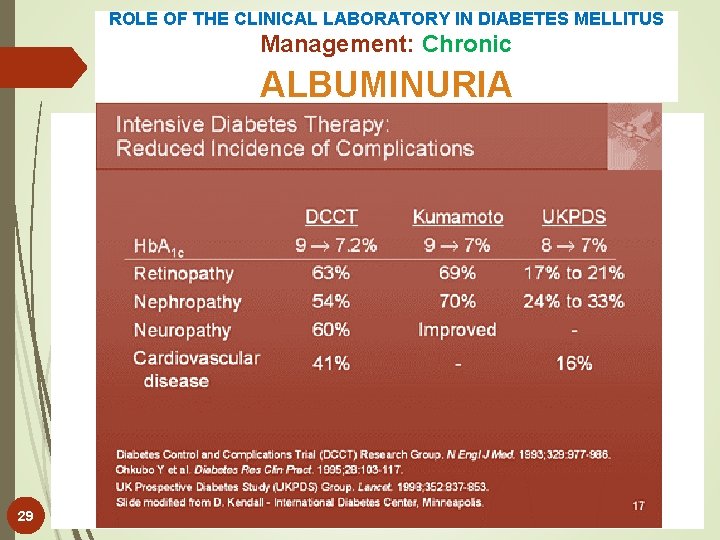
ROLE OF THE CLINICAL LABORATORY IN DIABETES MELLITUS Management: Chronic ALBUMINURIA The DCCT and the UKPDS showed that intensive diabetes therapy can significantly reduce the risk of development of increased AER and overt nephropathy in individuals with diabetes. Increased AER also identifies a group of nondiabetic subjects at increased risk for coronary artery disease. Interventions, such as control of blood glucose concentrations and blood pressure, particularly with angiotensin-converting enzyme (ACE) inhibitors, slow the rate of decline in renal function. 28
ROLE OF THE CLINICAL LABORATORY IN DIABETES MELLITUS Management: Chronic ALBUMINURIA 29

30 Case Studies
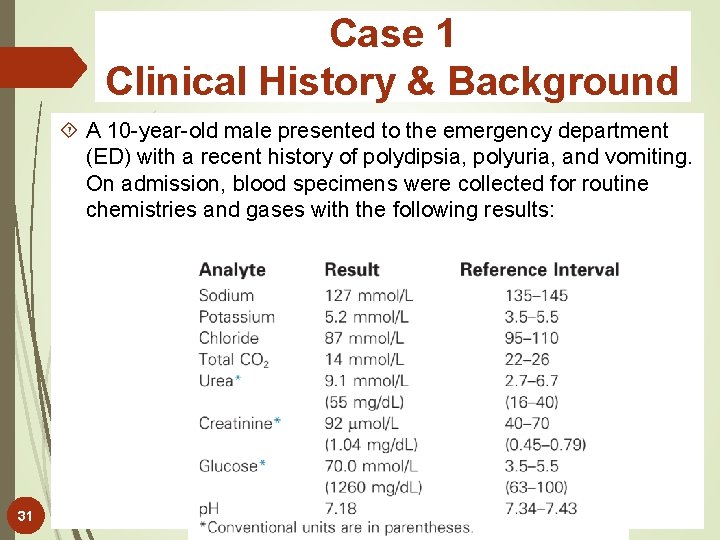
Case 1 Clinical History & Background A 10 -year-old male presented to the emergency department (ED) with a recent history of polydipsia, polyuria, and vomiting. On admission, blood specimens were collected for routine chemistries and gases with the following results: 31
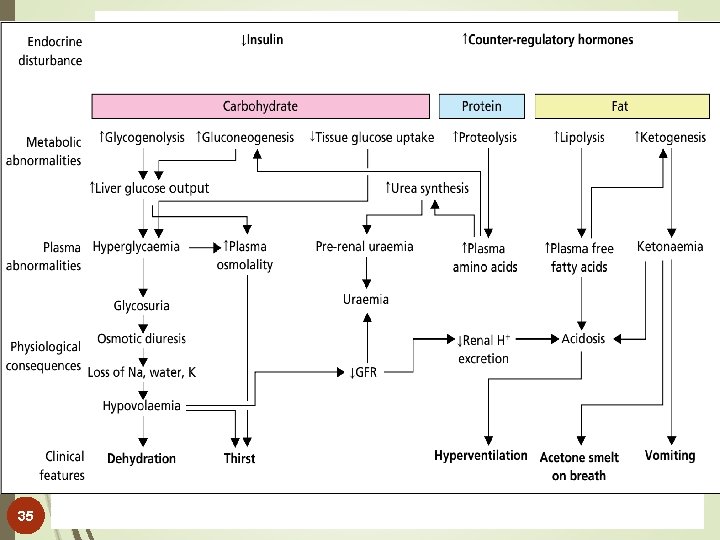
Case 1 Diagnosis & Case Discussion This is a case of diabetic ketoacidosis (DKA). In DKA, there are several metabolic derangements, some of which are as follows: Deranged carbohydrate metabolism Insulin promotes cellular uptake of glucose and hepatic glycogen synthesis. In DKA, insufficient insulin causes inhibition of glycolysis and leads to a state of hyperglycemia. Deranged lipid metabolism Insulin promotes lipogenesis. In DKA, insufficient insulin leads to lipolysis, with the production of glycerol and fatty acids. Fatty acids are further metabolized for energy, with the formation of ketones (β-hydroxybutyrate and acetoacetate). Deranged protein metabolism In DKA, insufficient insulin leads to proteolysis and negative nitrogen balance. 32
Case 1 Diagnosis & Case Discussion Electrolyte imbalances Hyperglycemia may lead to osmotic diuresis and urinary sodium loss. Sodium depletion is further worsened by vomiting. However, hypernatremia is a common finding in DKA, when dehydration predominates over sodium loss. The acidosis associated with DKA causes potassium to shift extracellularly, resulting in hyperkalemia. However, because potassium is also lost renally and extra-renally (eg, vomiting), total body potassium is often depleted. When insulin therapy is introduced, profound hypokalemia can ensue, as potassium shifts intracellularly as a result of the action of insulin. In addition to potassium, phosphate also shifts intracellularly during treatment with insulin, often resulting in profound hypophosphatemia. 33
Case 1 Diagnosis & Case Discussion Acid-base imbalance The production of ketoacids in DKA causes high anion gap metabolic acidosis, with β-hydroxybutyrate more abundant than acetoacetate, as a result of the abundance of reduced NAD (NADH), driving production of the former. Lactic acid production, which may be exacerbated by poor circulation and shock, may further exacerbate the metabolic acidosis. Changes in urea and creatinine In DKA, marked polyuria can lead to severe dehydration, often presenting with prerenal failure, with elevated plasma concentrations of urea and creatinine. Extremely high plasma concentrations of ketones may cause positive interference in some laboratory methods (eg, Jaffe) for measuring creatinine. 34
35
Case 2 Clinical History & Background A 27‐year‐old man was referred to the local diabetes clinic. He had been diagnosed as having T 2 DM 3 years previously and his control was poor (Hb. A 1 c 9. 6%) despite being on an optimal dose of metformin. The GP was wondering whether this man needed to start on insulin. Several close family members also had diabetes. The man was slightly overweight with a BMI of 26, and he was normotensive. 36
Case 2 Diagnosis & Case Discussion In view of the strong family history of diabetes and the fact that he did not fit the typical phenotype of type 2 diabetes (he was relatively young, not obese and normotensive) the possibility of maturity onset diabetes of the young (MODY) was raised. Genotyping revealed a mutation in the HNF 1α gene. Metformin was stopped and he achieved excellent control on a low dose of gliclazide. 37

Case 3 Clinical History & Background An elderly man was visited by his son and was found to be semi‐conscious. Neighbours had last seen him about 10 days previously, when he had seemed well. He was admitted to hospital. On examination, he appeared extremely dehydrated. The results of biochemical investigations were as follows: 38
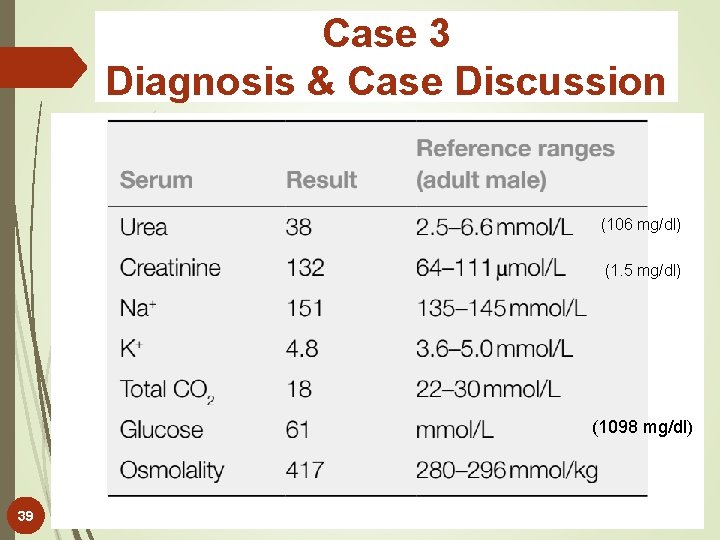
Case 3 Diagnosis & Case Discussion (106 mg/dl) (1. 5 mg/dl) (1098 mg/dl) 39
Case 3 Diagnosis & Case Discussion There is severe hyperglycaemia, resulting in a very high osmolality. The hyperglycaemia has driven an osmotic diuresis, resulting in loss of ECF and consequent reduction in the GFR and retention of urea. The sustained osmotic diuresis causes a loss of water in excess of sodium, explaining the hypernatraemia. The total CO 2 is slightly reduced due to the impaired renal function, but is not as low as would be expected in a case of ketoacidosis with results as abnormal as these. The patient was very dehydrated, but was eventually able to provide a urine sample, which gave a negative test for ketones. 40
Case 3 Diagnosis & Case Discussion He had nonketotic hyperglycaemia. This only occurs in patients with T 2 DM. These patients have sufficient circulating insulin to prevent the ketogenesis, but not enough to prevent the hyperglycaemia. Treatment is by replacement of fluid and electrolyte losses, and by insulin infusion to restore the glucose. Once the acute episode is over, insulin is unlikely to be needed. 41

Case 3 Diagnosis & Case Discussion When the patient recovered, he reported having experienced increasing thirst and polyuria over several weeks. In response to the thirst, he had been drinking several large bottles of lemonade every day. 42
Case 4 Diagnosis & Case Discussion A 45‐year‐old woman who was unable to feed, wash or dress herself because of severe multiple sclerosis was being cared for in a nursing home. About 6 h after a visit by relatives, it was found that she could not be roused. On admission to a hospital, she was found to be extremely hypoglycaemic (glucose 34 mg), and required repeated IV infusions of glucose to maintain plasma glucose over the next 12– 24 h. A sample of blood taken on admission was stored and subsequently analysed for insulin and C peptide. The results were inappropriately raised, considering the hypoglycaemia. 43
Case 4 Diagnosis & Case Discussion Over the next few days, repeated overnight fasts failed to induce further hypoglycaemia. Eventually, after a prolonged fast of 4 days, glucose dropped to 45 mg/dl, at which time insulin and C peptide were undetectable. 44
Case 4 Diagnosis & Case Discussion The results on admission were suggestive of an insulinoma, with hypoglycaemia & inappropriately elevated insulin and C peptide levels. However, it proved difficult to induce a further episode of hypoglycaemia. Most patients with an insulinoma will be hypoglycaemic on one or more occasions after three overnight fasts, even if not symptomatic. 45 Even a prolonged fast failed to induce true hypoglycaemia, and at that time the insulin level was appropriately low. Review of her history revealed no suggestions of previous hypoglycaemic episodes. The clinical staff were accordingly forced to reconsider the initial diagnosis.
Case 4 Diagnosis & Case Discussion The sample of blood taken at the time of admission was sent for toxicological analysis, and was found to contain high concentrations of the oral hypoglycaemic drugs chlorpropamide and glibenclamide. These drugs are sulphonylureas, which act by enhancing pancreatic insulin secretion in response to glucose. Both chlorpropamide and glibenclamide have long half‐lives, making hypoglycaemia an occasional problem even when used therapeutically in patients with diabetes. 46
Case 4 Diagnosis & Case Discussion The patient would have been unable to obtain or take these drugs. It was likely that a relative, distressed by her condition, had administered them. The police were informed, but it was felt that there was insufficient evidence to proceed further. 47
- Slides: 47