
Diabetes mellitus classification etiopathogenesis clinical features diagnosis management
Diabetes mellitus : classification , etiopathogenesis, clinical features, diagnosis management Dr Nishesh jain Assistant professor Department of Endocrinology
Definition • Diabetes is a group of metabolic diseases characterized by hyperglycemia resulting from defects in insulin secretion, insulin action, or both. The chronic hyperglycemia of diabetes is associated with long-term damage, dysfunction, and failure of different organs, especially the eyes, kidneys, nerves, heart, and blood vessels. (American Diabetes Association)
Types • • Type 1 Diabetes (IDDM) Type 2 Diabetes(NIDDM) Gestational Diabetes Other specific types
TYPE 1 DIABETES MELLITUS(IDDM) • It occurs mostly in young group of patients <30 years. • Insulin deficiency results due to destruction of beta cells • Etiolopathogenesis- T cell mediated autoimmune destruction of beta cells /glutamic acid decarboxylase antibodies (GAD Abs) • Genetic predisposition (HLA- DR 3 DR 4 genes) 30 -50% concordance in identical twins • Environmental factors (viruses, excessive coffee intake, stress, cow milk in newborn ) • It is usually associated with thyroid disease, Addison disease , Pernicious anemia, Coelic disease.
TYPE 2 DIABETES MELLITUS (NIDDM) • It mostly affects middle age and older people (>30 years) • It occurs due to Insulin resistance and beta cell exhaustion (relative insulin deficiency) • High insulin levels in the early stage is characteristic. • Etiopathogenesis-Central obesity ( ↑FFA compete with glucose for oxidation , adipokines decreases sensitivity of insulin receptors , inhibits gluconeogenesis). Metabolic syndrome (obesity, hypertension, ↑LDL, ↑TAGs etc) Genetic predisposition (TCFL 2 gene) BMI >30 kg/m 2.
MATURE ONSET DM (MODY) • A type of type 2 DM occurring in young people It is of further subtypes Ø MODY 1 (HNF 4 a deficiency) Ø MODY 2 (glucokinase deficiency) Ø MODY 3 (HNF 1 a deficiency) Ø MODY 4 (IPF-1 deficiency) Ø MODY 5 HNF-1 b deficiency)
GESTATIONAL DIABETES (GDM) • It is the hyperglycemia occurring for the first time during pregnancy • Etiopathogenesis- Placental hormones reduce the sensitivity of insulin receptors resulting in hyperglycemia and insulin doesn’t meet body requirement and beta cell exhaustion occurs.
OTHER SPECIFIC TYPES • Genetic defects of beta cells • Genetic defects of insulin action e. g lipodystrophy • Pancreatic disease (pancreatitis, cystic fibrosis, neoplasm, hemochromatosis) • Drug induced DM (steroids, thiazides, diuretics) • Viral (congenital rubella, mumps, coxasackie ) • Uncommon form of immune mediated DM • Endocrine Induced DM (thyrotoxicosis, Cushing syndrome, acromegaly, pheochromocytoma)
• Genetic defects in insulin action 1. Type A insulin resistance 2. Leprechaunism 3. Rabson-Mendenhall syndrome 4. Lipoatrophic diabetes 5. Others
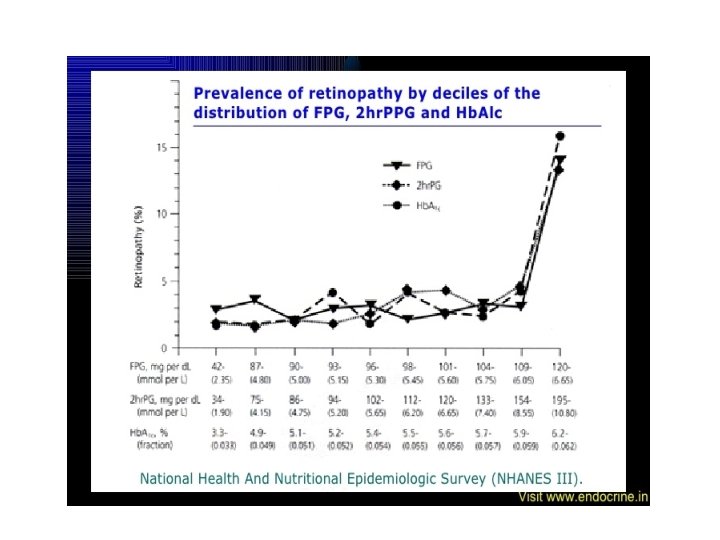
Diagnosis • Fasting PG > 126 mg% (8 hrs. non caloric intake). • Postprandial PG > 200 mg% ( glucose load containing the equivalent of 75 g anhydrous glucose). • Symptoms of diabetes plus Random Blood Glucose > 200 mg%.
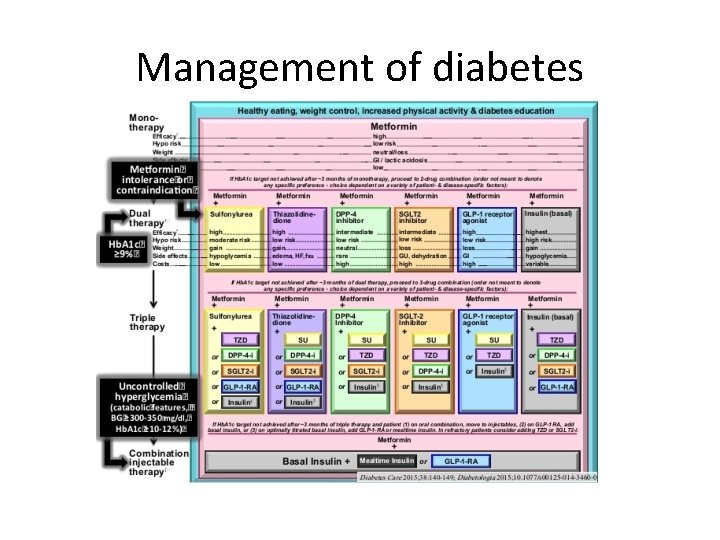
Management of diabetes
- Slides: 12