
Diabetes Mellitus Chronic condition Endocrine Disorder Impaired insulin


Diabetes Mellitus Chronic condition Endocrine Disorder Impaired insulin secretion Hyperglycemia Insulin resistance

Differences between type 1 and type 2 DM • Type 1 diabetes • Type 2 diabetes • β-cell destruction • No β-cell destruction • Islet cell antibodies present • No islet cell antibodies present • Strong genetic link • Very strong genetic link • Age of onset usually below 30 • Age of onset usually above 40 • Faster onset of symptoms • Slower onset of symptoms • Patients usually not overweight • Patients usually overweight • Insulin must be administered • Diet control and oral hypoglycaemic glycemic agent • Extreme hyperglycaemia causes diabetic ketoacidosis • Extreme hyperglycaemia causes hyperosmolar hyperglycaemic state
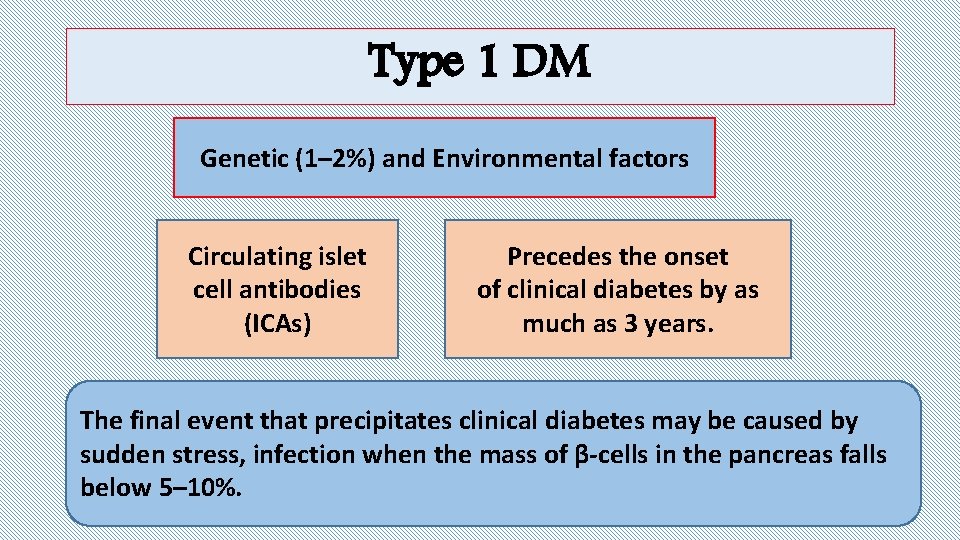
Type 1 DM Genetic (1– 2%) and Environmental factors Circulating islet cell antibodies (ICAs) Precedes the onset of clinical diabetes by as much as 3 years. The final event that precipitates clinical diabetes may be caused by sudden stress, infection when the mass of β-cells in the pancreas falls below 5– 10%.

Type 1 DM / Pathophysiology • Acute deficiency of insulin that leads to: Ø↑↑ Hepatic glycogenolysis, Ø↑ Gluconeogenesis, Ø↑ Hepatic glucose output, Ø↓ Glucose uptake by insulin-sensitive tissues Ø sudden stress, infection--- ↑ counter-regulatory hormones (glucagon, cortisol, catecholamine and growth hormone)→ increase hepatic glucose.
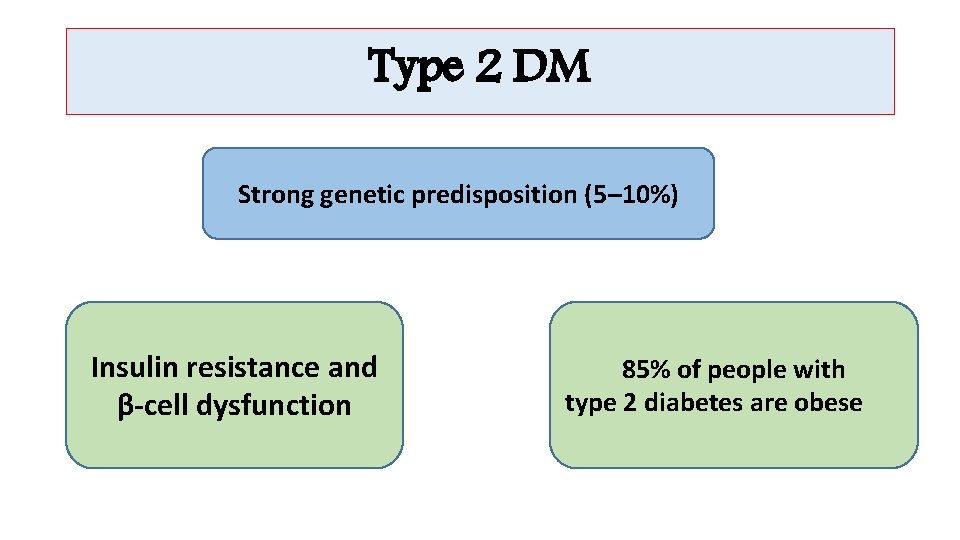
Type 2 DM Strong genetic predisposition (5– 10%) Insulin resistance and β-cell dysfunction 85% of people with type 2 diabetes are obese
Type 2 DM / Pathophysiology • Less acute --- Insulin production decreases over a sustained period. • Hyperinsulinaemia is able to maintain glucose levels for a period of time, but eventually β-cell function deteriorates and hyperglycaemia ensues. • Routin check for Impaired glucose tolerance (IGT), Impaired fasting glucose or hyperinsulinaemia may be detected before overt diabetes develops. • At the time of diagnosis, those with type 2 diabetes may have already lost about 50% of their β-cell function.

Pathophysiology of insulin resistance ØAbdominal fat is resistant to the antilipolytic effects of insulin →→ release of excessive amounts of free fatty acids →→ insulin resistance in the liver and muscle →→ increase in gluconeogenesis in the liver and an inhibition of insulin-mediated glucose uptake in the muscle. ØExcess fat →→ adipocytes become too large →→ unable to store additional fat →→ fat storage in the muscles, liver and pancreas, causing →→ insulin resistance in these organs.
Pathophysiology of insulin resistance Ø Adipose tissue causes the ↑ of some cytokines: • plasminogen activator inhibitor-1 (which is prothrombotic), • tumour necrosis factor-α and interleukin-6 (which are proinflammatory) • resistin (which causes insulin resistance). ØExcess adipose tissue ↓ beneficial adipokine (adiponectin). • Adiponectin suppresses the attachment of monocytes to endothelial cells, thereby protecting against vascular damage.
Clinical manifestations • Polyuria (increased urine production, particularly noticeable at night) • Polydipsia (increased thirst). • Osmotic diuresis secondary to hyperglycaemia. • Fatigue due to an inability to utilise glucose and marked weight loss because of the breakdown of body protein and fat as an alternative energy source to glucose. • Blurred vision caused by a change in lens refraction • Higher infection rate, especially Candida, and urinary tract infections due to increased urinary glucose levels.
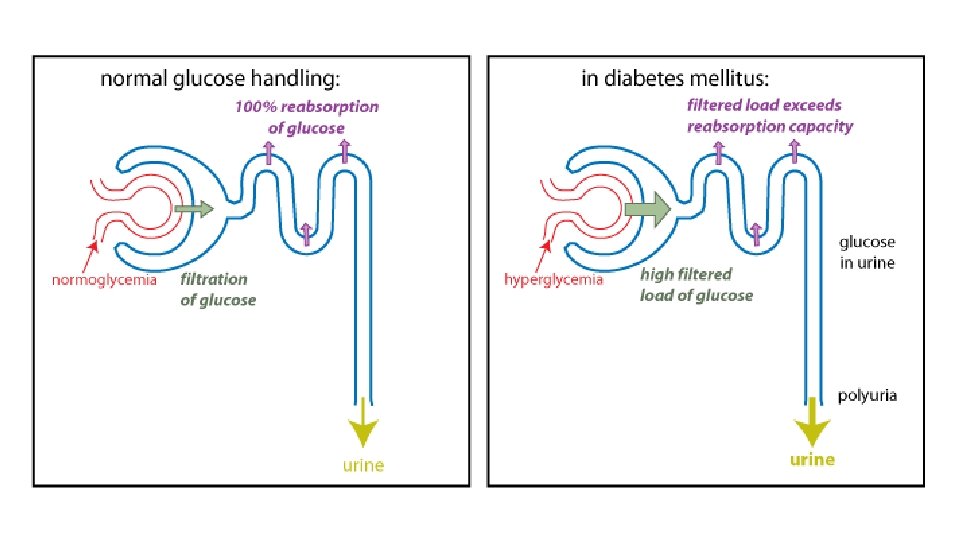
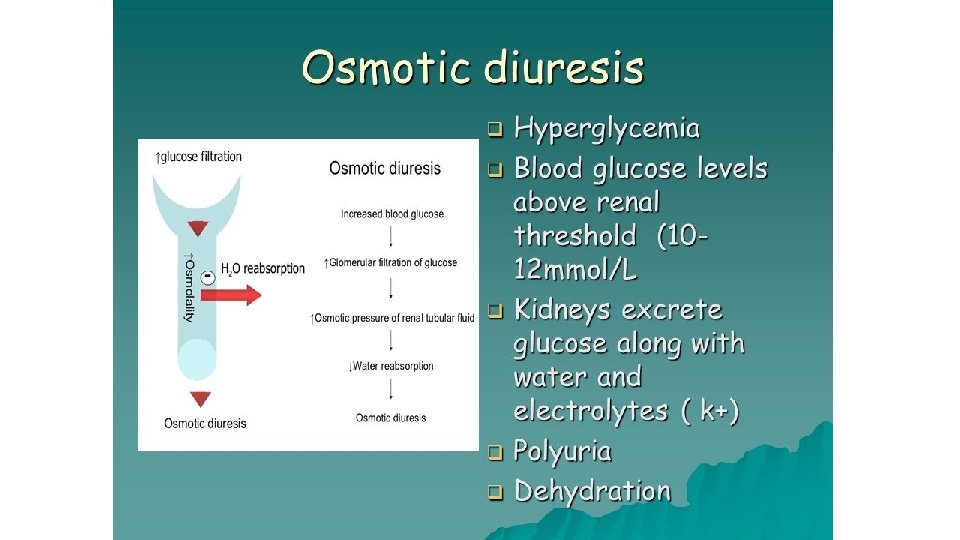
Diagnosis • With symptoms (polyuria, polydipsia and unexplained weight loss) plus: • Fasting serum glucose concentration ≥ 7. 0 mmol/L • or serum glucose concentration ≥ 11. 1 mmol/L 2 h after 75 g anhydrous glucose in an OGTT. • With no symptoms, • Diagnosis should not be based on a single glucose determination. • Glycated haemoglobin (Hb. A 1 c)
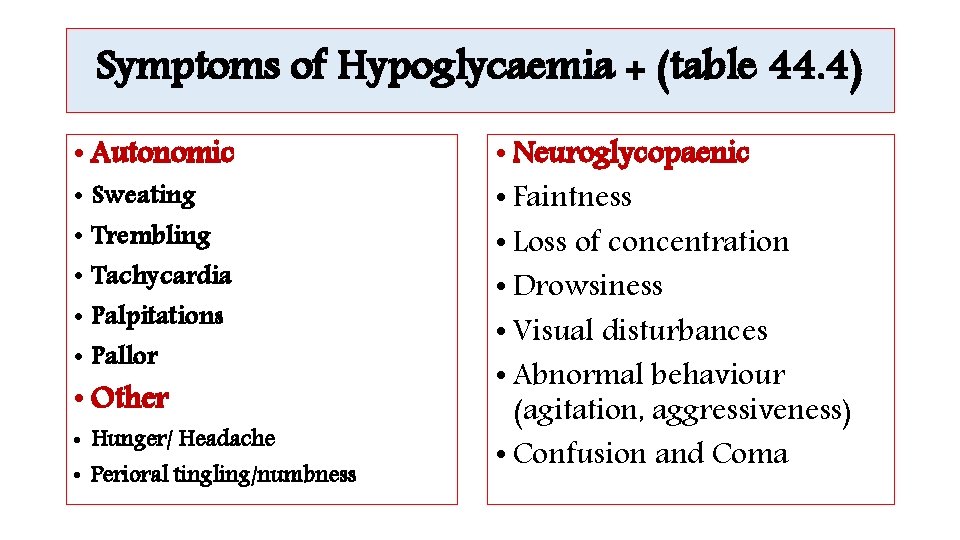
Symptoms of Hypoglycaemia + (table 44. 4) • Autonomic • Sweating • Trembling • Tachycardia • Palpitations • Pallor • Other • Hunger/ Headache • Perioral tingling/numbness • Neuroglycopaenic • Faintness • Loss of concentration • Drowsiness • Visual disturbances • Abnormal behaviour (agitation, aggressiveness) • Confusion and Coma
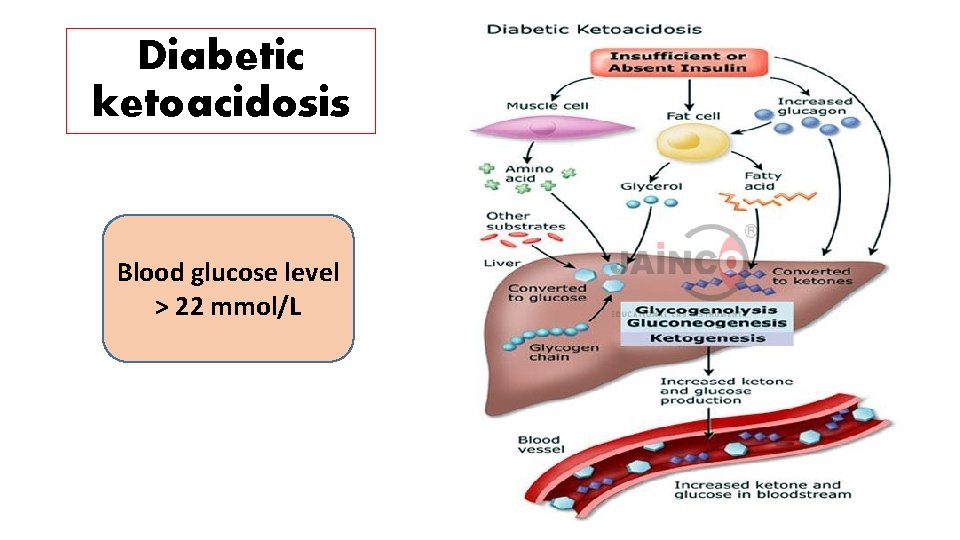
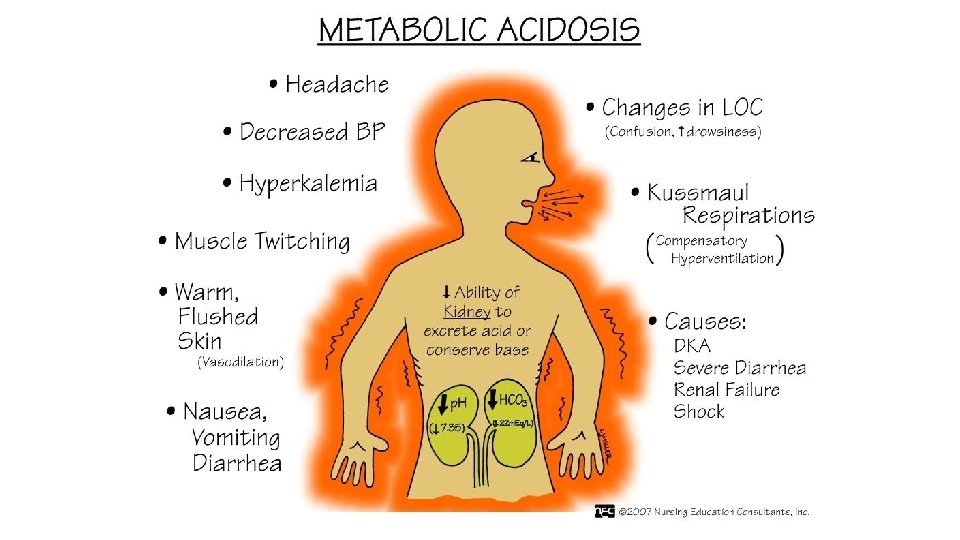
Diabetic ketoacidosis Blood glucose level > 22 mmol/L
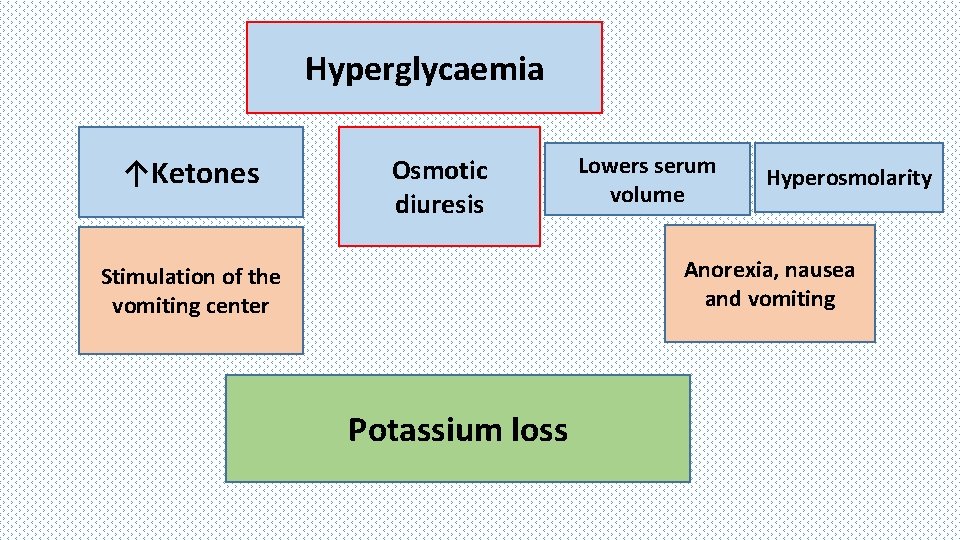
Hyperglycaemia ↑Ketones Osmotic diuresis Lowers serum volume Hyperosmolarity Anorexia, nausea and vomiting Stimulation of the vomiting center Potassium loss

Hyperosmolar hyperglycemic state • No significant ketone production and therefore no severe acidosis. • Hyperglycemia → osmotic diuresis → dehydration → hyperosmolarity → increase blood viscosity and the risk of thromboembolism. • Factors precipitating HHS are infection, myocardial infarction, poor adherence with medication regimens or medicines which cause diuresis or impair glucose tolerance, for example, glucocorticoids.
Long-term diabetic complications ØMacrovascular disease • Cardiovascular disease • Peripheral vascular disease ØMicrovascular disease • Retinopathy • Nephropathy • Peripheral neuropathy
Cardiovascular disease • The most common cause of death in people with type 2 diabetes • Silent myocardial infarction (infarction with no symptoms) is more common in those with diabetes • Cerebrovascular disease is also more commonly associated with diabetes • Hypertension is twice as common amongst the diabetic population. It affects over 80% of those with type 2 diabetes
Peripheral vascular disease • PVD affects the blood vessels outside the heart • It often affects the arteries of the legs • A cramping pain experienced on walking, due to reversible muscle ischaemia secondary to atherosclerosis.
Retinopathy • The main problem with retinopathy is that it is symptomless until the disease is far advanced. • Tight glycaemic control has been shown to prevent and delay the progression of retinopathy in patients with DM.
Nephropathy • In diabetic renal disease, the kidneys become enlarged and the glomerular filtration rate (GFR) initially increases. • Detection by GFR estimation and microalbuminuria • (ACE) inhibitors and/or (ARBs) are the treatments of choice, provide renal protective effects.
Peripheral neuropathy • progressive loss of peripheral nerve fibres resulting in nerve dysfunction. • sensory, motor and autonomic symptoms.
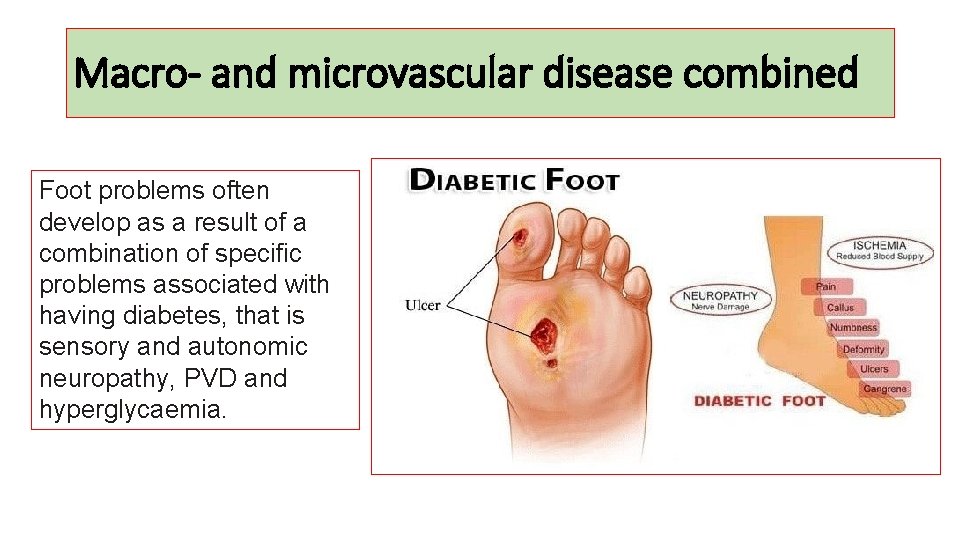
Macro- and microvascular disease combined Foot problems often develop as a result of a combination of specific problems associated with having diabetes, that is sensory and autonomic neuropathy, PVD and hyperglycaemia.
There are three main types of foot ulcers: • Neuropathic ulcers occur when peripheral neuropathy causes loss of pain sensation. • Ischaemic ulcers result from PVD and poor blood supply causing a reduction in available nutrients and oxygen required for healing. • Ischaemic ulcers are painful and usually occur on the distal ends of the toes. • Most ulcers have elements of both neuropathy and ischaemia and are termed neuroischaemic.
Charcot arthropathy • This is an uncommon foot complication • caused by severe neuropathy. It results in chronic, • progressive destruction of joints with marked inflammation. • Reduced bone density leads to bone fractures, altered • foot shape and gross deformity
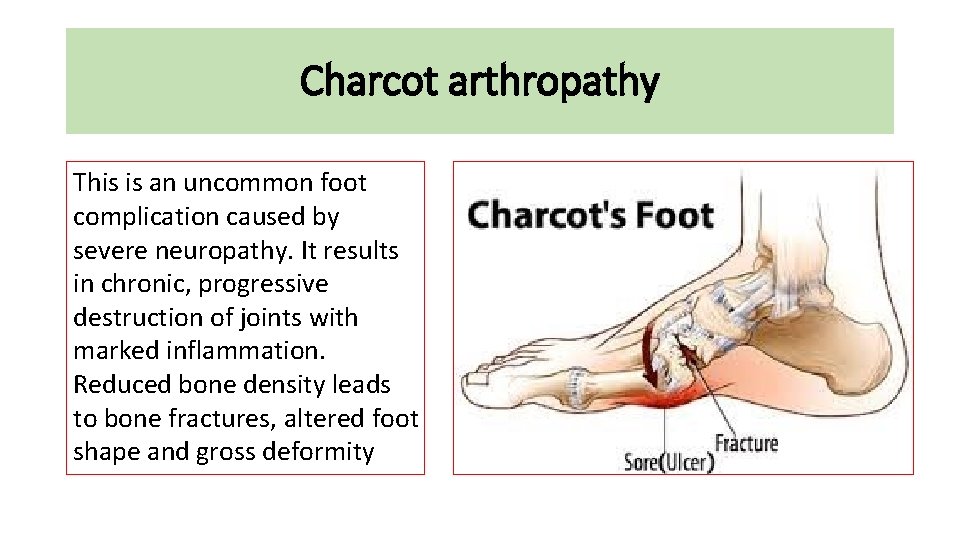
Charcot arthropathy This is an uncommon foot complication caused by severe neuropathy. It results in chronic, progressive destruction of joints with marked inflammation. Reduced bone density leads to bone fractures, altered foot shape and gross deformity
Management of T 1 DM

Management of T 2 DM
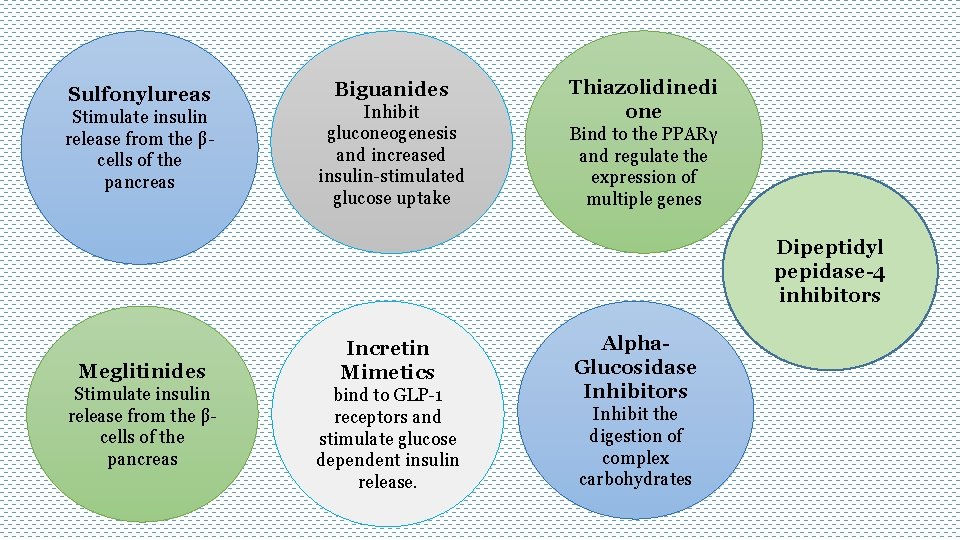
Sulfonylureas Stimulate insulin release from the βcells of the pancreas Biguanides Inhibit gluconeogenesis and increased insulin-stimulated glucose uptake Thiazolidinedi one Bind to the PPARγ and regulate the expression of multiple genes Dipeptidyl pepidase-4 inhibitors Meglitinides Stimulate insulin release from the βcells of the pancreas Incretin Mimetics bind to GLP-1 receptors and stimulate glucose dependent insulin release. Alpha. Glucosidase Inhibitors Inhibit the digestion of complex carbohydrates

- Slides: 32