
Diabetes Interprofessional Management of A Public Health Crisis
Diabetes: Interprofessional Management of A Public Health Crisis A Collaborative Effort of Dentists, Physicians, and Diabetes Educators
Disclosure to Participants • Notice of Requirements For Successful Completion – Please refer to learning goals and objectives – Learners must attend the full activity and complete the evaluation in order to claim continuing education credit/hours • Conflict of Interest (COI) and Financial Relationship Disclosures: – – – • Non-Endorsement of Products: – • Presenter: Jerry A Brown DMD, CDESpeaker, Colgate Oral Health Speaker’s Network Presenter: Donna Jornsay CPNP, CNS, CDE, BC-ADM-Speaker, No Disclosures Presenter: Karlynn Sievers, MD Speaker-No Disclosures Accredited status does not imply endorsement by AADE, ANCC, ACPE or CDR of any commercial products displayed in conjunction with this educational activity Off-Label Use: – Participants will be notified by speakers to any product used for a purpose other than for which it was approved by the Food and Drug Administration.
Objectives: • Identify the current impact of Diabetes. • Explain the bidirectional relationship between Diabetes and Oral Health. • Describe ways that dentists, physicians, and diabetes educators can help mitigate the problem. • Discuss ways to facilitate communication between the healthcare professions, and with people living with Diabetes. • Encourage and facilitate patient referrals between dentists, physicians, and diabetes educators.
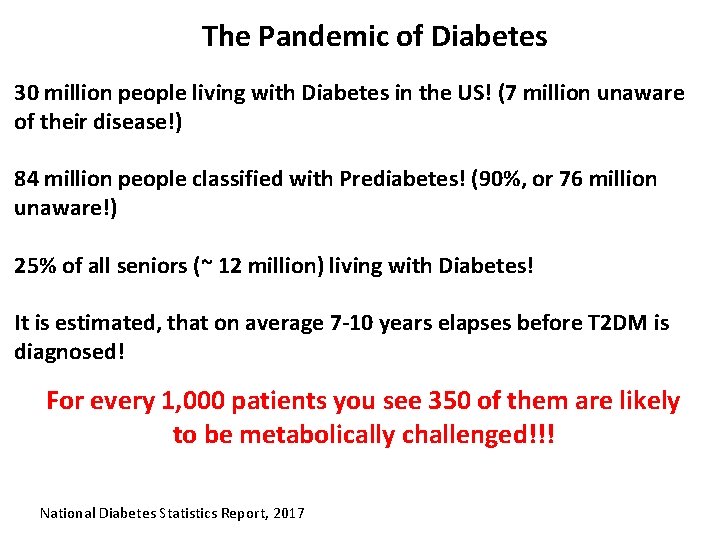
The Pandemic of Diabetes 30 million people living with Diabetes in the US! (7 million unaware of their disease!) 84 million people classified with Prediabetes! (90%, or 76 million unaware!) 25% of all seniors (~ 12 million) living with Diabetes! It is estimated, that on average 7 -10 years elapses before T 2 DM is diagnosed! For every 1, 000 patients you see 350 of them are likely to be metabolically challenged!!! National Diabetes Statistics Report, 2017
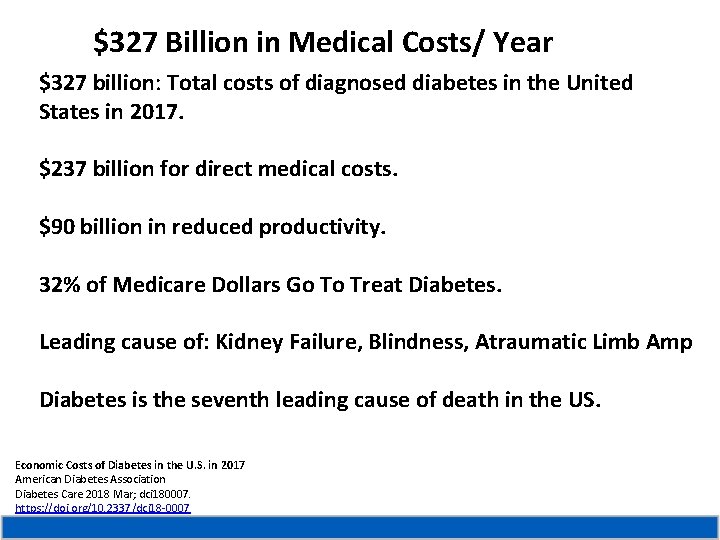
$327 Billion in Medical Costs/ Year $327 billion: Total costs of diagnosed diabetes in the United States in 2017. $237 billion for direct medical costs. $90 billion in reduced productivity. 32% of Medicare Dollars Go To Treat Diabetes. Leading cause of: Kidney Failure, Blindness, Atraumatic Limb Amp Diabetes is the seventh leading cause of death in the US. Economic Costs of Diabetes in the U. S. in 2017 American Diabetes Association Diabetes Care 2018 Mar; dci 180007. https: //doi. org/10. 2337/dci 18 -0007
Diabetes Task Force • A joint effort by the: Academy of General Dentistry American Academy of Family Physicians American Association of Diabetes Educators • Goal: To promote integrated management and communication of dentists, physicians, and diabetes educators in an effort to improve outcomes of people living with diabetes.
Diabetes Task Force Launched by 3 Leading Health Organizations • Academy of General Dentistry (AGD) • American Academy of Family Physicians (AAFP) • American Association of Diabetes Educators (AADE)
Academy of General Dentistry • Professional organization of over 40, 000 dentists • The AGD is a nonprofit international organization with 37, 000 member dentists from the United States and Canada. It was founded in 1952. • The AGD strives to provide the best possible patient care through its dedication to the continuing dental education of its members. In addition, it provides the public with information to help make informed choices about personal dental care and treatments.
American Academy of Family Physicians • Represents 129, 000 physicians and student members nationwide. • The only medical society devoted solely to primary care. • Founded 1969 • Family physicians conduct approximately one in five office visits • 192 million visits annually • 48 percent more than to the next most visited specialty. • Unlike other specialties that are limited to a particular organ or disease, family medicine integrates care for patients of all genders and every age, and advocates for the patient in a complex health care system.
American Association of Diabetes Educators • AADE is a multi-disciplinary professional membership organization dedicated to improving diabetes care through innovative education, management, and support. • 14, 000 professional members including nurses, dietitians, pharmacists, exercise specialists, and others • AADE has a vast network of practitioners working with people who have, are affected by, or are at risk for diabetes.
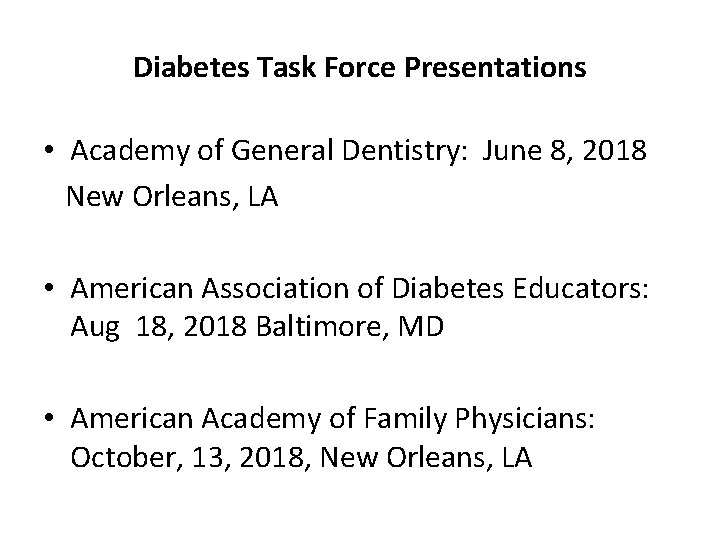
Diabetes Task Force Presentations • Academy of General Dentistry: June 8, 2018 New Orleans, LA • American Association of Diabetes Educators: Aug 18, 2018 Baltimore, MD • American Academy of Family Physicians: October, 13, 2018, New Orleans, LA
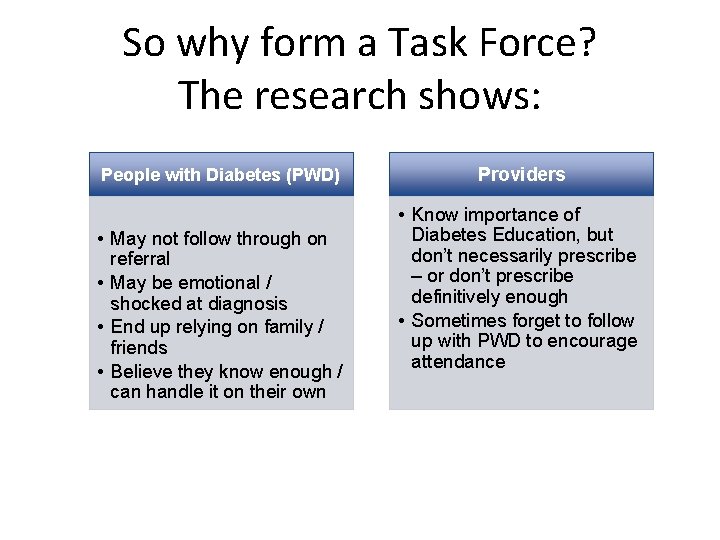
So why form a Task Force? The research shows: People with Diabetes (PWD) • May not follow through on referral • May be emotional / shocked at diagnosis • End up relying on family / friends • Believe they know enough / can handle it on their own Providers • Know importance of Diabetes Education, but don’t necessarily prescribe – or don’t prescribe definitively enough • Sometimes forget to follow up with PWD to encourage attendance
Treating People With Diabetes Demands on your practice are escalating • Enabling PWD to help themselves • Balancing priorities and goals
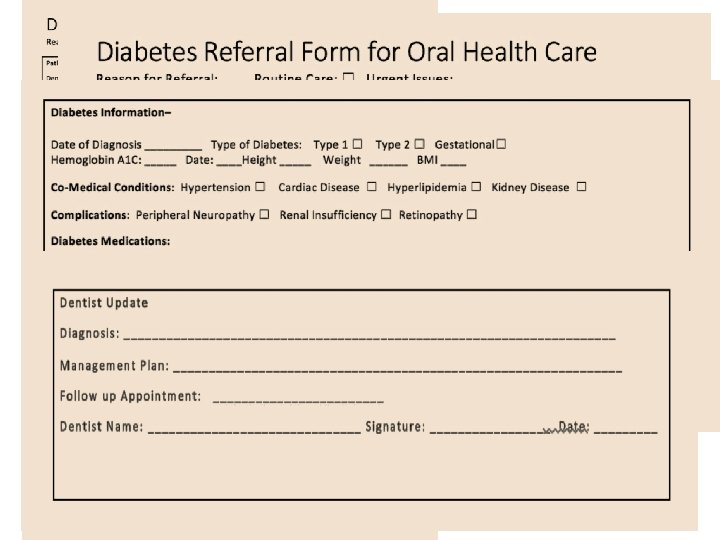
Strategies of the Task Force thus far: 1. Developed Forms used to exchange information between physicians and dentists a) Forms for dentist to use for referral to physicians b) Forms for physicians to use for referral to dentists 2. Developing a Shared Database and EMR to increase access to information 3. Creation of this presentation to educate the professions on how we can and should work together.
Role of the Diabetes Educator • Helping to direct/refer patients for other health needs – Dental assessments – Ophthalmology referrals – Podiatry referrals • Education and demonstration of the AADE 7 TM Self-Care Behaviors
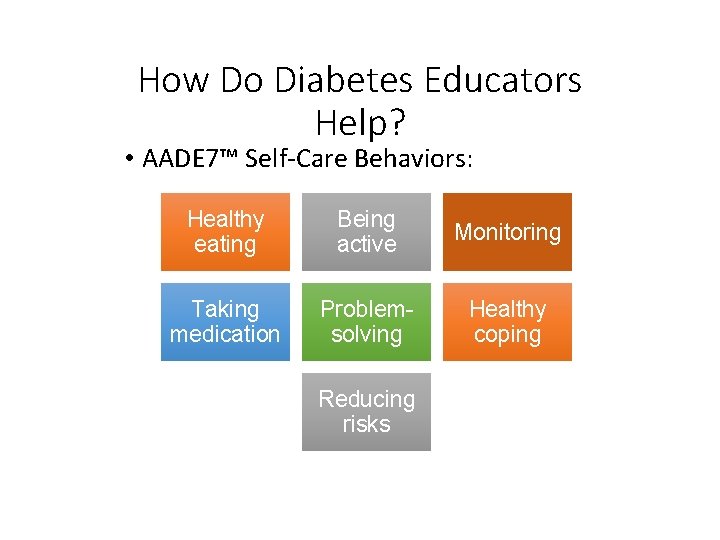
How Do Diabetes Educators Help? • AADE 7™ Self-Care Behaviors: Healthy eating Being active Monitoring Taking medication Problemsolving Healthy coping Reducing risks
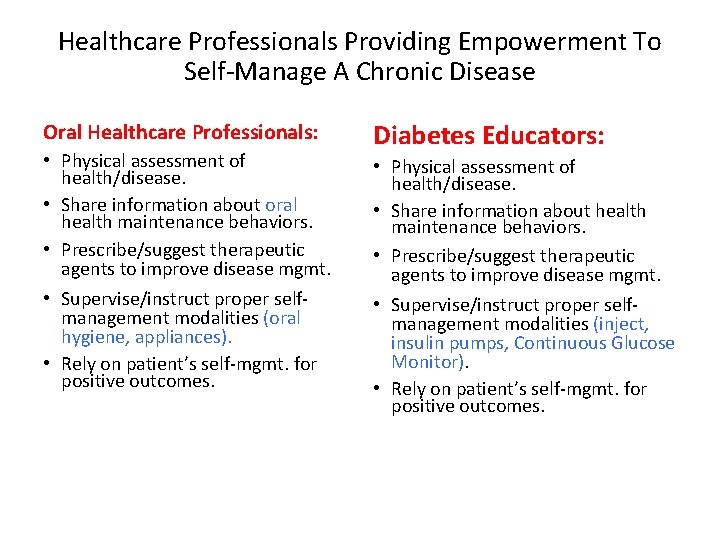
Healthcare Professionals Providing Empowerment To Self-Manage A Chronic Disease Oral Healthcare Professionals: • Physical assessment of health/disease. • Share information about oral health maintenance behaviors. • Prescribe/suggest therapeutic agents to improve disease mgmt. • Supervise/instruct proper selfmanagement modalities (oral hygiene, appliances). • Rely on patient’s self-mgmt. for positive outcomes. Diabetes Educators: • Physical assessment of health/disease. • Share information about health maintenance behaviors. • Prescribe/suggest therapeutic agents to improve disease mgmt. • Supervise/instruct proper selfmanagement modalities (inject, insulin pumps, Continuous Glucose Monitor). • Rely on patient’s self-mgmt. for positive outcomes.
Partnership: MDs, DMDs/DDSs, CDEs help MDs and DMDs by: • Assisting PWD to improve outcomes • Providing education to delay onset of diabetes • Tracking and monitoring progress • Increasing efficiency • Meeting pay-for-performance and QI goals
Partner With a Diabetes Educator We help the PWD: • • Develop self-management skills Achieve better metabolic control Improve lipid levels Reduce blood pressure
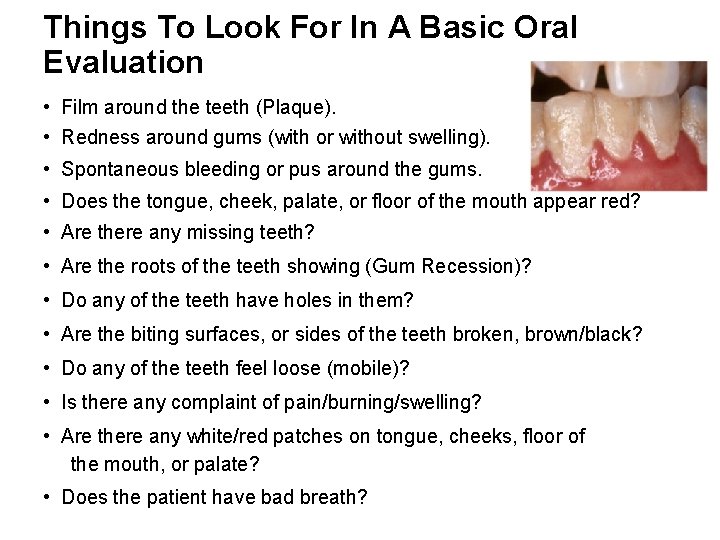
Things To Look For In A Basic Oral Evaluation • Film around the teeth (Plaque). • Redness around gums (with or without swelling). • Spontaneous bleeding or pus around the gums. • Does the tongue, cheek, palate, or floor of the mouth appear red? • Are there any missing teeth? • Are the roots of the teeth showing (Gum Recession)? • Do any of the teeth have holes in them? • Are the biting surfaces, or sides of the teeth broken, brown/black? • Do any of the teeth feel loose (mobile)? • Is there any complaint of pain/burning/swelling? • Are there any white/red patches on tongue, cheeks, floor of the mouth, or palate? • Does the patient have bad breath?
What Do I, as the CDE, Ask? ? ? • When did you last see your dentist for a cleaning? • Was any treatment recommended? • Was the treatment completed? If “No” “Why not? ” • Are teeth missing? If yes, explain the necessity for replacement. • Are any of your teeth loose or hurting? • Do you notice your gums bleeding? • Does your mouth feel dry, and do you have difficulty swallowing?
Diabetes Educators As Oral Health Partners • Are you doing visual oral cancer screenings and basic oral exams? If not, REFER! • Dental referrals are included in the American Diabetes Association “Standards of Care. ” • Educate PWD on the importance of oral health for optimal BG levels. • Recommend prostheses when necessary.
Role of the Family Physician and team in treating the PWD • Comprehensive care of the whole person. • Prevention and chronic illness care • Anticipatory guidance and preventive counseling • Review history, medications • Physical exam • Lab work for diagnosis and/or follow up • Assure annual retinal exam • Assess systems high risk for co-morbidity: oral, cardiovascular, renal, ophtho • Assess lifestyle and counsel regarding needed changes • Assess and administer appropriate immunizations • Assure proper patient education
When physicians should refer PWD to dentists. • Right after the initial diagnosis of Diabetes Mellitus. • With red gums, tongue, cheeks, or floor of the mouth • When spontaneous bleeding/pus is noticed around gums. • If more than 3 -4 months has elapsed since last dental exam. • When there are loose, or missing teeth. • When there are complaints of pain, burning, or swelling. • When you are able to see the root surfaces of many teeth. • When the biting surfaces/sides of teeth appear broken, brown, or black.
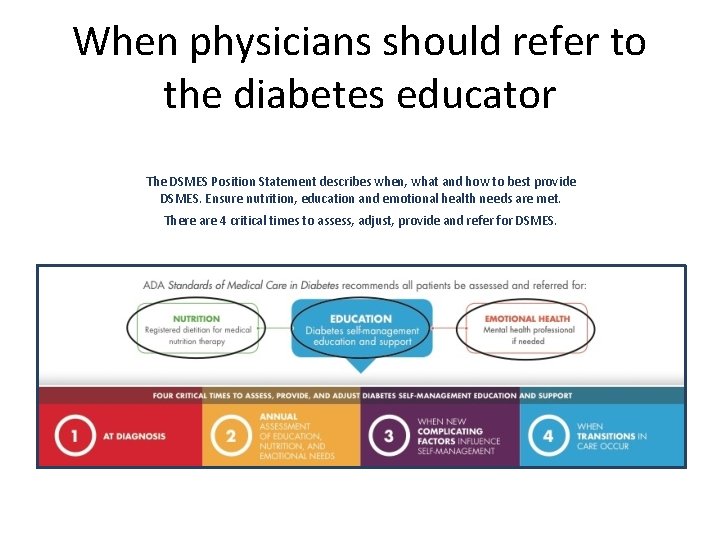
When physicians should refer to the diabetes educator The DSMES Position Statement describes when, what and how to best provide DSMES. Ensure nutrition, education and emotional health needs are met. There are 4 critical times to assess, adjust, provide and refer for DSMES.
When dentists should refer to physicians When patients tell you: • They have not had a physicians visit in the past 3 -4 months. • They have classic symptoms of Diabetes. • They don’t remember when their most recent Hb. A 1 C was taken. • Their self-monitoring test results are usually elevated. • They have stopped taking some/all of their medications. • They no longer self-monitor their BG. • They have not had a dilated eye exam in the past year. • They have not had a foot examination in the past year. When patients have: • Elevated blood pressure. • Elevated BMI. • Elevated Hb. A 1 C after screening. • A positive biopsy of a suspicious oral lesion.
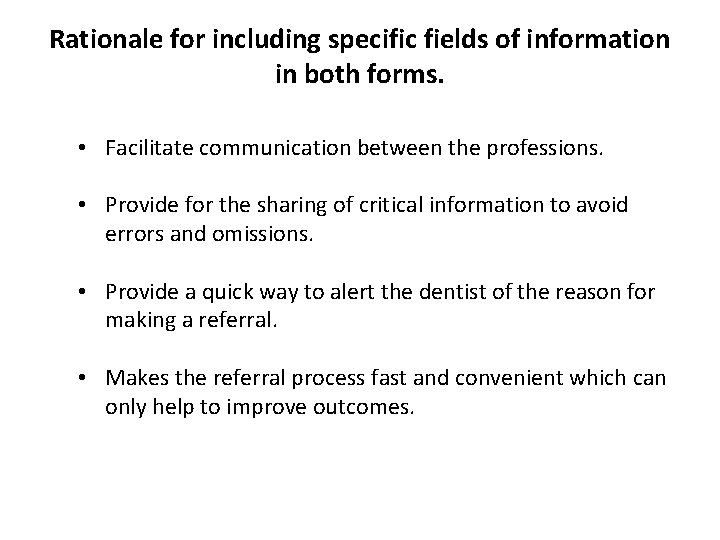
Rationale for including specific fields of information in both forms. • Facilitate communication between the professions. • Provide for the sharing of critical information to avoid errors and omissions. • Provide a quick way to alert the dentist of the reason for making a referral. • Makes the referral process fast and convenient which can only help to improve outcomes.
Advantages of the exchange of information by professionals with patients. • Consistent messaging from all healthcare professionals can reinforce behavior change. • Knowledge empowers patients to self-manage their chronic diseases. • We can no longer afford to assume that everybody fully understands what may, or may not impact their health. • Patients that are fully involved in their healthcare more likely to be part of a successful outcome.
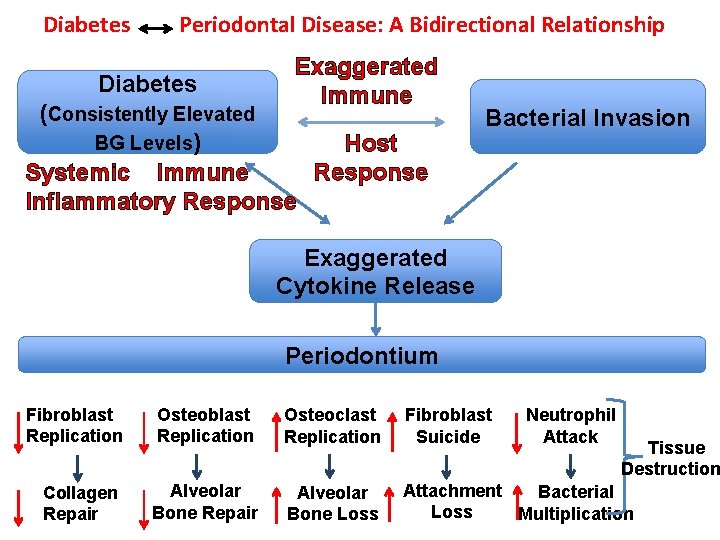
Diabetes Periodontal Disease: A Bidirectional Relationship Diabetes Exaggerated Immune (Consistently Elevated BG Levels) Host Response Systemic Immune Inflammatory Response Bacterial Invasion Exaggerated Cytokine Release Periodontium Fibroblast Replication Osteoclast Replication Fibroblast Suicide Collagen Repair Alveolar Bone Loss Attachment Bacterial Loss Multiplication Neutrophil Attack Tissue Destruction
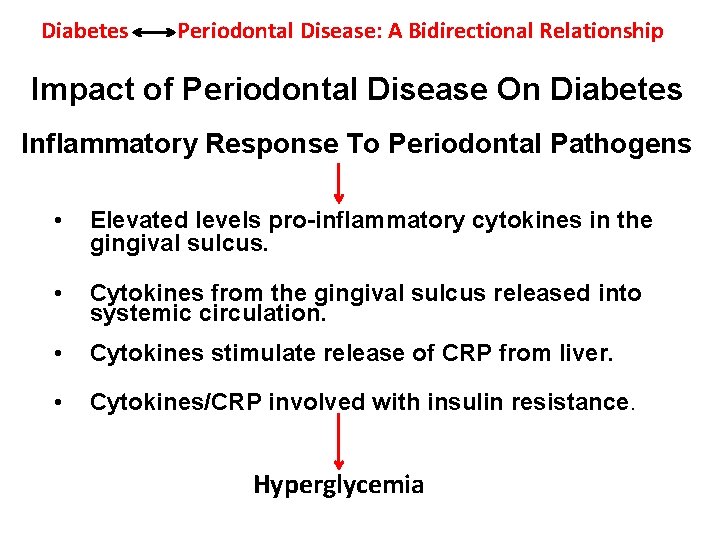
Diabetes Periodontal Disease: A Bidirectional Relationship Impact of Periodontal Disease On Diabetes Inflammatory Response To Periodontal Pathogens • Elevated levels pro-inflammatory cytokines in the gingival sulcus. • Cytokines from the gingival sulcus released into systemic circulation. • Cytokines stimulate release of CRP from liver. • Cytokines/CRP involved with insulin resistance. Hyperglycemia
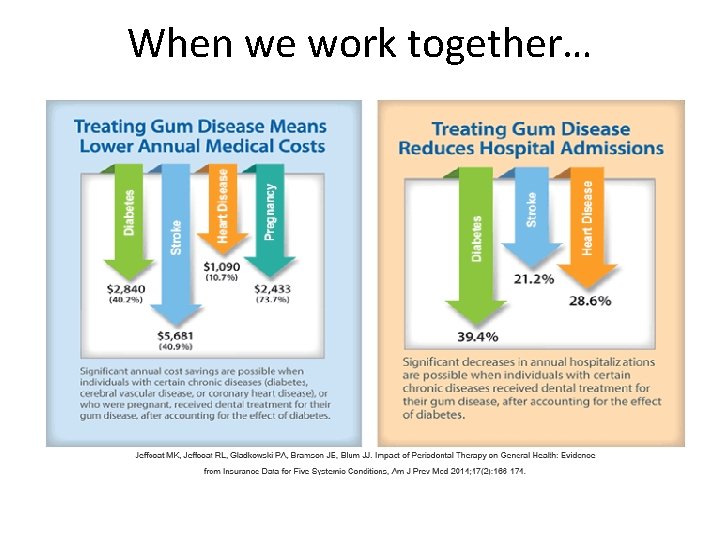
When we work together…
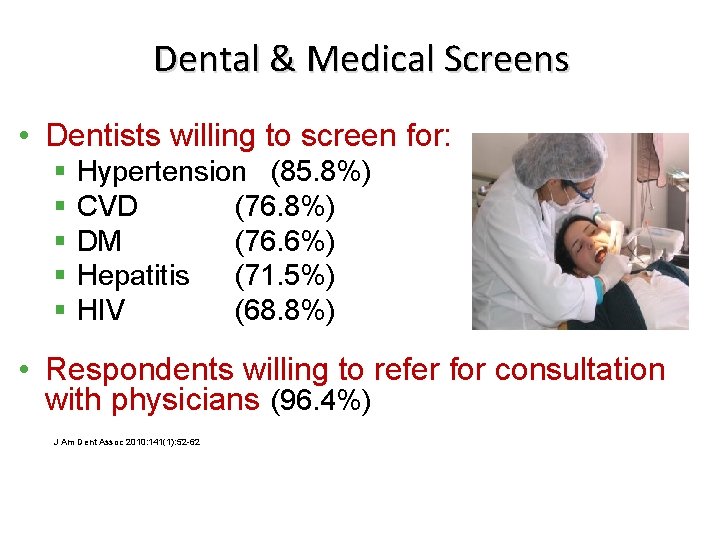
Dental & Medical Screens • Dentists willing to screen for: § § § Hypertension (85. 8%) CVD (76. 8%) DM (76. 6%) Hepatitis (71. 5%) HIV (68. 8%) • Respondents willing to refer for consultation with physicians (96. 4%) J Am Dent Assoc 2010: 141(1): 52 -62
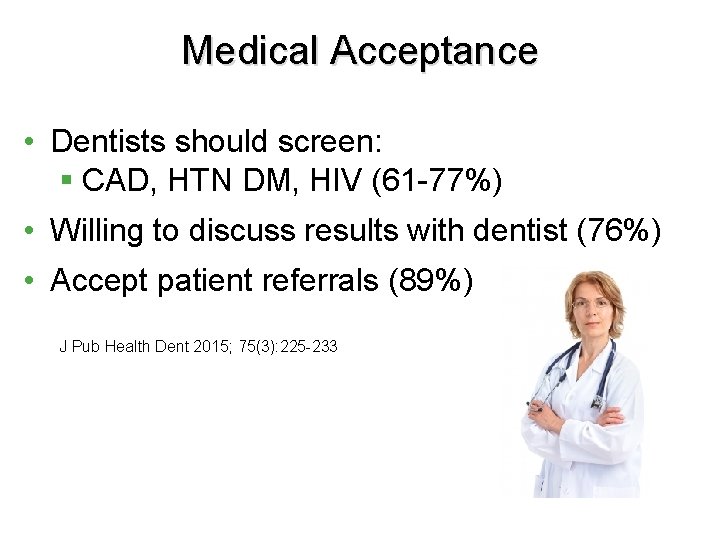
Medical Acceptance • Dentists should screen: § CAD, HTN DM, HIV (61 -77%) • Willing to discuss results with dentist (76%) • Accept patient referrals (89%) J Pub Health Dent 2015; 75(3): 225 -233
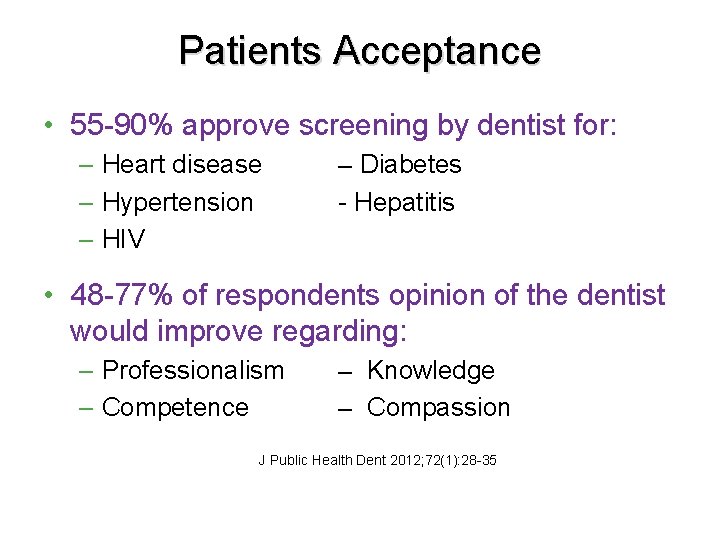
Patients Acceptance • 55 -90% approve screening by dentist for: – Heart disease – Hypertension – HIV Diabetes - Hepatitis • 48 -77% of respondents opinion of the dentist would improve regarding: – Professionalism – Competence Knowledge Compassion J Public Health Dent 2012; 72(1): 28 -35
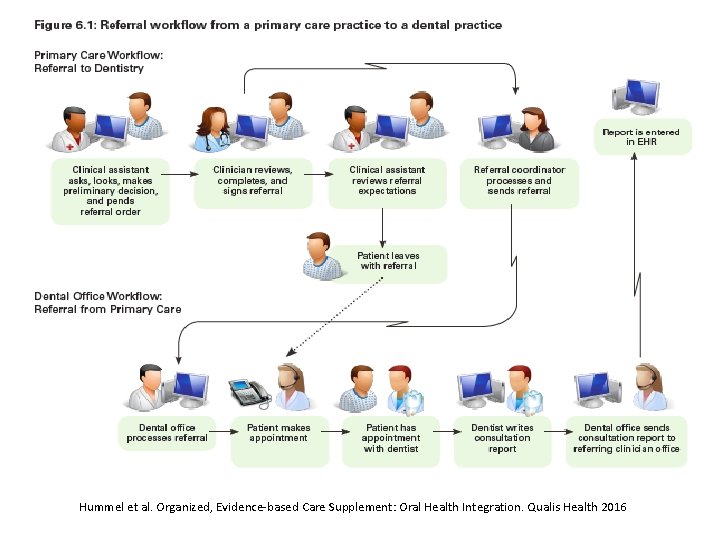
Hummel et al. Organized, Evidence-based Care Supplement: Oral Health Integration. Qualis Health 2016
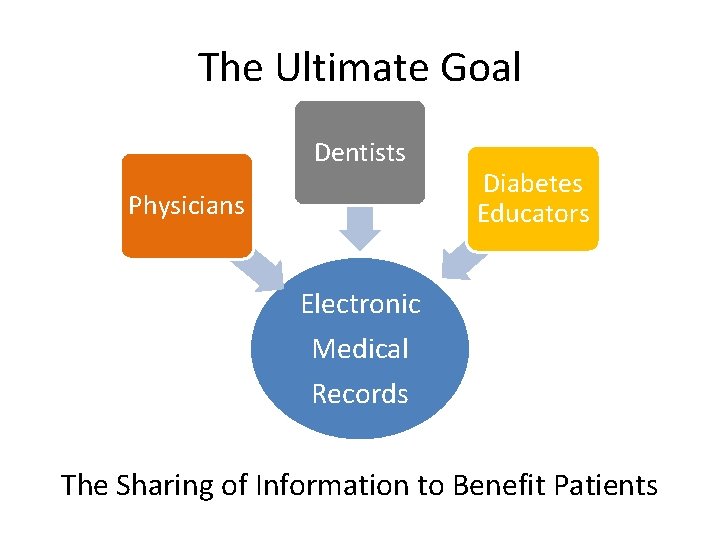
The Ultimate Goal Dentists Physicians Diabetes Educators Electronic Medical Records The Sharing of Information to Benefit Patients
Diabetes: Interprofessional Management of A Public Health Crisis A Collaborative Effort of Dentists, Physicians, and Diabetes Educators Thank You!!
- Slides: 41