
Diabetes Cardiovascular complications The prevalence of major cardiovascular

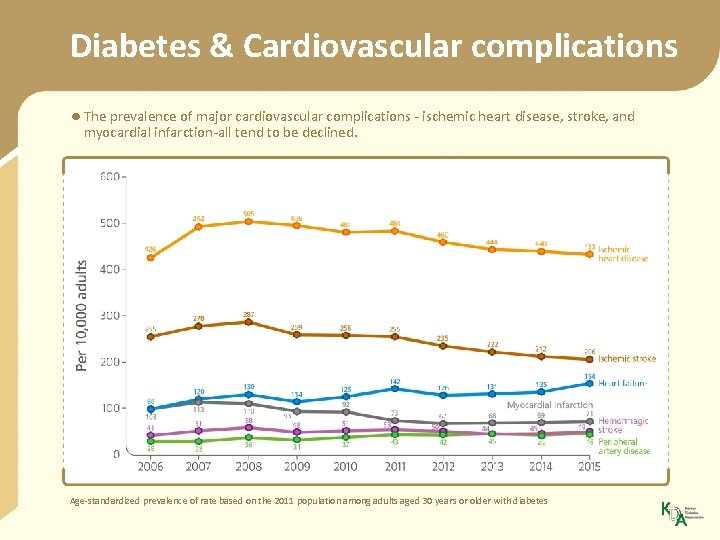
Diabetes & Cardiovascular complications • The prevalence of major cardiovascular complications - ischemic heart disease, stroke, and myocardial infarction-all tend to be declined. Age-standardized prevalence of rate based on the 2011 population among adults aged 30 years or older with diabetes
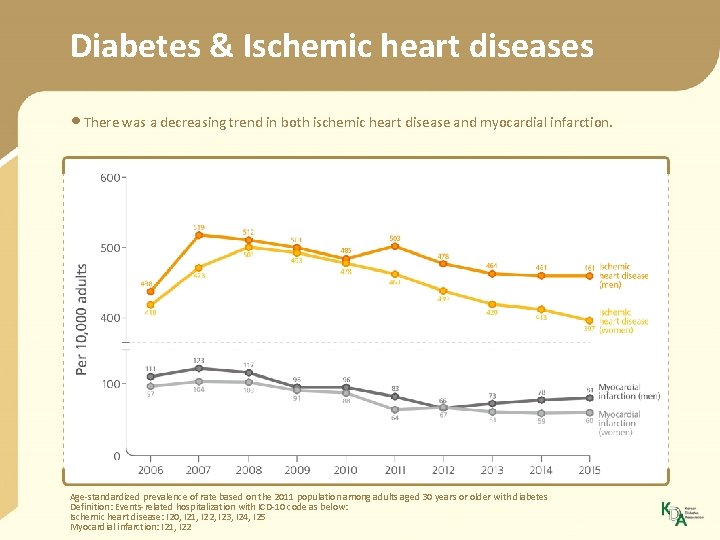
Diabetes & Ischemic heart diseases • There was a decreasing trend in both ischemic heart disease and myocardial infarction. Age-standardized prevalence of rate based on the 2011 population among adults aged 30 years or older with diabetes Definition: Events-related hospitalization with ICD-10 code as below: Ischemic heart disease: I 20, I 21, I 22, I 23, I 24, I 25 Myocardial infarction: I 21, I 22
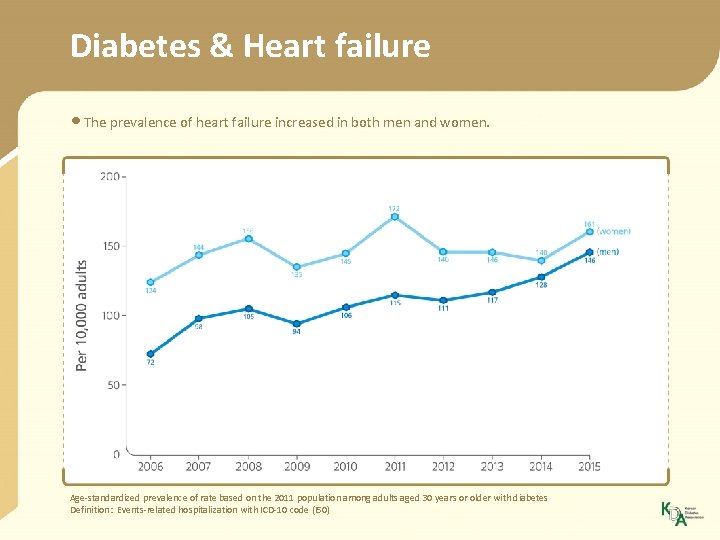
Diabetes & Heart failure • The prevalence of heart failure increased in both men and women. Age-standardized prevalence of rate based on the 2011 population among adults aged 30 years or older with diabetes Definition: Events-related hospitalization with ICD-10 code (I 50)
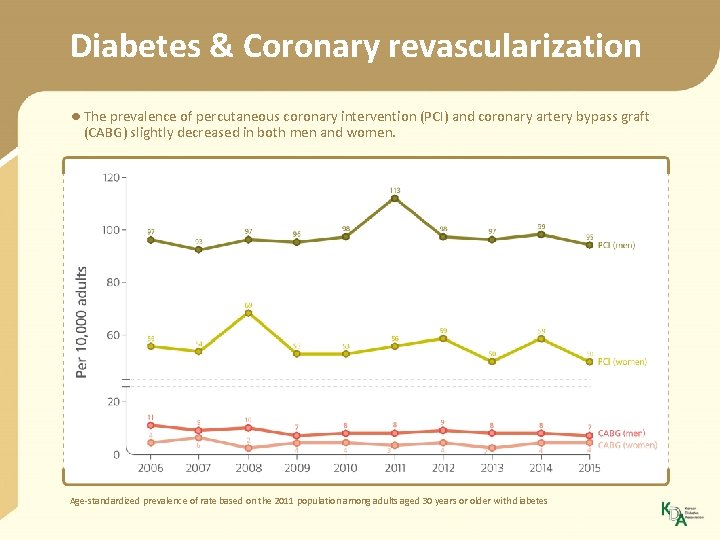
Diabetes & Coronary revascularization • The prevalence of percutaneous coronary intervention (PCI) and coronary artery bypass graft (CABG) slightly decreased in both men and women. Age-standardized prevalence of rate based on the 2011 population among adults aged 30 years or older with diabetes
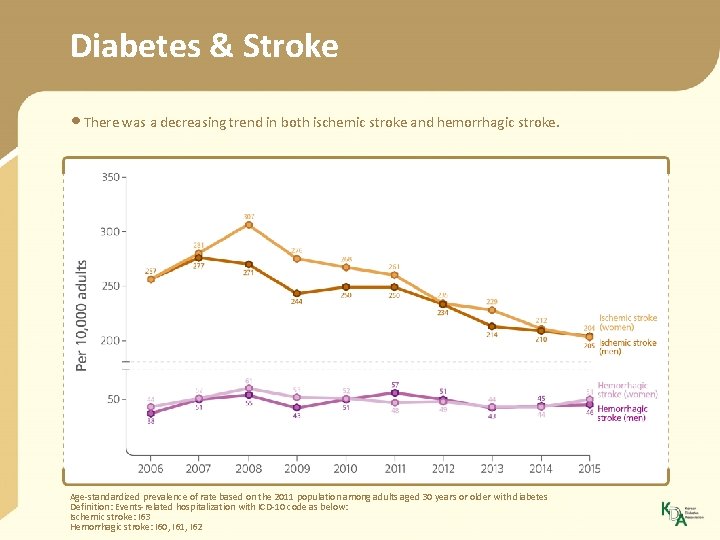
Diabetes & Stroke • There was a decreasing trend in both ischemic stroke and hemorrhagic stroke. Age-standardized prevalence of rate based on the 2011 population among adults aged 30 years or older with diabetes Definition: Events-related hospitalization with ICD-10 code as below: Ischemic stroke: I 63 Hemorrhagic stroke: I 60, I 61, I 62
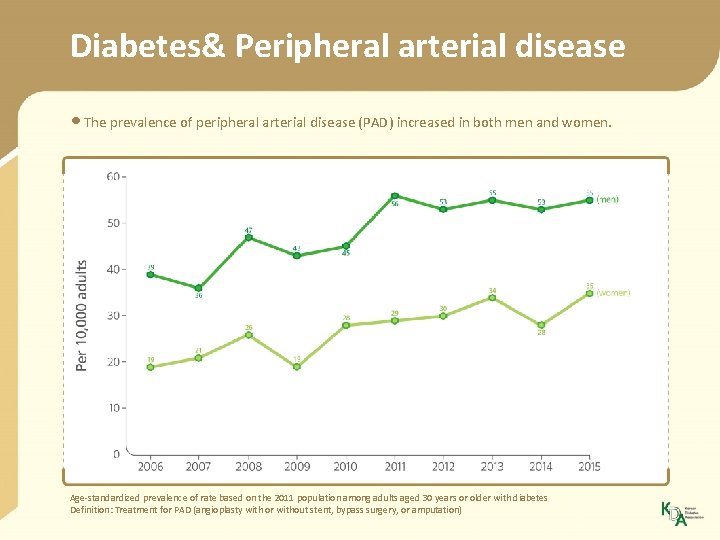
Diabetes& Peripheral arterial disease • The prevalence of peripheral arterial disease (PAD) increased in both men and women. Age-standardized prevalence of rate based on the 2011 population among adults aged 30 years or older with diabetes Definition: Treatment for PAD (angioplasty with or without stent, bypass surgery, or amputation)
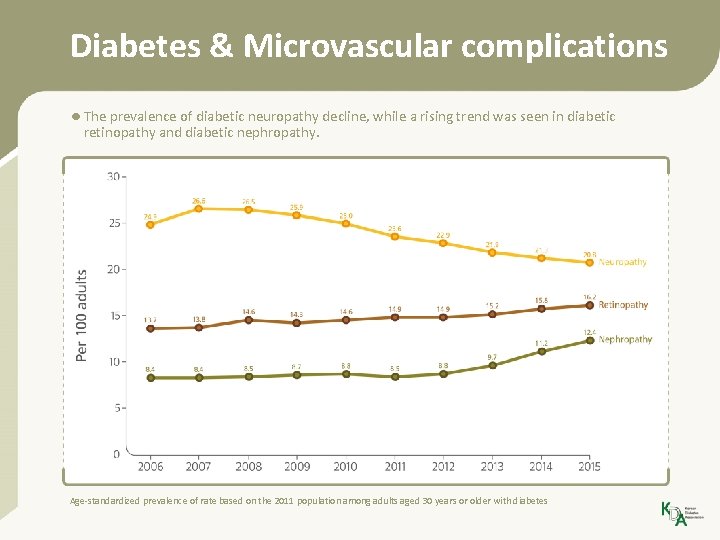
Diabetes & Microvascular complications • The prevalence of diabetic neuropathy decline, while a rising trend was seen in diabetic retinopathy and diabetic nephropathy. Age-standardized prevalence of rate based on the 2011 population among adults aged 30 years or older with diabetes
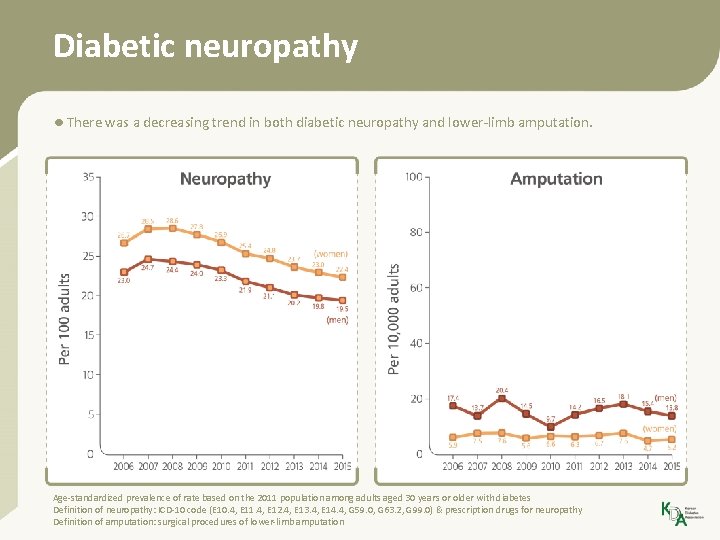
Diabetic neuropathy • There was a decreasing trend in both diabetic neuropathy and lower-limb amputation. Age-standardized prevalence of rate based on the 2011 population among adults aged 30 years or older with diabetes Definition of neuropathy: ICD-10 code (E 10. 4, E 11. 4, E 12. 4, E 13. 4, E 14. 4, G 59. 0, G 63. 2, G 99. 0) & prescription drugs for neuropathy Definition of amputation: surgical procedures of lower-limb amputation
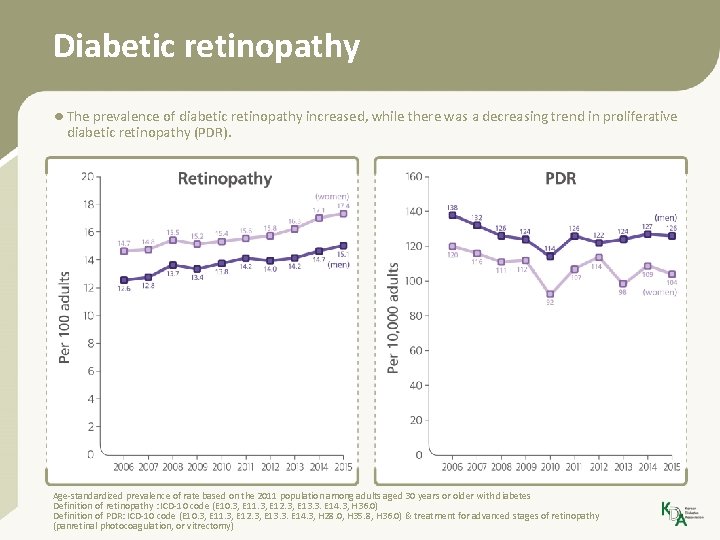
Diabetic retinopathy • The prevalence of diabetic retinopathy increased, while there was a decreasing trend in proliferative diabetic retinopathy (PDR). Age-standardized prevalence of rate based on the 2011 population among adults aged 30 years or older with diabetes Definition of retinopathy : ICD-10 code (E 10. 3, E 11. 3, E 12. 3, E 13. 3. E 14. 3, H 36. 0) Definition of PDR: ICD-10 code (E 10. 3, E 11. 3, E 12. 3, E 13. 3. E 14. 3, H 28. 0, H 35. 8, H 36. 0) & treatment for advanced stages of retinopathy (panretinal photocoagulation, or vitrectomy)
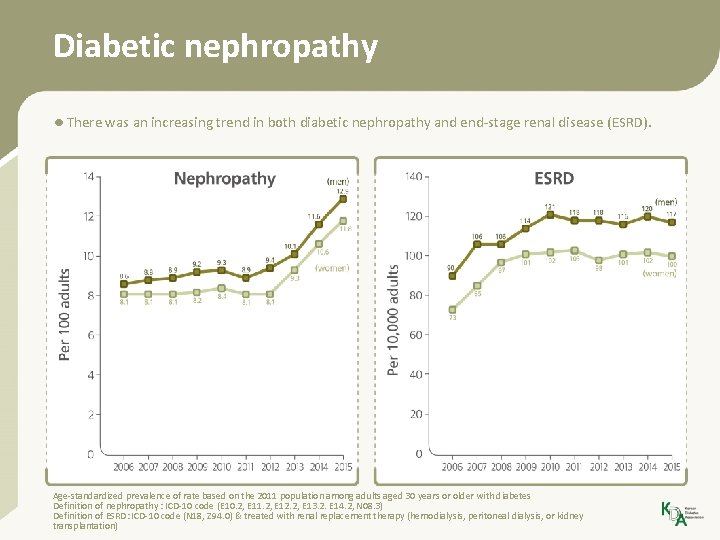
Diabetic nephropathy • There was an increasing trend in both diabetic nephropathy and end-stage renal disease (ESRD). Age-standardized prevalence of rate based on the 2011 population among adults aged 30 years or older with diabetes Definition of nephropathy : ICD-10 code (E 10. 2, E 11. 2, E 12. 2, E 13. 2. E 14. 2, N 08. 3) Definition of ESRD: ICD-10 code (N 18, Z 94. 0) & treated with renal replacement therapy (hemodialysis, peritoneal dialysis, or kidney transplantation)
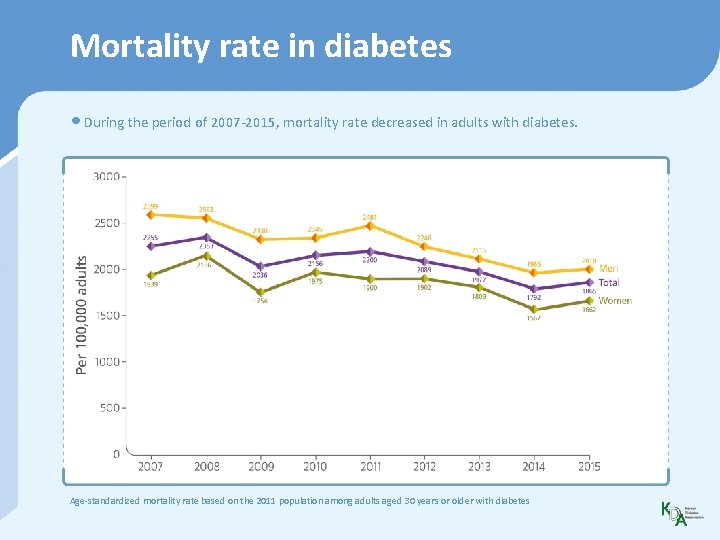
Mortality rate in diabetes • During the period of 2007 -2015, mortality rate decreased in adults with diabetes. Age-standardized mortality rate based on the 2011 population among adults aged 30 years or older with diabetes
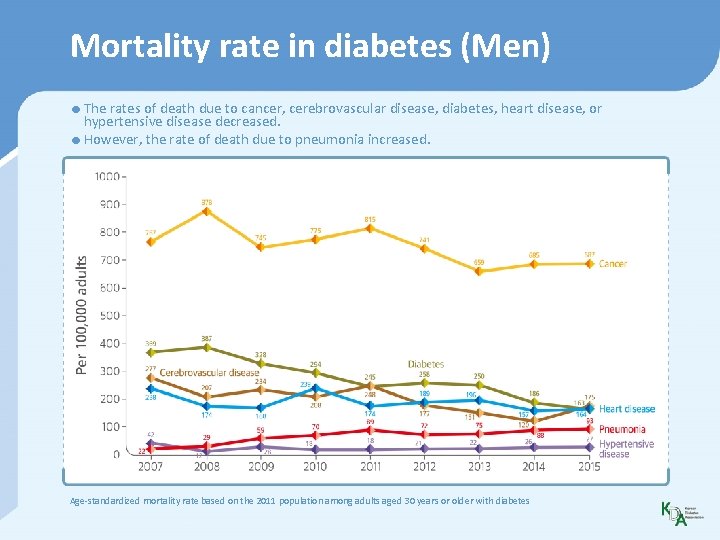
Mortality rate in diabetes (Men) • The rates of death due to cancer, cerebrovascular disease, diabetes, heart disease, or hypertensive disease decreased. • However, the rate of death due to pneumonia increased. Age-standardized mortality rate based on the 2011 population among adults aged 30 years or older with diabetes
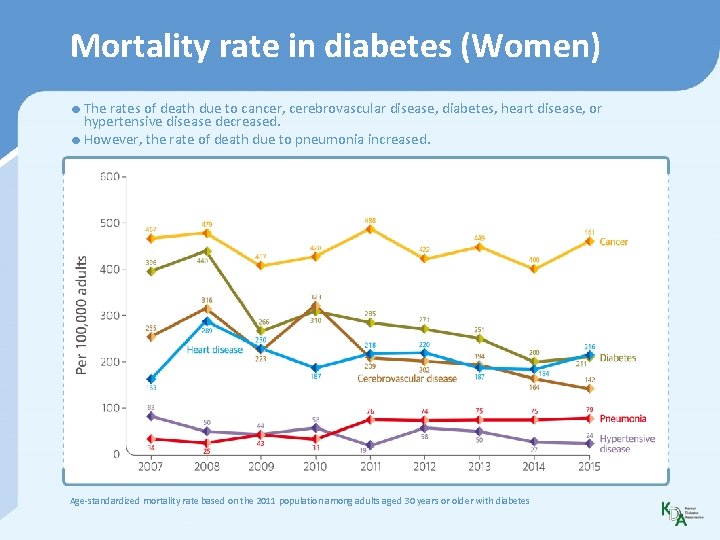
Mortality rate in diabetes (Women) • The rates of death due to cancer, cerebrovascular disease, diabetes, heart disease, or hypertensive disease decreased. • However, the rate of death due to pneumonia increased. Age-standardized mortality rate based on the 2011 population among adults aged 30 years or older with diabetes
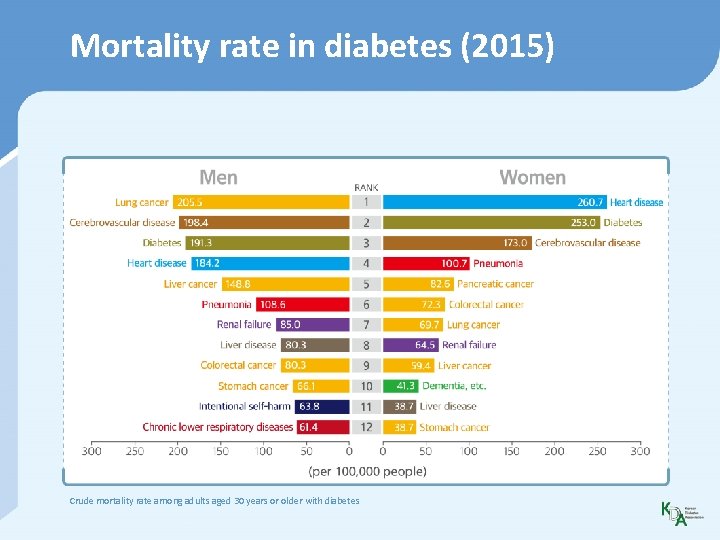
Mortality rate in diabetes (2015) Crude mortality rate among adults aged 30 years or older with diabetes
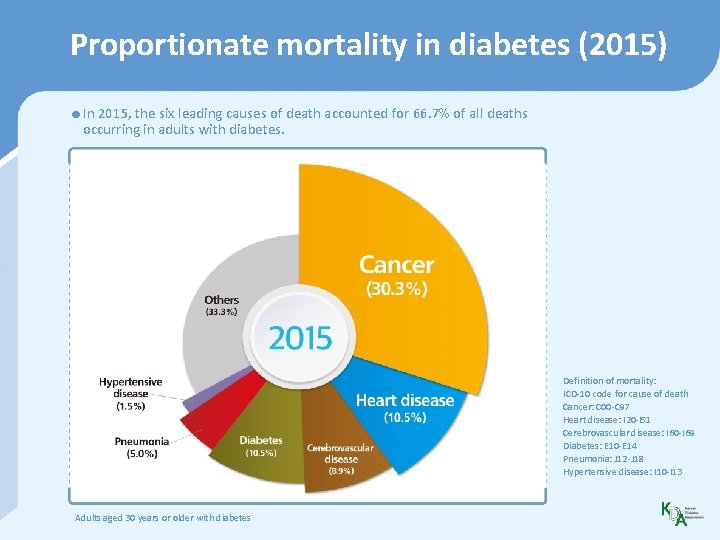
Proportionate mortality in diabetes (2015) • In 2015, the six leading causes of death accounted for 66. 7% of all deaths occurring in adults with diabetes. Definition of mortality: ICD-10 code for cause of death Cancer: C 00 -C 97 Heart disease: I 20 -I 51 Cerebrovascular disease: I 60 -I 69 Diabetes: E 10 -E 14 Pneumonia: J 12 -J 18 Hypertensive disease: I 10 -I 13 Adults aged 30 years or older with diabetes
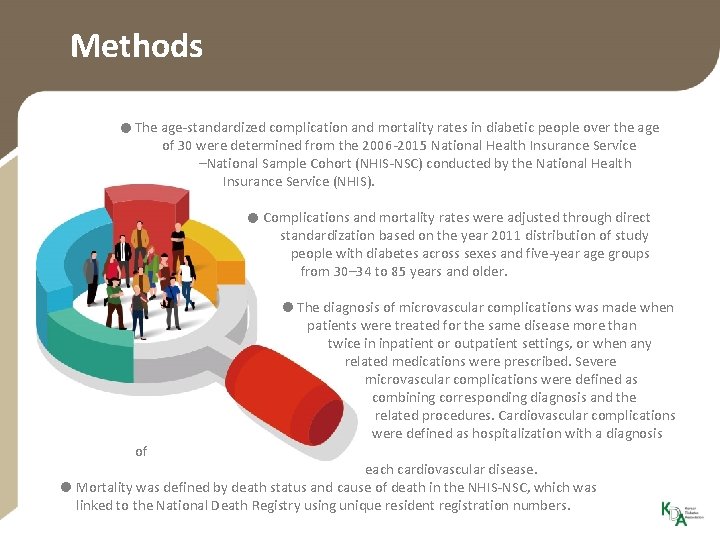
Methods • The age-standardized complication and mortality rates in diabetic people over the age of 30 were determined from the 2006 -2015 National Health Insurance Service –National Sample Cohort (NHIS-NSC) conducted by the National Health Insurance Service (NHIS). • Complications and mortality rates were adjusted through direct standardization based on the year 2011 distribution of study people with diabetes across sexes and five-year age groups from 30– 34 to 85 years and older. • • The diagnosis of microvascular complications was made when patients were treated for the same disease more than twice in inpatient or outpatient settings, or when any related medications were prescribed. Severe microvascular complications were defined as combining corresponding diagnosis and the related procedures. Cardiovascular complications were defined as hospitalization with a diagnosis of each cardiovascular disease. Mortality was defined by death status and cause of death in the NHIS-NSC, which was linked to the National Death Registry using unique resident registration numbers.
- Slides: 17