
DFH detailed mechanical design Presentation of detailed DFHX
- Slides: 17
DFH detailed mechanical design - Presentation of detailed DFHX design - Differences for DFHm Y. Leclercq, F. Pillon, R. Betemps, P. Schneider, E. Gonzalez De Audicana, I. Alonso Romero, D. Dominguez Ochoa, J. Fleiter, J. Hurte, F. Di Ciocchis, P. Cruikshank DDR DFH 16 June 2020 1
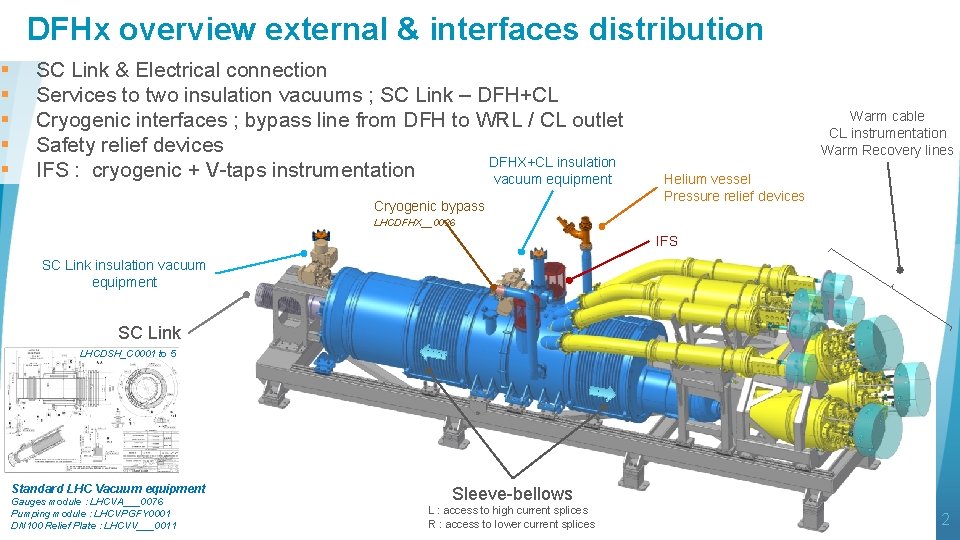
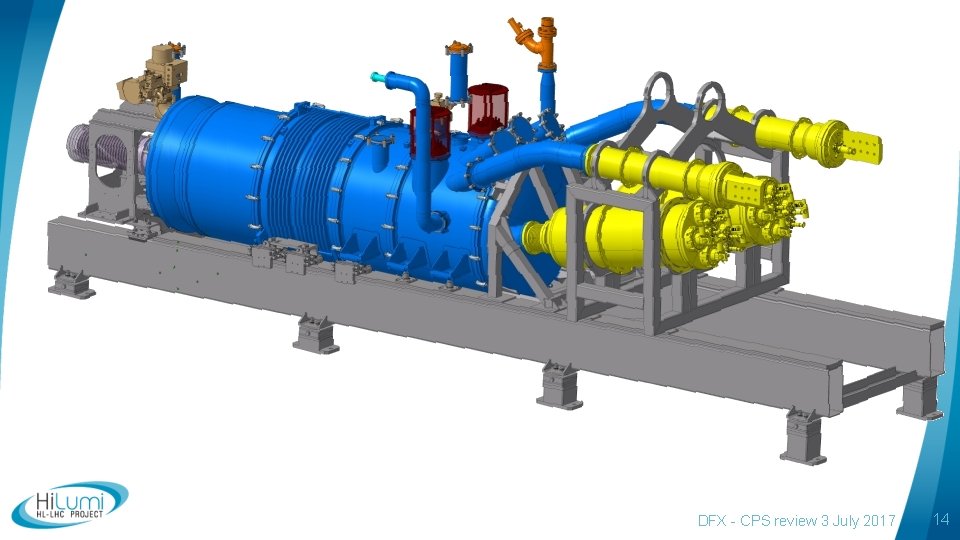
DFHx overview external & interfaces distribution § § § SC Link & Electrical connection Services to two insulation vacuums ; SC Link – DFH+CL Cryogenic interfaces ; bypass line from DFH to WRL / CL outlet Safety relief devices DFHX+CL insulation IFS : cryogenic + V-taps instrumentation vacuum equipment Cryogenic bypass Warm cable CL instrumentation Warm Recovery lines Helium vessel Pressure relief devices LHCDFHX__0026 IFS SC Link insulation vacuum equipment SC Link LHCDSH_C 0001 to 5 Standard LHC Vacuum equipment Gauges module : LHCVA___0076 Pumping module : LHCVPGFY 0001 DN 100 Relief Plate : LHCVV___0011 Sleeve-bellows L : access to high current splices R : access to lower current splices 2
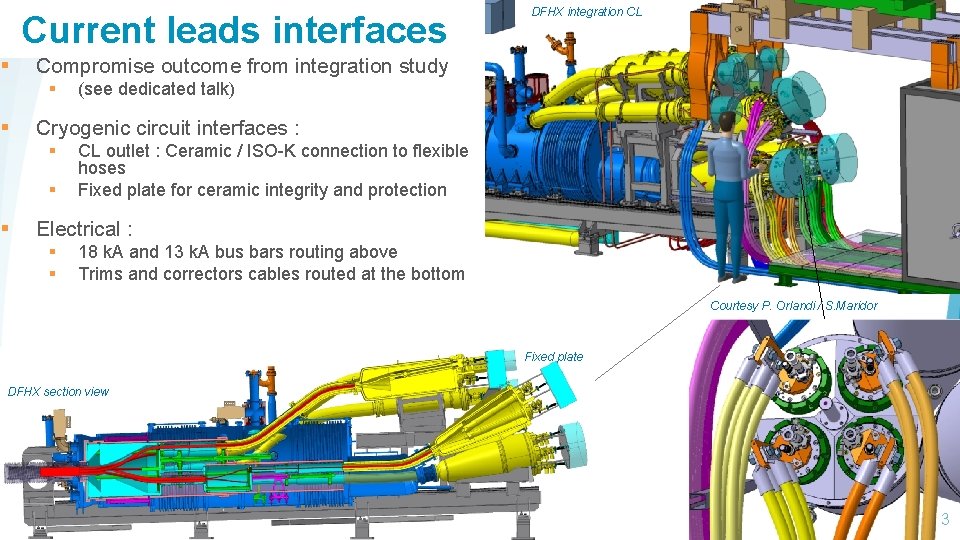
Current leads interfaces § Compromise outcome from integration study § § (see dedicated talk) Cryogenic circuit interfaces : § § § DFHX integration CL CL outlet : Ceramic / ISO-K connection to flexible hoses Fixed plate for ceramic integrity and protection Electrical : § § 18 k. A and 13 k. A bus bars routing above Trims and correctors cables routed at the bottom Courtesy P. Orlandi / S. Maridor Fixed plate DFHX section view 3
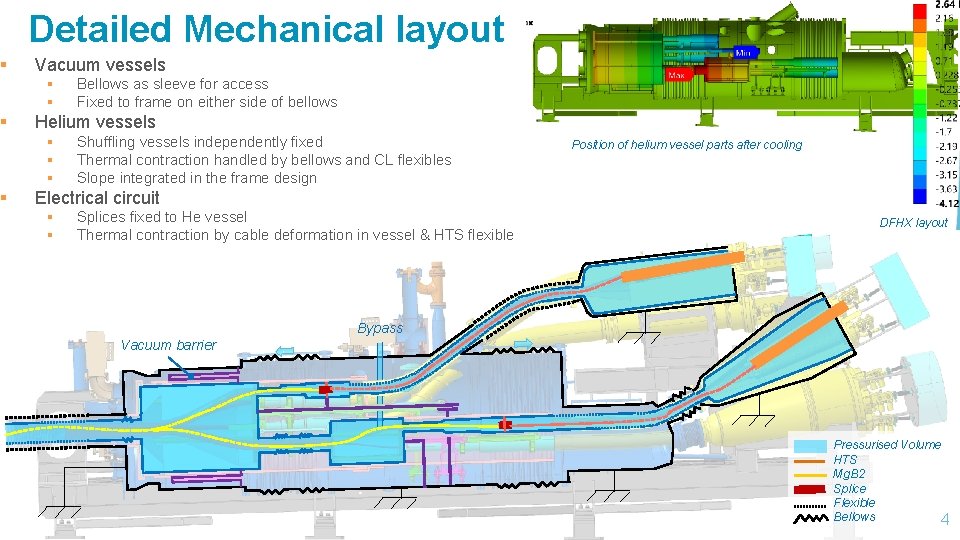
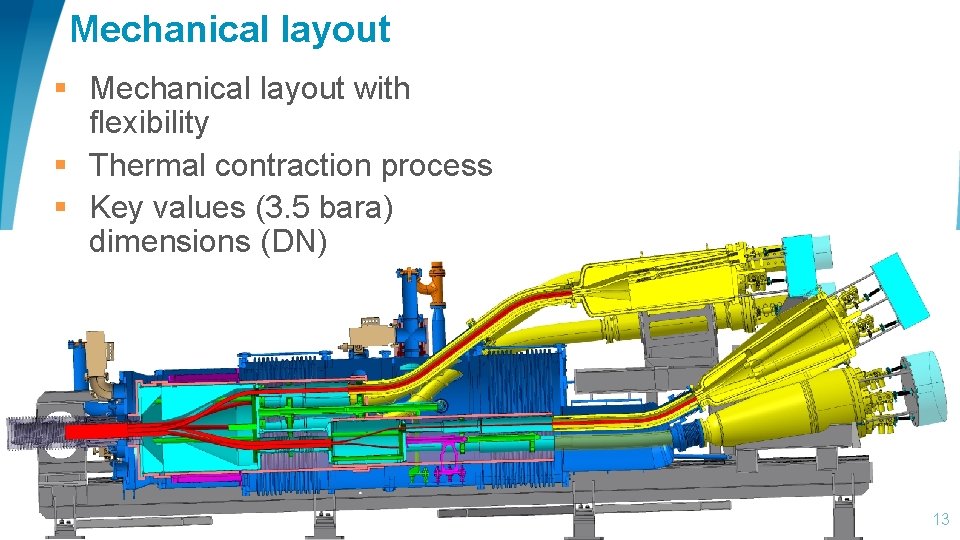
§ § § Detailed Mechanical layout Vacuum vessels § § Bellows as sleeve for access Fixed to frame on either side of bellows Helium vessels § § § Shuffling vessels independently fixed Thermal contraction handled by bellows and CL flexibles Slope integrated in the frame design Position of helium vessel parts after cooling Electrical circuit § § Splices fixed to He vessel Thermal contraction by cable deformation in vessel & HTS flexible DFHX layout Bypass Vacuum barrier Pressurised Volume HTS Mg. B 2 Splice Flexible Bellows 4
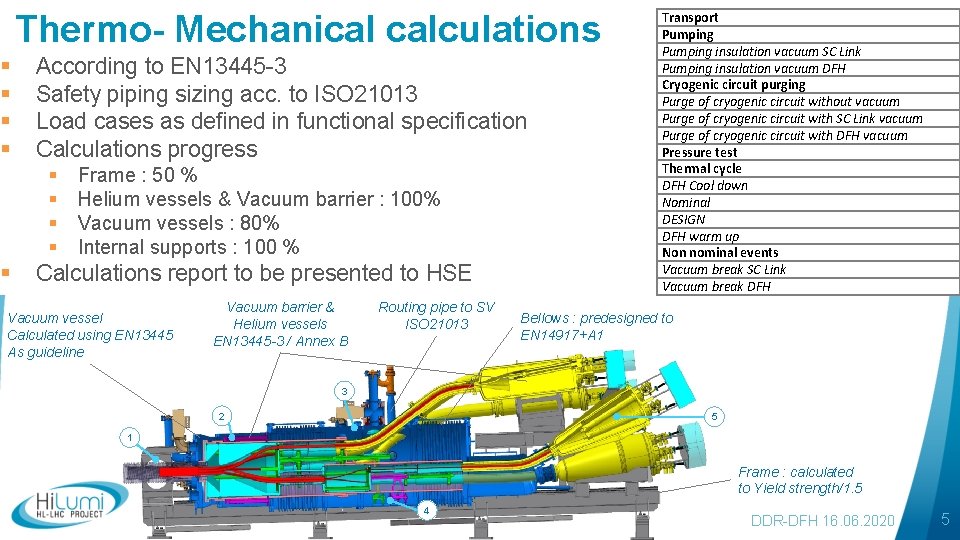
Thermo- Mechanical calculations § § According to EN 13445 -3 Safety piping sizing acc. to ISO 21013 Load cases as defined in functional specification Calculations progress § § § Frame : 50 % Helium vessels & Vacuum barrier : 100% Vacuum vessels : 80% Internal supports : 100 % Calculations report to be presented to HSE Vacuum vessel Calculated using EN 13445 As guideline Vacuum barrier & Helium vessels EN 13445 -3 / Annex B Routing pipe to SV ISO 21013 Transport Pumping insulation vacuum SC Link Pumping insulation vacuum DFH Cryogenic circuit purging Purge of cryogenic circuit without vacuum Purge of cryogenic circuit with SC Link vacuum Purge of cryogenic circuit with DFH vacuum Pressure test Thermal cycle DFH Cool down Nominal DESIGN DFH warm up Non nominal events Vacuum break SC Link Vacuum break DFH Bellows : predesigned to EN 14917+A 1 3 2 5 1 Frame : calculated to Yield strength/1. 5 4 DDR-DFH 16. 06. 2020 5
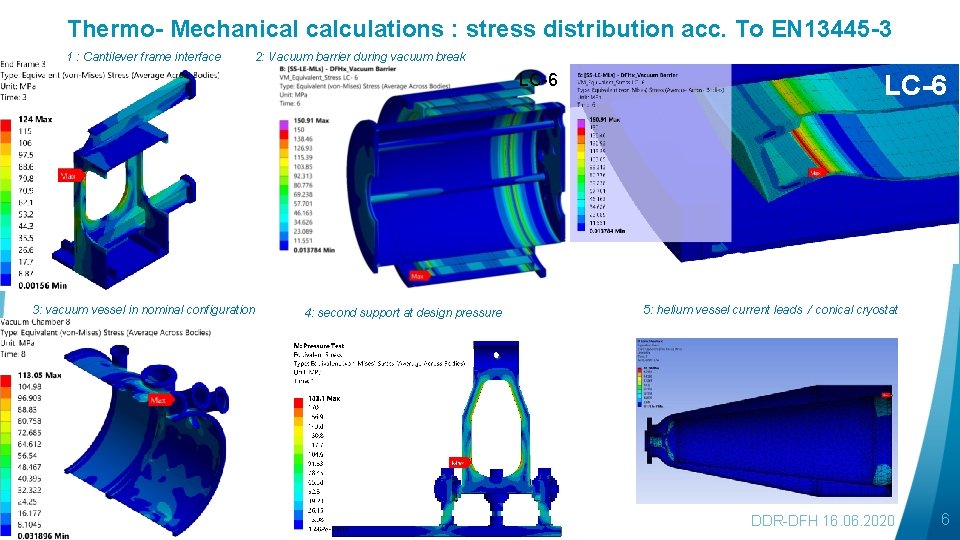
Thermo- Mechanical calculations : stress distribution acc. To EN 13445 -3 1 : Cantilever frame interface 2: Vacuum barrier during vacuum break LC-6 3: vacuum vessel in nominal configuration 4: second support at design pressure LC-6 5: helium vessel current leads / conical cryostat DDR-DFH 16. 06. 2020 6
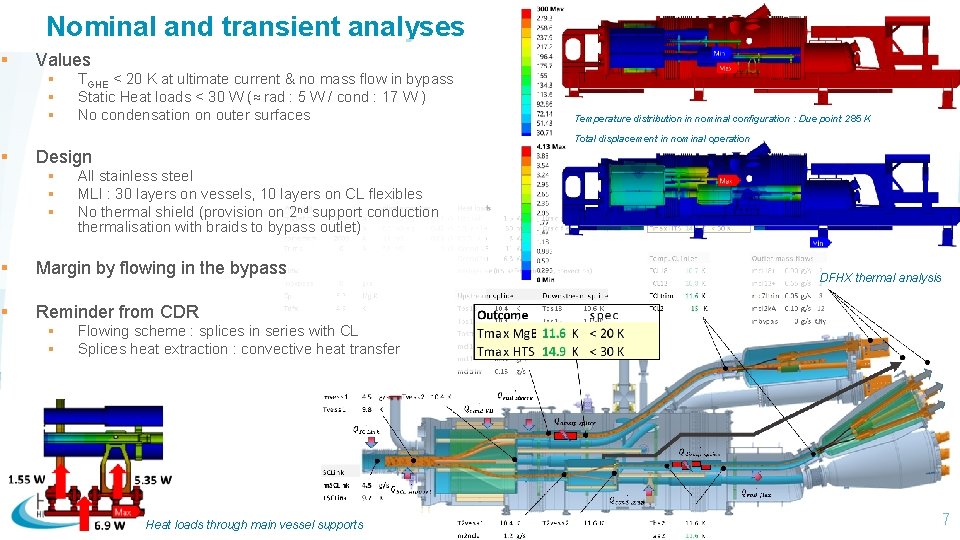
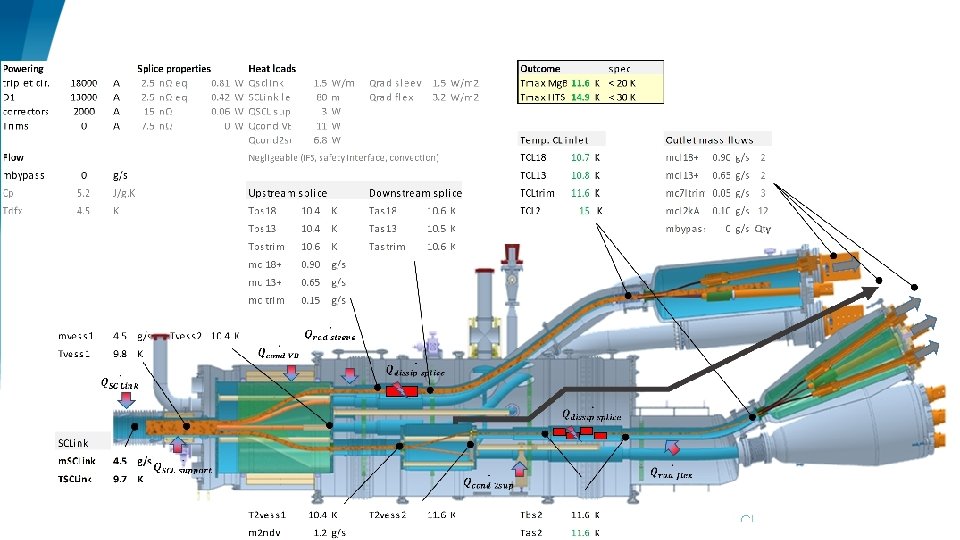
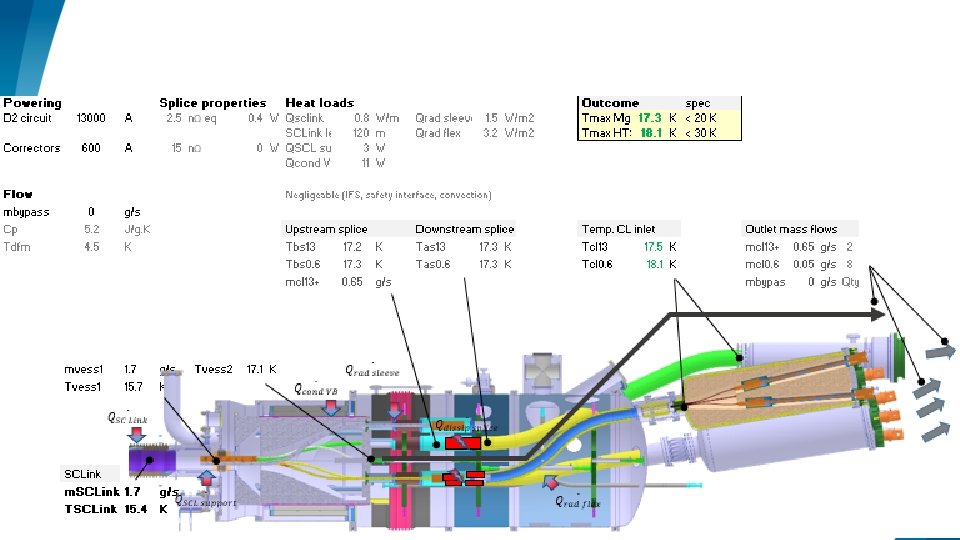
Nominal and transient analyses § Values § § § TGHE < 20 K at ultimate current & no mass flow in bypass Static Heat loads < 30 W (≈ rad : 5 W / cond : 17 W ) No condensation on outer surfaces Temperature distribution in nominal configuration : Due point 285 K Total displacement in nominal operation § Design § § § All stainless steel MLI : 30 layers on vessels, 10 layers on CL flexibles No thermal shield (provision on 2 nd support conduction thermalisation with braids to bypass outlet) § Margin by flowing in the bypass § Reminder from CDR § § DFHX thermal analysis Flowing scheme : splices in series with CL Splices heat extraction : convective heat transfer Heat loads through main vessel supports 7
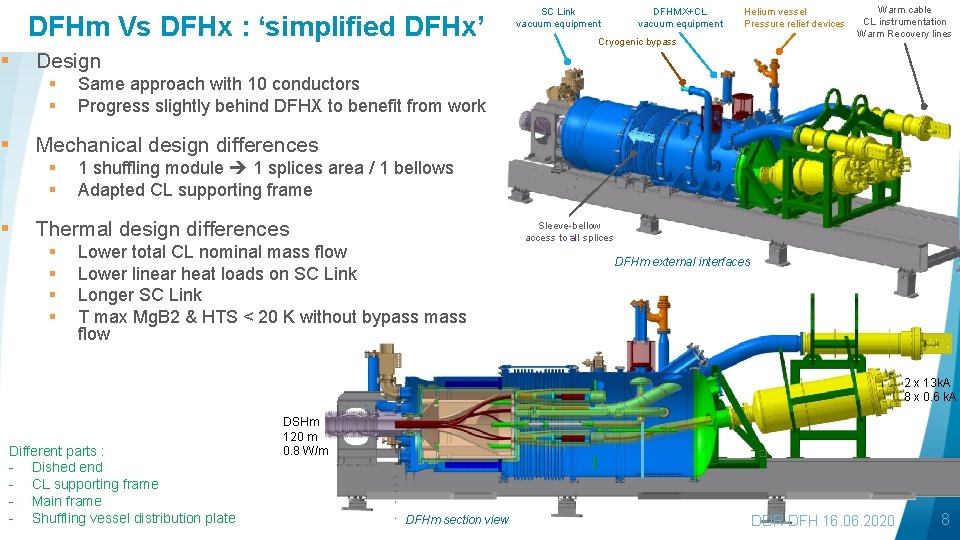
DFHm Vs DFHx : ‘simplified DFHx’ § Helium vessel Pressure relief devices Cryogenic bypass Warm cable CL instrumentation Warm Recovery lines Same approach with 10 conductors Progress slightly behind DFHX to benefit from work Mechanical design differences § § § DFHMX+CL vacuum equipment Design § § § SC Link vacuum equipment 1 shuffling module 1 splices area / 1 bellows Adapted CL supporting frame Thermal design differences § § Lower total CL nominal mass flow Lower linear heat loads on SC Link Longer SC Link T max Mg. B 2 & HTS < 20 K without bypass mass flow Sleeve-bellow access to all splices DFHm external interfaces 2 x 13 k. A 8 x 0. 6 k. A Different parts : - Dished end - CL supporting frame - Main frame - Shuffling vessel distribution plate DSHm 120 m 0. 8 W/m DFHm section view DDR-DFH 16. 06. 2020 8
Observations § Thermo-mechanical detailed design developed to specifications and applicable standards § Drawings production in progress § Thermo-mechanical calculations and report being finalised § Interfaces defined (some to be validated with DEMO 2) DDR-DFH 16. 06. 2020 9
Spare slides DFX - CPS review 3 July 2017 10
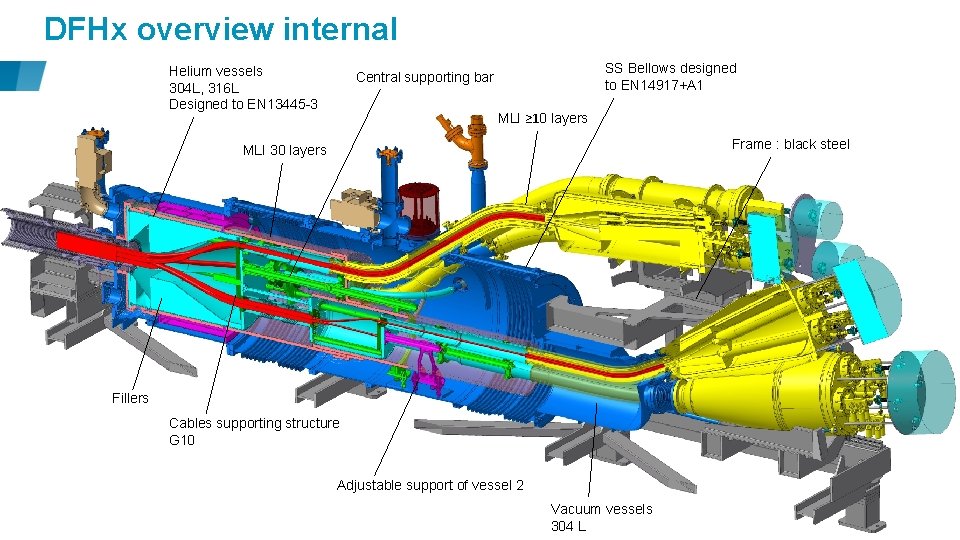
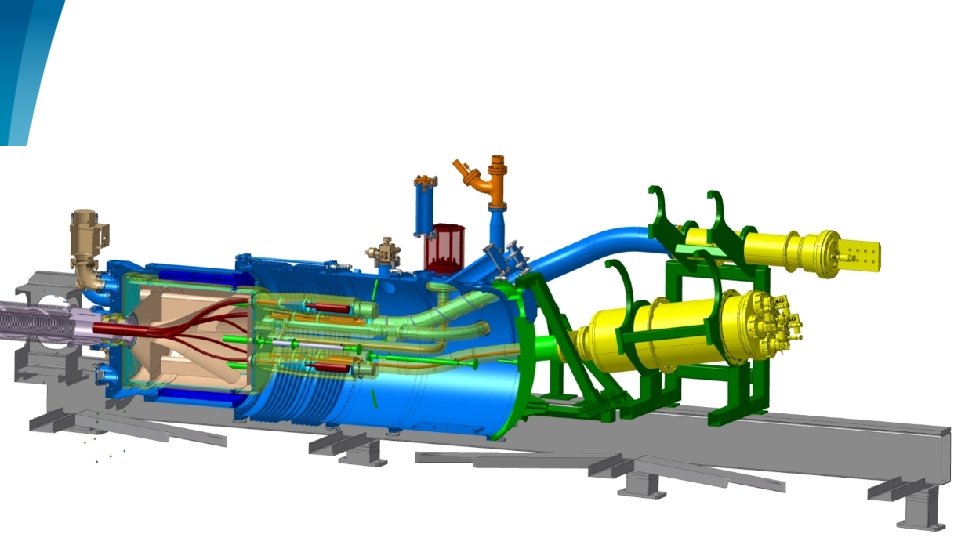
DFHx overview internal Helium vessels 304 L, 316 L Designed to EN 13445 -3 SS Bellows designed to EN 14917+A 1 Central supporting bar MLI ≥ 10 layers Frame : black steel MLI 30 layers Fillers Cables supporting structure G 10 Adjustable support of vessel 2 Vacuum vessels 304 L
DFX - CPS review 3 July 2017 12
Mechanical layout § Mechanical layout with flexibility § Thermal contraction process § Key values (3. 5 bara) dimensions (DN) 13
DFX - CPS review 3 July 2017 14
DFX - CPS review 3 July 2017 15
DFX - CPS review 3 July 2017 16
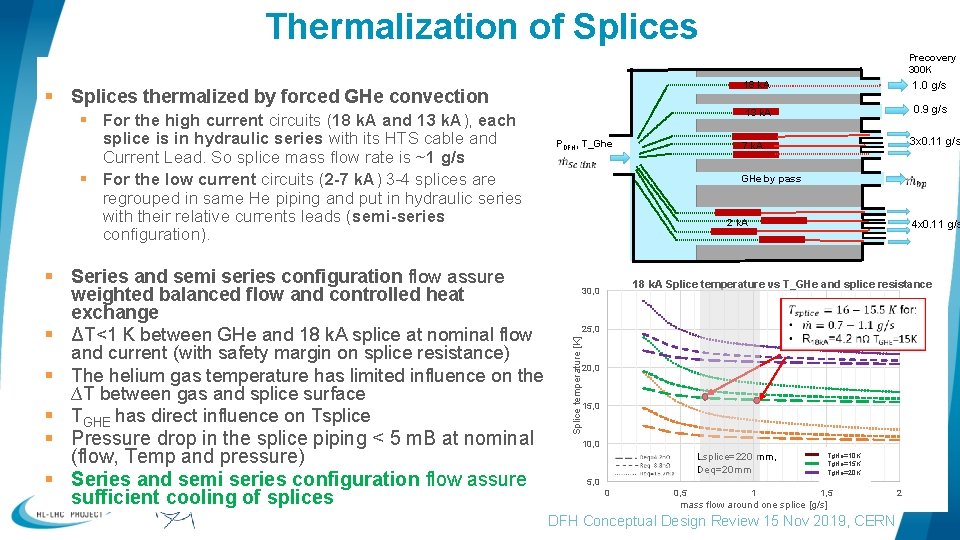
Thermalization of Splices Precovery 300 K § Splices thermalized by forced GHe convection § Series and semi series configuration flow assure weighted balanced flow and controlled heat exchange § ΔT<1 K between GHe and 18 k. A splice at nominal flow and current (with safety margin on splice resistance) § The helium gas temperature has limited influence on the ∆T between gas and splice surface § TGHE has direct influence on Tsplice § Pressure drop in the splice piping < 5 m. B at nominal (flow, Temp and pressure) § Series and semi series configuration flow assure sufficient cooling of splices PDFH, T_Ghe 1. 0 g/s 13 k. A 0. 9 g/s 3 x 0. 11 g/s 7 k. A GHe by pass 2 k. A 4 x 0. 11 g/s 18 k. A Splice temperature vs T_GHe and splice resistance 30, 0 25, 0 Splice temperature [K] § For the high current circuits (18 k. A and 13 k. A), each splice is in hydraulic series with its HTS cable and Current Lead. So splice mass flow rate is ~1 g/s § For the low current circuits (2 -7 k. A) 3 -4 splices are regrouped in same He piping and put in hydraulic series with their relative currents leads (semi-series configuration). 18 k. A 20, 0 15, 0 10, 0 Lsplice=220 mm, Deq=20 mm Tg. He=10 K Tg. He=15 K Tg. He=20 K 5, 0 0 0, 5 1 1, 5 mass flow around one splice [g/s] DFH Conceptual Design Review 15 Nov 2019, CERN 2