
DFD Rules and Guidelines Yong Choi BPA CSUB
DFD Rules and Guidelines Yong Choi BPA CSUB
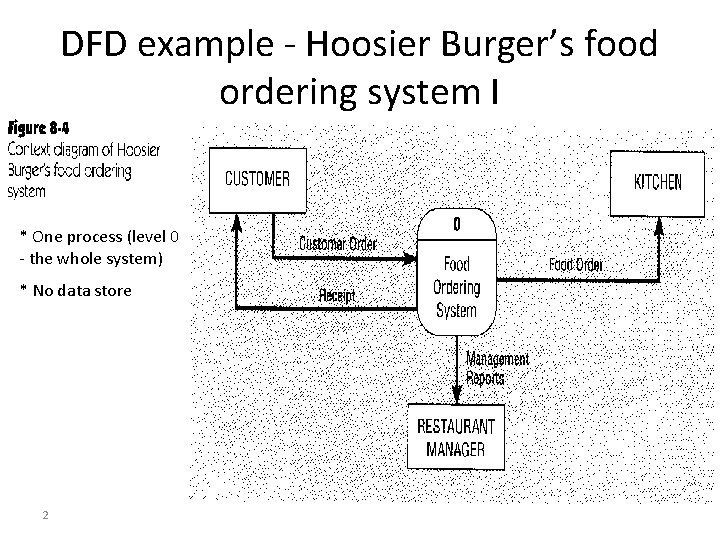
DFD example - Hoosier Burger’s food ordering system I * One process (level 0 - the whole system) * No data store 2
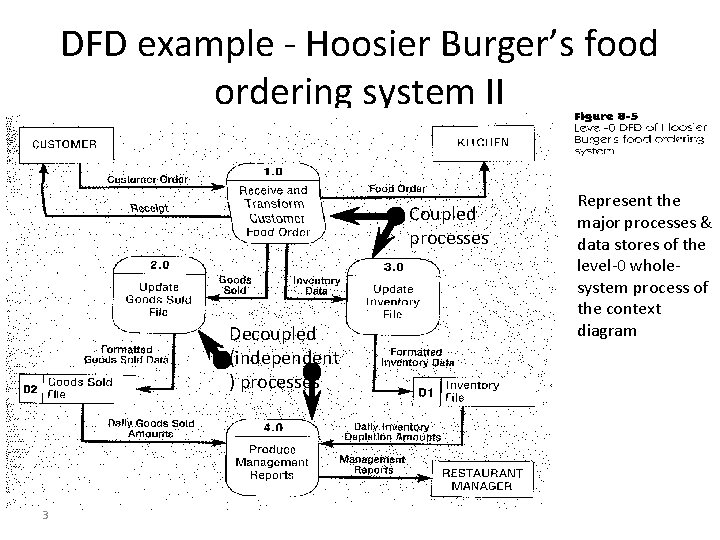
DFD example - Hoosier Burger’s food ordering system II Coupled processes Decoupled (independent ) processes 3 Represent the major processes & data stores of the level-0 wholesystem process of the context diagram
DFD guidelines & rules I • Starting with context diagram, DFDs are refined and decomposed from level to level, with more detail at each lower level • Process’s input & output are different • Unique descriptive names to all objects – But the same objects (and names) may appear at various levels – To minimize clutter a data store (or even dataflow) may be repeated even on the same diagram – Process names usually start with a verb 4
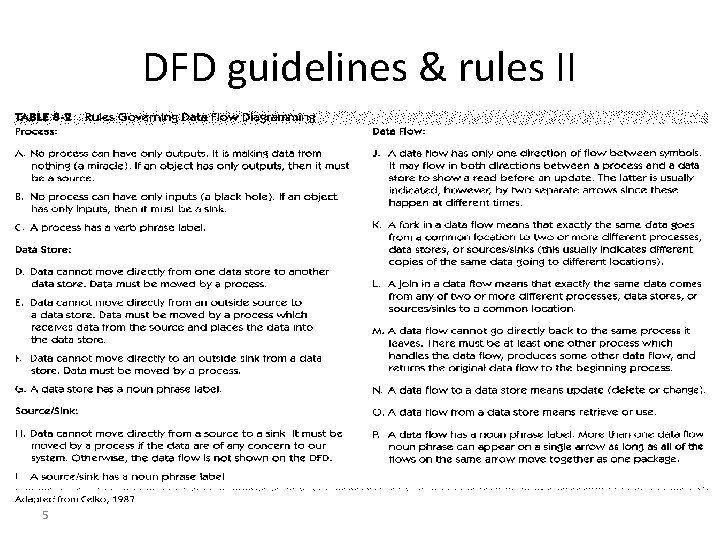
DFD guidelines & rules II 5
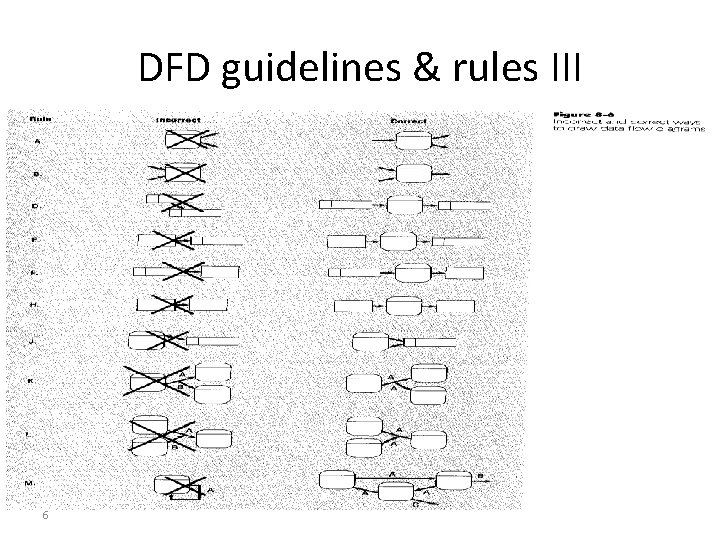
DFD guidelines & rules III 6
DFD (functional) decomposition • An iterative hierarchical process of refining the details of a system, creating a set of charts at lower and lower levels, in which a process at a certain level is explained on the next level in greater detail • Primitive DFD: the lowest level DFD, where no process can (or it is useful to) be broken any further 7
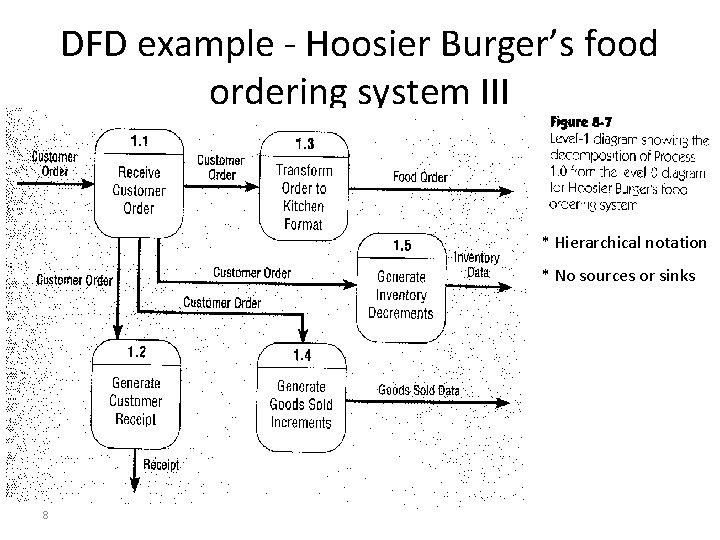
DFD example - Hoosier Burger’s food ordering system III * Hierarchical notation * No sources or sinks 8
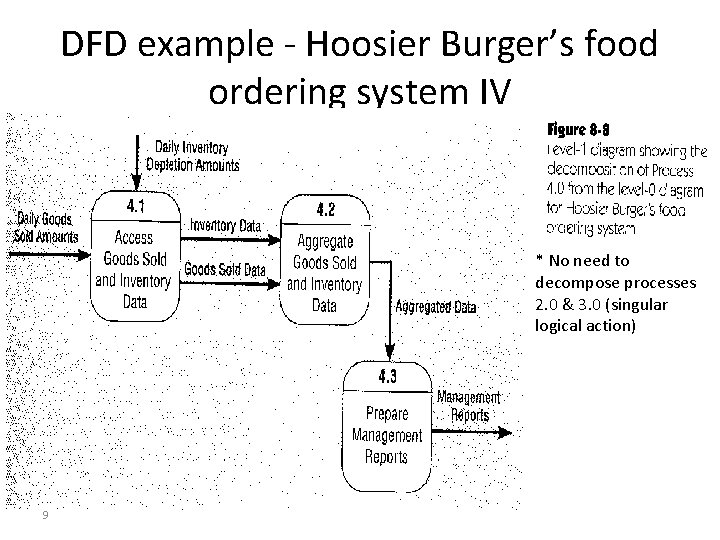
DFD example - Hoosier Burger’s food ordering system IV * No need to decompose processes 2. 0 & 3. 0 (singular logical action) 9
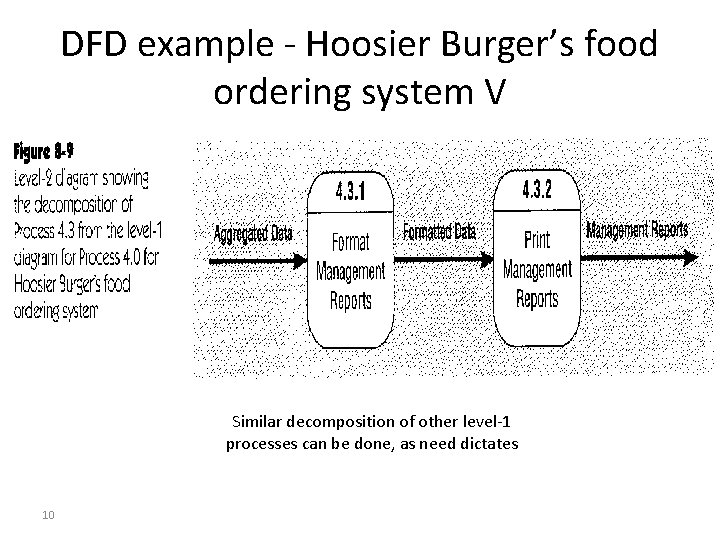
DFD example - Hoosier Burger’s food ordering system V Similar decomposition of other level-1 processes can be done, as need dictates 10
DFD balancing I • Conservation of inputs and outputs when a process is decomposed – A decomposed process must have the same inputs and outputs as the non-decomposed process from which it was derived 11
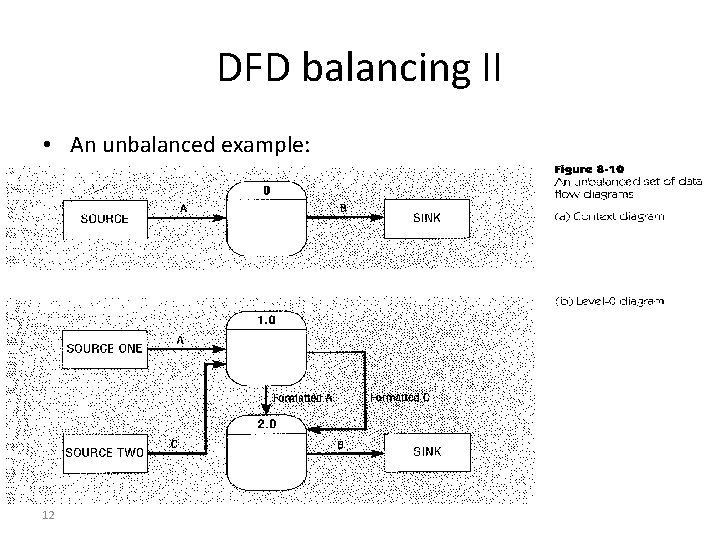
DFD balancing II • An unbalanced example: 12
DFD balancing III • But a composite dataflow may be split. . . – e. g. , “payments and coupons” leading into process 1. 0 may be split into: • “payments” leading into 1. 1 • “coupons” leading into 1. 2 – But all data must be conserved between levels 13
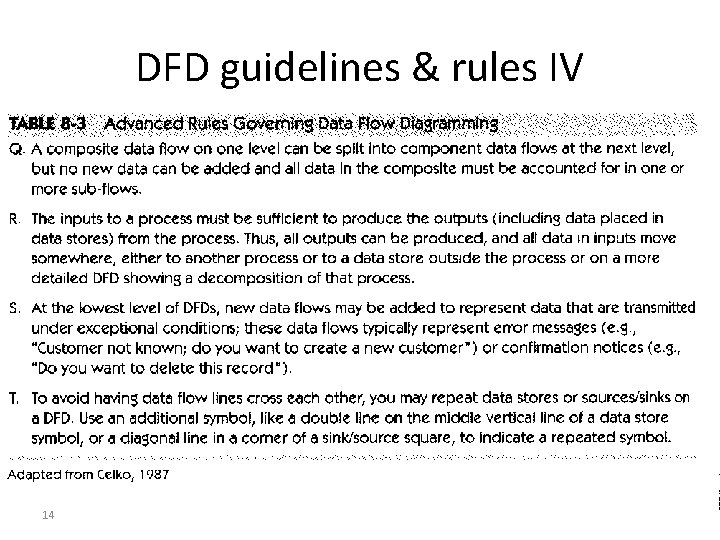
DFD guidelines & rules IV 14
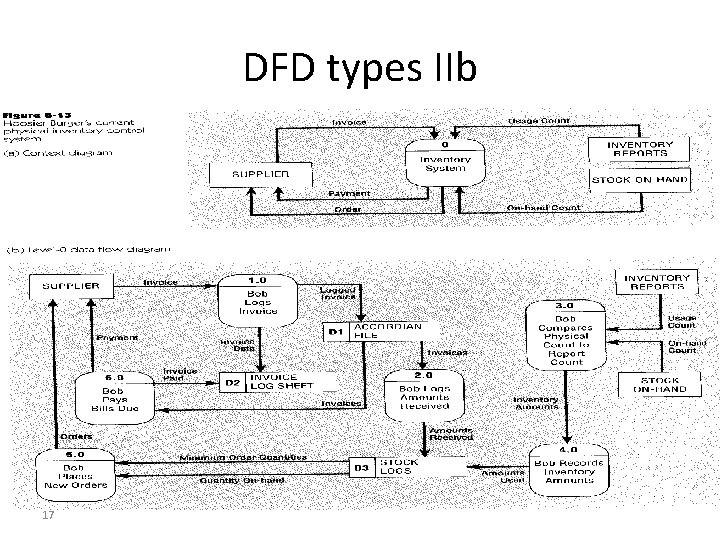
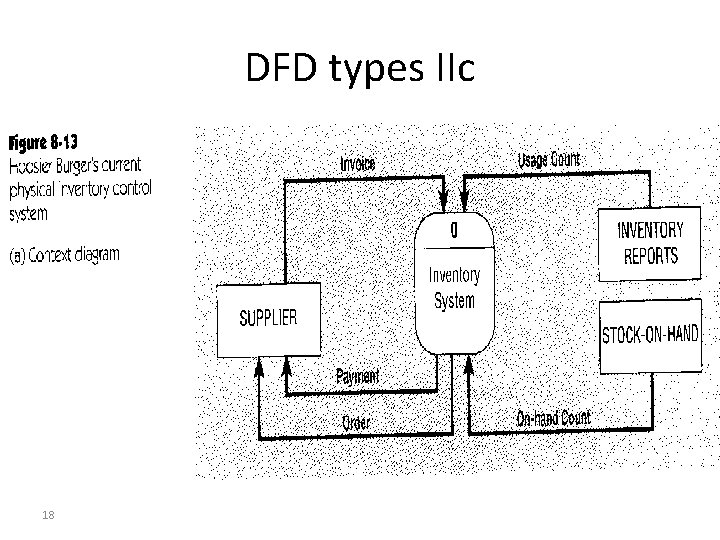
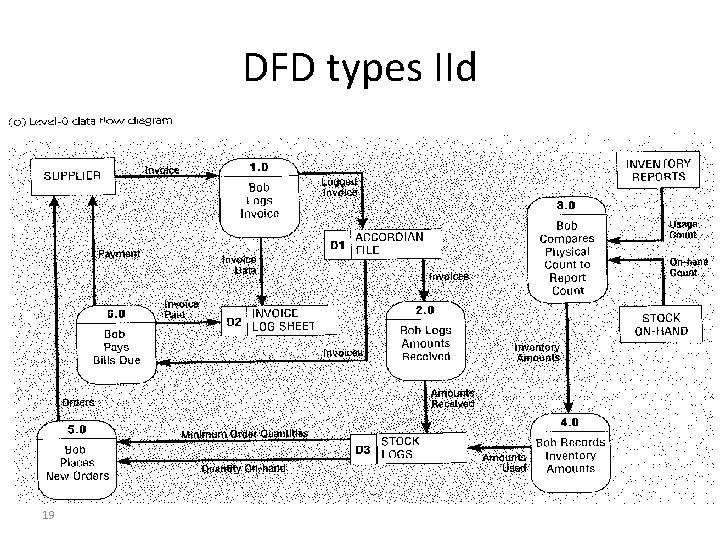
DFD types I • Current physical DFD – Process labels include location and technology • Names of people • Names of computer and other physical systems – Same with data stores and dataflows 15
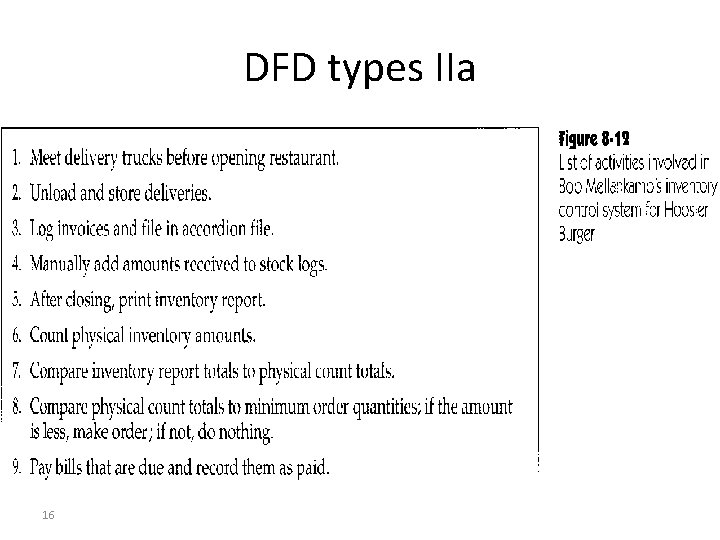
DFD types IIa 16
DFD types IIb 17
DFD types IIc 18
DFD types IId 19
DFD types III • Current logical DFD – Physical characteristics are removed • Names of people, departments, and other locations • Names of technological physical devices & facilities 20
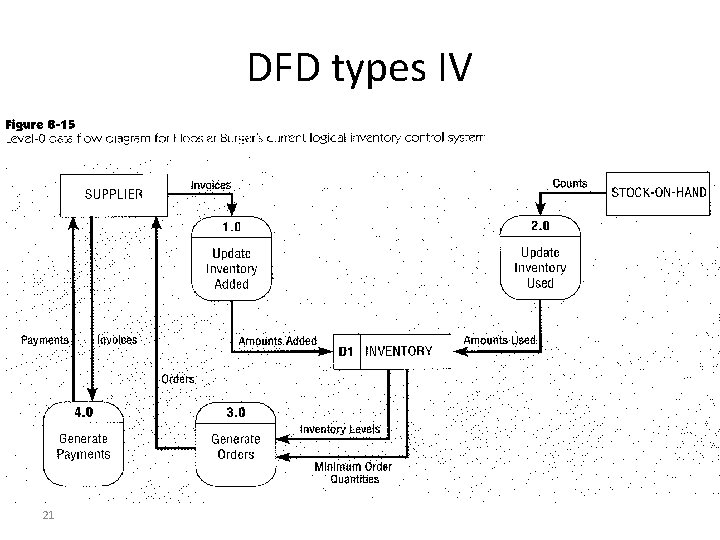
DFD types IV 21
DFD types V • New logical DFD – – – Derived from current logical DFD Removed entities Expanded and added entities Flows and processes reorganized Order modified • May remain identical to current logical DFD 22
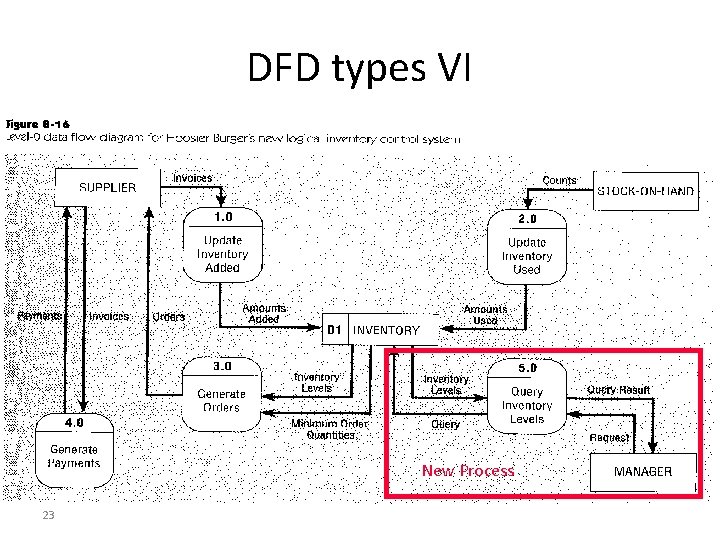
DFD types VI New Process 23
DFD types VII • New physical DFD – – 24 The physical implementation of the new logical DFD Names and locations added Technologies and devices identified Identification of automated procedures
DFD guidelines & rules V • Completeness: include and fully describe all necessary components of a system • Consistency: Assure that all information at one level is also contained on the next/former level • Iterative development process • Timing – Cannot be represented by DFD – Will be represented by state-transition diagram – Assume system operates indefinitely • Decide about the primitive (lowest level) diagrams 25
- Slides: 25