
DEW POINT HYGROMETER TYPE MEASURED IN Vapor Pressure
- Slides: 38
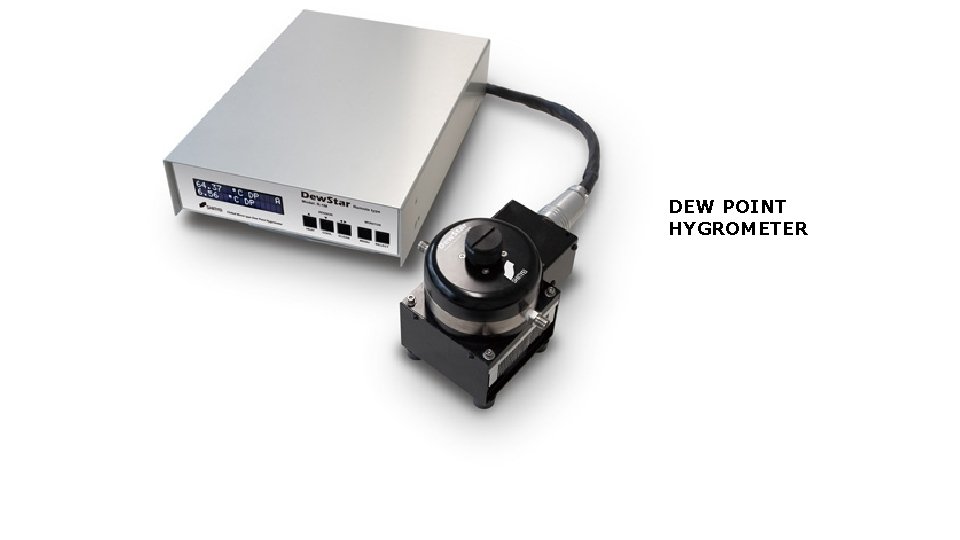
DEW POINT HYGROMETER
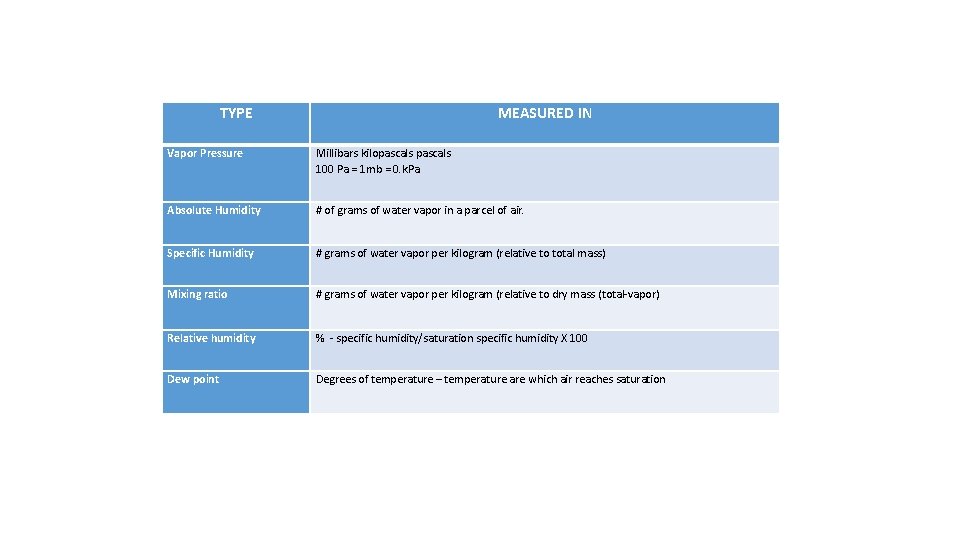
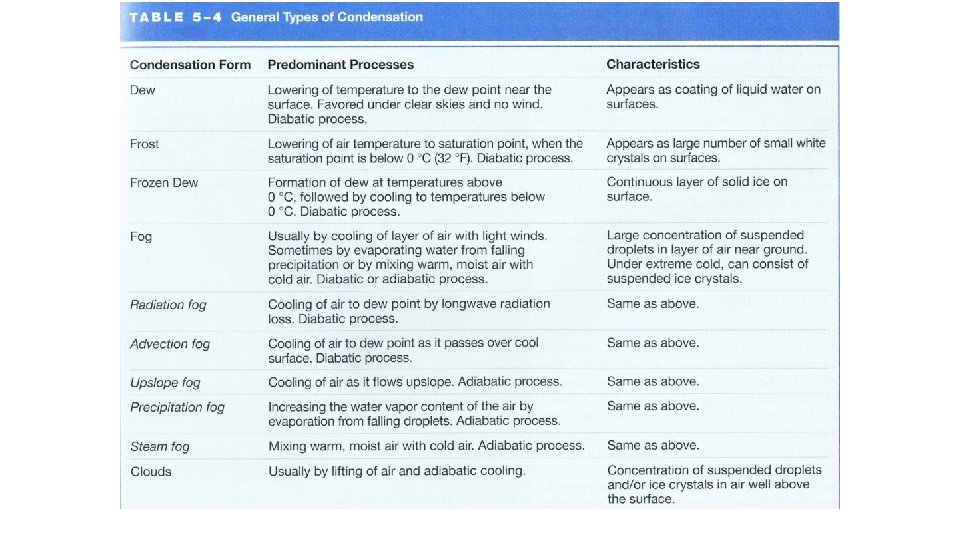
TYPE MEASURED IN Vapor Pressure Millibars kilopascals 100 Pa = 1 mb = 0. k. Pa Absolute Humidity # of grams of water vapor in a parcel of air. Specific Humidity # grams of water vapor per kilogram (relative to total mass) Mixing ratio # grams of water vapor per kilogram (relative to dry mass (total-vapor) Relative humidity % - specific humidity/saturation specific humidity X 100 Dew point Degrees of temperature – temperature are which air reaches saturation
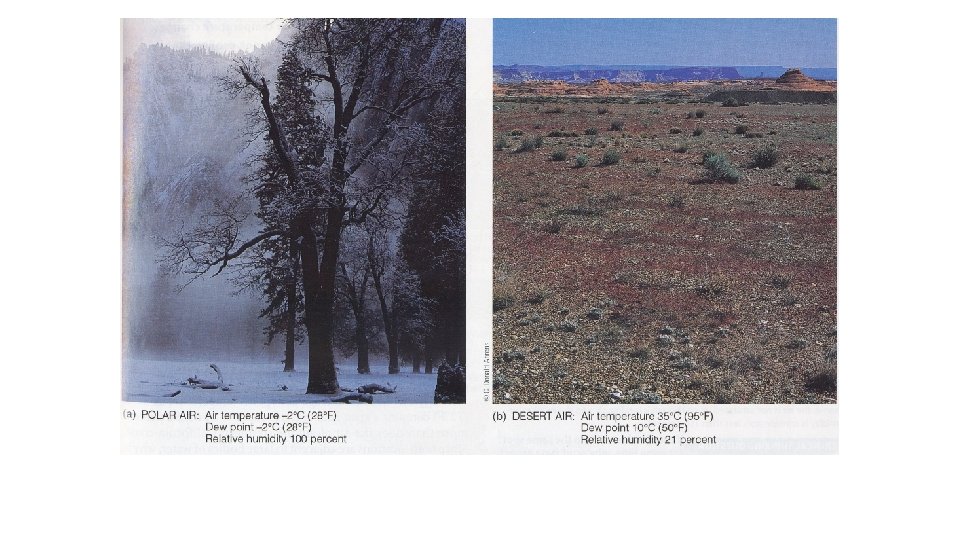
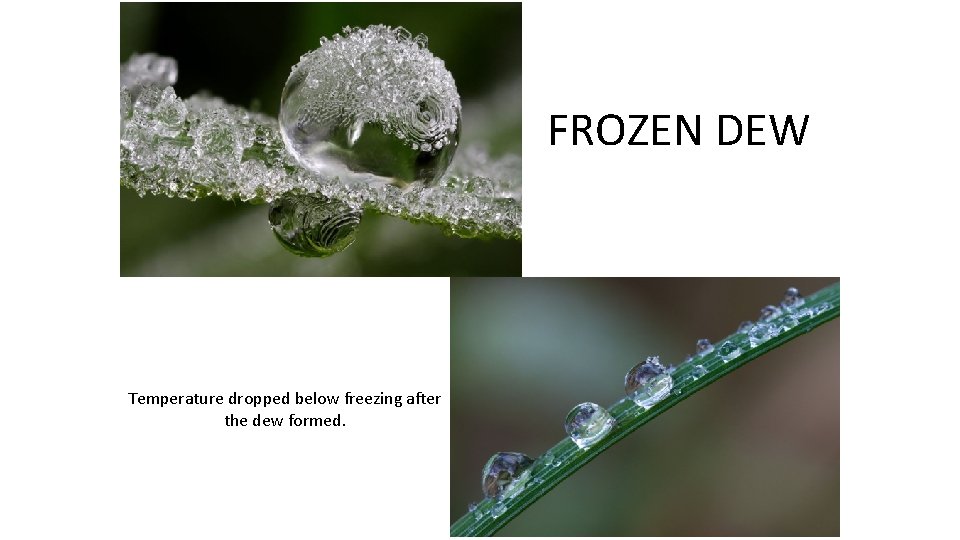
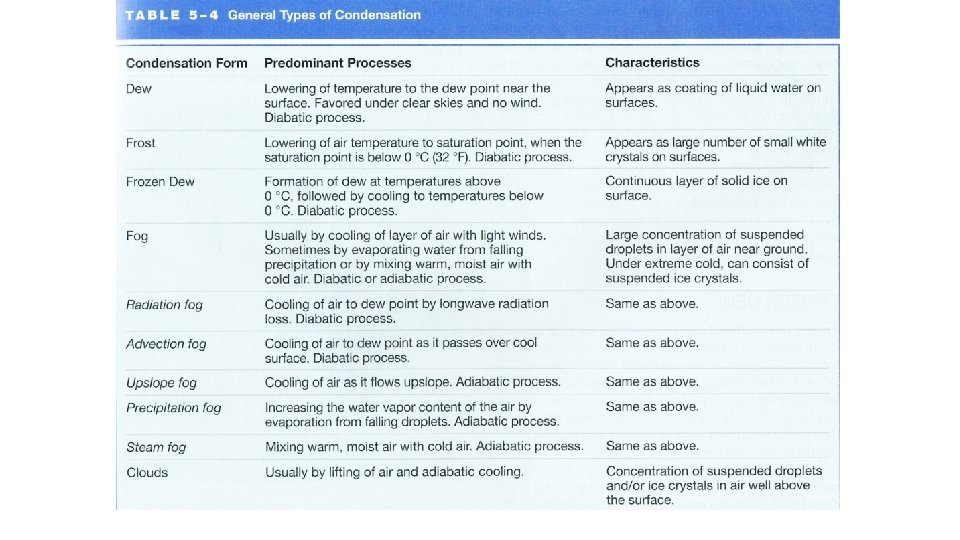
FROZEN DEW Temperature dropped below freezing after the dew formed.
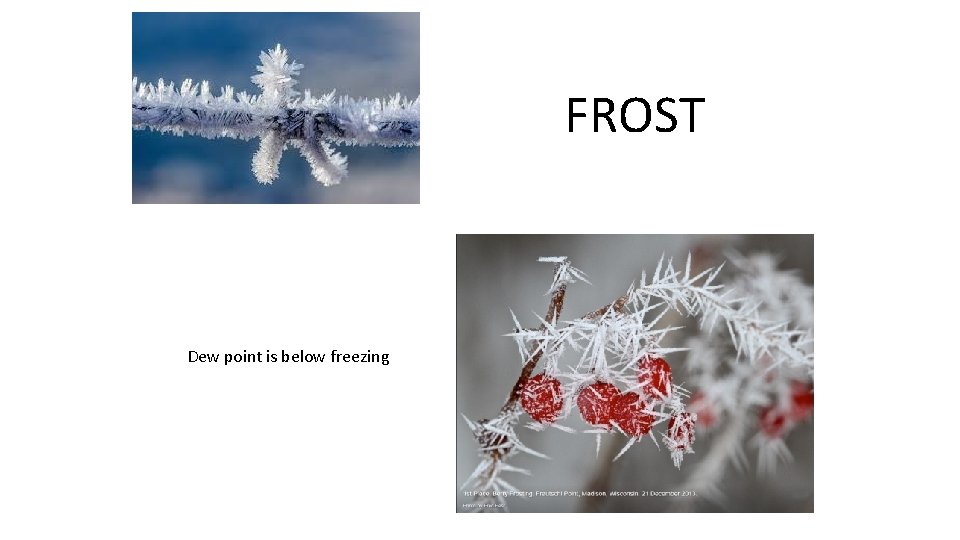
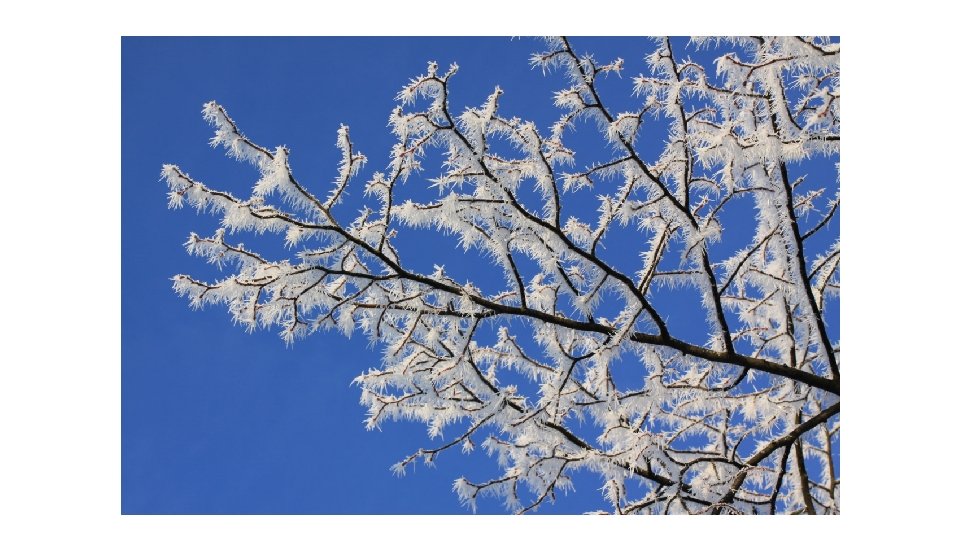
FROST Dew point is below freezing
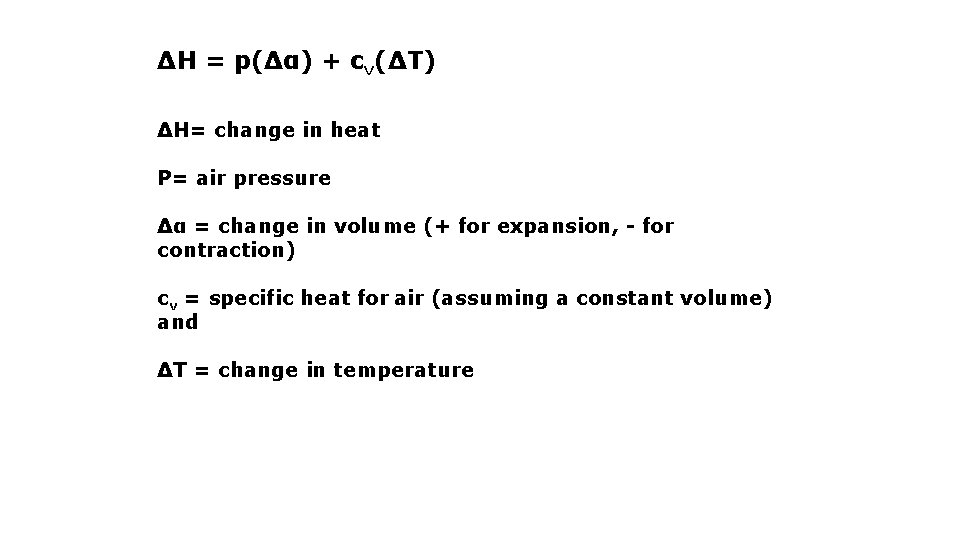
ΔH = p(Δα) + cv(ΔT) ΔH= change in heat P= air pressure Δα = change in volume (+ for expansion, - for contraction) cv = specific heat for air (assuming a constant volume) and ΔT = change in temperature
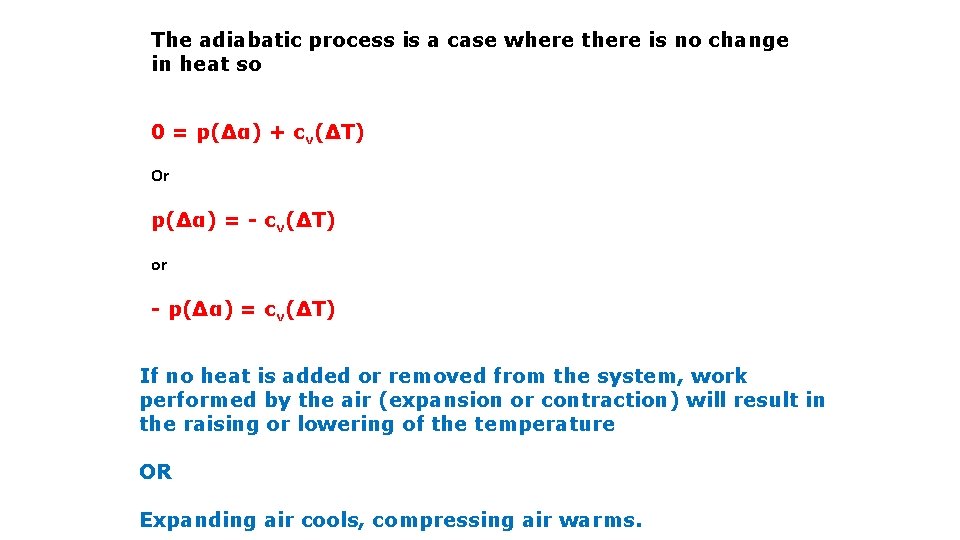
The adiabatic process is a case where there is no change in heat so 0 = p(Δα) + cv(ΔT) Or p(Δα) = - cv(ΔT) or - p(Δα) = cv(ΔT) If no heat is added or removed from the system, work performed by the air (expansion or contraction) will result in the raising or lowering of the temperature OR Expanding air cools, compressing air warms.
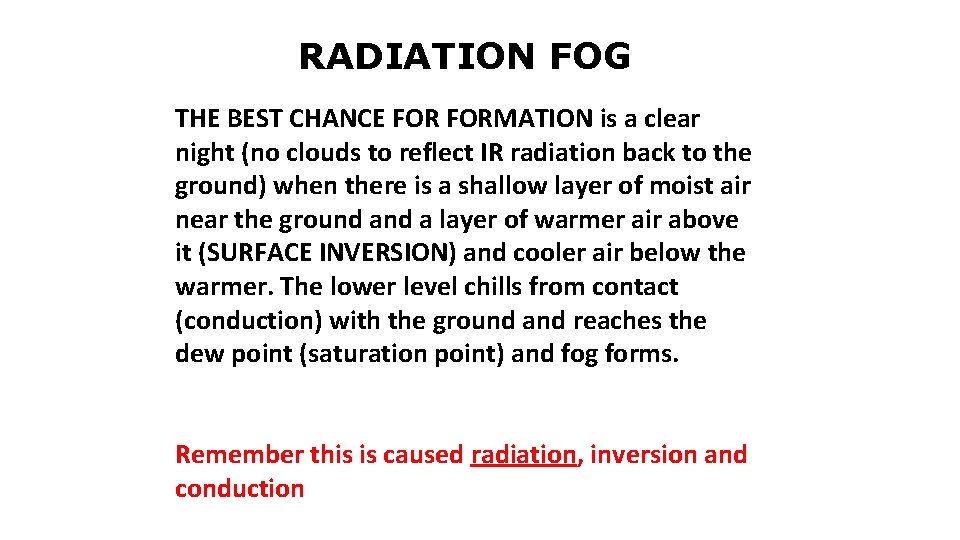
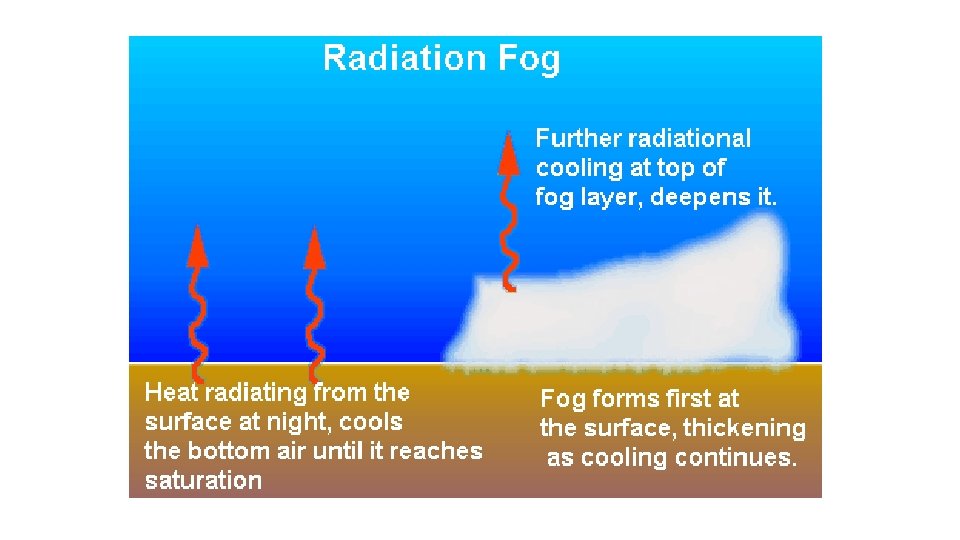
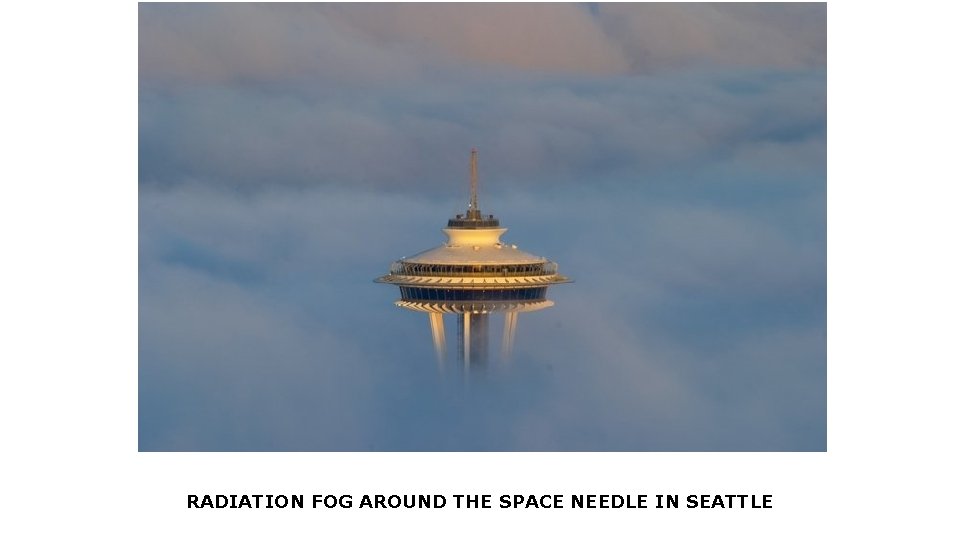
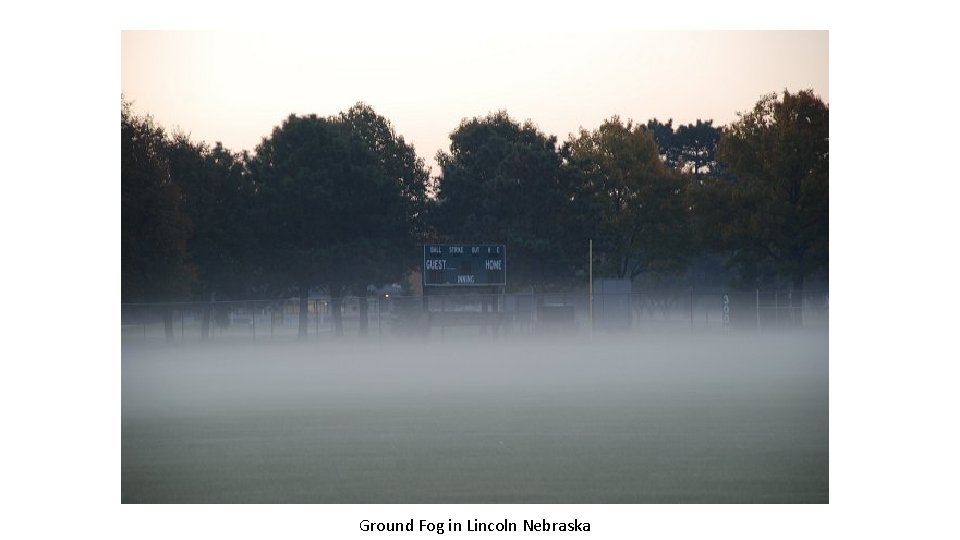
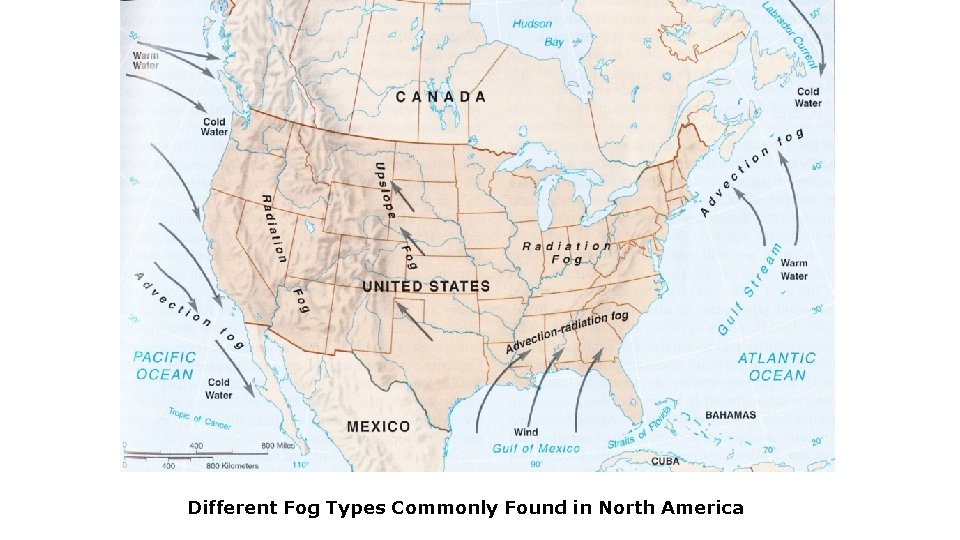
RADIATION FOG THE BEST CHANCE FORMATION is a clear night (no clouds to reflect IR radiation back to the ground) when there is a shallow layer of moist air near the ground a layer of warmer air above it (SURFACE INVERSION) and cooler air below the warmer. The lower level chills from contact (conduction) with the ground and reaches the dew point (saturation point) and fog forms. Remember this is caused radiation, inversion and conduction
From CAT PEOPLE (1942) Val Lewton and Jacques Tourneur
RADIATION FOG AROUND THE SPACE NEEDLE IN SEATTLE
Ground Fog in Lincoln Nebraska
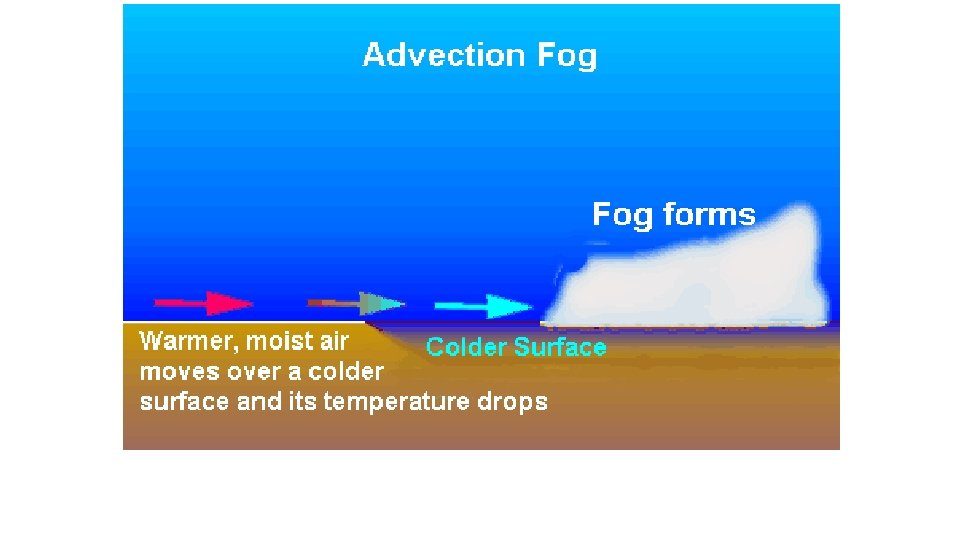
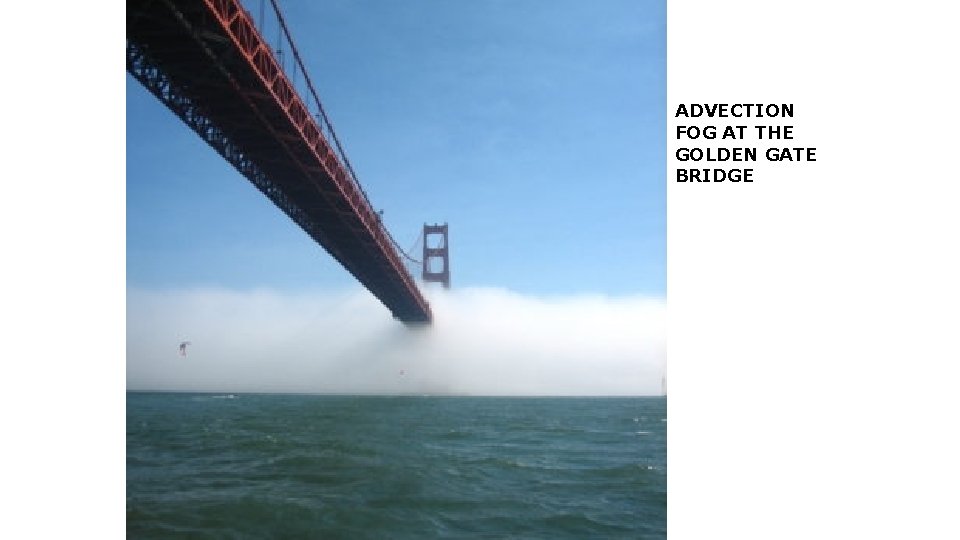
ADVECTION FOG This occurs when warm moist air moving over a cold surface. It can be cold land or water. If the surface is cold enough to bring the warm air to its dew point it will condense and produce fog. Remember advection has to do with horizontal movement.
ADVECTION FOG AT THE GOLDEN GATE BRIDGE
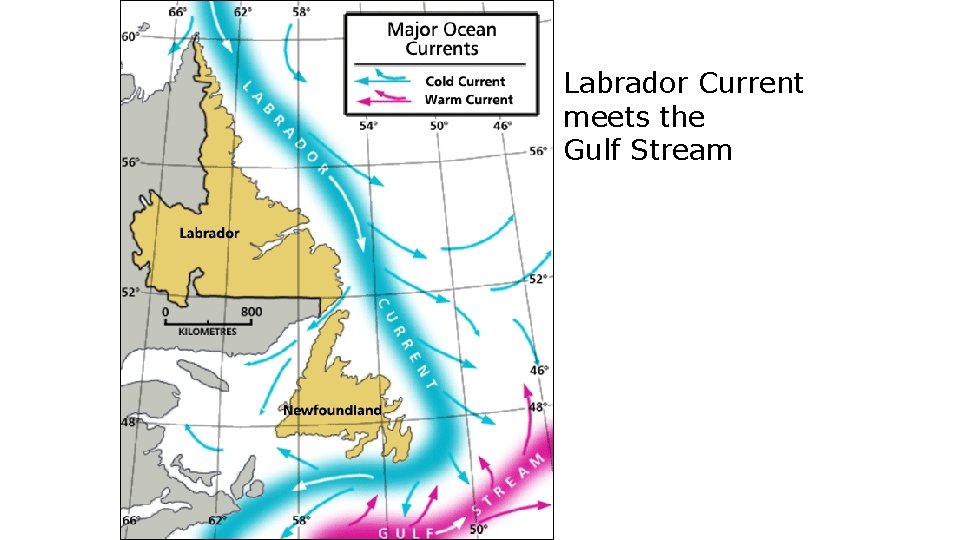
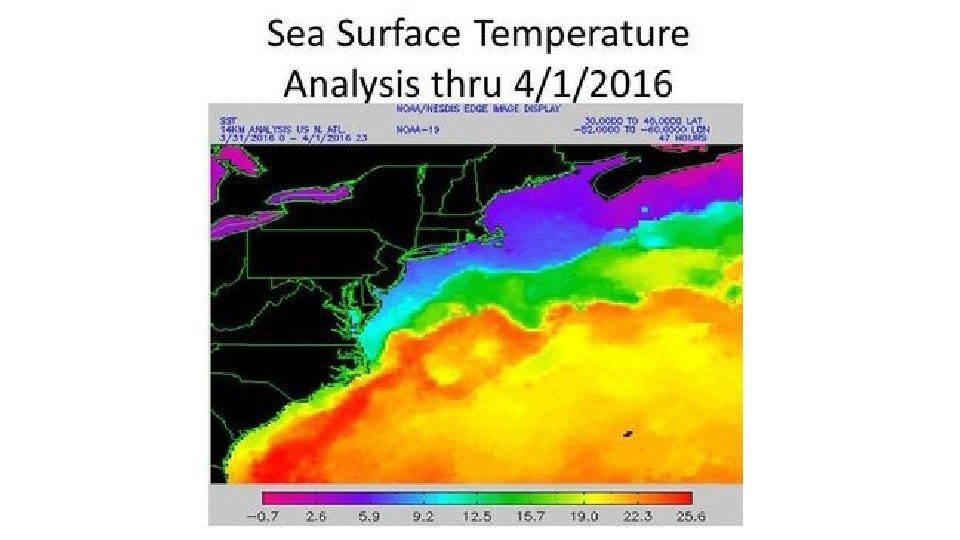
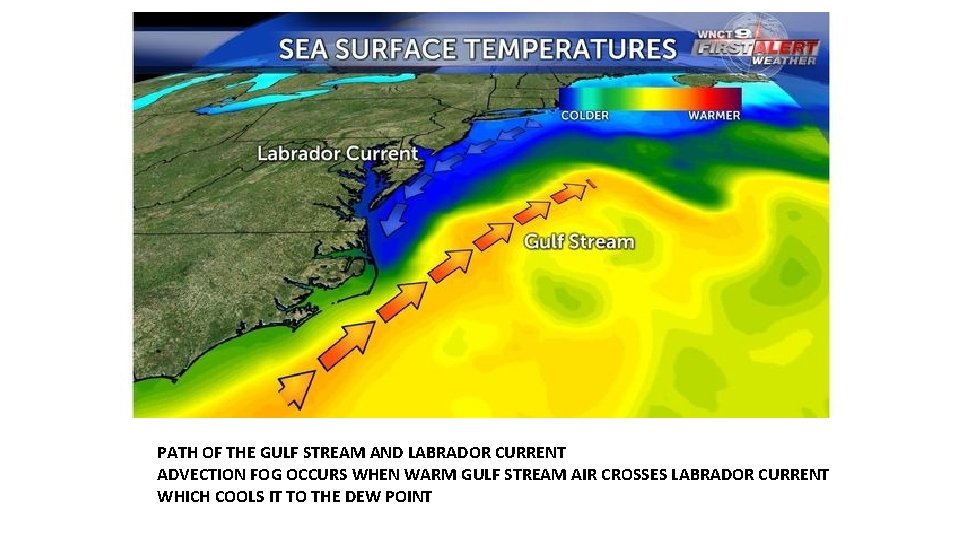
Labrador Current meets the Gulf Stream
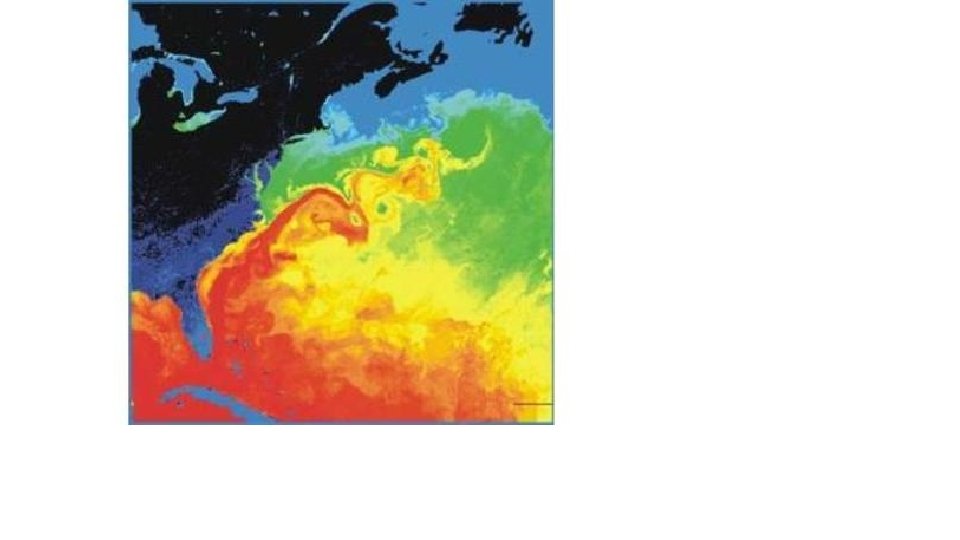
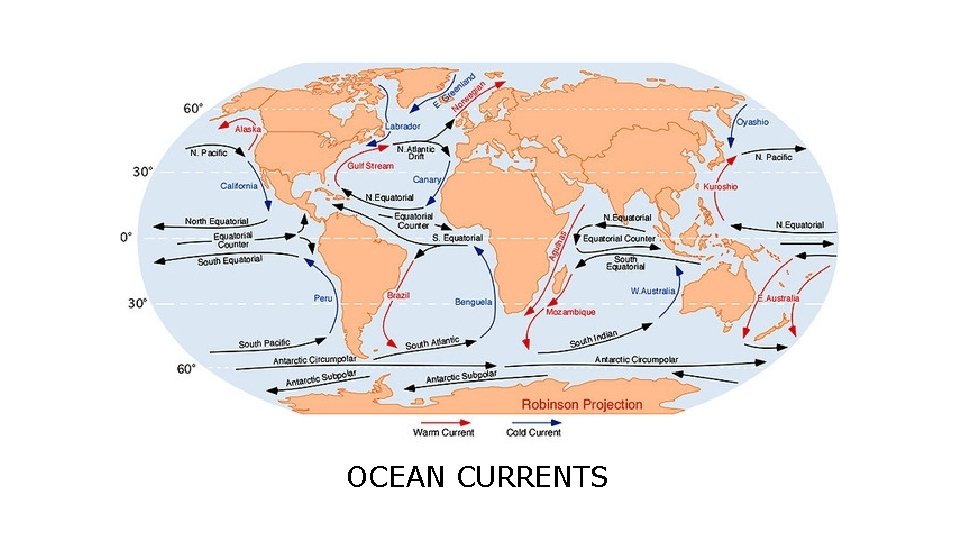
OCEAN CURRENTS
PATH OF THE GULF STREAM AND LABRADOR CURRENT ADVECTION FOG OCCURS WHEN WARM GULF STREAM AIR CROSSES LABRADOR CURRENT WHICH COOLS IT TO THE DEW POINT
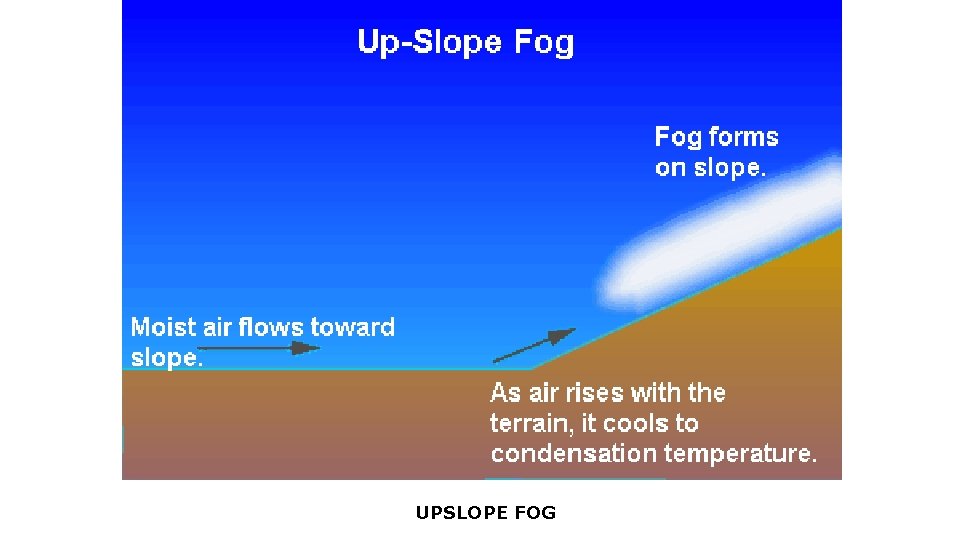
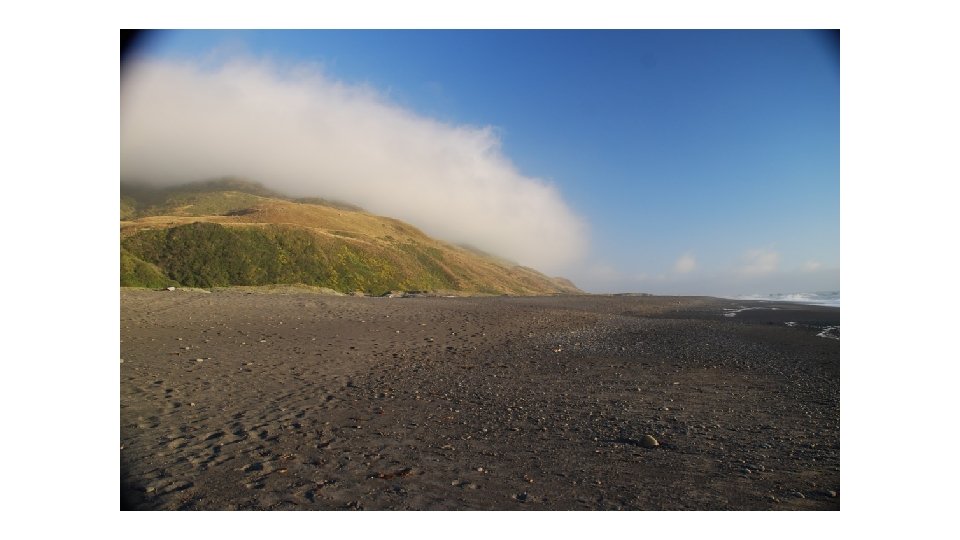
UPSLOPE FOG
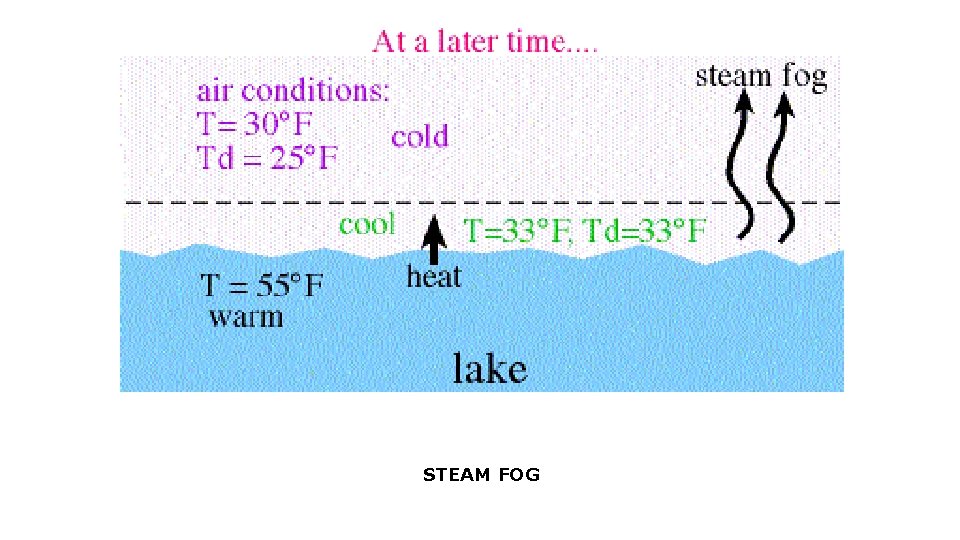
STEAM FOG
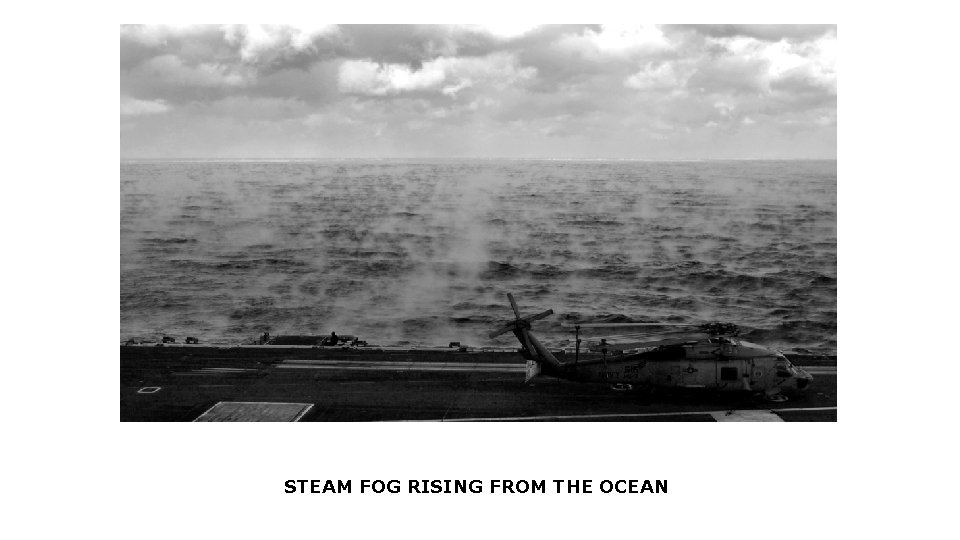
STEAM FOG RISING FROM THE OCEAN
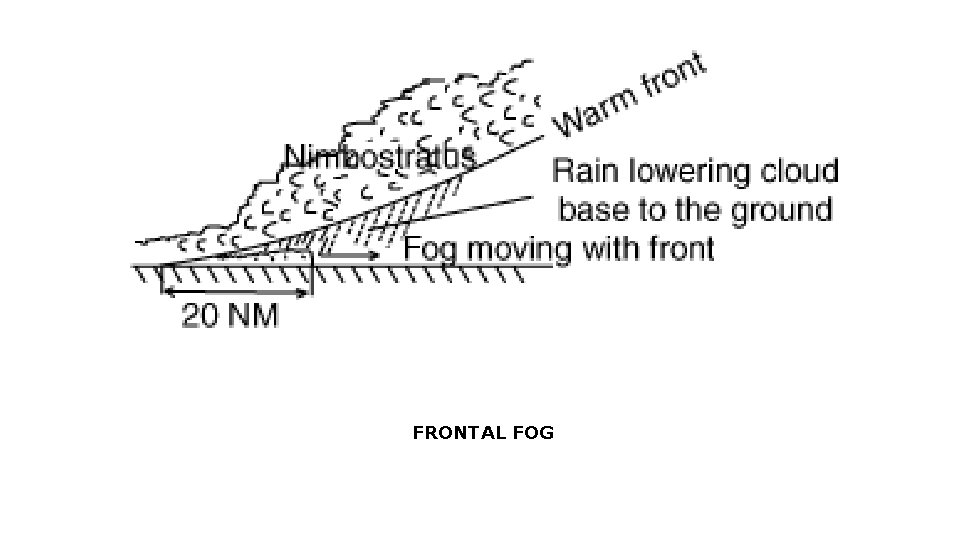
FRONTAL FOG
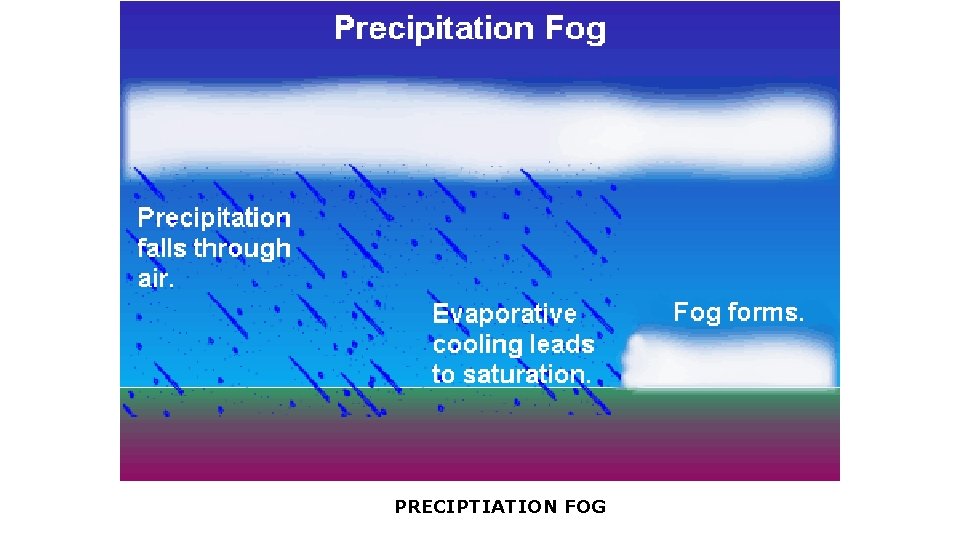
PRECIPTIATION FOG
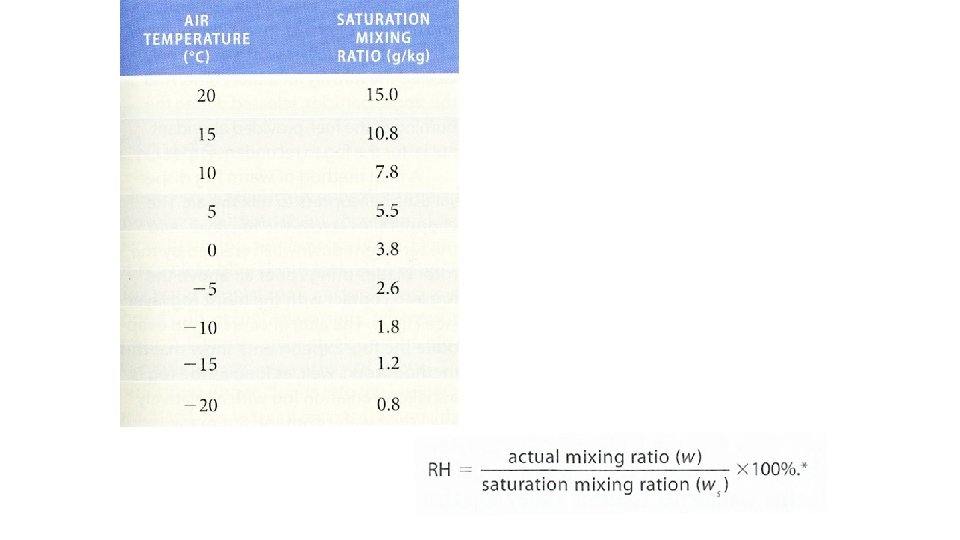
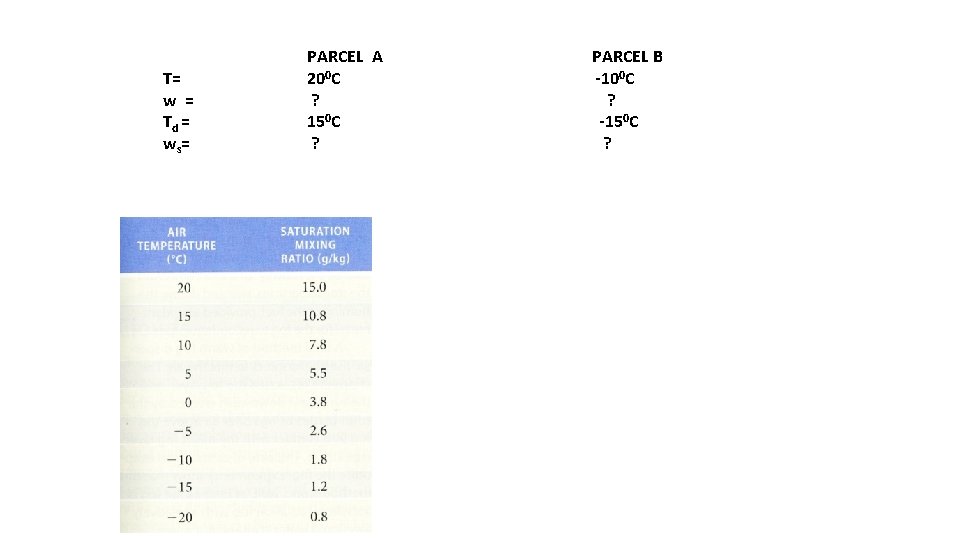
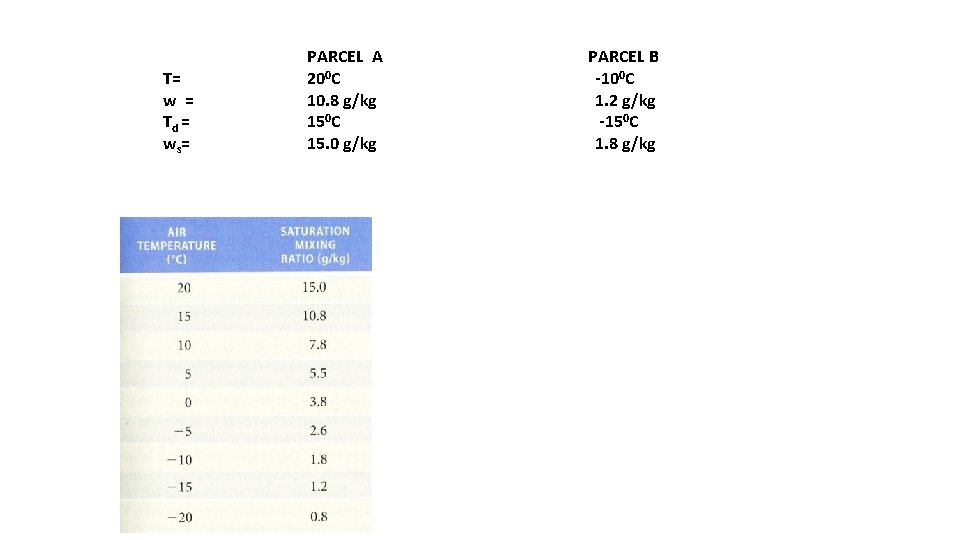
T= w = Td = ws = PARCEL A 200 C ? 150 C ? PARCEL B -100 C ? -150 C ?
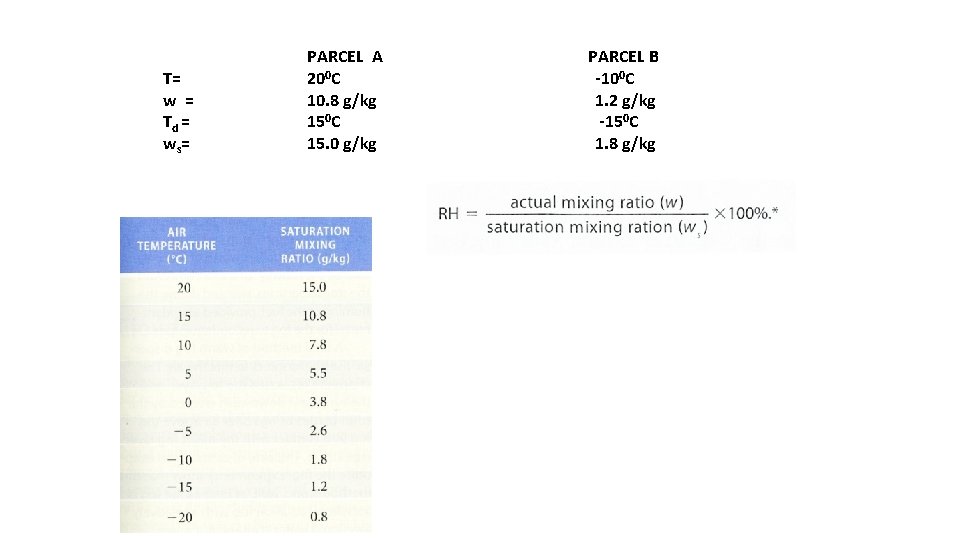
T= w = Td = ws = PARCEL A 200 C 10. 8 g/kg 150 C 15. 0 g/kg PARCEL B -100 C 1. 2 g/kg -150 C 1. 8 g/kg
T= w = Td = ws = PARCEL A 200 C 10. 8 g/kg 150 C 15. 0 g/kg PARCEL B -100 C 1. 2 g/kg -150 C 1. 8 g/kg
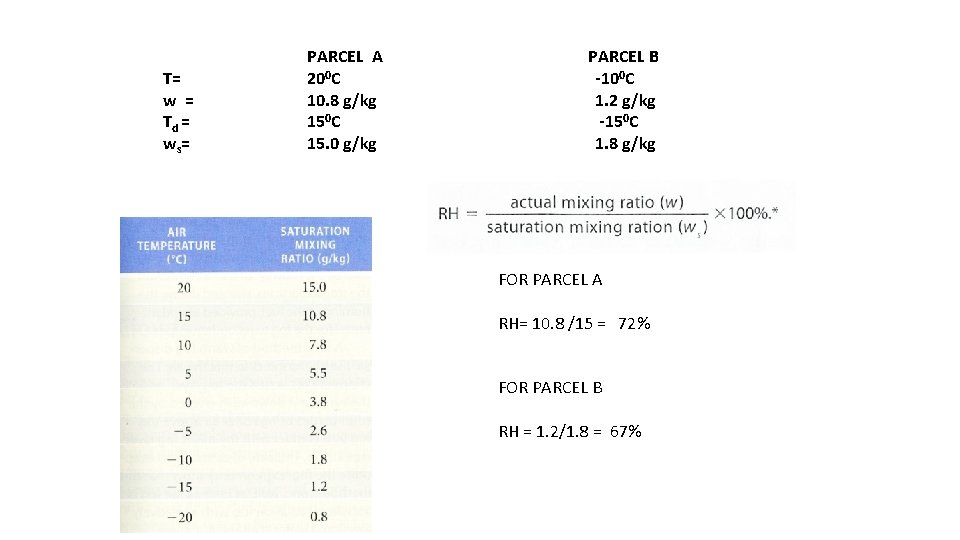
T= w = Td = ws = PARCEL A 200 C 10. 8 g/kg 150 C 15. 0 g/kg PARCEL B -100 C 1. 2 g/kg -150 C 1. 8 g/kg FOR PARCEL A RH= 10. 8 /15 = 72% FOR PARCEL B RH = 1. 2/1. 8 = 67%
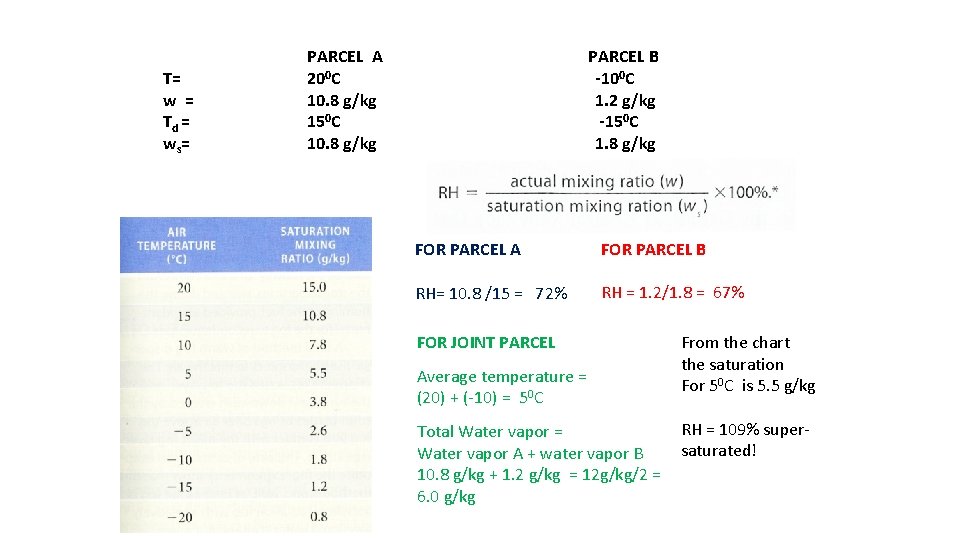
T= w = Td = ws = PARCEL A 200 C 10. 8 g/kg 150 C 10. 8 g/kg PARCEL B -100 C 1. 2 g/kg -150 C 1. 8 g/kg FOR PARCEL A FOR PARCEL B RH= 10. 8 /15 = 72% RH = 1. 2/1. 8 = 67% FOR JOINT PARCEL Average temperature = (20) + (-10) = 50 C Total Water vapor = Water vapor A + water vapor B 10. 8 g/kg + 1. 2 g/kg = 12 g/kg/2 = 6. 0 g/kg From the chart the saturation For 50 C is 5. 5 g/kg RH = 109% supersaturated!
Different Fog Types Commonly Found in North America