
Devics neuromyelitis optica its distinctive features and treatment
- Slides: 18
Devic’s neuromyelitis optica: its distinctive features and treatment Mark Morrow, MD Providence Multiple Sclerosis Center Portland, Oregon
Conclusions • Neuromyelitis optica is a distinct demyelinating disease with accurate diagnostic criteria • Demographic and historic features predict relapses • Relapse prevention requires broad-spectrum or B-cell-specific immunosuppression
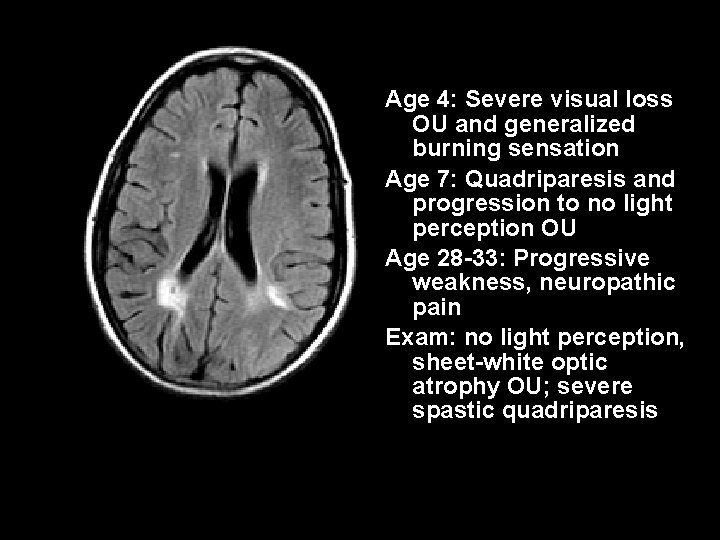
Age 4: Severe visual loss OU and generalized burning sensation Age 7: Quadriparesis and progression to no light perception OU Age 28 -33: Progressive weakness, neuropathic pain Exam: no light perception, sheet-white optic atrophy OU; severe spastic quadriparesis
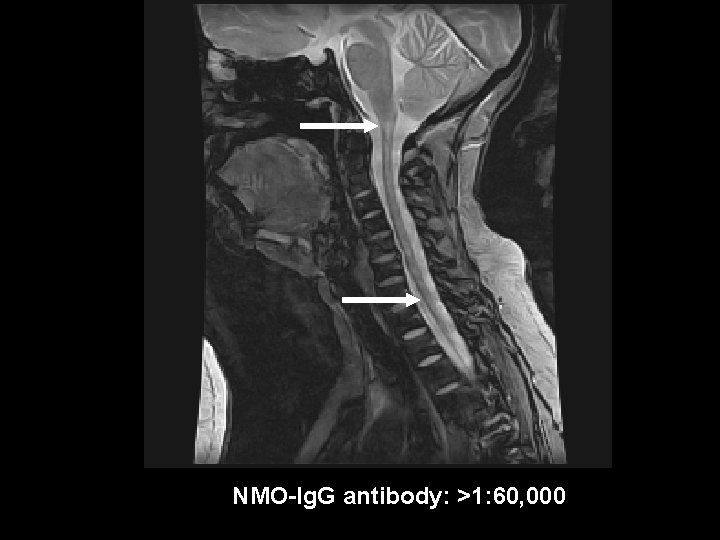
NMO-Ig. G antibody: >1: 60, 000
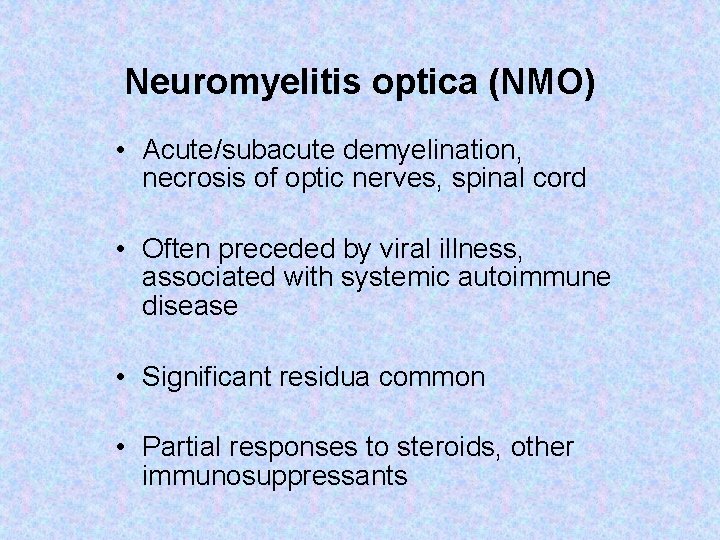
Neuromyelitis optica (NMO) • Acute/subacute demyelination, necrosis of optic nerves, spinal cord • Often preceded by viral illness, associated with systemic autoimmune disease • Significant residua common • Partial responses to steroids, other immunosuppressants
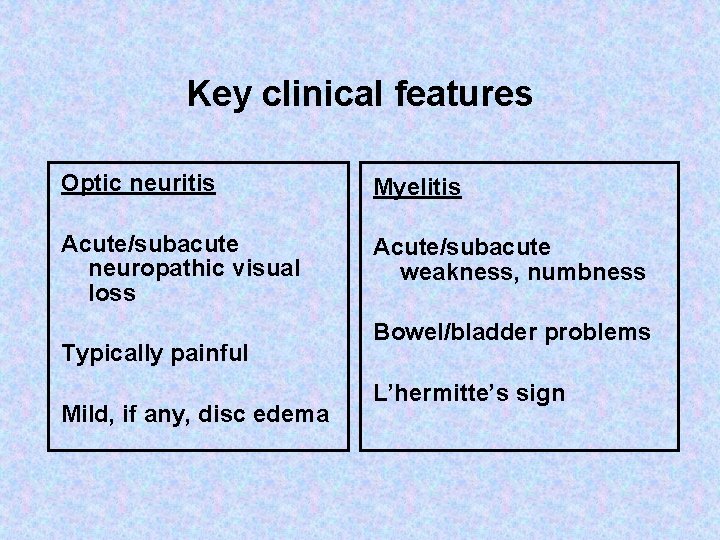
Key clinical features Optic neuritis Myelitis Acute/subacute neuropathic visual loss Acute/subacute weakness, numbness Typically painful Mild, if any, disc edema Bowel/bladder problems L’hermitte’s sign
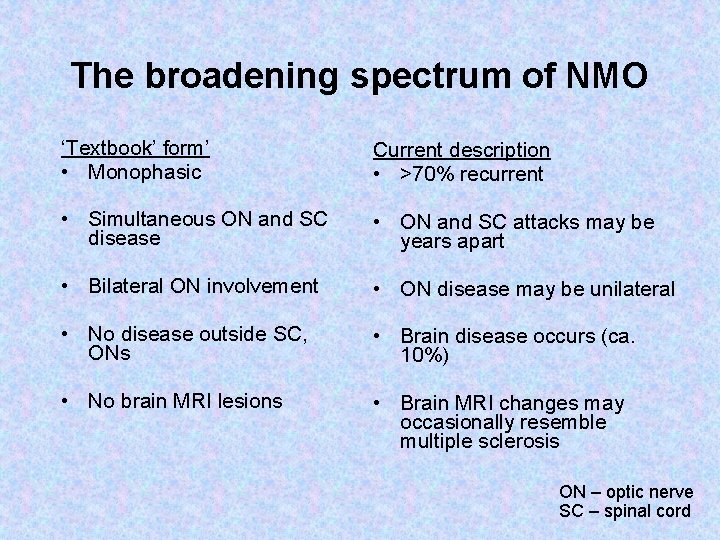
The broadening spectrum of NMO ‘Textbook’ form’ • Monophasic Current description • >70% recurrent • Simultaneous ON and SC disease • ON and SC attacks may be years apart • Bilateral ON involvement • ON disease may be unilateral • No disease outside SC, ONs • Brain disease occurs (ca. 10%) • No brain MRI lesions • Brain MRI changes may occasionally resemble multiple sclerosis ON – optic nerve SC – spinal cord
NMO – disease or syndrome? Differential diagnosis Multiple sclerosis Acute disseminated encephalomyelitis (ADEM) Lupus Sjogren’s syndrome Parainfectious
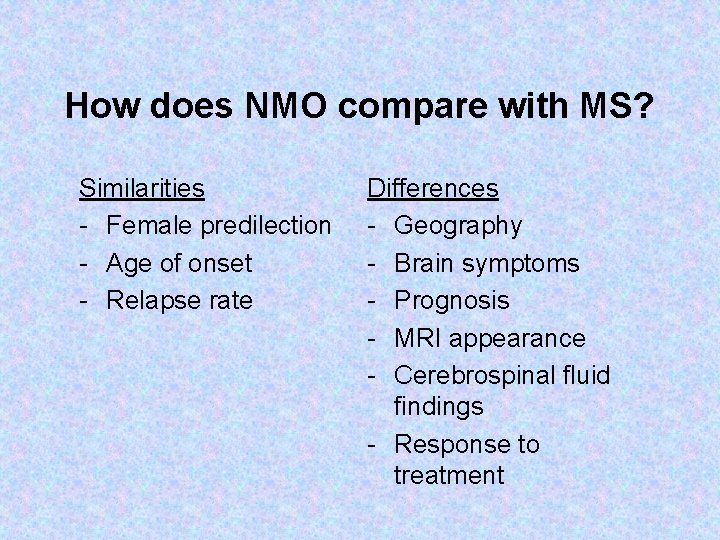
How does NMO compare with MS? Similarities - Female predilection - Age of onset - Relapse rate Differences - Geography - Brain symptoms - Prognosis - MRI appearance - Cerebrospinal fluid findings - Response to treatment
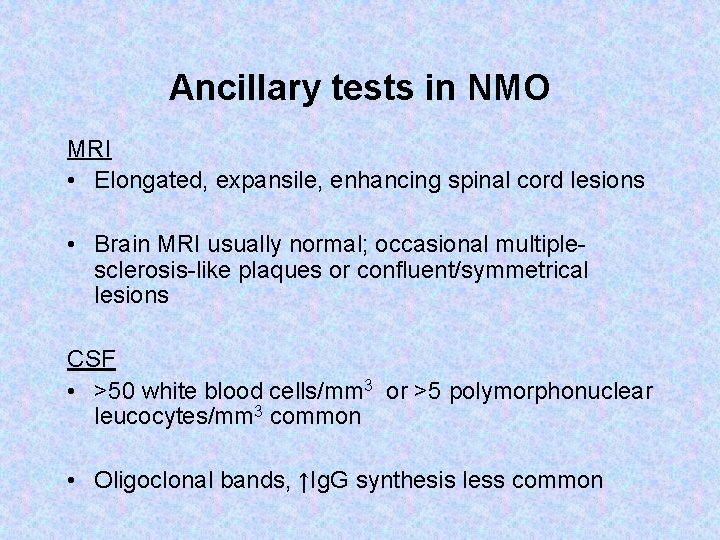
Ancillary tests in NMO MRI • Elongated, expansile, enhancing spinal cord lesions • Brain MRI usually normal; occasional multiplesclerosis-like plaques or confluent/symmetrical lesions CSF • >50 white blood cells/mm 3 or >5 polymorphonuclear leucocytes/mm 3 common • Oligoclonal bands, ↑Ig. G synthesis less common
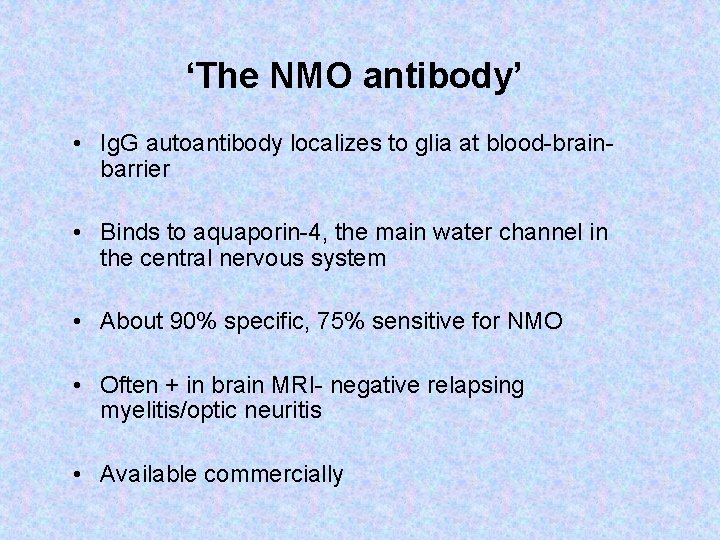
‘The NMO antibody’ • Ig. G autoantibody localizes to glia at blood-brainbarrier • Binds to aquaporin-4, the main water channel in the central nervous system • About 90% specific, 75% sensitive for NMO • Often + in brain MRI- negative relapsing myelitis/optic neuritis • Available commercially
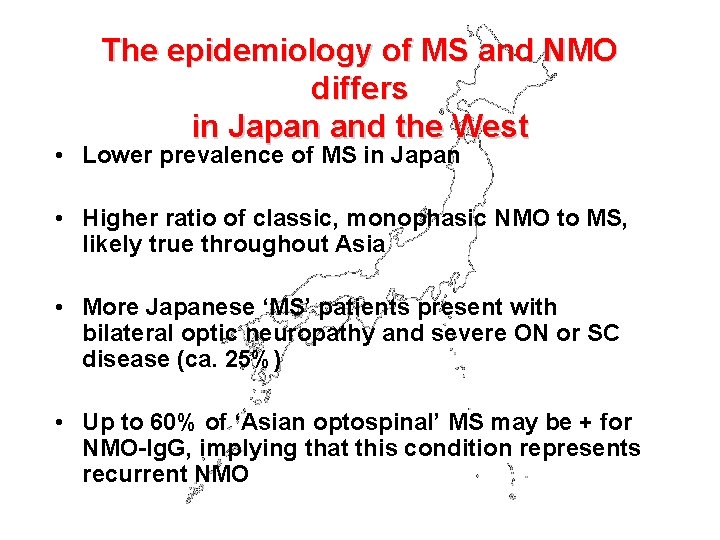
The epidemiology of MS and NMO differs in Japan and the West • Lower prevalence of MS in Japan • Higher ratio of classic, monophasic NMO to MS, likely true throughout Asia • More Japanese ‘MS’ patients present with bilateral optic neuropathy and severe ON or SC disease (ca. 25%) • Up to 60% of ‘Asian optospinal’ MS may be + for NMO-Ig. G, implying that this condition represents recurrent NMO
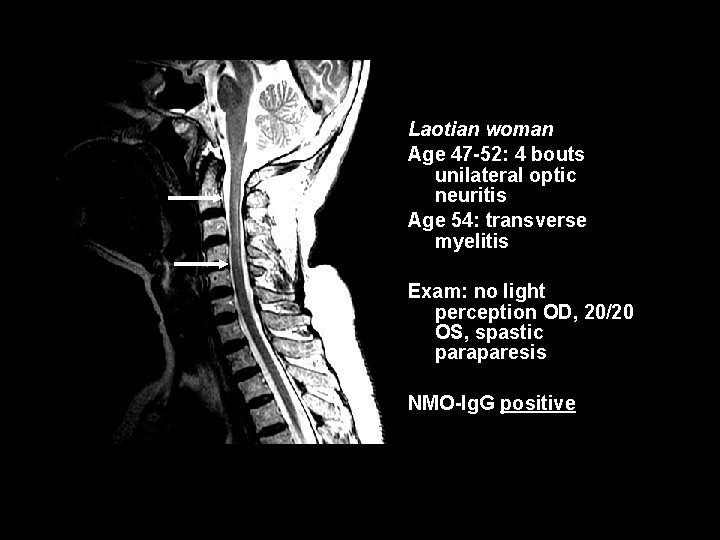
Laotian woman Age 47 -52: 4 bouts unilateral optic neuritis Age 54: transverse myelitis Exam: no light perception OD, 20/20 OS, spastic paraparesis NMO-Ig. G positive
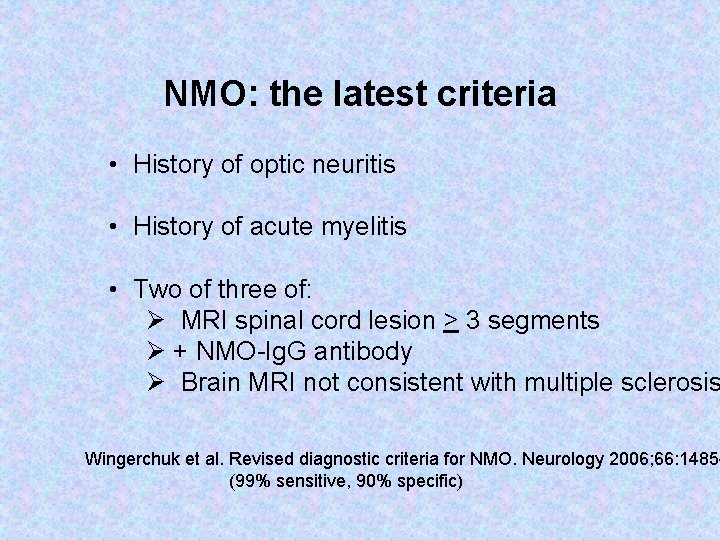
NMO: the latest criteria • History of optic neuritis • History of acute myelitis • Two of three of: Ø MRI spinal cord lesion > 3 segments Ø + NMO-Ig. G antibody Ø Brain MRI not consistent with multiple sclerosis Wingerchuk et al. Revised diagnostic criteria for NMO. Neurology 2006; 66: 1485(99% sensitive, 90% specific)
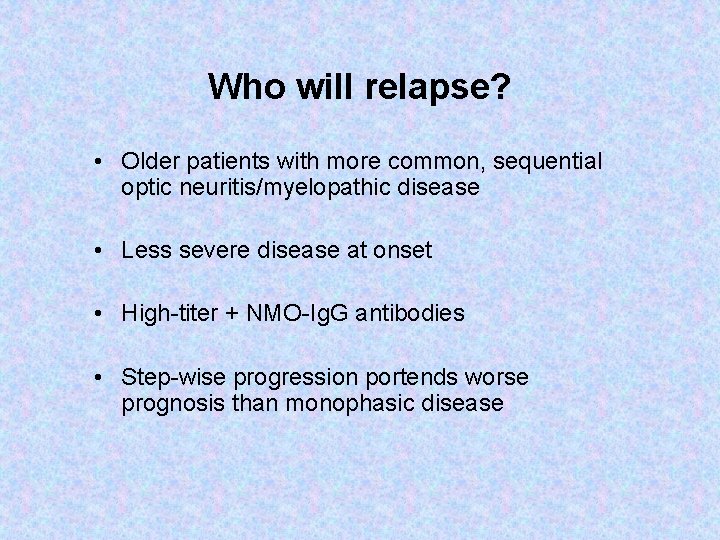
Who will relapse? • Older patients with more common, sequential optic neuritis/myelopathic disease • Less severe disease at onset • High-titer + NMO-Ig. G antibodies • Step-wise progression portends worse prognosis than monophasic disease
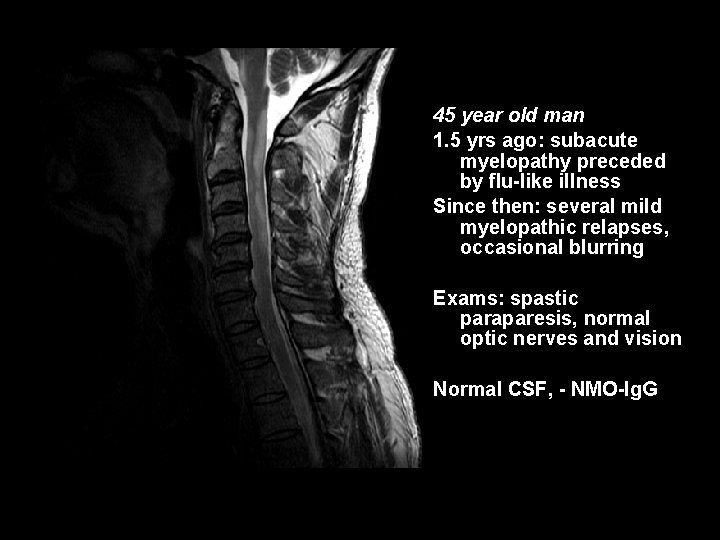
45 year old man 1. 5 yrs ago: subacute myelopathy preceded by flu-like illness Since then: several mild myelopathic relapses, occasional blurring Exams: spastic paraparesis, normal optic nerves and vision Normal CSF, - NMO-Ig. G
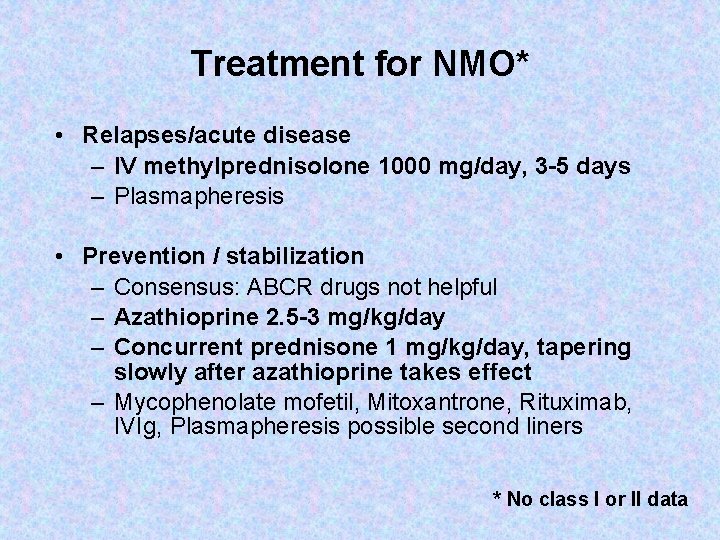
Treatment for NMO* • Relapses/acute disease – IV methylprednisolone 1000 mg/day, 3 -5 days – Plasmapheresis • Prevention / stabilization – Consensus: ABCR drugs not helpful – Azathioprine 2. 5 -3 mg/kg/day – Concurrent prednisone 1 mg/kg/day, tapering slowly after azathioprine takes effect – Mycophenolate mofetil, Mitoxantrone, Rituximab, IVIg, Plasmapheresis possible second liners * No class I or II data
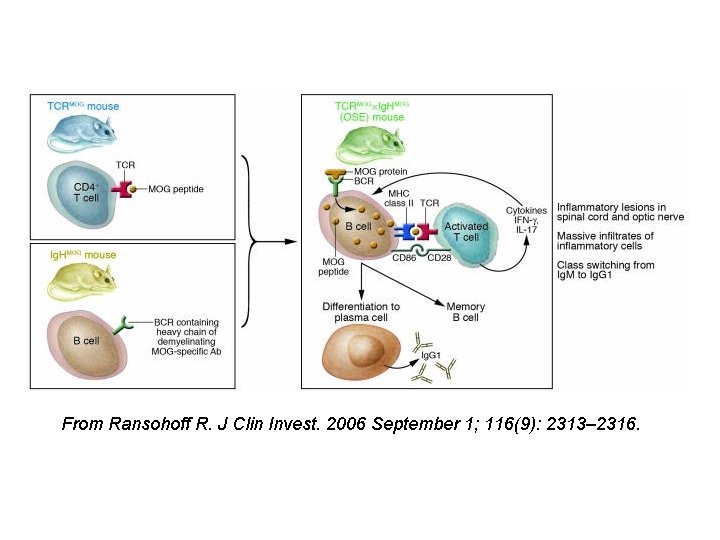
From Ransohoff R. J Clin Invest. 2006 September 1; 116(9): 2313– 2316.