
Developmentally Informed Classroom Management Creating a Trauma Informed
- Slides: 21
Developmentally Informed Classroom Management Creating a Trauma Informed Classroom Kirk Ward, LCSW Clinical Director, Mount Saint Vincent NMT Fellow Kyle Bixenmann, MBA Senior Workforce Training Specialist
Training Objectives § Develop foundational knowledge the Neurosequential Model of Therapeutics including brain development and how negative experiences during developmentally critical periods can lead to challenging behavior in the classroom § Explore tools to be able to identify, analyze, and reframe challenging behavior from your students § Provide an overview of strategies to prevent and mitigate challenging behavior in the classroom All rights reserved © 2006 -2014 Bruce D. Perry and The Child. Trauma Academy
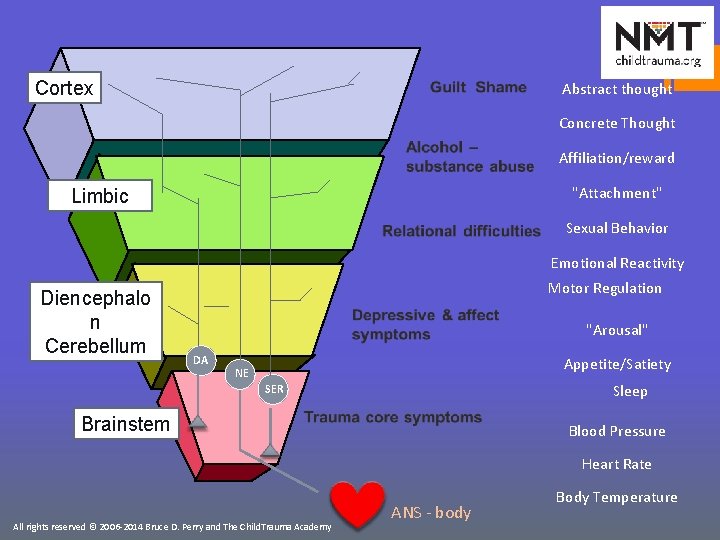
Cortex Abstract thought Concrete Thought Affiliation/reward "Attachment" Limbic Sexual Behavior Emotional Reactivity Diencephalo n Cerebellum Motor Regulation "Arousal" DA Appetite/Satiety NE Sleep SER Brainstem Blood Pressure Heart Rate All rights reserved © 2006 -2014 Bruce D. Perry and The Child. Trauma Academy ANS - body Body Temperature
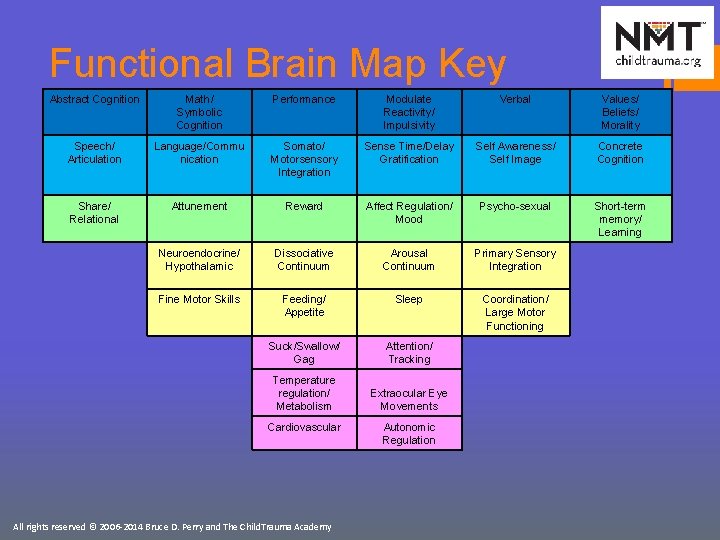
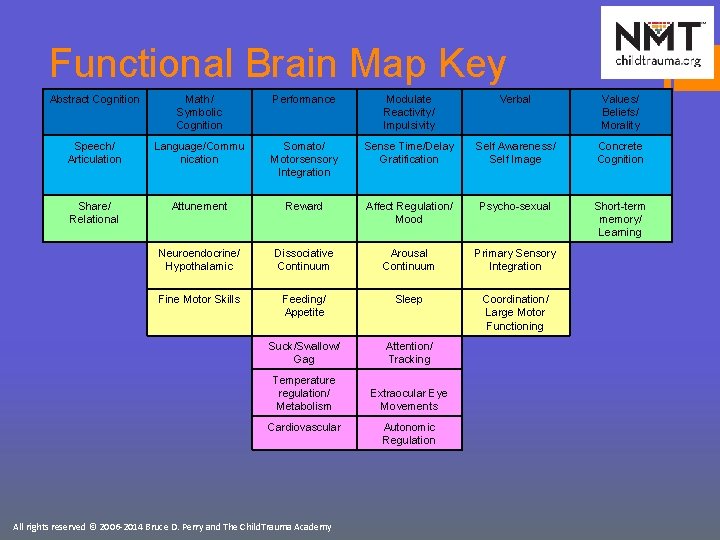
Functional Brain Map Key Abstract Cognition Math/ Symbolic Cognition Performance Modulate Reactivity/ Impulsivity Verbal Values/ Beliefs/ Morality Speech/ Articulation Language/Commu nication Somato/ Motorsensory Integration Sense Time/Delay Gratification Self Awareness/ Self Image Concrete Cognition Share/ Relational Attunement Reward Affect Regulation/ Mood Psycho-sexual Short-term memory/ Learning Neuroendocrine/ Hypothalamic Dissociative Continuum Arousal Continuum Primary Sensory Integration Fine Motor Skills Feeding/ Appetite Sleep Coordination/ Large Motor Functioning Suck/Swallow/ Gag Attention/ Tracking Temperature regulation/ Metabolism Extraocular Eye Movements Cardiovascular All rights reserved © 2006 -2014 Bruce D. Perry and The Child. Trauma Academy Autonomic Regulation
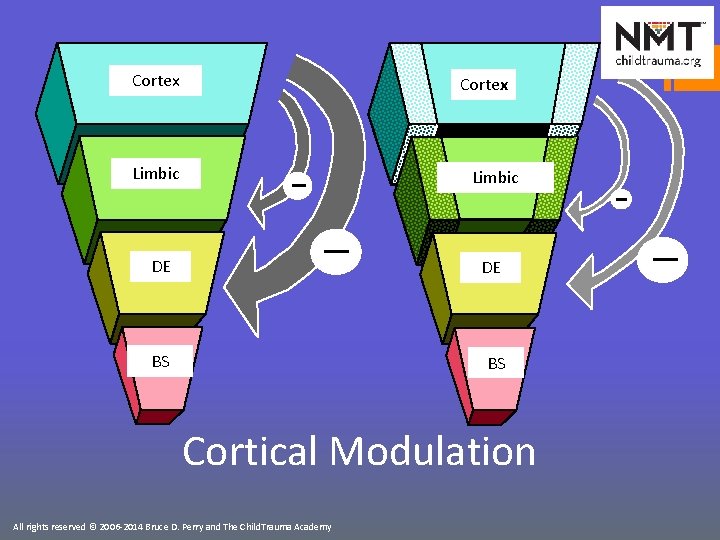
Cortex Cortical Cortex Limbic DE DE BS BS Cortical Modulation All rights reserved © 2006 -2014 Bruce D. Perry and The Child. Trauma Academy
Templates § Templates are created from early life experiences to dictate the meaning of interactions and experiences § Becomes your Worldview § Your brain organizes the environment, the environment doesn’t organize your brain § The brain perceives all new stimuli as threatening until it recognizes it’s not scary. All rights reserved © 2006 -2014 Bruce D. Perry and The Child. Trauma Academy
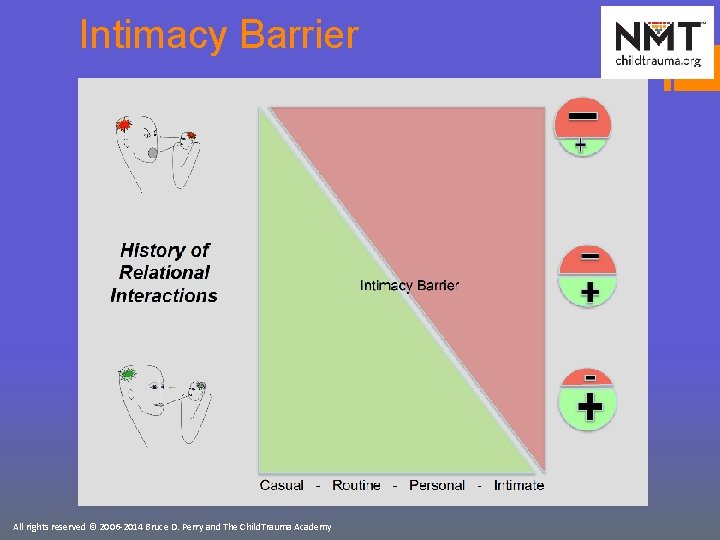
Intimacy Barrier All rights reserved © 2006 -2014 Bruce D. Perry and The Child. Trauma Academy
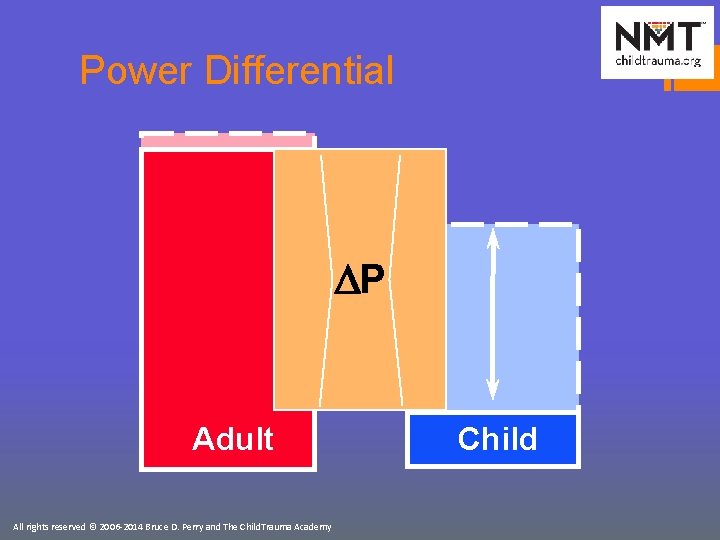
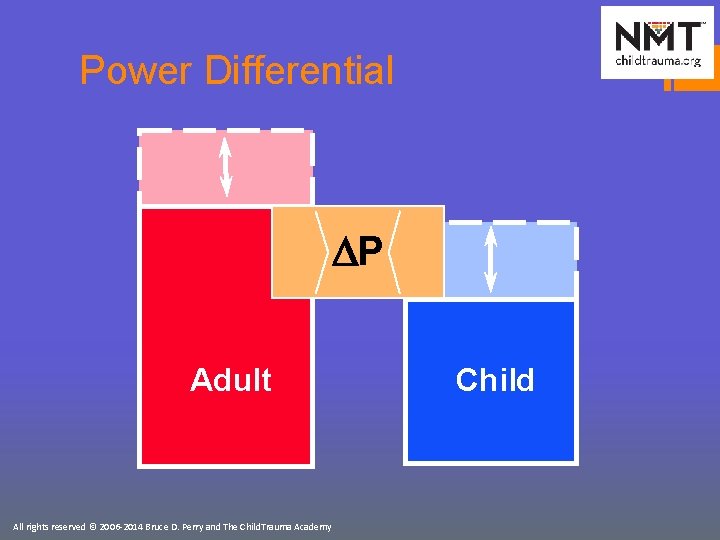
Power Differential DP Adult All rights reserved © 2006 -2014 Bruce D. Perry and The Child. Trauma Academy Child
Power Differential DP Adult All rights reserved © 2006 -2014 Bruce D. Perry and The Child. Trauma Academy Child
Functional Brain Map Key Abstract Cognition Math/ Symbolic Cognition Performance Modulate Reactivity/ Impulsivity Verbal Values/ Beliefs/ Morality Speech/ Articulation Language/Commu nication Somato/ Motorsensory Integration Sense Time/Delay Gratification Self Awareness/ Self Image Concrete Cognition Share/ Relational Attunement Reward Affect Regulation/ Mood Psycho-sexual Short-term memory/ Learning Neuroendocrine/ Hypothalamic Dissociative Continuum Arousal Continuum Primary Sensory Integration Fine Motor Skills Feeding/ Appetite Sleep Coordination/ Large Motor Functioning Suck/Swallow/ Gag Attention/ Tracking Temperature regulation/ Metabolism Extraocular Eye Movements Cardiovascular All rights reserved © 2006 -2014 Bruce D. Perry and The Child. Trauma Academy Autonomic Regulation
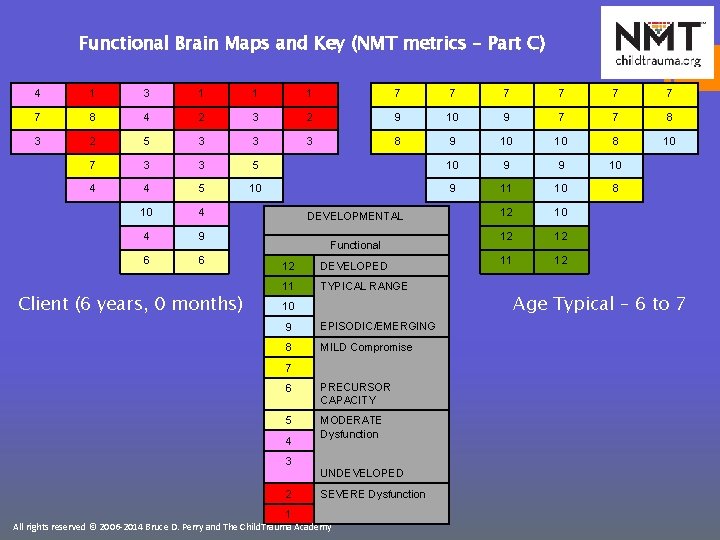
Functional Brain Maps and Key (NMT metrics – Part C) 4 1 3 1 1 1 7 7 7 7 8 4 2 3 2 9 10 9 7 7 8 3 2 5 3 3 3 8 9 10 10 8 10 7 3 3 5 10 9 9 10 4 4 5 10 9 11 10 8 10 4 12 10 4 9 12 12 6 6 11 12 Client (6 years, 0 months) DEVELOPMENTAL Functional 12 DEVELOPED 11 TYPICAL RANGE 10 9 EPISODIC/EMERGING 8 MILD Compromise 7 6 PRECURSOR CAPACITY 5 MODERATE Dysfunction 4 3 2 1 UNDEVELOPED SEVERE Dysfunction All rights reserved © 2006 -2014 Bruce D. Perry and The Child. Trauma Academy Age Typical – 6 to 7
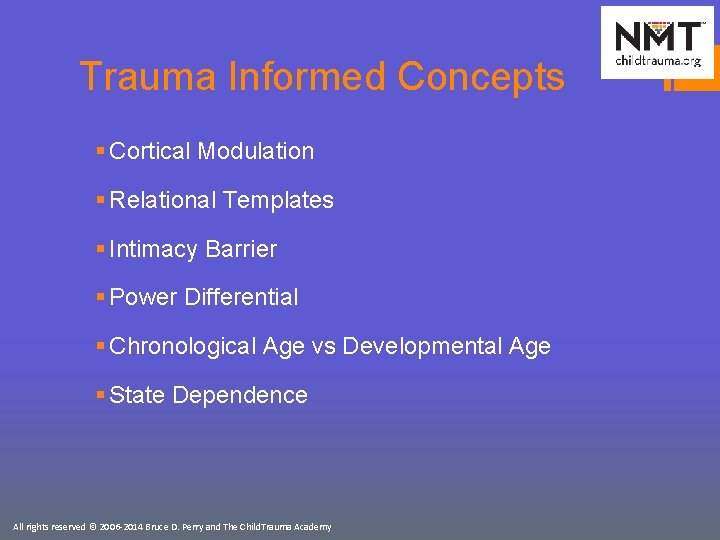
Trauma Informed Concepts § Cortical Modulation § Relational Templates § Intimacy Barrier § Power Differential § Chronological Age vs Developmental Age § State Dependence All rights reserved © 2006 -2014 Bruce D. Perry and The Child. Trauma Academy
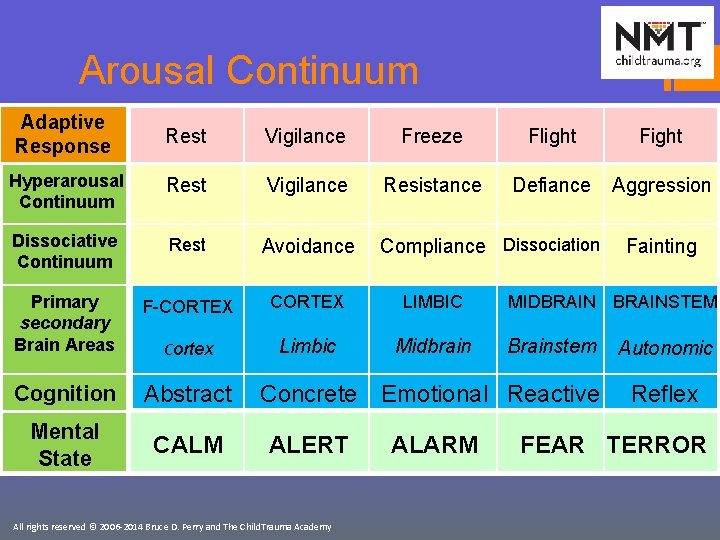
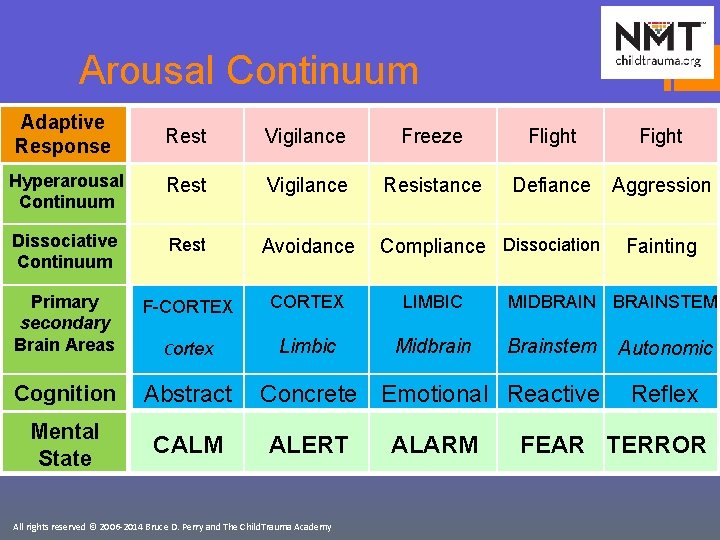
Arousal Continuum Adaptive Response Rest Vigilance Freeze Flight Fight Hyperarousal Continuum Rest Vigilance Resistance Defiance Aggression Dissociative Continuum Rest Avoidance Compliance Dissociation Primary secondary Brain Areas F-CORTEX LIMBIC Cortex Limbic Midbrain Cognition Abstract Mental State CALM MIDBRAINSTEM Brainstem Concrete Emotional Reactive ALERT All rights reserved © 2006 -2014 Bruce D. Perry and The Child. Trauma Academy ALARM Fainting Autonomic Reflex FEAR TERROR
BREAK All rights reserved © 2006 -2014 Bruce D. Perry and The Child. Trauma Academy
Arousal Continuum Adaptive Response Rest Vigilance Freeze Flight Fight Hyperarousal Continuum Rest Vigilance Resistance Defiance Aggression Dissociative Continuum Rest Avoidance Compliance Dissociation Primary secondary Brain Areas F-CORTEX LIMBIC Cortex Limbic Midbrain Cognition Abstract Mental State CALM MIDBRAINSTEM Brainstem Concrete Emotional Reactive ALERT All rights reserved © 2006 -2014 Bruce D. Perry and The Child. Trauma Academy ALARM Fainting Autonomic Reflex FEAR TERROR
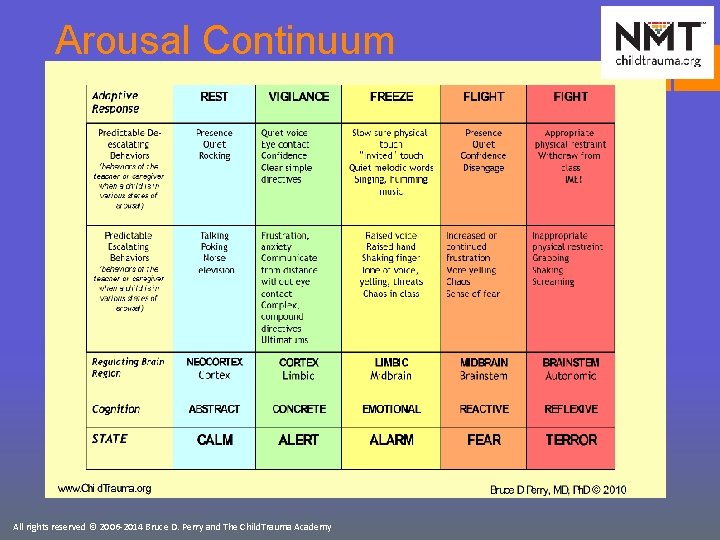
Arousal Continuum All rights reserved © 2006 -2014 Bruce D. Perry and The Child. Trauma Academy
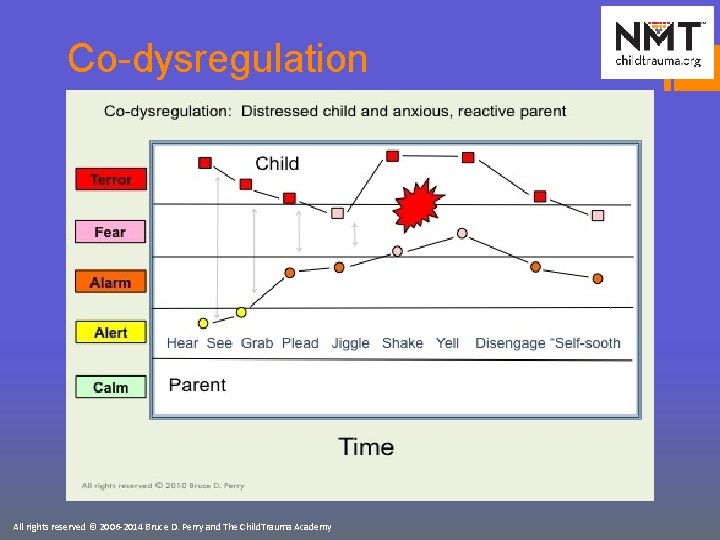
Co-dysregulation All rights reserved © 2006 -2014 Bruce D. Perry and The Child. Trauma Academy
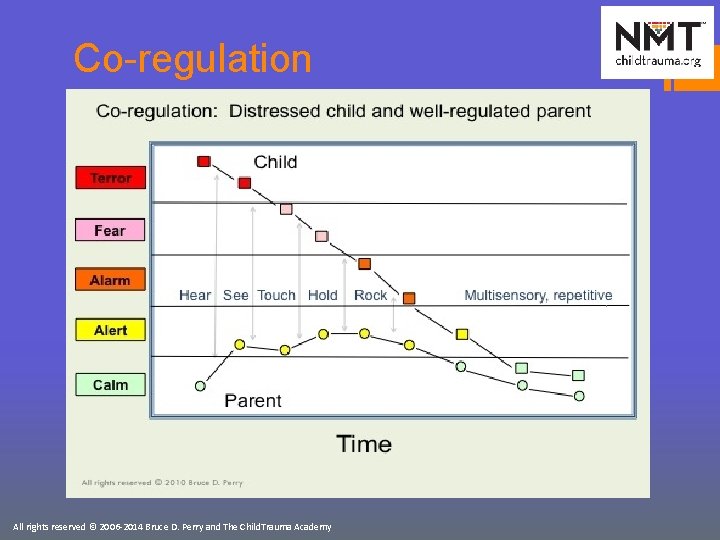
Co-regulation All rights reserved © 2006 -2014 Bruce D. Perry and The Child. Trauma Academy
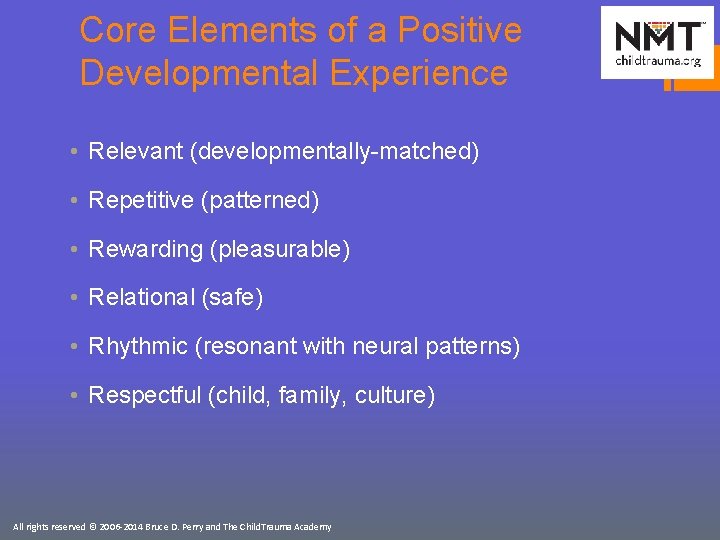
Core Elements of a Positive Developmental Experience • Relevant (developmentally-matched) • Repetitive (patterned) • Rewarding (pleasurable) • Relational (safe) • Rhythmic (resonant with neural patterns) • Respectful (child, family, culture) All rights reserved © 2006 -2014 Bruce D. Perry and The Child. Trauma Academy
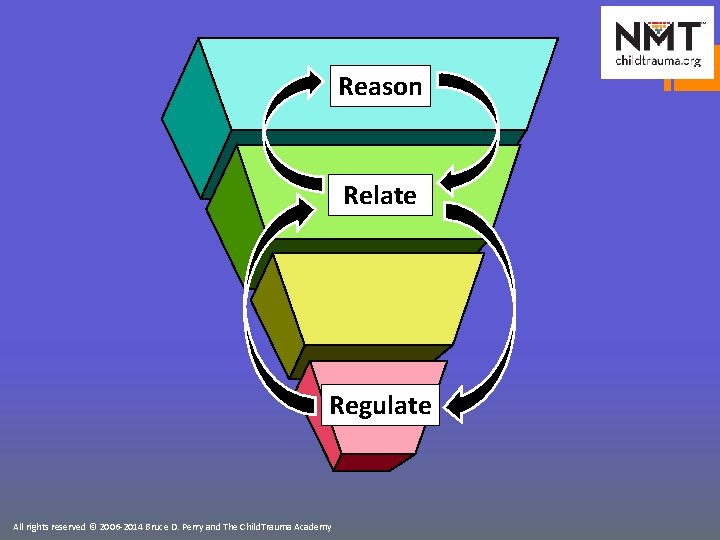
Reason Relate Regulate All rights reserved © 2006 -2014 Bruce D. Perry and The Child. Trauma Academy
Training Objectives § Develop foundational knowledge the Neurosequential Model of Therapeutics including brain development and how negative experiences during developmentally critical periods can lead to challenging behavior in the classroom § Explore tools to be able to identify, analyze, and reframe challenging behavior from your students § Provide an overview of strategies to prevent and mitigate challenging behavior in the classroom All rights reserved © 2006 -2014 Bruce D. Perry and The Child. Trauma Academy