
Developmental Psychology UNIT 9 Baby Ethan What is
Developmental Psychology UNIT 9 Baby Ethan "What is it? "
Developmental Psychology The analysis of how people are continually developing— physically, cognitively, and socially—from infancy to old age Complete hand-out 9 -2
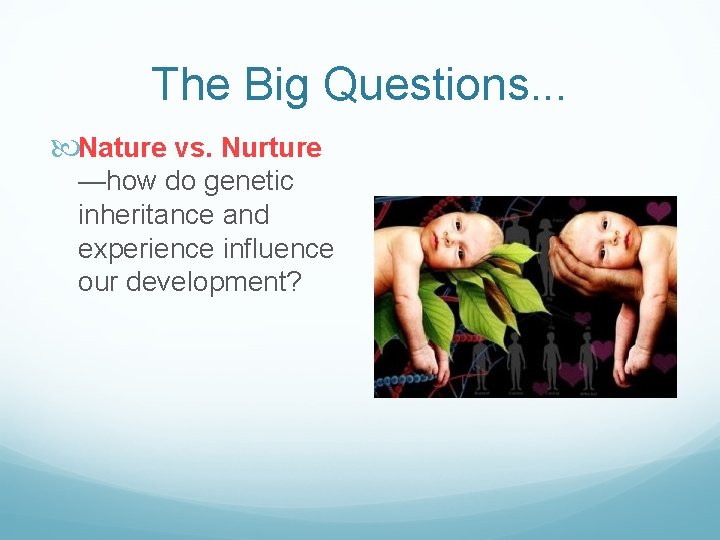
The Big Questions. . . Nature vs. Nurture —how do genetic inheritance and experience influence our development?

The Big Questions. . . Continuity vs. Stages —is development a continuous, gradual process or does it proceed through a sequence of separate stages?

The Big Questions. . . Stability vs. Change —do our early personality traits persist through life, or do we become different persons as we age?
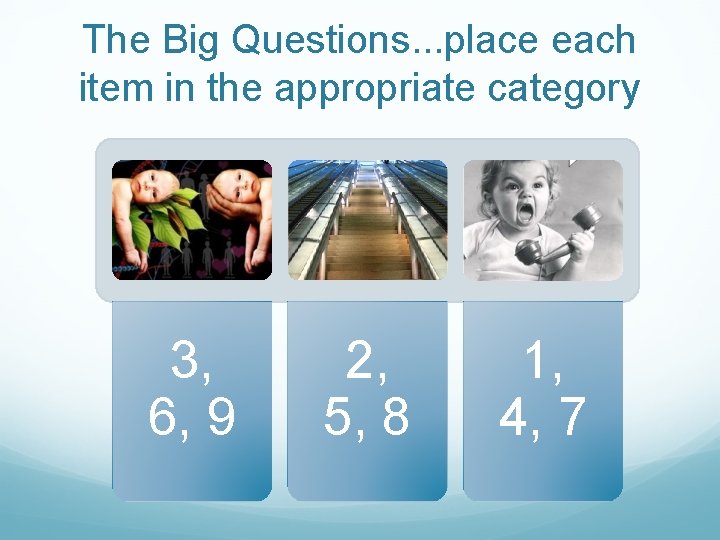
The Big Questions. . . place each item in the appropriate category 3, 6, 9 2, 5, 8 1, 4, 7

What do you think? Scoring: 1. Add items 1, 4, and 7— reverse item #4 2. Add items 2, 5, and 8— reverse item #5 3. Add items 3, 6, and 9— reverse item #3 4. (Reverse meaning 0=5, 1=4, 2=3, 3=2, 4=1, 5=0) Compare your scores with someone next to you. Discuss and defend your responses Complete Hand-out 9 -4
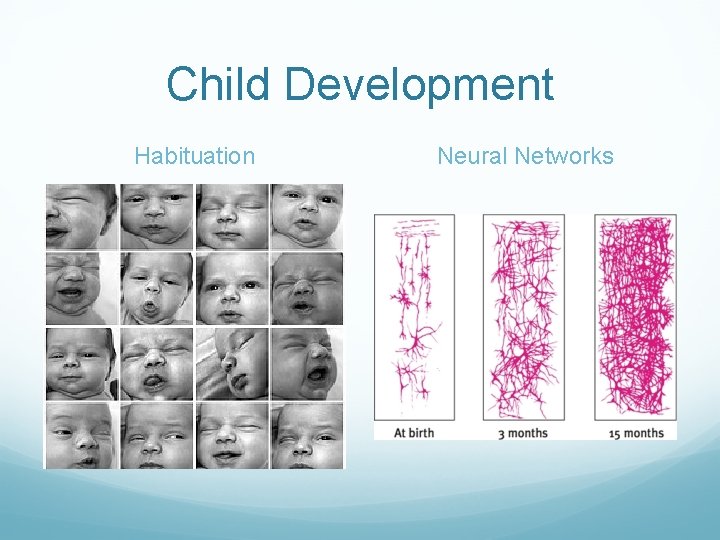
Child Development Habituation Neural Networks
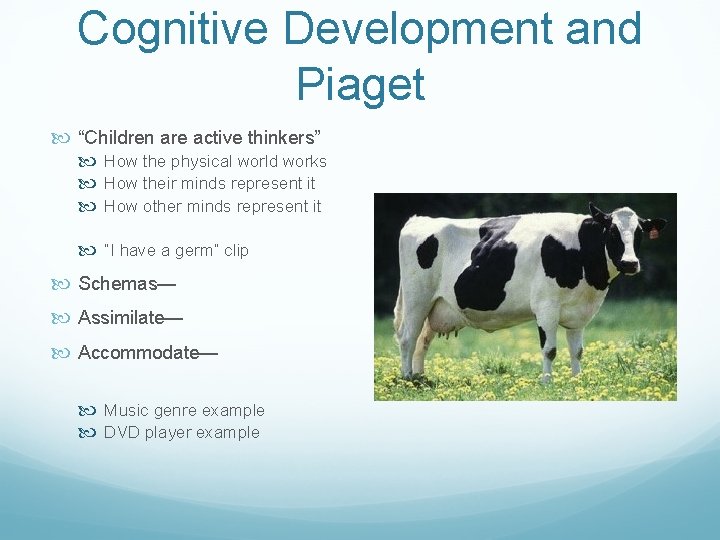
Cognitive Development and Piaget “Children are active thinkers” How the physical world works How their minds represent it How other minds represent it “I have a germ” clip Schemas— Assimilate— Accommodate— Music genre example DVD player example
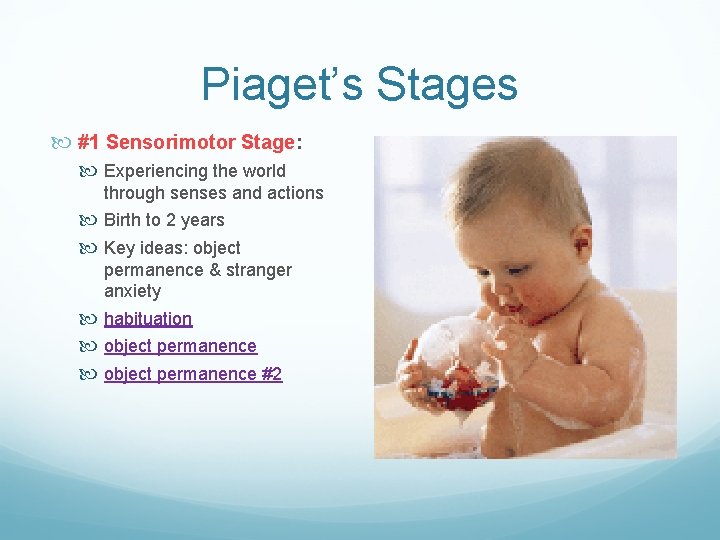
Piaget’s Stages #1 Sensorimotor Stage: Experiencing the world through senses and actions Birth to 2 years Key ideas: object permanence & stranger anxiety habituation object permanence #2
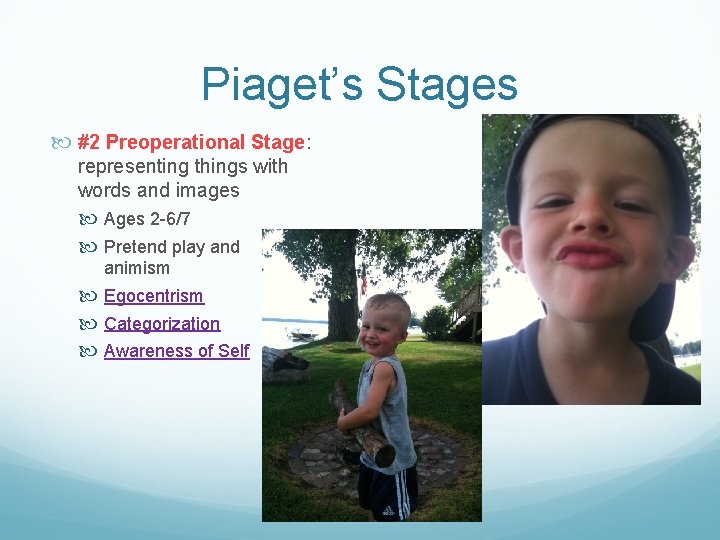
Piaget’s Stages #2 Preoperational Stage: representing things with words and images Ages 2 -6/7 Pretend play and animism Egocentrism Categorization Awareness of Self
Piaget’s Stages #3 Concrete Operational Thinking logically about concrete events, basic mathematic operations Ages 7 -11 Conservation “Smart” Deductive Reasoning
Piaget’s Stages #4 Formal Operational Stage —abstract reasoning and mature moral reasoning. Age 12 through adulthood
TED “What Babies Think”
Social Development Attachment, Temperament, and Parenting Styles
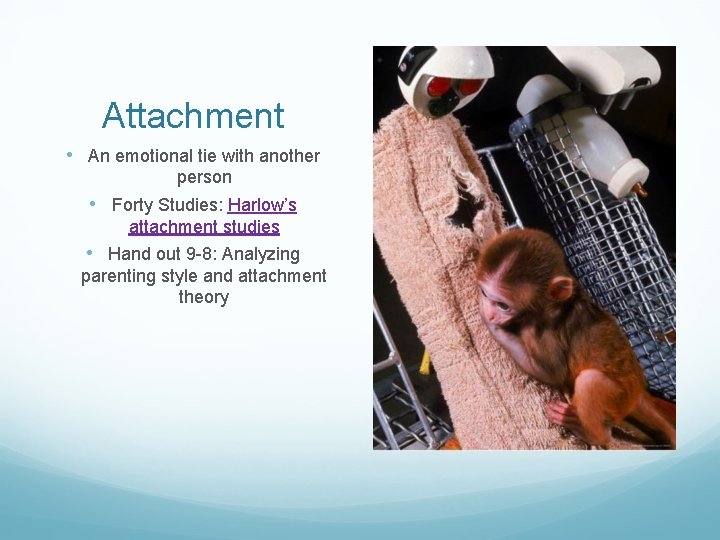
Attachment • An emotional tie with another person • Forty Studies: Harlow’s attachment studies • Hand out 9 -8: Analyzing parenting style and attachment theory
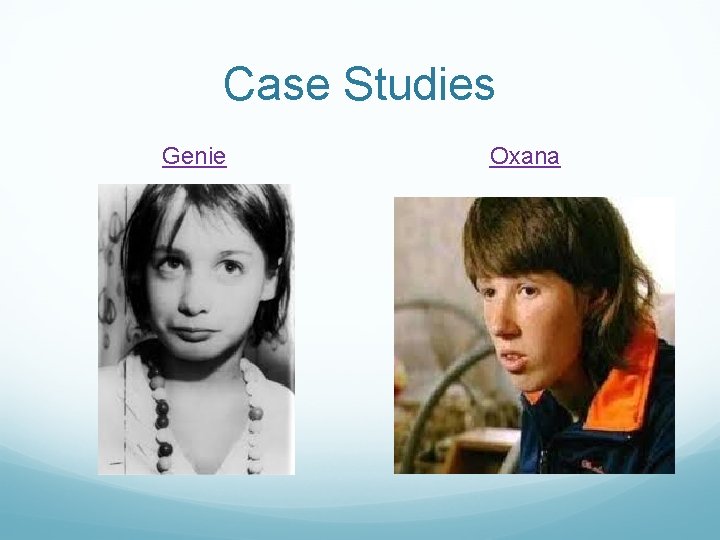
Case Studies Genie Oxana
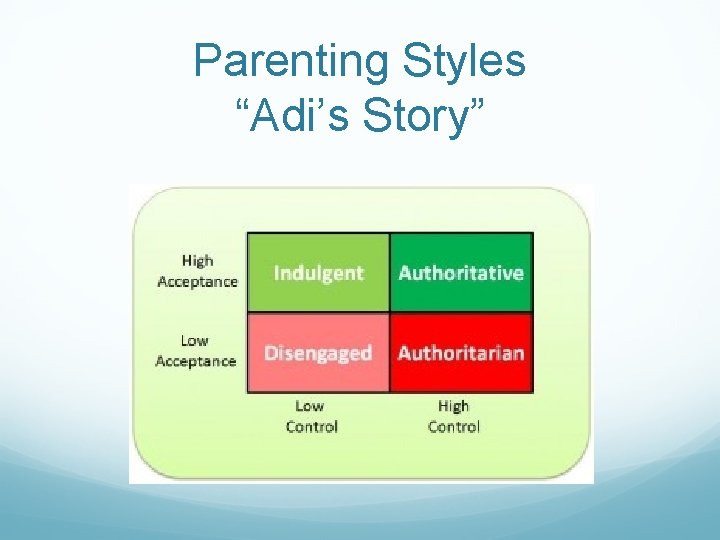
Parenting Styles “Adi’s Story”
Parenting
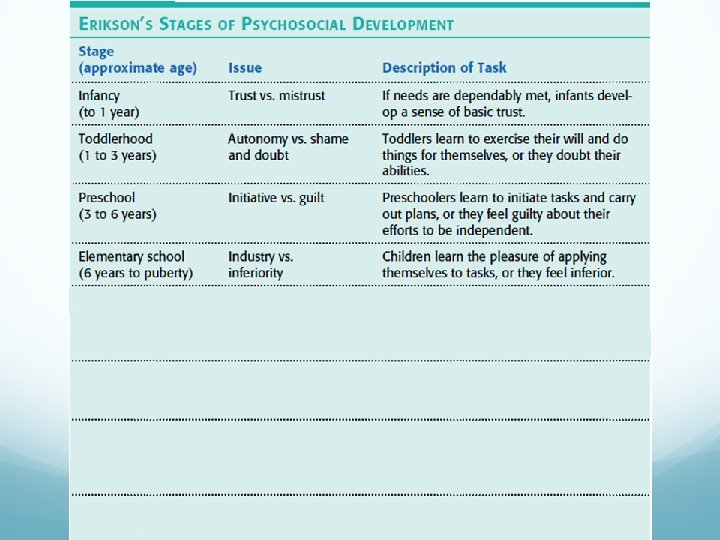
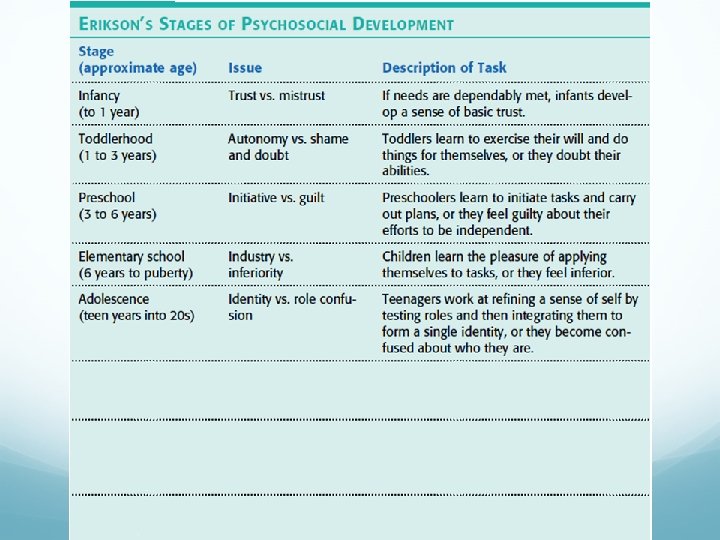
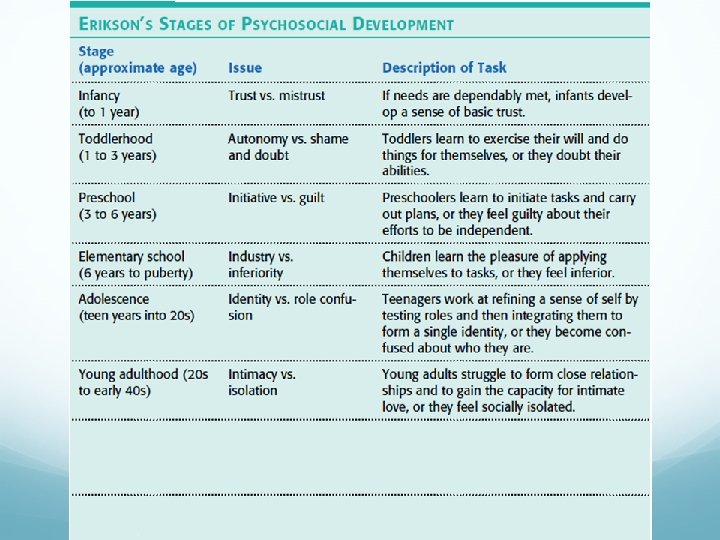
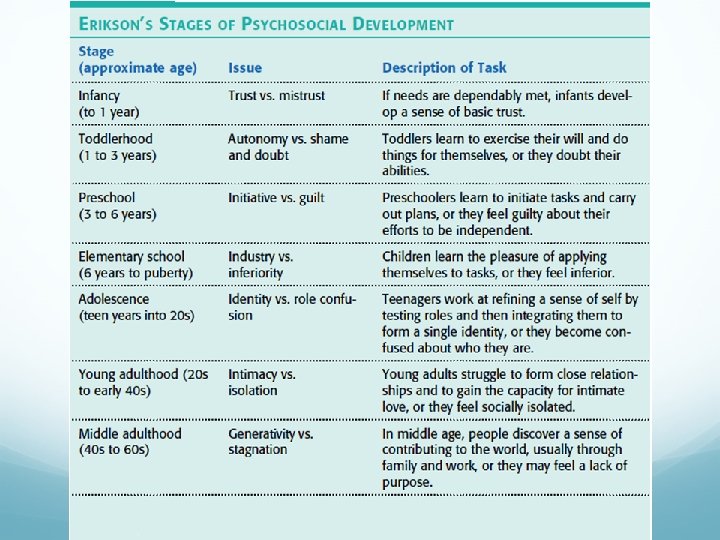
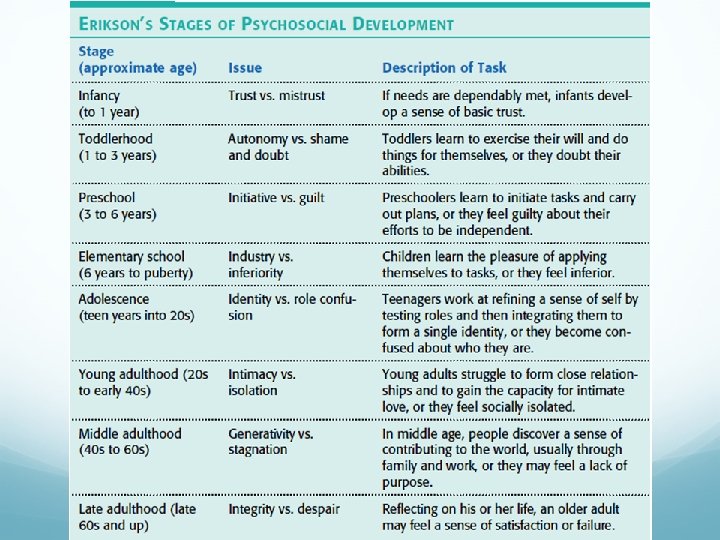
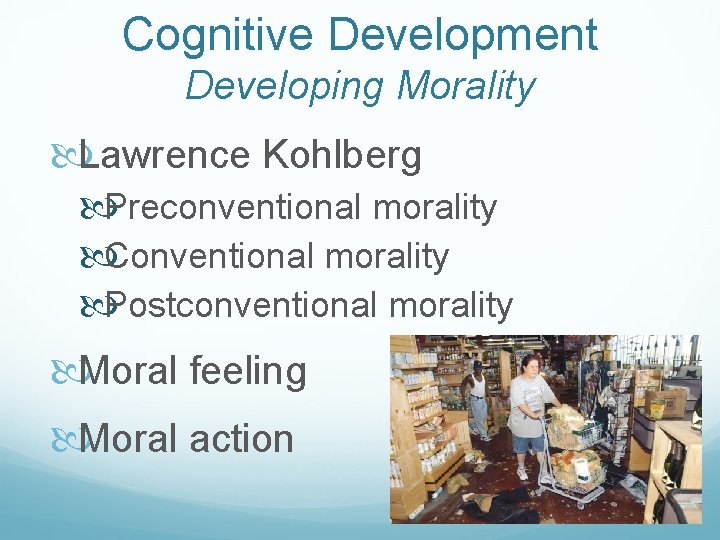
Cognitive Development Developing Morality Lawrence Kohlberg Preconventional morality Conventional morality Postconventional morality Moral feeling Moral action
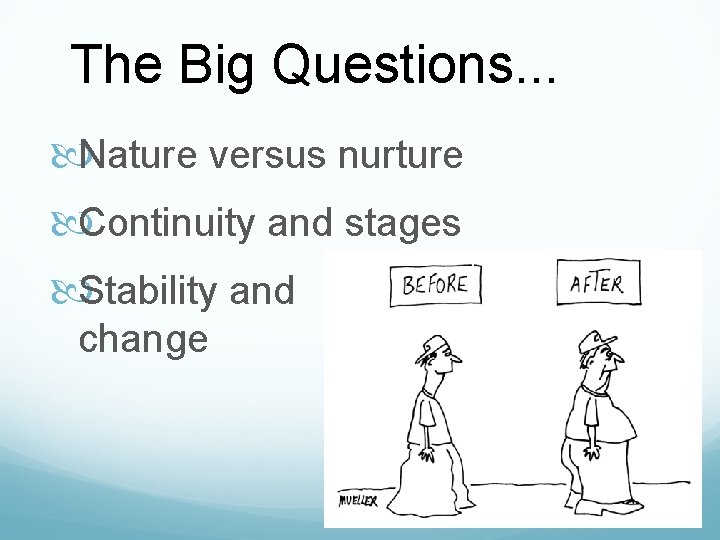
The Big Questions. . . Nature versus nurture Continuity and stages Stability and change
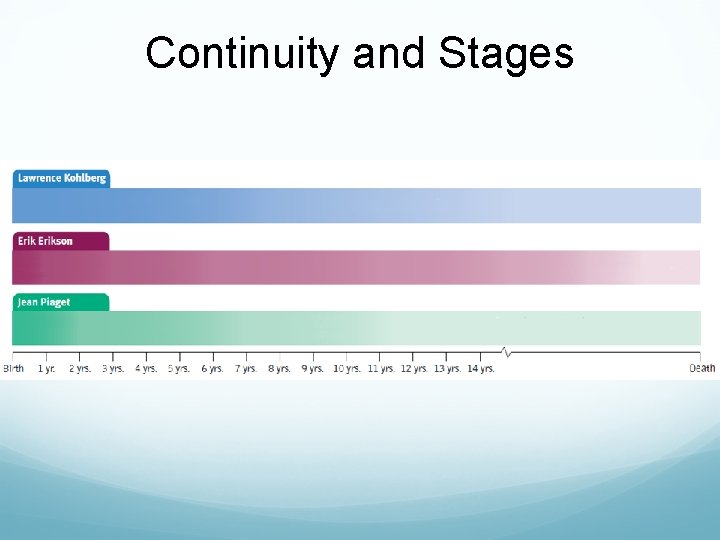
Continuity and Stages
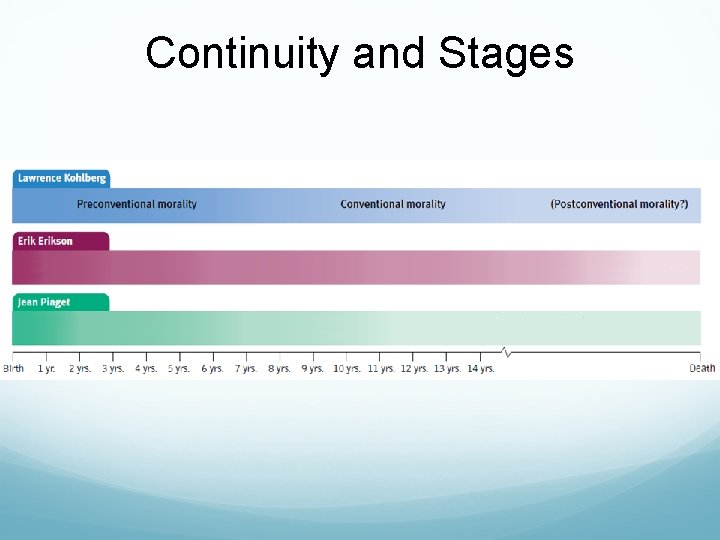
Continuity and Stages
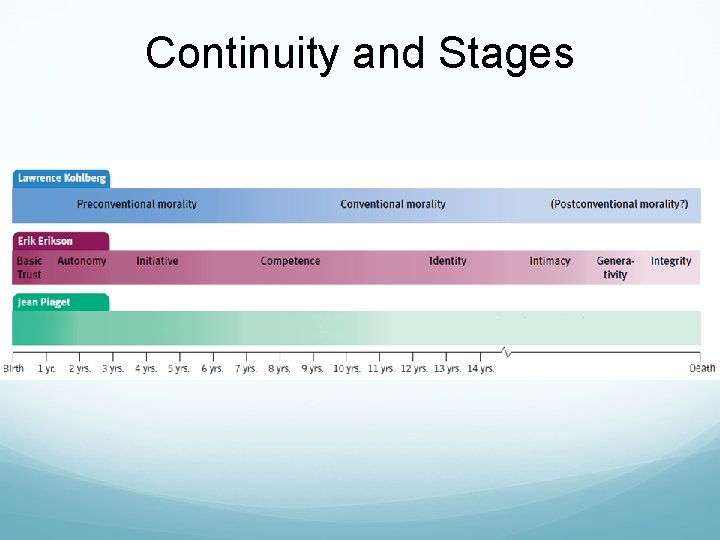
Continuity and Stages
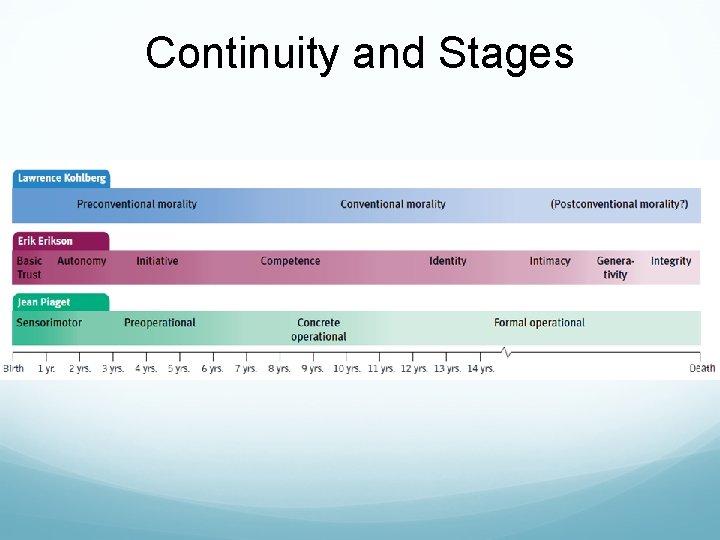
Continuity and Stages
- Slides: 34