
DEVELOPMENTAL PSYCHOLOGY Day 1 Physical Development Piaget Major


- Slides: 20
DEVELOPMENTAL PSYCHOLOGY Day 1: Physical Development & Piaget
Major questions: 1. 2. 3. Nature v. Nurture – How much do genes and experience influence our development? Continuity v. Discontinuity – Is development a gradual continuous process, or does it proceed through separate stages? Stability v. Change – Do personality traits stay the same throughout life or do they change?
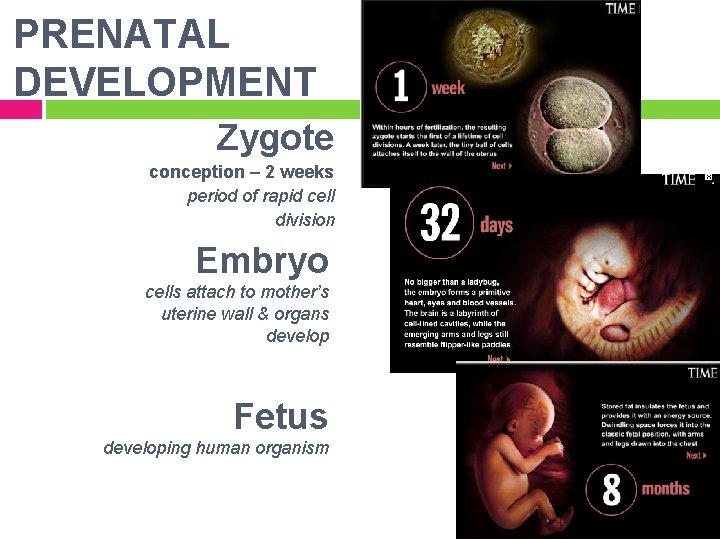
PRENATAL DEVELOPMENT Zygote conception – 2 weeks period of rapid cell division Embryo cells attach to mother’s uterine wall & organs develop Fetus developing human organism
Prenatal Development TERATOGENS: Agents that can reach the developing embryo or fetus and cause harm Alcohol Nicotine Drugs (both prescription drugs & “street” drugs) Viruses (the flu) Toxoplasmosis (contact with cat feces) Food poisoning FETAL ALCOHOL SYNDROME – Birth defects of the baby due to high concentration of alcohol consumption during pregnancy. Side effects = delayed development, low birth weight, smaller head size, facial abnormalities and more
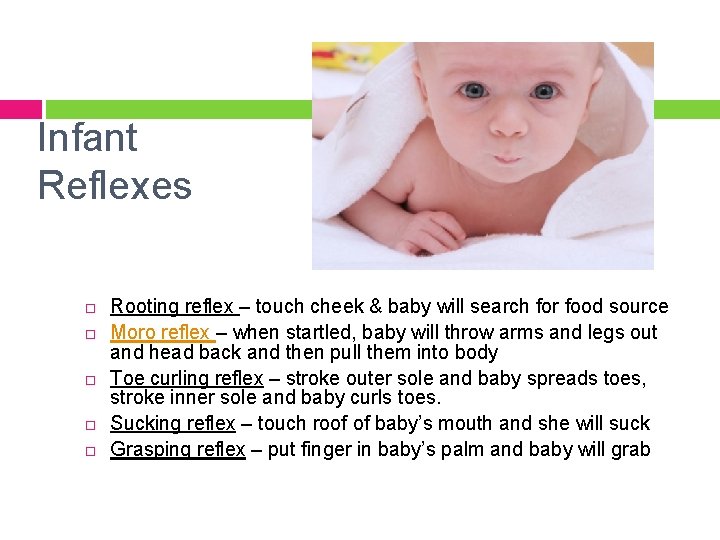
Infant Reflexes Rooting reflex – touch cheek & baby will search for food source Moro reflex – when startled, baby will throw arms and legs out and head back and then pull them into body Toe curling reflex – stroke outer sole and baby spreads toes, stroke inner sole and baby curls toes. Sucking reflex – touch roof of baby’s mouth and she will suck Grasping reflex – put finger in baby’s palm and baby will grab
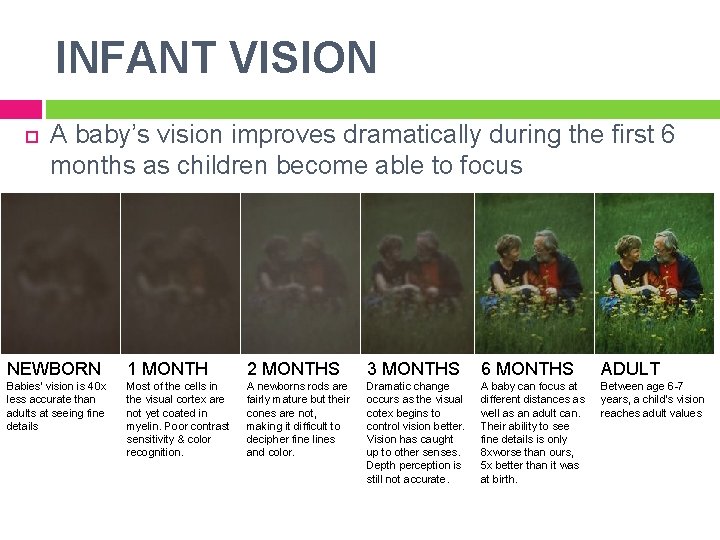
INFANT VISION A baby’s vision improves dramatically during the first 6 months as children become able to focus NEWBORN 1 MONTH 2 MONTHS 3 MONTHS 6 MONTHS ADULT Babies’ vision is 40 x less accurate than adults at seeing fine details Most of the cells in the visual cortex are not yet coated in myelin. Poor contrast sensitivity & color recognition. A newborns rods are fairly mature but their cones are not, making it difficult to decipher fine lines and color. Dramatic change occurs as the visual cotex begins to control vision better. Vision has caught up to other senses. Depth perception is still not accurate. A baby can focus at different distances as well as an adult can. Their ability to see fine details is only 8 xworse than ours, 5 x better than it was at birth. Between age 6 -7 years, a child’s vision reaches adult values
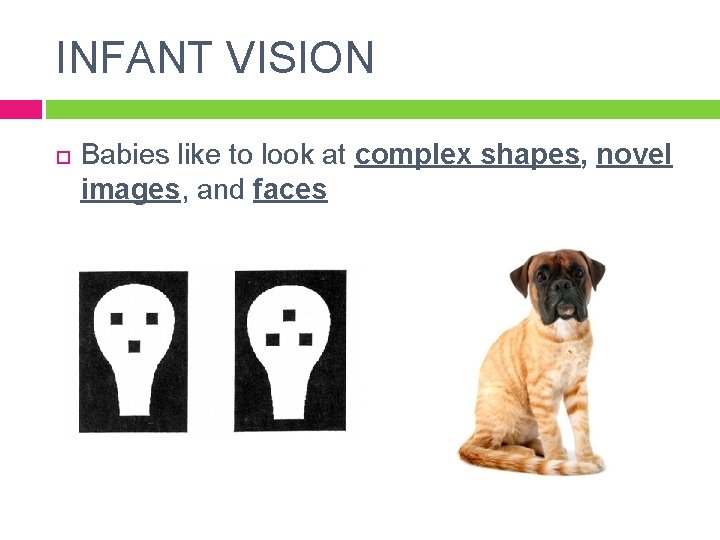
INFANT VISION Babies like to look at complex shapes, novel images, and faces
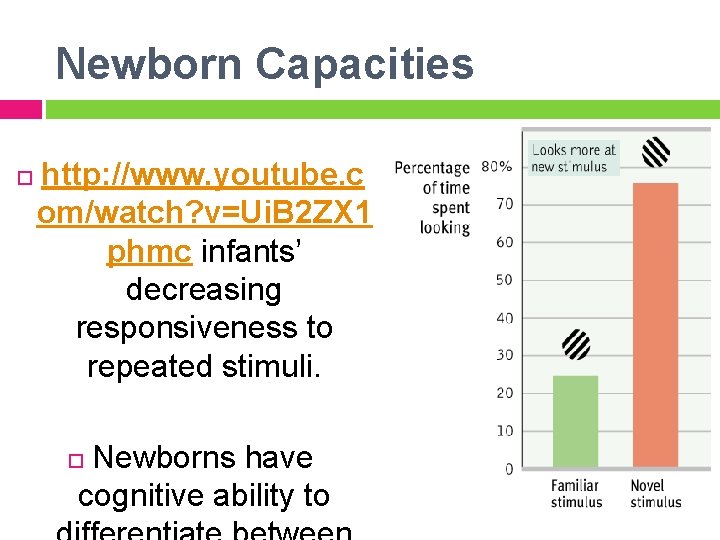
Newborn Capacities http: //www. youtube. c om/watch? v=Ui. B 2 ZX 1 phmc infants’ decreasing responsiveness to repeated stimuli. Newborns have cognitive ability to
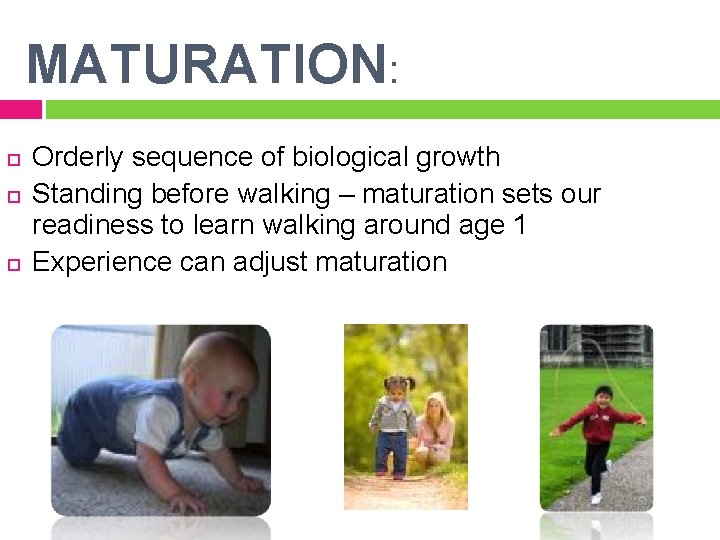
MATURATION: Orderly sequence of biological growth Standing before walking – maturation sets our readiness to learn walking around age 1 Experience can adjust maturation
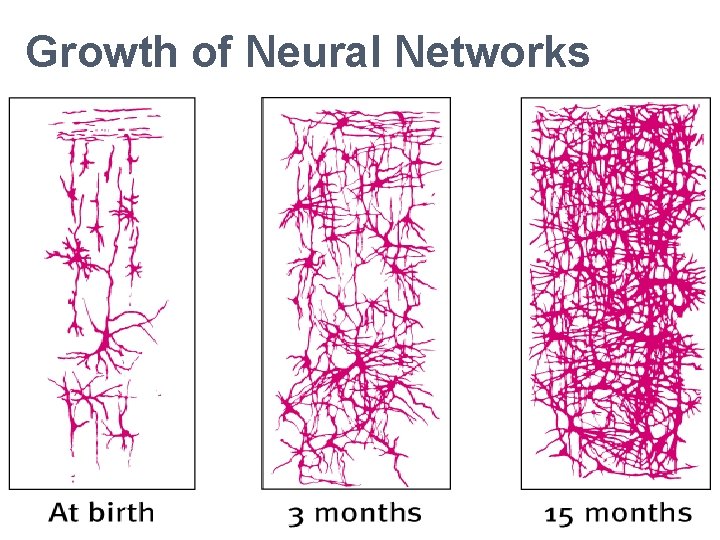
Growth of Neural Networks
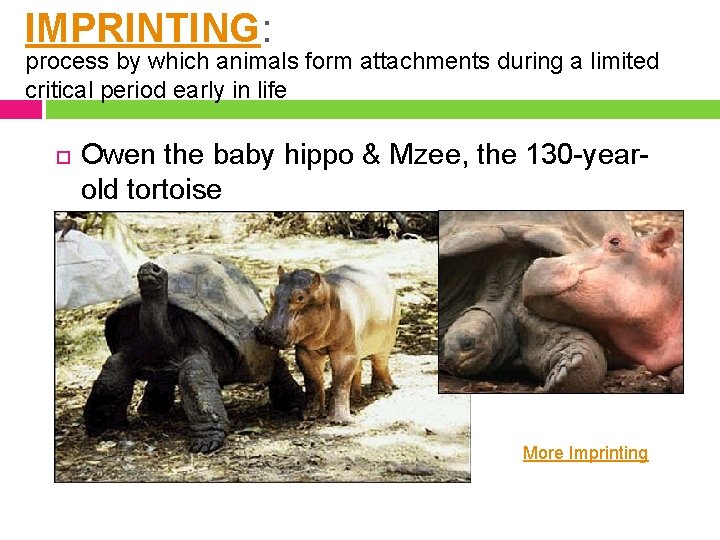
IMPRINTING: process by which animals form attachments during a limited critical period early in life Owen the baby hippo & Mzee, the 130 -yearold tortoise More Imprinting
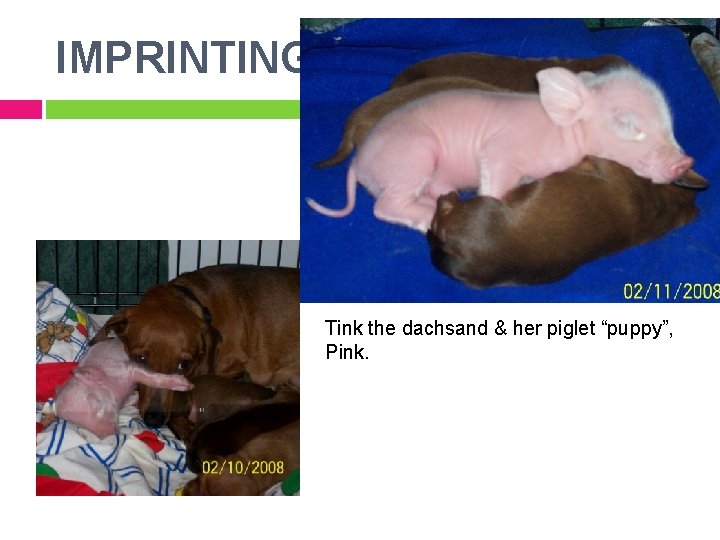
IMPRINTING Tink the dachsand & her piglet “puppy”, Pink.
IMPRINTING: Koko’s Kitten
IMPRINTING
WHAT’S YOUR EARLIEST MEMORY? OUR EARLIEST MEMORIES RARELY PREDATE OUR 3 RD BIRTHDAY. THIS IS CALLED “INFANTILE AMNESIA”. Why don’t we remember earlier events? Our brains are still developing Limited language before age 3 – we remember in words EARLY MEMORY FORMATION
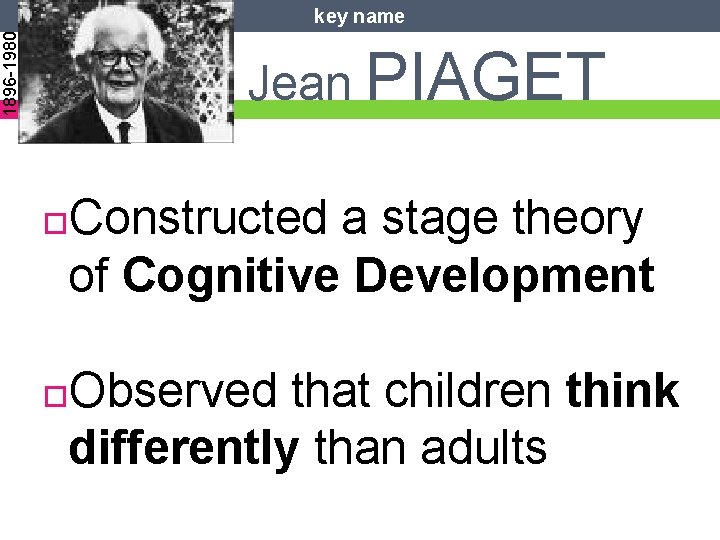
1896 -1980 key name Jean PIAGET Constructed a stage theory of Cognitive Development Observed that children think differently than adults
Piaget’s 4 Stages of Cognitive Development Sensorimotor Birth – 2 years stage 1 Lack object permanence (until about age 8 -10 months) Develop separation anxiety at about 12 months. Stanger anxiety also occurs in this stage.
Piaget’s 4 Stages of Cognitive Development Preoperational 2 – 6 years stage 2 Egocentric (the inability to take another's perspective or even to recognize that others have different perspectives and points of view. ) Learns to use language and to represent objects by images and words Lacks the concept of conservation – quantity remains the same despite changes in shape. Participate in pretend play/role play Animism, or the tendency to attribute psychological properties to inanimate objects.
Piaget’s 4 Stages of Cognitive Development Concrete 7 – 11 years stage By age 7, develop law of conservation Can think logically about objects and events. Can sort objects into multiple categories (color & size, for example) 3
Piaget’s 4 Stages of Cognitive Development Formal 12 years - adult stage 4 Abstract thinking Can think hypothetically Can think about the future and ideological problems