
Developmental Model of Physical Education David Mlodzinski Sheri
- Slides: 12
Developmental Model of Physical Education David Mlodzinski, Sheri Tajmajer
What IS Developmental Education? Developmental education in physical education entails “education through the physical” that enhances cognitive, affective and psychomotor learning.
Four Developmental Objectives Organic Development 2 Neuromuscular Development 3 Intellectual Development 4 Social-Personal-Emotional Development ü 1 ü ü ü
Organic Development • Strength (static, dynamic) • Endurance (muscle, cardiovascular) • Flexibility
Neuromuscular Development • Perceptual motor abilities (balance, kinesthesis, visual discrimination. Auditory discrimination, visual motor coordination, tactile sensitivity) • Fundamental movement skills (body manipulative, object manipulative, sport)
Intellectual Development • Knowledge (rules, safety, etiquette, terms, body functions) • Intellectual skills and abilities (strategies movement judgments, solving movement problems, understanding relationships, understanding immediate and long-range effects
Social-Personal-Emotional Development • Healthy response (Positive reactions to success and failure, appreciation of aesthetics, tension release, fun spectator appreciation) • Self-actualization (awareness of capability) • Self-esteem (individual perception)
Social-Personal-Emotional Development Ex. )The Name Game Objectives: • Socialization • To remember classmates names Movement Experiences: • overhand throwing • catching
Assessment should include cognitive, affective as well as psychomotor domains.
Examples for assessing students Cognitive • Written knowledge test • Verbal explanation of steps Affective • Rating scale Psychomotor • Skills testing
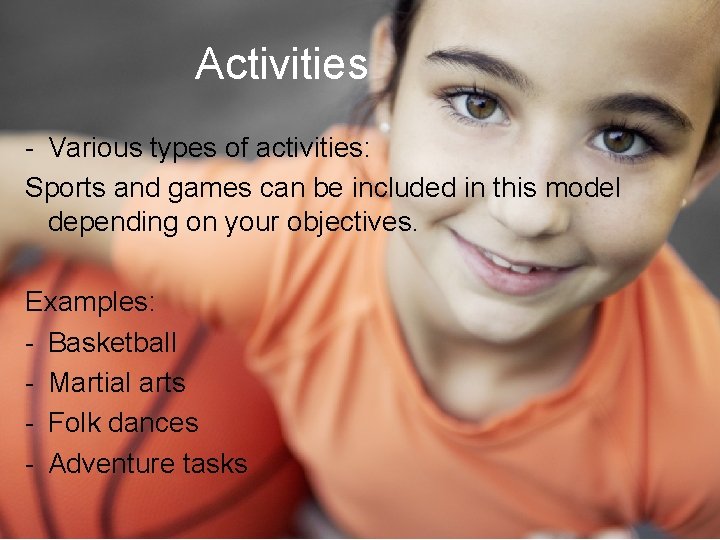
Activities - Various types of activities: Sports and games can be included in this model depending on your objectives. Examples: - Basketball - Martial arts - Folk dances - Adventure tasks