
DEVELOPMENTAL INDIVIDUAL DIFFERENCES RELATIONSHIPBASED DIR MODEL GREENSPAN AND
DEVELOPMENTAL, INDIVIDUAL DIFFERENCES, RELATIONSHIP-BASED (DIR) MODEL GREENSPAN AND WEIDER Jehan Shehata, Outlining DIRtm Model & Approach, March 10, 05 1
FLOORTIME APPROACH: A Comprehensive, Individualized Developmentally Based Interactive Approach Developed by Stanley Greenspan and Serena Weider Jehan Shehata, Outlining DIRtm Model & Approach, March 10, 05 2
RESEARCH CONSENSUS Core Deficits • Difficulties Integrating and Processing Complex Information –Higher Level Thinking: Abstract, reflective thinking, making inferences & generating ideas. (Minshew & Goldstein, 2000. Bishop & Norbury, 2005) • Problems of Relating and Communicating –Relating: Experiencing high levels of relatedness and empathy. (Hillier & Allinson, 2002) –Communicating: Engaging in reciprocal affective interactions as part of a continuous flow of interactive problemsolving. (Minshew & Goldstein, 2000) Jehan Shehata, Outlining DIRtm Model & Approach, March 10, 05 3
Research Consensus The Role of Emotion in Learning and Human Development is supported by: 1. Recent neurological research: 1. Knowledge of the pathways that process emotion • The impact of emotional stress on the brain • The impact of brain lesions on emotional regulation 2. The recognition of the social origins of cognition (Dennis, Lockyer & Lazenby, 2000. Greenspan & Shanker, 2004, p. 22) Jehan Shehata, Outlining DIRtm Model & Approach, March 10, 05 4

Emotional Signaling and Concept Formation Emotional signaling in repeated pleasurable, synchroniesed interactions with significant others in the first years of life leading to the development of images, is the link between sensory perceptions & symbol/concept formation, such as that of the “Mother”. (Greenspan and Shanker, 2004, p. 29) Jehan Shehata, Outlining DIRtm Model & Approach, March 10, 05 5
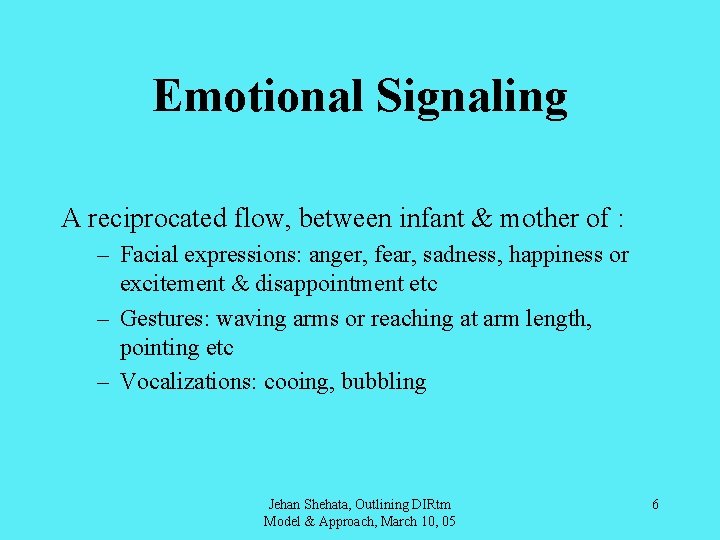
Emotional Signaling A reciprocated flow, between infant & mother of : – Facial expressions: anger, fear, sadness, happiness or excitement & disappointment etc – Gestures: waving arms or reaching at arm length, pointing etc – Vocalizations: cooing, bubbling Jehan Shehata, Outlining DIRtm Model & Approach, March 10, 05 6
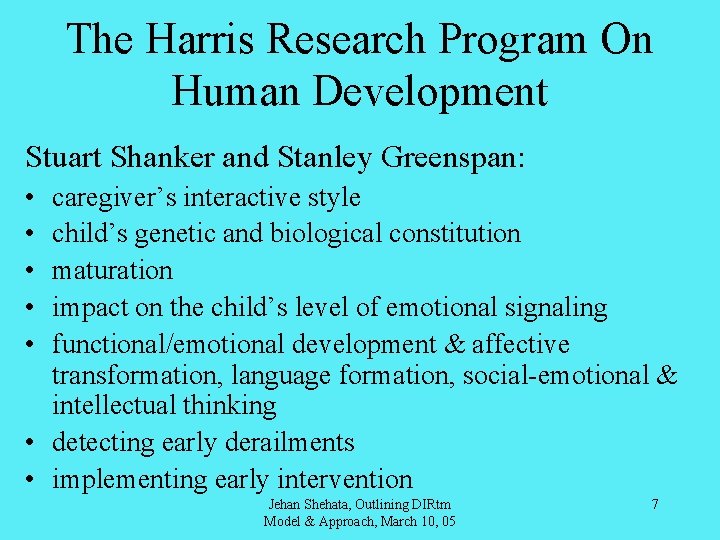
The Harris Research Program On Human Development Stuart Shanker and Stanley Greenspan: • • • caregiver’s interactive style child’s genetic and biological constitution maturation impact on the child’s level of emotional signaling functional/emotional development & affective transformation, language formation, social-emotional & intellectual thinking • detecting early derailments • implementing early intervention Jehan Shehata, Outlining DIRtm Model & Approach, March 10, 05 7
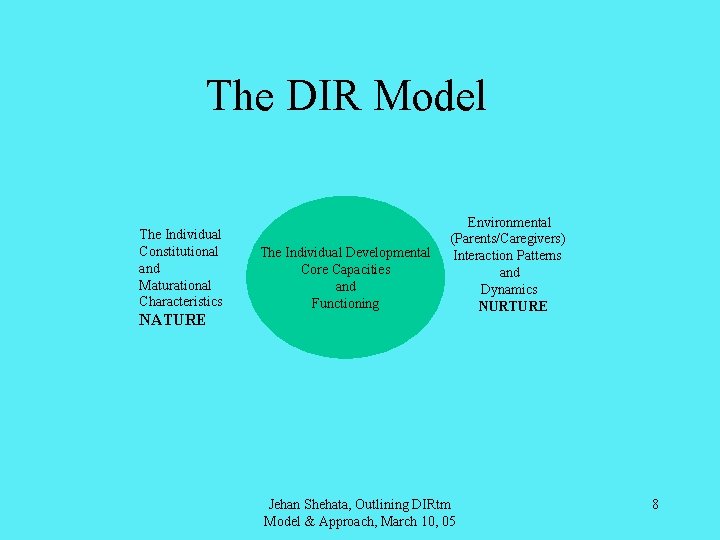
The DIR Model The Individual Constitutional and Maturational Characteristics NATURE The Individual Developmental Core Capacities and Functioning Environmental (Parents/Caregivers) Interaction Patterns and Dynamics NURTURE Jehan Shehata, Outlining DIRtm Model & Approach, March 10, 05 8
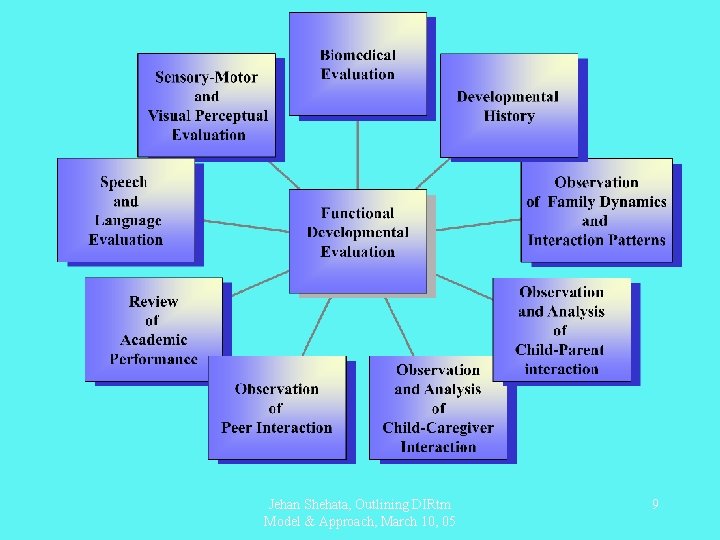
Jehan Shehata, Outlining DIRtm Model & Approach, March 10, 05 9
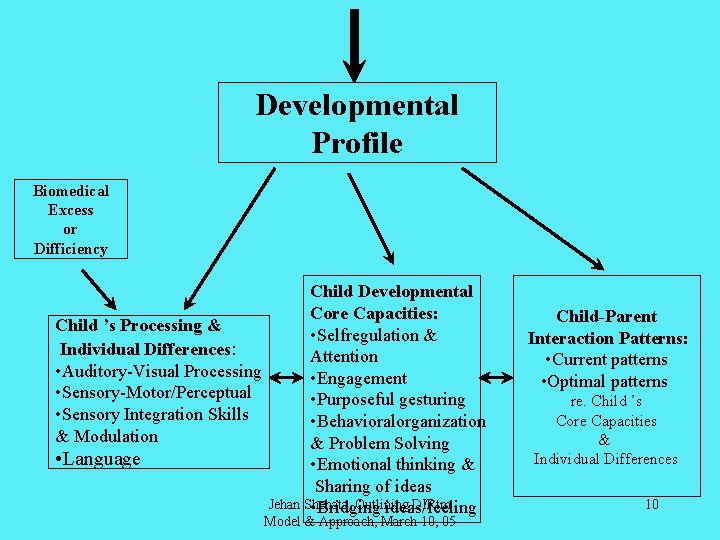
Developmental Profile Biomedical Excess or Difficiency Child Developmental Core Capacities: Child ’s Processing & • Selfregulation & Individual Differences: Attention • Auditory-Visual Processing • Engagement • Sensory-Motor/Perceptual • Purposeful gesturing • Sensory Integration Skills • Behavioralorganization & Modulation & Problem Solving • Language • Emotional thinking & Sharing of ideas Jehan Shehata, Outlining DIRtm • Bridging ideas/feeling Model & Approach, March 10, 05 Child-Parent Interaction Patterns: • Current patterns • Optimal patterns re. Child ’s Core Capacities & Individual Differences 10
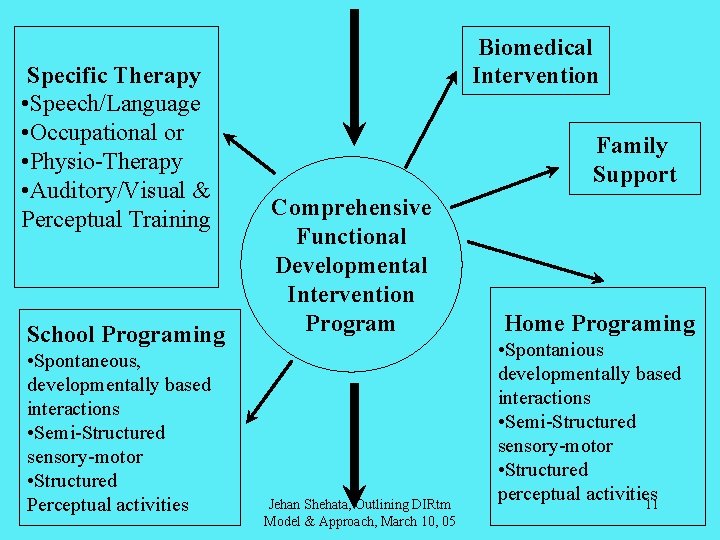
Specific Therapy • Speech/Language • Occupational or • Physio-Therapy • Auditory/Visual & Perceptual Training School Programing • Spontaneous, developmentally based interactions • Semi-Structured sensory-motor • Structured Perceptual activities Biomedical Intervention Family Support Comprehensive Functional Developmental Intervention Program Jehan Shehata, Outlining DIRtm Model & Approach, March 10, 05 Home Programing • Spontanious developmentally based interactions • Semi-Structured sensory-motor • Structured perceptual activities 11
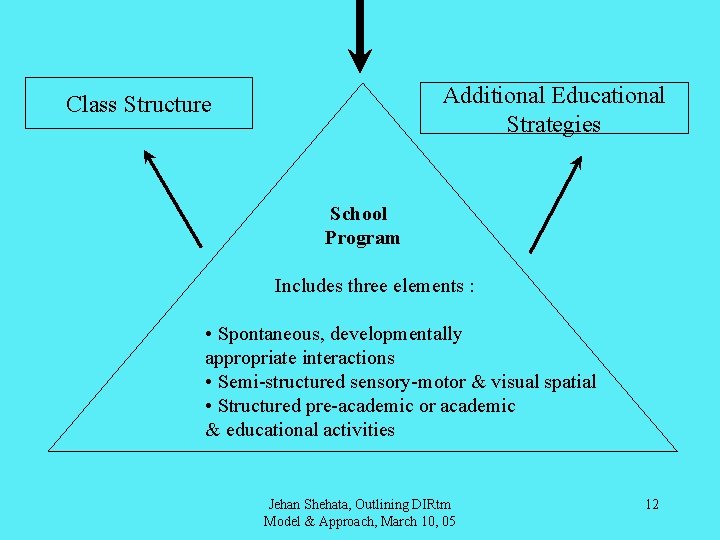
Class Structure Additional Educational Strategies School Program Includes three elements : • Spontaneous, developmentally appropriate interactions • Semi-structured sensory-motor & visual spatial • Structured pre-academic or academic & educational activities Jehan Shehata, Outlining DIRtm Model & Approach, March 10, 05 12
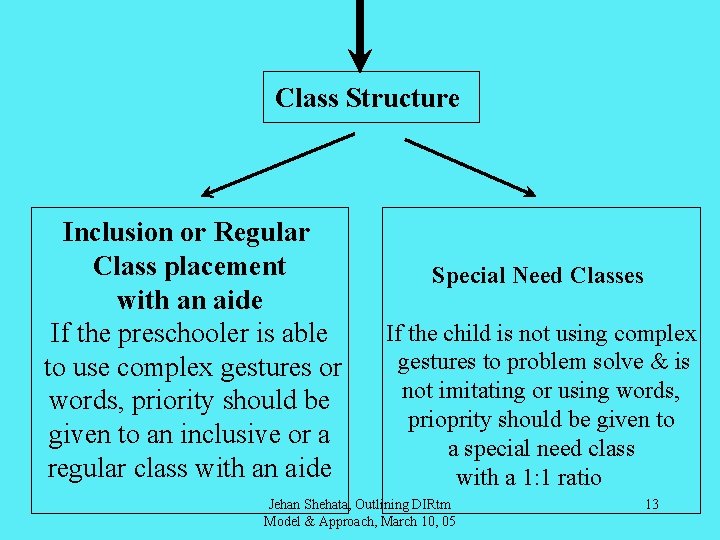
Class Structure Inclusion or Regular Class placement with an aide If the preschooler is able to use complex gestures or words, priority should be given to an inclusive or a regular class with an aide Special Need Classes If the child is not using complex gestures to problem solve & is not imitating or using words, prioprity should be given to a special need class with a 1: 1 ratio Jehan Shehata, Outlining DIRtm Model & Approach, March 10, 05 13
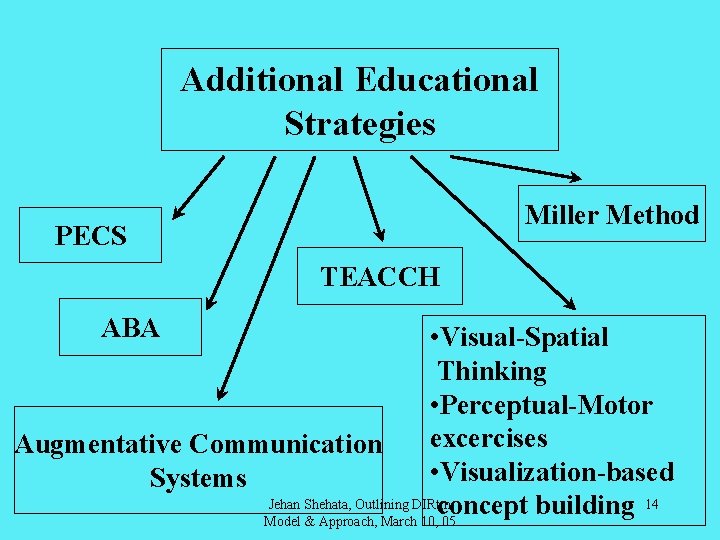
Additional Educational Strategies Miller Method PECS TEACCH ABA • Visual-Spatial Thinking • Perceptual-Motor excercises Augmentative Communication • Visualization-based Systems Jehan Shehata, Outlining DIRtm 14 concept building Model & Approach, March 10, 05
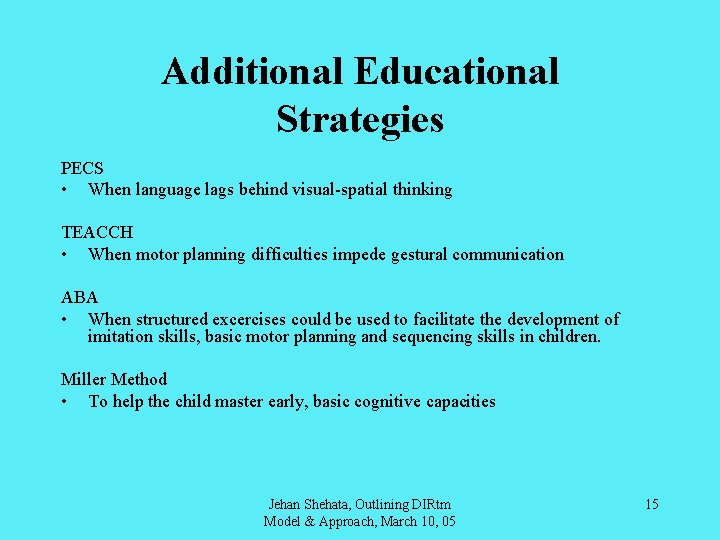
Additional Educational Strategies PECS • When language lags behind visual-spatial thinking TEACCH • When motor planning difficulties impede gestural communication ABA • When structured excercises could be used to facilitate the development of imitation skills, basic motor planning and sequencing skills in children. Miller Method • To help the child master early, basic cognitive capacities Jehan Shehata, Outlining DIRtm Model & Approach, March 10, 05 15
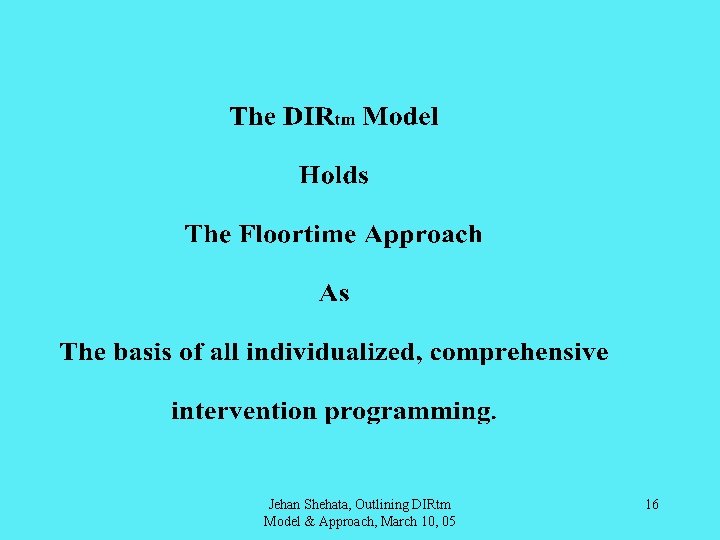
Jehan Shehata, Outlining DIRtm Model & Approach, March 10, 05 16
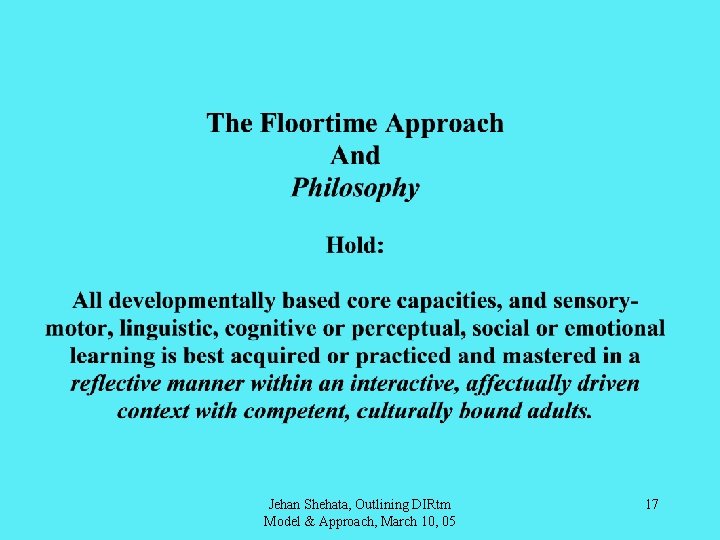
Jehan Shehata, Outlining DIRtm Model & Approach, March 10, 05 17
Jehan Shehata, Outlining DIRtm Model & Approach, March 10, 05 18
Jehan Shehata, Outlining DIRtm Model & Approach, March 10, 05 19
Jehan Shehata, Outlining DIRtm Model & Approach, March 10, 05 20
Jehan Shehata, Outlining DIRtm Model & Approach, March 10, 05 21
- Slides: 21