Developmental Approaches OT 460 A Week 4 Many
- Slides: 11
Developmental Approaches OT 460 A Week 4
• Many different theories • Some end at adolescence (like Freud) and some at old age (like Erikson) • Age is never a good or true measure of development • Persons with disabilities may have differences between their chronological age and developmental expectations 9/18/2012 Theories of Human Development 2
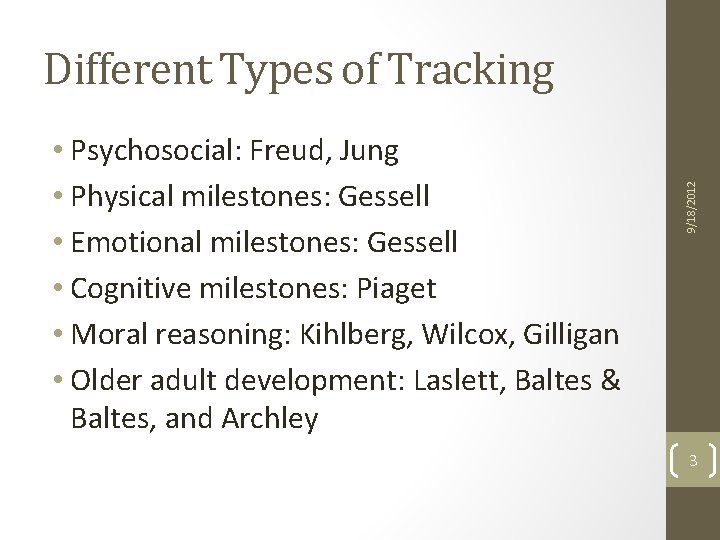
• Psychosocial: Freud, Jung • Physical milestones: Gessell • Emotional milestones: Gessell • Cognitive milestones: Piaget • Moral reasoning: Kihlberg, Wilcox, Gilligan • Older adult development: Laslett, Baltes & Baltes, and Archley 9/18/2012 Different Types of Tracking 3
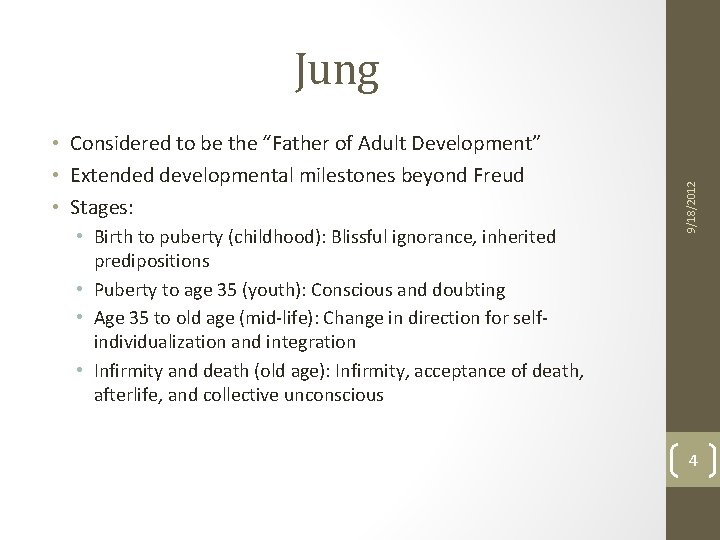
• Considered to be the “Father of Adult Development” • Extended developmental milestones beyond Freud • Stages: • Birth to puberty (childhood): Blissful ignorance, inherited predipositions • Puberty to age 35 (youth): Conscious and doubting • Age 35 to old age (mid-life): Change in direction for selfindividualization and integration • Infirmity and death (old age): Infirmity, acceptance of death, afterlife, and collective unconscious 9/18/2012 Jung 4
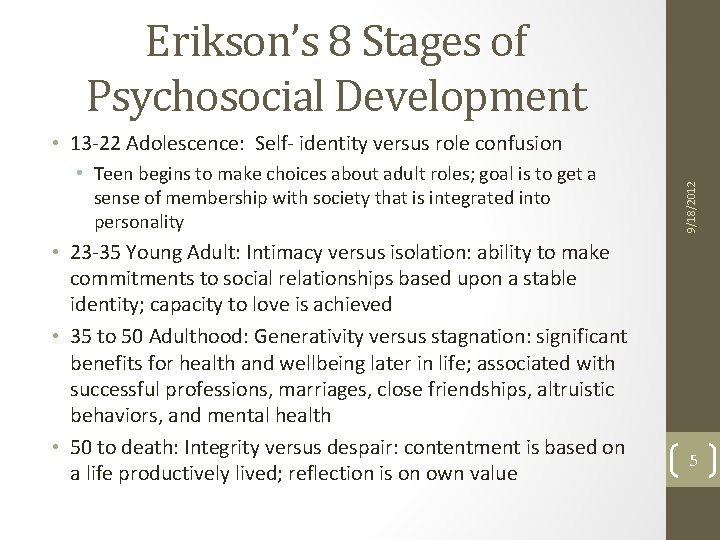
Erikson’s 8 Stages of Psychosocial Development • Teen begins to make choices about adult roles; goal is to get a sense of membership with society that is integrated into personality • 23 -35 Young Adult: Intimacy versus isolation: ability to make commitments to social relationships based upon a stable identity; capacity to love is achieved • 35 to 50 Adulthood: Generativity versus stagnation: significant benefits for health and wellbeing later in life; associated with successful professions, marriages, close friendships, altruistic behaviors, and mental health • 50 to death: Integrity versus despair: contentment is based on a life productively lived; reflection is on own value 9/18/2012 • 13 -22 Adolescence: Self- identity versus role confusion 5
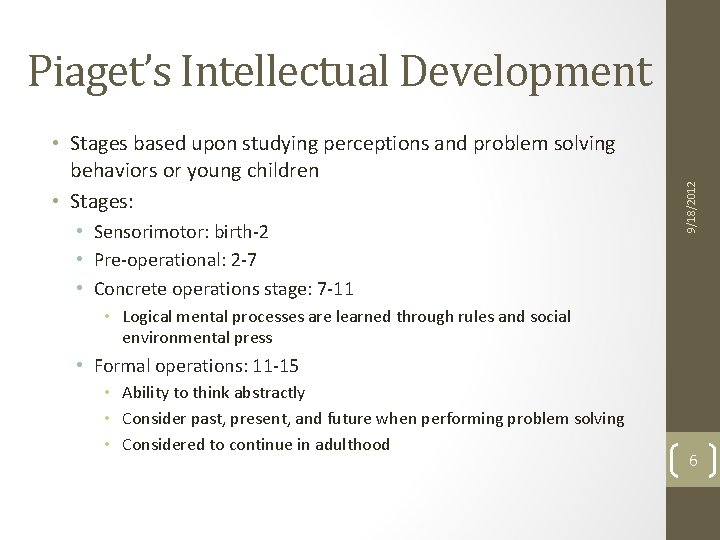
• Stages based upon studying perceptions and problem solving behaviors or young children • Stages: • Sensorimotor: birth-2 • Pre-operational: 2 -7 • Concrete operations stage: 7 -11 9/18/2012 Piaget’s Intellectual Development • Logical mental processes are learned through rules and social environmental press • Formal operations: 11 -15 • Ability to think abstractly • Consider past, present, and future when performing problem solving • Considered to continue in adulthood 6
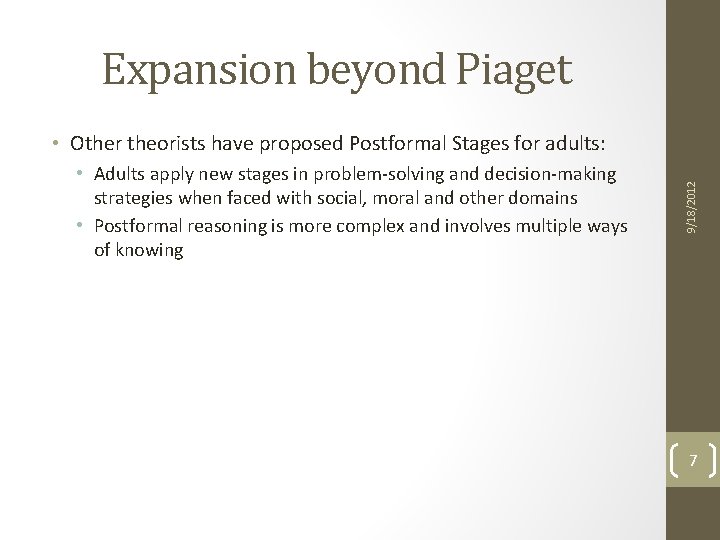
Expansion beyond Piaget • Adults apply new stages in problem-solving and decision-making strategies when faced with social, moral and other domains • Postformal reasoning is more complex and involves multiple ways of knowing 9/18/2012 • Other theorists have proposed Postformal Stages for adults: 7
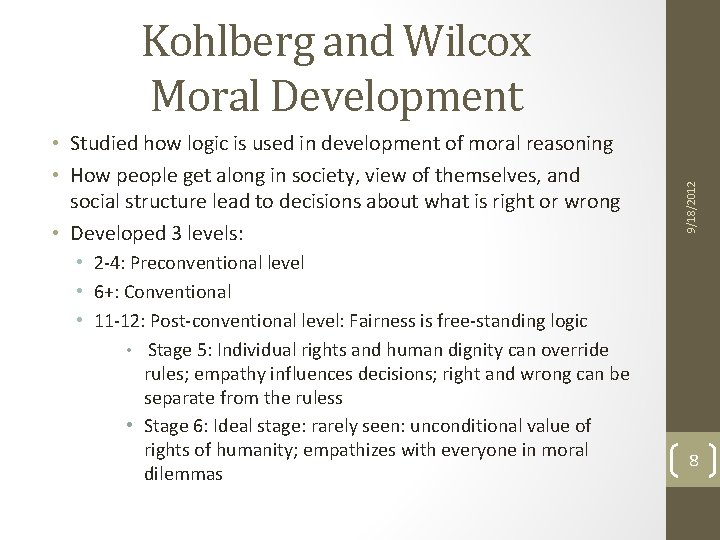
• Studied how logic is used in development of moral reasoning • How people get along in society, view of themselves, and social structure lead to decisions about what is right or wrong • Developed 3 levels: • 2 -4: Preconventional level • 6+: Conventional • 11 -12: Post-conventional level: Fairness is free-standing logic • Stage 5: Individual rights and human dignity can override rules; empathy influences decisions; right and wrong can be separate from the ruless • Stage 6: Ideal stage: rarely seen: unconditional value of rights of humanity; empathizes with everyone in moral dilemmas 9/18/2012 Kohlberg and Wilcox Moral Development 8
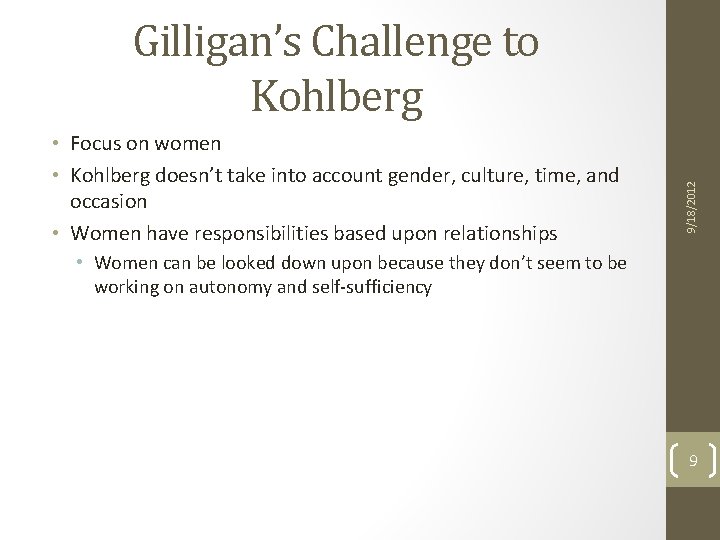
• Focus on women • Kohlberg doesn’t take into account gender, culture, time, and occasion • Women have responsibilities based upon relationships 9/18/2012 Gilligan’s Challenge to Kohlberg • Women can be looked down upon because they don’t seem to be working on autonomy and self-sufficiency 9
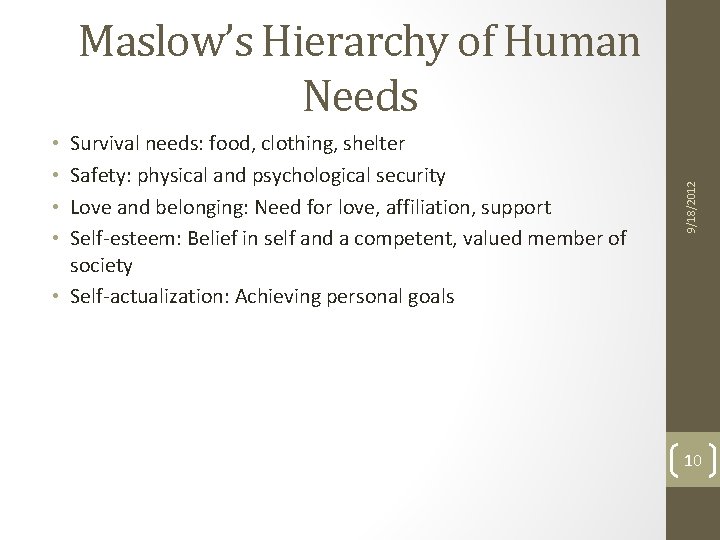
Survival needs: food, clothing, shelter Safety: physical and psychological security Love and belonging: Need for love, affiliation, support Self-esteem: Belief in self and a competent, valued member of society • Self-actualization: Achieving personal goals • • 9/18/2012 Maslow’s Hierarchy of Human Needs 10
• Decide whether you believe in linear stages • Look for delays based upon illness, injury, disability, life circumstances • Design interventions that promote growth 9/18/2012 What Does all of this Mean to OT? 11