
DEVELOPMENT PLANNING PERSPECTIVES TECHNIQUES AND APPROACHES NARHARI GHIMIRE

- Slides: 27
DEVELOPMENT PLANNING PERSPECTIVES, TECHNIQUES AND APPROACHES NARHARI GHIMIRE NATIONAL PLANNING COMMISSION NGHIMIRE@NPC. GOV. NP
OUTLINE 3 • Development Planning The Concept • Development Planning and Development Plan • Planning Periods 4 • Planning Techniques 5 • Planning Approaches 6 • Planning Institutions 7 • Plan Contents 8 • Planning Techniques Used in Nepal 1 2
OUTLINE 9 10 11 12 • Planning Cycle • Planning Process • Planned Development in Nepal. Challenges and Issues • Major Highlights of 15 th Plan
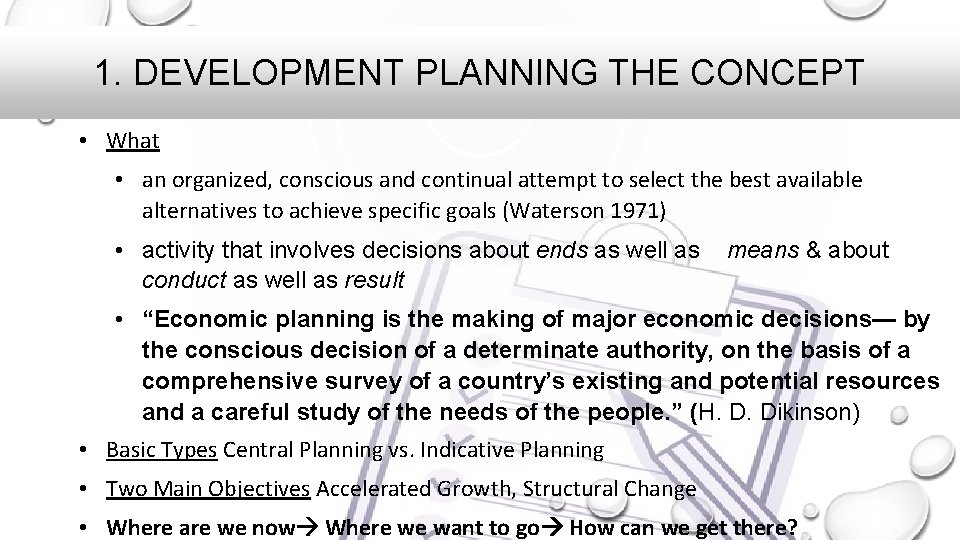
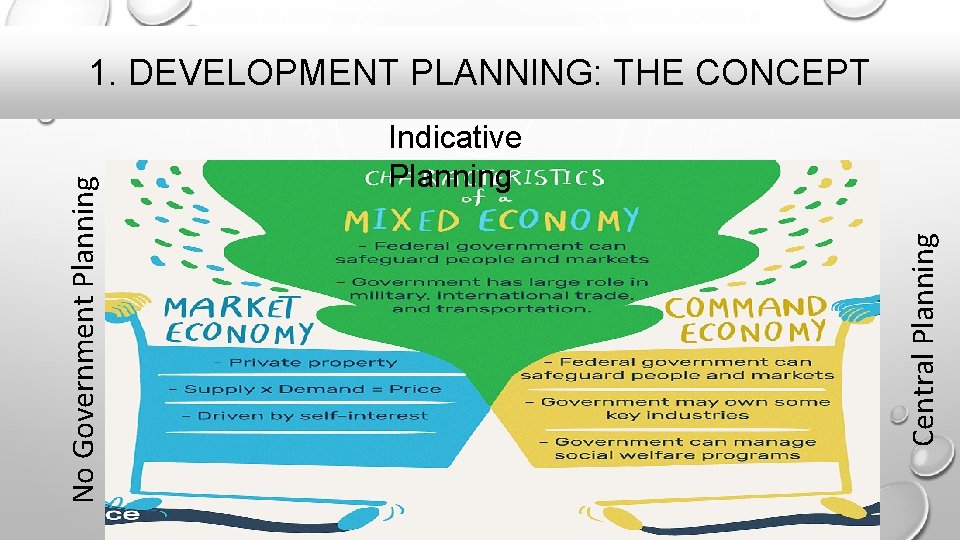
1. DEVELOPMENT PLANNING THE CONCEPT • What • an organized, conscious and continual attempt to select the best available alternatives to achieve specific goals (Waterson 1971) • activity that involves decisions about ends as well as conduct as well as result means & about • “Economic planning is the making of major economic decisions— by the conscious decision of a determinate authority, on the basis of a comprehensive survey of a country’s existing and potential resources and a careful study of the needs of the people. ” (H. D. Dikinson) • Basic Types Central Planning vs. Indicative Planning • Two Main Objectives Accelerated Growth, Structural Change • Where are we now Where we want to go How can we get there?
1. DEVELOPMENT PLANNING: THE CONCEPT
Indicative Planning Central Planning No Government Planning 1. DEVELOPMENT PLANNING: THE CONCEPT
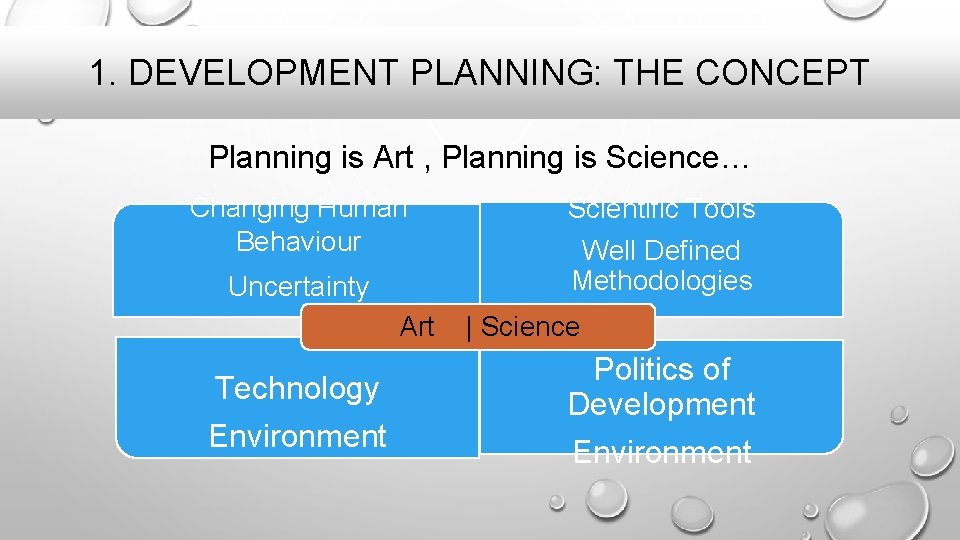
1. DEVELOPMENT PLANNING: THE CONCEPT Planning is Art , Planning is Science… Changing Human Behaviour Uncertainty Art Technology Environment Scientific Tools Well Defined Methodologies | Science Politics of Development Environment
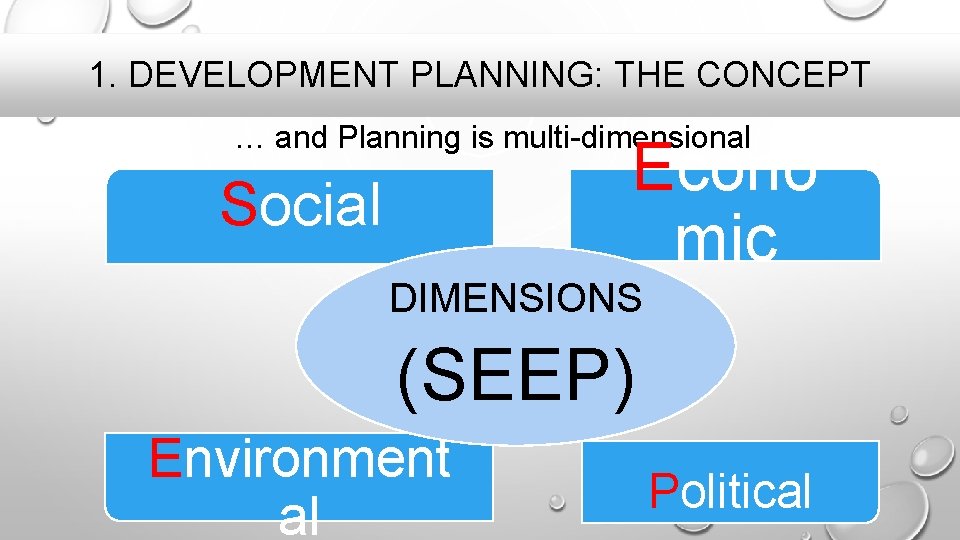
1. DEVELOPMENT PLANNING: THE CONCEPT … and Planning is multi-dimensional Econo mic Social DIMENSIONS (SEEP) Environment al Political
1. DEVELOPMENT PLANNING: THE CONCEPT Why Planning 1. Optimum Use of Resources 2. Rapid Economic Development 3. Economic Stability 4. Balanced Growth 5. Better Solution of Basic Problem 6. Right use and Conservation of Natural Resources 7. Economic and Social Justice 8. Production according to Needs 9. Inter-Generational Balance (Justice) 10. Attainment of full Employment 11. Farsightedness
2. DEVELOPMENT PLANNING AND DEVELOPMENT PLAN Planning • Process • Tools of Planning, Approach, Methodology Plan • Tool for Development • Not Necessarily Sufficient for Development
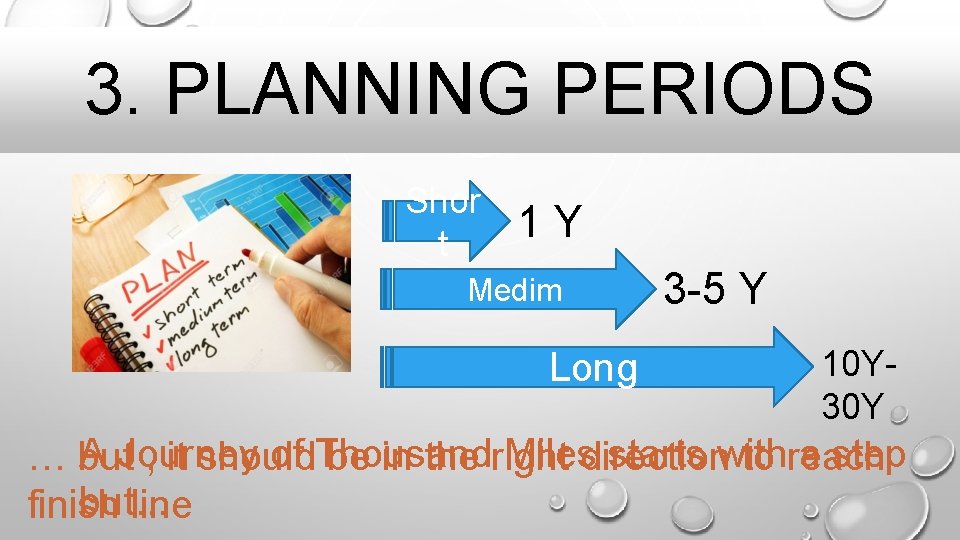
3. PLANNING PERIODS Shor t 1 Y Medim Long 3 -5 Y 10 Y 30 Y A Journey of Thousand Milesdirection starts with a step … but , it should be in the right to reach but. . . finish line
4. PLANNING TECHNIQUES • Harod-Domar (HD) Growth Model • Neo-Classical Growth Models • Input-Output Model
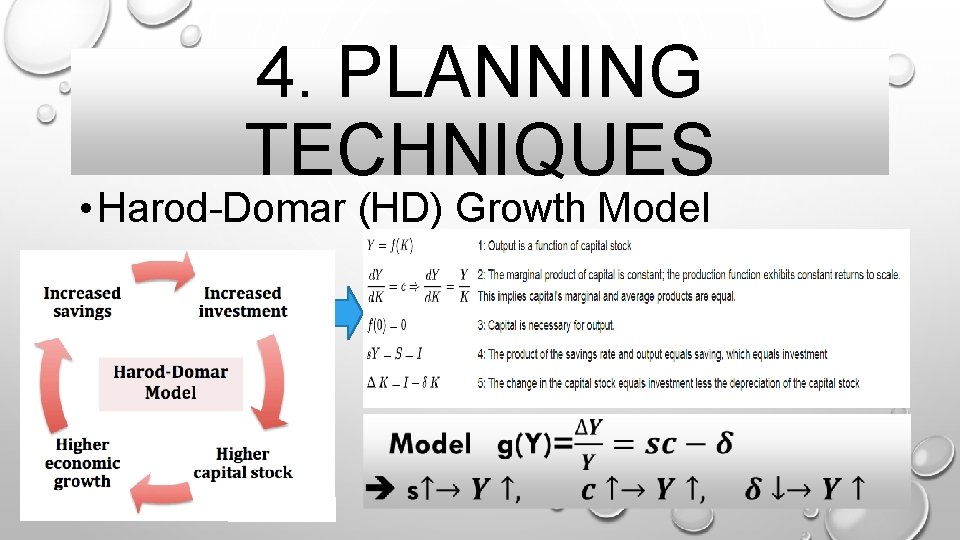
4. PLANNING TECHNIQUES • Harod-Domar (HD) Growth Model
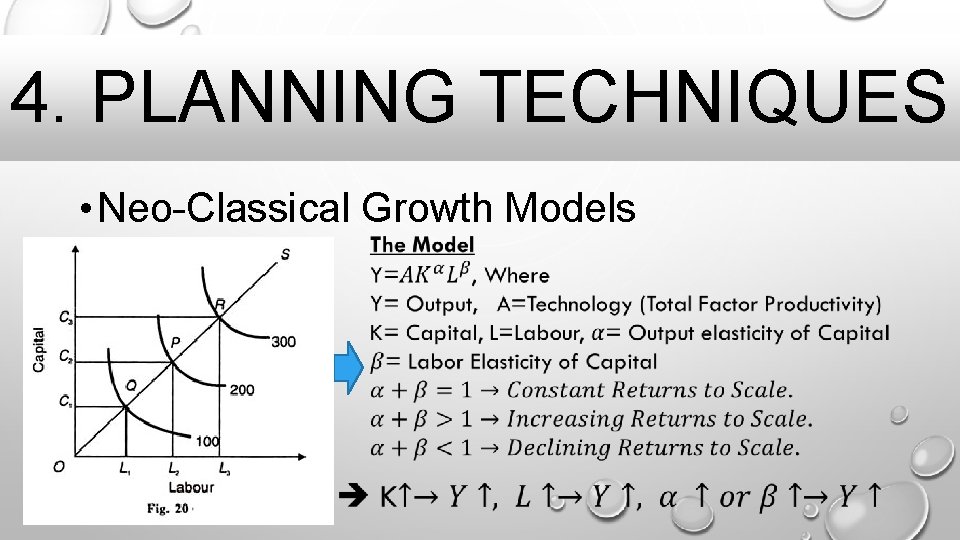
4. PLANNING TECHNIQUES • Neo-Classical Growth Models
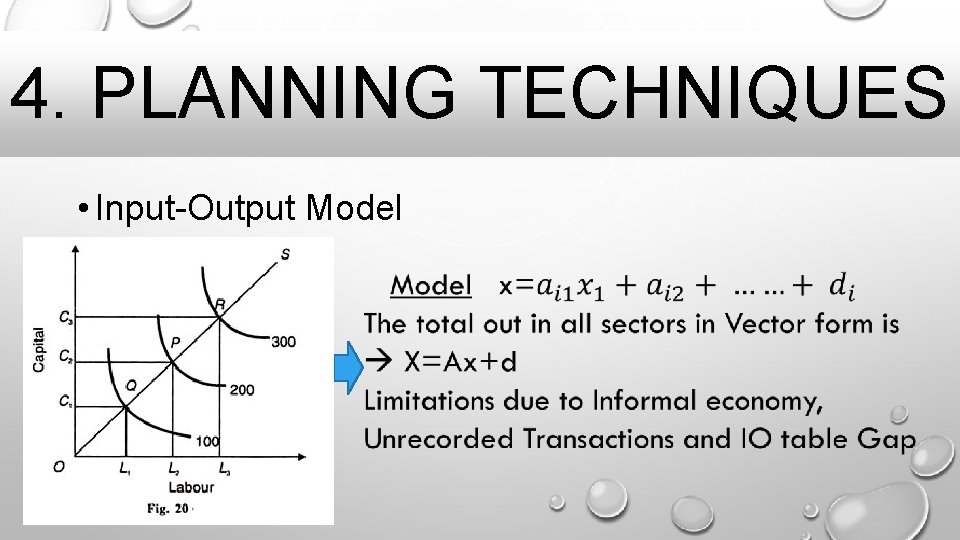
4. PLANNING TECHNIQUES • Input-Output Model
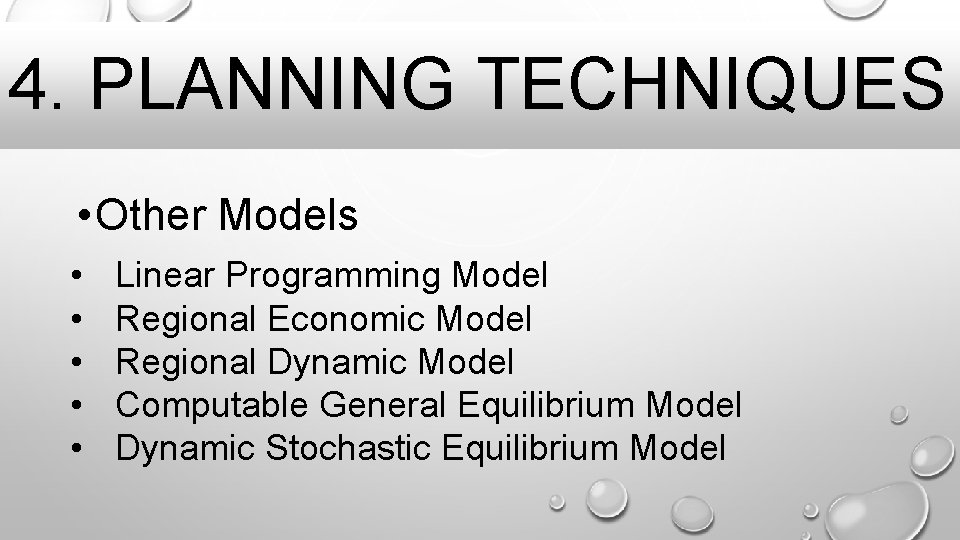
4. PLANNING TECHNIQUES • Other Models • • • Linear Programming Model Regional Economic Model Regional Dynamic Model Computable General Equilibrium Model Dynamic Stochastic Equilibrium Model
• • 5. PLANNING APPROACHES Level Int’l, Regional, Sub-regional, National, Central, District, Local; Location Rural/Urban, Accessible/Remote; Process Top-down, bottom-up; lateral; Time Perspective, periodic, rolling and annual; Sectoral Physical, Poverty, Environmental, health, education, forestry, agricultural etc. Instrumental Regulatory, Allocative, Development and indicative (private sector development; Other models Strategic, Zero-based, Incremental.
6. PLANNING INSTITUTIONS • The Cabinet • The National Development Council (NDC) • The National Planning Commission (NPC) • Provincial Planning Commissions (PPC) • Local Governments • Ministry of Economic Affairs and planning, • Sector Ministries (Federal and Provincial)– Planning Division or Section
7. PLAN CONTENTS Survey of Current Economic Situation Objectives, Targets, Strategies and Programs Proposed Expenditure Macro Projection
8. PLANNING TECHNIQUES USED IN NEPAL • BROAD CONSENSUS ON NATIONAL TARGETS (MACRO OBJECTIVES) • SETTING NATIONAL GOALS AND STRATEGIES • PRIORITIZATION • PARTICIPATION • ALIGNMENT WITH INTERNATIONAL COMMITMENTS AND AGENDAS • CONSULTATION AND APPROVAL
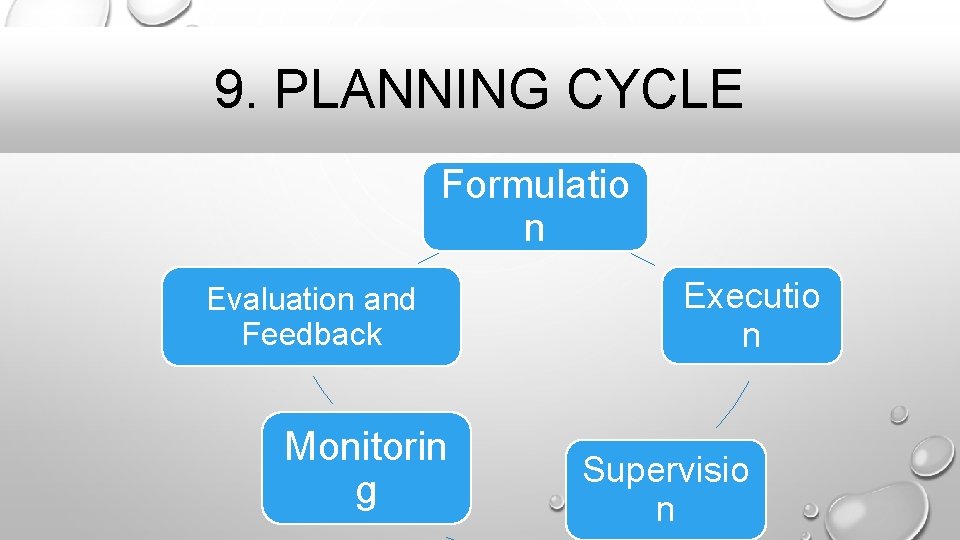
9. PLANNING CYCLE Formulatio n Evaluation and Feedback Monitorin g Executio n Supervisio n
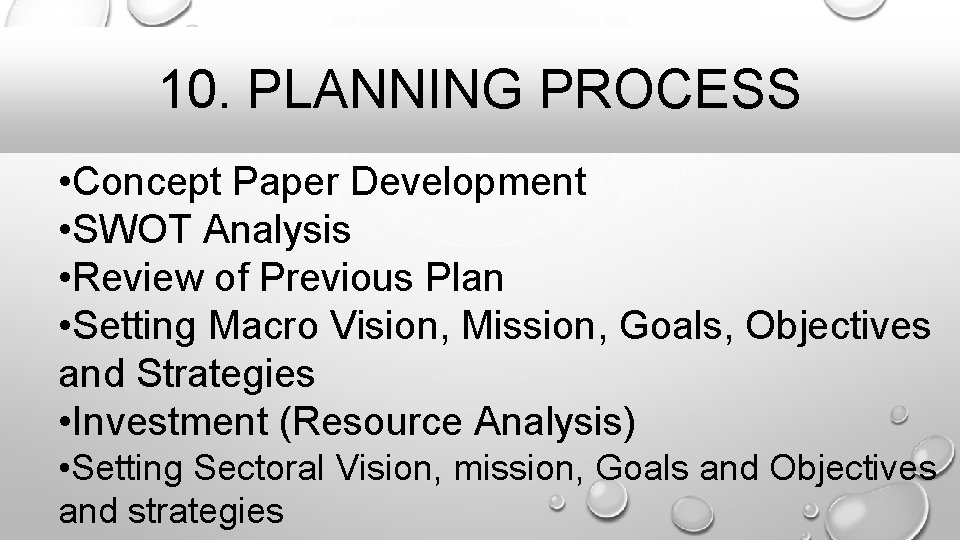
10. PLANNING PROCESS • Concept Paper Development • SWOT Analysis • Review of Previous Plan • Setting Macro Vision, Mission, Goals, Objectives and Strategies • Investment (Resource Analysis) • Setting Sectoral Vision, mission, Goals and Objectives and strategies
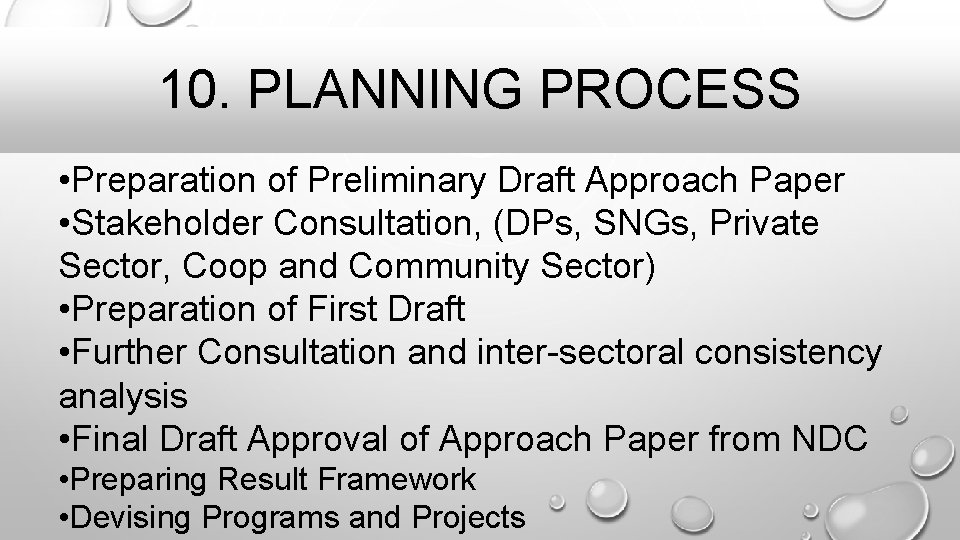
10. PLANNING PROCESS • Preparation of Preliminary Draft Approach Paper • Stakeholder Consultation, (DPs, SNGs, Private Sector, Coop and Community Sector) • Preparation of First Draft • Further Consultation and inter-sectoral consistency analysis • Final Draft Approval of Approach Paper from NDC • Preparing Result Framework • Devising Programs and Projects
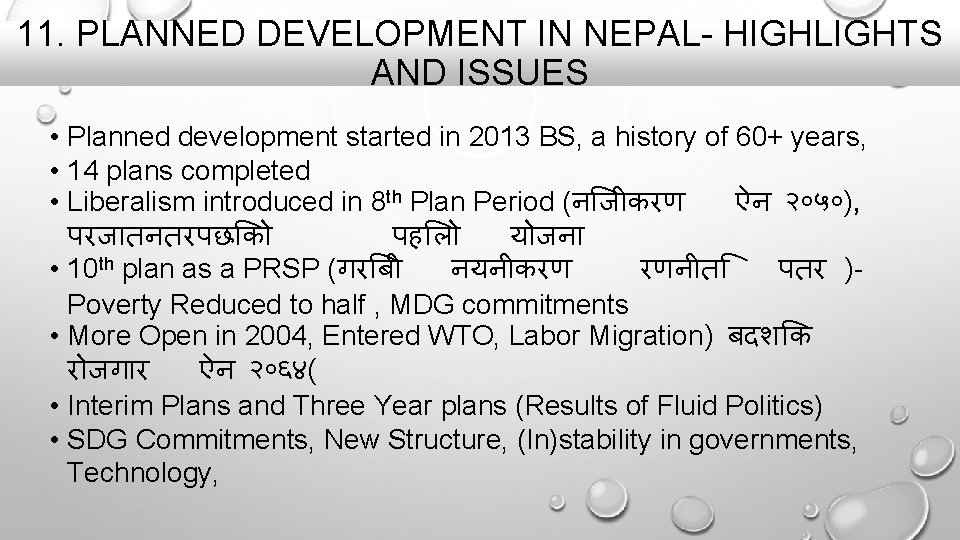
11. PLANNED DEVELOPMENT IN NEPAL- HIGHLIGHTS AND ISSUES • Planned development started in 2013 BS, a history of 60+ years, • 14 plans completed • Liberalism introduced in 8 th Plan Period (न ज करण ऐन २०५०), परज तनतरपछ क पह ल य जन • 10 th plan as a PRSP (गर ब नयन करण रणन त पतर )Poverty Reduced to half , MDG commitments • More Open in 2004, Entered WTO, Labor Migration) बदश क र जग र ऐन २०६४( • Interim Plans and Three Year plans (Results of Fluid Politics) • SDG Commitments, New Structure, (In)stability in governments, Technology,
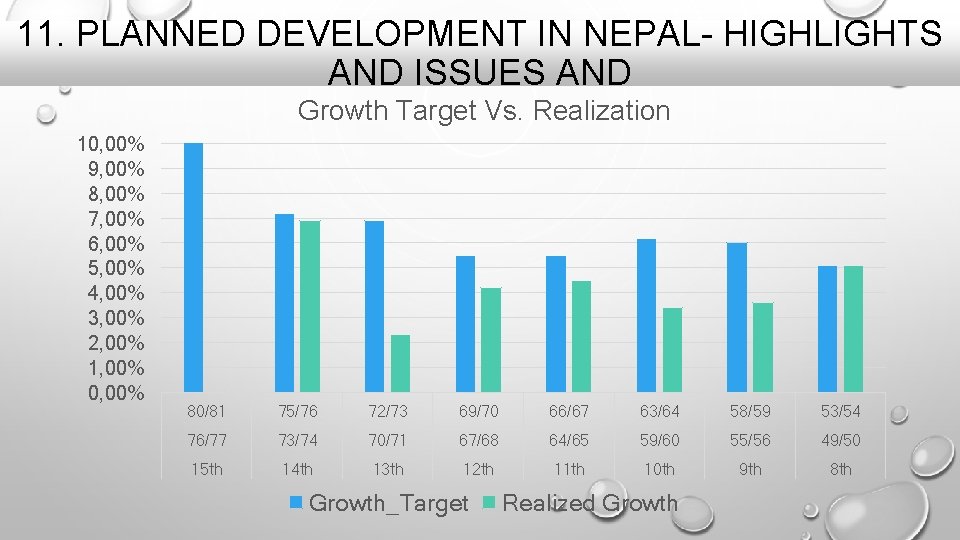
11. PLANNED DEVELOPMENT IN NEPAL- HIGHLIGHTS AND ISSUES AND Growth Target Vs. Realization 10, 00% 9, 00% 8, 00% 7, 00% 6, 00% 5, 00% 4, 00% 3, 00% 2, 00% 1, 00% 0, 00% 80/81 75/76 72/73 69/70 66/67 63/64 58/59 53/54 76/77 73/74 70/71 67/68 64/65 59/60 55/56 49/50 15 th 14 th 13 th 12 th 11 th 10 th 9 th 8 th Growth_Target Realized Growth
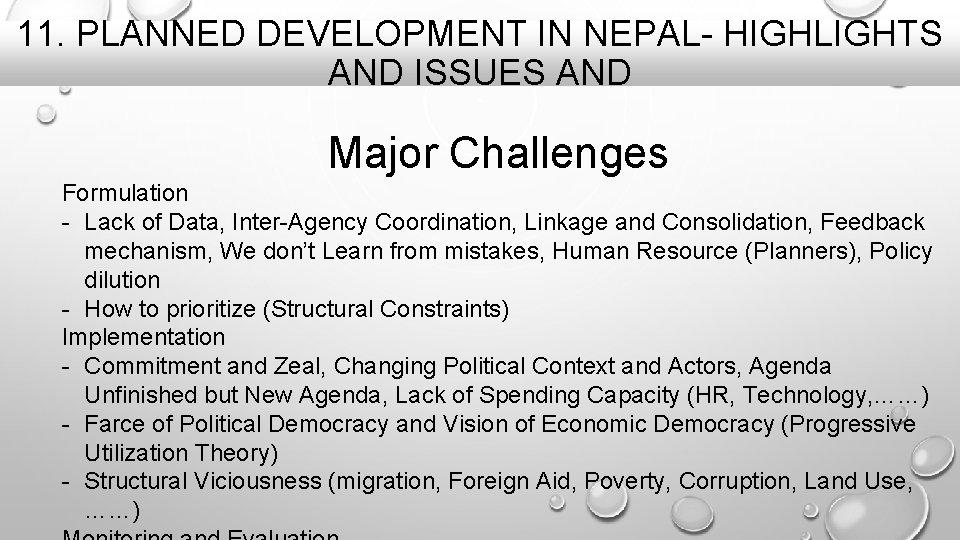
11. PLANNED DEVELOPMENT IN NEPAL- HIGHLIGHTS AND ISSUES AND Major Challenges Formulation - Lack of Data, Inter-Agency Coordination, Linkage and Consolidation, Feedback mechanism, We don’t Learn from mistakes, Human Resource (Planners), Policy dilution - How to prioritize (Structural Constraints) Implementation - Commitment and Zeal, Changing Political Context and Actors, Agenda Unfinished but New Agenda, Lack of Spending Capacity (HR, Technology, ……) - Farce of Political Democracy and Vision of Economic Democracy (Progressive Utilization Theory) - Structural Viciousness (migration, Foreign Aid, Poverty, Corruption, Land Use, ……)
12. MAJOR HIGHLIGHTS OF Open TH 15 PLAN