
Development of Whey Protein Based Edible Films with
Development of Whey Protein Based Edible Films with p. H-controlled Release for Active Packaging Derya Boyacı İzmir Institute of Technology Turkey
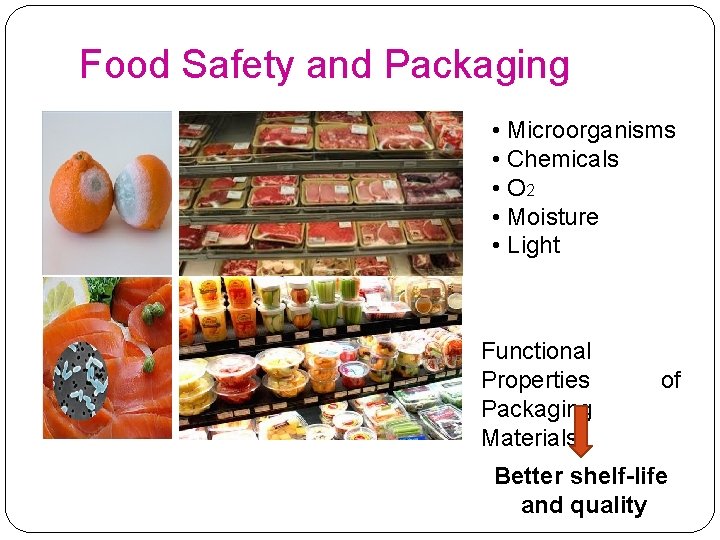
Food Safety and Packaging • Microorganisms • Chemicals • O 2 • Moisture • Light Functional Properties Packaging Materials of Better shelf-life and quality
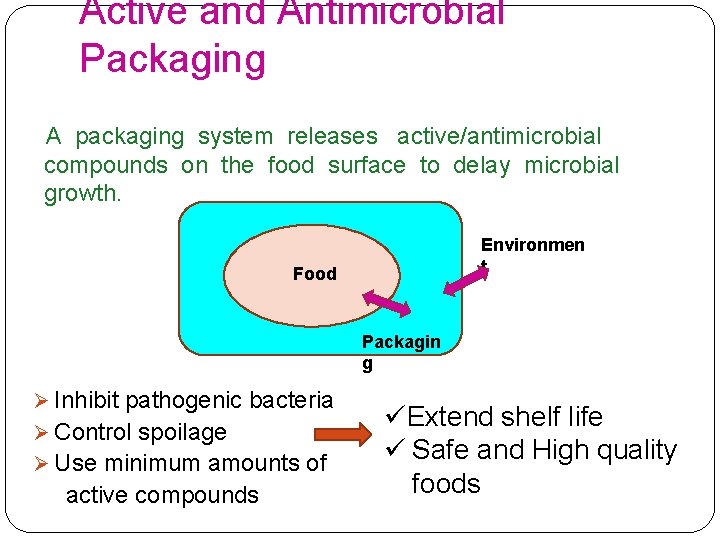
Active and Antimicrobial Packaging A packaging system releases active/antimicrobial compounds on the food surface to delay microbial growth. Environmen t Food Packagin g Ø Inhibit pathogenic bacteria Ø Control spoilage Ø Use minimum amounts of active compounds üExtend shelf life ü Safe and High quality foods
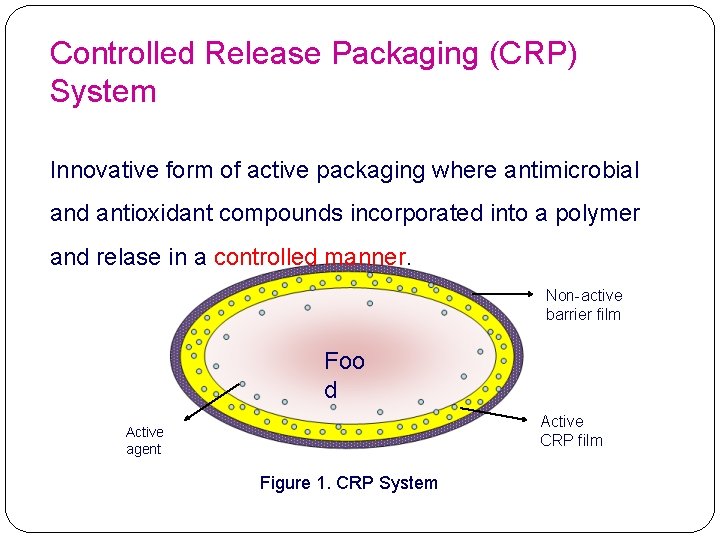
Controlled Release Packaging (CRP) System Innovative form of active packaging where antimicrobial and antioxidant compounds incorporated into a polymer and relase in a controlled manner. Non-active barrier film Foo d Active CRP film Active agent Figure 1. CRP System
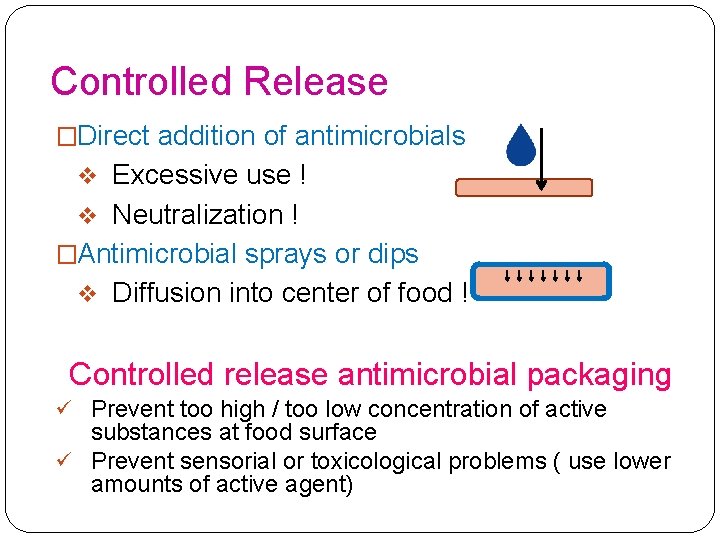
Controlled Release �Direct addition of antimicrobials v Excessive use ! v Neutralization ! �Antimicrobial sprays or dips v Diffusion into center of food ! Controlled release antimicrobial packaging ü Prevent too high / too low concentration of active substances at food surface ü Prevent sensorial or toxicological problems ( use lower amounts of active agent)
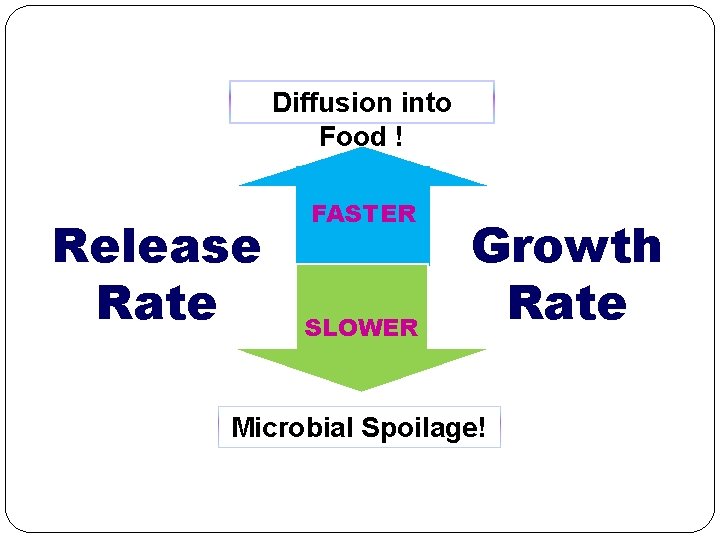
Diffusion into Food ! Release Rate FASTER SLOWER Growth Rate Microbial Spoilage!
p. H-Controlled Release in WPI films �p. H-triggering mechanism for controlled release of lysozyme from WPI films �Can be triggered by adjusting the p. H of food when antimicrobial activity is needed � Before cold storage � After freezing-thawing � Before transportation and market display
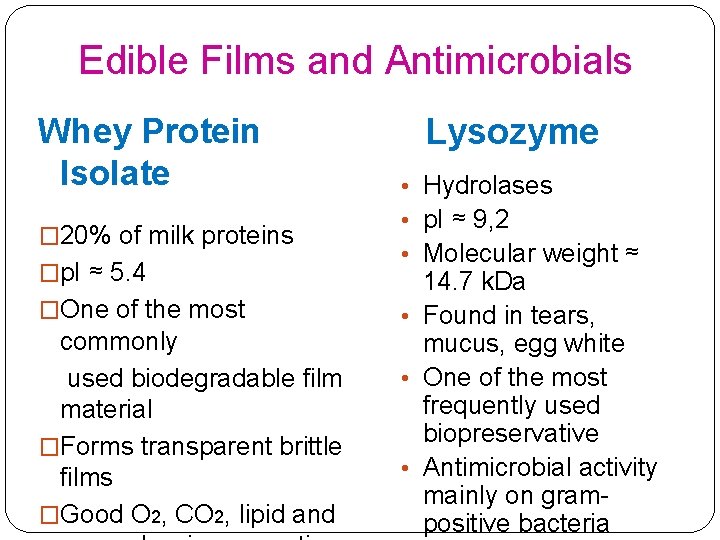
Edible Films and Antimicrobials Whey Protein Isolate � 20% of milk proteins �p. I ≈ 5. 4 �One of the most commonly used biodegradable film material �Forms transparent brittle films �Good O 2, CO 2, lipid and Lysozyme • Hydrolases • p. I ≈ 9, 2 • Molecular weight ≈ 14. 7 k. Da • Found in tears, mucus, egg white • One of the most frequently used biopreservative • Antimicrobial activity mainly on grampositive bacteria
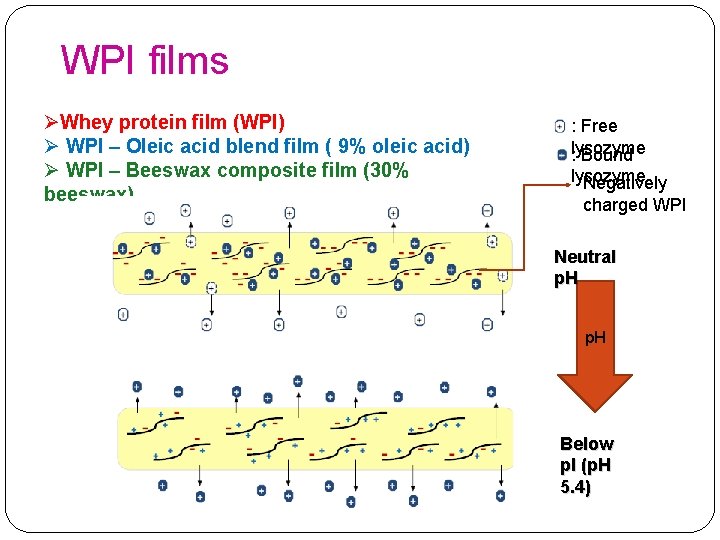
WPI films ØWhey protein film (WPI) Ø WPI – Oleic acid blend film ( 9% oleic acid) Ø WPI – Beeswax composite film (30% beeswax) : Free lysozyme : Bound lysozyme Negatively charged WPI Neutral p. H Below p. I (p. H 5. 4)
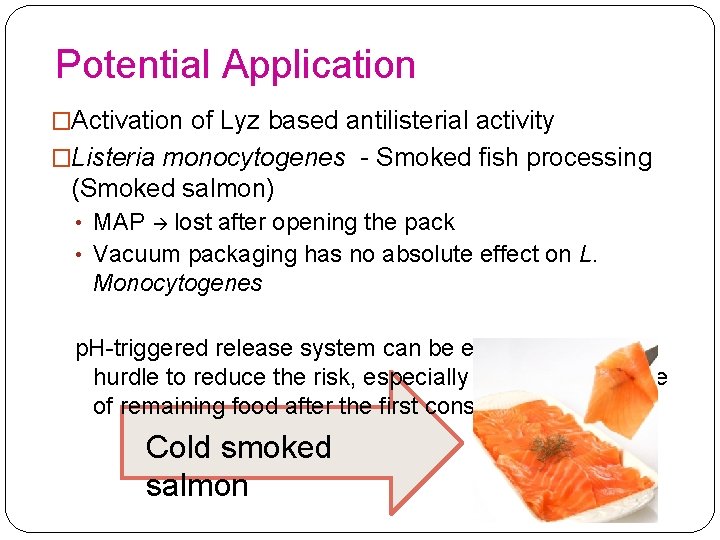
Potential Application �Activation of Lyz based antilisterial activity �Listeria monocytogenes - Smoked fish processing (Smoked salmon) • MAP lost after opening the pack • Vacuum packaging has no absolute effect on L. Monocytogenes p. H-triggered release system can be employed as a hurdle to reduce the risk, especially during the storage of remaining food after the first consumption. Cold smoked salmon
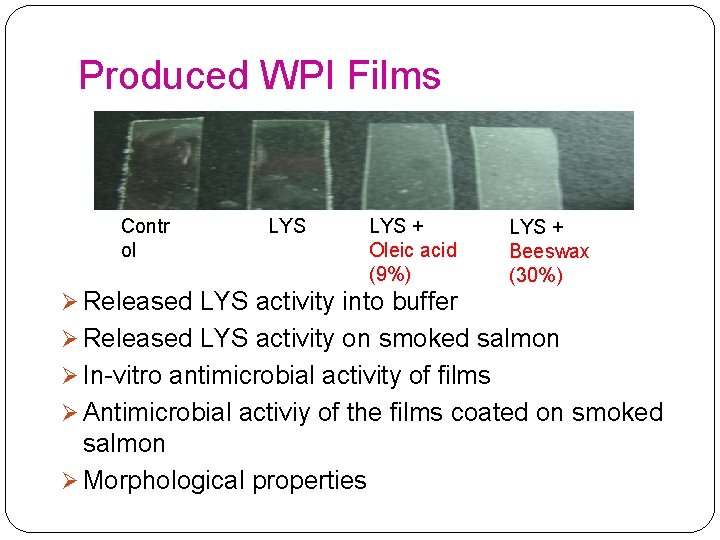
Produced WPI Films Contr ol LYS + Oleic acid (9%) LYS + Beeswax (30%) Ø Released LYS activity into buffer Ø Released LYS activity on smoked salmon Ø In-vitro antimicrobial activity of films Ø Antimicrobial activiy of the films coated on smoked salmon Ø Morphological properties
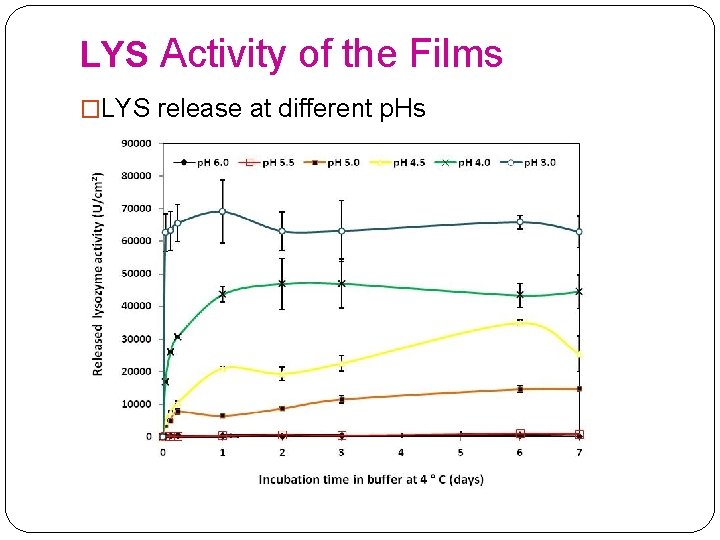
LYS Activity of the Films �LYS release at different p. Hs
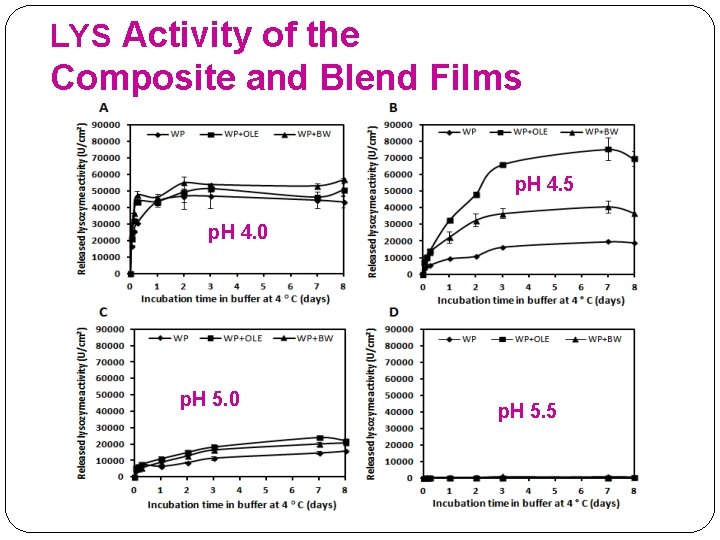
LYS Activity of the Composite and Blend Films p. H 4. 5 p. H 4. 0 p. H 5. 5
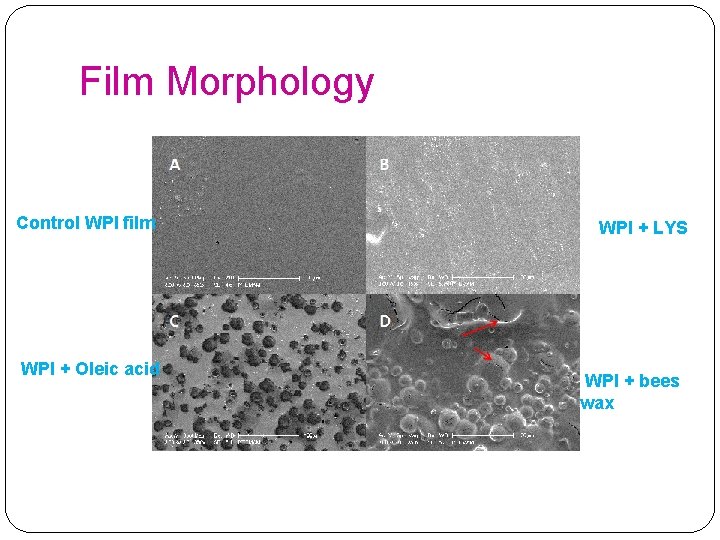
Film Morphology Control WPI film WPI + Oleic acid WPI + LYS WPI + bees wax
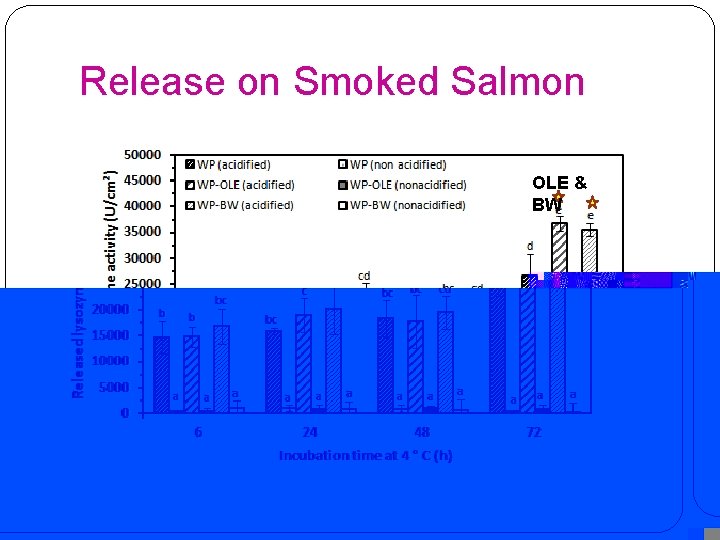
Release on Smoked Salmon OLE & BW
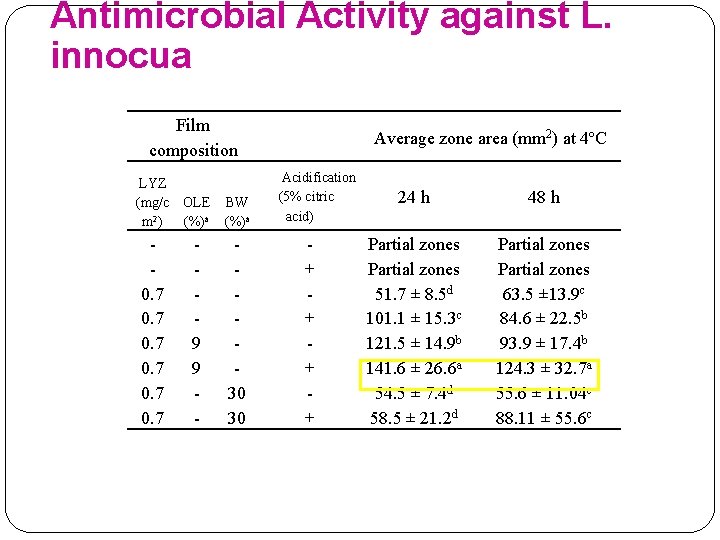
Antimicrobial Activity against L. innocua Film composition LYZ (mg/c m 2) OLE (%)a BW (%)a 0. 7 0. 7 9 9 - 30 30 Average zone area (mm 2) at 4ºC Acidification (5% citric acid) + + 24 h 48 h Partial zones 51. 7 ± 8. 5 d 101. 1 ± 15. 3 c 121. 5 ± 14. 9 b 141. 6 ± 26. 6 a 54. 5 ± 7. 4 d 58. 5 ± 21. 2 d Partial zones 63. 5 ± 13. 9 c 84. 6 ± 22. 5 b 93. 9 ± 17. 4 b 124. 3 ± 32. 7 a 55. 6 ± 11. 04 c 88. 11 ± 55. 6 c
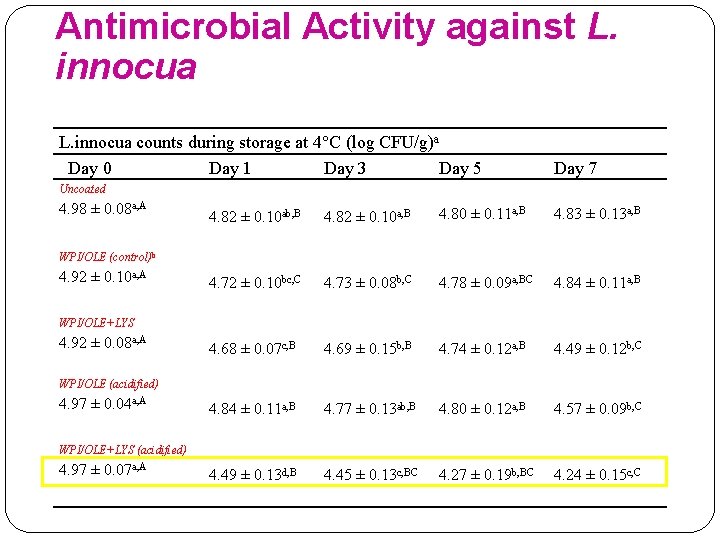
Antimicrobial Activity against L. innocua counts during storage at 4°C (log CFU/g)a Day 0 Day 1 Day 3 Day 5 Day 7 Uncoated 4. 98 ± 0. 08 a, A 4. 82 ± 0. 10 ab, B 4. 82 ± 0. 10 a, B 4. 80 ± 0. 11 a, B 4. 83 ± 0. 13 a, B 4. 72 ± 0. 10 bc, C 4. 73 ± 0. 08 b, C 4. 78 ± 0. 09 a, BC 4. 84 ± 0. 11 a, B 4. 68 ± 0. 07 c, B 4. 69 ± 0. 15 b, B 4. 74 ± 0. 12 a, B 4. 49 ± 0. 12 b, C 4. 84 ± 0. 11 a, B 4. 77 ± 0. 13 ab, B 4. 80 ± 0. 12 a, B 4. 57 ± 0. 09 b, C 4. 49 ± 0. 13 d, B 4. 45 ± 0. 13 c, BC 4. 27 ± 0. 19 b, BC 4. 24 ± 0. 15 c, C WPI/OLE (control)b 4. 92 ± 0. 10 a, A WPI/OLE+LYS 4. 92 ± 0. 08 a, A WPI/OLE (acidified) 4. 97 ± 0. 04 a, A WPI/OLE+LYS (acidified) 4. 97 ± 0. 07 a, A
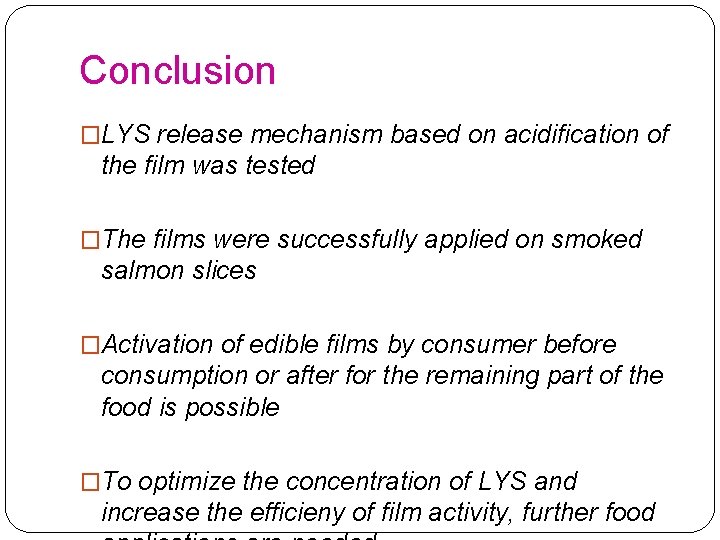
Conclusion �LYS release mechanism based on acidification of the film was tested �The films were successfully applied on smoked salmon slices �Activation of edible films by consumer before consumption or after for the remaining part of the food is possible �To optimize the concentration of LYS and increase the efficieny of film activity, further food

- Slides: 19