
Development of the urinary system Dr Altdorfer Development

- Slides: 21
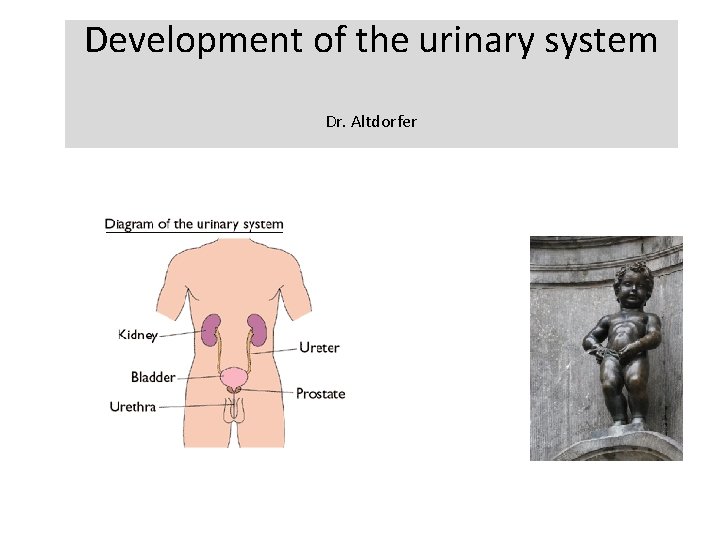
Development of the urinary system Dr. Altdorfer
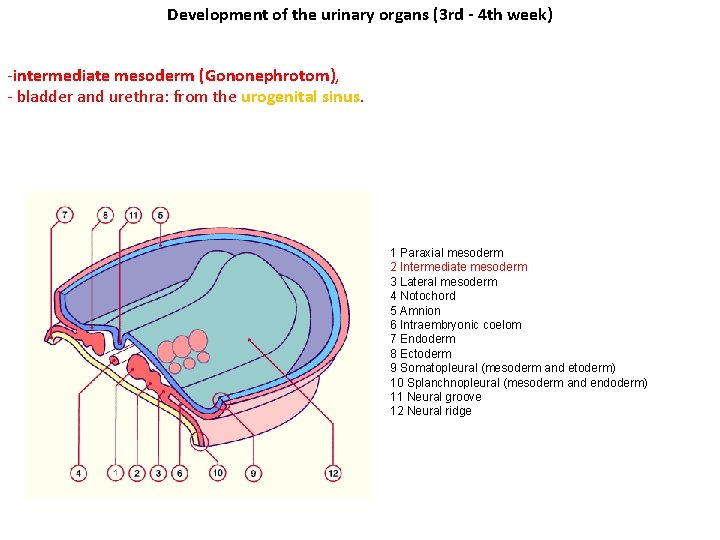
Development of the urinary organs (3 rd - 4 th week) -intermediate mesoderm (Gononephrotom), - bladder and urethra: from the urogenital sinus. 1 Paraxial mesoderm 2 Intermediate mesoderm 3 Lateral mesoderm 4 Notochord 5 Amnion 6 Intraembryonic coelom 7 Endoderm 8 Ectoderm 9 Somatopleural (mesoderm and etoderm) 10 Splanchnopleural (mesoderm and endoderm) 11 Neural groove 12 Neural ridge
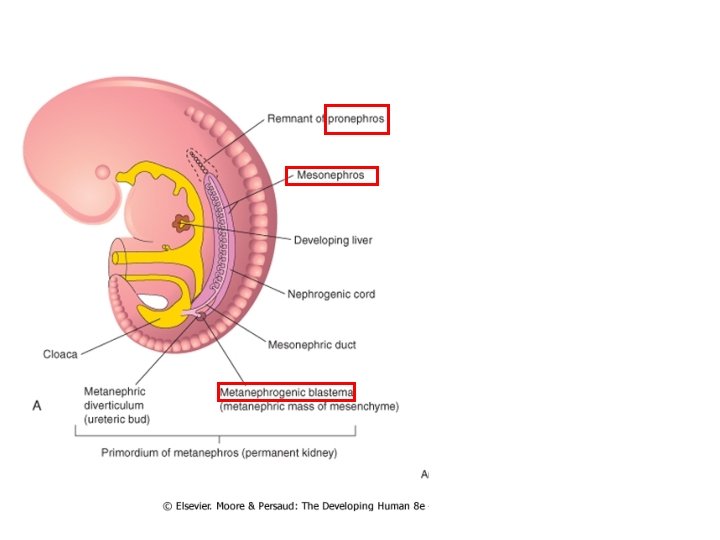
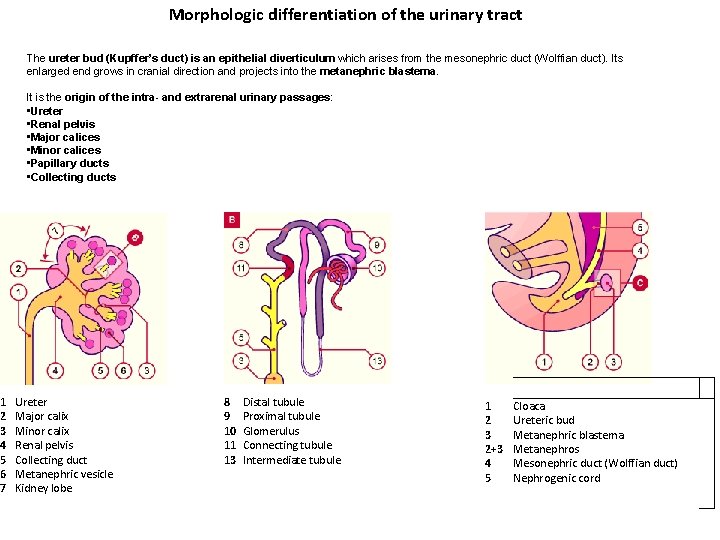
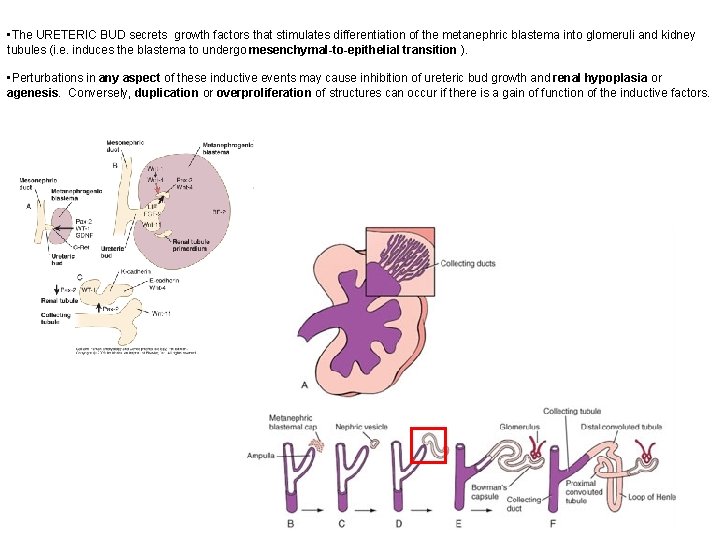
1 2 3 4 5 6 7 Morphologic differentiation of the urinary tract The ureter bud (Kupffer’s duct) is an epithelial diverticulum which arises from the mesonephric duct (Wolffian duct). Its enlarged end grows in cranial direction and projects into the metanephric blastema. It is the origin of the intra- and extrarenal urinary passages: • Ureter • Renal pelvis • Major calices • Minor calices • Papillary ducts • Collecting ducts Ureter Major calix Minor calix Renal pelvis Collecting duct Metanephric vesicle Kidney lobe 8 9 10 11 13 Distal tubule Proximal tubule Glomerulus Connecting tubule Intermediate tubule 1 2 3 2+3 4 5 Cloaca Ureteric bud Metanephric blastema Metanephros Mesonephric duct (Wolffian duct) Nephrogenic cord
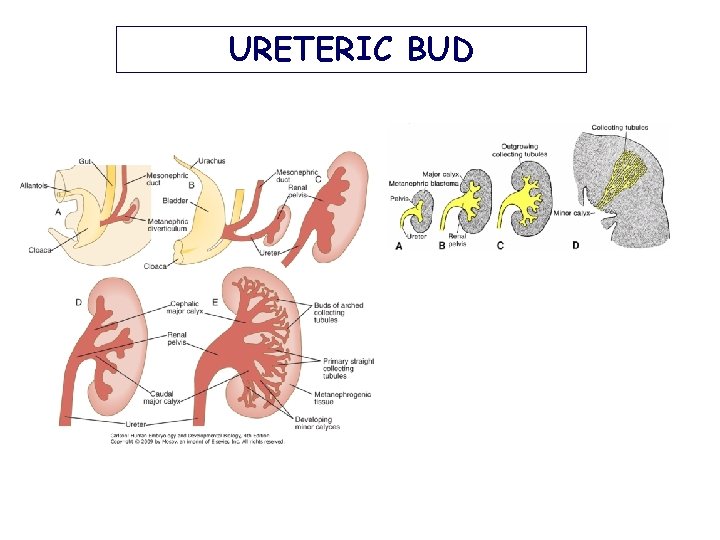
URETERIC BUD
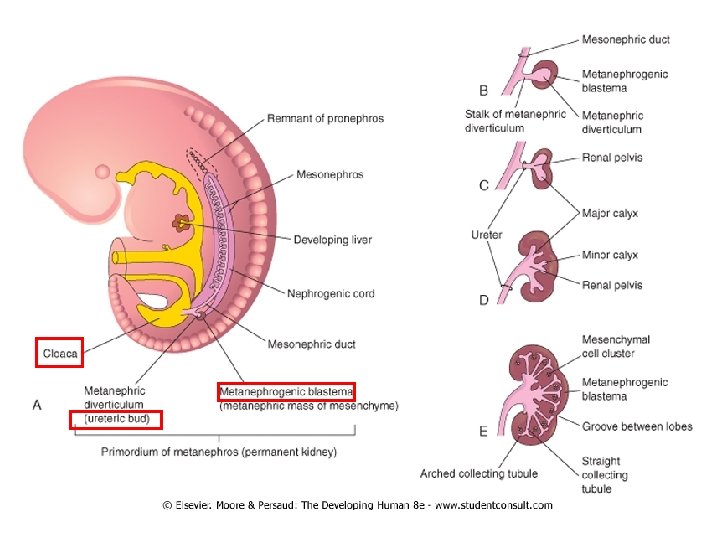
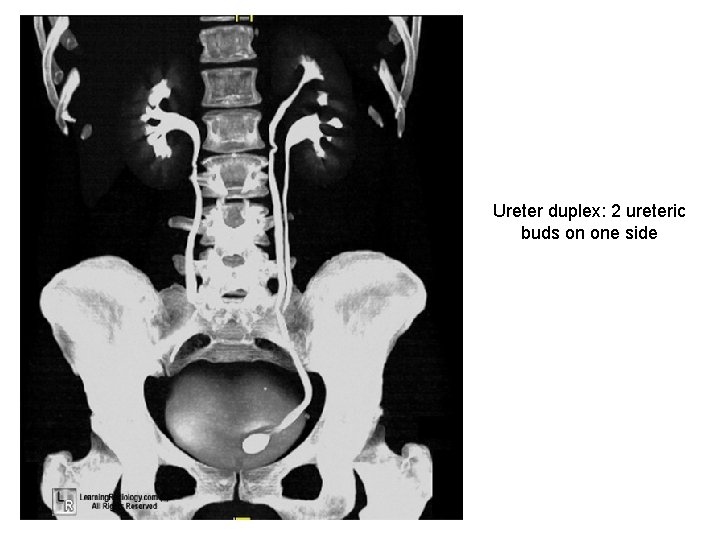
• The URETERIC BUD secrets growth factors that stimulates differentiation of the metanephric blastema into glomeruli and kidney tubules (i. e. induces the blastema to undergo mesenchymal-to-epithelial transition ). • Perturbations in any aspect of these inductive events may cause inhibition of ureteric bud growth and renal hypoplasia or agenesis. Conversely, duplication or overproliferation of structures can occur if there is a gain of function of the inductive factors.
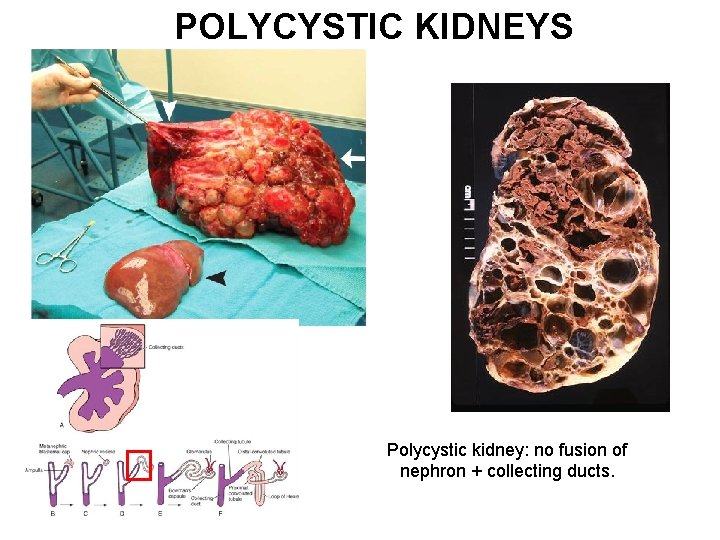
POLYCYSTIC KIDNEYS Polycystic kidney: no fusion of nephron + collecting ducts.
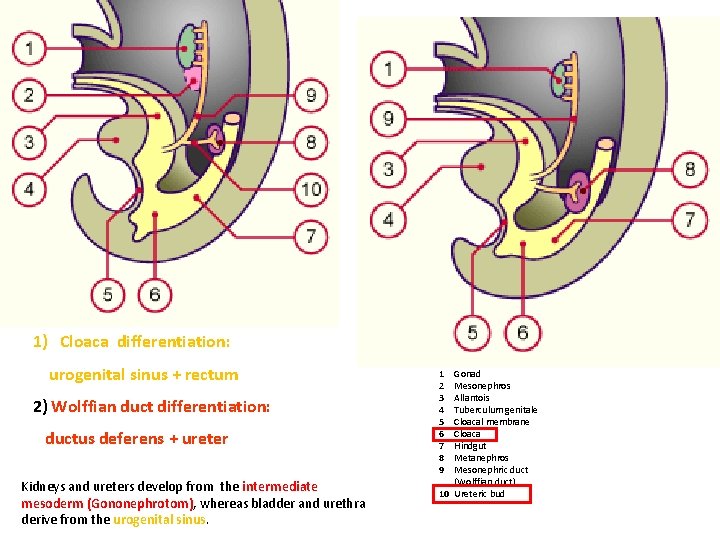
1) Cloaca differentiation: urogenital sinus + rectum 2) Wolffian duct differentiation: ductus deferens + ureter Kidneys and ureters develop from the intermediate mesoderm (Gononephrotom), whereas bladder and urethra derive from the urogenital sinus. 1 2 3 4 5 6 7 8 9 Gonad Mesonephros Allantois Tuberculum genitale Cloacal membrane Cloaca Hindgut Metanephros Mesonephric duct (Wolffian duct) 10 Ureteric bud
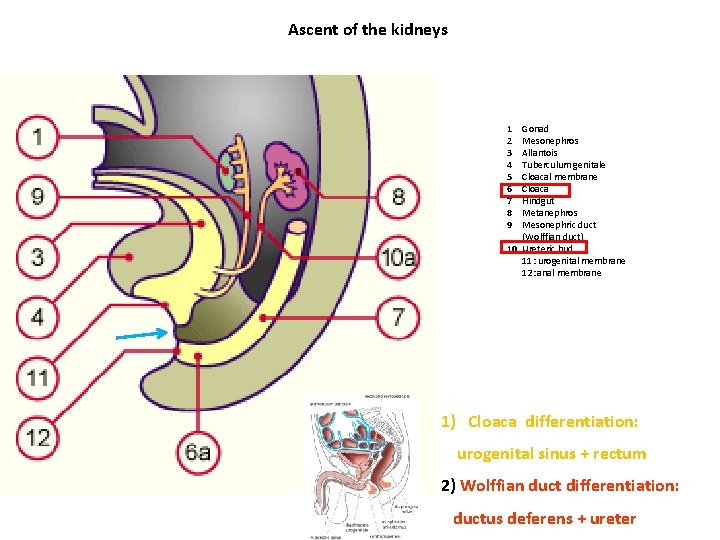
Ascent of the kidneys 1 2 3 4 5 6 7 8 9 Gonad Mesonephros Allantois Tuberculum genitale Cloacal membrane Cloaca Hindgut Metanephros Mesonephric duct (Wolffian duct) 10 Ureteric bud 11: urogenital membrane 12: anal membrane 1) Cloaca differentiation: urogenital sinus + rectum 2) Wolffian duct differentiation: ductus deferens + ureter
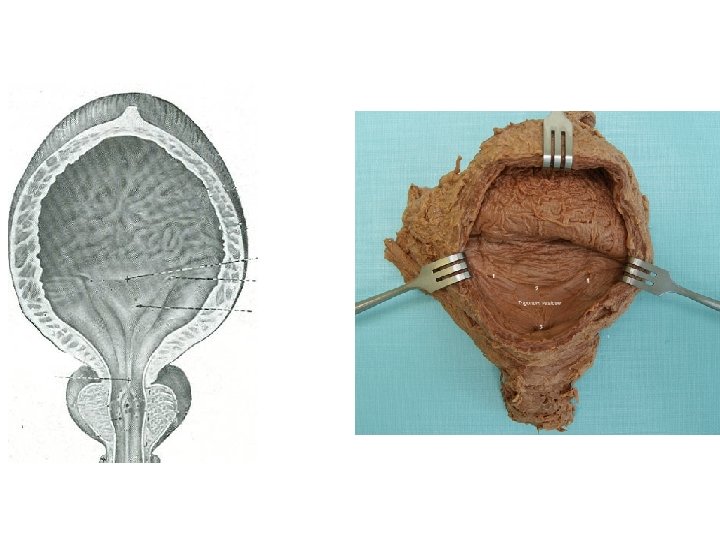
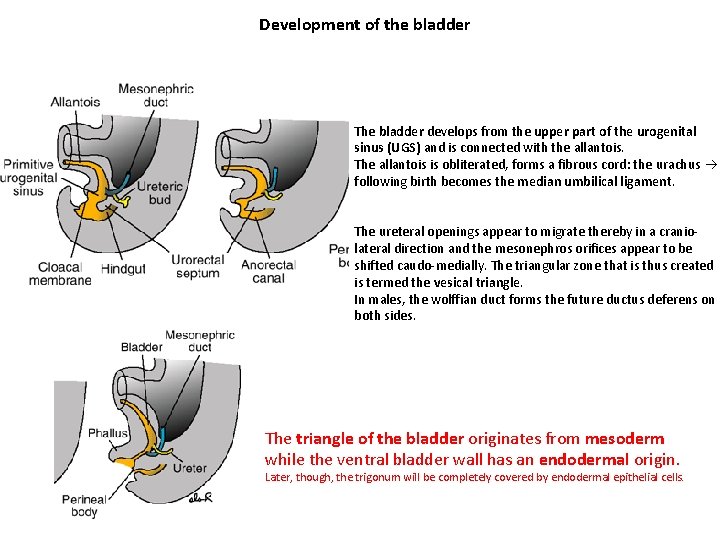
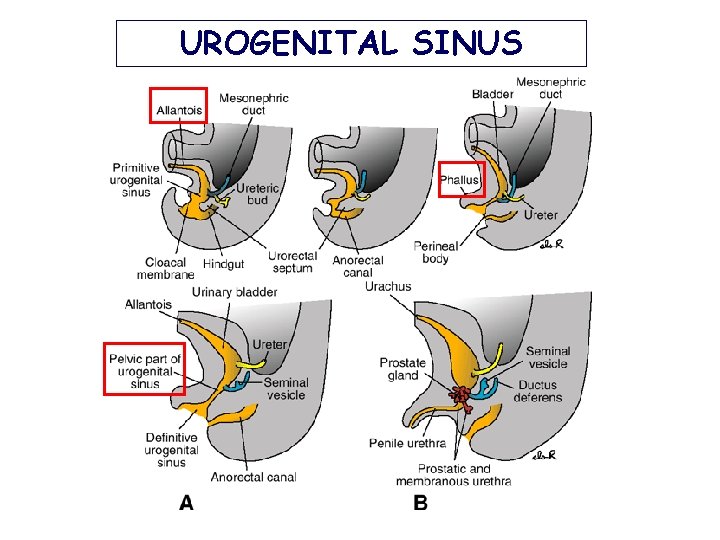
Development of the bladder The bladder develops from the upper part of the urogenital sinus (UGS) and is connected with the allantois. The allantois is obliterated, forms a fibrous cord: the urachus following birth becomes the median umbilical ligament. The ureteral openings appear to migrate thereby in a craniolateral direction and the mesonephros orifices appear to be shifted caudo-medially. The triangular zone that is thus created is termed the vesical triangle. In males, the wolffian duct forms the future ductus deferens on both sides. The triangle of the bladder originates from mesoderm while the ventral bladder wall has an endodermal origin. Later, though, the trigonum will be completely covered by endodermal epithelial cells.
UROGENITAL SINUS
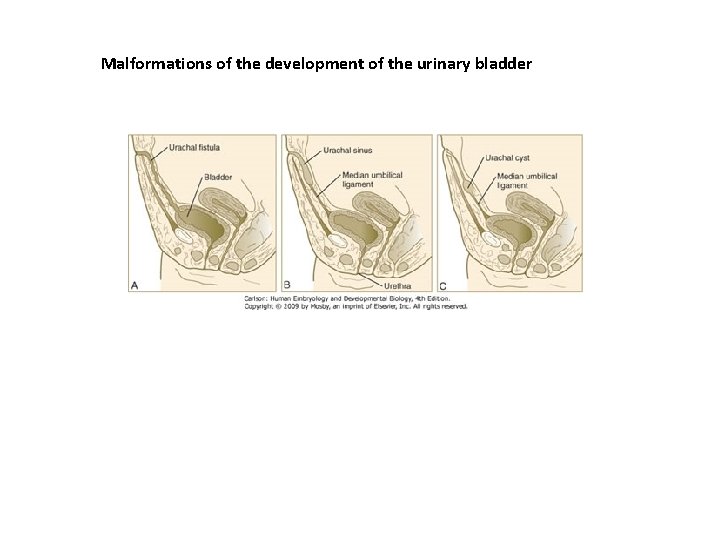
Malformations of the development of the urinary bladder
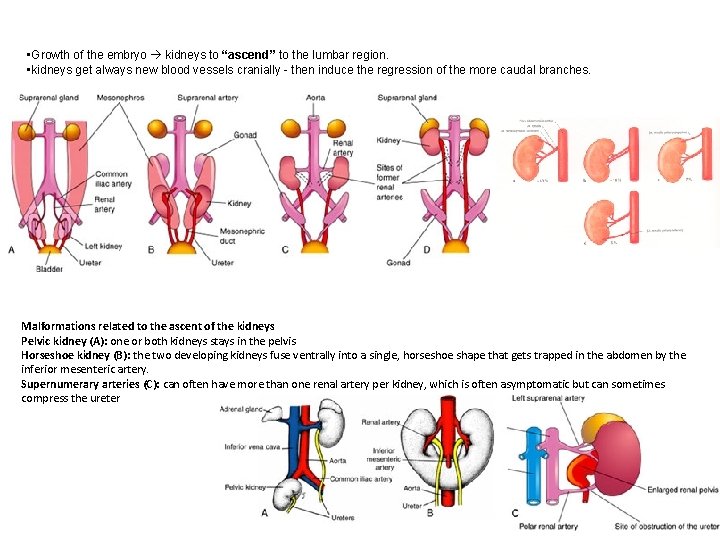
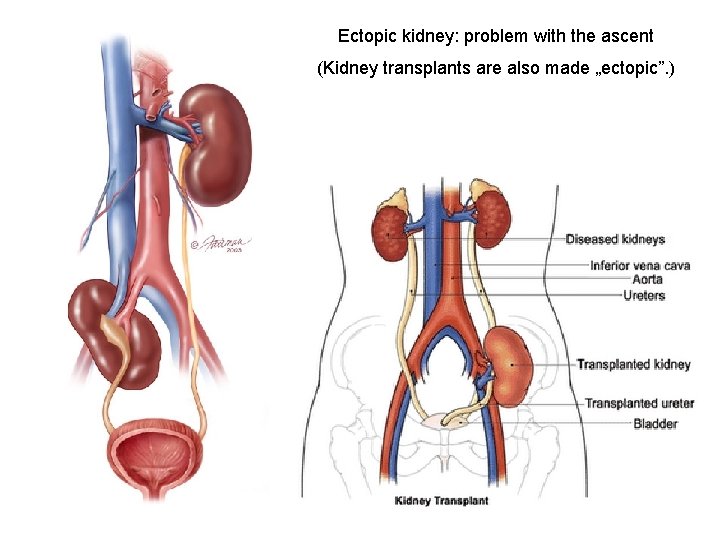
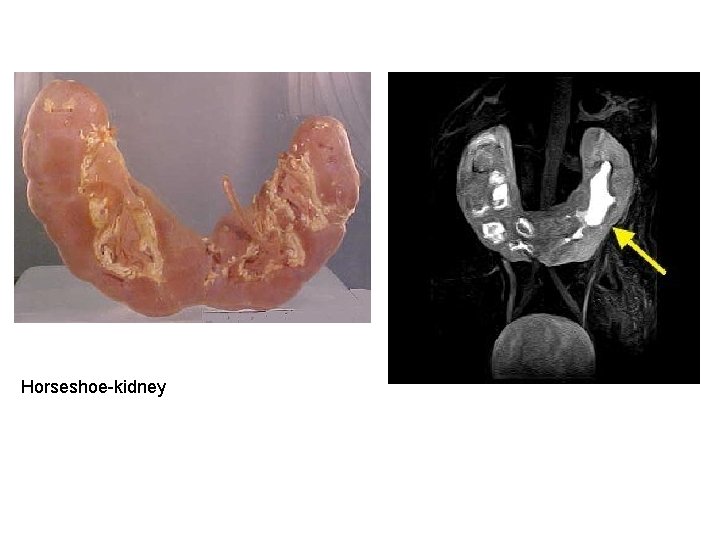
• Growth of the embryo kidneys to “ascend” to the lumbar region. • kidneys get always new blood vessels cranially - then induce the regression of the more caudal branches. Malformations related to the ascent of the kidneys Pelvic kidney (A): one or both kidneys stays in the pelvis Horseshoe kidney (B): the two developing kidneys fuse ventrally into a single, horseshoe shape that gets trapped in the abdomen by the inferior mesenteric artery. Supernumerary arteries (C): can often have more than one renal artery per kidney, which is often asymptomatic but can sometimes compress the ureter
Ectopic kidney: problem with the ascent (Kidney transplants are also made „ectopic”. )
Horseshoe-kidney
Ureter duplex: 2 ureteric buds on one side