
Development of the Skull The skull consists of
- Slides: 8
Development of the Skull The skull consists of a neurocranium that forms a protective case, which surrounds the brain and special sensory organs (optic, auditory, and olfactory), and a viscerocranium (facial skeleton, or splanchnocranium) that forms the ear ossicles, hyoid bone, laryngeal and tracheal cartilages, and certain processes of the skull.
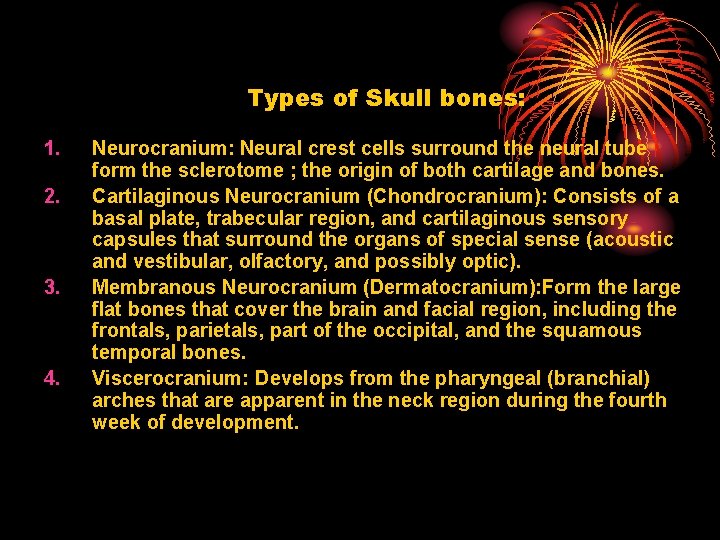
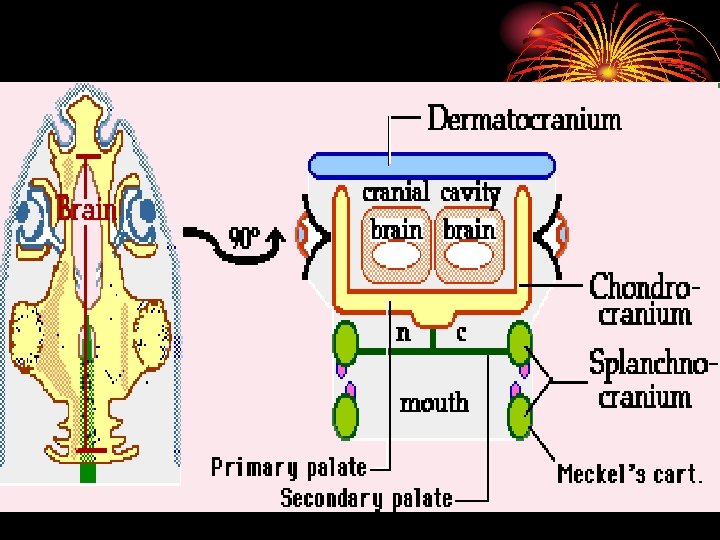
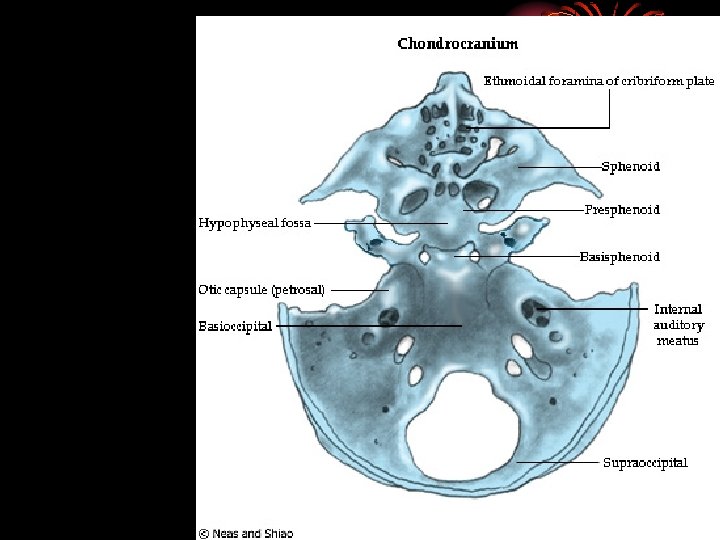
Types of Skull bones: 1. 2. 3. 4. Neurocranium: Neural crest cells surround the neural tube form the sclerotome ; the origin of both cartilage and bones. Cartilaginous Neurocranium (Chondrocranium): Consists of a basal plate, trabecular region, and cartilaginous sensory capsules that surround the organs of special sense (acoustic and vestibular, olfactory, and possibly optic). Membranous Neurocranium (Dermatocranium): Form the large flat bones that cover the brain and facial region, including the frontals, parietals, part of the occipital, and the squamous temporal bones. Viscerocranium: Develops from the pharyngeal (branchial) arches that are apparent in the neck region during the fourth week of development.
Modes of Ossification: 1. Membranous ossification. 2. Endochondral ossification.
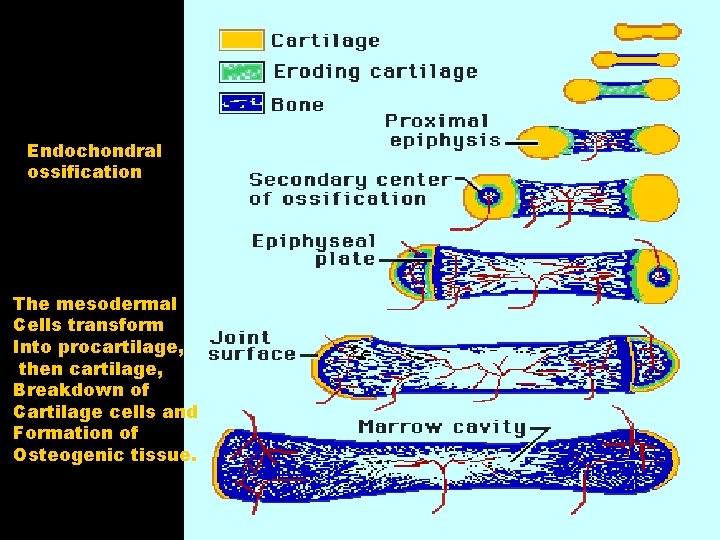
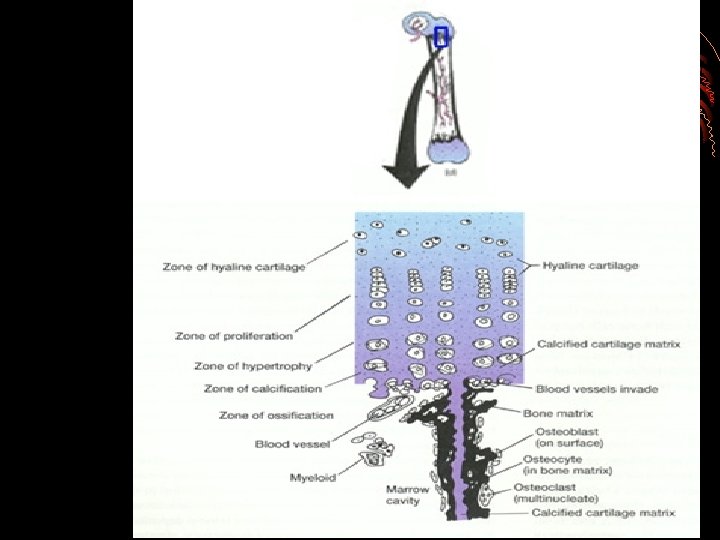
Endochondral ossification The mesodermal Cells transform Into procartilage, then cartilage, Breakdown of Cartilage cells and Formation of Osteogenic tissue.