
Development of the Putsch Segment Filter Robert W
Development of the Putsch Segment Filter Robert W. Howe Beta. VA Ltd.
Background 2 nd carb filtration at British Sugar Wissington sugar factory had become a process bottleneck Largely due to Insufficient filtration area for the budgeted factory throughput Poor beet cleaning, too much clay and flume water entering the process Much improved following the installation of Putsch Jet Wash Roller Tables Some due to Excessive alkali addition from NRS softening regenerant depressing 2 nd Carb particle size A satisfactory workaround had been developed for regenerant handling Occasional poor Carb control and operator knowledge/ decision making Poor slice quality Improvement through working with Putsch on knife sharpening, slicer block cleaning and setting Lost opportunity when filter off for acid clean or bag change
Background Wissington use Dorr juice purification Overall this delivers good 1 st Carb filtration & acceptable 2 nd Carb filtration but poorer juice quality Purification system is stretched, clarification and post reaction tanks undersized Colloidal (clays) material not precipitated as they are in classical purification The colloidal material suppresses particle size in 2 nd Carb and also leads to post precipitation and filter bag scaling In 1993 Wissington installed 5 x 2. 8 m Ø Gaudfrin Diastar filters Station designed on 1. 2 m 3/m 2/hr because of the juice purification system 60 x 2 x 0. 75 m elements per filter 890 m 2 for a beet slice of 14, 000 tpd - 6. 35 m 2/ 100 T BS As factory capacity increased, throughput lost opportunity was a common occurrence Over 25 years the throughput increase at the factory had seen the installed 2 nd Carb filtration area reduce to 4. 8 m 2/ 100 T BS Juice quality and filterability needed to be excellent, filtration values of 3 -6 secs (250 ml) Filter performance managed with copious acid washing
How much Filtration Area do I need? It was often said in British Sugar “You will never regret putting in the most area you can get!” However when filtration is poor you will never have enough area!! From the benchmarking carried out, Wissington’s installed 2 nd Carb filtration area was low Benchmarking would postulate the minimum area for the various types of juice purification are: Minimum Area 2 nd Carb Filtration Area Dorr Purification BMA 65 Purification Classical Purification 8 m 2/ 100 T BS 6. 5 m 2/ 100 T BS
2 nd Carb Filter Project In 2009 it was learnt Gaudfrin had developed a new double star Diastar design For same diameter vessel 306 m 2 per filter or 1530 m 2 total, giving 8. 27 m 2/ 100 T BS Due to better filtration years/ reduced lost opportunity no further action had been taken Initially considered retrofit of Gaudfrin new double star but the existing vessels Were approaching end of life Couldn’t accept the 3 m long filter elements Looked to identify alternatives to double star Diastar Putsch had been developing an alternative filtration solution for such a duty A new concept of a “segment filter” Pilot trial works had already commenced in Germany, no installations had been made Putsch invited to look at a solution for increasing filtration area within existing footprint Complimentary to the customer/ supplier relationship in place
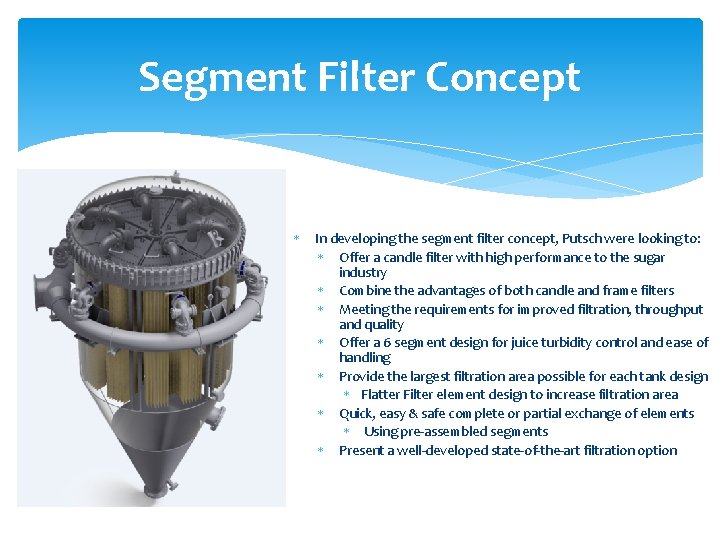
Segment Filter Concept In developing the segment filter concept, Putsch were looking to: Offer a candle filter with high performance to the sugar industry Combine the advantages of both candle and frame filters Meeting the requirements for improved filtration, throughput and quality Offer a 6 segment design for juice turbidity control and ease of handling Provide the largest filtration area possible for each tank design Flatter Filter element design to increase filtration area Quick, easy & safe complete or partial exchange of elements Using pre-assembled segments Present a well-developed state-of-the-art filtration option

Segment Filter Development
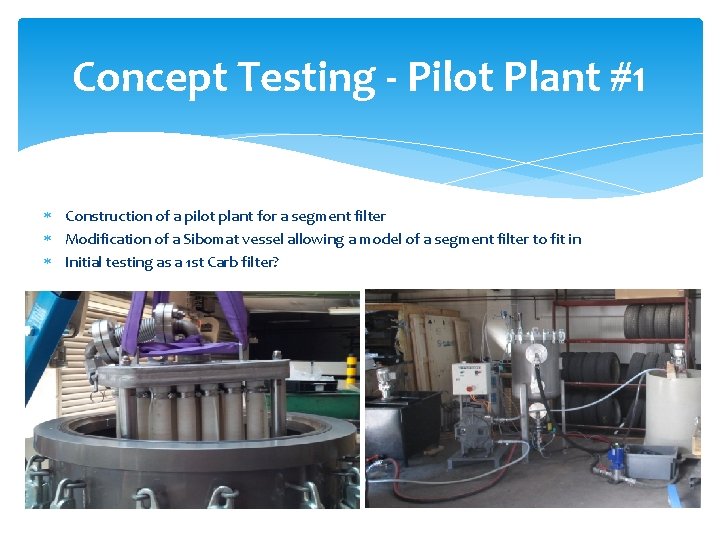
Concept Testing - Pilot Plant #1 Construction of a pilot plant for a segment filter Modification of a Sibomat vessel allowing a model of a segment filter to fit in Initial testing as a 1 st Carb filter?
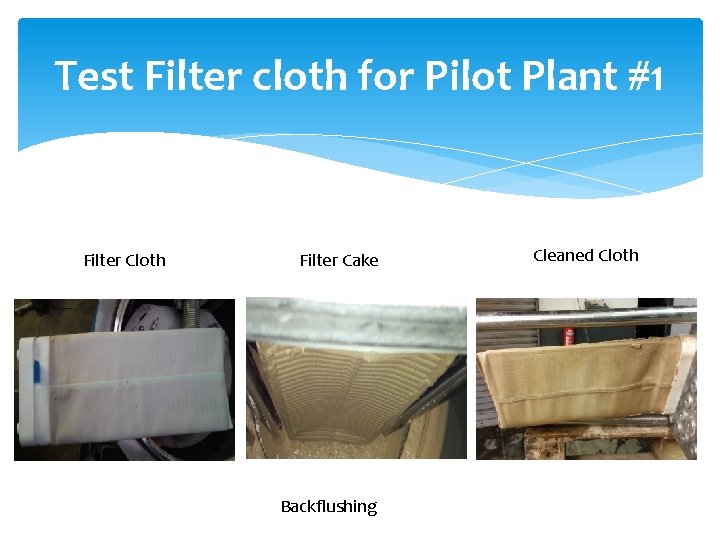
Test Filter cloth for Pilot Plant #1 Filter Cloth Filter Cake Backflushing Cleaned Cloth
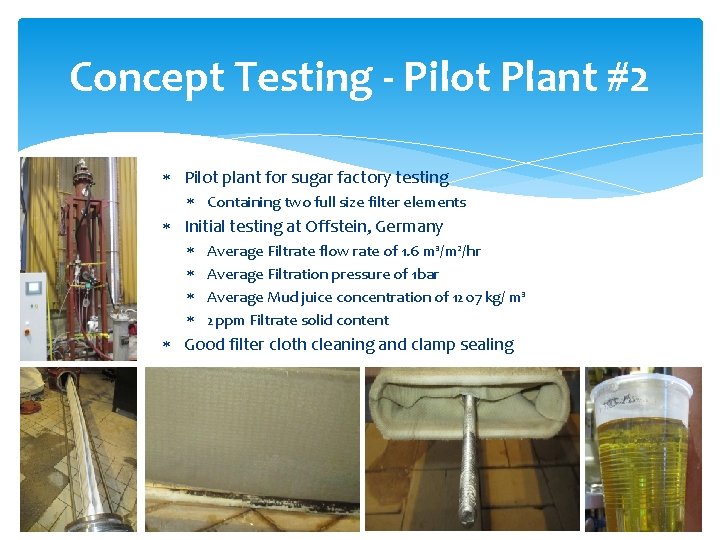
Concept Testing - Pilot Plant #2 Pilot plant for sugar factory testing Containing two full size filter elements Initial testing at Offstein, Germany Average Filtrate flow rate of 1. 6 m³/m²/hr Average Filtration pressure of 1 bar Average Mud juice concentration of 1207 kg/ m³ 2 ppm Filtrate solid content Good filter cloth cleaning and clamp sealing
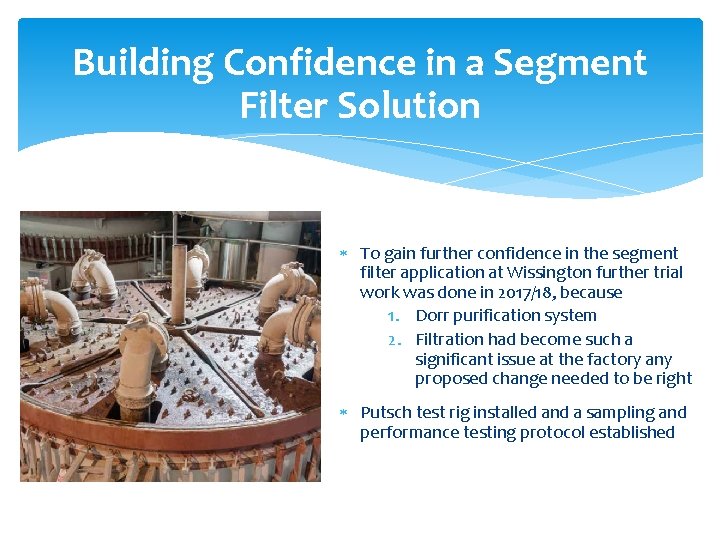
Building Confidence in a Segment Filter Solution To gain further confidence in the segment filter application at Wissington further trial work was done in 2017/18, because 1. Dorr purification system 2. Filtration had become such a significant issue at the factory any proposed change needed to be right Putsch test rig installed and a sampling and performance testing protocol established
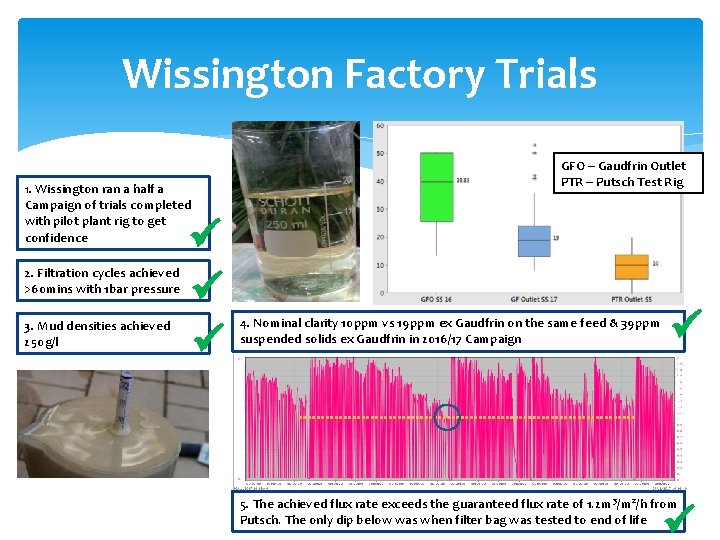
Wissington Factory Trials 1. Wissington ran a half a Campaign of trials completed with pilot plant rig to get confidence 2. Filtration cycles achieved >60 mins with 1 bar pressure 3. Mud densities achieved 250 g/l ü ü ü GFO – Gaudfrin Outlet PTR – Putsch Test Rig 4. Nominal clarity 10 ppm vs 19 ppm ex Gaudfrin on the same feed & 39 ppm suspended solids ex Gaudfrin in 2016/17 Campaign ü 5. The achieved flux rate exceeds the guaranteed flux rate of 1. 2 m 3/m 2/h from Putsch. The only dip below was when filter bag was tested to end of life ü
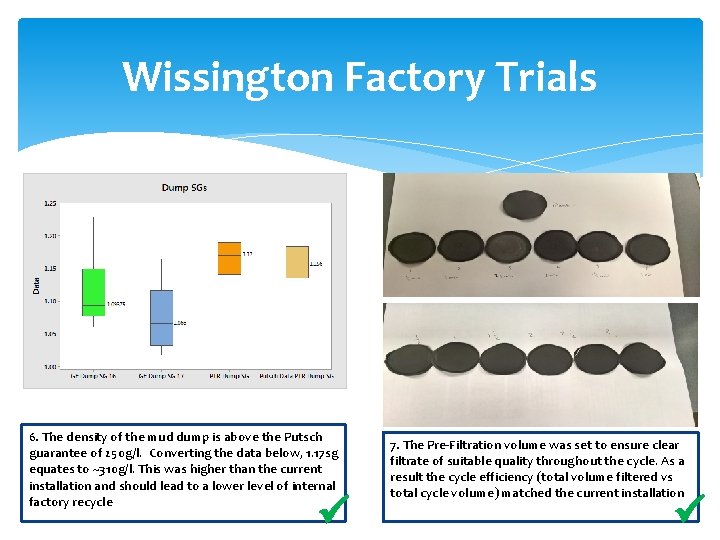
Wissington Factory Trials 6. The density of the mud dump is above the Putsch guarantee of 250 g/l. Converting the data below, 1. 17 sg equates to ~310 g/l. This was higher than the current installation and should lead to a lower level of internal factory recycle ü 7. The Pre-Filtration volume was set to ensure clear filtrate of suitable quality throughout the cycle. As a result the cycle efficiency (total volume filtered vs total cycle volume) matched the current installation ü
Summary of Factory Trials Test Rig achieved Putsch guarantees on Wissington 2 nd Carb Juice Flux rate of at least 1. 2 m³/m²/hr achieved on clean filter cloth Typically between 1. 4 and 1. 6 m³/m²/hr Filter could operate at 1. 4 bar feed pressure Pressure difference between inlet and outlet Mud concentration of > 250 g/l was achieved A clear filtrate quality of 10 ppm suspended solids achieved (20 ppm max) A number of improvements were identified and recommended
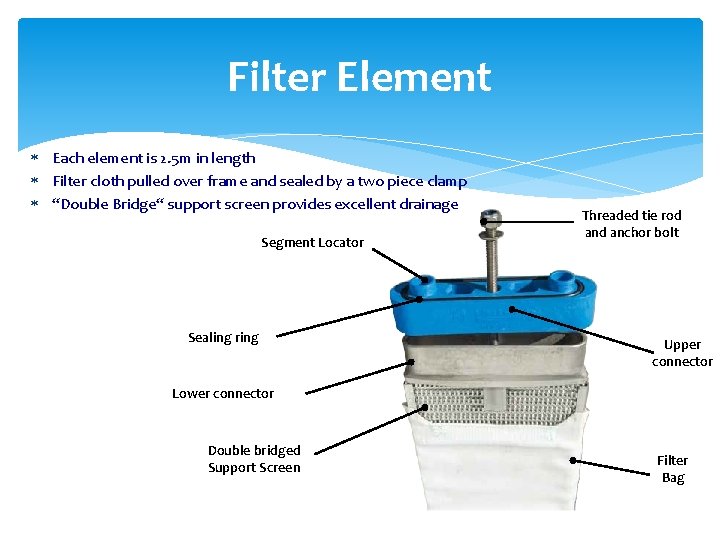
Filter Element Each element is 2. 5 m in length Filter cloth pulled over frame and sealed by a two piece clamp “Double Bridge“ support screen provides excellent drainage Segment Locator Sealing ring Threaded tie rod anchor bolt Upper connector Lower connector Double bridged Support Screen Filter Bag
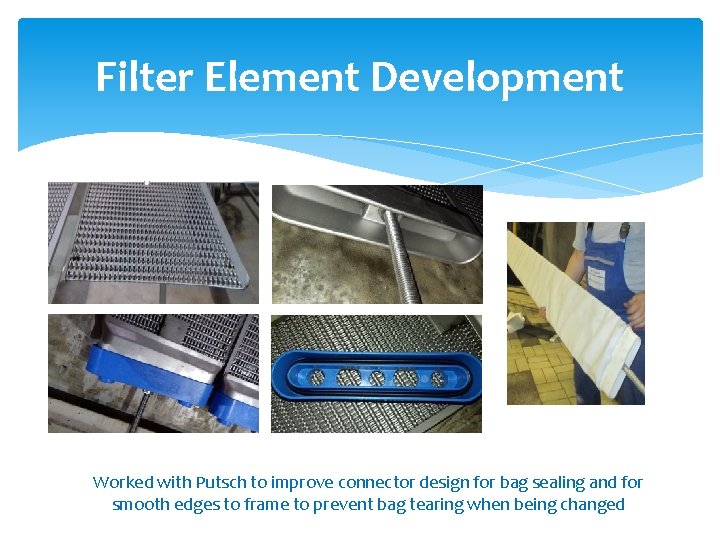
Filter Element Development Worked with Putsch to improve connector design for bag sealing and for smooth edges to frame to prevent bag tearing when being changed
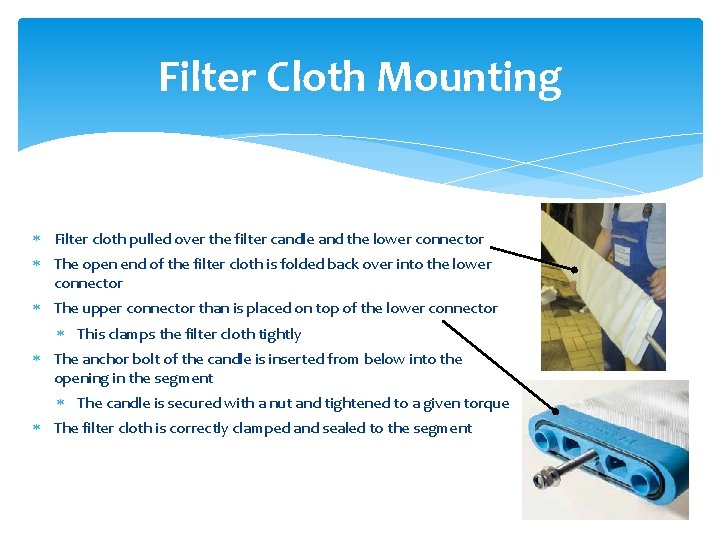
Filter Cloth Mounting Filter cloth pulled over the filter candle and the lower connector The open end of the filter cloth is folded back over into the lower connector The upper connector than is placed on top of the lower connector This clamps the filter cloth tightly The anchor bolt of the candle is inserted from below into the opening in the segment The candle is secured with a nut and tightened to a given torque The filter cloth is correctly clamped and sealed to the segment
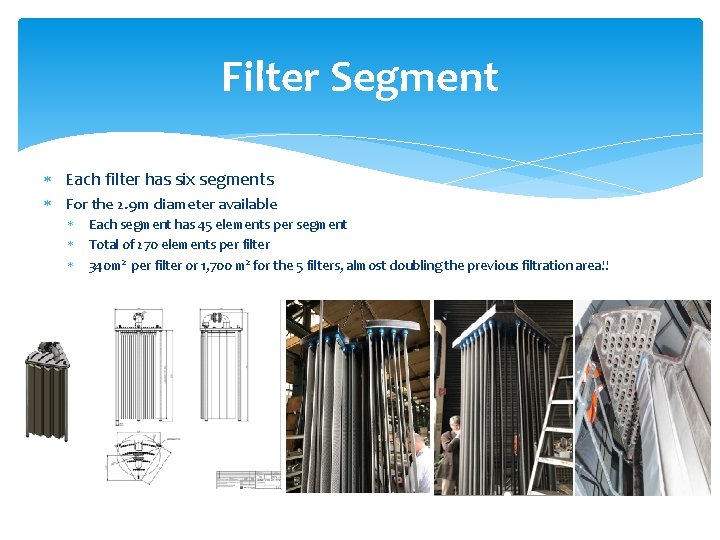
Filter Segment Each filter has six segments For the 2. 9 m diameter available Each segment has 45 elements per segment Total of 270 elements per filter 340 m 2 per filter or 1, 700 m 2 for the 5 filters, almost doubling the previous filtration area!!
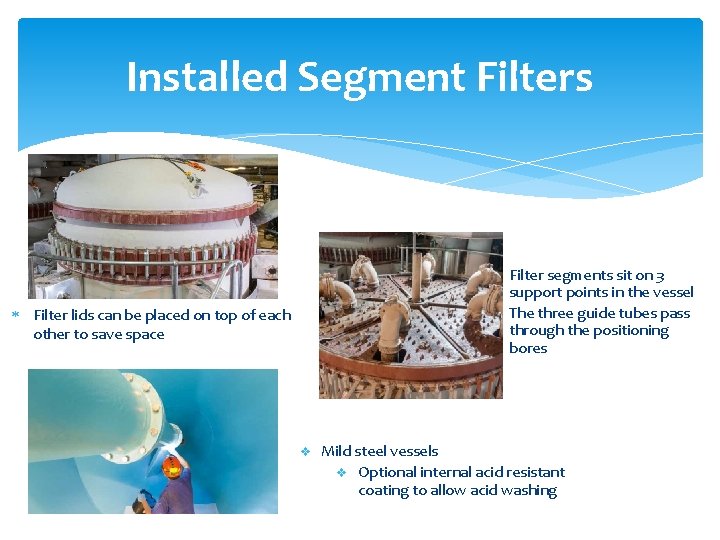
Installed Segment Filters Filter segments sit on 3 support points in the vessel The three guide tubes pass through the positioning bores Filter lids can be placed on top of each other to save space v Mild steel vessels v Optional internal acid resistant coating to allow acid washing
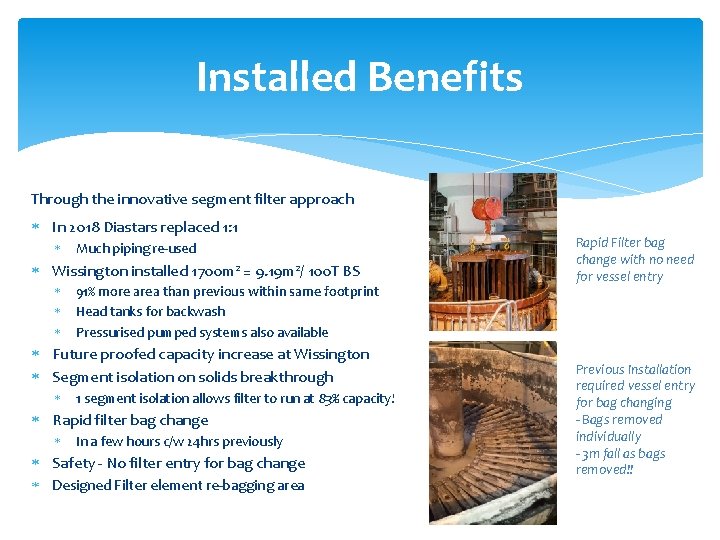
Installed Benefits Through the innovative segment filter approach In 2018 Diastars replaced 1: 1 Much piping re-used Wissington installed 1700 m 2 = 9. 19 m 2/ 100 T BS 91% more area than previous within same footprint Head tanks for backwash Pressurised pumped systems also available Future proofed capacity increase at Wissington Segment isolation on solids breakthrough 1 segment isolation allows filter to run at 83% capacity! Rapid filter bag change In a few hours c/w 24 hrs previously Safety - No filter entry for bag change Designed Filter element re-bagging area Rapid Filter bag change with no need for vessel entry Previous Installation required vessel entry for bag changing - Bags removed individually - 3 m fall as bags removed!!
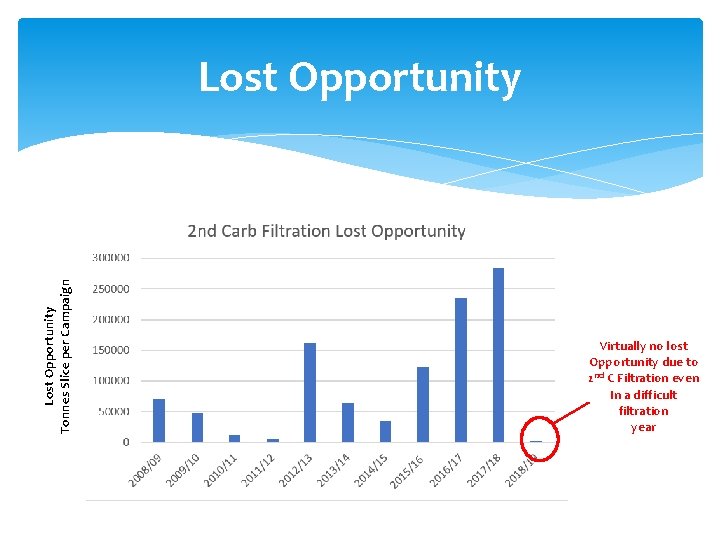
Lost Opportunity Tonnes Slice per Campaign Lost Opportunity Virtually no lost Opportunity due to 2 nd C Filtration even In a difficult filtration year
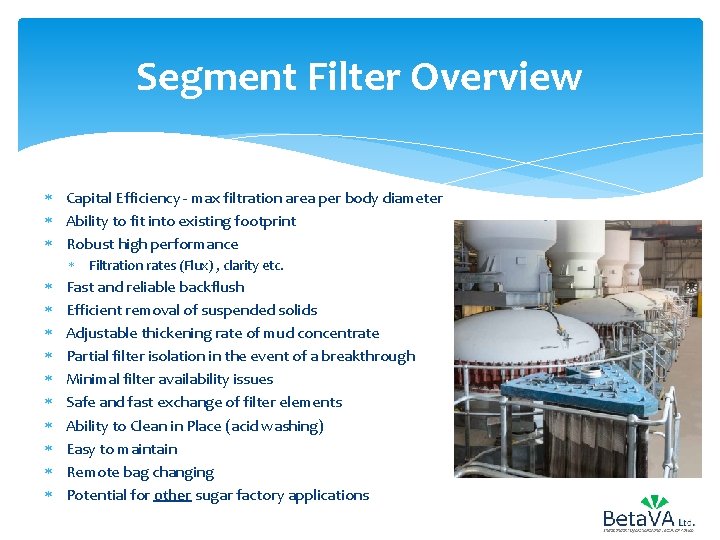
Segment Filter Overview Capital Efficiency - max filtration area per body diameter Ability to fit into existing footprint Robust high performance Filtration rates (Flux) , clarity etc. Fast and reliable backflush Efficient removal of suspended solids Adjustable thickening rate of mud concentrate Partial filter isolation in the event of a breakthrough Minimal filter availability issues Safe and fast exchange of filter elements Ability to Clean in Place (acid washing) Easy to maintain Remote bag changing Potential for other sugar factory applications
- Slides: 22