
Development of the Kinetic Monte Carlo model for
- Slides: 13
Development of the Kinetic Monte Carlo model for simulation of laser ablation Dawid Zych, Konrad Perzyński, Łukasz Madej AGH University of Science and Technology, al. Mickiewicza 30, 30 -059 Kraków, Poland
Agenda 1. Properties and applications of thin Ti. N layers 2. Manufacturing process 3. Microstructure of thin Ti. N layers 4. Simplified FEM simulations – Homogeneity assertions 5. Artificial Digital Material Representation 6. Common approaches for modeling of thin layer growth 7. Kinetic Monte Carlo method 8. Model description 9. Results and their usefulness 10. Conclusions and future work
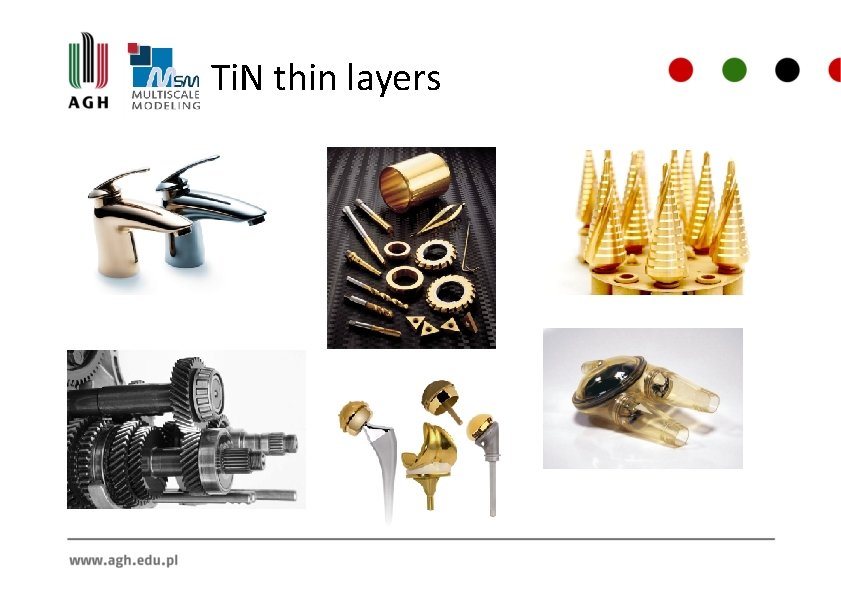
Ti. N thin layers
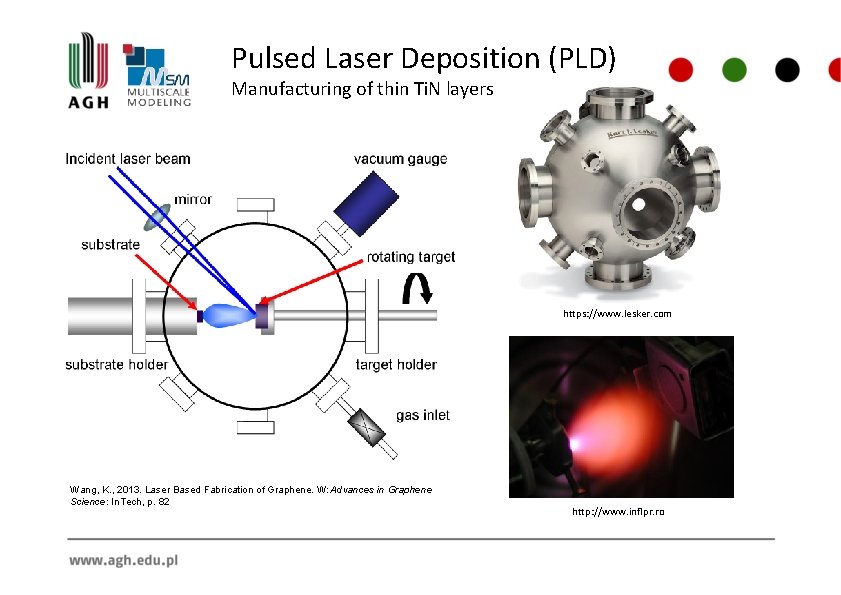
Pulsed Laser Deposition (PLD) Manufacturing of thin Ti. N layers https: //www. lesker. com Wang, K. , 2013. Laser Based Fabrication of Graphene. W: Advances in Graphene Science: In. Tech, p. 82 http: //www. inflpr. ro
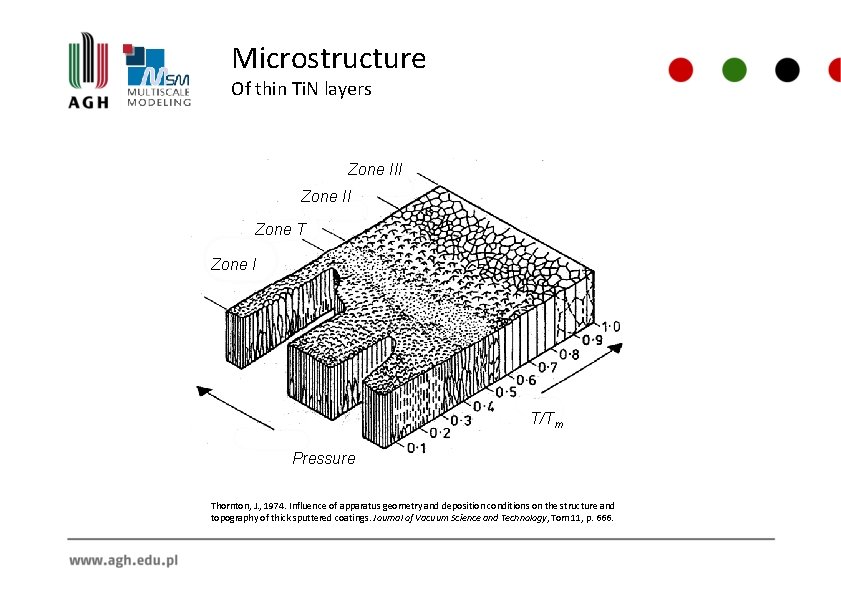
Microstructure Of thin Ti. N layers Zone III Zone T Zone I T/Tm Pressure Thornton, J. , 1974. Influence of apparatus geometry and deposition conditions on the structure and topography of thick sputtered coatings. Journal of Vacuum Science and Technology, Tom 11, p. 666.
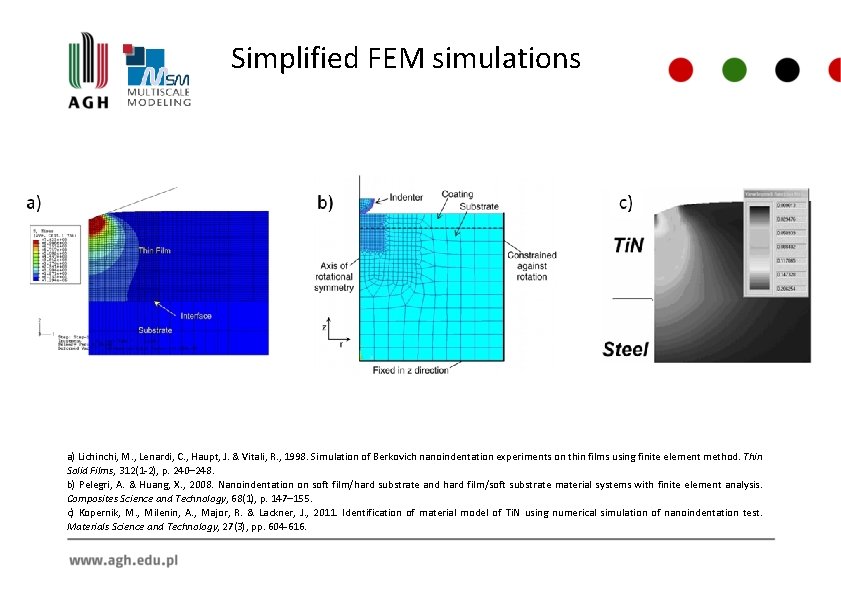
Simplified FEM simulations a) Lichinchi, M. , Lenardi, C. , Haupt, J. & Vitali, R. , 1998. Simulation of Berkovich nanoindentation experiments on thin films using finite element method. Thin Solid Films, 312(1 -2), p. 240– 248. b) Pelegri, A. & Huang, X. , 2008. Nanoindentation on soft film/hard substrate and hard film/soft substrate material systems with finite element analysis. Composites Science and Technology, 68(1), p. 147– 155. c) Kopernik, M. , Milenin, A. , Major, R. & Lackner, J. , 2011. Identification of material model of Ti. N using numerical simulation of nanoindentation test. Materials Science and Technology, 27(3), pp. 604 -616.
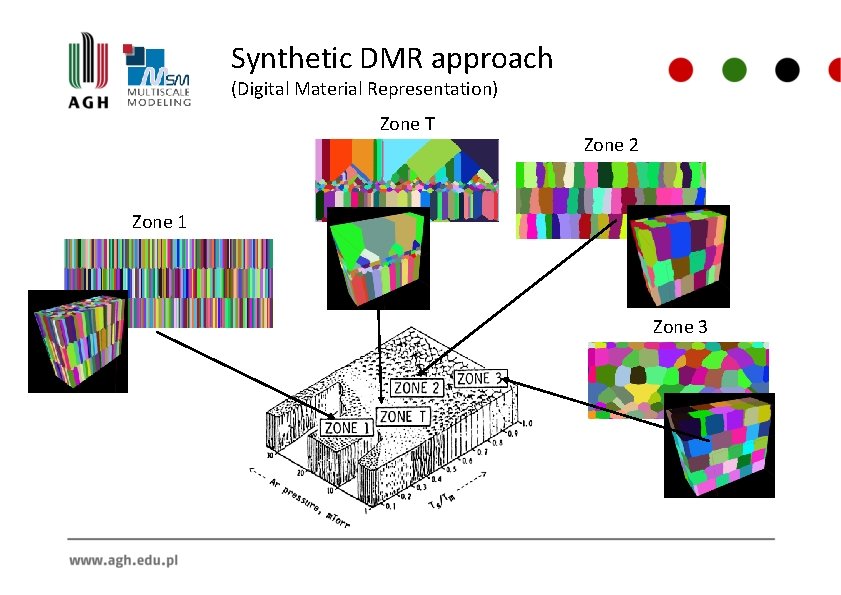
Synthetic DMR approach (Digital Material Representation) Zone T Zone 2 Zone 1 Zone 3
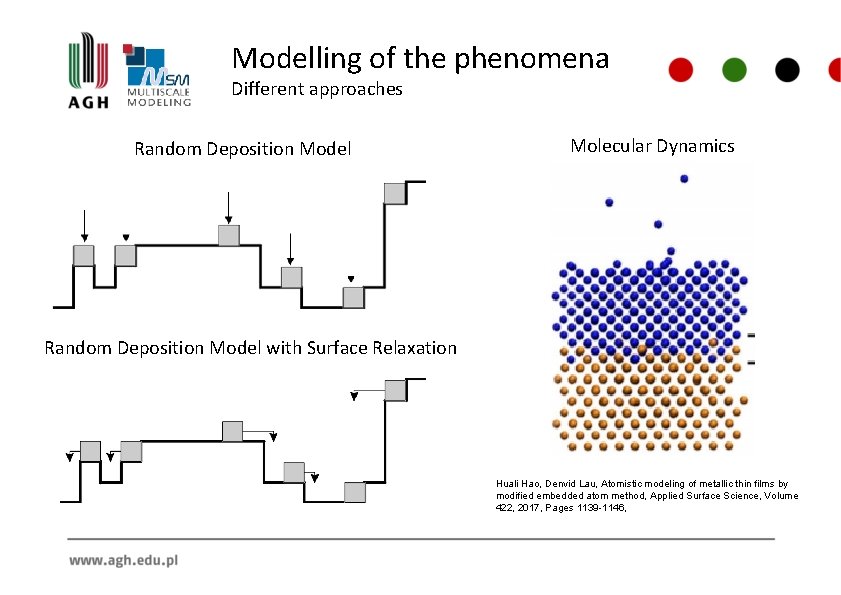
Modelling of the phenomena Different approaches Random Deposition Model Molecular Dynamics Random Deposition Model with Surface Relaxation Huali Hao, Denvid Lau, Atomistic modeling of metallic thin films by modified embedded atom method, Applied Surface Science, Volume 422, 2017, Pages 1139 -1146,
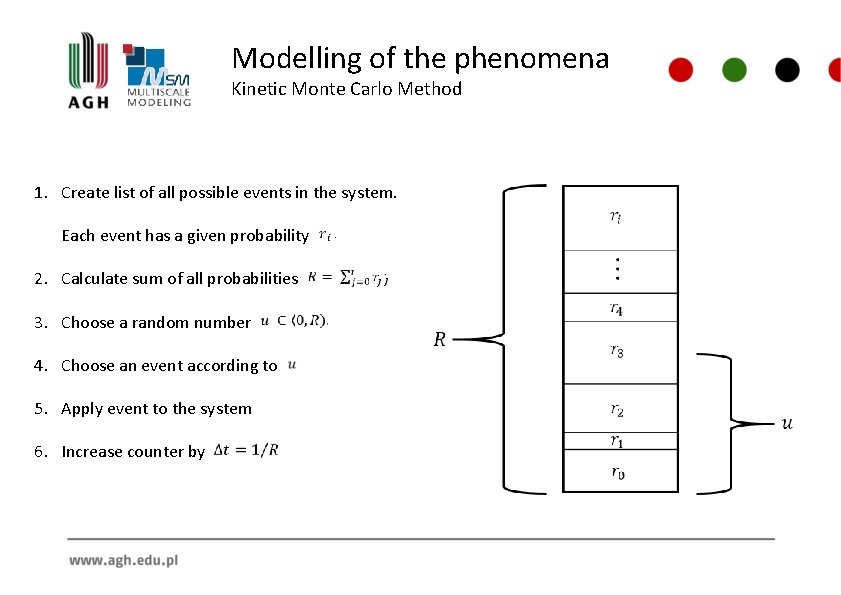
Modelling of the phenomena Kinetic Monte Carlo Method 1. Create list of all possible events in the system. Each event has a given probability 2. Calculate sum of all probabilities 3. Choose a random number 4. Choose an event according to 5. Apply event to the system 6. Increase counter by
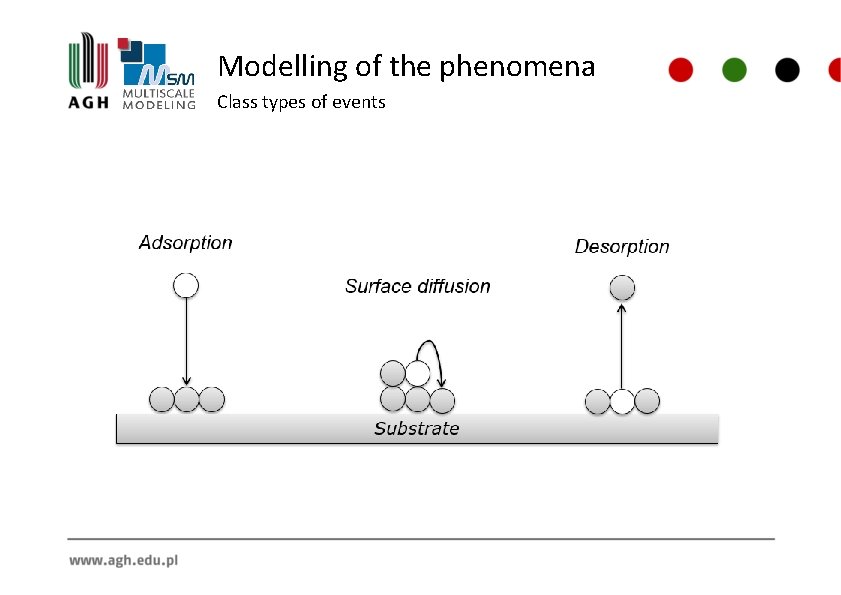
Modelling of the phenomena Class types of events
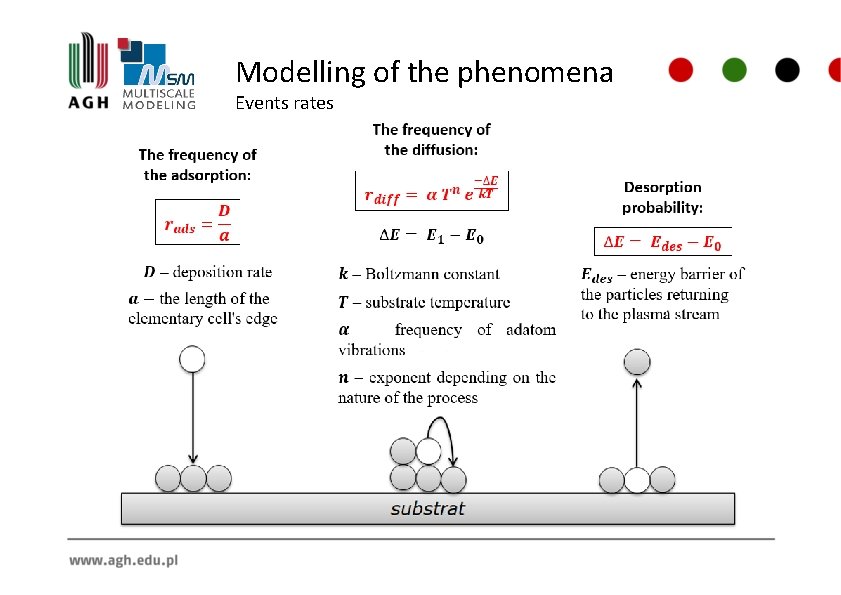
Modelling of the phenomena Events rates
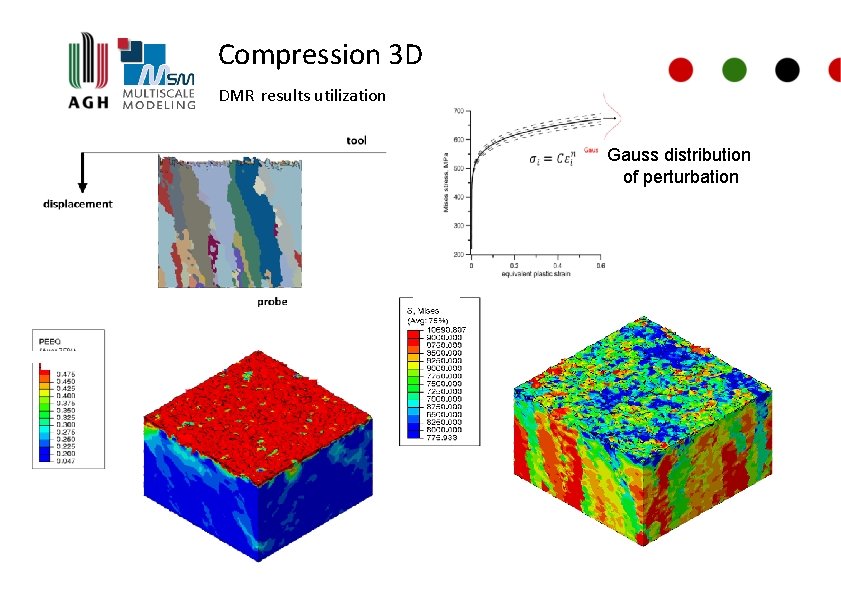
Compression 3 D DMR results utilization Gauss distribution of perturbation
Conclusions and Future Work Conclusions: • KMC method is suitable for simulating thin layers growth • DMR is useful tool for taking microstructure impact into account • DMRs can be easily integrated with FEM solutions • FEM compression simulation showed heterogeneity of Von Mises stress distribution Future work: • Perform series of laboratory experiments to validate in-depth the solution • Perform corresponding Molecular Dynamics simulation for comparison • Adding volume diffusion can be potentially beneficial for precision of results • Taking into account uneven distribution of plasma flux • Extend model to obtain information about crystals orientation