
DEVELOPMENT OF THE KIDNEYS 2 Embryology 436 MEDICINE
![DEVELOPMENT OF THE KIDNEYS ﴾ ﴿ ﺍ ﺍ ﺍﻹﻧﺴﺎﻥ ﺍ ﻳﺍ ﻳﺍ : 2].](https://slidetodoc.com/presentation_image/48b59a669414cc1f067574cbd87ec6ce/image-1.jpg "DEVELOPMENT OF THE KIDNEYS ﴾ ﴿ ﺍ ﺍ ﺍﻹﻧﺴﺎﻥ ﺍ ﻳﺍ ﻳﺍ : 2].")
DEVELOPMENT OF THE KIDNEYS ﴾ ﴿ ﺍ ﺍ ﺍﻹﻧﺴﺎﻥ ﺍ ﻳﺍ ﻳﺍ : 2]. ]ﺍﻹﻧﺴﺎﻥ Embryology 436 MEDICINE KING SAUD UNIVERSITY Important Dr. notes Explanation - We recommend you to study anatomy of the kidney lecture first.
OBJECTIVE • Identify the embryological origin of kidneys & ureters. • Differentiate between the 3 systems of kidneys during development. • Describe the development of collecting & excretory parts of permanent kidney. • Describe the fetal kidney & identify the pre- and postnatal changes that occur in the kidney. • Enumerate the most common anomalies of kidneys & ureters.

Embryological Origin - There are three layers of mesoderm which are parietal , lateral and intermediate mesoderm. However, just one of them contains the kidney and ureter which is intermediate mesoderm. - Embryological origin of kidney and ureter is from intermediate mesoderm - intermediate mesoderm differentiates into: ( two elevation). 1. Nephrogenic ridge (cord) (lateral) : forms kidneys and ureters. 2. Gonadal ridge (medial): forms gonads (testes or ovaries). Nephrogenic ridge Gonadal ridge video for extra explanation

Development Of Kidney v Three Systems The Kidneys Develop: 1. Pronephric system: • • • appears at beginning of 4 th week in cervical region (upper part of nephrogenic pool) analogous to kidney of fish ﺗﺸﺒﻪ ﺷﻜﻞ ﻛﻠﻴﺔ ﺍﻷﺴﻤﺎﻙ formed of tubules ﺗﺒﺪﺃ ﺑـ and a duct ﻭﺗﻨﺘﻬﻲ ﺑـ not functional in human disappears (temporal) Only tubules will disappear. (duct is available). . ﺍﻟﻜﺪﻧﻲ ﺗﻜﻮﻥ ﻣﻮﺟﻮﺩﺓ ﻓﻲ ﺍﻝ ﺑﺪﺍﻳﺔ ﺳﻴﺮﻓﻴﻜﺎﻝ ﺭﻳﺠﻮﻥ ﻓﺘﺘﺘﺸﻜﻞ ﻓﻲ ﺍﻷﺴﺒﻮﻉ ﺍﻟﺮﺍﺑﻊ Upper part of nephrogenic pool ﻭﻫﻲ ﻋﺒﺎﺭﺓ ﻋﻦ Tubules open in duct 2. Mesonephric system: • • appears at end of 4 th week in thoracic and abdominal regions analogous to kidney of amphibians ﺗﺸﺒﻪ ﺷﻜﻞ ﻛﻠﻴﺔ ﺍﻟﺰﻭﺍﺣﻒ formed of tubules and a duct Function but temporarily 3. Metanephric system: • appears at 5 th week in pelvis • starts to function at 9 th week • * Very important * This system will give the permanent kidney The duct: In male: forms genital duct transfer the sperm from testes to urethra In both sexes: forms ureteric bud In males the mesonephric duct will be part of the genital system , while in female it will disappear except the most lower part it will form ureteric bud, so in both sexes the lower part will form ureteric bud Videos for extra explanation: Pronephros Mesonephros metanephros

Metanephros (Permanent Kidney) Metanephros: is permanent kidney. Formed of 2 origins: 1 - Ureteric bud (derived from distal end of mesonephric duct) : ( )ﻳﺠﻤﻊ ﺍﻟﺒﻮﻝ gives collecting part of kidney. 2 - Metanephric blastema (mass): (from most lower part of nephrogenic cord). gives excretory part of kidney. ( )ﺍﻟﺠﺰﺀ ﺍﻟﻲ ﻳﺴﺘﺨﻠﺺ ﻭﻳﻨﻘﻲ ﺍﻟﺪﻡ ( COLLECTING PART ) A- Ureteric bud elongates and penetrates metanephric mass. ( (ﺯﻱ ﻋﻨﻖ ﻭﺑﻌﺪﻳﻦ ﻳﺒﺪﺍ ﺍﻟﻴﻮﺭﻳﺘﺮﻙ ﺑﺪ ﻭﺍﻟﻌﻨﻖ ﻳﺼﻴﺮﻭﺍ ﺃﻄﻮﻝ stalk) )ﻣﻴﺴﻮﻧﻔﺮﻙ ﺩﻛﺖ ﻳﺨﺮﺝ ﻣﻨﻬﺎ ﻳﻮﺭﻳﺘﺮﻙ ﺑﺪ ﺻﻐﻴﺮ ﻳﻮﺻﻞ ﺑﻴﻨﻬﻢ B- Stalk of ureteric bud forms ureter and cranial end forms renal pelvis. C- Branching of renal pelvis gives 3 major calices. Branching of major calyces gives minor calyces. ﻣﻴﺠﻮﺭ 3 )ﺑﻌﺪﻳﻦ ﺍﻟﻴﻮﺭﻳﺘﺮﻙ ﺑﺪ ﺗﺪﺧﻞ ﺩﺍﺧﻞ ﺍﻟﻤﻴﺘﺎﻧﻔﺮﻙ ﻣﺎﺱ ﻭﺗﺒﺪﺍ ﺗﺘﻔﺮﻉ ﻭﻳﻌﻄﻴﻨﺎ A B C . ( ﻣﺎﻳﻨﻮﺭ ﻛﺎﻟﻴﺴﺰ 3 ﻛﺎﻟﻴﺴﺰ ﻭﺗﺘﻔﺮﻉ ﺍﺻﻐﺮ ﻭﺗﻌﻄﻴﻨﺎ D- Continuous branching gives straight then arched collecting tubules. ﻣﻊ ﺍﺳﺘﻤﺮﺍﺭ ﺍﻟﺘﻔﺮﻉ ﻳﻌﻄﻴﻨﺎ ﺍﺳﺘﺮﻳﺖ ﺗﻴﺒﻴﻮﻟﺰ ﻭﻧﻬﺎﻳﺘﻬﺎ ﻓﻲ ﺍﺭﺵ Excretory part ﻭﻛﻞ ﻫﺬﺍ ﺩﺍﺧﻞ ﻣﻴﺘﺎﻧﻔﺮﻙ ﻣﺎﺱ ﻭﺑﻌﺪﻳﻦ ﻫﻴﺼﻴﺮ ﺗﻐﻴﺮﺍﺕ ﻓﻴﻬﺎ ﻋﺸﺎﻥ ﺗﻌﻄﻴﻨﻲ D
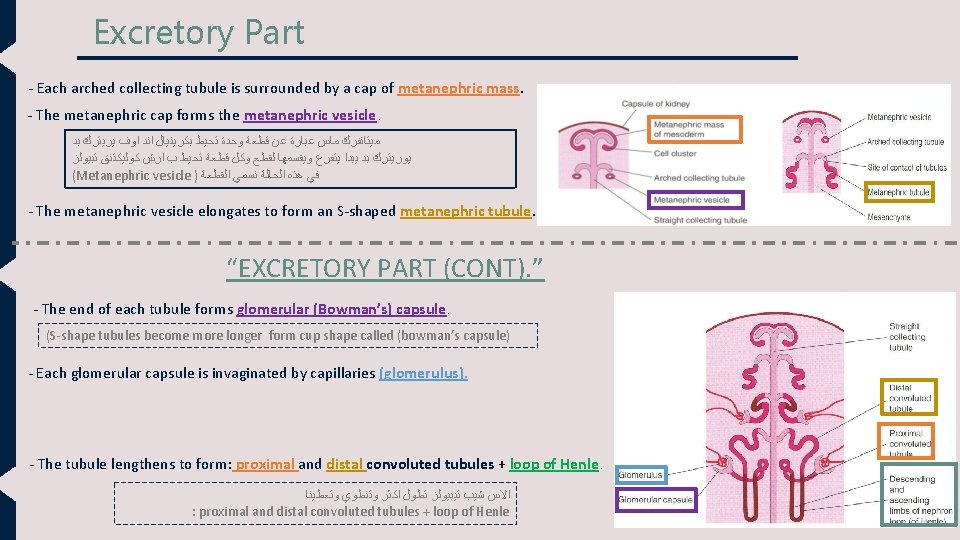
Excretory Part - Each arched collecting tubule is surrounded by a cap of metanephric mass. - The metanephric cap forms the metanephric vesicle. ﻣﻴﺘﺎﻧﻔﺮﻙ ﻣﺎﺱ ﻋﺒﺎﺭﺓ ﻋﻦ ﻗﻄﻌﺔ ﻭﺣﺪﺓ ﺗﺤﻴﻂ ﺑﻜﺮﻳﻨﻴﺎﻝ ﺍﻧﺪ ﺍﻭﻑ ﻳﺮﻳﺘﺮﻙ ﺑﺪ ﻳﻮﺭﻳﺘﺮﻙ ﺑﺪ ﻳﺒﺪﺍ ﻳﺘﻔﺮﻉ ﻭﻳﻘﺴﻤﻬﺎ ﻟﻘﻄﻊ ﻭﻛﻞ ﻗﻄﻌﺔ ﺗﺤﻴﻂ ﺏ ﺍﺭﺵ ﻛﻮﻟﻴﻜﺘﻨﻖ ﺗﺒﻴﻮﻟﺰ (Metanephric vesicle ) ﻓﻲ ﻫﺬﻩ ﺍﻟﺤﺎﻟﺔ ﻧﺴﻤﻲ ﺍﻟﻘﻄﻌﺔ - The metanephric vesicle elongates to form an S-shaped metanephric tubule. “EXCRETORY PART (CONT). ” - The end of each tubule forms glomerular (Bowman’s) capsule. (S-shape tubules become more longer form cup shape called (bowman’s capsule) - Each glomerular capsule is invaginated by capillaries (glomerulus). - The tubule lengthens to form: proximal and distal convoluted tubules + loop of Henle. ﺍﻻﺱ ﺷﻴﺐ ﺗﻴﺒﻴﻮﻟﺰ ﺗﻄﻮﻝ ﺍﻛﺜﺮ ﻭﺗﻨﻄﻮﻱ ﻭﺗﻌﻄﻴﻨﺎ : proximal and distal convoluted tubules + loop of Henle

The Nephron - The nephron: functional unit of kidney. - The nephron is formed by fusion of: (collecting part +excretory tubules) 1. Excretory tubule formed of metanephric mass (cap). 2. Arched collecting tubule formed of ureteric bud. - Each kidney contains: 800000 – 1000000 nephrons. No more nephrons formed after birth CRITERIA OF THE FETAL KIDNEY : - Kidney is subdivided into lobes that are visible externally. - Lobulation diminishes at the end of fetal period. - Nephron formation is complete at birth. - No more nephron is formed after birth. - The difference between kidney in adult and fetal: fetal : small size , has lobes that can see with eye and disappear at the end of the fetal. Adult: large size , has no lobes (if it has lobes (abnormal)).

Changes Of Kidney Before Birth - Changes during development: (by 9 th week). 1. Change in position: The kidney ascends from pelvis to abdomen and attains its adult position, caudal to suprarenal gland. ( ﺻﺎﺭ ﺃﻄﻮﻝ ﻟﻤﺎ ﺗﻮﺻﻞ ﻝ ﺳﺒﺮﺍﺭﻳﻨﺎﻝ ﻗﻼﻧﺪ ﻑ ﻳﻮﻗﻔﻬﺎ ﻣﻦ ﺍﻧﻬﺎ ﺗﻄﻠﻊ ﺍﻛﺜﺮ Body trunk )ﺗﻄﻠﻊ ﻟﻔﻮﻕ ﺑﺴﺒﺐ ﺍﻥ 2. Change in blood supply: As the kidney ascends, its blood supply changes from renal branches of common iliac arteries (pelvis) into renal branches of (abdominal aorta) (abdomen). 3. Rotation: Initially, hilum (site of entry and exit of vessels and nerves) is ventral then rotates medially about 90° and becomes medial. Common iliac artery Video for explanation

The Fetal Kidney - What happens at the 9 th week ? ! (This week is very important for the kidney). - beginning of glomerular filtration (start of function). - The kidney attains its adult position at the level of L 2 and receives its supply from renal artery(abdominal aorta). - The hilum is rotated medially. - Kidney is subdivided into lobes that are visible externally. Lobulation diminishes at the end of fetal period. - Changes of kidney after birth: - Increase in size: due to elongation of tubules and increase in connective tissue between tubules (not due to increase in number of nephrons*). *ﻣﻬﻢ ﺟﺪﺍ ﻧﻌﺮﻑ ﺍﻥ ﺍﻟﻜﺪﻧﻲ ﺑﻌﺪ ﺍﻟﻮﻻﺩﺓ ﻣﺎﺗﺰﻳﺪ ﻓﻲ . ﻋﺪﺩ ﺍﻟﻨﻴﻔﺮﻭﻧﺰ - Disappearance of kidney lobulation. ﻳﺒﺪﺍ ﺍﻝ )ﻟﻮﺑﺲ(ﺑﺎﻻﺧﺘﻔﺎﺀ ﻓﻲ ﻓﺘﺮﺓ ﻣﺎﻗﺒﻞ ﺍﻟﻮﻻﺩﺓ ﻭﻳﺨﺘﻔﻲ ﺗﻤﺎﻣﺎ ﺑﻌﺪ ﺍﻟﻮﻻﺩﺓ
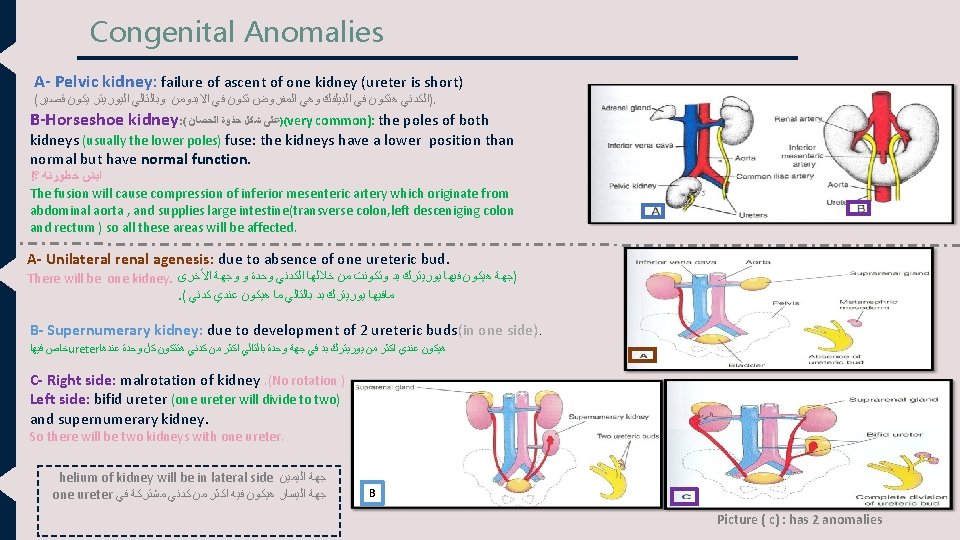
Congenital Anomalies A- Pelvic kidney: failure of ascent of one kidney (ureter is short) ( )ﺍﻟﻜﺪﻧﻲ ﻫﺘﻜﻮﻥ ﻓﻲ ﺍﻟﺒﻴﻠﻔﻚ ﻭﻫﻲ ﺍﻟﻤﻔﺮﻭﺽ ﺗﻜﻮﻥ ﻓﻲ ﺍﻻﺑﺪﻭﻣﻦ ﻭﺑﺎﻟﺘﺎﻟﻲ ﺍﻟﻴﻮﺭﻳﺘﺮ ﻳﻜﻮﻥ ﻗﺼﻴﺮ. B-Horseshoe kidney: ( ()ﻋﻠﻰ ﺷﻜﻞ ﺣﺬﻭﺓ ﺍﻟﺤﺼﺎﻥ very common): the poles of both kidneys (usually the lower poles) fuse: the kidneys have a lower position than normal but have normal function. ! ﺍﻳﺶ ﺧﻄﻮﺭﺗﻪ ؟ The fusion will cause compression of inferior mesenteric artery which originate from abdominal aorta , and supplies large intestine(transverse colon, left desceniging colon and rectum ) so all these areas will be affected. A- Unilateral renal agenesis: due to absence of one ureteric bud. There will be one kidney. )ﺟﻬﺔ ﻫﻴﻜﻮﻥ ﻓﻴﻬﺎ ﻳﻮﺭﻳﺘﺮﻙ ﺑﺪ ﻭﺗﻜﻮﻧﺖ ﻣﻦ ﺧﻼﻟﻬﺎ ﺍﻟﻜﺪﻧﻲ ﻭﺣﺪﺓ ﻭ ﻭﺟﻬﺔ ﺍﻷﺨﺮﻯ . ( ﻣﺎﻓﻴﻬﺎ ﻳﻮﺭﻳﺘﺮﻙ ﺑﺪ ﺑﺎﻟﺘﺎﻟﻲ ﻣﺎ ﻫﻴﻜﻮﻥ ﻋﻨﺪﻱ ﻛﺪﻧﻲ B- Supernumerary kidney: due to development of 2 ureteric buds(in one side). ﺧﺎﺹ ﻓﻴﻬﺎ ureter ﻫﻴﻜﻮﻥ ﻋﻨﺪﻱ ﺍﻛﺜﺮ ﻣﻦ ﻳﻮﺭﻳﺘﺮﻙ ﺑﺪ ﻓﻲ ﺟﻬﺔ ﻭﺣﺪﺓ ﺑﺎﻟﺘﺎﻟﻲ ﺍﻛﺜﺮ ﻣﻦ ﻛﺪﻧﻲ ﻫﺘﺘﻜﻮﻥ ﻛﻞ ﻭﺣﺪﺓ ﻋﻨﺪﻫﺎ C- Right side: malrotation of kidney. (No rotation ) Left side: bifid ureter (one ureter will divide to two) and supernumerary kidney. So there will be two kidneys with one ureter. helium of kidney will be in lateral side ﺟﻬﺔ ﺍﻟﻴﻤﻴﻦ one ureter ﺟﻬﺔ ﺍﻟﻴﺴﺎﺭ ﻫﻴﻜﻮﻥ ﻓﻴﻪ ﺍﻛﺜﺮ ﻣﻦ ﻛﺪﻧﻲ ﻣﺸﺘﺮﻛﺔ ﻓﻲ B Picture ( c) : has 2 anomalies
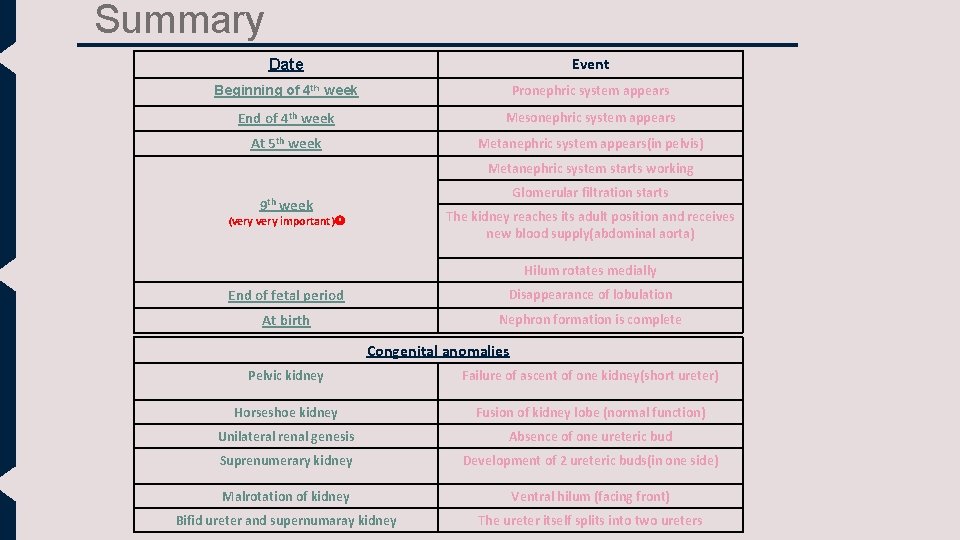
Summary Date Event Beginning of 4 th week Pronephric system appears End of 4 th week Mesonephric system appears At 5 th week Metanephric system appears(in pelvis) Metanephric system starts working Glomerular filtration starts 9 th week The kidney reaches its adult position and receives new blood supply(abdominal aorta) (very important) Hilum rotates medially End of fetal period Disappearance of lobulation At birth Nephron formation is complete Congenital anomalies Pelvic kidney Failure of ascent of one kidney(short ureter) Horseshoe kidney Fusion of kidney lobe (normal function) Unilateral renal genesis Absence of one ureteric bud Suprenumerary kidney Development of 2 ureteric buds(in one side) Malrotation of kidney Ventral hilum (facing front) Bifid ureter and supernumaray kidney The ureter itself splits into two ureters
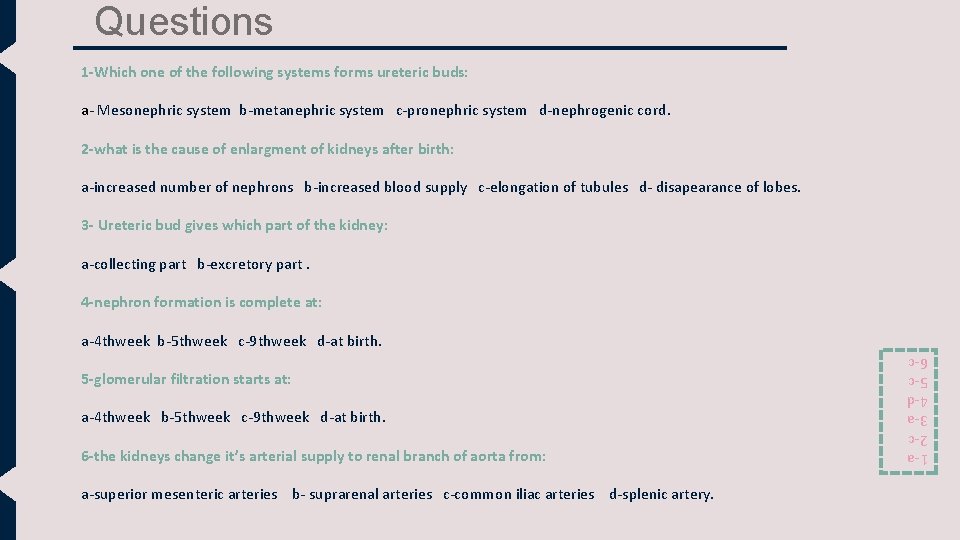
Questions 1 -Which one of the following systems forms ureteric buds: a- Mesonephric system b-metanephric system c-pronephric system d-nephrogenic cord. 2 -what is the cause of enlargment of kidneys after birth: a-increased number of nephrons b-increased blood supply c-elongation of tubules d- disapearance of lobes. 3 - Ureteric bud gives which part of the kidney: a-collecting part b-excretory part. 4 -nephron formation is complete at: a-4 thweek b-5 thweek c-9 thweek d-at birth. 6 -the kidneys change it’s arterial supply to renal branch of aorta from: a-superior mesenteric arteries b- suprarenal arteries c-common iliac arteries d-splenic artery. 1 -a 2 -c 3 -a 4 -d 5 -c 6 -c 5 -glomerular filtration starts at:

ANY SUGGESTION OR ISSUE USEFUL VIDEOS https: //youtu. be/yigzn. Ayhn. Go? t=19 https: //www. youtube. com/watch? v=W 76 SYj. JDHw. A Embryology 436 Editing file @Embryology 436@gmail. com

TEAM MEMBERS § TEAM LEADERS : SAAD ALRUSHOUD NEHAL BEYARI ▪ • Abdulrahman Alharbi • Abdulrahman Alrasheed • Rayan Alqarni • Abdulkarim Alharbi ▪ EDITING By: MUHANNED ALZAHRANI BOYS : GIRLS : • Razan Alotaibi • Thikrayat Omar • Do’aa Walid • Ohood Abdullah • Nouf Aloqili
- Slides: 14