
Development of system for semiautomatic GIS visualization based
Development of system for semi-automatic GIS visualization based on common data model OMOP-CDM : AEGIS (Application for Epidemiological Geographic Information System) Jaehyeong Cho, B. S. 1, Seng Chan You, M. D. M. S. 1, Kyehwon Kim, B. E. 2, Doyeop Kim, B. E. 1, Rae Woong Park, M. D. , Ph. D. 1, 3 Dept. of Biomedical Informatics, Ajou University School of Medicine, Yeongtong-gu, Suwon Yeungnam University Graduate school of Medicine, Nam-gu, Daegu Dept. of Biomedical Sciences, Ajou University Graduate School of Medicine, Yeongtong-gu, Suwon

Introduction 2
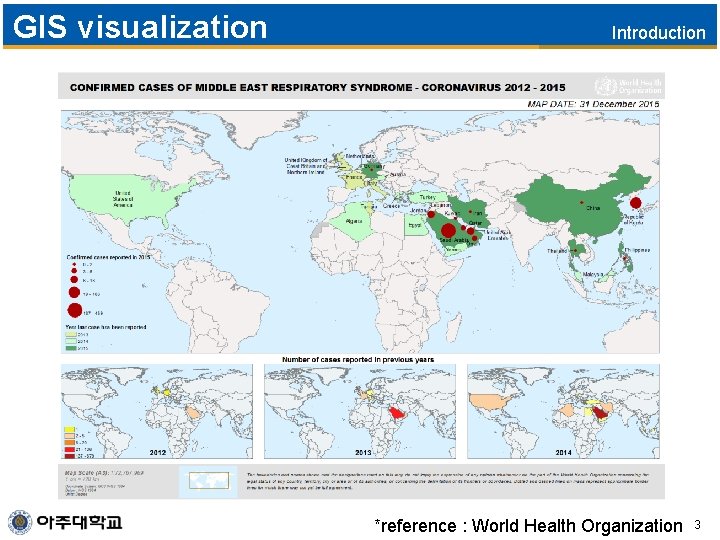
GIS visualization Introduction *reference : World Health Organization 3
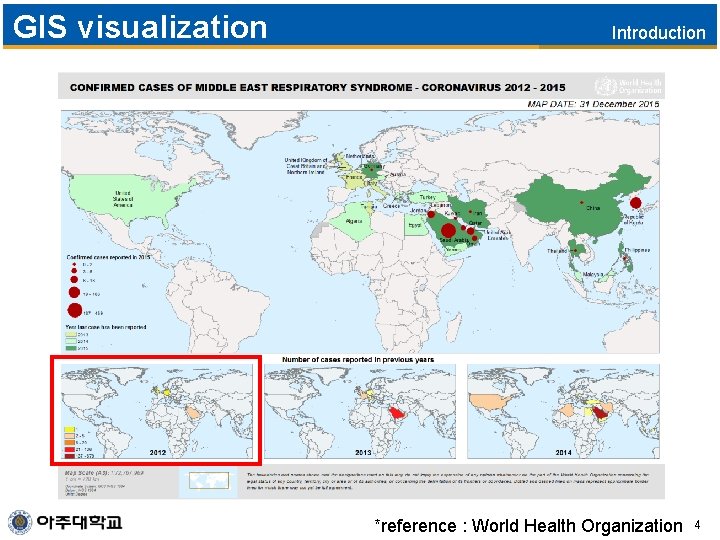
GIS visualization Introduction *reference : World Health Organization 4
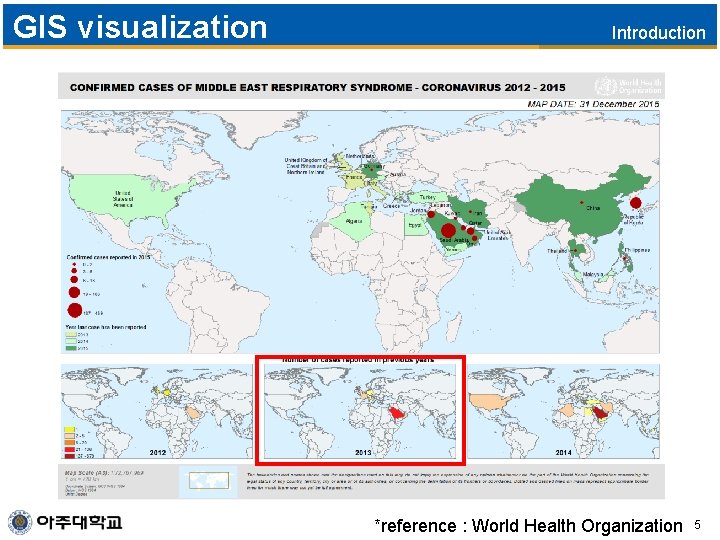
GIS visualization Introduction *reference : World Health Organization 5
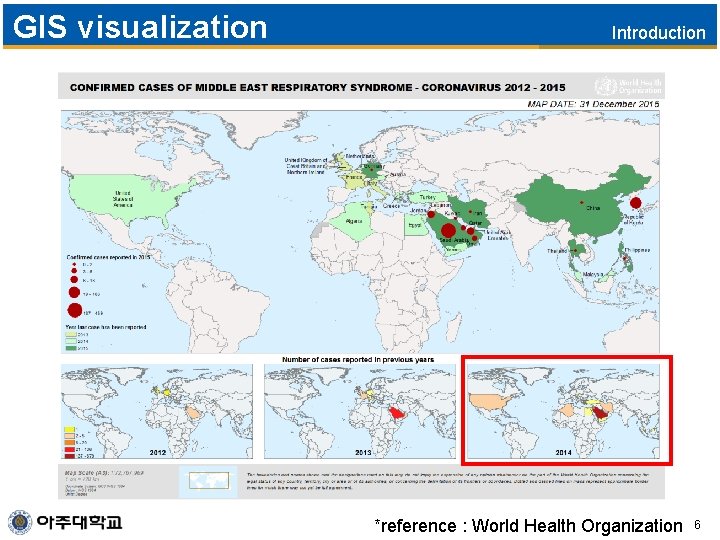
GIS visualization Introduction *reference : World Health Organization 6
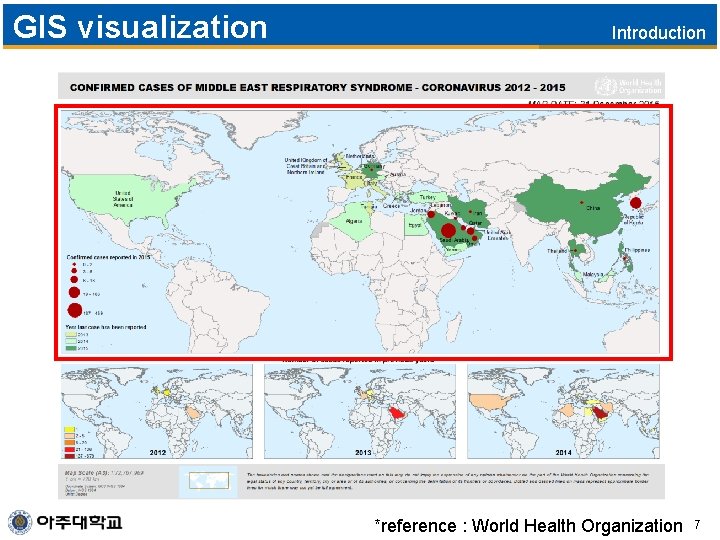
GIS visualization Introduction *reference : World Health Organization 7
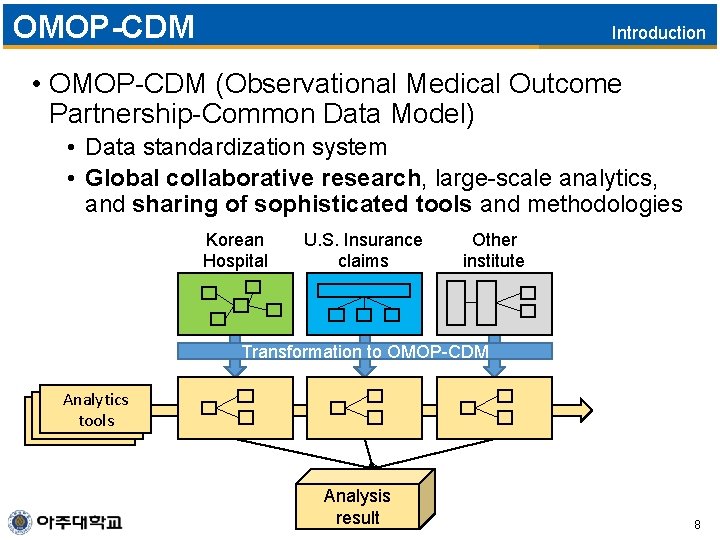
OMOP-CDM Introduction • OMOP-CDM (Observational Medical Outcome Partnership-Common Data Model) • Data standardization system • Global collaborative research, large-scale analytics, and sharing of sophisticated tools and methodologies Korean Hospital U. S. Insurance claims Other institute Transformation to OMOP-CDM Analytics Analyis tools Analyis tool Analysis result 8
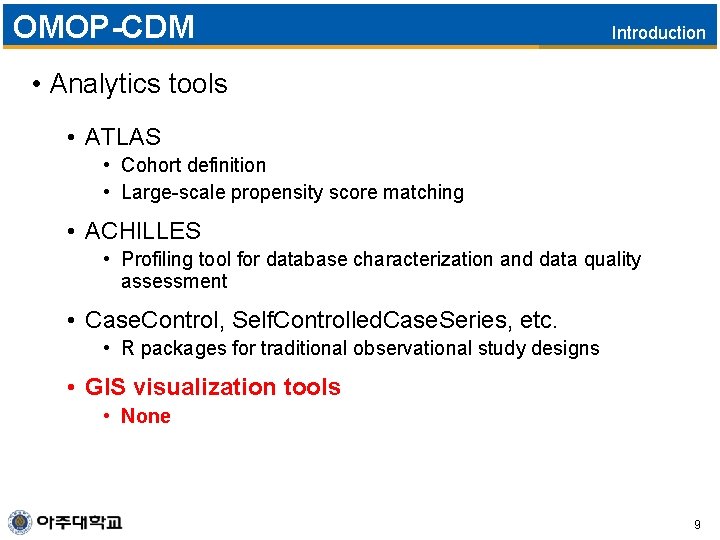
OMOP-CDM Introduction • Analytics tools • ATLAS • Cohort definition • Large-scale propensity score matching • ACHILLES • Profiling tool for database characterization and data quality assessment • Case. Control, Self. Controlled. Case. Series, etc. • R packages for traditional observational study designs • GIS visualization tools • None 9
AIM Introduction • AEGIS development * AEGIS : Application for Epidemiological Geographic Information System - Tools based on OMOP-CDM - Semi-automated medical map generation 10
Method 11
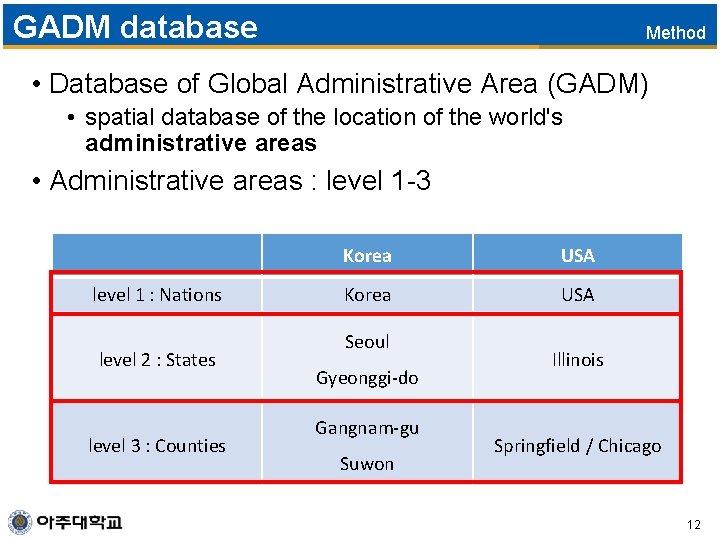
GADM database Method • Database of Global Administrative Area (GADM) • spatial database of the location of the world's administrative areas • Administrative areas : level 1 -3 level 1 : Nations level 2 : States level 3 : Counties Korea USA Seoul Gyeonggi-do Gangnam-gu Suwon Illinois Springfield / Chicago 12
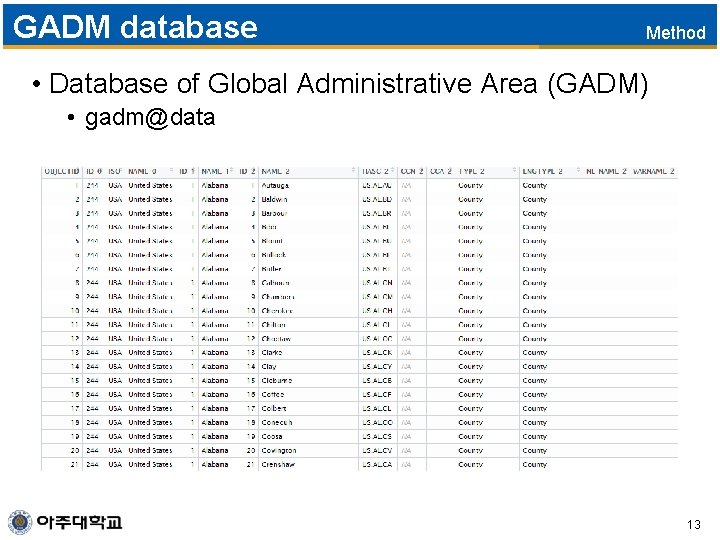
GADM database Method • Database of Global Administrative Area (GADM) • gadm@data 13
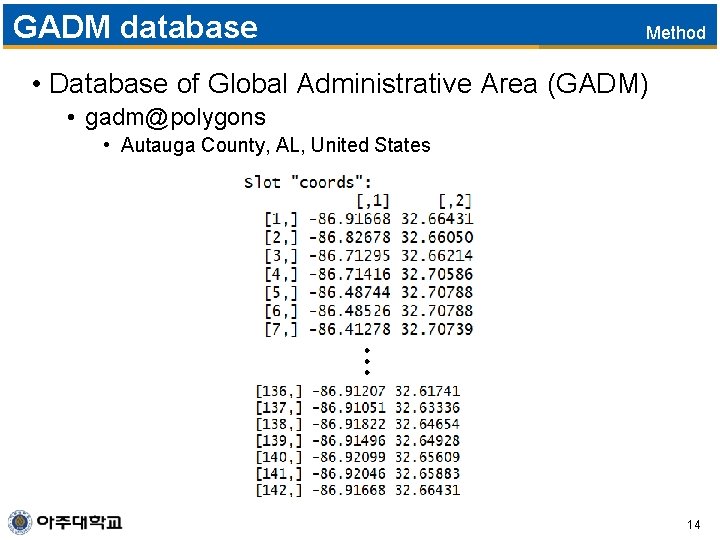
GADM database Method • Database of Global Administrative Area (GADM) • gadm@polygons • Autauga County, AL, United States • • • 14
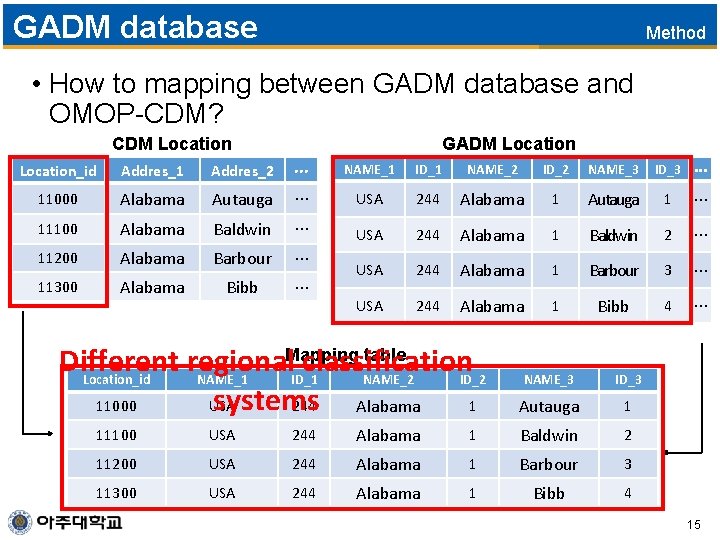
GADM database Method • How to mapping between GADM database and OMOP-CDM? CDM Location GADM Location_id Addres_1 Addres_2 … NAME_1 ID_1 NAME_2 ID_2 NAME_3 11000 Alabama Autauga … USA 244 Alabama 1 Autauga 1 … 11100 Alabama Baldwin … USA 244 Alabama 1 Baldwin 2 … 11200 Alabama Barbour … 11300 Alabama Bibb USA 244 1 Barbour 3 … … Alabama USA 244 Alabama 1 Bibb 4 … Mapping table Different regional classification Location_id NAME_1 ID_1 NAME_2 ID_2 systems 11000 USA 244 1 Alabama NAME_3 ID_3 Autauga 1 11100 USA 244 Alabama 1 Baldwin 2 11200 USA 244 Alabama 1 Barbour 3 11300 USA 244 Alabama 1 Bibb 4 ID_3 … 15
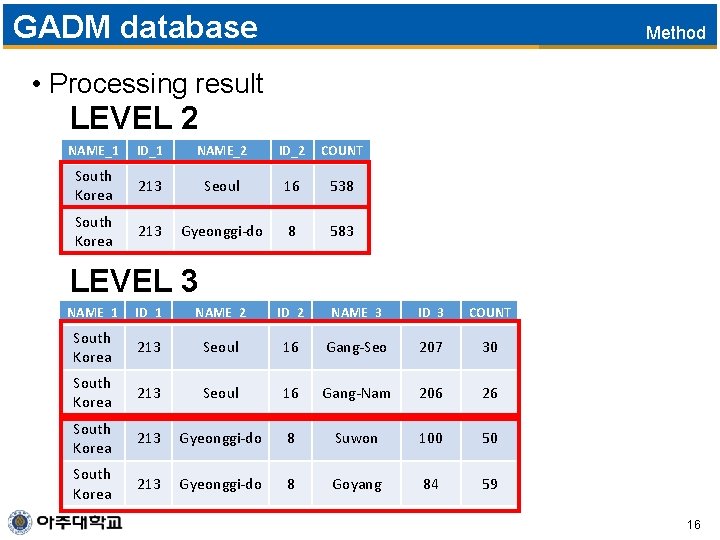
GADM database Method • Processing result LEVEL 2 NAME_1 ID_1 NAME_2 ID_2 COUNT South Korea 213 Seoul 16 538 South Korea 213 Gyeonggi-do 8 583 LEVEL 3 NAME_1 ID_1 NAME_2 ID_2 NAME_3 ID_3 COUNT South Korea 213 Seoul 16 Gang-Seo 207 30 South Korea 213 Seoul 16 Gang-Nam 206 26 South Korea 213 Gyeonggi-do 8 Suwon 100 50 South Korea 213 Gyeonggi-do 8 Goyang 84 59 16
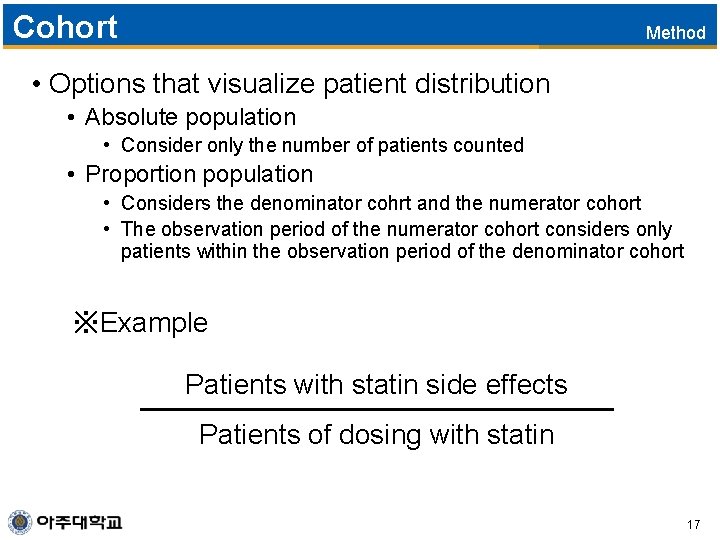
Cohort Method • Options that visualize patient distribution • Absolute population • Consider only the number of patients counted • Proportion population • Considers the denominator cohrt and the numerator cohort • The observation period of the numerator cohort considers only patients within the observation period of the denominator cohort ※Example Patients with statin side effects Patients of dosing with statin 17
Result 18
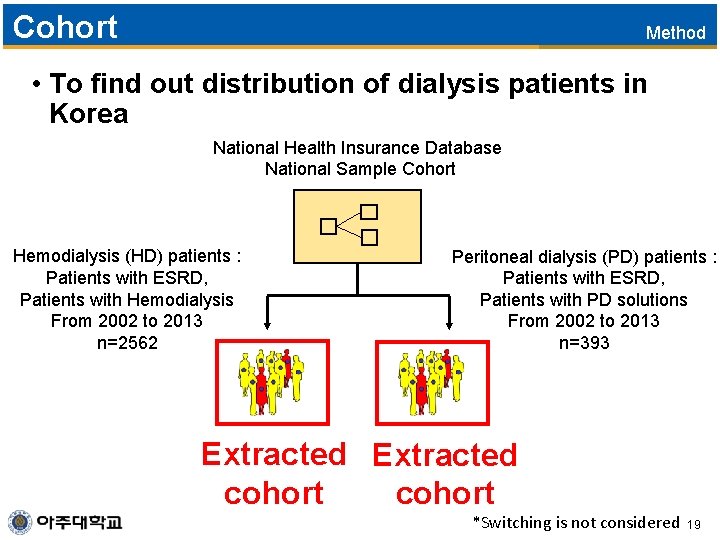
Cohort Method • To find out distribution of dialysis patients in Korea National Health Insurance Database National Sample Cohort Hemodialysis (HD) patients : Patients with ESRD, Patients with Hemodialysis From 2002 to 2013 n=2562 Peritoneal dialysis (PD) patients : Patients with ESRD, Patients with PD solutions From 2002 to 2013 n=393 Extracted cohort *Switching is not considered 19
UI Result • AEGIS UI 20
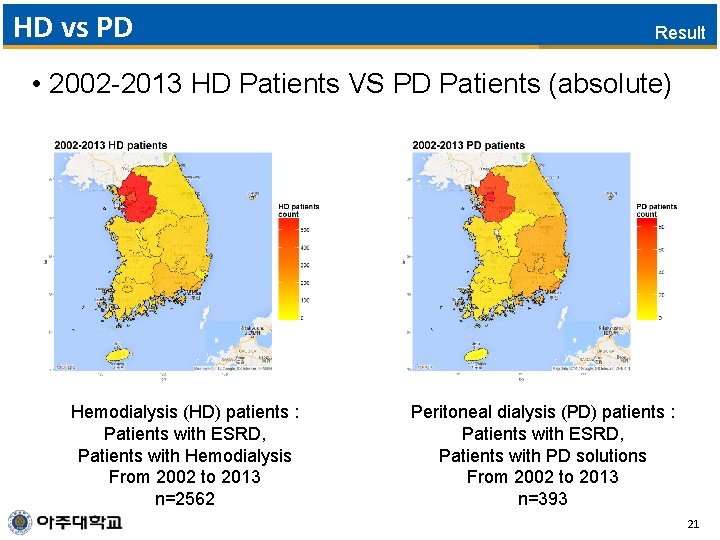
HD vs PD Result • 2002 -2013 HD Patients VS PD Patients (absolute) Hemodialysis (HD) patients : Patients with ESRD, Patients with Hemodialysis From 2002 to 2013 n=2562 Peritoneal dialysis (PD) patients : Patients with ESRD, Patients with PD solutions From 2002 to 2013 n=393 21
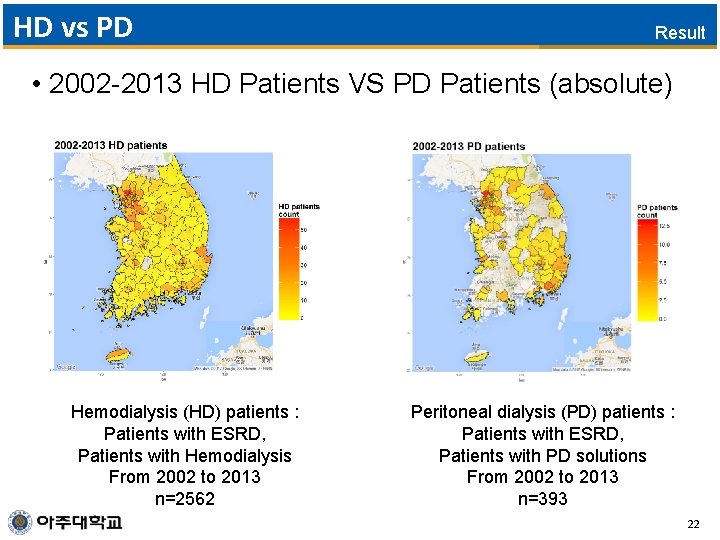
HD vs PD Result • 2002 -2013 HD Patients VS PD Patients (absolute) Hemodialysis (HD) patients : Patients with ESRD, Patients with Hemodialysis From 2002 to 2013 n=2562 Peritoneal dialysis (PD) patients : Patients with ESRD, Patients with PD solutions From 2002 to 2013 n=393 22
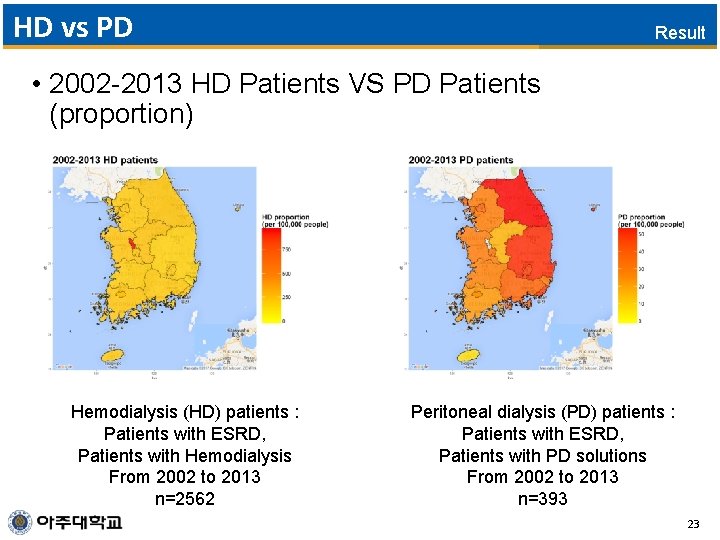
HD vs PD Result • 2002 -2013 HD Patients VS PD Patients (proportion) Hemodialysis (HD) patients : Patients with ESRD, Patients with Hemodialysis From 2002 to 2013 n=2562 Peritoneal dialysis (PD) patients : Patients with ESRD, Patients with PD solutions From 2002 to 2013 n=393 23
HD vs PD Result • 2002 -2013 HD Patients VS PD Patients (proportion) Hemodialysis (HD) patients : Patients with ESRD, Patients with Hemodialysis From 2002 to 2013 n=2562 Peritoneal dialysis (PD) patients : Patients with ESRD, Patients with PD solutions From 2002 to 2013 n=393 24
Result • Example - US 25
Summary Result • As a result, the development of AEGIS facilitates quick and effective analysis of geographical and temporal characteristics • Medical maps generated through semiautomatic systems can be used to monitor disease • In the future, we will provide additional functions to verify and visualize statistical differences in data 26
Suggestion and Question • What we’re suggesting: • Adopting GADM as standard vocabulary for geographical index in CDM • Not in OMOP vocabulary table itself, but via using mapping table • What we’re not sure: • How to extract cohort for proportional visualization • Should child cohort be included in mother cohort? As outcome cohort in target/comparator cohort • Is it necessary to specify date in AEGIS (Isn’t it sufficient by using ATLAS? ) • Should we count only number of distinct person in cohort? • Which statistical method can be used for geographical difference?
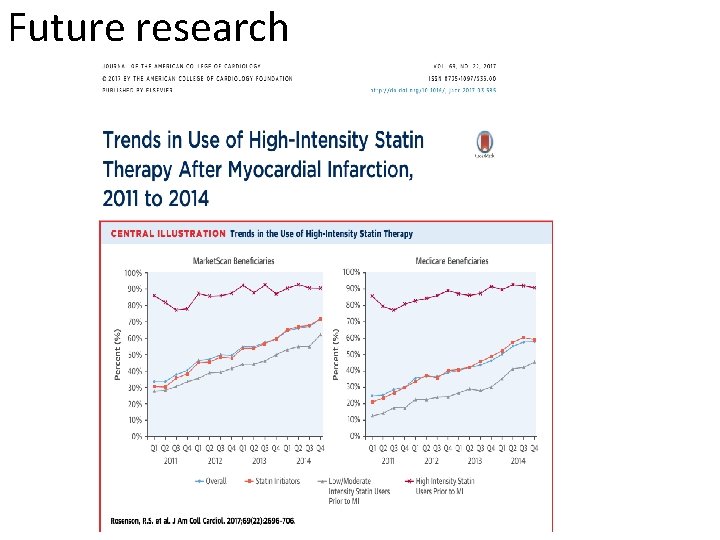
Future research
Future research • We want to visualize and analyze differences in prescription patterns across the world after revision of guideline • We can identify the impact of the guideline worldwide • We can identify the differences in adoption of guideline within the nation and between the nations • We want to visualize and analyze differences in mortality and complication rate of the disease (eg. MI, stroke )
Thank you 30
- Slides: 30