
Development of Synthetics Carrie Knott Ph D Coastal
- Slides: 22
Development of Synthetics Carrie Knott, Ph. D. Coastal Plants Breeding AGRO 4064 November 1, 2011
Synthetic Cultivars Open-pollination of clones (inbred lines) Common in forages and legumes Common for maize in developing countries Most synthetics consist of 5 to 12 parents Introduced in forage breeding in Denmark Frandsen 1940; Schaepman 1952 Further developed to improve alfalfa after limited success of hybrid cultivars Tysdal 1948; Tysdal, Kiesselbach, Westover 1942; Tysdal and Crandall, 1948; Wellensiek, 1952
Synthetic Cultivar Development Formation of a population Evaluation of individual clones (inbred lines) Evaluation of combining ability of the clone Evaluation of experimental synthetic Preparation of commercial seed
Population Formation Sources of Breeding Populations: Natural open-pollinated populations Open-pollinated cultivars Planned crosses of selected clones Breeding populations
Identification of Superior Clones Phenotypic Selection Individual plants evaluated and selected Selected individuals can be released as synthetic cultivar Selected lines can be further evaluated before developed into synthetic cultivar
Identification of Superior Clones Genotypic Selection Evaluates the ability of a clone to produce superior progeny when crossed with other clones Combining ability of clones can be determined by 2 methods: Testcross Polycross
Evaluation of Combining Ability Testcross Also referred to as topcross test Determines general combining ability of an individual Three steps Selection of Tester Production of testcross seed Testcross trial
Evaluation of Combining Ability Testcross—Selection of Tester is generally heterogeneous population that produces diverse genotypes Assess clone’s ability to produce superior progeny Tester should maximize differences in clone performance Cultivars and experimental synthetics common testers in forages and legumes
Evaluation of Combining Ability Testcross—Production of Testcross Seed Random pollination with tester is essential Ensure that testcross seed of all experimental clones have similar array of gametes from tester Essential that variation in performance of progeny of clones is due to genetic potential of clones and not variation in genetic contribution of genes from tester
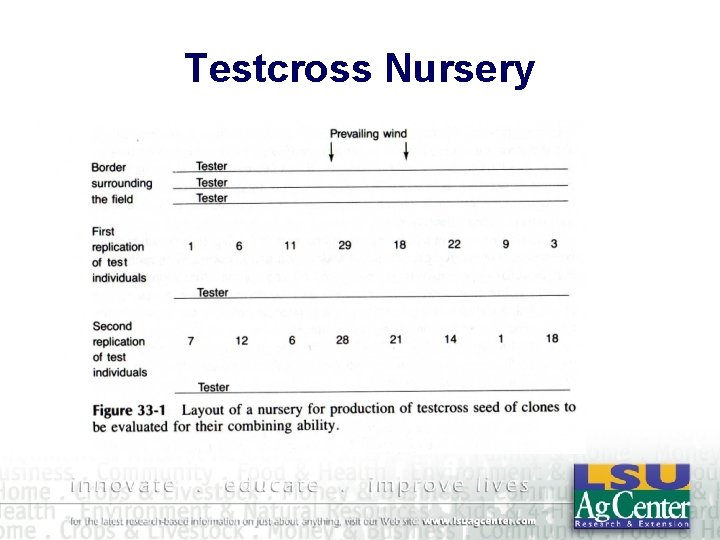
Evaluation of Combining Ability Testcross—Production of Testcross Seed To minimize non-random pollination testcross nurseries should consider Isolation Distances Direction of prevailing wind Proximity of tester to clones Distance between clones Replication of clones
Evaluation of Combining Ability Testcross—Production of Testcross Seed Forages Male fertile Non-emasculated Testcross consists of pollen from clones--self and others-and tester Self pollen not major concern because of selfincompatibility Main source of non-random pollen is undesirable matings with adjacent clones in the testcross nursery
Testcross Nursery
Evaluation of Combining Ability Testcross—Testcross Trial Seed from testcrosses evaluated in replicated trials Superior clones identified on basis of testcross performance Superior clones evaluated further Commonly in polycross test
Evaluation of Combining Ability Polycross Method of genotypic selection among clones being considered for use in a synthetic cultivar Difference with testcross Selected clones intermated—not outside tester Random pollination required Ensure variation in progeny performance due to genetic potential of clones and not genetic contribution of pollen source
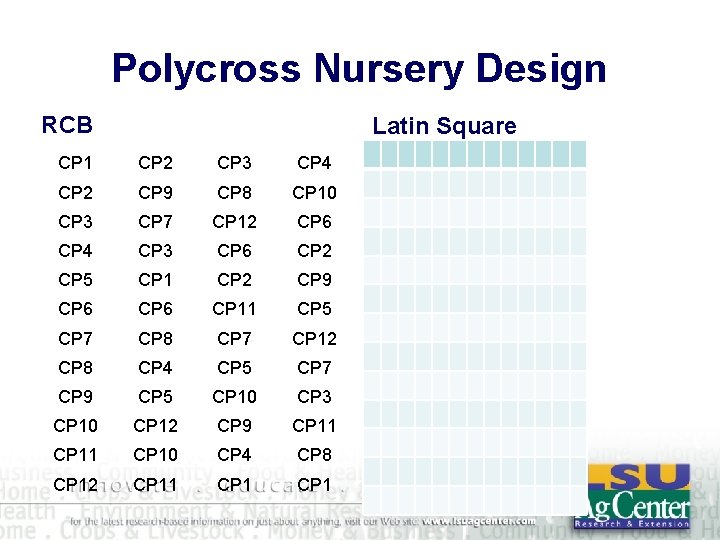
Evaluation of Combining Ability Polycross Considerations Timing of flowering Isolation Number of replications Arrangement of clones within reps Randomized Complete Block Latin square
Polycross Nursery Design RCB Latin Square CP 1 CP 2 CP 3 CP 4 CP 2 CP 9 CP 8 CP 10 CP 3 CP 7 CP 12 CP 6 CP 4 CP 3 CP 6 CP 2 CP 5 CP 1 CP 2 CP 9 CP 6 CP 11 CP 5 CP 7 CP 8 CP 7 CP 12 CP 8 CP 4 CP 5 CP 7 CP 9 CP 5 CP 10 CP 3 CP 10 CP 12 CP 9 CP 11 CP 10 CP 4 CP 8 CP 12 CP 11 CP 1
Evaluation of Combining Ability Polycross Seed from each rep harvested Similar amounts of seed from each block bulked Seed evaluated to determine combing ability of each clone in replicated trials
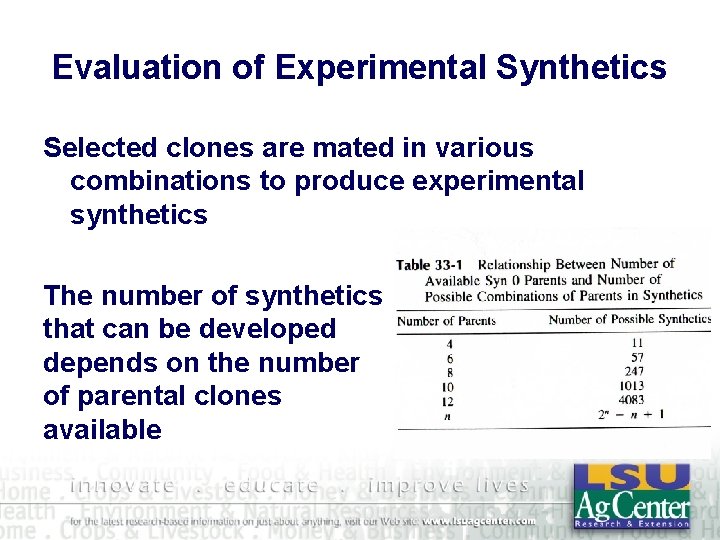
Evaluation of Experimental Synthetics Selected clones are mated in various combinations to produce experimental synthetics The number of synthetics that can be developed depends on the number of parental clones available
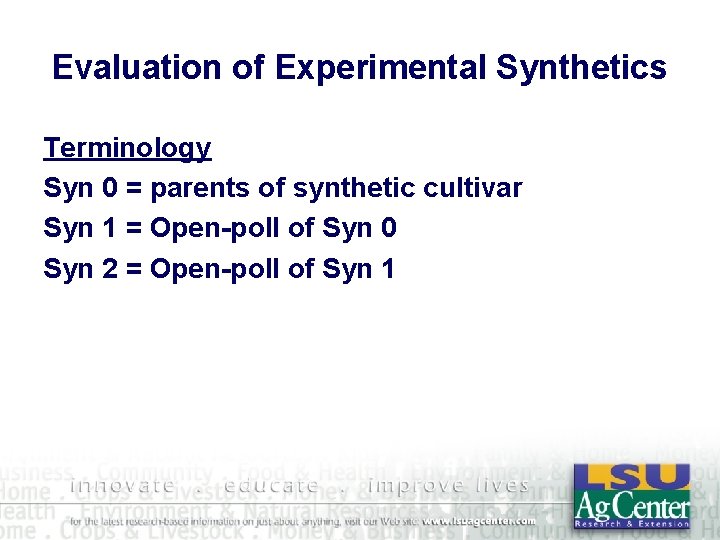
Evaluation of Experimental Synthetics Terminology Syn 0 = parents of synthetic cultivar Syn 1 = Open-poll of Syn 0 Syn 2 = Open-poll of Syn 1
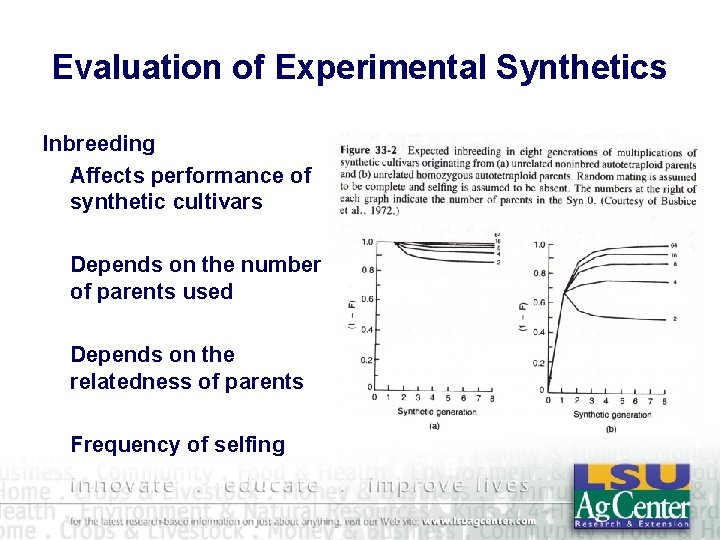
Evaluation of Experimental Synthetics Inbreeding Affects performance of synthetic cultivars Depends on the number of parents used Depends on the relatedness of parents Frequency of selfing
Performance of Synthetic Cultivars In general, highest performance is in Syn 1 generation In forages, Syn 1 has 10 -12% higher yield than Syn 2 or Syn 3 Predict performance of synthetic cultivars
Advantages/Disadvantage of Synthetic Cultivars Advantages Economical method for cross-pollinated species Allows retention of large population sizes Retains heterozygosity Relatively easy to produce Disadvantage Potential performance based on hybrid vigor/heterosis disregarded