
Development of Spinal Cord Vertebral Column Color Code
Development of Spinal Cord & Vertebral Column Color Code: ● Important ● Doctors Notes ● Extra explanation Done
OBJECTIVES: ● Describe the development of the spinal cord from the neural tube. ● List the layers of the spinal cord and its contents. ● List subdivisions of mantle & marginal zones. ● List meningeal layers and describe positional changes of spinal cord. ● Describe development of vertebral column from sclerotomic portion of paraxial mesoderm. ● Describe chondrification & ossification stages in vertebral development. ● Describe spina bifida and its types.
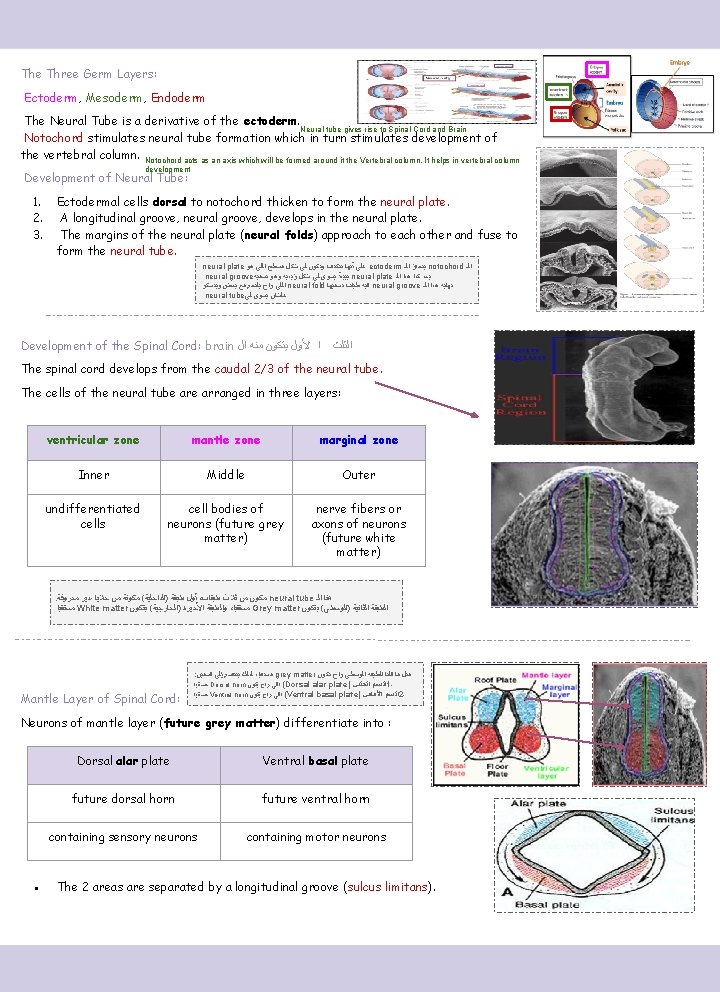
The Three Germ Layers: Ectoderm, Mesoderm, Endoderm The Neural Tube is a derivative of the ectoderm. Neural tube gives rise to Spinal Cord and Brain Notochord stimulates neural tube formation which in turn stimulates development of the vertebral column. Notochord acts as an axis which will be formed around it the Vertebral column. It helps in vertebral column development Development of Neural Tube: 1. 2. 3. Ectodermal cells dorsal to notochord thicken to form the neural plate. A longitudinal groove, neural groove, develops in the neural plate. The margins of the neural plate (neural folds) approach to each other and fuse to form the neural tube. neural plate ﻋﻠﻰ ﺃﻨﻬﺎ ﺗﺘﻜﺜﻒ ﻭﺗﻜﻮﻥ ﻟﻲ ﺷﻜﻞ ﻣﺴﻄﺢ ﺍﻟﻠﻲ ﻫﻮ ectoderm ﺑﺘﺤﻔﺰ ﺍﻟـ notochord ﺍﻟـ neural groove ﺑﻴﺒﺪﺃ ﻳﺴﻮﻱ ﻟﻲ ﺷﻜﻞ ﺯﺑﺪﻳﺔ ﻭﻫﻮ ﻧﺴﻤﻴﻪ neural plate ﺑﻌﺪ ﻛﺬﺍ ﻫﺬﺍ ﺍﻟـ ﺍﻟﻠﻲ ﺭﺍﺡ ﻳﻠﺘﺤﻢ ﻣﻊ ﺑﻌﺾ ﻭﻳﺘﺴﻜﺮ neural fold ﻓﻴﻪ ﻃﻴﺎﺕ ﻧﺴﻤﻴﻬﺎ neural groove ﻧﻬﺎﻳﺔ ﻫﺬﺍ ﺍﻟـ neural tube ﻋﻠﺸﺎﻥ ﻳﺴﻮﻱ ﻟﻲ Development of the Spinal Cord: brain ﺍ ﻷﻮﻝ ﻳﺘﻜﻮﻥ ﻣﻨﻪ ﺍﻝ ﺍﻟﺜﻠﺚ The spinal cord develops from the caudal 2/3 of the neural tube. The cells of the neural tube arranged in three layers: ventricular zone mantle zone marginal zone Inner Middle Outer undifferentiated cells cell bodies of neurons (future grey matter) nerve fibers or axons of neurons (future white matter) . ﺃﻮﻝ ﻃﺒﻘﺔ )ﺍﻟﺪﺍﺧﻠﻴﺔ( ﻣﻜﻮﻧﺔ ﻣﻦ ﺧﻼﻳﺎ ﻏﻴﺮ ﻣﻌﺮﻭﻓﺔ ، ﻣﻜﻮﻥ ﻣﻦ ﺛﻼﺙ ﻃﺒﻘﺎﺕ neural tube ﻫﻨﺎ ﺍﻟـ ﻣﺴﺘﻘﺒﺍ White matter ﻭﺍﻟﻄﺒﻘﺔ ﺍﻷﺨﻴﺮﺓ )ﺍﻟﺨﺎﺭﺟﻴﺔ( ﺑﺘﻜﻮﻥ ، ﻣﺴﺘﻘﺒﺍ Grey matter ﺍﻟﻄﺒﻘﺔ ﺍﻟﺜﺎﻧﻴﺔ )ﺍﻟﻮﺳﻄﻰ( ﺑﺘﻜﻮﻥ Mantle Layer of Spinal Cord: : ﻟﺬﻟﻚ ﺑﺘﻨﻘﺴﻢ ﺇﻟﻰ ﻗﺴﻤﻴﻦ ، ﻣﺴﺘﻘﺒﺍ grey matter ﻣﺜﻞ ﻣﺎ ﻗﻠﻨﺎ ﺍﻟﻄﺒﻘﺔ ﺍﻟﻮﺳﻄﻰ ﺭﺍﺡ ﺗﻜﻮﻥ ﻣﺴﺘﻘﺒﺍ Dorsal horn ( ﺍﻟﻠﻲ ﺭﺍﺡ ﻳﻜﻮﻥ Dorsal alar plate) ﺍﻟﻘﺴﻢ ﺍﻟﺨﻠﻔﻲ 1 ﻣﺴﺘﻘﺒﺍ Ventral horn ( ﺍﻟﻠﻲ ﺭﺍﺡ ﻳﻜﻮﻥ Ventral basal plate) ﺍﻟﻘﺴﻢ ﺍﻷﻤﺎﻣﻲ 2 - Neurons of mantle layer (future grey matter) differentiate into : ● Dorsal alar plate Ventral basal plate future dorsal horn future ventral horn containing sensory neurons containing motor neurons The 2 areas are separated by a longitudinal groove (sulcus limitans).
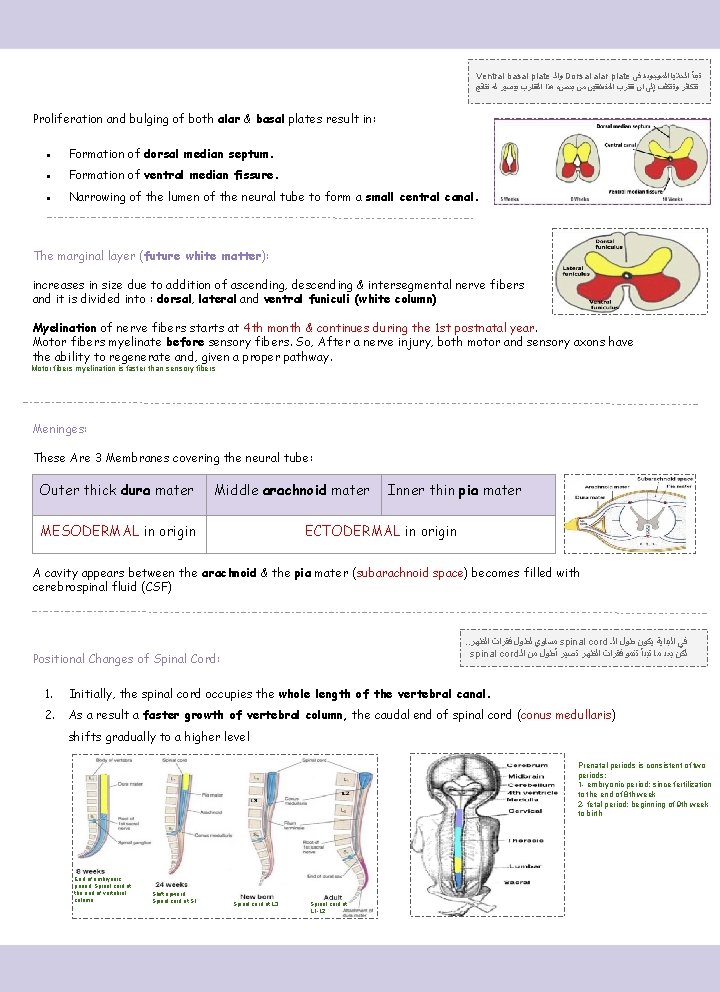
Ventral basal plate ﻭﺍﻟـ Dorsal alar plate ﺗﺒﺪﺃ ﺍﻟﺨﻼﻳﺎ ﺍﻟﻤﻮﺟﻮﺩﺓ ﻓﻲ ﻫﺬﺍ ﺍﻟﺘﻘﺎﺭﺏ ﺑﻴﺼﻴﺮ ﻟﻪ ﻧﺘﺎﺋﺞ ، ﺗﺘﻜﺎﺛﺮ ﻭﺗﺘﻜﺜﻒ ﺇﻟﻰ ﺍﻥ ﺗﻘﺘﺮﺏ ﺍﻟﻤﻨﻄﻘﺘﻴﻦ ﻣﻦ ﺑﻌﺾ Proliferation and bulging of both alar & basal plates result in: ● Formation of dorsal median septum. ● Formation of ventral median fissure. ● Narrowing of the lumen of the neural tube to form a small central canal. The marginal layer (future white matter): increases in size due to addition of ascending, descending & intersegmental nerve fibers and it is divided into : dorsal, lateral and ventral funiculi (white column) Myelination of nerve fibers starts at 4 th month & continues during the 1 st postnatal year. Motor fibers myelinate before sensory fibers. So, After a nerve injury, both motor and sensory axons have the ability to regenerate and, given a proper pathway. Motor fibers myelination is faster than sensory fibers Meninges: These Are 3 Membranes covering the neural tube: Outer thick dura mater Middle arachnoid mater MESODERMAL in origin Inner thin pia mater ECTODERMAL in origin A cavity appears between the arachnoid & the pia mater (subarachnoid space) becomes filled with cerebrospinal fluid (CSF) . . ﻣﺴﺎﻭﻱ ﻟﻄﻮﻝ ﻓﻘﺮﺍﺕ ﺍﻟﻈﻬﺮ spinal cord ﻓﻲ ﺍﻟﺒﺪﺍﻳﺔ ﻳﻜﻮﻥ ﻃﻮﻝ ﺍﻟـ spinal cord ﻟﻜﻦ ﺑﻌﺪ ﻣﺎ ﺗﺒﺪﺃ ﺗﻨﻤﻮ ﻓﻘﺮﺍﺕ ﺍﻟﻈﻬﺮ ﺗﺼﻴﺮ ﺃﻄﻮﻝ ﻣﻦ ﺍﻟـ Positional Changes of Spinal Cord: 1. Initially, the spinal cord occupies the whole length of the vertebral canal. 2. As a result a faster growth of vertebral column, the caudal end of spinal cord (conus medullaris) shifts gradually to a higher level Prenatal periods is consistent of two periods: 1 - embryonic period: since fertilization to the end of 8 th week 2 - fetal period: beginning of 9 th week to birth End of embryonic period: Spinal cord at the end of vertebral column Shift upward: Spinal cord at S 1 Spinal cord at L 3 Spinal cord at L 1 -L 2

Development of the Vertebral Column: The vertebral column develops from the ventromedial parts (sclerotomes) of the somites. The somites develop from the para-axial mesoderm. Intraembryonic Mesoderm: notochord. ﺗﻘﺴﻢ ﺇﻟﻰ ﺛﻼﺙ ﺃﻘﺴﺎﻡ ﻣﻦ ﺍﻟﻴﻤﻴﻦ ﻭﺍﻟﻴﺴﺎﺭ ﻭﻳﻔﺼﻞ ﺑﻴﻦ ﺍﻟﻴﻤﻴﻦ ﻭﺍﻟﻴﺴﺎﺭ ﺍﻟـ mesoderm ﻃﺒﻘﺔ ﺍﻟـ : ﻭﻫﺬﺍ ﺍﻟﻘﺴﻢ ﻳﻘﺴﻢ ﺇﻟﻰ ﺛﻼﺙ ﺃﺠﺰﺍﺀ para-axial mesoderm ﺃﻮﻝ ﻗﺴﻢ ﻫﻮ ﺍﻟـ ﻳﺘﻜﻮﻥ ﻟﻨﺎ ﻋﻈﺎﻡ ﻓﻘﺮﺍﺕ ﺍﻟﻈﻬﺮ Sclerotome ﻣﻦ ﺍﻟـ Sclerotome, Dermatome, Myotome. . Located between Ectoderm & Endoderm EXCEPT in the central axis of embryo where NOTOCHORD is found. Differentiates into 3 parts: 1. Paraxial mesoderm 2. Intermediate mesoderm 3. Lateral mesoderm Paraxial mesoderm divides into segments called ‘somites’. Each somite divides into 3 parts: 1. Dermatome Future skin 2. Myotome Future muscles 3. Sclerotome Future bones DEVELOPMENT OF VERTEBRA: 1. Sclerotome around neural tube: forms vertebral (neural) arch. 2. Sclerotome around notochord: forms body of vertebra. 3. Sclerotome in body wall near to neural tube and notochord: forms costal process ( gives ribs in thoracic region only ). Formation of Body of Vertebra: At 4 th week, each sclerotome becomes subdivided into two parts : ● an cranial part, consisting of loosely arranged cells. ● a caudal part, of more condensed tissue. The Caudal Part Of each somite fuses with the cranial part of the consecutive somite, around the notochord to form the body of the vertebra, called the centrum. Thus each centrum develops from 2 adjacent sclerotomes.

Fate of Notochord: In the region of the bodies of vertebrae: It degenerates Between bodies of vertebrae: It forms the central part, ’nucleus pulposus’ of the intervertebral discs. Annulus fibrosus part of the intervertebral discs is formed by the mesoderm surrounding the notochord. ● The fused sclerotomes grow dorsally around the neural tube and form the vertebral (neural) arch. ● Ventrolaterally, costal processes develop that give rise to ribs in thoracic region. Nucleus pulposus developed from the remnants of notochord Annulus fibrosus developed from mesoderm surrounding the notochord Vertebral Development: This picture represents the changes that occurs into 2 stages : chondrification stage and ossification stage. ﺗﻜﻮﻥ ﺍﻟﻌﻈﺎﻡ ﺑﻨﻬﺎﻳﺔ embryonic period Primary Ossification Stage Mesenchymal Stage Chondrification Stage - The chondrification centers appears at 6 th week (cartilage): (Pic. B) - And by the (at the end of 8 th week) the 3 primary ossification centers appears (bone): (Pic. c) - And The 5 secondary ossification centers appear at puberty. Fusion of bony halves of vertebral arch occurs at 3 -5 years (pic. D). and Fusion of centrum with vertebral arch occurs at 46 years (pic. D). All centers unite around 25 years. SO, Ossification starts at the end of embryonic period ( end of 8 th week) and ends at adult age 25 years. Stage of fusion Stage of Secondary Ossification Dr. sanaa Notes ( 435 team ) Curvatures of Vertebral Column: Primary curvatures (concave anterior) : Secondary curvatures: (convex anterior) develop prenatally ﻗﺒﻞ ﺍﻟﻮ ﻻﺩﺓ develop postnatally ﺑﻌﺪ ﺍﻟﻮ ﻻﺩﺓ 1. Thoracic 2. Pelvic or Sacral 1. Cervical: as a result of lifting the head 2. Lumbar: as a result of walking Vertebral column is concave anterior during the prenatal period The it convex in 2 areas Cervical - as results when baby is lifting his head Thoracic - as result when the baby walks

Spina Bifida Cause: Failure of fusion of the halves of vertebral arches Incidence: 0. 04 -0. 15% Sex: more frequent in females Meningo = meninges myelo = spinal cord ocoele = sac contains fluid or cysist schisis= opening Types: 1. Spina bifida occulta (20%) 2. Spina bifida cystica (80%) Better prognosis ● ● ● The closed type Only one vertebra is affected No clinical symptoms Skin overlying it is intact. Sometimes covered by a tuft of hair. Usually Doesn't Involve underlying neural tissue. ﻫﻨﺎ ﻓﻘﻂ ﺍﻟﻔﻘﺮﺓ ﻫﻲ ﺍﻟﻠﻲ ﺗﺄﺜﺮﺕ ﻭﻣﺎﻓﻲ ﺃﻲ ﺷﻴﺀ ﻃﺎﻟﻊ ﻣﻦ ﺍﻟﺴﺒﺎﻳﻨﻞ ﻛﻮﺭﺩ 1. Spina bifida with meningocoele ● The open type ● Cystica is the most severe and complex form of spina bifida. It usually involves serious or fatal neurological problems. A portion of the nerves and the spinal cord are exposed outside the body ● ● ● Neurological symptoms are present ● 1. 2. 3. Subdivided into: Spina bifida with meningocoele Spina bifida with meningomyelocoele Spina bifida with myeloschisis 2. Spina bifida with meningomyelocoele protrusion of sac containing meninges and cerebrospinal fluid. protrusion of sac containing meninges with spinal cord and/or nerve roots. ﻫﻨﺎ ﺍﻟﻔﻘﺮﺓ ﺗﺄﺜﺮﺕ ﻭﻃﺎﻟﻊ ﺯﻱ ﺍﻟﻜﻴﺲ ﺩﺍﺧﻠﻪ Meninges and CSF ﻫﻨﺎ ﺍﻟﻔﻘﺮﺓ ﺗﺄﺜﺮﺕ ﻭﻃﺎﻟﻊ ﺯﻱ ﺍﻟﻜﻴﺲ ﺩﺍﺧﻠﻪ Meninges and spinal cord 3. Spina bifida with myeloschisis spinal cord is open due to failure of fusion of neural folds. Failure in development of neural tube and neural fold ﻫﻨﺎ ﺍﻟﻔﻘﺮﺓ ﺗﺄﺜﺮﺕ ﻭﺍﻟﺴﺒﺎﻳﻨﻞ ﻛﻮﺭﺩ ﻃﺎﻟﻊ ﻭﻣﺎﻓﻲ ﺃﻲ ﺷﻴﺀ ﻳﻐﻄﻴﻪ
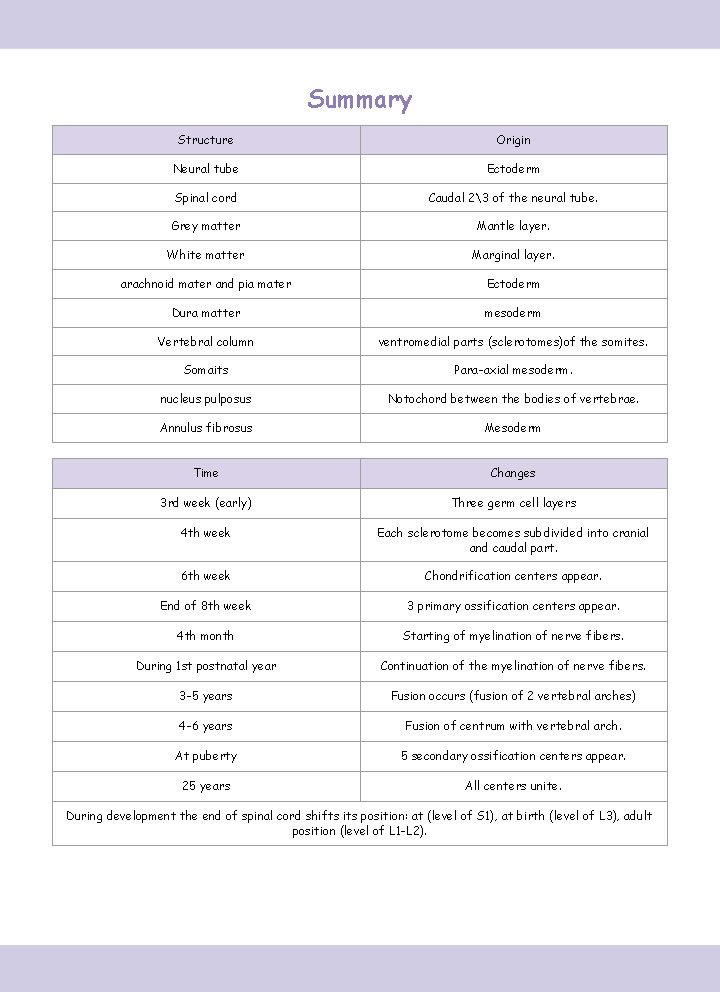
Summary Structure Origin Neural tube Ectoderm Spinal cord Caudal 23 of the neural tube. Grey matter Mantle layer. White matter Marginal layer. arachnoid mater and pia mater Ectoderm Dura matter mesoderm Vertebral column ventromedial parts (sclerotomes)of the somites. Somaits Para-axial mesoderm. nucleus pulposus Notochord between the bodies of vertebrae. Annulus fibrosus Mesoderm Time Changes 3 rd week (early) Three germ cell layers 4 th week Each sclerotome becomes subdivided into cranial and caudal part. 6 th week Chondrification centers appear. End of 8 th week 3 primary ossification centers appear. 4 th month Starting of myelination of nerve fibers. During 1 st postnatal year Continuation of the myelination of nerve fibers. 3 -5 years Fusion occurs (fusion of 2 vertebral arches) 4 -6 years Fusion of centrum with vertebral arch. At puberty 5 secondary ossification centers appear. 25 years All centers unite. During development the end of spinal cord shifts its position: at (level of S 1), at birth (level of L 3), adult position (level of L 1 -L 2).
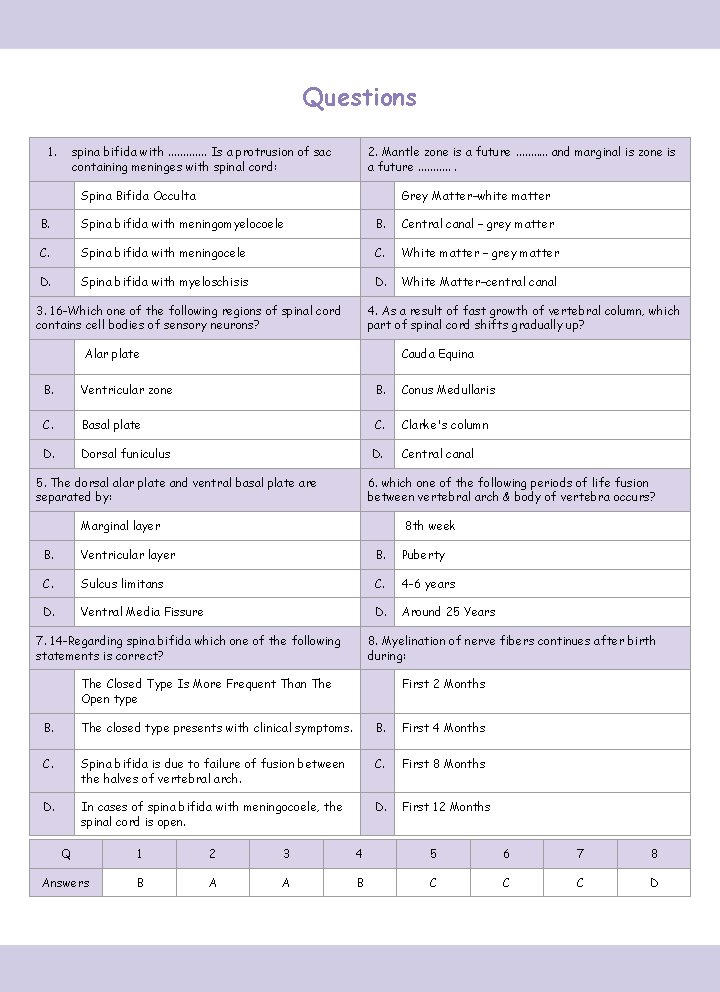
Questions 1. spina bifida with. . . Is a protrusion of sac containing meninges with spinal cord: 2. Mantle zone is a future. . . and marginal is zone is a future. . . Spina Bifida Occulta Grey Matter–white matter B. Spina bifida with meningomyelocoele B. Central canal – grey matter C. Spina bifida with meningocele C. White matter – grey matter D. Spina bifida with myeloschisis D. White Matter–central canal 3. 16 -Which one of the following regions of spinal cord contains cell bodies of sensory neurons? 4. As a result of fast growth of vertebral column, which part of spinal cord shifts gradually up? Alar plate Cauda Equina B. Ventricular zone B. Conus Medullaris C. Basal plate C. Clarke's column D. Dorsal funiculus D. Central canal 5. The dorsal alar plate and ventral basal plate are separated by: 6. which one of the following periods of life fusion between vertebral arch & body of vertebra occurs? Marginal layer 8 th week B. Ventricular layer B. Puberty C. Sulcus limitans C. 4 -6 years D. Ventral Media Fissure D. Around 25 Years 7. 14 -Regarding spina bifida which one of the following statements is correct? 8. Myelination of nerve fibers continues after birth during: The Closed Type Is More Frequent Than The Open type First 2 Months B. The closed type presents with clinical symptoms. B. First 4 Months C. Spina bifida is due to failure of fusion between the halves of vertebral arch. C. First 8 Months D. In cases of spina bifida with meningocoele, the spinal cord is open. D. First 12 Months Q 1 2 3 4 5 6 7 8 Answers B A A B C C C D

- Slides: 10