
Development of Sound Localization 2 How do the
- Slides: 33
Development of Sound Localization 2 How do the neural mechanisms subserving sound localization develop?
Overview of the development of sound localization n n Gross localization responses are observed soon after the cochlea begins to function and in newborn humans. The precision of sound localization improves between birth and 5 years of age. Localization under complex listening conditions takes longer to develop. Experience appears necessary for the formation of auditory spatial maps.
Overview of this lecture n n Electrophysiological evidence of development of binaural hearing mechanisms in humans. Morphological and physiological evidence of development of binaural hearing mechanisms in nonhumans. Limitations imposed by immature peripheral coding. Development of spatial maps and role of experience.
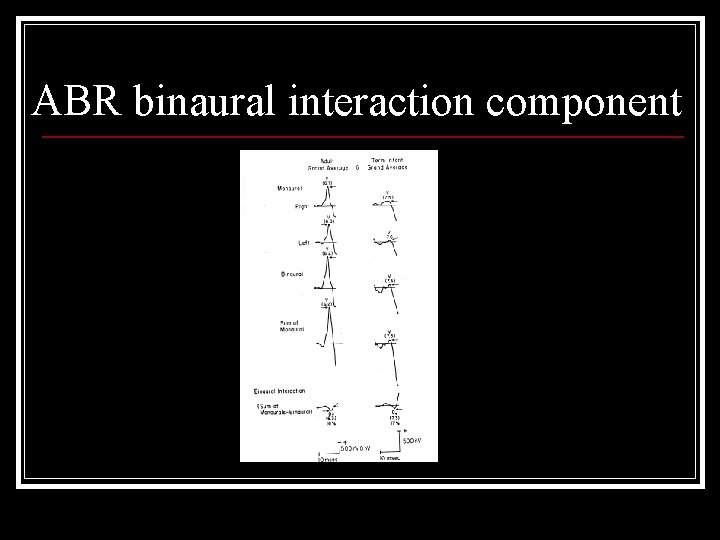
ABR binaural interaction component
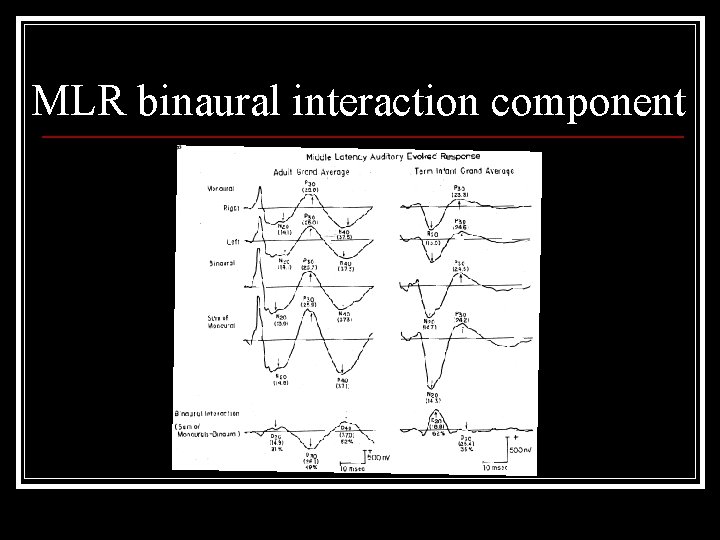
MLR binaural interaction component
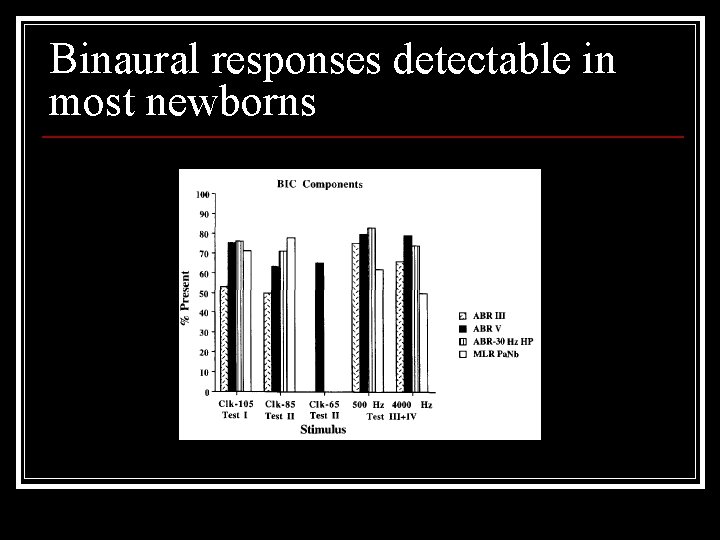
Binaural responses detectable in most newborns
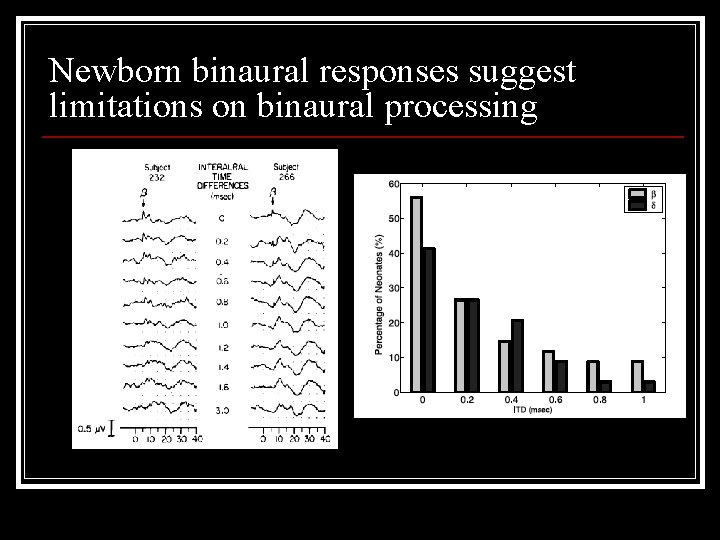
Newborn binaural responses suggest limitations on binaural processing
Conclusion Binaural evoked potentials have not been well described in human infants
Morphological and physiological evidence of binaural development in nonhumans What limits binaural processing during development?
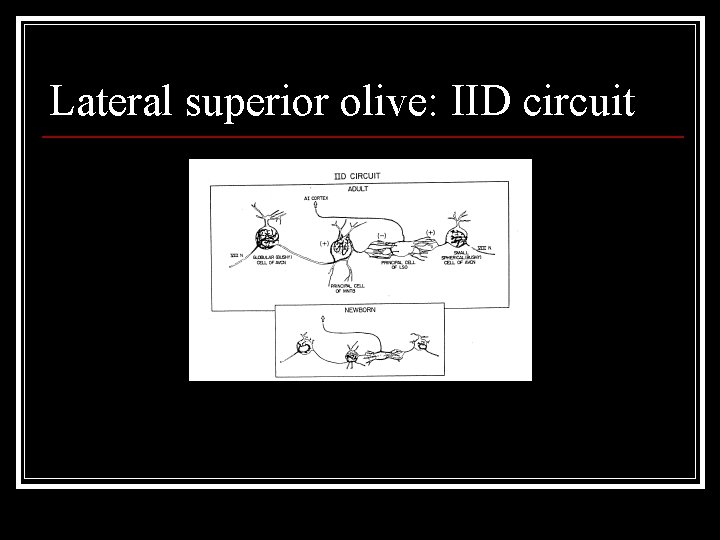
Lateral superior olive: IID circuit
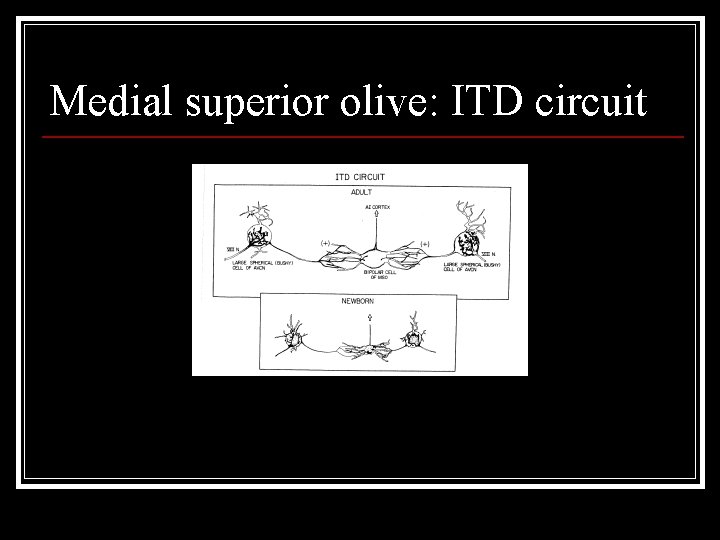
Medial superior olive: ITD circuit
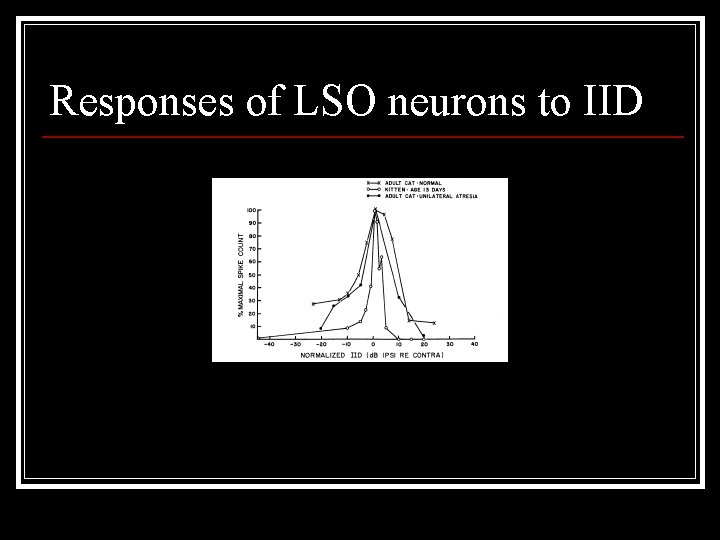
Responses of LSO neurons to IID
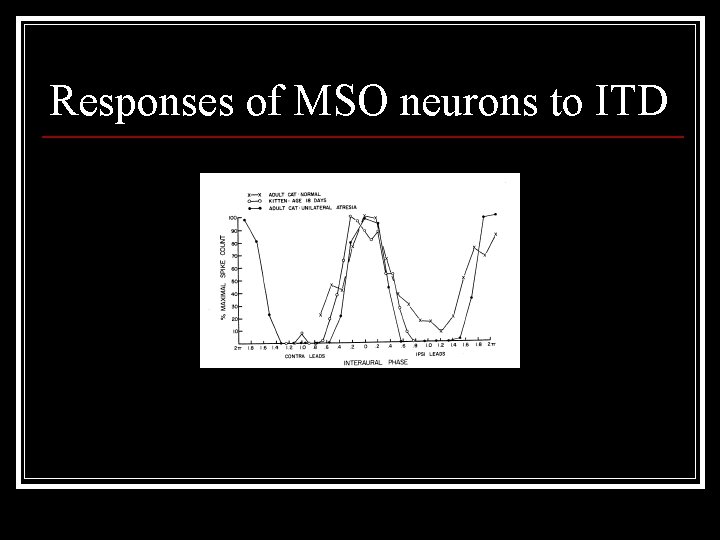
Responses of MSO neurons to ITD
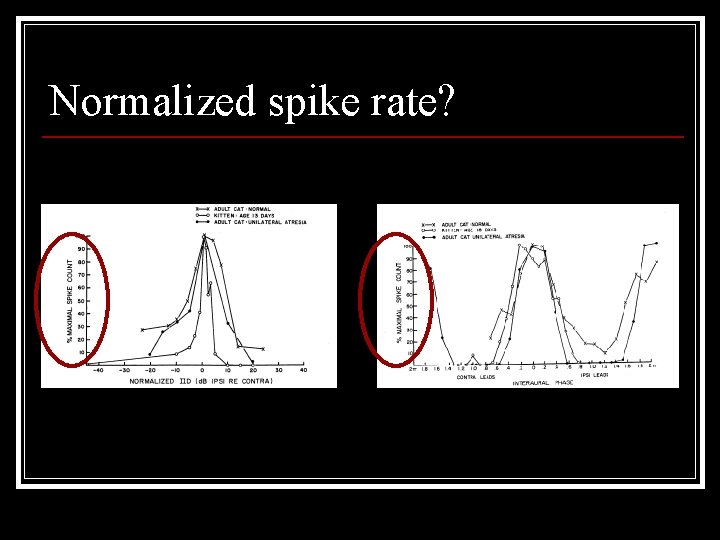
Normalized spike rate?
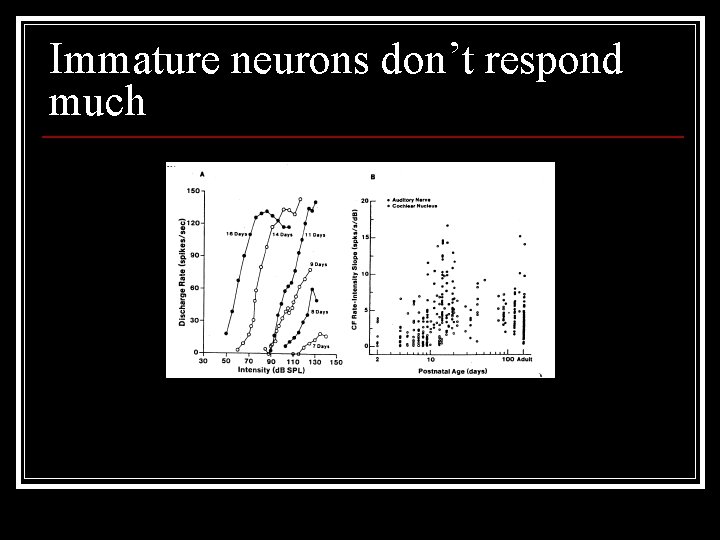
Immature neurons don’t respond much
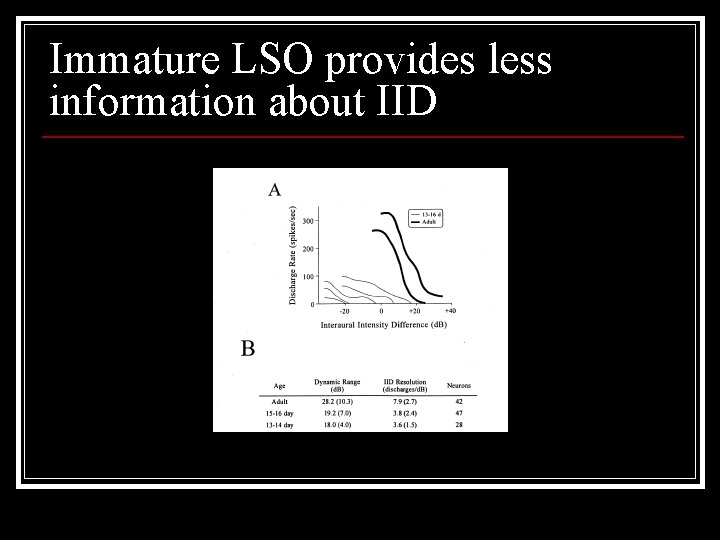
Immature LSO provides less information about IID
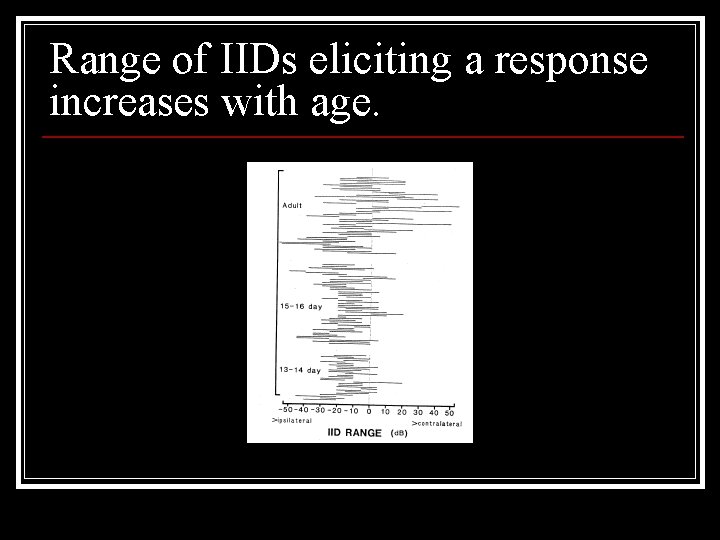
Range of IIDs eliciting a response increases with age.
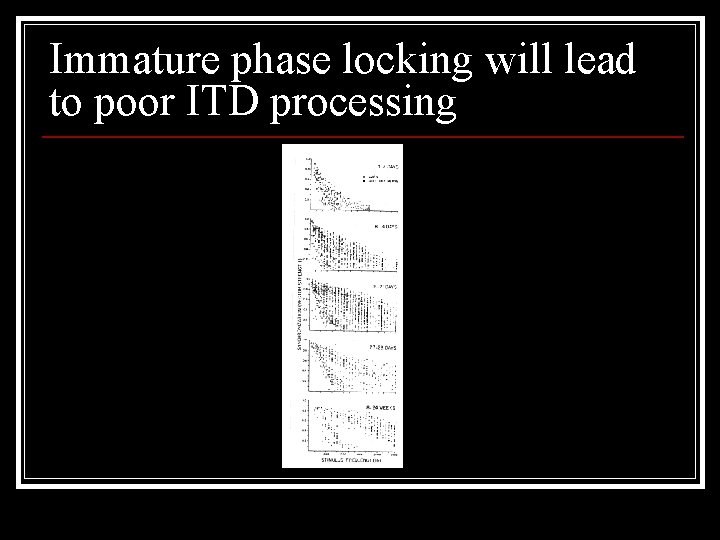
Immature phase locking will lead to poor ITD processing
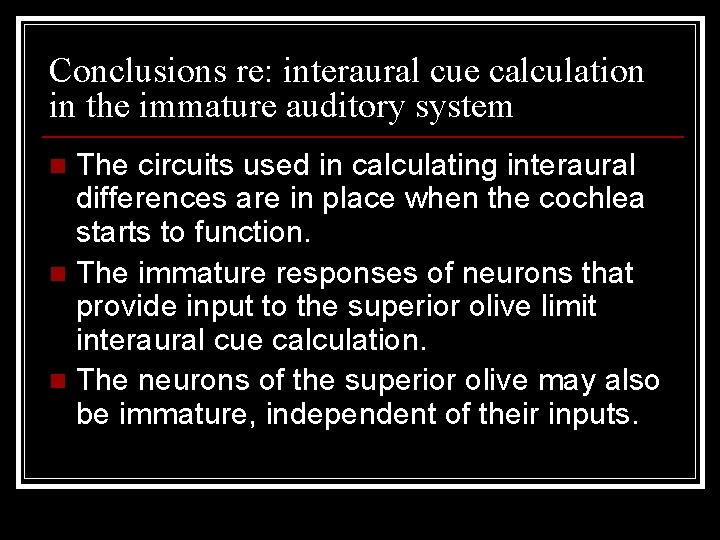
Conclusions re: interaural cue calculation in the immature auditory system The circuits used in calculating interaural differences are in place when the cochlea starts to function. n The immature responses of neurons that provide input to the superior olive limit interaural cue calculation. n The neurons of the superior olive may also be immature, independent of their inputs. n
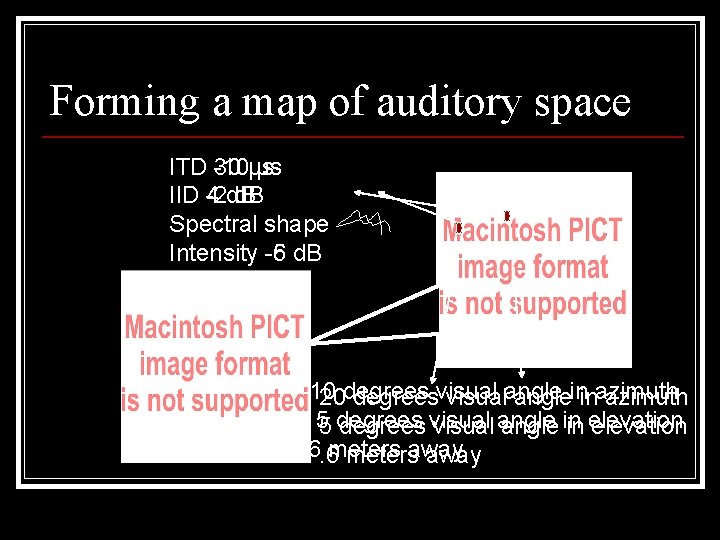
Forming a map of auditory space ITD -10 30 µs µs IID -2 4 d. B Spectral shape Intensity -6 -5 d. B -10 20 degreesvisualangleininazimuth - 55 degrees visual angle in in elevation. 6. 6 metersaway
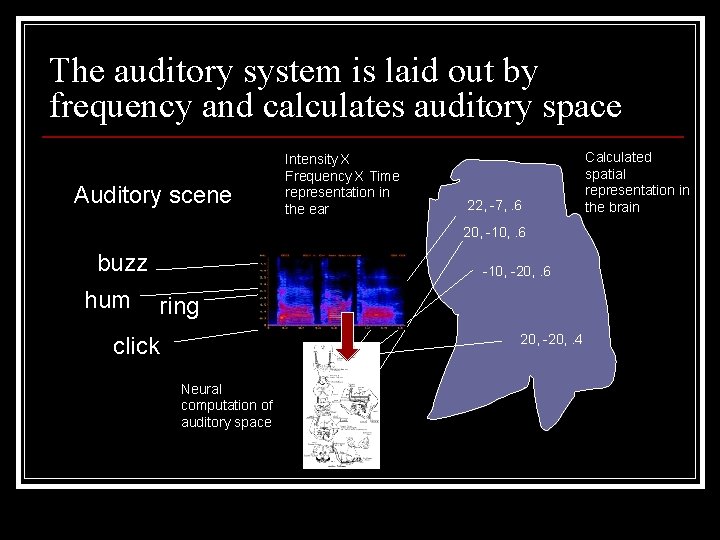
The auditory system is laid out by frequency and calculates auditory space Auditory scene Intensity X Frequency X Time representation in the ear 22, -7, . 6 20, -10, . 6 buzz hum -10, -20, . 6 ring 20, -20, . 4 click Neural computation of auditory space Calculated spatial representation in the brain
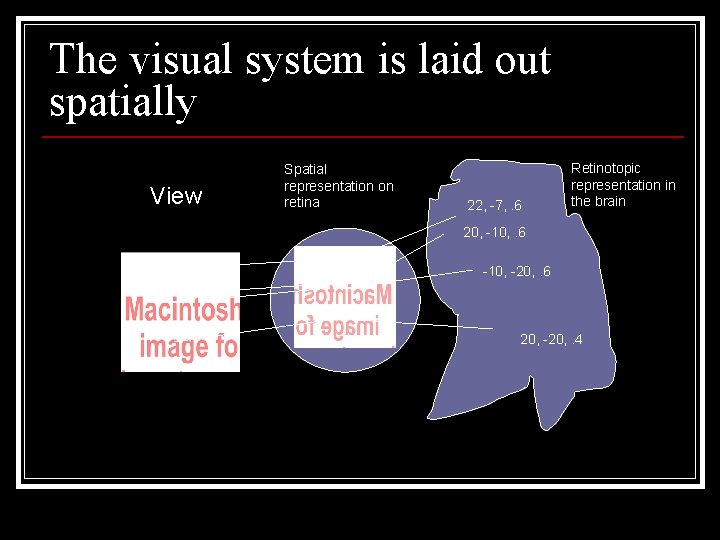
The visual system is laid out spatially View Spatial representation on retina 22, -7, . 6 Retinotopic representation in the brain 20, -10, . 6 -10, -20, . 6 20, -20, . 4
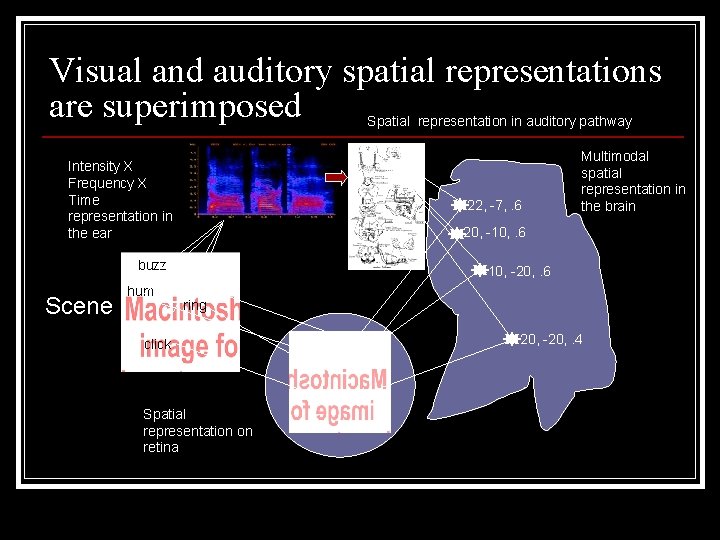
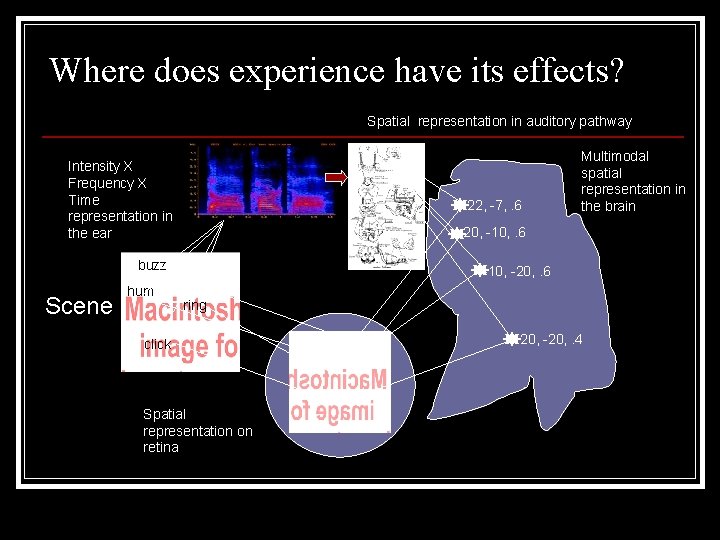
Visual and auditory spatial representations are superimposed Spatial representation in auditory pathway Intensity X Frequency X Time representation in the ear 22, -7, . 6 20, -10, . 6 buzz Scene hum Multimodal spatial representation in the brain -10, -20, . 6 ring click Spatial representation on retina 20, -20, . 4
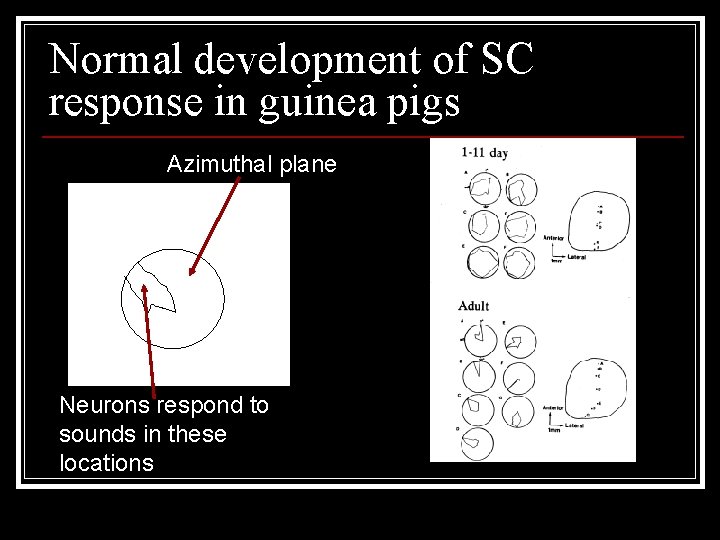
Normal development of SC response in guinea pigs Azimuthal plane Neurons respond to sounds in these locations
Effects of visual and auditory experience on spatial maps
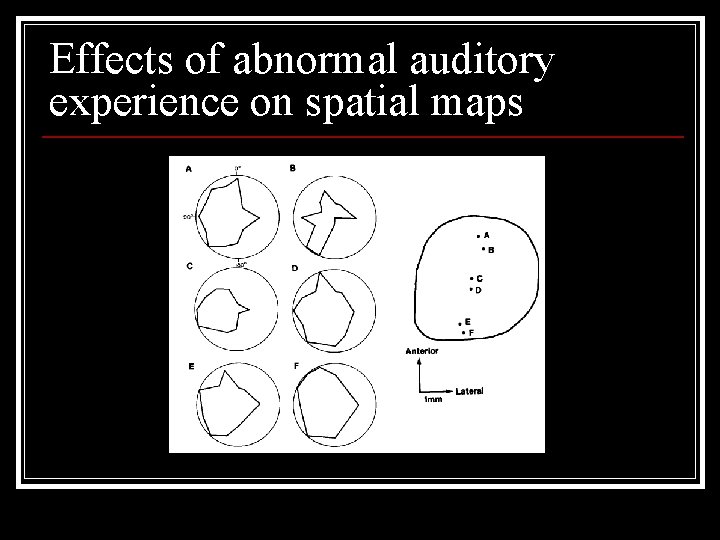
Effects of abnormal auditory experience on spatial maps
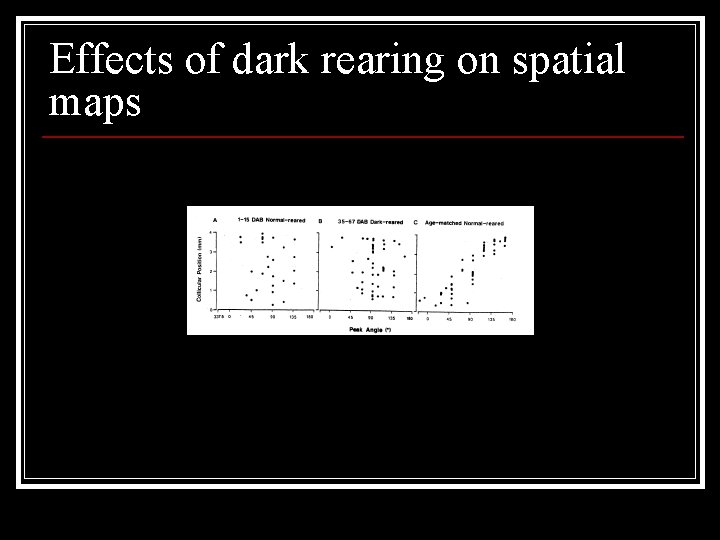
Effects of dark rearing on spatial maps
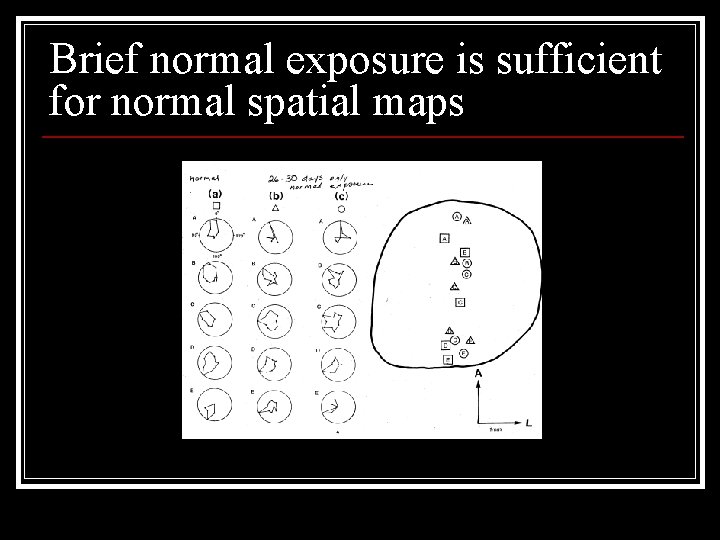
Brief normal exposure is sufficient for normal spatial maps
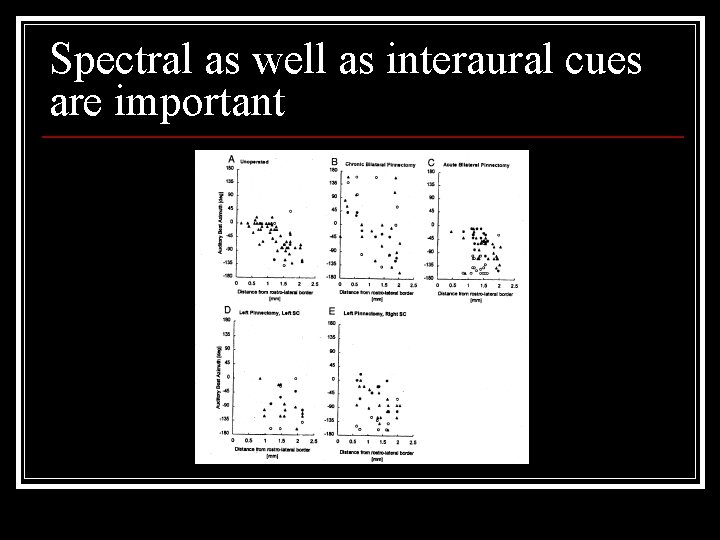
Spectral as well as interaural cues are important
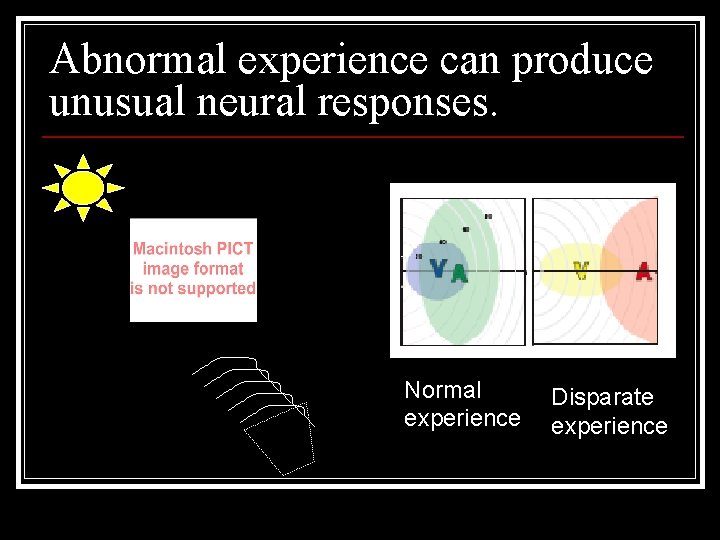
Abnormal experience can produce unusual neural responses. Normal experience Disparate experience
Where does experience have its effects? Spatial representation in auditory pathway Intensity X Frequency X Time representation in the ear 22, -7, . 6 20, -10, . 6 buzz Scene hum Multimodal spatial representation in the brain -10, -20, . 6 ring click Spatial representation on retina 20, -20, . 4
Implications: Blind people and sound localization Blind people (and visually deprived guinea pigs) have same discrimination-type sound localization abilities as sighted people. n Interestingly, they are able to localize sound sources by pointing as well as sighted people. n Conclusion: Vision isn’t the only sense that can define space. n
Conclusions n n n Not surprisingly, binaural evoked responses can be evoked from newborn infants, although the morphology of some responses change with age Whether binaural interaction or improvements in monaural coding is responsible for changes in response is not clear. Normal multimodal experience is required for the formation of auditory maps of space.