
DEVELOPMENT OF SIMPLIFIED MECHANISTICEMPIRICAL DESIGN TOOL FOR PENNSYLVANIA

- Slides: 28
DEVELOPMENT OF SIMPLIFIED MECHANISTICEMPIRICAL DESIGN TOOL FOR PENNSYLVANIA RIGID PAVEMENTS (PITTRIGID-ME) Lev Khazanovich, Anthony Gill Professor Haoran Li, graduate student 1 University of Pittsburgh | Swanson School of Engineering
THE PROBLEM 2 § The current Pennsylvania design method for rigid pavements is outdated § AASHTO 93 -based procedure (1960 -s technology) § Not cost-effective: many empirical evidences of overdesign built into AASHTO 93 § Pennsylvania is transitioning to AASHTO ME design, which requires the user: § to provide many inputs thus increasing possibilities of the design errors § to use AASHTOWare Pavement ME software with anof expensive license University Pittsburgh | Swanson School of Engineering
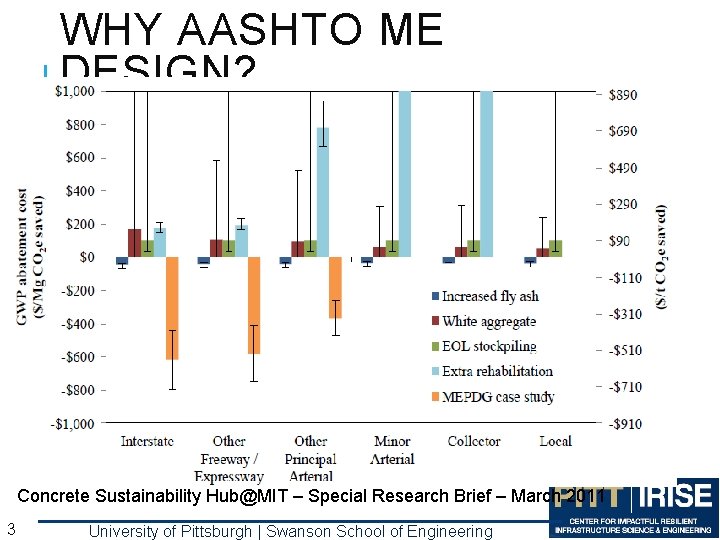
WHY AASHTO ME DESIGN? Concrete Sustainability Hub@MIT – Special Research Brief – March 2011 3 University of Pittsburgh | Swanson School of Engineering 3
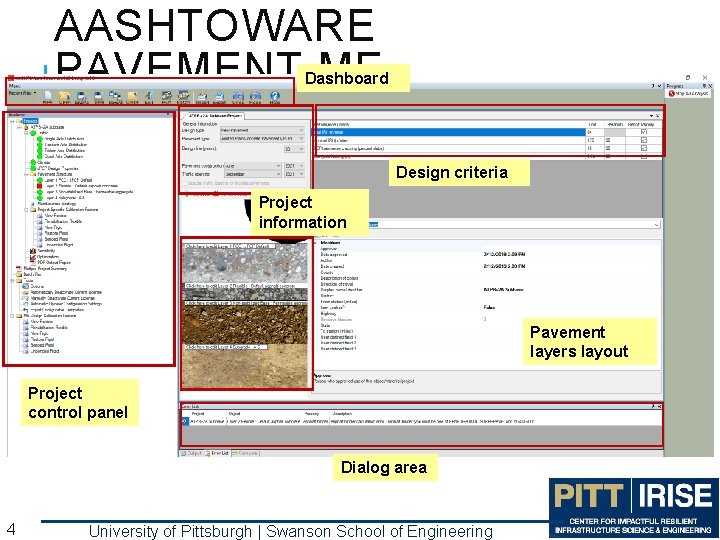
AASHTOWARE PAVEMENT ME Dashboard Design criteria Project information Pavement layers layout Project control panel Dialog area 4 University of Pittsburgh | Swanson School of Engineering 4
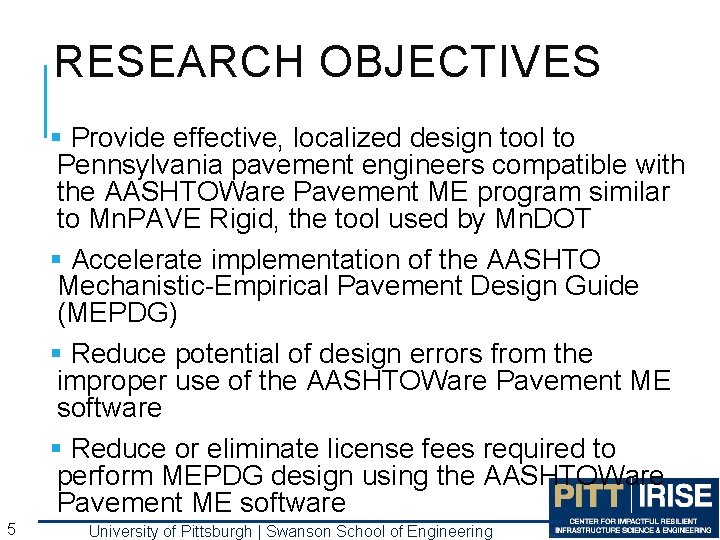
RESEARCH OBJECTIVES § Provide effective, localized design tool to Pennsylvania pavement engineers compatible with the AASHTOWare Pavement ME program similar to Mn. PAVE Rigid, the tool used by Mn. DOT § Accelerate implementation of the AASHTO Mechanistic-Empirical Pavement Design Guide (MEPDG) § Reduce potential of design errors from the improper use of the AASHTOWare Pavement ME software § Reduce or eliminate license fees required to perform MEPDG design using the AASHTOWare Pavement ME software 5 University of Pittsburgh | Swanson School of Engineering 5
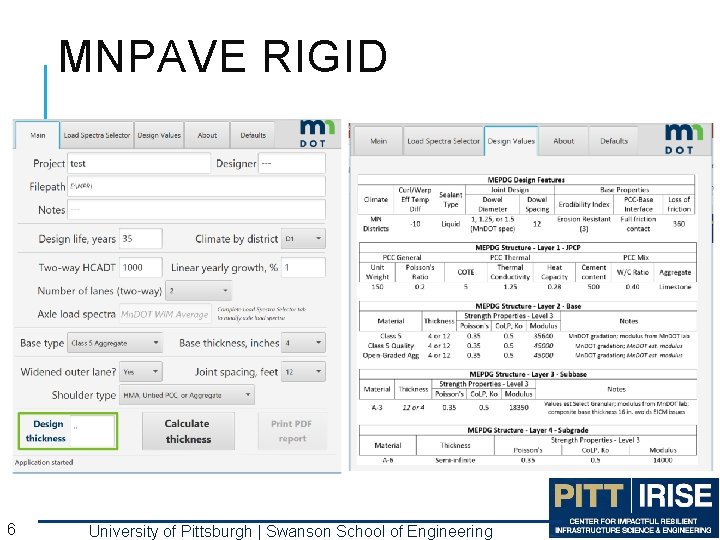
MNPAVE RIGID 6 University of Pittsburgh | Swanson School of Engineering 6
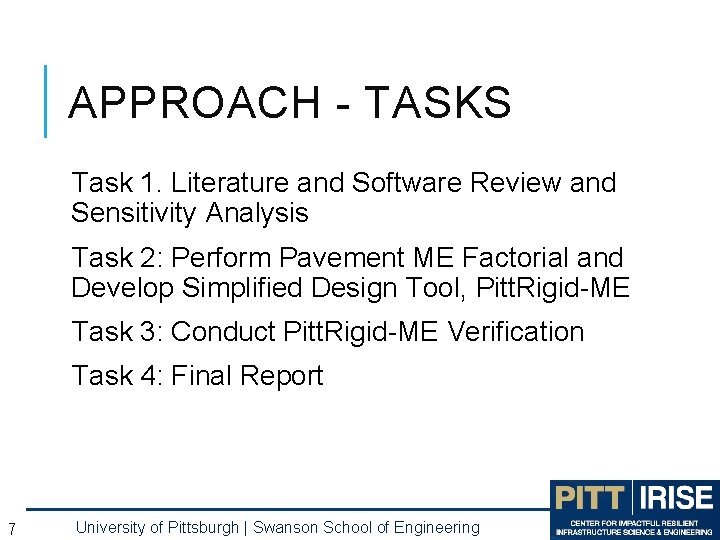
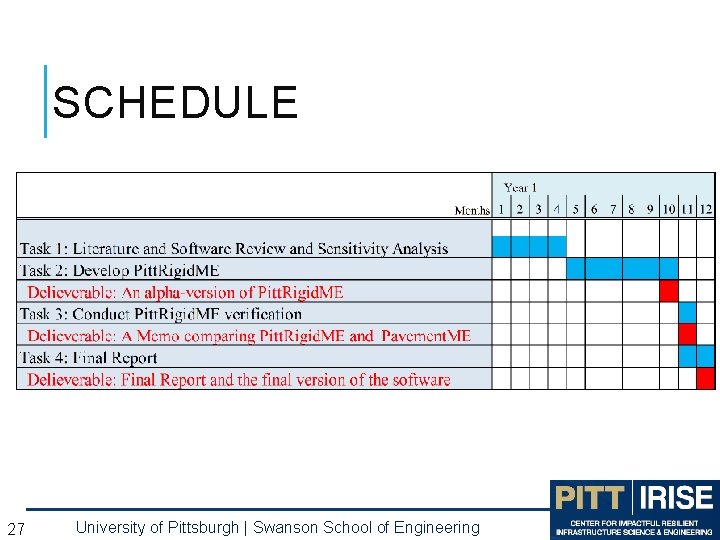
APPROACH - TASKS Task 1. Literature and Software Review and Sensitivity Analysis Task 2: Perform Pavement ME Factorial and Develop Simplified Design Tool, Pitt. Rigid-ME Task 3: Conduct Pitt. Rigid-ME Verification Task 4: Final Report 7 University of Pittsburgh | Swanson School of Engineering
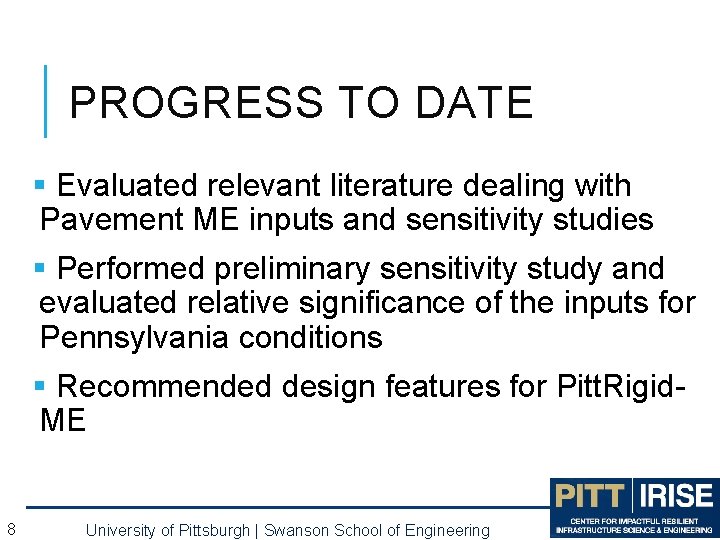
PROGRESS TO DATE § Evaluated relevant literature dealing with Pavement ME inputs and sensitivity studies § Performed preliminary sensitivity study and evaluated relative significance of the inputs for Pennsylvania conditions § Recommended design features for Pitt. Rigid. ME 8 University of Pittsburgh | Swanson School of Engineering
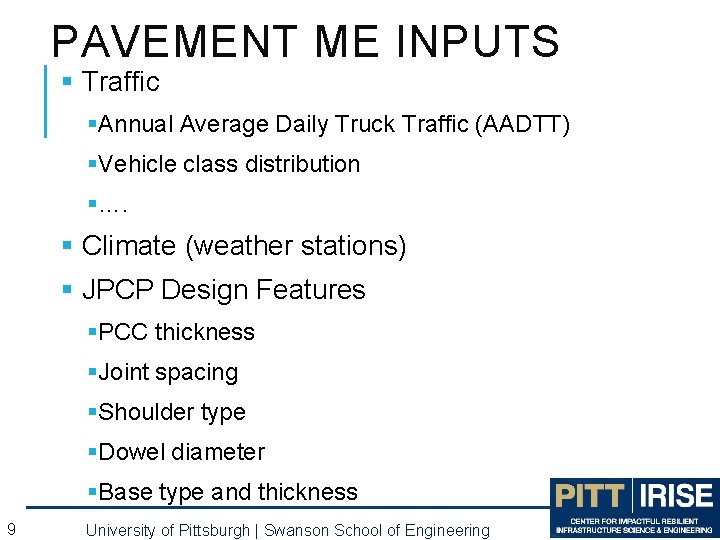
PAVEMENT ME INPUTS § Traffic §Annual Average Daily Truck Traffic (AADTT) §Vehicle class distribution §…. § Climate (weather stations) § JPCP Design Features §PCC thickness §Joint spacing §Shoulder type §Dowel diameter §Base type and thickness 9 University of Pittsburgh | Swanson School of Engineering
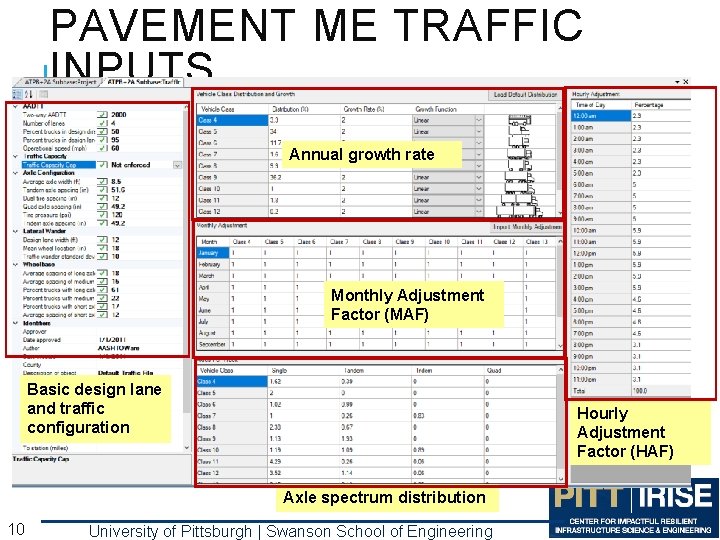
PAVEMENT ME TRAFFIC INPUTS Annual growth rate Monthly Adjustment Factor (MAF) Basic design lane and traffic configuration Hourly Adjustment Factor (HAF) Axle spectrum distribution 10 University of Pittsburgh | Swanson School of Engineering 10
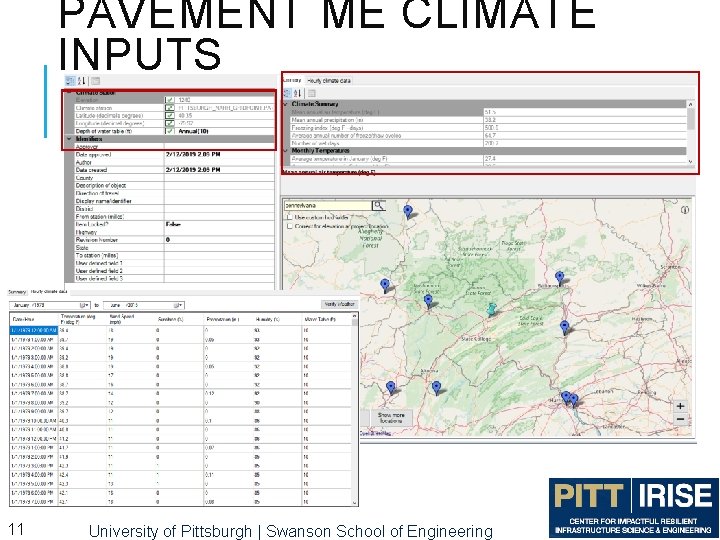
PAVEMENT ME CLIMATE INPUTS 11 University of Pittsburgh | Swanson School of Engineering 11
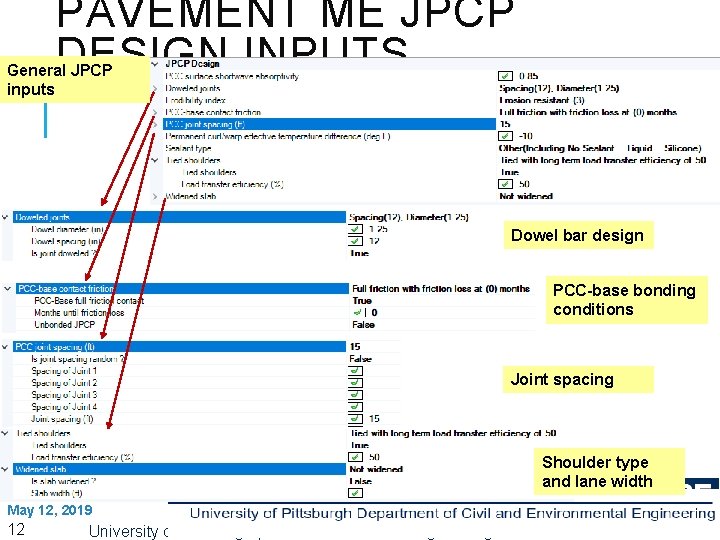
PAVEMENT ME JPCP DESIGN INPUTS General JPCP inputs Dowel bar design PCC-base bonding conditions Joint spacing Shoulder type and lane width May 12, 2019 12 University of Pittsburgh | Swanson School of Engineering 12
SENSITIVITY ANALYSIS More than 100 Pavement ME runs § 7 -in thick Jointed Plain Concrete Pavement § 9 -in thick Jointed Plain Concrete Pavement 13 University of Pittsburgh | Swanson School of Engineering
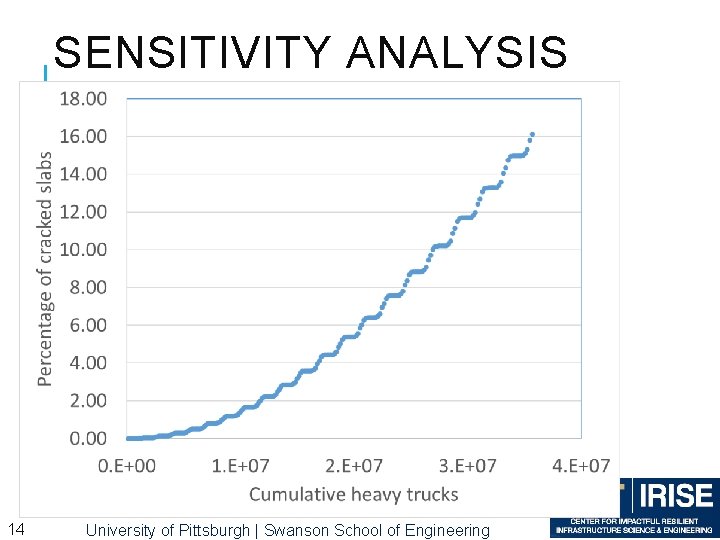
SENSITIVITY ANALYSIS 14 University of Pittsburgh | Swanson School of Engineering
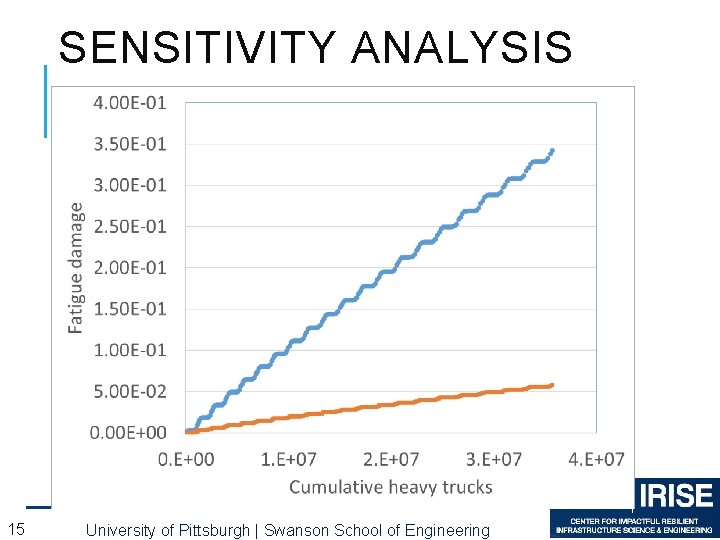
SENSITIVITY ANALYSIS 15 University of Pittsburgh | Swanson School of Engineering
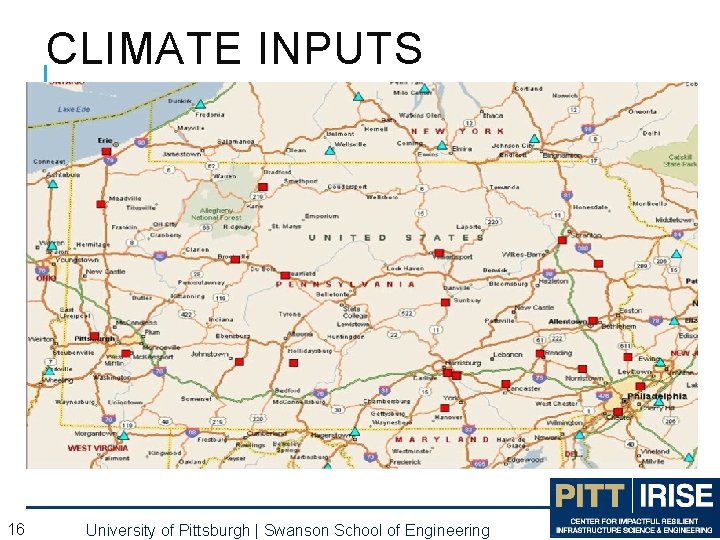
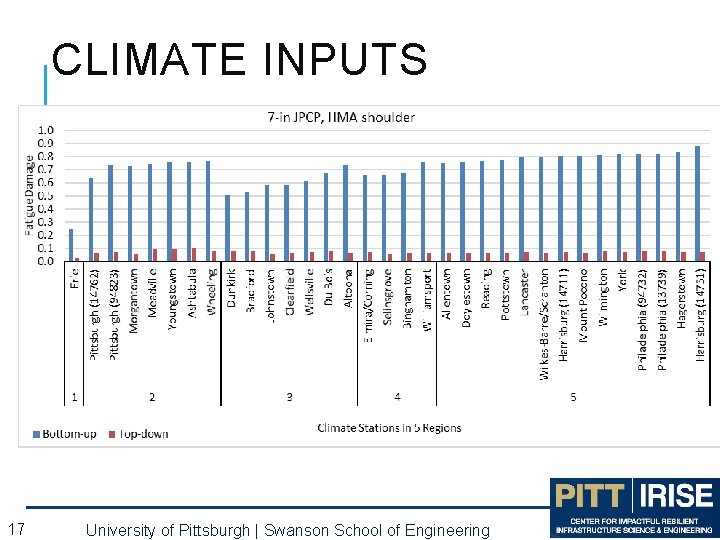
CLIMATE INPUTS 16 University of Pittsburgh | Swanson School of Engineering
CLIMATE INPUTS 17 University of Pittsburgh | Swanson School of Engineering
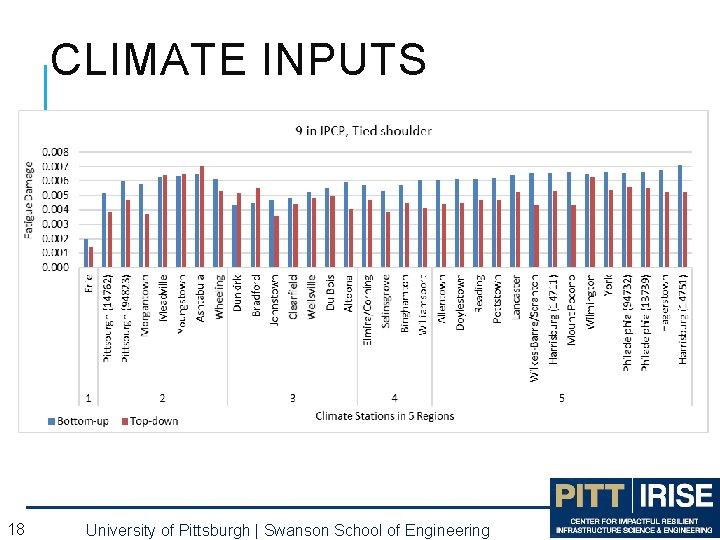
CLIMATE INPUTS 18 University of Pittsburgh | Swanson School of Engineering
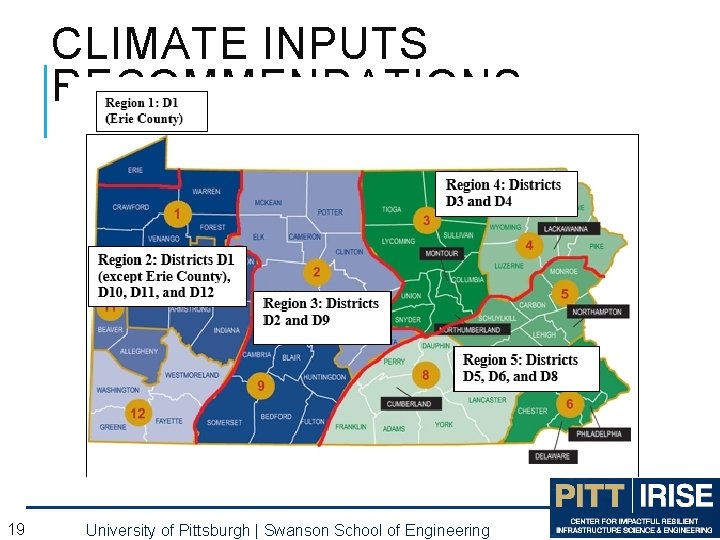
CLIMATE INPUTS RECOMMENDATIONS 19 University of Pittsburgh | Swanson School of Engineering
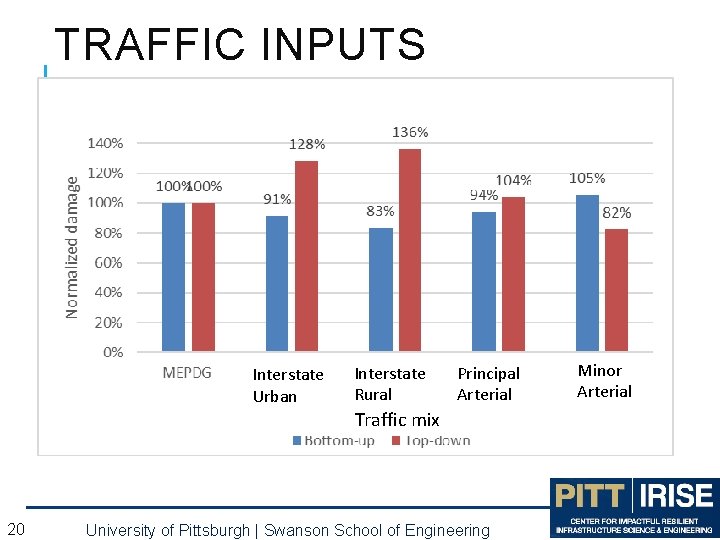
TRAFFIC INPUTS Interstate Urban Interstate Rural Principal Arterial Traffic mix 20 University of Pittsburgh | Swanson School of Engineering Minor Arterial
EFFECT OF BASE TYPE 21 University of Pittsburgh | Swanson School of Engineering 21
EFFECT OF BASE THICKNESS 22 University of Pittsburgh | Swanson School of Engineering 22
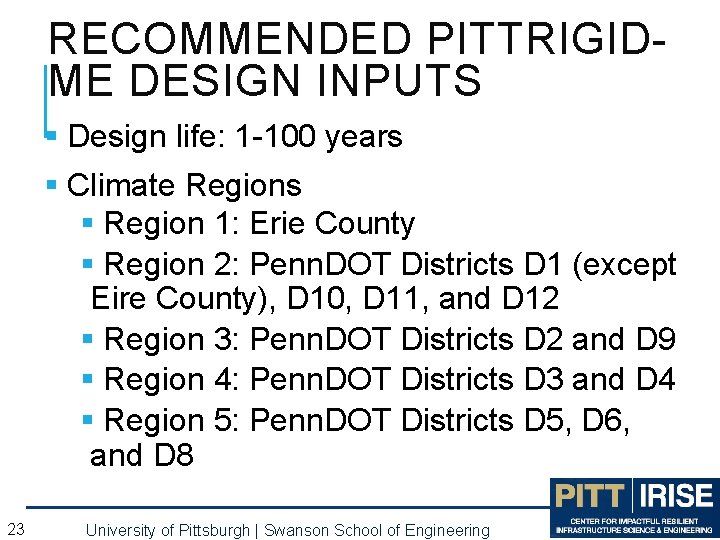
RECOMMENDED PITTRIGIDME DESIGN INPUTS § Design life: 1 -100 years § Climate Regions § Region 1: Erie County § Region 2: Penn. DOT Districts D 1 (except Eire County), D 10, D 11, and D 12 § Region 3: Penn. DOT Districts D 2 and D 9 § Region 4: Penn. DOT Districts D 3 and D 4 § Region 5: Penn. DOT Districts D 5, D 6, and D 8 23 University of Pittsburgh | Swanson School of Engineering 23
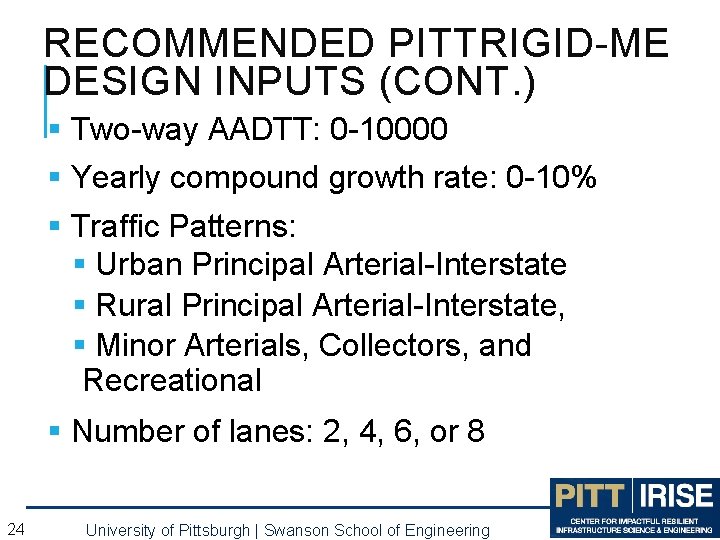
RECOMMENDED PITTRIGID-ME DESIGN INPUTS (CONT. ) § Two-way AADTT: 0 -10000 § Yearly compound growth rate: 0 -10% § Traffic Patterns: § Urban Principal Arterial-Interstate § Rural Principal Arterial-Interstate, § Minor Arterials, Collectors, and Recreational § Number of lanes: 2, 4, 6, or 8 24 University of Pittsburgh | Swanson School of Engineering 24
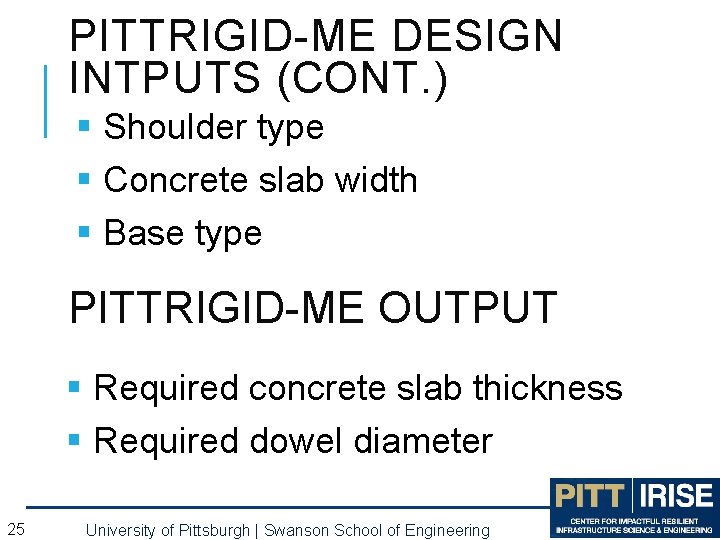
PITTRIGID-ME DESIGN INTPUTS (CONT. ) § Shoulder type § Concrete slab width § Base type PITTRIGID-ME OUTPUT § Required concrete slab thickness § Required dowel diameter 25 University of Pittsburgh | Swanson School of Engineering 25
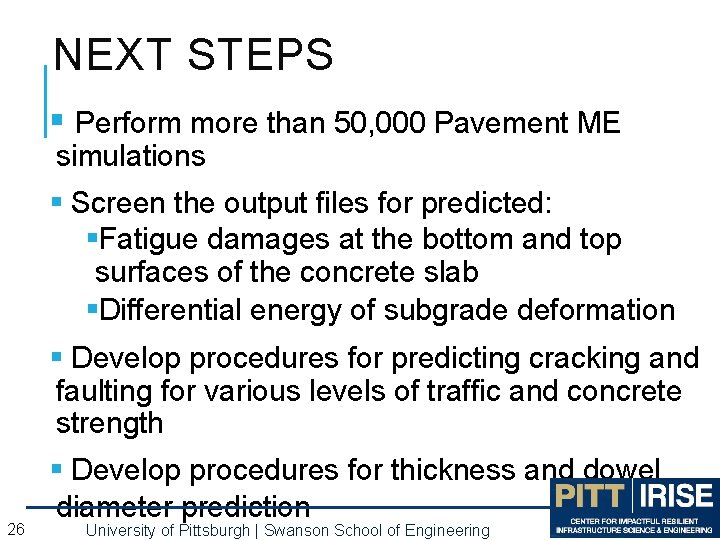
NEXT STEPS § Perform more than 50, 000 Pavement ME simulations § Screen the output files for predicted: §Fatigue damages at the bottom and top surfaces of the concrete slab §Differential energy of subgrade deformation § Develop procedures for predicting cracking and faulting for various levels of traffic and concrete strength 26 § Develop procedures for thickness and dowel diameter prediction University of Pittsburgh | Swanson School of Engineering 26
SCHEDULE 27 University of Pittsburgh | Swanson School of Engineering
APPLICATION OF RESEARCH PRODUCT § Design of new concrete pavements § Implementation of the AASHTO ME design procedure for concrete pavements in Pennsylvania without software license fees § Simplification of design and reduction of design errors § Pavement type selection § Improvement/local calibration of AASHTO ME for Pennsylvania conditions 28 University of Pittsburgh | Swanson School of Engineering 28