
Development of Prostatic Exosomal Protein Lateral Flow Chromatographic



- Slides: 20
Development of Prostatic Exosomal Protein Lateral Flow Chromatographic Strips for Detection of Chronic Prostatitis Jiao Zhang MD, Ph. D. The Brody School of Medicine East Carolina University Greenville, NC 27834 Email: zhangj 15@ecu. edu Prostate Cancer June 22 -24, 2015 Florida, USA
Background • Chronic prostatitis/chronic pelvic pain syndrome (CP/CPPS) is a common condition in urological practice, may be linked to an increased risk of prostate cancer, yet proper diagnosis and treatments are still lacking. • Traditional diagnoses are based primarily on the clinical symptoms and signs, routine urine test, bacterial culture as well as the expressed prostatic secretion (EPS) indexes. • There are no gold-standard or objective diagnostic surrogates for non-bacterial CP/CPPS.
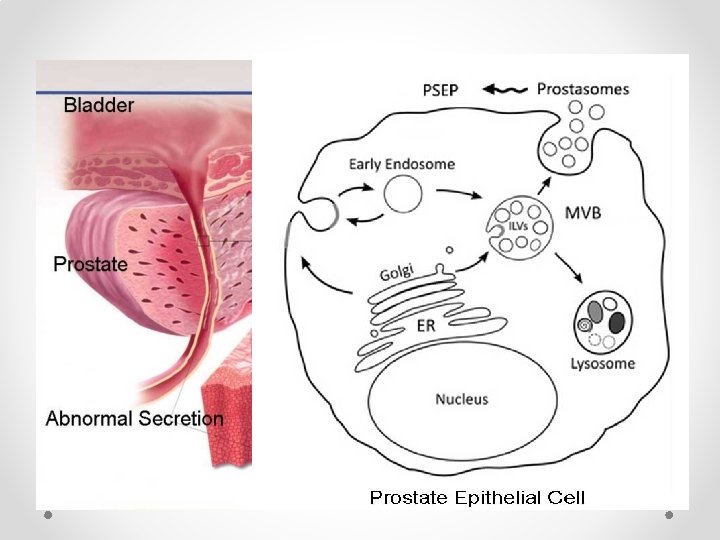
• Recently, PSEP (Prostatic exosomal protein) ELISA methodology was developed to be used as a potential indicator of CP/CPPS. • Multi-center clinical trials performed in China demonstrated that CP/CPPS patients present elevated PSEP in the void urine when compared to that of the healthy men. • Our current study is designed to further develop a PSEP point-of-care (POC) platform for large-scale screening of CP/CPPS patients.
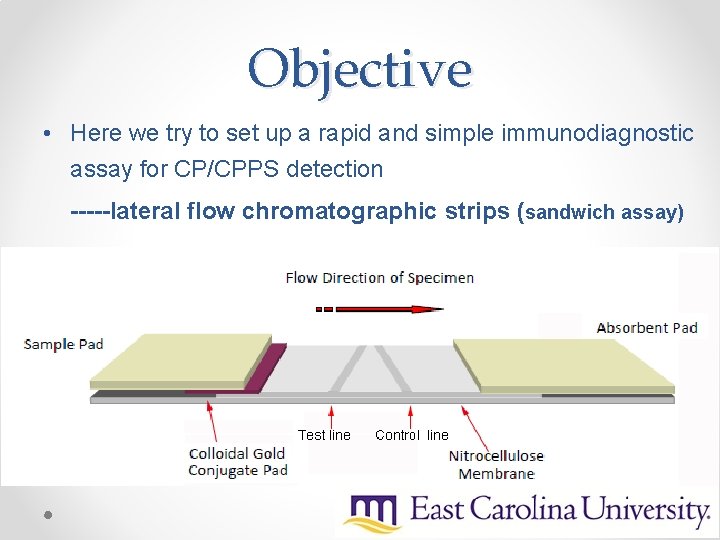
Objective • Here we try to set up a rapid and simple immunodiagnostic assay for CP/CPPS detection -----lateral flow chromatographic strips (sandwich assay)
Research Design • PSEP Antibody production • Development of Lateral-Flow Test Device o Preparation of Colloidal Gold Particles o Preparation of Colloidal Gold Labeled m. Ab o Preparation of Nitrocellulose Capture Membranes o Test Procedure and Principle • Determination of Performance o Sensitivity of the Test Strip o Detection of Urine Sample
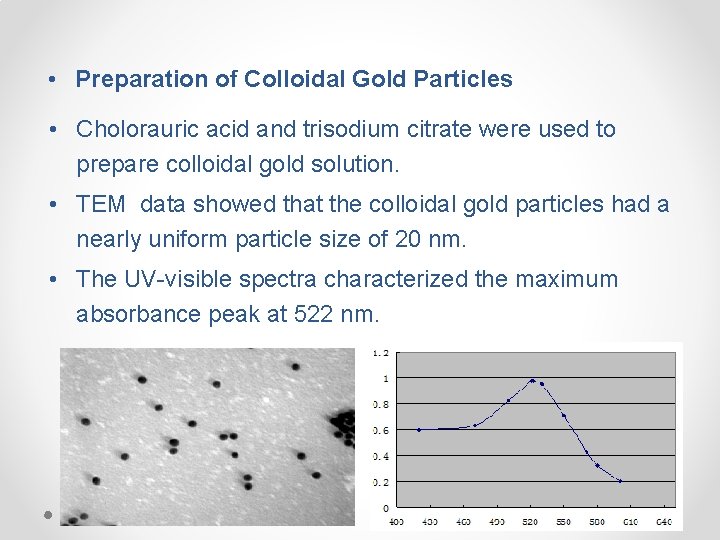
• Preparation of Colloidal Gold Particles • Cholorauric acid and trisodium citrate were used to prepare colloidal gold solution. • TEM data showed that the colloidal gold particles had a nearly uniform particle size of 20 nm. • The UV-visible spectra characterized the maximum absorbance peak at 522 nm.
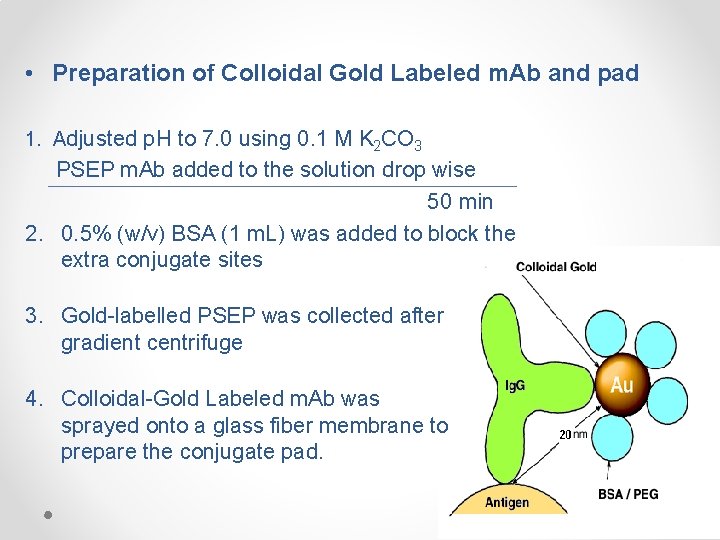
• Preparation of Colloidal Gold Labeled m. Ab and pad 1. Adjusted p. H to 7. 0 using 0. 1 M K 2 CO 3 PSEP m. Ab added to the solution drop wise 50 min 2. 0. 5% (w/v) BSA (1 m. L) was added to block the extra conjugate sites 3. Gold-labelled PSEP was collected after gradient centrifuge 4. Colloidal-Gold Labeled m. Ab was sprayed onto a glass fiber membrane to prepare the conjugate pad.
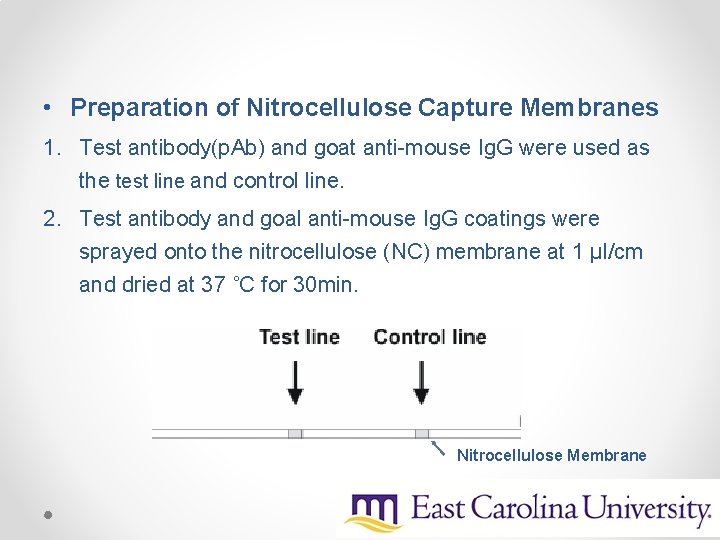
• Preparation of Nitrocellulose Capture Membranes 1. Test antibody(p. Ab) and goat anti-mouse Ig. G were used as the test line and control line. 2. Test antibody and goal anti-mouse Ig. G coatings were sprayed onto the nitrocellulose (NC) membrane at 1 μl/cm and dried at 37 ˚C for 30 min. Nitrocellulose Membrane
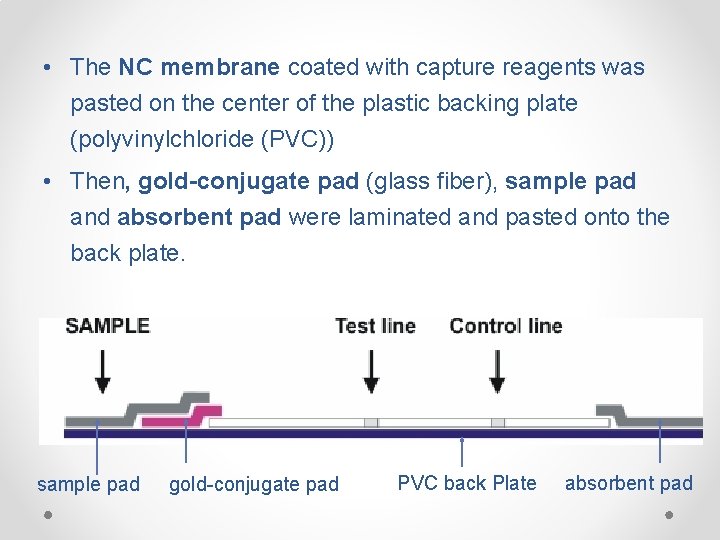
• The NC membrane coated with capture reagents was pasted on the center of the plastic backing plate (polyvinylchloride (PVC)) • Then, gold-conjugate pad (glass fiber), sample pad and absorbent pad were laminated and pasted onto the back plate. sample pad gold-conjugate pad PVC back Plate absorbent pad
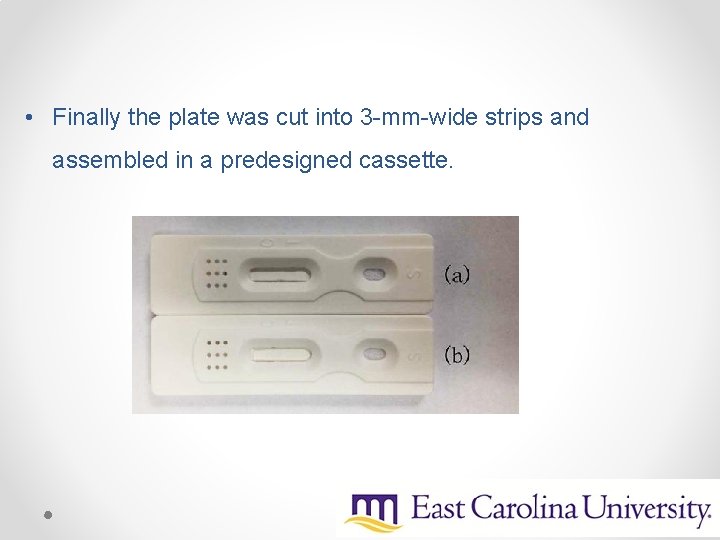
• Finally the plate was cut into 3 -mm-wide strips and assembled in a predesigned cassette.
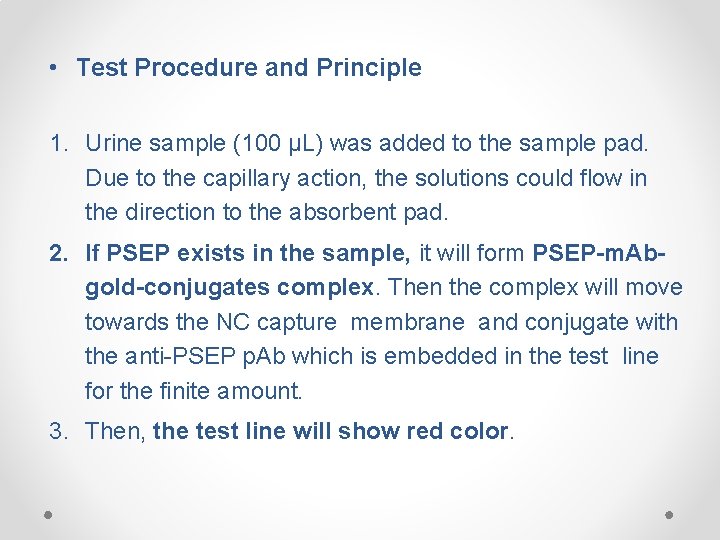
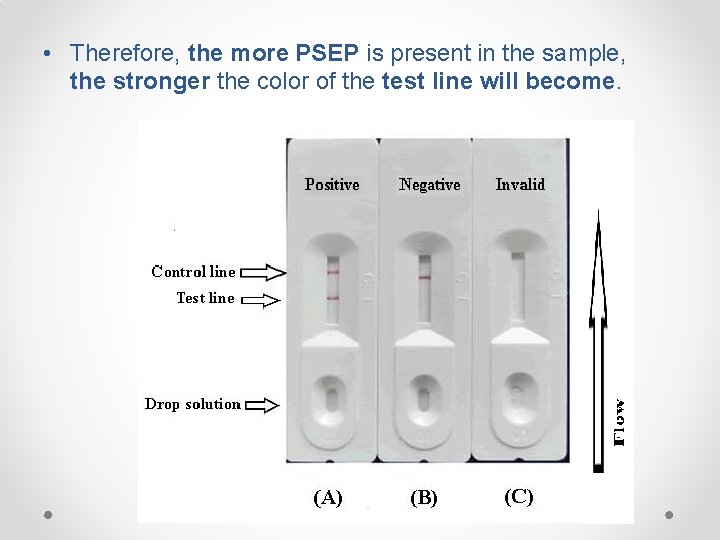
• Test Procedure and Principle 1. Urine sample (100 μL) was added to the sample pad. Due to the capillary action, the solutions could flow in the direction to the absorbent pad. 2. If PSEP exists in the sample, it will form PSEP-m. Abgold-conjugates complex. Then the complex will move towards the NC capture membrane and conjugate with the anti-PSEP p. Ab which is embedded in the test line for the finite amount. 3. Then, the test line will show red color.
• Therefore, the more PSEP is present in the sample, the stronger the color of the test line will become.
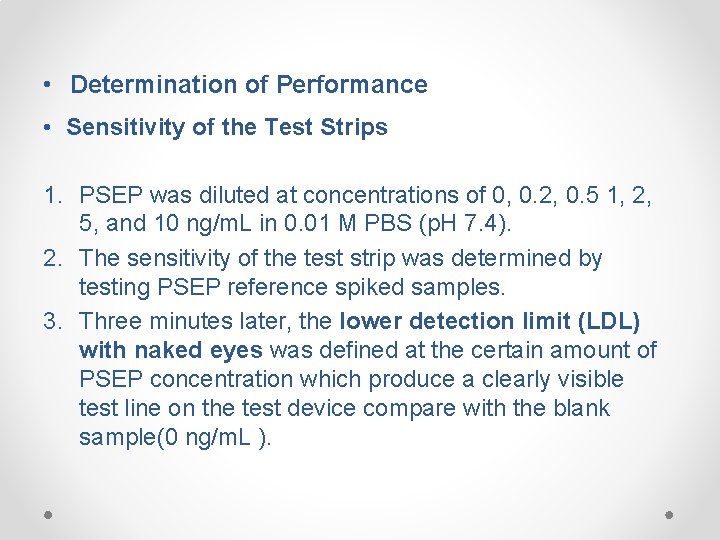
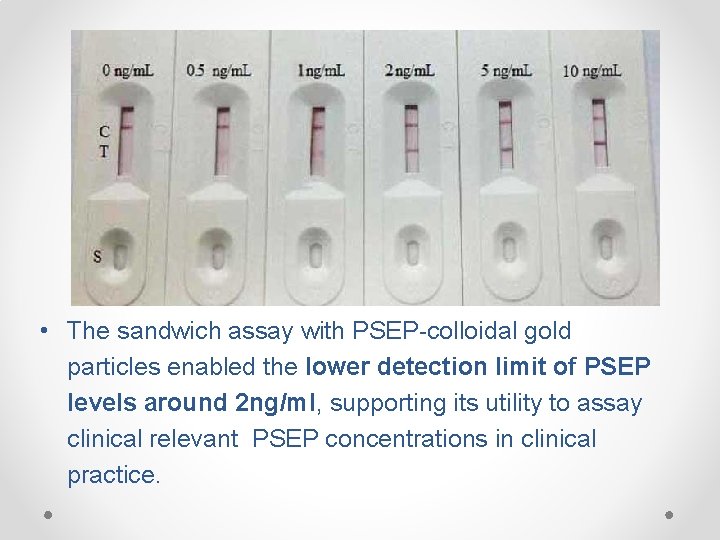
• Determination of Performance • Sensitivity of the Test Strips 1. PSEP was diluted at concentrations of 0, 0. 2, 0. 5 1, 2, 5, and 10 ng/m. L in 0. 01 M PBS (p. H 7. 4). 2. The sensitivity of the test strip was determined by testing PSEP reference spiked samples. 3. Three minutes later, the lower detection limit (LDL) with naked eyes was defined at the certain amount of PSEP concentration which produce a clearly visible test line on the test device compare with the blank sample(0 ng/m. L ).
• The sandwich assay with PSEP-colloidal gold particles enabled the lower detection limit of PSEP levels around 2 ng/ml, supporting its utility to assay clinical relevant PSEP concentrations in clinical practice.
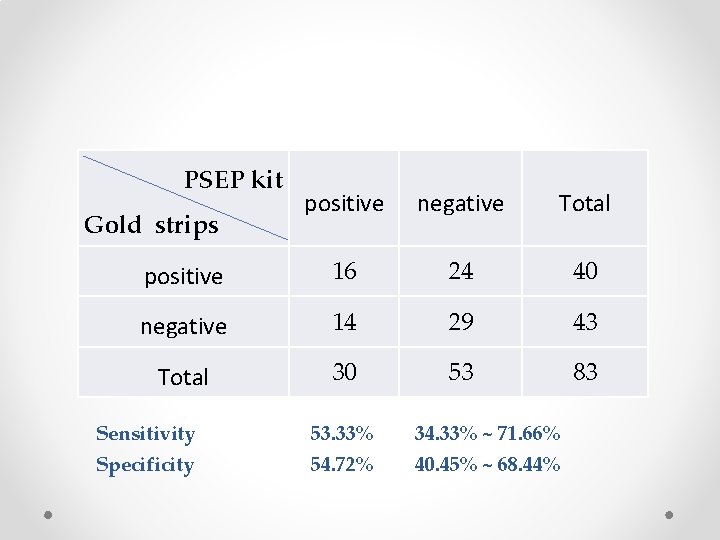
• Detection of Urine Sample 1. All the samples were detected using lateral-flow chromatographic strips, and using PSEP (Prostatic exosomal protein) ELISA kit as parallel control. 2. Three replicates were performed for each urine sample using the test strips.
PSEP kit positive negative Total positive 16 24 40 negative 14 29 43 Total 30 53 83 Gold strips Sensitivity 53. 33% 34. 33% ~ 71. 66% Specificity 54. 72% 40. 45% ~ 68. 44%
Above result indicated that : 1. The test device enabled the detection level of PSEP as low as 2 ng/ml. 2. These lateral flow chromatographic strips showed potential value in assisting CP/CPPS POC diagnosis.
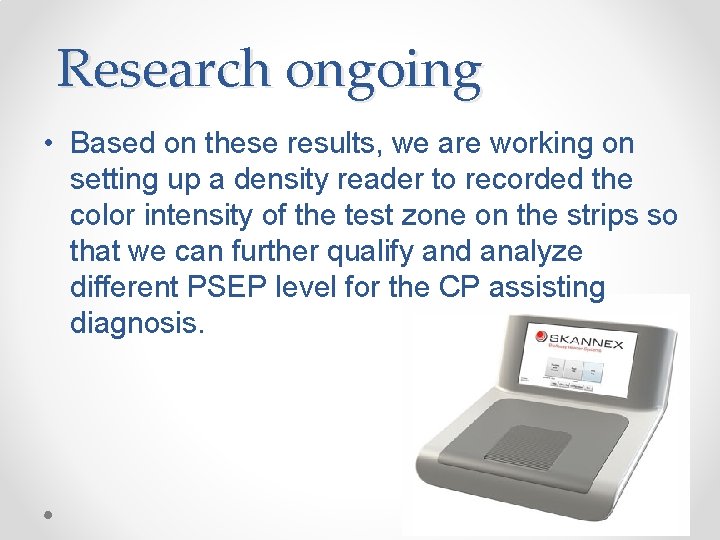
Research ongoing • Based on these results, we are working on setting up a density reader to recorded the color intensity of the test zone on the strips so that we can further qualify and analyze different PSEP level for the CP assisting diagnosis.